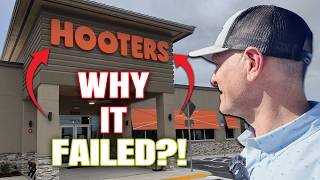
In this video Michael Girdley, a serial entrepreneur, delivers a comprehensive business case study of Hooters, the iconic "breastaurant" chain. He traces the brand’s inception in 1983 as a casual sports bar in Clearwater, Florida, its rapid franchising‑driven expansion to over 430 locations worldwide, and its diversification into merchandise, calendars, an airline, and a casino. The narrative then shifts to the forces that eroded Hooters’ dominance: changing consumer preferences, especially among Millennials and Gen Z who found the overtly sexualized model outdated; aggressive competition from newer concepts like Twin Peaks, Tilted Kilt, and Buffalo Wild Wings; and macro‑economic shocks such as the 2008 recession. Girdley outlines Hooters’ attempted turnarounds—menu diversification, rebranding toward families and women, interior remodels, and the launch of a fast‑casual spin‑off called Hoots—none of which reversed the decline. He details the impact of private‑equity ownership, highlighting multiple buyouts (HIG Capital/Chanacler, then TriArtisan/Nord Bay) that loaded the company with $376 million of debt and a focus on cost‑cutting over long‑term investment. The COVID‑19 pandemic further crippled the dine‑in‑centric model, forcing a limited delivery pivot that failed to offset lost traffic. Operational strains, rising labor and ingredient costs, deferred maintenance, and a uniform controversy amplified brand image problems. By 2025, unsustainable interest payments and vendor arrears forced Hooters of America into a pre‑packaged Chapter 11 filing, resulting in a sale to its largest franchisees, including co‑founder Neal Keefer, who vows to restore the brand’s core fun while modernizing it. Girdley concludes with lessons for entrepreneurs: the necessity of anticipating market shifts, the dangers of excessive leverage, and the contrast between founder‑led long‑term stewardship versus private‑equity short‑termism.
Chapters
If you like what you see here on the outside, you're gonna love what you'll see on the inside. Hooters was once an American pop culture sensation. It was the original, well, breastaurant chain famous for hot wings, cold beer, and waitresses in tight orange shorts. At its peak, Hooters grew to over 430 locations worldwide and even launched its own airline and casino. But fast forward 40 years and this iconic brand is today going bust. Literally, Hooters of America filed Chapter 11 bankruptcy in 2025, drowning in $376 million of debt. How did a company built on chicken wings and cheerleader vibes fly so high for so long, only to crash so hard today? So this video, I'm digging into the rise and fall of Hooters and what pushed it into bankruptcy, and what we can all learn from it as business owners. Hi, my name is Michael Girdley. I'm a 25-year entrepreneur, and I love making content for people who are business owners, especially those who want to own businesses passively. Please give me a follow or interact with this video so the algorithm will show it to you. It will make me happy. Also, here's a link to my newsletter. I send out a letter with this type of content every week to business owners and aspiring business owners. Subscribe here. It's free. So to explain how we got here, we need to start at the beginning. And Hooters started on April Fool's Day, 1983, in Clearwater, Florida. And of course, it's Florida. And it was launched by 6 fun-loving guys with zero restaurant experience. They wanted a place they, well, couldn't get kicked out of. And the result was a laid-back sports bar with spicy wings, cold beer, and a standout feature: waitresses wore orange shorts and tight tank tops. This delightfully tacky yet undefined— their words, not mine— concept became a magnet for a certain type of casual dining customer. Hooters was cheeky, fun, and apologetically sexy. Franchising fueled fast growth across the US, and the chain became a cultural fixture by the late 1980s. Robert Brooks bought out the founders and scaled the brand, launching international locations, calendars, merchandise, and even an airline called Hooters Air. Hooters Hooters Air puts the fun back into flying. A short-lived airline with Hooters girls serving drinks in flight. And by 2008, the brand hit 400 locations and close to $1 billion in annual revenue. They weren't just a restaurant, they were a cultural phenomenon. They marketed heavily, sponsored sports events, and leaned into their identity. The Hooters girl, she became a recognized piece of Americana, as distinctive as Ronald McDonald or the Marlboro Man. Things went well. Until they didn't, and trouble started brewing. The 2008 recession dented sales, but more damaging were long-term trends. New competitors like Twin Peaks and Tilted Kilt began stealing market share with fresher concepts. These rivals didn't just imitate Hooters, they reinvented the category. Twin Peaks in particular offered a more upscale mountain lodge aesthetic, more craft beer, and more attention to food quality. And it worked. Buffalo Wild Wings also appealed to younger diners who wanted sports, food, and beer without the overtly sexualized brand and environment. Millennials in particular found Hooters' vibe outdated, and some even cringeworthy. The customer base aged, and Hooters didn't adapt quickly enough. Sales stagnated, and franchisees struggled to justify remodels, and some shut down altogether. By 2012, Hooters leadership caught on to the fact that they needed to modernize. When the numbers are going bad, eventually management gets the, uh, gets the message. And the turnaround plan included new decor, menu updates, and a controversial move: marketing to women and families. They even introduced salads. Yes, salads at Hooters that they were trying to sell to families and women. They partnered with marketing agencies to recast the brand as more fun rather than provocative and sexy. Their slogan changed to quote-unquote "Feed the Dream," and they added grilled options and healthier sides to attract more diverse eaters. Store remodels rolled out with warmer lighting, wood fixtures, and less 1980s-style neon. And even a new spin-off called Hoots was also launched—no Hooters girls, just wings and fast casual service. It featured counter-ordering, smaller footprints, and a neutral brand experience. But it remained small with just a few locations, and it was a test, not a transformation, and it didn't go anywhere. Meanwhile, behind the scenes, private equity came in and did what private equity does. In 2011, HIG Capital and Chanacler Holdings acquired the brand. Then in 2019, TriArtisan Capital and Nord Bay Capital bought it from the previous PE owners. And these PE firms had a strategy: they were going to cut costs, squeeze efficiencies, and prepare for an eventual resale or IPO. Standard P.E. playbook. These owners also tried to refresh the band, but the numbers weren't great. U.S. locations were declining in numbers, and in 2018, sales dropped 1.7%. Hooters was no longer a growth story, and the same-store sales metric, so crucial in the restaurant world, had flatlined or declined. Then came the knockout punch. The pandemic crushed dine-in restaurants. Hooters pivoted to takeout and delivery, launching virtual bands like Hooties Burger Bar, but the core experience didn't translate. Hooters isn't a delivery brand. Remote work and fewer large social gatherings changed how Americans dined out. While Hooters had thrived on office happy hours, sports nights, and conventions, when those things disappeared, well, so did the traffic. Delivery helped a bit, but it didn't come close to covering losses. So costs soared, chicken wings prices rose, and labor was tight, and inflation squeezed margins. Management raised prices, but customers pushed back, and maintenance got deferred, training budgets were cut, locations started looking shabby, and guests noticed. And there was another headwind for Hooters. Younger consumers, they were drifting away. Gen Z and late millennials, they're not interested in the boobs and beer model. And in 2021, Hooters introduced shorter shorts, sparking a viral backlash from their own employees. It wasn't just about the uniforms. Younger workers and customers, they expected different workplace norms. The Hooters girl model, once seen as playful and aspirational, now felt awkward and out of touch to many. And at its core, the brand had become a cultural relic in an era of inclusivity, authenticity, and image-conscious consumption. Hooters feels like a throwback that nobody asked for. And here's where I think you look back at this story, you can see that they made a mistake. Hooters didn't take a look at where the world was going, and instead they were stuck in the past. And many companies get stuck here. They don't see that the things are changing around them 'cause they're so focused on their core business that they don't see that, well, their core customer's declining or even changing their views and going someplace else. And in the end, that's what ends up killing businesses like Hooters. And the knockout blow for Hooters came just a few years ago. Private equity, you see, had loaded Hooters with tons of debt. And by 2025, the company owed $376 million, with $30 million a year due in interest alone. They couldn't pay vendors, and around 40 locations closed in 2024. This means that deferred payments piled up. Some vendors waited 90 days or more to be paid. Franchisees got frustrated with corporate's lack of support. Internally, morale plummeted. So it finally, in March 2025, Hooters of America filed for Chapter 11 bankruptcy. Another well-known restaurant chain is filing for bankruptcy. This time it's Hooters. But this was a prepackaged bankruptcy, a sale to its largest franchisees, including original co-founder Neil Keefer. Keefer had never stopped believing in the brand. His franchise group in Florida continued to perform relatively well because it's Florida, I think, thanks to better execution and local marketing as well. Keefer, he blamed the private equity owners, quote unquote. He said they had no history with the brand. He said. Now he's vowing to return Hooters to its roots without all the gimmicks. He wants to modernize the brand but preserve the social casual fun that originally made Hooters stand out. And I think also important about this story is the danger of debt, right? Debt— if your cost of capital and paying the interest and all that gets really high, it can really kill growth because you're busy paying for money that you borrowed in the past rather than being able to invest in keeping your business up to date either now or growing it in the future. And because PE ownership had brought in this short-term thinking, loading it up with debt with the hope of flipping it, they kind of killed the long term. And in the end, Hooters saddled with debt. They couldn't invest in modernizing. They cut training. They had deferred all these updates and lost long-term value. And while debt is a good tool for growth, it's something you want to use and it's an appropriate tool sometimes. It's something that is a double-edged sword and you have to be careful with it when you own a business, especially one like Hooters that was maturing or even declining because, man, as the, as the revenue slows down, that interest becomes more and more of your total income for the business. So in the end, I love that Neal Keefer, one of the original founders, is coming back in. There is something special about businesses that are owned by their founders or major stockholders. And the difference between Neal versus the folks in private equity is, well, one's going to be thinking long term and one's going to be shaking short term. So that's the story of Hooters. What do you think? Do you think the brand can reinvent itself? And are there any lessons from this story that I haven't mentioned in the video? Let me know in the comments below. It's a great opportunity to learn from the rise, fall, and maybe potential comeback of Hooters. Let me know in the comments below.