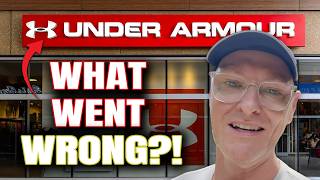
In this walk‑and‑talk YouTube video, the host chronicles Under Armour’s meteoric rise from a college‑athlete‑born idea to the world’s second‑largest sportswear brand, then dissects the series of strategic missteps that led to its steep decline and current struggle. The narrative begins with Kevin Plank’s invention of a moisture‑wicking compression shirt, early sales, a breakthrough after a product placement in the film Any Given Sunday, and rapid growth to $400 million in sales within a decade, then $3.1 billion and a $20 billion market valuation by 2015. The host highlights the company’s early focus on a narrow set of high‑performance athletic categories, a strategy likened to other single‑product success stories. The decline is attributed to several pivotal errors: a misguided pivot toward being a “technology” company through costly app acquisitions (e.g., MyFitnessPal), politicizing the brand which alienated star athlete Steph Curry, over‑reliance on wholesale partners and mall‑based retail (especially the collapse of Sports Authority), failure to anticipate the athleisure shift that Lululemon capitalized on, and aggressive discounting that eroded the premium, “cool” brand image. These missteps culminated in a disastrous earnings call, a 74 % stock plunge from its 2015 peak, and a revolving door of CEOs. The video notes Kevin Plank’s return as CEO, recent turnaround moves such as cutting SKU count by 25 % and refocusing on core products, and extracts entrepreneurial lessons about hubris, staying true to core strengths, and the dangers of overconfidence and political entanglement. The host ends with a personal anecdote about wearing an Under Armour hat to illustrate the brand’s loss of coolness and invites viewer commentary.
Chapters
So the story of Under Armour, the rise and fall, is a pretty fascinating one. In 20 years, the company went from basically an idea in one guy's basement to the number 2 sportswear company basically in the world. They were number 2 behind Nike. Just an incredible rise. And today, like, things have totally changed. In just a few years, Under Armour is basically an afterthought and the company's struggling, massive management turnover and stock getting pummeled. So in this video, I will talk about the story of the rise and fall of Under Armour and what we as small business owners and entrepreneurs can learn from this, uh, well, just incredible story. Oh, and a key part of this story is why I'm wearing an Under Armour hat today. Uh, I'll tell you about the whole part of it, uh, which may surprise you. So if you are interested in this kind of stuff, learning from things that go right and wrong in business, I am your guy. Uh, please give me a subscribe and a follow, or at least write a comment below. That says, "You think I look funny. It'll make me feel better and help the algorithm show this to more people." So thanks. So Under Armour was started by an entrepreneur named Kevin Plank, and he had been a college athlete at the University of Maryland, and he noticed a personal problem that he had, which was cotton t-shirts were really crappy underneath all of your gear. They tended to fill with water and they just weren't comfortable. So he invented a product that was a compression-fitting, moisture-wicking t-shirt. and basically it was something that he wanted for his own needs. Uh, but it turns out other people wanted it too. And in the first year he sold $17,000 worth of these shirts. And Kevin kept kind of grinding along as a lot of early stage entrepreneurs do like this, uh, until he got lucky a few years in, uh, a movie called Any Given Sunday basically picked up his article of clothing and featured it. And overnight that turned into $750,000 worth of sales for his fledgling brand. And fast forward to a decade later, the brand went public. Uh, it was doing over $400 million in sales. Just incredible growth in 10 years. And the momentum didn't stop there for Under Armour. They started to introduce new products. In 2006, they created a series of cleats which were a huge hit. Uh, and over the next decade, moving into 2015, the brand grew to almost $3.1 billion in annual sales. And by 2014, it had overtaken juggernaut Adidas as the number 2 apparel, sports apparel brand in the world, in the United States as well. And they showed 26 quarters in a row of over 20% growth. Just an incredible run. And if you look at what they did really well during this period, it's something that we see as a pattern over and over on this channel, which is Pick something really, really precise that you're going to be really, really good at and just execute the hell out of that one thing. Chick-fil-A does it with chicken. You see In-N-Out Burger do it with burgers. And in the case of Under Armour, they picked a few fitness categories for hardcore athletes and they just went all in on those and they did them really, really well. But at this point, it's where Under Armour started to make some missteps. And the very first of those was forgetting their identity. In this case, they decided, well, we're going to be a technology company. And they started to acquire all these kind of tech-enabled products, MyFitnessPal and all this other crap. MyFitness, I can't even keep track of them because I don't use any of them. But they started to forget that they were an apparel and sportswear company and started to become this thing that, well, I guess was going to be a tech company. And it was easy for them to do this because the stock market still loved them. They were doing huge amounts of revenue. They had Steph Curry as a sponsor, as a promoted athlete. Like, it was good times. In 2016, when the stock market values you at $20 billion and your revenue is nearly $5 billion a year, it's easy to get kind of full of yourself and think that you as Under Armour are a brand that just can't lose and start throwing around hundreds of millions of dollars buying fitness apps. But as is often the case in business, wins in one area does not guarantee wins in other areas, and it's easy to get overconfident. And looking back at the story here, I can see why folks in the Under Armour world would think that they couldn't be beat and they were going to take these big bets and become a tech company. But in retrospect, It seems totally crazy. And despite these big moves into becoming a tech company, they were starting to make just fundamental strategic decisions the wrong way with regards to the business. One of those was they started to get political. And I talked about Steph Curry being kind of a darling of, you know, their Under Armour's version of Michael Jordan to propel their brand. Well, Steph Curry really didn't like when the CEO of Under Armour went on TV and started to associate the Under Armour brand with the Trump era politics. And in fact, Steph Curry got pretty upset about it and used the word ass to describe what was going on. And it's easy when you're a business owner to start thinking that, well, you should be political because a lot of times the people around you are very political. But the great businesses don't do that. You see what happens recently with Musk when he went and got political. Well, See how that's turned out for his businesses. So I tell people, don't do it. Stay apolitical. It's not worth it to your companies. And the next trend that Under Armour really missed was not seeing what was happening with the change in retail. And around this time in the mid-2010s, Under Armour was very dependent upon the retail channel, both wholesalers who were selling to the end user and, and seller kind of retailers, but also folks like Sports Authority. Under Armour was extremely dependent upon Sports Authority to kind of reach their end market. And in 2016, when Sports Authority went bankrupt, it created a $120 million shortfall for the Under Armour brand. Just terrible. And similarly, Under Armour had bet heavy on malls. They had a lot of their kind of in-retailers and some of their own stores that were in the malls. And, uh, the thing that's happened to malls over the past couple decades is by and large most of them are dying. There's a little bit of a resurgence lately in the 2020s, but Over the past 15 years, mall traffic's down with tons of closures. And in the case of Under Armour, they bet heavily on these malls as a channel for them to reach their core demographic, kind of young teens and 20-something hardcore athletes. And as the malls started to die, well, the channel for Under Armour was dying along with it. And other brands like Nike at the same time, they didn't make this mistake. They had seen this trend happening. Nike famously started to open their own stores. Uh, and in the case of me here in San Antonio, I looked up because I wanted to record this video in front of an Under Armour store. The nearest one is 50 miles away. I was like, oh, this video is not worth that. I'm not driving 50 miles to go record one Under Armour, so you guys get the park. But wait, it gets worse. There was one more thing that Under Armour really missed, which was underneath the whole industry that they had been built on was really changing. The idea of just wearing plain old athletic sweatpants wasn't the thing anymore. And what you saw was the rise of what are called athleisure brands and athleisure products, where they're these athletic cut products like Lululemon pants and Lululemon-type stuff that you can wear out in public, but they aren't kind of hardcore workout gear. So it's stuff you can wear just on a day-to-day basis. And in the case of Under Armour, they totally missed this trend. And so while folks like Lululemon saw it coming amongst other brands and started to produce products that kind of catered to this change in the market, Under Armour totally missed it. And by 2023, Lululemon was 2 times the size of our friends here at Under Armour. Just kind of a crazy switch in, in fortunes. And by the late 2010s, Under Armour was forced to do what a lot of brands do when they're struggling to get product out the door. They started to discount. So they started to put their products in places like TJ Maxx and Kohl's. Well, there's a problem with that. If you're a premium brand trying to sell premium stuff and you're trying to do it based on the image of cool, if your stuff starts to show up in TJ Maxx en masse, that's really bad for your brand perception. And Under Armour was a brand that was built totally on the perception of cool, with the old kind of "protect this house," uh, kind of advertisements, and the Steph Currys of the world thinking they were awesome. And fast forward to the late 2010s, and we have a situation where the Under Armour brand is perceived by teens and younger people as totally uncool. And you want to know how uncool it is? I'm wearing an Under Armour hat. I'm like the least cool person out there. And this huge discounting strategy basically put the brand back to the Stone Ages. Now it's cool to wear things like Lulu and Alo and kind of more hardcore gear for the athleisure type folks. And on the other end of the spectrum, you have folks like Nike and other guys who are just doing a better job of talking to this core athlete market. And all these mistakes and missteps, eventually they caught up to Under Armour. And in 2017, they had a pretty disastrous earnings call with a 26% decrease in the stock's price in just one day. Never good. And eventually the stock crashed overall 74% from its 2015 peak to just all-time lows where it really just hasn't recovered. And over the past few years they've had a revolving door of CEOs where people are staying for a year, maybe two. And in CEO timeframe, when you see that kind of turnover happening that quickly due to poor performance and poor performance both by the company and also by the CEOs. That's never a good thing. And eventually today, Kevin Plank is back in charge based on the last stuff I read. And some people have said that the reason this is kind of the only answer for the company right now is because Kevin had never really exited. He had these other CEOs that were in there, but he was still kind of a presence in the background controlling things and talking to people. And I think that's a lesson here. Like, if you're going to exit a company as a founder or an owner and let somebody be let somebody else be CEO, you gotta let them do their job. And if you're going to be in the background undermining them or pushing things on your own agenda that's not in line with theirs, there's no way they're going to succeed. And, uh, so fast forward to a company that never really kind of left Kevin as a leader, and, uh, he's back in there today trying to fix stuff. And the good news if you're a shareholder is Under Armour is trying to turn stuff around. Um, they're getting back to basics. They're reducing their SKU count by 25%. They're focusing on reestablishing their brand presence. They're starting to kind of go back to the things that made the company great in the first place. The story of Under Armour for me is a lot of lessons, but the biggest one is the danger of hubris. And hubris is this idea where you start to make decisions feeling like you can't lose and get a level of overconfidence and feeling like, well, you, you walk on water. In the case of Under Armour, you hearken back to taking their eye off the ball for their channel and their core business and their core market and going into this technology kind of stuff and getting involved in politics. Like, in retrospect, all of that is just a mistake. Like, just do your business really well. And there's something to be said for that. And when you just stick to your core business really well, it tends to do a lot of great things for the company. And it helps you also avoid one of the mistakes I think Under Armour went through here, which was missing underlying trends of what was going on in their market. They were so distracted by politics and tech that they forgot what they were all about. All right. Thanks for being here on a walk with me today. What do you think will happen with Under Armour? Oh, and why am I wearing this hat? My wife and I recently went through the hats that we have. And, you know, at our age, you tend to get a bunch of different hats. And we both agreed this Under Armour hat is the absolute worst hat that we own. So, yeah. So that was fitting for the whole story. So let me know what you think in the comments below. Do you think Under Armour can turn it around? Do you think they'll ever matter again as a brand? Uh, curious your thoughts. Let me know in the comments. See ya!