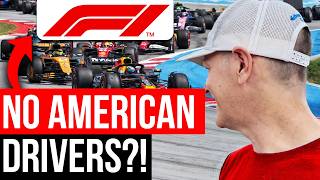
The video chronicles Formula 1’s long‑standing struggle to gain a foothold in the United States and the dramatic turnaround after Liberty Media acquired the sport in 2017. It begins by describing early, fragmented attempts in the 1970s‑80s (Watkins Glen, Dallas, a casino parking lot) and the lack of a permanent U.S. Grand Prix venue, which prevented fan loyalty. The narrative then explains how Bernie Ecclestone’s elitist, pay‑wall‑driven strategy—targeting wealthy car‑enthusiasts and refusing to engage younger or average fans—kept F1 marginal in the U.S., leading to plummeting viewership by 2016. The video introduces Liberty Media as the “hero” that bought F1 for $4.4 billion, installed Chase Carey, and rewrote the sport’s delivery model. Key tactics included a free‑to‑air ESPN broadcast deal (often commercial‑free), tearing down digital restrictions so teams could post on social media, and partnering with Netflix for the docuseries Drive to Survive, which humanized the sport and attracted a massive new audience. Liberty also “eventized” U.S. races—adding venues like Austin, Miami, Las Vegas, and Chicago, and replicating the Super Bowl playbook with celebrity appearances, prime‑time scheduling, and party atmospheres. The video backs these moves with statistics: U.S. TV viewership grew from ~540 k in 2018 to 1.1 M in 2022; the 2024 Miami race hit 3.1 M viewers; a 2025 survey shows 25 % of U.S. adults now follow F1, with 46 % of 18‑29‑year‑olds (especially women) engaged. The narrator concludes that storytelling—framing F1’s rise as a classic hero’s journey—was the core driver of the sport’s resurgence, and invites viewers to discuss the strategy in the comments.
Chapters
After getting its start in the 1950s, Formula One became one of the world's most popular sports. By the early 2000s, an estimated 500 million people a year watched each one of its seasons. But despite multiple attempts over 5 decades, the sport never really managed to penetrate the US market. We liked NASCAR and nobody gave a crap about Formula One. But fast forward to today and Formula One is seemingly everywhere. Every young person, young ladies even, are going to the races. The races are sold out and it's the new hot thing. Well, how did this all happen? That's what this video is about. So the first attempts to bring Formula One to the United States happened in the '70s and '80s. They would bounce around between different venues— Watkins Glen, Dallas, all these different places. Heck, they even tried a casino parking lot. These attempts had a kind of build it and they will come, Field of Dreams approach to everything. Surely this sport that was so popular in Europe would magically be something that Americans embraced, except they didn't. The first problem was that these efforts had no dedicated home. It was kind of like, imagine you're a Dallas Cowboys fan, except the Dallas Cowboys played in a different stadium every week and weren't associated with one city. That's no way to build a following. And besides the lack of a consistent location for a U.S. Grand Prix or similar races, Formula One also made a very intentional decision to make itself elitist and aloof. In other words, it did not want to be a sport for people that were everyman or normal people in the US. I wanted to be the sport for people that drove Lambos and owned Rolexes. So I know what you're thinking. This is a crazy decision to make. Why would you exclusively get rid of so many people who could be paying customers? Well, that was because F1 was totally under control of one guy, a man named Bernie Ecclestone, who had definitely negotiated away back in the '50s and '60s to where he had exclusive control over the media rights for Formula One. So in effect, he was the dictator and he said what went and what he didn't want was average Joes showing up with Bud Light cans at Formula One races. After trying races, they gave up for a bit in 1991, but then they came back and tried again to bring Formula One to the United States in 2005. But that turned out to be a huge fiasco. A big deal with tires caused it to where only 6 cars started the race. Fans were throwing stuff on the track like it was just horrible. In reality, all these failures were because Formula 1 just didn't make any effort whatsoever to try to work for and make something that worked for American fans. In fact, Ecclestone famously said, "I don't give a crap if young people come to watch Formula 1 races." And the reason why is, well, he didn't respect them, but also because he didn't feel like they had any money. And in reading about Formula 1, because I've been curious about it to prepare for this video, Ecclestone had a quote that said, Most of these young kids haven't got any money. I'd rather have a 70-year-old rich guy showing up to my race. Yeah, great job, Bernie. That's a real way to make your sport cool. And this old-school mindset meant the sport was like stuck in the 1950s. They didn't get social media. Bernie described it as nonsense. Their TV strategy was one that was just way behind the times, heavily based on paywalls when everybody else was making themselves more and more available to younger audiences. Formula One was stuck in the past, and American fans used to the fan-friendly confines of places like the NFL, the NBA, Major League Baseball, heck, even soccer. Those were all doing much better and outcompeting Formula One, which got little to no fanfare at all. All these mistakes meant by 2016, viewership from Formula One was plummeting. One analyst noted that 200 million fans had left the sport and weren't watching anymore over the previous 7 years. So with something as beautiful as Formula 1, but performing so poorly, it was clear we needed a hero to step in and turn things around. But before I tell you who did that, let me give you a call to action. I'd love for you to take a look and consider coming to the conference that I host each year. It's for people that are business owners and aspiring multiple business owners. It's called Holdco Conference. Uh, we'll put a link to it below. Come see us if that's the type of life you want to live. By 2018, the first year that ESPN started to carry Formula 1, The average race would get 540,000 viewers. To put that in perspective, that was 1/6 of what a typical NASCAR televised race would get on the same network. One of the best things about nature is that everybody eventually gets old and they have to step aside whether they like it or not. And the same thing happened to Ecclestone. So in 2017, our hero emerged, a company called Liberty Media. They came in and they made a play for Formula 1. Liberty Media is paying $4.4 billion for control of F1. In 2017, Bernie finally stepped aside. Liberty Media bought the entirety of Formula One for $4.4 billion, which was a hefty price for a business that was on the decline. The first thing that Liberty did was replace management. They brought in a guy named Chase Carey with the idea of, hey, we're going to make Formula One become a much more accessible and approachable and a sport for everyone rather than one just for the elites. And the Liberty guys are smart. One of their executives noted, hey, like the problem with Formula One is not that the product sucks, it's that we're not delivering it well to the customers. We need to engage them like, well, the other sports do in order to win over worldwide and especially young audiences. The first deal they did was to go to ESPN and create a deal that basically gave them Formula One broadcast rights for a while for free. And they did it in a very fan-friendly way. Like one of the things they did was put a lot of the races on with no commercials at all. Like nothing says come back and love us like a commercial-free broadcast. Suddenly viewers could come check out the sport in an approachable way without going behind a paywall or paying a paid subscription. Second thing they did was tear down digital walls. Under Eccleston, believe it or not, teams were forbidden from making social media posts. In other words, they were not allowed to promote his sport. It's just crazy. Liberty flipped the switch on all that. They started to flood all the platforms to go and speak to young people where they were viewing. YouTube, Instagram, Twitter, they were flooded with clips from Formula 1, and suddenly it wasn't this obscure thing that only some guy watched on cable. Like, it was a modern sport. Then came the masterstroke, and it's something that's been copied by a lot of sports. But in 2018, Formula 1 and Liberty Media went to Netflix and created a show called Drive to Survive. And suddenly they were going down a path of humanizing and telling the story of Formula 1 so fans would get engaged. In other words, giving them a peek behind the scenes. And millions of viewers who had never been a Formula 1 fan before suddenly had access to all these stories. and they got hooked as a result. In a recent survey they did of people who watch docuseries like Drive to Survive, 42% of people who got hooked on the show eventually became rabid fans of the sport itself. Liberty Media also doubled down on bringing the sport to the United States. Not only were they running races in Austin, but they brought them to other places. Las Vegas is an example, and I think Chicago is the second one. But anyway, I know Miami, but so they brought it to the real world. Where people could actually have the type of experiences they were having at NFL and Major League Baseball games. And Liberty ran basically the same playbook that makes the Super Bowl such an event. They brought in celebrities, they put it on TV, made it at a perfect time with great weather, brought in big sponsors, parties, made it an event. And that's what American consumers needed to really dive into the sport. And you see the beauty of their strategy here. They were not just selling races. They weren't selling cars. They weren't selling tires. They weren't selling Rolexes. They were selling a story and an experience, and they had packaged that all together in a way that would reach the types of consumers that advertisers are hungry for these days, which are young people, both men and young women. The turnaround success is shown in the numbers. Uh, in 2018, they were getting about 500,000 viewers per televised race. By 2022, that number had more than doubled to 1.1 million viewers. And even more crucially, they've built a product that appeals to young fans, especially young women. Uh, it is just incredibly difficult to reach those people now. They don't watch TV, they don't have cable, and there's no way to find them. Well, Formula 1 has figured out a way, and advertisers are lining up to pay for the privilege to talk to them. Fast Forward Today and a study in 2025 showed that 1/4 of US adults say they somewhat follow Formula 1, which is an incredible difference from where it was just a couple years ago. And the more interesting fact is 46% of people 18 to 29, especially young women, are following Formula 1. Yeah, Drive to Survive indeed. The 2024 Formula One race in Miami became the most watched televised Formula One race in history, getting 3.1 million viewers on ABC. And the crazy thing about all this is people are interested in a niche auto racing sport en masse without a single driver in the lead who's an American driver. In other words, Americans are getting heavy into a sport with like Dutch, Brazilian, Portuguese, and Spanish drivers. Just nuts. Can imagine what will happen to Formula 1 when the Lance Armstrong— remember what he did for the Tour de France? When that person comes along for Formula 1, man, this thing is just primed to explode and become, well, maybe the next nationwide sport that we all follow. For me, the huge lesson about all this is the power of storytelling. If you look at everything that humans embrace, there is a story, which is a call to action, a rise in conflict, a big moment, and then a resolution at the end. And every one of the sports that succeeds in the US gets that. The baseball season is that. The NBA season is that. And now Formula 1 under Liberty Media just figured out how to do it. They just run the same Star Wars playbook that we see in every narrative. The Odyssey, The Iliad, they all have the same hero's journey. And these guys used it and they're making billions off of it. Kudos to them. Super smart. All right. Let me know what you think about Formula 1, this story, and the strategy that Liberty Media put together. Uh, I try to read them all in the comments below. See ya. Bye.