The rise of Panda Express
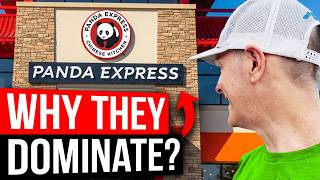
In this video Michael Girdley chronicles how Panda Express grew from a single Chinese‑food restaurant to a $6 billion U.S. fast‑food powerhouse without ever franchising. He explains the founders’ background—Andrew Cherng’s immigrant story and Peggy Cherng’s PhD in electrical engineering—and how their early decisions (owning 100 % of every location, profit‑sharing with managers, and digitizing operations) created a disciplined, data‑driven organization. The narrative highlights key strategic moves: the 1983 mall food‑court launch, the creation of the iconic orange‑chicken product, a deliberately limited menu to ensure uniformity, and the 1997 shift from mall locations to standalone drive‑throughs ahead of the mall‑decline. Girdley shows how these choices gave the Cherngs tight control over quality, speed of innovation (e.g., rapid rollout of digital ordering), and profit margins, allowing them to outpace traditional franchised chains like KFC and McDonald’s. He also notes the financial milestones (1 billion in sales by 2007, 1,000 stores, $4.4 billion in 2020, $6 billion today) and the wealth generated for the founders. The video concludes with reflections on the trade‑offs of ownership versus franchising and a brief mention of Panda Express’s untapped breakfast concept.
Chapters
Back in 2006, Chipotle went public. The stock absolutely exploded and McDonald's made billions selling their share in the company. And at that moment, every restaurant chain and investor in America was watching the playbook, which was franchise, grow fast, go public, cash out. That same year, a reporter asked the owner of this place, Andrew Cherng, if he'd ever take Panda Express public. And his answer was, "We don't need the money." Was Andrew's position the smartest thing in restaurant business or the dumbest? Well, this video will dig into a lot of that. Hold that thought. Oh, and by the way, thanks to Xero for sponsoring this video.
More on them later.
You see, the moment Andrew made that quote, Panda Express here had hit $1 billion in sales. They were growing like crazy. But instead of doing things like that McDonald's over there does, where they franchise and bring in outside investors, or where they bring in venture capital to the business, the Cherngs had decided to own the whole thing themselves. And they own 100% of every single restaurant, including this one. 18 years after that quote, the chain of Panda Express is approaching $6 billion in sales. They've passed a lot of big names in total sales. KFC, Arby's, Popeyes, they're ahead of all of them. And the Cherngs, well, they basically are billionaires several times over, and they own everything and they control everything with Panda Express. And just like Chipotle came to dominate fast casual Mexican, these guys are the only game in town, or any town for that matter, for fast food Chinese food. And it's a fascinating story. This video is the rise of Panda Express. Founder Andrew Chung arrived in America in 1966. He came from Taiwan. His father had cooked meals for Chinese Communist Party officials back in Taiwan. And the next thing would prove to be very important for the success of the company. Andrew met his wife, Pezi Tseng, and she was a PhD student who would go on to get an electrical engineering degree. In other words, Very technical and very scientific lady. So in 1973, Andrew and his father scraped together enough money from an SBA loan to open a small Chinese food restaurant called Panda Inn in California. And you would think that it would take off, but it didn't. It was actually so bad that Andrew had to stand outside with free samples to get people to come into the restaurant. But Andrew was doing something different than everybody else was. See, most Americanized Chinese food is nothing like the actual food that you get in China. In fact, the food that you get in China is actually delicious and somewhat healthy. The stuff here, uh, not so good. But what Andrew was doing was bringing a lot of the original recipes and productions from different regions of China inside of his Panda Inn restaurant. And in 1982, Peggy, his wife, quit her job at McDonnell Douglas to come in and help with the growing restaurant chain. And then something would happen that would be incredibly lucky for the pair of them. A real estate developer, a man named Dan, Dan Donahue, he approached the couple and said, hey, I love Panda Inn, I love eating there, but we would really love to have a fast food version of this inside of our mall in Glendale, California. And in 1983, the first Panda Express opened inside the food court at the mall. Most folks, if you go look at the story of Chipotle or Boston Market or any of that type of stuff on this channel, the fast food stuff, would see this as the beginning of an opportunity to create a huge franchising opportunity and cash out. But Andrew and Peggy, they had a different idea about how they were going to do stuff. I remember Peggy. She was going to be the real secret weapon to this whole story of why Panda Express is so successful. But before we get to that, let's talk about what Panda Express did with their managers. See, the beauty of franchising is it makes people feel like co-owners. They have an incentive to really outperform. But when you own the store and the people are employees, you have to do something different. And so what Panda Express did was make the managers get profit sharing from virtually day one. And this was pretty radical at the time. Back in the 1980s, fast food managers were pretty much disposable. You paid them as little as possible and they had huge turnover and little incentive to do a great job. I mean, heck, a fast food place is like a food factory, right? Well, why do you need to pay incentive? Well, it turns out Chick-fil-A, Panda Express, and others have learned the game is entirely different. Sarandar understood that if he treated the managers like partners, they would start to act like owners and run the businesses better and customers would love it and the cycle would continue and they'd be more successful. And so that's the way he acted. But remember Peggy, who had gotten the PhD in electrical engineering? She brought something else that was gonna be magical to the combination. She brought the things that she had learned building software for defense contractors and her job before she got together with Andrew. Believe it or not, back in the 1980s, most Chinese restaurants ran on pieces of paper, handwritten notes. There was no computerization, no point of sale, no nothing. But the Chengs decided to change all of that. Much like Walmart became so big not because of low prices, but because they were the first to digitize and computerize and bring mainframes to everything in retailing, the Chengs did the same thing, but for Chinese food. And suddenly you could go ask Peggy on any given day what recipe sold best at a given time in a given place. Suddenly they had more information than any of their competitors, and so they were able to make better decisions. Then they caught another lucky break. Andrew sent a guy who was a train chef, Andrew Kao, to Hawaii to open a new location there. Inspired by the local flavors and kind of citrusy island stuff that would go on in Hawaii, Andrew would invent a recipe that was kind of radical at the time. It was a chicken-based dish with an orange glaze on it, citrus-flavored, and it would become, well, perhaps the thing that propelled the entire chain, orange chicken. And to put that in perspective, today Panda Express sells 100 million pounds of orange chicken per year. Basically, they redefined an entire cuisine, which is this kind of fake Chinese cuisine that we eat that we call Chinese food here in the United States. But it's just a radical success, but it's changed an entire culture.
Before we get into that, I wanna talk about today's video sponsor, Xero. One of the biggest issues in small business isn't revenue, it's visibility. You've got money coming in, bills going out, invoices floating around, and half the time you're just checking your bank balance trying to guess if you're okay. That's where things start to break. Xero fixes that by putting everything in one place. Your invoices, your bills, your payments, and your bank feeds all flow into a single system. So instead of guessing, you can actually see what's coming in, going out, and what's left to spend. That alone changes how you run the business. You can send invoices, accept payments, schedule bills, and even automate a lot of the reconciliation behind the scenes, which cuts down a ton of manual work and errors. And instead of just looking at where you are today, Xero gives you a forward view with analytics and projections. So you can actually plan ahead instead of reacting when things get tight. If you're still juggling spreadsheets, bank portals, and separate tools, this is the upgrade that gives you real control over your cash flow. Special zero offer: get 90% off for 6 months using this link.
Terms and conditions apply. Orange chicken is 30% of the total sales at most of these locations. Another thing that the Chengs are super smart about, they don't overfill their menu. You go to a Dairy Queen, for example, and there's just so many choices, or Cheesecake Factory. Here, they keep their SKUs low. Fewer choices means it's easier to do things better, and they're okay just having fewer choices on the menu. So by 1993, based on these choices, Panda Express had grown to 100 locations, with the last one opening at the University of California, Los Angeles. And because of the things Peggy had done and the choices they had made, both on the technology side and the limited menu, suddenly you had true uniformity of taste and experience at every single location. Whereas Chinese food might taste different inside the same restaurant on a different day. At every Panda Express, the experience was almost identical, and that's something customers love. But look, if you were interested in understanding whether these Chiang couple are total badasses, what they saw next was what so many other folks missed, which was that they were built inside of malls across the US, and malls were going to die. And while other people would get this message about malls dying back in the 2000s, The Chung's figured it out in the '90s, and in 1997, they opened the first standalone Peddler Express like this one with a drive-through in California. But while in retrospect this had to be done, it was this pivot that would almost destroy the company.
Oh.
And if you're here and you're interested in a deeper dive on each and every one of these videos, I do a deep dive accompaniment document that you can download from my website, girdley.com/youtube. Each business video I do has that goes with it. Check it out. So one thing nobody talks about is how all these restaurants truly work from an ownership perspective. While Panda Express owns this restaurant, that McDonald's over there, that's owned by some local entrepreneur. Chick-fil-A, Subway, basically McDonald's, every single one of these restaurants grew through franchising. And here's the thing most people don't realize about franchises. It is government-guaranteed loans that enable entrepreneurs like whoever owns that McDonald's to borrow money cheaply from a local bank that's guaranteed by the government via the SBA. And basically build out franchise systems really quickly. But Andrew, back in the 1990s, has said he's not going to do that. And the beauty of that was it let Andrew keep control. And unlike a franchisee who actually owns that business and operates under license from McDonald's, Andrew could tell all of his folks who are his employees, like, you got to do it. You want to fire a franchisee? It's pretty hard. You want to fire the manager who you employ? It's pretty easy. So they got to do what you say. It enables you to have a greater level of control. Than you get from a franchise system. And there have been instances where franchisees actively fight the franchise system on changes they want to make. Heck, just look what's going on with Subway and the $5 footlong stuff. Like, it's a real problem. But when you control everything like the Cherngs did, well, that gives you power and control. And the other power and control they could do was go around and basically pay their employees better than average market wages. Folks that are working at this Panda Express on average are going to be getting paid better than that McDonald's over there. And in fact, you see that white truck there? When I started recording this video, the nice worker came out and just started chatting me up. He wanted to know what I was doing. And I said, "I'm outside by a highway being a loser talking about business to a camera." And so besides this customer experience standpoint, you have the other side of it, which is when Panda Express wants to move fast, they can. And as an example, when they saw digital ordering and online ordering coming, they could just go ahead and tell all their locations, "Hey, we're gonna do it." And suddenly 2,000 Panda Expresses We're doing it within a few months. And the other beautiful thing when you own everything like the Cheungs do is you're keeping all of the profits. So a restaurant like this might run at 15% to 20% net margins, whereas the franchisor from McDonald's over there might be only keeping 4% to 6% of it while the local entrepreneur is keeping the rest. And that makes the Cheungs so rich because they're the owner, operator, and controller of basically every dollar of cash flow coming through this restaurant. And so that meant all of these decisions together meant by 2007, Panda Express hit $1 billion in revenue and 1,000 restaurants. The Chung's had created a category killer. They basically were the largest Chinese food restaurant chain in America by a big margin. In the 2010s, as malls continued to die in the post-Great Recession era, the Chung's smartly started to exit malls. Today, only 2% of their locations are inside of malls. The rest, they look like this one out in the suburbs with drive-thrus. And the big reason? It goes back to the quiet hero of our story, Peggy.
Peggy.
Her data-driven approach to understanding every aspect of the business, her computerization, meant they saw the decline in malls before anybody else did, and they started moving quickly. And that meant when the pandemic came in 2020, they were more than ready to deal with it because they had already moved out into the suburbs like this. They had delivery already set up. And since 2020, their delivery business has tripled since before the pandemic happened. In 2021, they did $4.4 billion in sales. Went to $5-point-something billion in sales, and now they're at $6 billion in sales in the most recent years. They've passed all of these longer, more established chains that I talked about before. KFC, Popeyes, Arby's. They're ahead of all of them. And in a crazy outcome, in a country largely dominated by burger joints and pizza and fried chicken, you have— this chain is now the 14th largest restaurant chain in the United States. In Southern California, they have one location that does $7 million per year, a standalone like this. And they have one in an airport that does $9 million per year. That's crazy. The majority of the managers that run these stores make over $100,000 a year. The top earning manager made $277,000 last year slinging Orange Chicken. Yeah, crazy. In 2025, they plan to open 130 locations with more planned for 2026. And Andrew and Peggy, the heroes of our story, their wealth is valued at over $7 billion. The beauty is They haven't franchised, they haven't lost control, and they still own everything. Pretty incredible. In every business situation, there are always trade-offs, and the Cherngs made trade-offs that paid off for them. Other folks made different trade-offs, and that's okay. They picked a style that was going to work for them, and it worked for their market, and look, it made them rich. Kudos to them. All it took was just a little bit of patience and a lot of discipline. All right. Oh, and I promised to tell you why nobody was here. The reason is, is because Panda Express doesn't serve breakfast. Believe it or not, they do have Chinese food breakfast. It's really good. Just, I don't think Americans are ready for it yet because it tastes really different than what we eat. All right, let me know what you think about Panda Express in the comments below. I try to read them all. Catch you next time. 请注注我的评论下。










