The rise of Spirit Halloween: How a pop-up beat Amazon and Walmart
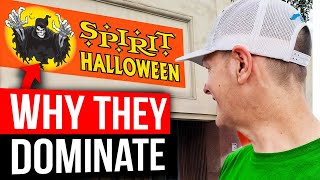
The video chronicles the evolution of Spirit Halloween from a single‑month pop‑up store launched by Joe Marver in 1983 to a $600 million, 1,500‑store national chain that now sells one‑sixth of all U.S. Halloween costumes. It explains how the seasonal, low‑overhead model allowed rapid scaling, how direct‑to‑factory sourcing gave price advantages over mom‑and‑pop competitors, and how the acquisition by Spencer Gifts provided the capital needed to expand nationwide. The narrative details Spirit’s strategic use of short‑term three‑month leases that activate vacant retail space, its focus on deep, Halloween‑only merchandising, and its experiential store design that out‑matches Party City, Walmart, Target, and Amazon. The video also outlines the company’s current operational scale, its reliance on late‑night hours and knowledgeable staff to capture procrastinators, and its e‑commerce adaptations. Finally, it flags future risks: trade tensions affecting Chinese‑sourced inventory, shifting consumer values among Millennials and Gen Z toward sustainability, reduced social gatherings post‑COVID, and a declining U.S. birth rate that could shrink the core market. The overarching lesson presented is that identifying a niche and relentlessly perfecting the associated business model can sustain dominance even against far larger competitors.
Chapters
Muahaha! Spirit Halloween, the brand new Halloween superstore with over 10,000 square feet of costumes. Muahaha! Today, Spirit Halloween operates over 1,500 stores like this one across the United States, and they sell an astounding 1 out of every 6 costumes sold in America each Halloween. And along the way to this level of greatness, they took on Party City, Walmart, Amazon, and Target, and they beat them all. This video explains how it all went down and how it happened and what we can learn about it as business owners. It all starts back in 1983 when an entrepreneur named Joe Marver, who was running a dress shop, sees a costume shop across the street selling costumes with a line outside the door. He decides to open up a costume shop, but instead of opening it up for a year-round adventure, he opens it up for just one month. So the rest of those months when he wasn't selling any costumes, he wouldn't be paying any costs. And it was the perfect time to do this. We were right on the cusp of Halloween becoming, well, perhaps the biggest holiday each year outside of Christmas in the United States. They didn't track sales of Halloween gear back in the 1980s, but they did start it in the 2000s. Just to give you a scale of how much the business of Halloween grew during that time, from 2005 to 2022, The spend on Halloween more than tripled from $3.3 billion to $10.2 billion. So Joe keeps building his business empire of these pop-up stores. He called them Spirit Halloween, and he does it to face and dominate his first enemy, other mom-and-pop pop-up Halloween stores. And the reason Joe wants to get bigger is why a lot of retailers want to get bigger. You can get better prices on supply and a bunch of other stuff gets easier too, but the supply gets much easier. And you can either do one of two things when you're a retailer. You can go buy from domestic wholesalers, people who are in the United States and act as middlemen, and they mark up the product before selling it to you. Or you can go directly to the factories themselves and buy it at a much, much lower cost. And those factories, they don't want to take small orders. Uh, if you want to get, say, socks from a factory or masks from a factory who's producing that stuff for your Halloween store, they're going to want to see you order 10,000, 15,000, 20,000 of those items. You can't just get a few. And the only way you can make it work is if you have a lot of stores selling a lot of merchandise. And when Spirit buys things directly from the factories, that means they can basically turn around and pay less for them and then sell them at a price that the mom-and-pop competitors can't match. And I know this is the case because back in the early 2000s, I opened up some Halloween stores and I found exactly this. Couldn't compete with Spirit on price just because they were buying from the factory and I was buying from some guy with a warehouse in Kansas. When his spirit got bigger, they got brand and credibility and data and things that the little guys who were competing with them, they just couldn't match. And the model worked great. Joe scaled the business to over 60 stores by the late 1990s. But there was a problem. Halloween stores are an intensely seasonal business. It means your revenue only comes in one month out of the year. But leading up to that, you got to front all the cash to open up those stores. You got to build out the spaces. You got to get the equipment. You got to get all of the merchandise. You got to pay all the people. And then hopefully you get paid back and you see what happens here. As you scale, it takes up more and more of your capital to run the business each year. And by the late '90s, Joe had hit his limit. So in stepped Spencer Gifts, a mall retailer of lava lamps and gag gifts, and they bought the business from Joe and gave him a nice payday. With Spencer's big balance sheet, meaning they had a lot of money and capital they could put to work, the business could really scale. And Spencer's over the early 2000s started to put that capital to work and built out a machine that could eventually be as big as it is today. Today, for example, Spirit has a team of 14 people whose sole job is to reach out to potential landlords and secure spaces for the next year. And landlords know if they have a space in a town with at least 35,000 people and up to 50,000 square feet in size, they can call Spirit, who will do a temporary lease with them. We don't see an abandoned Kmart. We see a Spirit. A Spirit Halloween. Spirit signs these short-term 3-month leases to basically give the landlords activation of the space and some cash flow. And along the way, it also gives them optionality. If, say, during the year they sign a new lease, well, they can kick out Spirit and terminate the lease and a full-time tenant can move in instead. And it turns into a win-win for both. Spirit gets to sell out of that space for short-term. And the landlord gets some money. Then in the 2000s, the next serious threat to Spirit came along, and that serious threat was Party City. And Party City wanted to own every holiday, not just Halloween. And they operated year-round stores that would sell everything from balloons to Christmas decorations and everything in between. Party City at the time was on their way to eventually opening up 700 stores, and they also opened up their own clone of Spirit called Halloween City. Here was a competitor that, well, Spirit basically couldn't use their size to beat. Party City would hire tens of thousands of seasonal staff for Halloween, and in one year they did 25% of their annual revenue for the entire chain for Halloween alone. That was $650 million. A lot of money. So how could Spirit face this threat? Well, they decided to just lean into their model and stay focused. Spirit, number one, leaned into what they were really good at: temporary 6 to 8 week leases. And number 2, get really, really good at merchandising for Halloween. Party City had to keep their stores ready for anniversaries and birthday parties year round, so it meant they could only allocate a part of their store to Halloween. And that meant that Spirit, well, they could have an entire store dedicated to Halloween and in theory provide a much better customer experience. And eventually it all worked. Spirit just outlasted Party City. The chain eventually got overextended, racked up too much debt, got bankrupted by private equity, and today it's only a handful of stores across the US. By now, in the late 2000s, Spirit has beat off the mom-and-pop stores and it beat Party City. But now an even more fearsome competitor entered the ring, and that was Walmart and Target, the superstore discounters. Walmart and Target had been, well, basically doubling and tripling the size of their stores from the '90s on. If there was a category that was owned by a category killer like toys or electronics or Halloween, they wanted to own that too. And bigger stores meant they could dedicate several aisles to seasonal products as they came up. And Halloween was one of those. And elsewhere on this channel, I've talked about what killed Party City, Circuit City, and a bunch of different specialty retailers. Well, would Walmart and Target kill Spirit Halloween? It turned out that Spirit understood something about Halloween that Walmart and Target didn't get. You see, when people practice Halloween and they buy things, they want to do two things. One is they want to wear a different costume than they did the year before. And number two, they want to be unique from their neighbors. It's about sending a message when you go out into a social scene or a costume party. So to compete against Walmart and Target, Spirit built an experience that those guys couldn't match. If Walmart and Target had maybe one or two aisles of stuff, uh, around Halloween, Spirit would have 30 of them, creating a level of selection and depth of what you could look at that the other guys just couldn't match. And if you bought from Walmart or Target, you might end up showing up in the costume that somebody else was wearing, and that's not a good thing. So Spirit made their stores bigger. You walk into one today and you'll see wall-to-wall variations of everything—dozens of different types of police officer costumes, sexy Joker, everything in between. It's all there. Heck, some of their larger stores even have 25 different types of fake blood. Like, you ain't getting that at Walmart. And I went into a Spirit earlier today, and they've copied one of the things out of a playbook from Sears that helped them get so big. You can see that video here on this channel, which is a lot of their designs are custom and available only at Spirit. They're Spirit branded. You can only get them there. Again, another way to compete with Walmart and Target. And they'll stock 4,000 to 5,000 costumes alone. And that's on top of all the decor, animatronics, and other stuff that just, well, is everywhere inside of a Spirit store. You don't even have time to scream. And the strategy worked. In the early 2010s, they broke the magical 1,000-store barrier, and they had held off now Walmart and Target. And then a new, even more formidable competitor arose. Amazon and the internet. And the fear of Amazon was real. I would have it too. I remember being in the Halloween business and somebody came into one of our stores and then I hear the guy on the phone leaving the store after having bought nothing and calling his wife and saying, "Well, I saw the costume I wanted, but I also found it on Amazon for $2 cheaper. It'll be here in a couple of days, honey. Look at me, I'm a great husband." And I knew Amazon was going to be a fierce and scary competitor for Halloween stores. So before I tell you how they fended off Amazon and e-commerce, Let me give you a plug for this channel. If you enjoy this kind of stuff around business breakdowns, give me a like and a follow, please. I'm trying to get to 1 million subscribers on YouTube and your help would be greatly appreciated. To fight off Amazon, Spirit leaned into the experience factor at their stores. They hired Halloween nerds who wanted to do nothing else than to nerd out with you about the types of blood and masks out there. And then they made the interior cool of like neat displays that make it an experience to come in. And lastly, they let you try on the costumes. That's a big problem with Amazon. What are you gonna do if the thing doesn't fit? Well, if you try it on at a Spirit, you don't have to worry about that. Each year they would change up the store at Spirit to make it more of an experience around a theme. In 2025, the theme is called CarnEvil, which basically had a Wheel of Fortune, all this kind of stuff. I didn't see any of that when I went in, but I did see a bunch of installations that made it feel like it was not just shopping for costumes, it was having an experience inside the Spirit store. And finally, Spirit went after e-commerce by winning over the procrastinators. Most of us don't think about a costume until we need one. Well, Spirit in many locations would stay open super late, even on the day up to Halloween, making sales of people who, well, just hadn't thought of it yet. And so Spirit, the market leader in this category of pop-up Halloween stores, has kept their market share constant even in the face of folks like Amazon. And while today of the $12 billion a year Halloween market, about a third is done by e-commerce providers, A third is done by specialty stores like Spirit. But in the end, Spirit has picked the right business to be in. Halloween is a special one that works incredibly well for their model. People want to touch and feel the products themselves. They want to have an experience when they buy them, and they want to not dress like the next guy over, which means it created a perfect opportunity for Spirit to do well. And they've smartly stayed true to this focused niche, just doing what they do really well, uh, rather than playing the competitors' games They've decided to play the game on their own terms, and that's created a niche that, man, they totally dominate. And if you look at the pattern of companies on this channel that eventually get into trouble, just at the moment it seems like the good times will never end, that's when they do. And as I look towards the future of what's going on with Spirit, I'm worried. Number one, there's a trade war going on, and deglobalization isn't helpful, especially when a lot of these costumes are coming from Chinese factories. Number two, millennial parents and Gen Z parents are different than previous generations of parents. They're environmentally conscious and they're not that interested in buying one-time use throwaway stuff like previous generations did. And lastly, people aren't going out as much. Parties and all that kind of stuff, they haven't recovered post-COVID. And I've talked about on this channel, over the average American is spending 70 minutes more per day in their home than they did pre-pandemic. That all hurts if your whole business, like Spirit, is based on people dressing up and going out to costume parties. But the scariest thing for Spirit is Halloween is a young person's game and people aren't having kids like they once were. The birth rate in the United States is down over 15% since 2007, and fewer kids means fewer costumes and fewer costume parties. In the end, we'll have to see what happens. It'll be fun to watch. And for me, the lesson of this whole story is about identifying a niche and staying true to that niche. And if you look at the genius of what Spirit has done is just stick to their knitting and do their model just better and better each individual year. And I just went into a Spirit store, as I talked about this morning, and I compare that to what a Spirit store looked like 10 to 15 years ago when I was in that business, and they are light years difference. These guys are clearly sticking in their niche and clearly getting really, really good at it, not resting on their laurels. So kudos to them for the success. They're over a $600 million business now. And man, they deserve every ounce of that success. Just really well executed and really smart, the people behind Spirit. Kudos to you guys. All right, that's the end of this video. Let me know what you think in the comments below. Why do you think Spirit succeeds? What do you think of my analysis? And how do you feel about my beard? All right, we'll catch you later. Write in the comments below, uh, I try to read them all. Bye.










