The Secret to Starting a Holding Company (with Michael Girdley)
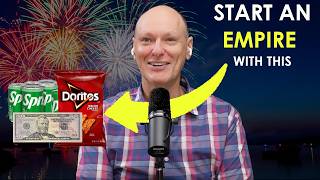
Michael Girdley left running his family's fireworks retail chain to start a holding company that buys and builds businesses. He keeps 3-6 months of cash on hand, avoids big early funding (the "bag of Doritos" approach), and transitioned the fireworks business to external CEOs so he could step back from day-to-day work.
Chapters
they don't want to ship explosives. Well, I'm just going to start allocating some of my time to go start a second business. And, and that's what I did. And then the Holdco eventually grew when I said I got addicted to it. I started doing 3 and 4 and, and incubating and creating stuff from there. But it all came from this kind of core of dissatisfaction that day to day I wasn't that happy with one running one business and being an operator and being down deep in the weeds. The bigger of a check I write into something, the higher of a commitment I have, the more money I put into it to start it, the typically the worse it turns out. If I can start the other inspector where I'm We're like, okay, we're going to start this with like a bag of Doritos and like some queso and some chips and like a 6-pack of Sprite and $50. Like, that's what we're going to do. That's the stuff that always seems to turn into a home run where we just start super frugally from the beginning.
You own a series of businesses. You own a B2B software conglomerate or roll-up business. You own a chain of fireworks stores. So you've got a lot going on. What led you from your early career life to becoming a holdco operator?
I think like a lot of things where you want to end up in life or where you do end up in life comes from pain and dissatisfaction with what's going on. And, you know, my first entrepreneurial foray was a successful one, was getting into the family business. And I was the CEO of that business for over a decade. And I learned a lot about the fireworks business. I learned about how to do import. I learned about how export works. I learned about sales, marketing, finance, accounting. So it's a great, a great lecture because that's like a super hard business, right? We only make money twice a year. of a substantial amount. And, you know, at the same time, as I went through a decade there, um, I learned a lot about what was going to truly give me joy. And I saw in myself this real, um, desire to be more creative in business. I loved having insights. I loved hard problems, but I hated routine and I hated optimizations. Like, those things were the kind of— this understanding of how my personality was. And so, you know, I started to branch out. I, I went and joined a coworking space here in San Antonio. I started to hang out with other entrepreneurs. I joined CEO peer group. I started to read a lot. I started to get exposed to stuff like Warren Buffett's writings, which I know you love too. And I started to feel like there was more out there that I could start to deploy my, you know, really passions towards. And that's creating businesses, helping them, supporting great leaders that run them. And so I just started doing it. Like, I just said, okay, well, I'm just going to start allocating some of my time to go start a second business. And, and that's what I did. And then the holdco eventually grew when I said I got addicted to it. I started doing 3 and 4 and incubating and creating stuff from there. But it all came from the this kind of core of dissatisfaction that day to day I wasn't that happy with one, running one business and being an operator and being down deep in the weeds.
How did you go from, I'm the CEO, I'm running this business every single day, you know, maybe it's taking you 8 to 10 hours a day to deal with people, pay payroll, manage the accountants, you know, make sure you have enough supplies and enough fireworks, I assume, to I am now carving out enough time for myself in order to go and be able to explore other businesses or other types of investment.
You can make yourself super efficient. So I was just started to do over a period of a couple of years, getting the business ready for me to step out, step away from things. So everything I was doing, I was trying to think about, okay, well, this is taking me a lot of time right now. How can I put this on somebody else's plate or automate this or hire somebody else to do it? So I started to do that kind of stuff. And then secondarily, I just started to coach the other folks in the company to understand like, hey, like, I'm going to count on you to take on more stuff because I'm going to be making a transition here over time to when I'm going to bring in somebody to run the company. And, um, you know, those two things just, I just started to do those. It, it can't happen overnight, right? And I think it's where a lot of people get confused. Like the business has to be ready for you to move out of it and for somebody else to come in and, and take it over so you can start to do a different job, which is, you know, being a holdco guy.
The fireworks business is, um, pretty seasonal. What do you do like throughout the year? Like, is it, is it a 12-month, like I always wonder if there's, you know, if the business is making most of their money in a couple months, are you working in month 3 and 4 or are you, do Do you like take off month 3, 4, 5, and then you kind of get back into it?
Uh, yeah.
In preparation for the season.
Uh, fireworks business, by the way, you, you wanna be popular at like a business nerd conference, like tell somebody you run a fireworks business cuz everybody loves talking about it. Um, and, uh, so the best way to think about that business is it's basically the inverse of like a normal business, right? So our company, uh, is opening 115-odd locations over the next week and a half. The staff's doing a great job with that and, you know, we're, we're operating it really well, I think. And so they'll be busy. Like, we have crews on staff on Christmas Day, like when everybody else is off, that's what's going on. And then after the season happens, January, February, there's a lot of work that happens just from a like, okay, how do we deal with the aftermath of selling all these fires? Could do the accounting, the reconciliation, start to get ready for next year as well, right? How do we lease new spots? How do we start thinking our strategy for the season ahead? Because we immediately start to switch towards thinking about the 4th of July. And then our kind of Christmas break will happen right around kind of March, April. That's when everybody will take vacations on our team. We'll go to a 4-day work week, all that kind of stuff. And then the cycle happens again where we get super busy. But there is enough work once a company gets to a certain size to where you're busy year round. And so we have about 35 employees who are working year round, and then that scales way up for the seasons when we sell fireworks.
And is there an online component to the business or is it all over the counter?
For us, we're just all in, in-person retail. Yeah, we, we've looked at kind of what some folks are doing to ship fireworks remotely. There's a handful of sites that do it. The challenge with fireworks is the shipping costs and the shipping mode. So FedEx, UPS, kind of the standard kind of delivery and LPL type situations, they don't take fireworks. USPS won't take them. They— I know you're shocked, but they don't want to ship explosives because they're actually legally explosives. They don't want to ship them in their trucks. So, so basically, if you want to order fireworks over the internet, you have to buy enough and early enough that they can come on an LTL. So like a partial truckload, like by the pallet. So just there's the number of people that want to think ahead and want to spend $2,000 to $3,000 on fireworks for a season. I love those people, but there's just not that many of them. So we haven't gone down that path. We focused really on retail. And best we can tell, like, you know, we have close to 40 stores now.
A number—
a lot of those online wholesalers, like, one of our stores will do more than a lot of them do. So it's much more fun to just focus on what's easier and what works, and that's the mass market.
Okay, so you, so you run the fire— the fireworks business for 10 years, and then at some point, at that point, did you hire a CEO? Is there a current CEO that runs the business day to day?
As of up until over the summer, we had a CEO running the business. My brother and I, when that CEO left, are co-running it right now as co-CEOs. So we're knee-deep in the business. But over the past 10 years, we graduated to where for a while my brother was a CEO and then we've had a full-on outsider third-party CEO. So he stayed with us for 5 years or so before leaving in August. And So, you know, if it was me today and I was in that situation where I was running Alamo and I wanted to go start a second business, I would hire, you know, a full-on CEO because I knew how to coach them and knew how to kind of be an owner rather than be an owner-operator at that point. But what I did was kind of, kind of gingerly step into it, and I ended up CEOing the first company that I incubated out of there. And I started out with partners. It was an educational company. We did a coding boot camp here in San Antonio that lasted for about 10 years before we shut it down.
So at some point you realize you want to start new businesses or buy new businesses, and it sounds like you raised a little bit of money to start this coding boot camp, and, and that kind of spun out of Alamo. Is that, is that what happened?
Except for the raising money part, yes. So we started it relatively cheaply. We started it for like 6 figures. So that was one where, um, you know, I don't know if you've seen this in your investing, but for my investing in stuff and creating stuff, there's an inverse relationship between how likely something is to be a success and how, like, cheaply I start it. The more— the bigger of a check I write into something, the higher of a commitment I have, the more money I put into it to start it, the typically the worse it turns out. If I can start the other spectrum where I'm like, okay, we're gonna start this with like a bag of Doritos and like some queso and some chips and like a 6-pack of Sprite and $50, like, that's what we're gonna do it. That's the stuff that always seems to turn into a home run where we just start super frugally from the beginning. So that Our first incubation, basically what we did was put some cash up. It was like less than 6 figures, which is a big chunk of change, but not crazy money. And then that business, when we started it, was actually beautiful because it had a negative cash conversion cycle. So people would pay ahead of time for the bootcamp, so we'd be profitable before we even started a class. That didn't end up finishing that way because we ended up getting dependent on government funding, which government funding loves to pay you late, which makes it hard to, to do that kind of stuff. But early on when it was private pay, that totally worked. But we started it all off of customer deposits and our personal balance.
Why do you— have you spent some time thinking a little bit about why the companies with low investment, high focus succeed as opposed to large investments? Um, yeah, curious what your takeaways are there.
My suspicion is that it causes the company to start off in a really much more healthy and sustainable way. Than when you feel like you have a bunch of money to start with. My second suspicion is I understand how statistics work and I have a pretty small sample size, so I'm still waiting to see if it's conclusive or not. But yeah, that's, that's my thought there is, you know, if it sets the tone the right way from the beginning, it makes you really work on your business model from the beginning. It makes you start in a much healthier place and that helps it finish in a healthier in a much healthier place than if you have all the money in the world on day one, which I guess is the best commercial I've ever given against VC right there.
I come from a VC kind of background, you know. I raised a little bit of VC for my first company. I was a VC investor for a little while. Not, not really my— not, not so much my jam, you know, even though some of them turned into unicorns and like the fund made money. It was not, not as fun for me. Um, the, uh, The learning that you just shared is actually one that we've also picked up on, but maybe in a slightly different way in that what we've noticed is if you have a lot of money in the bank account in a business, the activities and investments will increase to use that money basically.
Yep.
And if you have a lot less money in the bank account, then people will be a lot more efficient and the business will be a lot more profitable. And it doesn't necessarily mean that the business will grow slower. Sometimes the business will grow at the same speed or even faster. So there's not a direct correlation between more money in the bank account and growing faster, but there is a direct correlation between more money in the bank account and just spending more. So we try to keep our bank accounts, our operating accounts very lean.
Yeah, I think it's super smart. And it's, that's one of the things I, I set up with my companies now is we'll set like a target working capital. Budget in the company. And it's amazing how everybody seems to know how much money each company has in the, in, in the bank account, even though they're like in sales, like they all seem to figure it out. It's pretty crazy. But we'll set like a target working capital amount and then just like distribute back up to the owners whatever the excess of that amount is. And I think that's the right healthy thing because I've also seen the other end of that spectrum where if a company is financially distressed or has too little working capital, people start to make panicky decisions and start to freak out, and they can increase turnover and all that kind of stuff. So you want it just like the Goldilocks zone of not too much and not too little.
I get asked this question a lot by owners whose businesses are substantially profitable. You know, maybe they're generating $1 million or $3 million of profit per year. How much money should I keep in the bank account? And you just talked a little bit about that working capital dynamic. How would you answer that question.
Yeah, and we did a whole— for our CEO peer group, we call it Scale Path— we did a whole worksheet on this and a playbook on it. But basically the methodology we came down with was picking an appropriate margin of safety for the balance sheet and getting that out of the company accounts and then putting it in the owner's accounts. Because I think it's really tempting to have all of the capital available to you as an owner-operator of a business sitting in the company bank accounts because you know you're going to be there for the company if it needs it. But As you talked about, that has a problem, right? People tend to start spending more just because they see the bank account being so flush. So, you know, we came up with a formula as part of the Scale Path work where we would basically look at the annual budget, understand kind of what the worst case was in terms of the cash demand for the business. And then we basically just said, okay, well, let's pick a margin of safety and we're going to double that, right? So one of the businesses that I have now, we were talking this morning We have 3 months of cash on hand for operations, assuming zero revenue, and our goal is to get up to 6 months, and that'll be our stabilized kind of working capital. And then above that, we'll just distribute every month as cash builds up. So basically, that's just taking what our prediction is for the possible worst case in terms of cash, doubling it, and then putting the rest in the owners' bank accounts. And then it's on the owners then to not go spend it on Ferraris and Lambos, which pretty tempting, but don't do it.
Yeah, be there to kind of back up your company. So 3 months of operating expenses, assuming no more revenue comes in, and then maybe double that for padding. That's kind of the loose framework.
For that business, we did a model, right, of what's the worst. And I would say that 3 months should be like whatever you think your worst case is of the amount of capital, you know, at the lowest point you would require during the year. And then double it, and then you should feel like you're at a pretty good place. That was— that's our formula.
What opened your eyes to investing in or buying businesses? Because it sounds like at some point you went from operating to founding the boot camp, and then now you both start businesses and you invest in or you even buy businesses. Can you tell me a little bit about that transition?
Yeah, and I had a VC, uh, experience through that. There's VC funds I'm still working on that we raised 10 years ago. So, uh, if you do decide you want to raise a VC fund, my advice for you is just make sure you understand it's not like it's 5 years and done or 3 years and done. Like, you're going to still be working on at least your winners for a decade plus. And seed now, I think you've seen the numbers, yeah, but like the time from seed to like massive outcome is like 12 years or something ridiculous. Like, and guess there's some guy who's answering LP calls for some investment he made in 2012 that's going to return his fund 3 times and like he's going to be doing that until 2024. Guess who that guy is? He's me. So it totally happens. So yeah, I had a, I had a, I had a stint in VC there. And I think, you know, I think you hint on what I see as one of my strengths in life and also what I see as one of my biggest business weaknesses. Right. Which is I think the strongest business people are able to stay in their lane focus on, hone that thing, keep grinding it out, be really good at it for a large number of years, right? And ride that wave to the end. Right. And I think on the other end of the spectrum, I'm just a really curious person. Like, I'm excited by new ideas. I'm excited by working with interesting people on interesting things that excite me. And so that has caused me to, like, gravitate to things that I find interesting and kind of the Elon Musk idea of just like like, take work— if when given a choice that you can't make a decision, choose the most entertaining one. Like, I've chosen the most entertaining one a lot and followed my curiosity and explored it. And I think that ends up being a weakness, right? If I had to look back on my career and been able to just pick one thing and just go with it, right? Like, and go all in on that thing, or like just do that same thing forever and that same methodology and, and really dig deep in it, I think there's all— I could see the benefits of doing On the other end of the spectrum, I think I'd have been miserable doing that. And I was running one company for, for a decade. But in the end, my career kind of reflects who I am as a person.










