What can Krampus teach us about business?
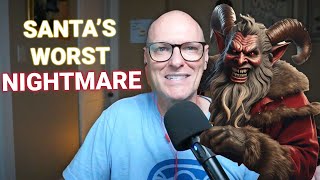
Michael Girdley traces Krampus's comeback in America, from San Antonio's first parade to a Texas homeowner's 6.5-foot animatronic, and argues the myth teaches businesses a lesson: consumers want brutal honesty over Santa's manufactured charm. Krampus is what you see. Santa is a brand.
Chapters
Some local citizens here in San Antonio were inspired by something they saw on the internet, and they went and organized and announced the city's first Krampus parade. You can imagine what happened. All hell broke loose. Well, kind of. You see, when they first announced it, everybody went crazy. The local folks were very excited to go. But on the other hand, you had some ministers who came out and said that they thought that the Krampus parade, well, it would open up a demonic portal to hell. So what happened? Why are folks so crazy about Krampus? And what can it teach us about business and the United States? Hi, my name is Michael Girdley. I have been a CEO for 20+ years. I've incubated over a dozen companies, employed hundreds of people, and I love talking about business in videos like this. You see, Krampus is a mythical creature. You can basically think of him as like a bizarro Santa Claus. In fact, he kind of hung out with Santa Claus early on in his myth. You see, some ancient Germans dating back hundreds of years ago, these Germans invented the concept and they named him Krampus after the word krampen. And krampen in ancient German, and I think current German too, it means claw. And Krampus, he has some claws among some other things you don't really want to touch. And Krampus been around for hundreds of years. I mean, these Germans, they decided that his job was to accompany Santa Claus. While Santa gave out toys to good kids in a red and white robe, Krampus, he was in horns and claws, kind of ugly, kind of scary. And his job, he would take branches and sticks and he would beat the bad kids. Good kids, gifts. Bad kids, sticks from Krampus. Scary. Look, I know how this sounds, but look, those old days, they were kind of metal. Eventually these Germans died out and so did the tradition over time. In America, well, it was a kinder, gentler place in the 1900s, so Americans by and large forgot the idea of Krampus until kind of recently. Saint Nick, AKA Santa Claus, he was our guy. And we've seen Saint Nick over that time become perhaps the most popular non-religious mythical character in the US. Parents would tell their kids about Santa Claus, promise them about all this kind of mythology of coming down your, your chimney. And, uh, it was quite a, quite a big deal. But look, a lot of this, because it became this big mythology and such a big part of our society, is because of US businesses. Where money can be made, America always finds a way. That's capitalism 101. And American marketers eventually saw Santa as an indication of holiday cheer. And if they want their products consumed at the holidays, what better way to get people to drink Coke and Pepsi than to make it a Christmas tradition? And while it's an urban myth that Coca-Cola created Santa, he's been around for a lot longer than that. What's not false is they were amongst the first to use him to sell consumer stuff. And since Pepsi and Coke and others went hard on Santa and it worked, more marketers piled in to do the same. And look, it's America. Again, you do something cool, it works, somebody's gonna copy you. And eventually, over the past 50 years, it got over the top beyond the idea of mall Santas and Chips Ahoy and Santa collars. Like, like, it went further, so much so that states like Ohio eventually passed laws because they felt forced to ban the use of Santa on alcoholic beverage packaging. I mean, look, if you're going to get lit on Christmas Eve, Saint Nick can help, and what better way to do that than buy a bottle of bourbon with Saint Nick on the front? Like, it's just crazy, uh, but that's America for you. Like, if there's something legal and somebody can do it to make a buck, they tend to do it. But coming in the 2000s, something happened, and let's look here to explain it at Jennifer Stakes, who lives outside of Austin, Texas, in a town called Kyle. She exemplifies how Krampus has made a surprise comeback. You see, Jennifer has freaked out her neighbors. She decorated her house with a 6.5-foot-tall animatronic menacing horned demon, and that guy, he's Krampus. But her neighbors would walk by and they just didn't know how to handle it. Some laughed, some were curious, but when you see something like this, can you blame them for being confused? People are decorating their houses for Christmas with Krampus instead of Saint Nick and having Krampus parades that frankly put Halloween to shame. I mean, these things are scary and freaky. So coming back to the San Antonio citizens who organized their first Krampus parade, given this is a very conservative religious community, there was outcry protest. One set of evangelicals publicly stated concern that such a parade would open this portal to hell. I mean, let's just reflect on like, seriously, that's what, that's what it is? I mean, it's just cool. Uh, look, the result, to come all the way to full circle, hell did not break loose, demons did not come out, I guess depending upon your definition of demon, but we did not have a demonic portal open and people just had a good time and then went home. Even though there were protesters there, it was kind of hilarious. However, it didn't end there. You know, Krampus is also under attack as an indication that the United States is losing its base culture and foundation. My buddy online, Molson Hart, he articulated his disappointment in all this. His view is that the Grinch and Krampus are actually anti-child propaganda and part of the reason why birth rates are declining across the developed world. Look, I'm not so sure of this. Birth rates are declining fundamentally because having kids right now is a bad value proposition. It's super expensive, it's a lot of work, and it's not as much fun as being a party animal living in a big city. And the story of Krampus, I think, is totally simpler than that. Santa represents what most people are rebelling against right now. You see, Santa at his core feels like a manufactured and also pretty confusing character. I mean, flying around in a sleigh, giving out toys, sometimes drinking and eating your cookies, sometimes eating alcohol, sometimes not. I mean, it's just kind of a mythology. You're like, that makes no sense whatsoever. Why would he do all that stuff? And then of course, like, it gets even more confusing. You have all kinds of Santas. You have mall Santas, different ones in the media. You have those ones in like the snow globe cartoons. You have ones in advertisements. And you also have parents feeling bad for lying to their kids about the myth. And in some cases, feeling Santa sets a bad precedent for young Christians because, well, do you want to teach them to lie about something? Hey, we got you all these gifts, uh, we told you they're from Santa. Just kidding. But look, why is all this happening now? So Krampus, if we look at the timeline, he made a return in the 2000s. And what else also happened in the early 2000s? Well, the internet and social media, and people were bombarded by inauthentic and fake. And remember, Santa is a myth. He is quintessential inauthentic and fake. And when a society craves authenticity, Santa is a very tough sell. On the other hand, Krampus, kind of scary looking, not somebody you're going to invite over for pizza and watch the ball game with you. And his job is to look scary and beat the bad kids. And objectively, He sucks. Like, there's no way— no way you're anything but freaked out if you see him in a dark alley. But Krampus, he's actually authentic as hell. And you know what you're getting with him. What you see is what you get. You're a bad kid, you get beat. Thank you very much. And look, I think that this ties to the lesson of Krampus for all of us and how we speak to other people, how we market our products, and how we do business with them. People are hungry for authenticity. They want to feel the real. They want to be a real person that they can trust. They want you to be that person they can trust. And look, if you're transparent with them, if you're open with them about what's going on, your business will thrive. Even if your competition is, well, a bad mall Santa like this guy.










