What happened to Theranos? The $9B lie everyone believed
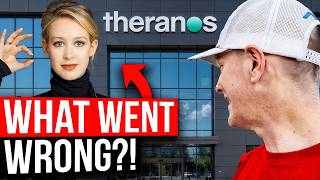
In this documentary‑style video, Michael Girdley chronicles the full arc of Theranos, from its 2003 founding by 19‑year‑old Stanford dropout Elizabeth Holmes to its spectacular collapse and criminal convictions. He outlines Holmes’s vision of a single‑drop blood test, the massive fundraising that attracted high‑profile board members (George Shultz, Henry Kissinger, Bill Frist) and corporate partners (Walgreens, Safeway), and the secretive, non‑peer‑reviewed technology centered on the Edison device that could not deliver on its promises. Girdley details the systematic deception—fabricated validation reports, forged Pfizer logo, fake labs for Joe Biden’s visit, and reliance on large Siemens machines while claiming the Edison performed the tests. Whistleblower Tyler Schultz’s internal concerns, John Carreyrou’s Wall Street Journal exposé, and subsequent regulatory actions (CMS revoking the lab license, SEC securities‑fraud settlement) are recounted. The video then follows the legal fallout: criminal trials, convictions, and sentences for Holmes and Sunny Balwani, the financial losses exceeding $945 million for investors, and the impact on roughly 945,000 patients. Girdley concludes with lessons for entrepreneurs about corporate culture, integrity, and the dangers of “fake‑it‑till‑you‑make‑it” in health‑care. A brief sponsor segment for Zocdoc is included.
Chapters
In 2008, a scientist at Pfizer evaluated Theranos' blood analysis technology and had one conclusion: stay away. Two years later, the founder of that startup would take a report that Pfizer never wrote and slap Pfizer's logo on it and send it to Walgreens, basically titled a glowing report of Theranos' ability. Executives at Walgreens didn't call to check and see if this report was real or forged. They wrote a $140 million check instead. Theranos' founder was Elizabeth Holmes. She was She was 26 years old, a female founder, and she was building an entire $9 billion empire on lies. This story has been told a lot. I've been asked to do it. And the reason is, I think, because people smell something interesting about the Theranos story. It's more than just a case of somebody lying and scheming. There's a lot more people at fault, a lot more things that went wrong. Before you guess what those are and remember them for later in the video, let me tell you about the title of it. This is The Rise and Fall of Theranos. And if you're interested in even a deeper dive beyond this video, I take every one of these videos and I put it into a longer document that accompanies it. You can download it for free on my website, girdley.com/youtube.
And oh, by the way, thanks to Zocdoc for sponsoring this video.
More on them later. Back in 2003, 19-year-old Elizabeth Holmes dropped out of Stanford. She used the remainder of her education fund to start a startup, and she called it Real-Time Cures. She pitched it to her Stanford professor, a lady named Phyllis Gardner. It's the idea of a small patch that could basically diagnose and cure people simultaneously. The professor told her it's physically impossible. Several other medical experts told her the same thing, but Holmes's advisor, a man named Channing Robertson, he believed in her, basically told her it was possible. But this man, he wasn't a medical professional, he was an engineering professor. That kind of stuff would come up often in the story, stay tuned. She renamed the company Theranos. It was a mashup of therapy and diagnosis. She thought people would be scared of the word cure, so she switched to diagnosis. A fun fact about all this: Elizabeth Holmes's dad was named Christian Holmes IV. You know where he worked? Enron. He was a vice president there and party to one of the greatest corporate frauds in history. I guess, uh, the apples don't fall far from the tree. Historically, doing blood samples and tests required these big huge machines. You draw multiple vials of blood and they get shipped off to a lab somewhere. These were highly calibrated large machines. Holmes's mission and vision was to take all of that and replace it with a single pinprick, a couple drops of blood, and a small to run at all. Blood testing is quietly a huge industry dominated by two folks: LabCorp and Quest. They do $75 billion a year testing people's blood. There's a problem when you have those big machines and stuff getting sent off to labs— means people don't follow up. Nearly a third of people who get their blood drawn never even read the results. So if anybody could fix this kind of backwards industry, there was a great opportunity. And it turned out Holmes was a master storyteller. By 2004, she'd raised a half a million dollars of venture capital from famous people like Tim Draper. And by By 2010, she would have raised over $92 million pursuing her dream. Theranos did something pretty different compared to a lot of folks breaking ground technologically and in the research fields. They never published a single peer-reviewed study. In other words, they were keeping everything they were working on a total secret. To be fair, this is kind of the way Silicon Valley works. You work behind closed doors, then you launch your thing, and then, uh, well, your technological advantage doesn't get eroded away by telling people about it beforehand. So Theranos wasn't running that crazy of a playbook. That's a playbook for tech, not for biotech and medicine where these guys were. And as they started to work on the project and into 2006, people inside started to see that there were problems, that they were just running into the laws of physics. What they were trying to do was just not going to work with just small drops of blood. In fact, the CFO at the time, 2006, saw that there were problems and didn't enjoy being party to kind of misleading people. He brought it to Elizabeth Holmes's attention, and, uh, well, she fired the guy. This is the way these types of deceptions tend to work. You start with little small deceptions and faking yourself out and faking other people out. Eventually you're doing fake product reviews like the thing the CFO noticed, and eventually, well, you're just lying wholesale. It builds on itself. That's happened with fraudster after fraudster in history. Everybody from Elizabeth Holmes to the original Mr. Ponzi himself to Bernie Madoff all running the same game. In 2011, Holmes got a meeting with George Shultz. That name sounds familiar. It's because he'd been a famous bureaucrat in the cabinet for basically under Ronald Reagan. He was one of the most powerful and famous people in Washington. Holmes talked him into joining the board, which he later on called one of the most powerful and illustrious in startup world. Henry Kissinger, James Mattis, Bill Frist, names go on and on. Former Secretary of State, people who were cabinet members, big names were joining the Theranos board. One of those people, Bill Frist, was trained in anything close to medicine or even diagnosis. He's a doctor. There's a problem. He didn't know anything about laboratory science, which is a radically different part of the medical community. Most boards are set up in a way that they're supposed to know something about the company's business and help it be better by providing guidance and oversight in the boardroom. In this case, this board was set up to do one thing: help Elizabeth get credibility out in the marketplace. And yeah, if Henry Kissinger's name shows up on a pitch deck, you're probably going to pay attention. Problem is, Henry Kissinger doesn't know jack squat about medicine. So when Elizabeth Holmes went to people like General Mattis and showed presentations saying that, uh, what she was doing had been validated by the World Health Organization and the FDA. He didn't know what to even ask, much less to decide if that was true or not. And in the end, these famous names would just trust what she was telling them. They were her sole source of truth, and they just didn't even know anything about reality or even be connected to people that could correct what she was saying. Holmes' number 2, her COO, was a guy named Sunny Balwani. He was a dot-com millionaire, a guy who'd made his money in software. He was her COO and president. And he was fully aware of the game that was being played. And interestingly enough, they kept their relationship, which was a romantic one, and he was over 20 years her senior. They kept it quiet from everybody— employees, investors, partners, everyone. Back in 2013, Holmes went public with the company, and much like Steve Jobs did, she wore dark turtlenecks and was touted as kind of the next revolution in the era of medicine and women-led companies. She was in Forbes, New York Times, you name it, TED. She gave a talk and she was out there. Walgreens bought into the hype and agreed to put $180 million into the Theranos startup. Safeway agreed to put hundreds of Theranos's kind of customer-facing units in all of their grocery stores, over 800 in fact. By 2014, all this hype enabled Elizabeth to raise $400 million at the valuation of over $9 billion with her owning over half the company. She was suddenly, on paper at least, the youngest self-made woman entrepreneur in America, being worth over $4.5 billion on paper. President— well, soon-to-be president and vice president at the time, Joe Biden, visited Theranos' lab in Silicon Valley and called it inspiring. So while the front was looking amazing, behind the scenes is a totally different story.
But before we get into that, I want to talk about today's video sponsor, Zocdoc. One thing that always surprises people about healthcare is how hard it can be to actually book a doctor's appointment. You end up calling offices, waiting on hold, trying to figure out which doctors take your insurance, and then repeating the whole process if the time doesn't work. And it's not because you don't care about your health. It's because the traditional process of booking an appointment is frustrating. But how good would it feel to book it and check it off your to-do list immediately? Zocdoc, which is today's video sponsor, makes that process a lot simpler. Zocdoc is a free website where you can find and book doctors online. You can search by specialty, symptom, location, and insurance to book appointments instantly. One thing I like is that you can actually see doctors who have openings that fit your schedule, including appointments that might be available at the same day or within 24 to 72 hours. You don't even have to talk on the phone, just a few clicks and you're good to go, which I love. By the way, my doctors, they call me on the phone, that goes to voicemail. It's just horrible. Zocdoc, a much better experience. You can search through and find appointments with more than 150,000 providers across all 50 states and read verified patient reviews. So next time you need a doctor, try Zocdoc to find available appointments near you. If something's been on your mind, even a little, take a minute and go to the link in the description below to find and instantly book a top-rated doctor today.
So while these big classical machines made by Siemens and folks like that required an entire room to run and big vials of blood, Theranos's basically startup claimed it could run over 200 tests with just a few drops of blood. The device was called the Edison after, you know, Thomas Edison. The reality was it couldn't do anything like the big machines could. In fact, it could run maybe one test at a time. Of those, it could run 12 different ones, and most of them were totally unreliable. You couldn't trust the results. On testosterone tests alone, the Edison machine was 87% unreliable. Just nuts. And the game they were playing was fascinating. They actually had access to the big machines from Siemens and folks like that. And while they pretended like the new Edison machine was running all these tests. In reality, they were just taking the blood and running it in the big Siemens machines and then giving people those results. In the world, fraud is defined as misleading people with the intention of gaining personal gain, and that has to be willful misleading. And here they were checking all of those boxes, willfully misleading people and, uh, doing it to make their startup worth more money. When Holmes pitched investors in 2014, she showed them doing $140 million in revenue that year. With a prediction of doing nearly $1 billion the next year. The reality was it wasn't $140 million. It was $14,000 that year. By 2014, almost a decade since the company was started, they had accumulated over $585 million in total losses. All of that investor money. Prospective investors that the US military was using Theranos on helicopters in Afghanistan. The reality was none of that was true. She told people that Pfizer and medical companies like Schering-Plough had basically evaluated the Edison machine and said great things about it. That was also a lie. When she would later be inquired at trial why she had misused the Pfizer logo to lie about that report, Holmes said, "I wish I hadn't done that." Holmes said she was the one who put a Pfizer company logo on some validation documents sent to Walgreens, even though Pfizer never validated Theranos. Holmes says she did it because the two companies had worked on a previous project, but said, quote, "I wish I hadn't done that." They even went so far that when Joe Biden came to visit the Theranos facility, Balwani and Holmes put together an entirely fake lab to convince him that they were doing real work. And fake it till you make it, which is kind of the Silicon Valley way of going about stuff, is okay when you're trying to sell somebody a photo app or some new type thing that doesn't involve people's lives. But in this case, Like Theranos was supposedly helping people get healthier and figure out if they had cancer or not. And here they were lying to people and faking diagnoses. And the crazy thing, it wasn't just Balwani and Holmes who knew what was going on. People on the staff did as well. See, back in 2013, a young Stanford graduate named Tyler Schultz had joined Theranos. He wasn't just anybody. He was George Schultz's grandson. And in retrospect, George should be pretty darn proud of Tyler. Because he had seen all the things that were going on. Faked samples, unreliable tests, the lying, and he, well, basically he was disgusted. Tyler went to Balwani and Holmes and spoke up about his concerns. Balwani started to make fun of him for being a nepo baby, that he got in the job because he was Schultz's grandson, and he said he didn't know anything about science. And Tyler would go on to be how this whole story started to unravel. He quit, and went out and contacted a Wall Street Journal reporter, a guy named John Carreyrou. Under a fake name, he reported Theranos to the New York State Department of Health for the lab violations. When Elizabeth found out, she actually called Tyler's grandfather, George Schultz, directly, who was on the board, to tell him what his grandson had done. Fascinatingly, George at the time sided with Elizabeth. Tyler's family— good thing he was an nepo baby— had to spend $400,000 fighting Elizabeth Holmes' lawyers. They had been using non-disclosure agreements, threats of lawsuit, and actual lawsuits themselves to keep employees like Tyler quiet. And that's when in October 2015, Carreyrou, he and the Wall Street Journal published a story that would change everything. The article basically told everybody everything I've been telling you in this story. That they had been faking results, that employees knew about it, and that they had spoken off the record and on the record to carry you, to tell them what had happened. And look, at moments like that, when you're a leader, you can either dig in or come out and say what was going on for real. Holmes decided to dig in. And at a Wall Street Journal conference a few days later, she came out and basically said, we know what we're doing and we're very proud of it. This means that some anonymous source is saying that there's concerns about their quote unquote testing methodology. I mean, we couldn't disagree more strongly with it. And we know what we're doing and we're very proud of it. Here's one thing that happens a lot when the press gets a hold of stuff and bureaucrats start getting phone calls from politicians and voters. Bureaucrats start to do things. In this case, the Medicare Center for basically safety came out to Theranos' lab, decided to take a look at what was going on. Group was called the Center for Medicare and Medical Services. After seeing what was happening there, They decided that the lab posed a threat to patient safety and they revoked the license for Theranos to be able to do lab tests. They cut them off from Medicare and Medicaid payments and Balwani and Holmes were restricted from taking, doing any sort of lab work for 2 years. Day 16, they forced Theranos to go back and tell all the patients, and they did some of it themselves, that the past 2 years' tests done by Theranos were unreliable and couldn't be trusted and should be voided. Walgreens shut down all 40 of the Theranos testing centers they'd put in their stores. They eventually settled for $30 million return of their $140 million investment. Safeway, who'd put in $350 million partnering with Theranos, would walk away with nothing. March 2018, the SEC stepped in. Here's the thing about getting the government mad. They got multiple departments that can come after you, and here they were coming after one after another. Holmes and Balwani would basically settle for securities fraud, saying that they had gone and basically misled investors who had put over $700 million into the company. Company. The penalty Holmes agreed to was paying $500,000 of her own money as a penalty. 3 months later, in July 2018, a federal grand jury would invite the— would indict the two on fraud charges. Holmes would step down from the CEO job. Finally, I guess she proved she was not qualified. And in 2018, Theranos would officially shut down. It had over 800 employees at its peak. At the end, fewer than 25 remained. Any patents, and other information and stuff that they had that was worth any value at all was sold off to try to get creditors, people that invested in the company, and it had hurt, some sort of a payment at least. Investor losses would exceed over $945 million. People like the DeVos family, who I think had worked on Amway if my memory serves, Rupert Murdoch, who is a Wall Street Journal publisher and News Corp owner, the Walton family behind Walmart, They all lost $100 million or more. And look, these rich people, they're all going to be okay. The Waltons could definitely afford it. So can Rupert Murdoch. But at the same time, 945,000 patients had done business with Theranos. Well, health is something that can't be replaced by money. And think about it, if you were a person who these fake tests had told were fine when in reality you had cancer or you were really sick, that's kind of unconscionable. The trial started in August 2021. Over 32 witnesses testified. The witnesses talked about all the stuff I've talked about in this video. Lying, deceit, fake tests, damaging people's health. Holmes took the stand for 7 days. She blamed Balwani for controlling her. She blamed her staff for misleading her about the state of technology. She said she was an optimist, not a fraudster. In January 2022, the jury found her guilty of 4 counts of fraud. Elizabeth Holmes, who famously dropped out of college to revolutionize blood testing, once compared to Steve Jobs, now found guilty of 4 counts of criminal fraud. November 2022, she was sentenced to 11 years and 3 months in prison, ordered to pay back $465 million in restitution. I don't know where she get that money, but anyway, she was ordered to pay it. Balwani got it worse. He was convicted on all 12 counts against him and sentenced to 13 years in prison. May 2023, Elizabeth entered prison in Texas. Due to good behavior so far, her sentence has already been reduced to 10 years, and She's asked President Trump for clemency. Unlike some of the other pardons that have been bought and paid for in the United States over the past couple of years, this one has not yet been granted, but give it some time. Hilariously enough, she's started posting on Twitter. What is X? And she's actually responded to a few of my posts. So I don't know if that's good or bad, but I'm not the only one. She's tweeting at other people too. It's kind of weird. Being an outsider when you're coming into a market and trying to innovate is sometimes a good thing because you have a beginner's mind. You're approaching stuff without the barriers that experts put on their own thinking. But that can create a window for people who fall prey to the temptation to lie to other folks or mislead them in the hopes of personal gain. And in this case, Balwani and Holmes did just that. It ended up hurting a lot of people, both personally health-wise and some rich people's pocketbooks. One of the things that we as entrepreneurs and business owners can take away from this is a reminder that our employees look to us for where our core values stand on things like honesty, truthfulness, and integrity. And the moment you start to demonstrate even a little bit of willingness to bend the rules, your employees can often take that as a license of what's okay in the organization. And that's where it's important for you as a leader to make sure that your employees understand there's a right way to do stuff, and that's the only way we're going to do it inside the company. Because if you don't, you can head down a slippery slope like Theranos did, and there's no coming back from that. All right, this is one of my most requested videos. It's raining today in San Antonio, And if you enjoyed the video, do me a favor, tell me you liked it in the comments below. It encourages me to make more. See you next time.










