Why air travel sucks now
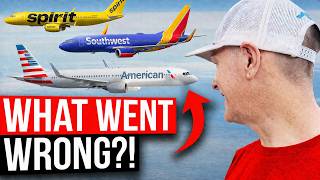
In this video Michael Girdley traces the decline of affordable air travel in the United States from the luxurious, heavily regulated 1950s‑60s era to today’s cramped, fee‑laden experience. He explains how the 1978 Airline Deregulation Act sparked a wave of low‑cost entrants, which were quickly suppressed by legacy carriers through yield‑management pricing and aggressive competition. The narrative then moves to structural shifts that entrenched high prices: the consolidation of aircraft manufacturers into a Boeing‑Airbus duopoly, a merger wave that reduced eight major airlines to four dominant players controlling most gates, and the collusion between airlines and airport‑owning municipalities that limits competition. Girdley details how seat pitch and width have shrunk, ancillary fees (baggage, seat selection) have exploded, and government inaction or lobbying has allowed these trends to persist. Recent events—Spirit Airlines’ double bankruptcy, Southwest’s 2024‑2025 shift to paid seating and bags, and activist investor pressure—illustrate the culmination of these forces. He concludes that the same government‑driven market distortions seen in healthcare and higher education now dominate air travel, making it unaffordable and miserable for consumers.
Chapters
In November 2024, Spirit Airlines, uh, you know, that airline that famously invented basically the $49 flight, filed for bankruptcy. That was fine, except then they came back and filed for bankruptcy again 5 months later. Through that process, the airline's debt went from $7.4 billion to $2.1 billion, and they slashed the fleet size from 214 planes to just over 100. A month later, one of the other low-cost airlines, Southwest Airlines, got rid of their open seating For the first time in 54 years, you had to pay to select a seat. Oh, and there was one more problem. They also got rid of their free bag. Suddenly it would cost you $35 to check a bag. In 1978, a round trip fare from New York to Los Angeles cost $1,400 in today's money. Then the government deregulated everything and fares dropped by almost 50% overnight. So how did we go from that moment that should have been one of the greatest consumer wins of all time, the deregulation of airlines, to where we are today, which is that air travel is basically getting unaffordable. And if it's not affordable, well, it's just downright miserable. I don't know if you stick around, I'll explain why I'm recording this video in front of this airfield in San Antonio, Texas. The answer might surprise you.
Oh, and by the way, thanks to Monarch Money for sponsoring this video.
More on them later. How we got today starts back in the 1950s and 1960s. If you've been following what the Department of Transportation in the United States has been talking about lately, they've been wanting to make air travel classy again. Well, the '50s and '60s was that era. People dressed in suits, and on the plane they served you a lobster. Well, sometimes, but you paid for it. A transatlantic flight would cost $5,800 in economy. But look, you got something for that money. Your seat pitch, in other words, the room between your seat and the seat in front, was 36 or even 40 inches. Extra foot room. Today you're lucky to get 28 inches, and if your knee is 6 foot 5, you could spend several hours or overnight on a transatlantic flight with your knee he's jammed into your passenger's back, in front of his back. But this is also where the term jet set came from. Things were so expensive in this regulated era of travel that only a few small percentage of people could afford to fly. Most Americans would never even get on an airplane in their lifetime. And the reason was, was that air travel was highly regulated. The Civil Aeronautics Board controlled every aspect of flying, down to the schedules, the seat sizes, and how big the planes were. If you were an airline, you wanted to lower your prices, you had to go ask some government official for permission. With prices fixed, suddenly airlines decided they had to compete on something else. So they competed on luxury. If you follow this channel, I did a story about why healthcare isn't affordable. You remember during World War II, there was a similar type episode where the government stepped in and screwed up the free markets. That theme will come back in this video as well. Stay tuned. Fast forward past the '50s and '60s into the 1970s, and America was in a funk. We had a thing called stagflation, which was stagnant growth and high inflation, basically the worst thing for a capitalist economy. And with America in a funk and manufacturing declining in messes, some people started to ask, what if we try something radical and let airlines compete just like normal businesses? But before I tell you about how all that happens, I take every single one of these videos I make and I make a deep dive cheat sheet that you can download for free. You can get on my website, girdley.com/youtube. All we ask is your email and then, uh, well, then you can unsubscribe, but that's how it works. Fast forward to the late 1970s and in 1977, President Carter replaced a guy named Alfred Kahn to run the Civil Aeronautics Board. His job was to blow up his own agency. During this period, Kahn and others had seen how unregulated intrastate airlines like Southwest Airlines and others in California had driven prices to remarkably low levels, and customers were happy. Same planes, same skies, just cheaper tickets. While senators like Ted Kennedy championed the effort, seeing the benefit for consumers, The airlines fought it, and there was good reason. They had built their whole business around not having any competition. On October 24th, 1978, cooler heads prevailed and the Airline Deregulation Act was pushed through. And that meant by 1984, the Civil Aeronautics Board would be sunsetted and the free market would reign in the skies over America. Everything that you see today actually flows from this one law. So keep it in mind because it'll come back over and over again. Look, entrepreneurs love an opportunity to make money. And within weeks, dozens of new airlines announced. And one of those stood out as an extreme of what was to come. It was called PeopleExpress. It was founded by an entrepreneur who was very reminiscent of kind of the swashbuckling oilmen of the time. Founded in 1981 by a guy named Don Burr. They did crazy cheap stuff, cheap fares, $23, operated out of a closed up old terminal at Newark, $3 snacks, just like basically value, value, value. By 1985, they were the 5th largest airline in America. The reason was They were crazy value. You could fly transatlantic for $149. How the hell is it that PeopleExpress has done this? But the other airlines were seeing what was going on. They didn't like upstarts coming and taking all their revenue and profit. The first shot fired by the big airlines was from American Airlines. They created a thing called yield management. Basically, it was the idea that you could special price each individual seat at each individual time inside of your planes. Suddenly the fancy seats up front cost more than the okay seats in the back. And it totally worked. It generated $1.4 billion in additional revenue for American in the first 3 years, and $500 million a year each year after that. American Airlines, doing what we do best. And American, desperate to protect their position, went after PeopleExpress. Whenever PeopleExpress launched a new route, with cheap seats, suddenly American would go in and undercut them, launching their own route and underselling them, making sure PeopleExpress didn't get any oxygen. But Burr, like many of these entrepreneurs early on in deregulated aviation, he was a pretty confident guy and he made a mistake. In 1985, he bought Frontier Airlines, not the current one, but, you know, the Frontier Airlines of the time. And the first time since the company had launched, they lost money that first quarter. In 1985, they lost $14 million. By 1986, facing all these pressures from American and all the incumbents, People's Express was dead and they sold their carcass to Continental Airlines for $125 million in 1986. Since deregulation, 162 airlines have filed for bankruptcy in the United States. That includes lots of upstarts, folks like Eastern, Spirit that you've heard about, but other big names as well. TWA, Braniff, and others. All carcasses. Now, you would normally think that the free market being this way is actually a good thing. It allows stronger competitors to get more consumer dollars and therefore win more business and get bigger. But it turns out there's more to the story, and the problem at the core of this story is the United States government. You would hope the deregulation, open competition, people competing on the ability to best execute would win, but it turns out that wasn't going to last. One thing different today is from back then is that there are only two companies today that make airliners. Airbus in the EU and Boeing in the United States. I mean, there is a Chinese competitor, but they're not a big force in the West yet. But the reality is, back then you had dozens of companies making jet airliners for corporations like PeopleExpress or American. But there were two big dogs in the United States in the late '90s: McDonnell Douglas and Boeing. And Boeing decided they wanted to buy McDonnell Douglas, and, uh, they went to the United States government. The United States government said, oh, Unlike other things that we're going to block through the Federal Trade Commission due to being anti-competitive, uh, we're going to let this one go because we don't think McDonnell Douglas has a future. That suddenly meant if you wanted to start a new airline and compete and offer lower fares than somebody else, you had to get in line behind all the other people who are already in line to buy planes at Boeing or Airbus. And just so you know, most of those production lines have 8 to 10 year waits to get a new airplane. And that means basically Boeing and Airbus, despite being incredibly dysfunctional in each regard, basically have incredible pricing power. They can charge airlines almost incredibly what they want. Then in the early 2000s, shareholders of these airlines started to realize there was a big problem. Airlines had lost a cumulative $60 billion since deregulation. Airlines were great to be a customer of, but they sucked to be an owner of. You'd see airlines repeatedly have a couple of years of profitability and then a fuel shock, overcapacity, labor problems, any of the above would come in and suddenly ruin their profitability and they'd lose billions. From 2008 to 2013, a merger wave swept air travel in the United States. Continental and United merged. Delta and Northwest merged. Southwest bought AirTran. America West— American consolidated. And suddenly we went from 8 competitors to 4. That means these 4 companies control over 70% of the domestic air travel market in the United States. And in some markets like Atlanta, which is a Delta hub, or Dallas, which is an American hub, 70 to 80% of gates are controlled by a single airline. So that means even if you wanted to compete in the Dallas air market, good luck. Southwest holds the Love Field market, which is the secondary airport in Dallas, and Dallas Fort Worth is owned by American. Nobody's coming in and breaking those fortresses. And these big corporations, that the Big Four that own the gates and have these relationships, well, they ain't going to let a free dollar go by. And if you look at prices, say if you're flying from Atlanta to Salt Lake City, two Delta hubs, good luck getting a fair price on that. You're oftentimes better off connecting through some random city and getting there via another airline than flying Delta on that route. And local governments are who owns these airports, and they are more than happy to get top dollar from these airlines who control all the gates and then turn around and have them charge us top dollar for that and get their fees. And everybody gets rich, except the consumer gets screwed. But wait, it gets worse. The government has chronically underinvested in air traffic control and the gates themselves. So if you're a new airline and you want to get to LaGuardia, JFK, any of that kind of stuff, there's no way you're getting in. There's just no opportunity to compete. Boston Logan, JFK, and LaGuardia, you feel like that's only a few airports. I mean, here I am at this random airport in San Antonio. That's our second municipal airport, Stinson Airport. And the reality is those main airports that are capacity constrained control nearly a quarter of the air traffic in the United States. But at this point, you would normally say, hey, like the local governments who own these airports, they have to look out for air travelers like us. The problem is they're totally in on it. They're happy to see the gravy train. And in most cases, these big commercial airports are huge moneymakers and job creators for the politicians and the cities themselves. The government is literally financing the airports through tax-exempt bonds to keep air travel constrained and supply limited. So prices are up for you and me. Politicians realized this was pretty screwed up, and there was a bipartisan bill at one point that tried to cap ownership of specific airport gates by airline at 50% and cap a bunch of other stuff as well. Well, guess whose lobbying won the day? The big airlines. They keep a lot of stuff from happening. And so that's where we are today with the government through the 2008 the 2025 period has been entirely complicit in making air travel really expensive. But wait, there's more. Because there's so much constraint on capacity and so much constraint on competition, the Big Four airlines decided and realized they could do something else. They could start to make air travel even more miserable so they could get even more profit. As an aside, this is a general aviation airport, so those people are not capacity constrained. They're just constrained by, are you willing to go up in the sky in a plane that's small? And I will tell you, they are really small. I've been up in one. It's a little scary. I'd much rather be in a jetliner. So while the average American over the 2000s has gotten on average 30 pounds heavier and taller— heck, I'm 6'5"— there is no limitation on how much these guys have been shrinking the seats. In fact, the legroom is not only less, but also the width of the seats has gone down. They used to be 17, 18, 19 inches. Now you're lucky to get 17. Better not be a flyer and have a big butt. And every time the FAA has tried to step in and regulate comfort for passengers to make sure there's at least a minimum to be survivable, the airplane lobby steps in and kills it. Starting in 2007, things got even worse on baggage fees. They were $464 million that year. By 2020, $3.4 billion. And in 2025, just the first 9 months of the year were $5.5 billion. In baggage fees. The government has done basically nothing to require transparent pricing during this whole period of time. And the numbers are pretty astounding. From 2018 to 2023, airlines made $12.4 billion in revenue from ancillary fees alone. In 2023, United made $1.3 billion just in one airline. 15% of annual revenue is all these BS fees that they tack on top of consumers. And while the government just sits back and watches, what used to be economy class becomes torture class.
But before we get into that, I want to talk about today's video sponsor.
Monarch.
One thing that trips people up with personal finance isn't necessarily spending too much. It's simply not having a clear picture of what's actually going on. When your checking account, credit cards, investments, and bills all live in different apps and dashboards, it becomes surprisingly hard to understand the full picture. Monarch is a private, ad-free personal finance platform designed to bring everything together into one place. It gives you a single dashboard where you can see your accounts, spending, net worth, credit score, recurring bills, and financial goals without having to piece it all together manually. What stands out is how it keeps things simple. Instead of constant notifications or complicated spreadsheets, Monarch focuses on clear summaries and flexible budgeting that separates fixed expenses from discretionary spending. It also includes AI-powered insights that explain changes in plain language. So if spending shifts or your net worth moves, you can quickly understand what's driving it. Over time, that context becomes really valuable. Being able to see trends in net worth and progress towards goals makes it much easier to tell whether your financial decisions are actually moving things in the right direction. Monarch connects with over 13,000 financial institutions, works across both web and mobile, and is built with privacy in mind. You are the customer, not the product. No ads and no selling your data.
If you like this video, please do me a favor and like and subscribe. My editor would be happy. And look, everything was going well until there was one last holdout in the we love our customer airline sweepstakes, and that was Southwest Airlines. And they had been profitable for 47 years in a row up until 2024. And they did it through no seat selection, no baggage fees, no BS. You could just do your thing. But in 2024, a hedge fund, well, an investment management fund called Elliott Investment Management, who'd love to be an activist investor, stepped in. Their message to Southwest: You're not making enough money for the shareholders and for Wall Street. In May 2025, the board finally capitulated. Suddenly bag fees, $35 for your first bag, they came in and suddenly billions of dollars in revenue were ready to flow into Southwest. And finally, the last airline that had been something that showed customers love, in fact that was their whole emblem from the days of Herb Kelleher, threw in the towels. And in 2026, open seating disappeared as well. Now you gotta pay to pick which seat you're gonna sit in. The shareholders behind Southwest, Wall Street and whatnot, decided that short-term money, which they could basically gouge their customers for because of the lack of competition, uh, was more important than customer loyalty. But there was another holdout through this whole time about low fares, and that was Spirit Airlines. Remember I started the story that they had declared bankruptcy twice within 5 months? And while the government had sat around in the 2000s and idly watched by as the major manufacturers of planes consolidated, as airports refused to allow more competition on a local basis, and more importantly, as the major airlines had gone from 8 to 4, Spirit itself in the early 2020s had tried to get acquired twice, once by JetBlue and once by Frontier. Except the difference was this time the government tried to block those. DOJ sued to stop the mergers and they won. And those basically left Spirit as its own solo flyer in the air travel market. And just a few days ago, late February 2026, Spirit emerged again as a new, leaner airline through its second bankruptcy, hoping to be a smaller airline. Flying almost exclusively out of Florida. And who benefits from all that? Well, the Big Four airlines that suddenly have less competition. So look, if you look at the numbers and wonder why flying sucks today, why the seats are small, why they're uncomfortable, why you sometimes look at fares and you're like, man, it'd be cheaper to hire somebody to drive me that far, uh, well, what's going on is the government has let a lot of stuff happen in the industry, and what used to be open competition that totally benefited the consumers after airline deregulation has become a total non- competitive quagmire. And so while prices should be going down for air travel, like they are for so many other things in life where free competition and the free markets are allowed to operate, they're going the other direction. You're not the only one who's angry. If you look at this situation and the industries that are most frustrating to Americans these days, they tend to be higher education, healthcare, and air travel. Well, the three of those all have something very much in common, which is the government has stepped in and because people lobby to protect their corporate interests, has removed the free market from functioning correctly. In higher ed, you have these crazy subsidized loans and a bunch of things that just create an entire klax of administrators working at these universities. In healthcare, you have this whole thing where the buyer and the user of healthcare are not the same people. And in the case of airlines, it's even simpler than that. Competition is restricted and the airlines get to charge whatever the heck they want and make you feel as uncomfortable as possible. As an entrepreneur, the reality is that Changes in the government policies can affect your ability to make money all the time. That's why you have to pay attention to what's going on in Washington. Not that us small guys can necessarily affect it, but when things change, that's when opportunities are created. If you look at owning an airline, it used to suck. Very good chance you're going to lose your money in the '80s and '90s. But by the time the 2010s came around, well, the government had changed the rules so much that suddenly owning one wasn't such a bad idea. Those guys are making a lot of money. And I promised to tell you why I wanted to record the video here. Well, it's because there isn't a good viewpoint at the San Antonio Airport to actually be able see airplanes and cool stuff. So I came to our secondary airport, which is this one, the general aviation one, where people fly, fly private planes and stuff like that. All right, that's it for this video about the death of affordable air travel. Let me know what you think in the comments below. I try to read them all.










