Why Aldi is the Fastest Growing Grocery Store
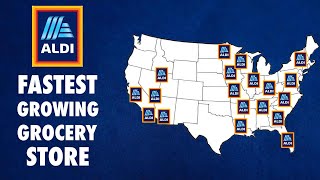
Aldi cuts costs through nine integrated tactics: quarter-deposit carts, private-label brands, items in shipping boxes, just 1,600 SKUs, a rotating treasure-hunt aisle, stores 25% smaller than rivals, fast checkout with oversized barcodes, and no public phone number. The result is ultra-low prices and over 100 new stores per year.
Chapters
Aldi is the fastest growing grocery store in the country, opening more stores than any of their competitors, and their prices are dirt cheap. Compare these things to the national average and it is far cheaper to shop at Aldi. Their unique cost-cutting measures have allowed them to offer the cheapest prices around, and as a result, they've opened over 100 stores every year for the last decade. But what is Aldi doing so well and how are prices remaining so cheap? Well, take a trip to your local Aldi and you'll discover there's 9 key tactics that put them ahead of their competition. Here's how. So picture this. You arrive at Aldi and right away you have to put a quarter in to get your shopping cart. That's weird, right? They actually charge a quarter. But don't worry, you'll get this back later. And they're actually using the quarter to do something special. They're using it to motivate you to return the cart so they don't have to pay an employee to do it. So now you're walking down the aisle with your cart and browsing for the essentials, the things you buy all the time, every trip to the grocery store. Milk, bread, butter, eggs. You get the idea. They have them at Aldi. And these are called known value items because people actually remember how much they cost. So Aldi makes sure these staples are priced lower than anywhere else. And they offer the best possible deal, price gouging in reverse all of their competitors. So what happens? Well, it's a classic trick of human psychology. When customers notice cheaper prices on some things, they assume everything else is cheaper too. So the aisle we're talking about, let's look even closer. What you'll notice on the shelves is there are none of the name brands that you're used to seeing. See this box of Cinnamon Toast Crunch? That is what your typical grocery store offers, name-branded products that allow them to jack up the prices. But Aldi's, well, they sell cinnamon crunch squares. Same product, same ingredients, oftentimes tasting better, but at half the cost.
90% of them are Aldi exclusive brands. So these are brands that the customers wouldn't be familiar with, but quality is very, very good.
So you won't find General Mills, Tide, or Old El Paso products. Instead, you'll find Millville, Tandoor, and El Toro. Lesson here is sometimes when you look at a market, you would think that everybody cares about the same thing, like brands. But a lot of people out there don't care about brands. There's a bunch of people who care more about the lowest prices and less about what name's on the outside of the package. And you'll notice Notice that everything is displayed in its original shipping box. It doesn't look fancy, but it means they're not paying staff to unpack everything. And they can restock inventory in a flash, meaning they hire less staff and save you money. And you might have noticed something else when looking at the inside of the store. While your average grocer stocks anywhere from 40,000 to 200,000 products, if you want a bottle of ketchup, you have 20 different options at a typical grocery store. But at Aldi's, you might have just 2 or 3. And that's because they only stock around 1,600 products. And this is often known as the Pareto principle or the 80/20 rule. A large percentage of your sales and profits usually come from a very small percentage of items or things that you do. And this means there's simpler logistics, easier restocking, and way less decision fatigue for you, the customer, and you get in and out faster. And aside from their regular products, they also keep people on their toes. As you walk to the center of the store, there's one aisle with crazy products that changes every week. Weird stuff like fishing waders, umbrellas, birdhouses, women's swimsuits, all the things you didn't know you needed when you walked in the store. Fans call it the aisle of shame because they can't resist spending money on this stuff, but Aldi refers to it as Aldi Finds.
So these two aisles are what we call Aldi Finds. These are just fun items to add to the shop at Aldi.
This is stuff that they've gotten on the cheap from different suppliers who are maybe doing closeouts or want to get rid of overstocks. Those things will all find their way into the Aldi Finds area, creating a special irresistible bargain for you and a treasure hunt that you can have fun doing. But you might have noticed the Aldis are tiny. But it totally makes sense. Think about it. They are offering 99% less inventory, so they don't need massive locations. In fact, Aldi comes in at just 25% the size of your typical supermarket, and you can actually see all four walls as soon as you enter the store. This lets them save millions in real estate costs. The real estate is super cheap because it's tiny and there's not other grocers competing for it. These smaller stores are easier to manage, and they only need 3 to 5 people in a shift at a time, a fraction of what a typical grocery store needs. It's also cheaper to cool in the summer and easier to heat in the winter. Plus, they can open in niche areas where other chains just can't survive. And the The lesson here is if you see competitors playing one game, Aldi teaches us that you should figure out how to play another one. Now you've got your birdhouse, you've got your cinnamon crunch, and you've got your cheap as hell milk. It's time to check out. And the slowest part of any grocery store is the time spent at the checkout counter. And I don't know about you, but every time I go to one, the lines are so long my produce starts to spoil before I get out the door. But Aldi has actually fixed the checkout line. First, they have giant barcodes on all their products, and that means the checkout person can fly through your stuff. Then you get to be an honorary Aldi employee. By taking your stuff to a separate counter and bagging it yourself. Oh, and one more efficiency tactic as you're checking out, you can take care of payment while they're still ringing you up. A simple concept, but a few seconds saved on every checkout across all of their stores adds up to millions of dollars in savings. Also, fun fact, their stores don't have public phone numbers. You think that makes for poor customer service, doesn't it? But no, it's strategic. They can focus on customers in the store and minimize distractions for the people working there. So now you're in and out of the store in less than 15 minutes, and that quarter you put in to get your shopping cart, you only get it back when you return your cart to the pickup location. So there are no cart police necessary to patrol their lots. People are going nuts for all this efficiency. There's fan clubs, subreddits, and tips all over the internet as how to be a pro at Aldi. All these tactics add up to massive success, and they're going hard at expanding the United States. And maybe those Europeans were right about something after all. Want more information on business strategies? Sign up for my free newsletter in the description. Thanks for watching.










