Why America stopped eating cereal
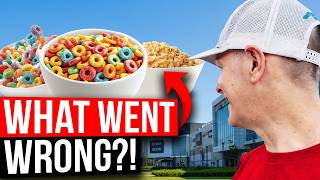
Dr. John Harvey Kellogg invented corn flakes at a Battle Creek sanitarium in the early 1900s, launching an industry that dominated American breakfasts for decades. Saturday morning cartoon ads and mascots made cereal a cultural staple, but Atkins diets, keto trends, and shrinkflation killed it. Kellogg's, Post, and General Mills lost control of the market, and Ferrero now owns what was once an iconic American brand.
Chapters
February 2024, the CEO of Kellogg's, you know, the people that make cereal, went out on CNBC and asked the public to please eat cereal for dinner. So we're advertising about cereal for dinner. If you think about the cost of cereal for a family versus what they might otherwise do, that's going to be much more affordable. Man's name was Gary Pilnick. He was making over $4 million a year, and he said basically that cereal was something that most people probably should be eating right now because it was cheap. The internet loves to hate stuff like this. TikTok organized a boycott. It was the new Marie Antoinette, "Let them eat cake" moment. But what people got wrong was Pilnick wasn't pooping on people and treating them like crap. He was trying to save his whole business. Whereas cereal was once a staple of diets everywhere, heck, I grew up eating it myself, everything from Cap'n Crunch to Grape-Nuts, it's on a massive multi-decade decline. Where Pilnick worked was a company called Kellogg's. They had basically invented the entire category of cereal, and they were about to sell to an Italian candy maker, basically a fire sale. The Kellogg name, after nearly 100 years, would leave the stock exchange entirely when the whole business would sell to these guys, these Europeans, for $3.1 billion. How did cereal go from a $14 billion a year industry in the United States to a business that its own parent company who had invented it didn't want it anymore. This whole video is the rise and fall of cereal. Well, breakfast cereal. And you could blame things like Atkins, changing attitudes, fewer childbirths. It's an interesting story when you dig underneath it to understand what really happened. And that's what this video is about.
Oh, and by the way, thanks to Monarch Money for sponsoring this video. More on them later.
And if you're interested in an even deeper dive, I take each one of these videos and I create a deeper dive and accompanying document that you can download for free off my website. Girdley.com/YouTube. The story of breakfast cereal actually starts with one guy who was a weird health nut nearly 100 years ago. Dr. John Harvey Kellogg ran what was called a sanitarium at the time, a health spa, an institute in Battle Creek, Michigan. Rich people would go there when they had some kind of ailment. Look, this was back before doctors kind of had real science backing them, and so there's a lot of quackery going on. Kellogg was anti-fun anti-caffeine, anti-sugar, anti-everything. And there was one thing he really wanted to get rid of, and that was sexual stimulation, which he called urges. He believed that if you ate bland food— sorry, there was a bird up there, scared the crap out of me— uh, if you believe that if you ate bland food, it would reduce your sexual desire. So when Kellogg invented Corn Flakes, it wasn't because he wanted to feed people. No, he was trying to suppress sexual desire. This is a true story. His younger brother, Will's younger brother, his name was John. He worked for his brother for 25 years. One day when they were making a batch of cereal, they left a crop of flakes out overnight and they got dry, and when they ran them through the machine they got really flaky. And without knowing it, the brothers had invented Corn Flakes. Older brother John saw cereal as a medicine. Will saw it as a business, an opportunity to make money. Turns out his patients loved corn flakes. So in 1906, Will walked out and started his own business competing with his brother. It was the Battle Creek Toasted Flake Company. He bought the recipe from his brother, added sugar, and he was off to the races. By 1909, he was producing an astounding 120,000 cases of the stuff per day. John was pissed. The older brother, he sued his younger brother Will, and it turned super acrimonious. The brothers would never speak to each other again. Meanwhile, a former sanitarium patient named C.W. Post had been watching the brothers in action, and he took what he learned watching them make cereals and decided to do the same thing. He launched Grape-Nuts in 1897, and that year he was making over $4 million a year. That's big money back then, selling cereals. And Battle Creek basically became the Silicon Valley of cereal. A few years later, there were over 40 companies producing cereal in that little town alone. Cereal was perfect for the time. You started to see food get transported by things like rail, car, and need to basically pack and kind of survive long distances. And here it was being innovated and invented at a time when America was ready for it. Here's something that came next, which is most of us don't realize how bad things got during the Great Depression. In a time now when most of us are struggling to lose weight, Back then we had Americans who were starving because they couldn't get enough calories. If you knew some of the people that grew up either as kids or adults during the Great Depression, it scarred them for life, sometimes in good ways and sometimes in bad ways. My grandparents grew up during the Great Depression. When one of them passed away, we discovered that they had hoarded thousands of paper clips. They had this mindset that you never knew when things could go wrong, so you always need to be prepared for a rainy day. These were the types of people that as World War II came and ended were the types of folks who wanted to have boxes of cereal everywhere in their house. It was stable, it lasted and stored, and it was fulfilling. You could get calories anytime you needed it. And as the Greatest Generation came back from World War II in the 1950s, they had their kids, the baby boomers, and the first thing they did was raise them on cereal because it was perfect. Post, Kellogg, and the other companies making cereal at this time, They were ready to produce standardized manufactured food and have it available in suburbs where people could buy it in their cars and shop for it at the supermarket. As we went into the 1970s and 1980s, consumption of cereal continued to grow. It became an essential part of American life. And that was because there was a fascinating confluence of things all happening at once. The first of those would be, was that baby boomers started to become the predominant generation of parents. In the 1970s, Women started to enter the workforce full-time at the highest rate in history. Dual-income households exploded, and suddenly nobody had time to cook breakfast for kids. Mom was too busy getting ready for work and trying to get everybody out the door. Cereal was unique. You could send a 7-year-old to go make themselves a bowl of cereal. All it needed was a jug of milk and a box of cereal. It was pretty tough to screw up. Millions of latchkey kids would wake up in the morning, mom and dad had already left for the office, get themselves ready for school and make themselves a bowl of Frosted Flakes or Cap'n Crunch or whatever it was. So while it's easy to think that the parents of the time chose cereal and fed it to their kids, turned out, well, just the changes in society did. But there was another bigger one happening, which was this was the era, the peak era in the '70s, '80s, and '90s of the American monoculture. This was a time when there were just a handful of newspapers, a handful of TV stations, and a handful of radio stations. So basically that meant that the advertisers that found their way onto those things were middle market things that basically applied to everybody, and cereal was one of those. And when there were only a couple channels to choose on Saturday morning, kids like me would grow up, roll out of bed in their pajamas, and make themselves a bowl of cereal and watch my— watch Saturday morning cartoons. And guess what was on those ads? Yep, Captain Crunch, Count Chocula, all those guys trying to make sure we bought some sugary cereal. At the time, Post and Kellogg and the folks that were dominating the cereal aisles they would spend over 90% of their marketing budget on Saturday morning cartoon ads. Over 95% of ads were promoting things that were highly sugared cereals. Captain Crunch, all that kind of stuff, had a lot of sugar in it. I remember we got highest kites eating that stuff. It was good. And a 1975 FTC study logged 7,500 commercials targeting kids to buy cereals. Only 4 of them were products without a super high sugar content. Tony the Tiger, Lucky the Leprechaun, Captain Crunch, Count Chocula— my favorite— those guys, those mascots were designed to do one thing, and one thing very clearly: get kids eating cereal. If you're just something fun, go hang out with your parents or your grandparents who are in their 40s, 50s, or 60s. Ask them those names, and I guarantee it's 100% brand recognition that every single person of my age knows who Count Chocula is. And who Captain Crunch is. It's crazy. But the government at the time was doing something pretty fun. Well, unfun if you think about American health, which is they were helping promote cereal as the idea of a complete breakfast. And remember, this is before we had the massive obesity epidemic in the United States. That only started to come around in the '80s and '90s. Up until then, we were happy to figure out how to get calories into kids as quickly as possible. And I can't really blame a lot of the people in the government that were doing that. A lot of them had been alive during the '30s. We're in a Great Depression. Americans had been starving. And I remember in the '80s and '90s, nutritionists were telling people like me, kids and even adults, low fat is the way to go. High carb. That's the healthiest way to get healthier. Turned out, well, we would later on learn that all that was bullshit and that would come back to haunt the cereal industry. So stay tuned for that later in the story. By the early 1990s, cereal hit $14 billion a year in sales. Cereal was in 90% of American households. and the average American ate an astounding 160 bowls a year of the stuff. But it was at that moment, just when it looked like things could never go wrong for the cereal industry, that everything was about to turn and things were going to get very, very bad.
But before we get into that, I want to talk about today's video sponsor, Monarch. One thing that tends to break down for most people isn't earning money. It's actually having a clear system to understand where the money's going. You've got accounts at different places, credit cards, investments, bills, and trying to piece that together mentally just doesn't scale. That's what Monarch solves. Monarch is a private, ad-free personal finance platform that brings all of your accounts into one clean dashboard. You can see your spending, net worth, and overall financial picture without jumping between apps or spreadsheets. What stands out is that it gives you control without forcing you to micromanage everything. You can separate fixed versus flexible spending, set up categories and rules, and get AI-powered insights that explain what's changing and why. It also works well if you're managing money with a partner. You can see the same dashboard, goals, and recurring bills, which removes a lot of the guesswork. And you can even add your partner or financial advisor to your account at no extra cost. So everyone is working off the same information. If you want a clearer, more structured way to manage your money, check out Monarch Money using the link in the description.
In the '90s, the industry had consolidated such that there were only 3 major producers of cereal in the United States. Kellogg's, Post, and General Mills controlled 85% of the cereal aisle. The 1980s, they had been raising prices on cereal by an average of 10% per year. And it's not because the ingredients themselves were growing or getting more expensive. It was because these guys had decided the way to grow their business was to spend more on marketing, especially to kids. Gross margins on branded cereal products would routinely be at 40 to 50%. Those are margins that would make a software company jealous. If you go look at typical stuff inside of a grocery store, most of that stuff is running at a couple percent or even zero percent margin, like bananas, because the grocery stores run at super low margin. But not the cereal aisle. These three cereal companies also created the entire concept of shrinkflation, the idea where the price stays the same but the product shrinks. They watched each other like hawks. Because there are only three of them, they could collude even without colluding. While this is illegal, you're not allowed to intentionally collude. It's called price fixing, and the government doesn't like that. Uh, what they did was just do it naturally. If Kellogg raised prices, the other guys did it too. The first thing to start to come after the cereal industry was that the grocery chains themselves started to get really big, and when they could do that, they could start to do store-branded cereal versions, right? So basically white box Corn Flakes. And it turns out the vast majority of consumers couldn't tell the difference between the stuff with Kellogg on the outside or the stuff that said "your local grocery store" on the outside. By 1996, all of this predatory behavior by the big companies was starting to catch up to them. Same— the, uh, store-branded stuff would grow that year by 11%, while the branded boxes from the big names would shrink by 3%. In April 1996, Post saw this happening. They panicked. They took their 22 brands and decreased the prices by an average of 20%. Kellogg followed. They cut 16 brands by an average of 19%. What this meant was suddenly these companies didn't have any money anymore to spend on advertising. At its core, cereal is a branding play. Remember how much money had been spent to teach me about Count Chocula? Well, if you stop spending that money, well, people don't recognize your brand and they'll just go with whatever looks cheapest on the shelves. Between 1994 and 1998, the three big brands cut $1.5 billion in annual marketing spent during that time. For consumers, especially moms who were the often buyers of cereals, uh, it exposed to them that they had been betrayed by the cereal industry for a number of decades. And suddenly they didn't have the brand loyalty that they once had anymore. By the year 2000, when I was turning 25, by the way, the $14 billion cereal industry was built on some foundational things that propelled it to these great heights. And one by one, they all started to turn against the industry. The first was that for decades, nutritionists and the US government helped by some healthy money from lobbyists from sugar-producing states, have been promoting to everybody that a low-fat, high-sugar, high-carb diet was good for people. But in the early 2000s, we started to notice something. We're all getting fat and unhealthy, and it wasn't working. And that's when people started to roll out low-carb diets— Atkins, keto, the Mediterranean diet, which has some fat in it, but relatively low fat. And you can see what's going on here. Like, people started to see the light. And once people could go Google, like, health information, you could start to see that Lucky Charms had 24% of your daily RDA of sugar in just one serving. They probably could have survived this, but the next thing to fall apart was the marketing machine for these brands. Starting in the early 2000s, the idea of the American monoculture started to fall apart. Whereas once we just watched the same handful of TV shows, the same handful of newspapers, and the same handful of radio stations, Suddenly people had hundreds of stations on cable TV, and even worse than that, they could access any information they wanted to read at all on the internet. And while mom and dad had been asleep in the '80s and '90s in their bedroom and the kids had been up at 7 AM eating sugary cereal watching Captain Crunch commercials, suddenly that wasn't happening anymore. One by one, the Saturday morning cartoon blocks started to die and become irrelevant, and the Big Three suddenly had no place to promote their product directly to young kids. But then as the 2010s approached, something else started to change in American society, which was our attitude towards breakfast. Starting in the early 2000s, consumption of milk started to do the same thing that was happening with cereal, which was consumption started to go way down. People weren't just not eating cereal or choosing something else, they just weren't eating breakfast at all. Gen Z and millennials, many of them skip breakfast and they eat an early lunch at 11 AM. And today, only 12% of American households eat any cereal at all. Remember, it's down from 90% just 15 or 20 years earlier. And with milk on the decline, cereal is like the one product that you need to have another product in your household to consume. And in this case, people stopped stocking milk entirely in their households. Heck, we don't even bring it into our house except for the one kid in my house that actually drinks it. Me, I can't even drink it at all. I'm lactose intolerant. US cereal sales from 2000 to 2013 would drop almost 40% from $14 billion to under $10 billion. And those aren't inflation-adjusted dollars. Remember, we're losing value each year. So the drop was precipitous. The 2020s came in. Everybody could see the writing that was on the wall, especially the big cereal companies. They got a brief reprieve in 2020 with the COVID pandemic. People started eating breakfast at home and sales actually spiked that year by 5.9%. But there was a problem. In 2021 and 2022, the decline started again, losing high single-digit percentages each of those years. In 2022, Kellogg's announced that it was going to be spinning off its cereal business. It turns out by that point, its snack business with things like Eggo, Pringles, Pop-Tarts, that was 80% of their nearly $12 billion a year in sales. That business would be known as Kelova, Canova, something like that. I don't know. These, these almost are bad as drug names. But the cereal business, that would be known as Kellogg Corporation. The reason the company did this was snacks were growing and cereal was shrinking. They didn't want the anchor of cereal holding them back when they talk to Wall Street analysts. One thing to know about business is when you're growing, that covers a lot of ills. When you're shrinking, that's a big problem because typically you have a lot of fixed costs, and as your sales shrink, makes it tougher and tougher to maintain the same level of profitability because the office still costs the same, people cost the same, but there's fewer dollars coming in the door and therefore fewer profits. WK Kellogg, the new company, spun out immediately and and started to hit headwinds. The first year, in the first 6 months, sales were down 7.5%. And as is a common theme on this channel amongst companies that eventually hit trouble, they had $500 million of debt on their balance sheet. And that leads us to the moment that started this whole video where CEO Pilnick went on CNBC and told people they should eat cereal instead of cooking chicken for dinner. Meanwhile, the company that was left behind with all the snacks, Kellanova, they attracted a buyer. Mars Incorporated, who loved their growth story, and they bought it for $36 billion. To put that in perspective, the snack business would be worth 12 times what the cereal business would eventually sell for. And that leads us up to 2025, when in the summer, a company from Italy called Ferrero, who owns a bunch of different chocolate brands and fancy stuff over there, made an offer to buy W.N. Kellogg and take it private and make it part of their business for $3.1 billion. And it would be delisted and no longer publicly traded. After nearly a century, something so essential to the daily part of American life, breakfast cereal, was now just a part of some random Italian candy conglomerate. Yeah, kind of sad. Made even worse was that during this time, they became part of the culture war and the Make America Healthy Again problems. And one of those was that a lot of these cereals had been at the forefront of using artificial dyes and colors. DA banned Red dye number 3 in January 2025. The scientific community has conducted a number of studies raising concerns about the correlation between petroleum-based synthetic dyes and several health conditions. Different states, including my state of Texas, sued the companies to try to get some of these dyes out of cereal. But it was just kind of back to the core problem. The world had changed and the cereal companies hadn't caught up. The shift on some of these dyes will cost 20 to 30% annually in terms of increased costs for these people to make cereals, at least for the few remaining customers that are buying them. And the worst part of all this is millennial parents who are raising young kids saw these advertisements in these lawsuits, and folks like the Texas Attorney General want to get in the press. You know what, that's not good. Another good message is sending parents the message that cereal is not healthy. Now they're completely convinced. I think the interesting thing about this story is how there were all these factors—generational changes, societal changes, technology changes, and legal changes—that affected the cereal industry. But the one people don't really talk about is how the industry itself got greedy when times were good. And I've seen it time and again. If you as a business start to disrespect your customer and not treat them with love and respect, uh, eventually they start to find other options. Or in some cases, Uh, they'll remember it for when they have other options and they'll switch to those. And it's important to remember, like, as business owners, you got to think long term. And the best way to do that is don't take advantage of your customers the way these cereal companies did. All right, let me know what you think of this video, and if you enjoyed it, uh, tell me you liked it in the comments below. It will make me feel good about going out in the rain today and talking to you about the rise and fall of cereal. Catch you next time.










