Why everyone wears these ugly shoes
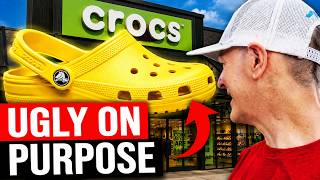
Crocs went from a 2002 boat shoe to a $900 million business by 2007, then nearly collapsed in 2008 after overexpanding. CEO Andrew Rees refocused on the core clog, embraced being ugly, and partnered with Balenciaga and Justin Bieber. By 2021, revenue hit $2.31 billion with 22-28% margins.
Chapters
Back in 2008, the company behind Crocs lost $185 million in a single year, and most analysts predicted they were about to go bankrupt. Today, the same company Crocs sells over 150 million shoes a year at profit margins that would make even Nike blush. This video is the story of how one of the ugliest shoe creations in history went from almost dead to a thriving success that's printing cash.
And oh, by the way, Thanks to Monarch for sponsoring this video.
More on them later.
I turn each and every one of these videos into a one-page cheat sheet you can download for free off my website, girdley.com/youtube.
And thank you to my friends at K'nai Fish up in Alaska who sent me a package and this hat was in it.
So if you send me a hat, I'll try to wear it on the video.
Thank you very much. The story of how it all happened starts back in 2002. Some sailing buddies from Boulder, Colorado— believe it or not, people do sail there— had found a foam shoe made out of Quebec of all places. You know, where Montreal is in Canada. It was perfect for sailing. It was lightweight, waterproof, wouldn't slip on a deck because of its foam creation, and most importantly, if you lost it in the water, it wouldn't sink. But unlike most shoes which were designed to look good, Crocs were okay being ugly. And that's what they decided to name it— Crocs— because they were amphibious, ugly, and tough as hell.
You know, like a crocodile.
They bought 200 of them and they took them to the Fort Lauderdale Boat Show. They tried to sell them at $30 apiece and they sold out. Then something entirely surprising happened. Those sailors who bought the Crocs, they took them home and suddenly their husbands and wives were borrowing them, take them into their jobs. Suddenly chefs, nurses, and anybody that was on their feet 12 hours a day was in love with Crocs. In 2003, they did $1.2 million in revenue. And it just started growing like crazy from there. By 2007, they did nearly $900 million worth of Crocs in sales. And remember what these are— they're ugly plastic foam clogs. And they did 700 times improvement in sales in less than a decade.
Pretty incredible.
February 2006, they go public in an IPO that would be the biggest footwear IPO in the history of the American stock market. And guess what? Investors loved it. The stock skyrocketed from $25 to nearly $75.
But right at that moment that it seemed like Crocs couldn't lose and they had dominated the entire market, they made a classical mistake. And it happens at moments like that when you're in business. You've got flush with cash, everything seemingly going right. You've made all these decisions that have turned out well, and you forget that getting a little bit lucky is part of what got you there.
And you think you can't lose.
And that's when the management of Crocs decided they weren't a clog company anymore. No, they were going to be a footwear company, a lifestyle brand. Yeah, they launch apparel, golf shoes, hiking boots, hockey crap.
They were doing it all.
The number of products they're carrying sprints past 400. They build factories in places like Mexico and Romania. And all that was setting them up for what was gonna be horrible next, which was the Great Recession started in 2008. And if you remember that time and you were alive, which is by the way, 18 years ago, believe it or not,.
It felt like the entire economy was about to grind to a halt. People were not spending money.
And here Crocs is no longer a clog company anymore.
They're a bloated conglomerate with no clear mandate, no clear vision, and too many products that weren't special at all. That year they would show a $185 million loss. They laid off thousands of employees and they were borderline to get delisted from the stock market with their price under a dollar. And here Crocs had made the fatal mistake most people understand. If you're a business, there's something really special that got you there, and that special thing doesn't necessarily transition into other efforts. You're better off spending your time making your core business better, i.e., Crocs and what made you special, than trying to get in a bunch of businesses that you may not know much about.
Seemingly every business publication and pundit writes an obituary for Crocs. You can read them now. Crocs, The business that failed. Public pundits love to do this stuff. It's so easy to poop on failure. Maybe that's why this channel works so well. Everybody likes to see a car crash, I guess. But here's the beautiful thing about tough times and part of why capitalism works so well. If your business gets inefficient or messy the way Crocs did at the time, you'll go through a tough time and it makes you slim down and either get better so that people want to buy what you have or you go out of business. You can see this over and over with different companies. If you watch the Lego video I did on this channel, The future one I'm sure I'm going to do at some point about Marvel. These companies all went through a tough time and realized they got fat and happy, need to slim down and get strong and, well, buff again. There's a decent chance if the economy hadn't gone to crap, that Crocs would still be a conglomerate of a bunch of messy stuff that just wasn't working. That Great Recession made them go in and make some really tough decisions and figure out who they really were and why customers would care.
But before we get into that, I want to talk about today's video sponsor, Monarch. One thing that causes a lot of financial stress is simply not having a clear picture of where your money is actually going. Most people have bank accounts in one app, investments somewhere else, credit cards in another tab, and maybe a spreadsheet trying to hold everything together. Monarch is built to simplify that. It's a private, ad-free personal finance platform that brings all of your accounts, spending, investments, recurring bills, and net worth into one clean dashboard. So instead of jumping between apps, you can see your full financial picture in just one place. It also gives you flexible budgeting tools, separates fixed versus flexible spending, and uses AI-powered insights to help explain changes in spending, unusual transactions, or shifts in your net worth. And because it syncs with more than 13,000 financial institutions, setup is straightforward and everything updates automatically. It works across web and mobile, and you can also add your partner and even your financial advisor to the same account at no additional cost. So everyone stays aligned around the same financial picture. And importantly, it is private and ad-free. You are not the product. If you want a more organized way to track spending, net worth, and financial goals, check out Monarch at the link in the description and use the code on screen to get 50% off your first year. That's 50% off Monarch for this audience through the link in the description.
In 2014, an investment firm, a hedge fund by the way, named Blackstone comes along with $200 million and asking for a couple of board seats. This is enough to keep them alive and give them a chance to figure out their next step. And the board installs a professional, a former consultant, uh, as the CEO of the company. His name is Andrew Rees, and he does the unsexy work. He does an analysis of what they should be doing, what's working and what's not.
And what he sees is that he needs to cut fat right away.
And the first thing he does is close hundreds of their 600 retail stores. And remember how they had over 400 different products, everything from hockey to Crocs themselves? He cuts those 400 down to just a couple hundred, streamlining the company. They stopped manufacturing their own Crocs, uh, they moved manufacturing specifically to China and Vietnam, getting out of the manufacturing business entirely. And the whole play was just to refocus the entire company on what made it at its core special, a clog called the Croc that had an amazing brand name and a, well, a good place in the market. And from 2013 to 2017, revenue stays pretty steady at $1 billion a year. And heck, selling foam clogs with a billion of them, you're going to make some money and do pretty well.
But there's still a problem.
Crocs are not seen as fashionable at all. In fact, they're the type of thing that you would see somebody staggering into a Walmart at 2 in the morning, barely sober, doing some shopping in their pajamas. That's the type of thing and message that wearing Crocs would send back then. But then something would happen to Crocs that would change everything and take them from lame, well, to something special. Human nature, if you have a product like Crocs that's super ugly and distinctive, is try to make it less distinctive. Let's make it look cooler, streamlined, or an aerodynamic Croc. But Andrew and his team realized something else about human nature and the way societies and crowds work. And instead of trying to make Crocs something that would appeal to everyone, that everybody would think is acceptably attractive and become the Nike of clogs or whatever, they said, screw it, we're just going to lean into the fact that some people are going to hate us and some people are going to love us. And the people are going to love us, well, they're going to be great customers. And the people that hate us, they weren't going to shop with us anyway. And in fact, they decided to make the entire polarization of the way Crocs looked their entire brand strategy. Controversy in itself can become a moat for your business. If people are talking about you, that means that you're in the public eye and they're going to think about you and have a brand recognition when they walk in the store and they see Crocs on the shelf next to the aisle of 100 other foam kind of Crocs, you know, and clogs hanging out.
At the same time, they got incredibly lucky as the 2010s ended. This was the peak acceptance era inside the United States.
We wanted to head into the 2020s and beyond at the peak of kind of woke and everybody being welcome, and Crocs was able to lean into that. Andrew and his team released a Come As You Are campaign saying basically everybody welcome, but ironically, with the ugliness, that meant that some people were going to self-select and choose not to be interested in Crocs. They appealed to aging millennials who were suddenly parents and wanted to be comfortable with Instagram ads that basically said, wear what you want with Crocs. Screw the haters. And at that moment, it resounded perfectly with these new parents who wanted to be comfortable. October 2017, Balenciaga partnered with Crocs. They put an $850 stiletto heel version of Crocs down a Paris runway and it sold out. Suddenly stars came in and realized they could be representative and connect with their fans by adopting Crocs and seeming like everybody's and every man.
Justin Bieber did it.
Post Malone did it.
By the way, I think Posty wore these anyway, whether he's getting paid or not. But he did a collab with, with Crocs, his own design, and it too sold out. And this was all perfect timing. Gen Z was entering the picture of consumers. They had money. We've talked about on this channel a lot. Gen Z really wants to know about the real. Like if you deal with them as employees or individuals, they're all people in their kind of mid-20s into early 30s now. They don't have time for BS. So there was no better brand than Crocs to just come in and say, hey, we're ugly, we don't give a crap, but we're the brand for you if you're— well, if you just don't give a crap about what people think.
As the culture shifted into the end of the 2010s, it was perfect. And then something else was about to happen that would totally help Crocs. And as we went into 2020, basically we all got locked down in COVID in March 2020 when the world shut down. And what did we all start doing? Getting really damn comfortable. Heck, when I was on Zoom calls, I remember being in Lululemon shorts and a button-down because nobody was going to be looking below the waist on a Zoom call. And so most of us went and created nice nests inside of our house. At the same time, we made ourselves as comfortable as possible. What's more comfortable than Crocs?
Heck, you don't even need to buy them at a shoe store.
They're so big and fluffy, you could just get them and they'll fit you. But something else I haven't talked about in this story actually started a bit earlier, back in 2005. And that's when Crocs, well, whether they knew it or not, started to become what's called a platform play. And a platform is like Microsoft Windows or anything else where somebody is going to be building a product on top of your product, making it more valuable for the consumer, which means you win by having other people build their product on top of yours.
And back in 2005, a woman named Sherrie Smeltzer had started to see that she could decorate her daughter's clogs with little charms. And then like any good entrepreneur, her husband came in and saw these charms all across the floor and said, you know what? This is a hell of a business. They called them Jibbitz, and they were basically little tiny charms that could snap into the holes on Crocs. Crocs, seeing how much promise this had, bought the entire business for $10 million just shortly thereafter. And what would happen is the moment somebody bought a Jibbitz, whether it's an NBA one or Hello Kitty or whatever, for $50, the last thing they're going to do is choose somebody else's, you know, clog because they wouldn't work with their gibbets. And so while Amazon or Skechers can release their own version of these kind of foam clogs, they can't recreate the ecosystem that exists around the original. So if you want to keep playing the game, well, once you start buying it, you're not going to be getting out, basically. Normally, this is a thing that only happens in things like software or let's say even airplanes, right? Like Boeing, where somebody builds a business around yours. And here were these were the first guys, whether they knew it or not, to figure out this platform strategy for shoes.
So while you look around town and you'll see a New Balance shoe or a Nike shoe or a Reebok shoe, there's a fundamental difference between them and a Croc. Croc has created an entire economic system, a moat around their type of, uh, business around their shoes. For the rest of the guys, they're just commodities. You or I might buy a Nike and we're forced to get a swoosh.
Here Crocs let you buy a Croc and customize it exactly to what you want.
Via the Jibbitz. And you probably would have looked back during this time and predicted that Crocs would have ended up in the dustbin of history alongside Reef and Hawaiianas and all these different, you know, basically clog and flip-flop brands that basically died horrible deaths when they got competed away by competitors. Crocs doesn't just have this platform play as a moat. They also have a lot of other stuff going on for them, too. And if you look at great big brands, they tend to have multiple moats, not just one that protect them from competitors. Heck, folks like Microsoft, they have hundreds. Amazon, hundreds as well. That's how they got that big. And as these businesses get bigger, people just can't compete with them.
And the story is the same with Crocs.
Besides the technology, the jibbitz, the brand, all this stuff put together and the ecosystem, well, you or I can't come in and get people to stop buying Crocs and buy our stuff if we copy them, even if it's cheaper. And the last thing that's the most fascinating moat for them is this idea of being ugly. Adidas, Nike, all these other guys, New Balance, have spent decades, if not longer, trying to build beautiful shoes. And the moment they would come out with ugly looking clogs to compete with Crocs, people would see right through what they were doing. It'd just be a money grab. 2021, they did $2.31 billion. Revenue goes up again the next year, growing by almost 30% year over year. Their net margins are 22 to 28%. Gross margins, 50 to 55%.
This is rivaling Nike in its heyday.
The stock price for Crocs went from $6 in 2017 to $180 by 2021. In 2021, Crocs would go on to start to repeat the sins of 2008 and diversify. They bought a brand called Hey Dude for over $1 billion, which today is contributing to sales but indicates potentially they're headed down the same path that got them in trouble back in 2008. And another fun fact for you is Terence Reilly, the CMO who had engineered the entire Not Cool But Cool strategy for Crocs back in 2017. He left the company in 2020 and he went to a company called Stanley. You know what the first thing he promoted over there was? Well, those Stanley mugs that suddenly you see every suburban mom carrying around now, but all got famous because they were in a burned-up automobile. He ran the exact same playbook for Stanley that he had run for Crocs. Celebrity, basically pitches, all that kind of stuff, ugliness in order to win people over. And that polarizing play totally worked. So much that, uh, the folks at Crocs brought him back and hired him to run Hey Dude back in 2024. And here he is, the president of that company, trying to run the exact same playbook again and keep Crocs cool and make Hey Dude actually be the same thing. Crocs ultimately won because they understood their customer better than anybody else. And if you look back to that era in 2017 where they ran this influencer and ugliness play, and leaned into being special.
Well, if you didn't know what they were doing and you weren't them, that would look like 4D chess. Totally confusing. But they got there because they had spent enough time with their customers, talking to them and understanding them, and then thinking deeply about the why of they were purchasing Crocs to be able to run a play that to the rest of us looked almost crazy. In the end, the great entrepreneurs spend an immense amount of time getting into the psychology of their customers, their employees, their partners, and their vendors. To understand not just what the people are saying about their product and their business, but the true deep why of what they're doing. And the great CEOs are spending a ton of time out watching customers, talking to them, even working in their own stores to actually hear directly from the people and see them thinking when they're looking at their products. And you as a business leader, you want to have your people spending as much time as possible and getting exposed to real customers. And every company that I know that turns out great does this, from lonely little retailers here in San Antonio, Texas, to giant companies like Intuit, who have their best employees answer the phones every tax season, which makes a lot of sense because they sell tax software. You know, that's how it works. Great story of triumph by an ugly brand called Crocs.
Can't help but love them.
If you enjoyed this video, let me know in the comments below.
It'll encourage me to make more.
Catch you next time.










