Balancing Innovation & Regulation with Michael Horn
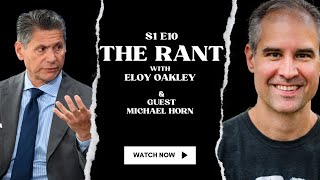
In this podcast episode, host Eloy Ortiz Oakley interviews Michael Horn, co‑founder of the Clayton Christensen Institute and author of From Reopen to Reinvent. The conversation centers on recent Department of Education proposals that expand the definition of third‑party servicers, tighten constraints on online program managers (OPMs), and scrutinize revenue‑share agreements. Horn explains his view of disruptive innovation—affordable, accessible, simple solutions that improve learner outcomes—and argues that the proposed regulations, by focusing on contractual inputs, risk stifling the very innovations needed to lower costs and improve job placement. He highlights examples of disruptive models such as Calbright, Southern New Hampshire University’s hybrid approach, Western Governors University, the Quantic School, Coursera, and emerging tele‑health services, illustrating how they expand access and affordability. Horn advocates for a shift toward outcome‑focused consumer protection: federal oversight should tie funding to verified graduation, earnings, and value‑add metrics rather than merely auditing contracts. He calls for transparent, audited standards—embodied in his work with the Education Quality Outcome Standards Board—to ensure institutions can only market programs they can substantiate. The discussion also touches on Horn’s current initiatives, including a new book on career transitions, a nonprofit focused on education quality outcomes, and his push for mastery‑based, personalized K‑12 learning. The episode concludes with a call for more transparent, value‑driven higher‑education policies that align incentives for institutions, innovators, and learners.
Chapters
Foreign. Hi, I'm Eloy Ortiz Oakley and welcome back to Lorraine the podcast where we get behind the curtain and break down the people, the policies and the politics of our higher education system. In this episode we talk more about the recent changes that the Department of Education has proposed for his Dear colleague letter addressing revenue share agreements and the expanded definition of a third party servicer. Today I'm joined by a very special guest and good friend, Michael Horn. Michael is a well known author, thought leader and is the co founder of the Clayton Christensen Institute. His latest book is titled From Reopen to Reinvent. Welcome to the podcast, Michael.
Eloy, thanks so much for having me.
All right, well, it's great to have you. It's great to be able to dive into some of these topics, particularly topics like this that are fresh on the mind of many of our colleagues. I've spent lots of time talking to them about the recent changes, what this means for learners, what this means for consumer protection, what this means for innovation. So let's talk a little bit about that. And before we dive into some of those questions, I want to ask you, you've spent much of your career working for and encouraging innovation in education. And for our listeners who have been living under a rock, haven't followed Michael Horn, tell us what you're working on currently and what excites you about innovation in higher education.
Yeah, and I don't know if they're living under a rock or they just have better things to do with their, with, with, with their day to day job. As you mentioned, my, my new book From Reopen to Reinvent is out that's more focused on K12 education. Really trying to say, you know, the learning loss and the devastation from the pandemic were just unimaginable for so many families. How do we take this and build something better for them? So I'm spending a lot of time on the road around that, working on a new book about helping people switch jobs better so that they don't regret their job switches and that they can navigate their careers better. And then in terms of innovation, I mean first I, I let me just actually give a defin mission of innovation just because I think a lot of times people think it's like you throw a bunch of stuff at the wall. Some of it's good, some of it's bad. Who knows what sticks in my mind? It's not innovative unless it's helping the individuals that you're serving make progress in their lives. And so there's some bad stuff that's out there that's new that I wouldn't consider innovative. And secondly, and I think this speaks about higher education, I think there's a whole bunch of innovation going on right now, whether it's informal higher ed, informal higher ed that is seeking to expand access. It's all relative. You know, maybe someone had it before, but now you're doing it at your institution and is really focused more and more on economic opportunity. And Eloy, I think that's my focus has always been, which is, you know, if the problem is just getting more people degrees, we can actually just hit print and run a diploma mill. But something really innovative is getting people into good jobs and then supporting them in those pathways. And, and that's, I, I, I'm just thrilled that higher ed is spending more time thinking about that right now. That, that gets me excited because I think presidents of universities are, are, are squarely focused on how do they extend opportunity in a way that maybe they weren't 20 years ago.
That's right. And you know, given the enormous amount of pressure that, that they get from their boards, from their communities, from. I think one of the greatest things that I've seen happen is, is the agency that learners have today, you know, they're not just sitting back and saying this is the way we should consume higher education. They're actually pushing their institutions to do more, to think differently. And especially post pandemic, I mean, you know, they've gotten a taste of what it means to be hybrid, what it means to access technology. So I think, I think all of these things are pushing us in the, in the right direction. Now, you've had a chance to read the Department of Education's proposed changes to the definition of third party servicers and, and the constraints that they would like to put on online program management companies, otherwise known as OPMs, and also Constrain some of the revenue share agreements that have been out there. And I know you, you've seen the landscape. How do these changes impact the kinds of disruptive innovations that you believe are necessary in higher education and actually work?
Yeah. So let's start with the definition of disruptive innovation and then dig into how the regulation affects it. And the only reason I do it is because, as you know, disruption is used to justify all sorts of actions out there in the ecosystem right now by entrepreneurs. And most of them don't understand it. But you know, disruption was a very specific theory coined by Clay Christensen at the Harvard Business School, and it basically said incumbents often, you know, have expensive, very monolithic services that serve consumers. They tend to be unaffordable, centralized and deeply inaccessible. And disruptive innovations come along and introduce something that's more affordable, accessible, simple to use, mm. And extends access to many, many more people. And the reason that's important I think is because typically the incumbents are not the ones launching the disruptions. They're startup organizations. And so when you look at the third party servicers, expanded definition and let's start there because then I also think the revenue share in the OPM spaces is a little bit different. You know, essentially what the department has done is said any organization that contracts in providing a Title 4 program is now going to be subject to audits, disclosure agreements and so forth. Disclosure is great, but the audits, A, we're not totally sure what it's going to be and that creates a bit of a bonanza for the accounting firms. But B, for a startup organization that is trying to maybe give more active learning pedagogy, right, for a university or for a nonprofit that doesn't have a big budget but is working with a university or College on supporting first gen students through a Title 4 program, all of a sudden they're going to be subject to these regulations and that's going to stifle innovation that I think we sorely need to help get students to, through and then into a job. And we know that frankly a lot of these organizations may pass those costs on to the colleges and the colleges then are going to pass those costs on to the students, which means higher tuition. And so none of that excites me. And I think it favors frankly the incumbents who have been working with universities and colleges that will be able to absorb them, these costs into their balance sheets. And frankly we need, we need some fresh thinking on how to work with students were not getting that great result. So. So that's the high level, I think in terms of the opium and rev share. You asked about that specifically. You know, the department's asked for comments and questions obviously and is still trying to figure that out. Obviously the opiums get sucked into the third party servicer piece of this from my perspective, I think it's interesting. I actually think disruptive innovation may have been solving this revenue share challenge already in the market as providers like Coursera and Noodle, we're coming in with lower cost alternative arrangements to setting up these online programs. And so I kind of think like I don't know that the major OPMs are still going to need to make their costs so they'll just switch to a fee for service model that is still expensive.
Right.
I'm not sure that the department muddling around in this way is really attacking the problem we really care about, which I think is affordability and value and quality outcomes for students on the back end.
Right. I think their, their main target is this issue of, of consumer protection and predatory practices. And you know, in, in your experience, especially looking at the landscape, how would you think about seeding innovation while also ensuring that there are some safeguards in place for, for the learners and also that, that there's transparency in the marketplace. So if, if they're thinking they're signing up for institution X, but they're getting, you know, through some relationship institution Y, how, how do you create a transparent marketplace so that everyone understands what they're getting into and that there's, there's guardrails in place? You think that's a role for the federal government or you think that's something that should be solved by the marketplace?
I think it's absolutely a role for the federal government because they're the key consumer in terms of the money. And so they ought to be demanding more of the colleges and universities that they're financing to serve students. And in my mind the market, it's still a market driven solution. It's just that the market is the government payer and so that they need to be focused on the outcomes. Right. And I'm super sympathetic to the consumer protection argument. I look at the debt that students incur, particularly if they don't graduate and how it cripples them. And I don't think we ought to be having innovation that's just about enrollment, but it ought to be tied to actual graduation and labor force outcomes in my mind. And that's where I would start at the department instead of muddling with the inputs of how the college puts it together, which is really just going to frankly reify the status quo, but it's not changing the ultimate consumer protection incentives. I, I'd love them to, you know, put in place similar to what they started to do with gainful employment for the career colleges and for profits, a much more expansive set of those sorts of things focused on the end outcomes and then say to the innovators, great, if you can hit this bar, you can come into the market, but if you can't, you're not welcome. And you can come up with whatever creative arrangements you want that better serve students, but you don't get access to this otherwise. And so that might be the institutions co signing right on the debt and having Some risk sharing as part of it. It might be the institutions having a bar relative to other programs like them that they have to clear. I definitely think the government has responsibility on that. And again, in my mind, it's not innovation if we're not putting some sort of quality or value controls around these things.
I was in a conversation with Paul LeBlanc, the president of Southern New Hampshire University recently, and I think he feels very similar. I think that there is a certain amount of accountability that the institutions need to take. I mean, I think there's a, there's sort of a famous, well, now infamous example here in Southern California of a Southern California university. I won't name names that you're being very political. You're being very political that, you know, created a situation where it's hard to imagine how the students who were in this graduate program paying the kind of tuition that they had to pay, would ever pay off that tuition based on the earnings that they would make post that graduate program. So another department is seeking to string together these expanded definition of third party servicer, you know, taking a look at revenue share agreements. They're also working on new gainful employment language and talking about low value programs. It's a difficult basket to weave and make sense of it all. So I appreciate the department taking time to listen to folks in the field. Now, your work from your early days at the Clayton Christensen Institute, you took a hard look and spent a lot of time thinking about disruptive innovation. How do you see disruptive innovation influencing the direction of higher education today? And, and how should we think about seeding disruptive innovation going forward?
Well, I, first of all, you oversaw, you know, what may be a disruptive innovation in California and Calbright, I believe, was under your purview. But you know, I, I think there's sort of two forms of disruption in higher ed. One is of higher ed, if you will. And so that's the, you know, you mentioned our friend Paul LeBlanc, Southern New Hampshire University online. Right. And what they've done with the hybrid colleges and things of that nature. Low cost, extend access, right. Western Governor's University. Another terrific example of a disruptive innovation. One of my favorite is the Quantic School of Business and Technology. That is incredibly low cost mba active learning pedagogy. Really neat. So that's disruption of. Right. And then there's disruption within. And so, you know, the courseras of the world that I think charge significantly less than a full service online program manager, provider, or frankly a lot of colleges and universities struggling to provide mental health access and support for their students. Right now, new telehealth services coming in to be able to provide access to tackle that non consumption in more affordable ways or peer to peer models for some of these, these things, you know, those are the sorts of disruptive innovations that I have in mind that are driving accessibility of service, that are driving affordability and again to help the learners make progress. And again when the federal government is a payer, they're a consumer as well and a healthy market, the consumers are demanding quality. They're not just giving free money for anything. Eloy, if it's okay, I'd actually love to hit some of my friends in the innovation community because a lot of times they, you know, will say well we need room to not be, you know, encumbered by outcomes at the beginning because we just need to try a lot of stuff. And I just, that's not true. Like you look at Apple introducing the first iPhone or the ipod, like they don't get to grow and do that unless they introduce a product to market that people want to use and delivers value. And we've created this weird system in which because of the, what feels like free money to some students, it's not on the back half but it feels like it on the, on the front half. We don't have that expectations of quality. And I, again that's not innovation. In my, in my mind we need that innovation so that as these disruptions come into market they're really driving value for the students and society.
Right. And as we think about disruptive innovation and you know, I've, I've heard from some, some of the same colleagues that, that you speak to and you know, they're asking me what. Well, what is the department thinking?
Yeah, it's a great question. And in my mind innovation and consumer protection occur when you free people up to reimagine inputs. So I would not regulate the third party servicer and dotted I's and T's, cross T's of contracts but instead focus on outcomes and I would focus on learner outcomes. And this is so that student borrowers aren't taking out so much debt that they can't possibly repay or that they're going to a social work program where the salary bump is not going to justify a hundred thousand plus dollars in, in tuition. Right. That's absurd. And so that's where I think department should be focusing is, is how do we very clearly say these are the sorts of outcomes we will pay for and this is what we won't pay for. And frankly, look, I don't think he a the Higher Ed act is going to get reauthorized. No, it would be wonderful. But, but, but, but I do think that they should have some conversations with Congress because I do think that there are some grand bargains potentially to be made right now between Democrats and Republicans on colleges sharing in the risk when student borrowers don't repay what they borrow. And I think that could be part of a solution, a system wide solution so that colleges don't have the incentive in the first place to even enter into these contracts that are going to put students in a really vulnerable, pretty awful place longer run. And then secondly, so they create the incentives in the marketplace so these providers can't even go to the colleges and say hey look, we'll help you set up this program that's not going to benefit students. And so that's where I'd rather the department really spend its focus. If you focus on outcomes then people will figure out ways to get them. If you focus on inputs, you're just, you're moving deck chairs around the Titanic but you're not changing the fundamental game on, on, on, on which colleges are setting up these programs and, and the fundamental incentives right now at play. And so that, that, that to me is that to me that's where I would love the department to spend their time. Focus on the debt equation, focus on the value equation. I would love to see the value added equation. That's the last piece I guess I'd add which is, you know, there was, as you know there's been a bunch of bills around the short term Pell programs and some of the policies there and so forth. And Republicans I think introduced a, a bill that would say, you know, if you're not making, we're going to look at basically the value add above 150% of the poverty line. The better one would be looking at the growth of salaries if you didn't have the degree versus if you did. Because I want to see that that low income student or limited income student, right chooses to go and then gets a big boost in their earnings relative to what they paid. That's what I really care about. And so in my mind policies that, that create more incentives to focus on, on boosting that and not gaming the system would be where I want us to focus.
Right. Especially as institutions themselves, well as whether it be online institutions on ground institutions make lots of commitments to learners and tell them, talk to them about the income boost that they're going to get. From a particular program. I mean, we should make sure that there's enough transparency behind those claims. Particularly in economies like we have today, there's lots of desperate people looking for ways to get a better foothold in the economy. And we as, and I'll say the royal way is as a higher education industry, make lots of, lots of commitments and say a lot about our own value that we create. So I think we should, we should
have to show that value 100%. Just, just quickly on that, Eloy. And I know you probably have a question, but just, you know, one of the reasons I started a nonprofit that JFF Jobs for the Future now operates called the Education Quality Outcome Standards Board, was that my sense is that institutions ought to have standards through which they can represent the outcomes that they get for students. And any standard and any outcome that they say, you know, in this laundry list of standards that they say, well, you know, we actually don't think this is something we add value on. You know, we're a liberal arts college and so we're not going to look at the boost in salary or something like that. Fine. But then you can't make any marketing claims whatsoever to prospective students about that because you weren't willing to go and audit on those outcomes when you got the chance up front. And, and so to me, one, absolutely we ought to be looking at those outcomes and, and only talking about those that have been audited and verified and to the federal government should stop the financing of programs that can't back it up so they can't even talk about it in the first place. And that to me is really, you know, if they're paying for it, let's pay for quality and value, not pay for stuff that doesn't help students or deludes them into thinking that there's a return here when they're, when there really isn't. But again, focusing on the input side of it, which is what the department's done here with the third party servicer. I mean, can you imagine going back to that Apple example if, you know, the regulators had gotten together and said this is exactly how the components have to work and the subcontracts you have with the chips and they would have just reified Nokia's position in the market. And thank goodness they didn't do that because then we'd still be stuck with these bricks that did. Not much for us.
That's right. Well, I mean, you mentioned a gainful employment and the value proposition. I'd love to have you back on at some point to have a broader conversation about that, especially once the department comes out with their new language around gainful employment. I think that's going to be a really great opportunity for all of us to talk about value because I think that's the key. The more information that learners have, the more information and transparent that the marketplace is, I think the better outcomes we'll see. So I'm hopeful that this next conversation as department will spur will be that conversation about how do we create value for the learner. Now let me, let me turn to you with, with a final question, Michael, and I'd love to, to hear from you what your latest endeavor is all about.
Yeah. So in from reopen to reinvent. My push is really that we shouldn't just be trying to reopen schools as they were. That frankly we're failing all too many kids even before the pandemic. And we know the devastation since the pandemic, but even beforehand the results were not satisfactory. You know, and let's just take K12 Eloy. You know, before the pandemic only a third of students were proficient in math. And it's easy to say, well that's a test. You know, tests sort of reduced to the simplistic stuff. But that meant fourth graders didn't know whether two eighths was bigger, less than or the same as one half. You need to know that. And because we can't do the higher order skills and things and application that we really care about out of education unless you have some of those baseline kids in this country weren't learning to read. We weren't doing the science of reading with them. And so we need a system that puts individuals at the center of their learning and personalizes for them and makes sure that they're making progress. And so in the book, it's a real plea for mastery based learning instead of seat time that we shouldn't be running students on through concepts embedding failure. It's a plea for moving away from a zero sum education system to a positive someone. So it's not one where you win, I lose. And it's one in which I think we create a better web of support for teachers as well. In this system. I encourage team teaching as a big piece of this so that we're not sticking teachers on islands by themselves and saying how dare you miss a day of school because your kid at home was sick. And therefore we can't find a substitute for these kids. Like let's create more relationships for kids and create a better web of support for the teachers. So that they're not leaving any letting anyone down when they have to have more flexibility as well.
Well, that sounds like perfect timing, and hopefully we have more of those conversations instead of some of the ridiculous conversations we're having now.
Amen.
Well, listen, Michael, I really appreciate you taking the time to to join me. This was a really fun conversation. So thank you for joining me on the Rent.
Hey, you bet. Thanks, Eli.
All right, well, if you've enjoyed this episode, hit the like button. Leave me your comments. To hear more episodes, subscribe to this channel or follow us on your favorite podcast platform. We'll be back to you soon with more timely topics, and I look forward to talking to you more and getting into the rant. So take care. We'll see you soon.










