Behind Global Citizen Academy: A Global Citizen Year and Minerva Partnership
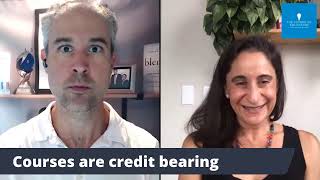
Abby Falik, CEO of Global Citizen Year, discusses the launch of Global Citizen Academy, a fully online program for high school students combining Minerva's active-learning platform with Global Citizen Year's fellowship model. The 10-15 hour weekly curriculum includes two accredited courses, real-world projects, and speakers like Melinda Gates and Wendy Kopp, with tuition on a sliding scale and $250,000 in scholarships from the Shawn Mendes Foundation.
Chapters
Welcome to the future of education. Really excited to have my first repeat guest on this format. Abby Fallock, CEO of Global Citizen Year. Abby was with me a few months ago and we were talking about how we shouldn't be thinking of this moment in high school seniors now graduates lives where many of them, we suspect, will be not going to college in the fall. And many of them will take what we have historically called a gap year and really had to reframe that as a year on purpose. And at the time, Abby, first, welcome. But second, you alluded to the fact that you would be launching something new soon and we would have you back on to talk about it, to really support individuals in this incredibly trying set of moments in the nation and across the world. So, so why don't we start there? You launched something called Global Citizen Academy in the last few weeks. What is it and how is it different from Global Citizen Year?
Thank you for having me back, Michael. I'm really excited to talk about this. I think the need for what we're building has never been greater. And even in the last couple of months since we spoke, the opportunity has just become even clearer. The opportunity to help young people who are coming out of high school this place past spring. So the high school class of 2020, whose future and options look dramatically different than any class that's come before them. And we need unorthodox new pathways that are accessible and purposeful. And we kicked into high gear in April and May to design and launch what has become Global Citizen Academy. So as I shared when we spoke before and for anybody who's watching and interested, Global Citizen Year, the organization I founded and lead for the last decade, has run a fellowship program for really high potential young leaders coming out of high school across the US and around the world. And the model has been to identify those young leaders and to take them through the equivalent of a school year long leadership course where they come together in California for training before and after that school year, the equivalent of the school year. And then from essentially September through April, they're living and working in a community in Asia, Africa or Latin America alongside the global majority, understanding what life looks like, looks and feels like for the majority of the world's inhabitants. And they live with a family and stay in a community long enough to go deeper than most of the flyby voluntourist experiences. They're not there to do a service project. They are there to observe and learn and be shaped by living in a new context and questioning everything they understood about themselves in the world. They learn a new language. They support a local project as what we call an apprentice. Again, it's not a volunteer placement or a global development operation. It's really about fundamentally shifting the orientation, the values, the identity, the wiring, the motivation, the convictions of a young leader, and recognizing that this transition, which I know you care a lot about as well, Michael, between high school and college is the ripest moment for doing that. And so when it became clear to us in April that we couldn't run our global fellowship responsibly in the context of a global pandemic, we recognized that we had built a lot of expertise and networks and curriculum and pedagogy that can be delivered through a new platform. And that's what's become Global Citizen Academy.
That's awesome. And so in practicality, then, it's a partnership with Minerva. Right. Which, for those that don't know, Minerva offers a. It's a technology company, I guess, first and foremost, with an active learning platform that I like to say, Abby, creates the most intense, robust seminar experience anyone has ever had in their lives. Way better than any face to face one that you've ever been a part of. And that they use that to power Minerva, historically, which has been a College that's about 6 years old, but now they're using it to power this new program. So what's it going to look like for learners who are coming into Global Citizen Academy?
So we had worked peripherally with Minerva for many years, and we'd always been a fan of what they do and what they've built. And it just felt like a perfect marriage of our mission with their pedagogy and approach to delivering active, engaged learning through what they've built, which they call their forum. And the first time I saw a demo of it, I was aware that not all online learning is created equal. I think we're having a lot of conversations right now about distance learning, and we tend to deprecate it like, well, it can't be as good as in person. But the reality is that most in person learning, lecture hall style, seminar style experiences tend to be quite passive and actually not very effective.
Yeah. Pretty crummy themselves.
Yeah, exactly, exactly. So there's something very exciting about being able to be on the cutting edge of how we can think about teaching and learning in new ways. So we've partnered with Minerva, who's helping us design courses and the Delivery Plan platform. And there are a number of components of the academy. So let me. Let's let. We can walk it through. It is accessible to students coming out of high school in 2020 from across the US and around the world. So part of the global dimension. But we can't send kids to have global experiences. We can bring them together in a truly globally representative cohort. Our instructors will be from around the world. Our speakers will be from around the world. The students will be the case studies and all of the course curriculum as well. So this is really for young people who are eager to learn about themselves in the broader context of this historic moment. What does life look and feel like for young people in different parts of the world right now? So students apply and we can talk a little bit about that, and then they have the opportunity. And I'll also mention that the tuition model, and this was deliberate, is pay what you can. So we recognize that there are millions of young people in this situation right now deciding whether or not paying full freight for a college experience that's going to be quite distorted, worthwhile is worth it. I tend to feel like it's probably not and that college can wait for so many young people. And we wanted to create something that wasn't going to be exclusive or elite or available only to kids who happen to have the financial means in order to participate. So it's a sliding scale model. You pay what you can.
That's huge, by the way. I mean, that's almost unprecedented right in this space, I think.
Yeah, I've never seen anything like it. And it just felt like a be bold. And so there's tuition for kids who can pay. And if your family's not in a position to. To. To pay tuition, we invite you to contribute a small deposit because we know that having some sense of ownership and skin in the game is crucial. But we've been actively raising a scholarship fund, including a big announcement yesterday with the Shawn Mendez Foundation. So singer songwriter who's gotten very excited about Global Citizen Year and Global Citizen Academy and has contributed $250,000 toward the scholarship fund in our mission to make sure that this is truly accessible to kids from across the economic spectrum, which is core to our mission as a nonprofit. So the academy experience consists of a number of parts. It's a 10 to 15 hour sort of active learning experience each week. And it's designed to layer on top of the lived experience that students might be having throughout the year. So the idea is you might be working for money, you might be volunteering on Covid relief or with an environmental nonprofit, you might be doing voter registration in the U.S. in the lead up to the November election. And we have now set up a whole roster of what we're calling Impact Partners, which are organizations who are excited to welcome our students as contributors to their mission, whether it's in person or virtually, depending on what context is available come September, which is all pretty hard to predict. But. So that's the experiential piece and then we're wrapping around it a curriculum that consists of of two courses that are accredited. So one is on Systems and Society that is developed by Minerva and they've used it in their core university experience for a long time. And it's really about the intersection of human behavior, group dynamics and society. So putting your experience in a global context, how does the world work and what's my role in it? The second course stems more from the work we've done at Global Citizen Year on Authentic Leadership Development and it's called Leadership as a Practice Practice. So it will be a practicum where you are both learning about yourself, your strengths and your weaknesses, trying various things in practice, reading historical context and case studies, and having an opportunity to interact directly with some of the world's leading thinkers and doers from across all industries and sectors. So we're putting together a high profile and very, very exciting speakers series calling it Leadership in Action. And just to give you a flavor for some of the people we've signed on. So we have social entrepreneurs like Andrew Yoon, who runs the One Acre Fund, and Wendy Kopp, who is the founder of Teach for America and now Teach for All. Melinda Gates has just signed on to give a talk. Sophia Bush is going to do a seminar on Civic engagement. Dre McKesson, one of the early leaders in the Black Lives Matter movement, is going to lead a piece on global activism. Varshini Prakash, the founder of the Sunrise Movement, is joining us as well. So. And the list is growing by the day. It's been really compelling to see how excited again, leaders in their industries are to share their experience with our students. And the intent of this speaker series is not to have a bunch of famous people kind of doing their stump speech. It's much more about getting into their inner lives, understanding their leadership journeys in a way that may not have been public before. This opportunity. It's all coming together to help young people figure out who they are and who they're becoming at this crucial moment in their lives. And how does that map to our historic moment?
That's incredible. It looks to me like my screen may have frozen, by the way, in an unfortunate post. I don't know if you're Seeing the same thing, but either way, you're almost smiling. All right, so almost there. But I'm still here from an audio perspective. So I guess the last question from my perspective is, so this is truly an international experience, actually, that you're cultivating now bringing. Which is demonstrably different. Well, Global Citizen Year brought people to international countries. This is now bringing anyone anywhere. How big do you think the program will be? And the scholarship news that just got announced, I think it was yesterday, the quarter million dollars, that's a pretty important signaling effect. I would think also that this is. This should be a mainstream opportunity. This is not a fringe thing anymore. This is something that is incredibly impactful for society, the learner, and sort of their pathway. Right. And so I'd love you to just think about the size of the program, what are we talking here, and how the scholarship really signals that in many ways.
So we've built it to be scalable, and that's by design. Exactly as you're saying, Michael. We're really committed to making sure that Global Citizen Academy becomes the best, accessible, formative next step for this year's high school graduates. And so we're in a position with the Minerva Partnership, the Minerva Forum, and the money we've been able to raise, both through Shawn Mendez and others, to make this accessible and big. So opportunities like this to share what it is we're doing and invite young people or adults who work with them to encourage them to explore the academy. You can go to our website, globalcitizenacademy.org learn much more and the application, we've made it quite easy. We are looking for kids who are determined and motivated, who are hopeful about the future and really committed to the specific opportunity that designed. But the application is quite quick. We are asking for a short video which is a personal statement, essentially an expression of why this experience and why now for you in particular. And as those videos roll in, we share them across our team. And it's been enormously inspiring to see that what we've built is matching a moment and a need in a way that kids are seeing themselves in this experience in a way that feels like we're onto something.
That's incredible. I put the website down there so people can check it out as they watch this video and as we push this out in newsletter and other forums. But just a huge thanks. I think that starting with the why for the learner, as you and I have discussed, is a question that is not asked nearly enough. And it's one that we ought to be Starting with and then building frankly right through these times. And so the courses that you're talking about and pairing it with that experiential element of impact in their community makes tons of sense from my perspective. Seems like a huge opportunity. Anything else you'd add, I guess is the final catch all question that you'd say, like make sure you think about X.
One of the things I realized I didn't mention is that the courses are credit bearing. And so the idea here persists well beyond just this fall. We're not seeing Global Citizen Academy as sort of a stopgap because we couldn't run our fellowship. We're actually envisioning that this becomes part of a new movement that forges a whole new pathway into young adulthood. And the opportunity to be able to provide courses that grant college credit ensures that able to embed these kinds of experiences in our notion of a higher education so that the traditional quote unquote gap year. And I know you and I have talked about how much we hate that term. Yes, we're moving beyond the notion of that being a luxury for an elite few that may or may not be purposeful to actually centering the idea that young people need a new type of transition into young adulthood. And to the extent that we can make it accessible, transformative and credit bearing, that changes everything. And we have a moment when, when anything is possible in terms of what the future of higher education will look like.
That's phenomenal. Just to geek out on it for one moment before we wrap up. So that's credit bearing because Minerva essentially allows that through their accreditation rate. And then do you already know that certain institutions because obviously Minerva could then accept it for some of those students. Are you having conversations with other schools to create articulation agreements or something like that where you know that those that they'll actually count those courses or their mechanics like that.
So the Minerva course that we are teaching on Global Systems in Society is accredited by Minerva and they have had the experience of those credits transferring broadly to a wide range of schools. I'll also mention that we're in conversation with colleges right now, which I had before. So there are a lot of schools that are now scrambling to figure out how to the term of the day apparently is de densify their college experience. And so it's. Some schools unexpectedly have found themselves over enrolled. Other schools have found themselves with a whole cohort of kids who are asking for a deferral but don't necessarily know what to do. And so we are in the process of designing formalized partnership arrangements with colleges who are excited to send a cohort of students to have a Global Citizen Academy experience before they welcome them back to campus.
That's awesome. That's awesome. Look, you and I have talked about this before, but I'll say it publicly that we make the conversation public, which is, I think the real magic is going to be when colleges partner with programs like Global Citizen Year now Global Citizen Academy through this to make it credit bearing and also bring their financial aid budgets to bear to make this more and more accessible. And colleges that don't, from my research and choosing college like they're just deluding themselves that a lot of students would be way more successful if they had this experience first.
That's right. We know it's true. And I think we've got a moment to make it happen.
Well, we'll keep pushing on. Thanks for the good work and thanks for joining us everyone. When you, when you watch this video and obviously reach out, I'll put the website there one more time. Globalcitizenacademy.org check it out. Apply become part of the cohort.
Next Application deadline is July 30, so check it out.
So get it in soon. So hey, thanks so much. Appreciate it.
Thank you, Michael.










