Behind The New Face of Education Philanthropy
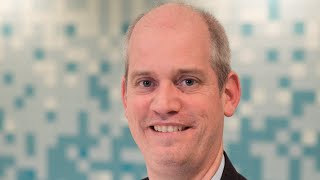
In this interview, Michael Horn talks with Tom Dawson, interim CEO of Strada Education Network, about how education philanthropy has evolved over the past decade and how Strada’s multi‑lever, networked model is designed to address today’s workforce‑education challenges. Dawson explains the shift from a focus on college access to a focus on college completion, and how foundations have moved from pure grant‑making to program‑related investments and ownership of for‑profit and nonprofit affiliates. He describes Strada’s intentional “network” – both internal (grants, investments, owned affiliates such as Road Trip Nation and Inside Track) and external (state governments, policymakers) – as essential for scaling impact across sectors. The conversation then turns to measurement: Strada is beginning to collect common impact data on three pillars – completion, value (post‑completion earnings and job outcomes), and purpose (social‑capital gains for low‑income learners). Dawson notes the difficulty of establishing sector‑wide metrics but stresses the need for common measures. They discuss the pandemic’s acceleration of adult learners’ demand for short‑term, skill‑focused programs, the lingering employer preference for degrees, and the growing openness to alternative pathways. Finally, they examine policy trends, especially increased federal funding for workforce‑training programs (WIOA, other Labor/Education Department initiatives) and the “first‑mile” problem of connecting learners to career information, arguing that data integration between education and labor agencies is crucial but insufficient without multi‑sector collaboration.
Chapters
Welcome to the future of education. Excited to be with Tom Dawson, who's the now interim CEO at Strada Education Network. We're going to get into what STRADA does. They're a fascinating new philanthropy, I would say, that is really on the cutting edge. Of what? Of how to think about the intersection of education in the workforce in truly novel ways. But first, Tom, welcome. It's good to see you.
Nice to see you as well, Michael. It's good to be back in touch.
Yeah, likewise, likewise. And for those that don't know, Tom and I grew up in the same neck of the woods, so we've had some knowledge of each other for a little while. But, you know, you've obviously had quite a career, ranging from senior roles at the Gates foundation and the U.S. department of Education, where you've gotten to craft policies in the wake of the dot com economic collapse. And now you have this opportunity. Right. With an incredible portfolio of giving activities, an incredible portfolio of organizations that you all directly own and support. I'd love you, though first, to sort of reflect across the wave of your work about some of the big shifts that you've seen in education philanthropy over the last couple of decades, just to give us that bird's eye view that, that I think you're one of a handful of people to uniquely have.
Sure. So I would say two things, and I think back to like 10 years ago, say, when I was at the Gates foundation, and I would point out what's changed from when I was at Gates to now that I'm at Stradden. I'd point out two things. The first is when I was first at Gates, the notion of college completion was really a new idea idea. And most philanthropy, most activities in higher education, a lot of the thought leadership that was being generated was really still around college access and affordability, which are important issues. But we, when I was at Gates, were just introducing and spending a lot of money and providing a lot of grants in the areas of college completion. And I remember at the time thinking that how long would this take to become more visible and more. More kind of in the lexicon, if you will. And now fast forward 10 years and a lot of the organizations that we stood up are now, you know, known organizations nationally Complete College America, for one, I think of. And then I also just think about how states and policymakers and, you know, even players in the private sector are now increasingly focused on helping, helping colleges improve completion rates. And that's a noticeable difference over a short period of time. The other thing I would Mention, and this is more akin to Strada is when I was at Gates, it was still, you know, when you think about big philanthropies and how they participated in terms of their grant making and their charitable activities, it was really focused on providing grants and some novel and creative foundations would do program related investments. But even that was new and a lot of foundations felt kind of skittish about that and squeamish about it. Now fast forward 10 years and everybody's doing program related investments. If you're a foundation and moreover, you have this new breed of organization akin to what, akin to what STRADA is. But you know, other players like Chan, Zuckerberg and Emerson, where they're focused on pulling multiple levers, many of them aren't even non profit, but to advance, advance a social mission. So that's, that's also relatively, you know, a lot's changed in 10 years.
Yeah, well, look, I think both of those are significant. Right to your point. The shift from college access to college success has been a tidal wave of change in higher education, but also philanthropy. And then on the second, with what you all have frankly led in many ways, strada not just making grants, as you said, but actually making investments and owning, even for profits outright. I'd love you to dig in deeper about the why behind that strategy and why you think, you know, in general the sector has become more comfortable with investments in any type of organization. But specifically, obviously at Strada, you all having a portfolio of organizations that you own and operate I think would be super illuminating.
Sure. So I would say that strada, like a lot of organizations like the kinds I mentioned that have moved into the space, say over the course of the last 10 years, that are not foundations. They, they're really interested in pulling multiple levers, not just grants. They're. Look, you know, they're largely sector agnostic, whether it's working with for profit players or governments or non profit entities. If you're in a field like education that's so heavily involved with and funded by the government, it's impossible to take a sort of siloed approach. You have to, you have to have a multi sector approach. And we think that being the type of organization we are with the levers that we pull is a much greater way of ultimately having impact and bringing to scale some of the effective interventions for the target populations that we seek to serve. If we're really interested in doing that. You have to have a sector agnostic, multiple sector, multiple lever type of approach.
So it makes sense. Let's let's double click on that a little bit. So talk about, you know, you all call yourself Strata Education Network. It's not just a stradic education philanthropies or foundation or something like that. So talk a little bit more about that notion of network and why that's such an important concept because you alluded to it there. But I'd love to dig in a little bit more deeply.
Sure. So network was very intentional. Both our name strada, which in Italian means winding path, which is supposed to connote unfortunately, the winding path that a lot of learners are on between transitioning between education, employment. But the network part's really important because there's both an internal network. So that's the, that's the grants we make, that's the investments that we make in outside parties, that's the affiliates that we operate, both nonprofit and for profit. But then there's also the external view of being a network, which is that you're working with parties that you may not directly, directly influence. So I think of state governments, policymakers, but you need to have both an internal network approach and an external network approach again to have that kind of scale that we're driving towards. So that's the, you know, the word network was. Both strata and network are really the most important two words in the three word Strata Education Network title.
So it's interesting though, right, because I think most people would say, oh, education must be, but you're purposely expanding beyond just education, recognizing that if you view education as a siloed problem, in effect, you're sort of going to miss the big reason why people enroll, the reason why it's so important in people's lives. And so that connection, sure, the meandering. But I think actually what I like about it is as opposed to a lot of efforts in education around, oh, everyone should be on a guided pathway or you know, everyone should have an IT or business certificate, which is super short term focused. It acknowledges that people, you know, do take pathways for life through life and they're going to be different from each other and more different than they ever were in the past, where perhaps you'd stay at one company for most of your career. That that really is not what most people are going to expect experience as they get out there. So. So I think it makes a heck of a lot of sense there. But I guess what it, the shift from my perspective then is, you know, you're focused very intentionally on measuring that social impact and thinking about that scale toward good, not just scale for its own Sake, but toward an outcome, how do you all dig into the measurement around that? Because the more you're entangled, if you will, across the ecosystem, it seems harder to wrap your hands around that measurement.
Yeah, so we, I would say two things. The first is that it's a long, it's a long path on measurement. We, we started intentionally measuring the impact of our nonprofit affiliates about three or four years ago. And we're just this year frankly getting the kind of volume of research and data back to actually show what their impact is. And it's not like we're running random control trial studies or, you know, necessarily activities or approaches that are tremendously sophisticated. Always it takes a long time to have a sufficient volume of students to have the commitment from the various parties. If you're working with a university, they have to be open to you, researching the effectiveness on their students. So as a result, I think when you look at other players in the sector, in the education and training space, there's. When people say impact and you actually look at their impact reports, you see a lot of data on reach and you see a lot of data on students served, for example. Those are all important things, but because for a variety of reasons like the one I just mentioned, it's hard to get at impact. We really think there's an opportunity to be kind of a field, sort of maker, if you will, around getting organizations like ours, sort of that external network I described before, to focus on common measures of impact. But before we can do that, we have to begin to discover and begin to generate results on the data, for example, that our affiliates are, our nonprofit affiliates that we own and operate are having. So we've started there and then our plan is to extend that to our investments. Those are the non controlling investments that we, that we don't own outright, and then also to include our grants as well. So we've started with, you know, that which we control the most, which are our affiliates. And we can, you know, we can work more closely with them to develop those kinds of impact measures. And then we intend to expand that across the variety of different activities that we're involved with.
So how much can you have measures that are in common? I mean, you all support a diversity of organizations that have very different missions, in many cases that operate in many different spheres. How much can you have metrics that are in common that bring these things together and unify? Or how much do you really just need to have a wide net, if you will? That's more disparate.
Yeah, I think we're starting with a wide net. So unlike some, because I have a couple of scars on me with respect to trying to generate sort of compelled or sector wide types of metrics where it's just too early to do that. The ambition is the right ambition, but it's just oftentimes the enthusiasm for developing those common metrics exceed the ability of, or the maturation of the field to do it. So what we're focused on initially out of the gate, Michael, is more how can we measure with our affiliates a common range of data and metrics around our learners completing their degrees and certificates that they start once they complete? Are they, you know, we talk about completion, value and purpose, so I just described completion. It's pretty, pretty obvious. Value is around. Do those learners, after they graduate, after they complete either their degree or certificate, whether it's in a four formal degree granting institution or not, do they, do they receive value from the program that they exited from and by that do they receive a pay increase, do they move up in terms of the job that they want? More quantitative measures? And then around purpose we're focused on some of the softer measures. So for example, if you're a low income learner, were you able as part of your educational pathway, were you able to develop social capital, for example, things that are, things that are a little softer but still important to measure. And in our view you really have to measure all three and treat it as the kind of three legs of the same stool. And what we're focused on in particular is identifying effective interventions around completion, value and purpose and saying that the way, you know, whether it's activity that road trip nation is involved with respect to trying to develop social capital with low income opportunity youth who go out on road trips or college completion with the work that Inside Track does is showing that our performance with a particular intervention exceeds the, the performance of a relevant standard in the field. So in the case of Inside Track, what's the, you know, what's the graduation rate at that particular institution or what's the graduation rate writ large for community colleges or for, for, for your institution? So it's about effective, it's about effective interventions. Excuse me, compared to a relevant standard benchmark.
So yeah, that's helpful.
And then scaling what we learn.
Gotcha. You know, I mean, just an aside actually, because I hadn't thought about it before, but you know, social capital is obviously becoming a much more important area of investment right now in the field. I think people are waking up to the fact that knowledge and skills are important. But beyond A baseline. It's who you know, not what you know. And the importance of having mentors and relationships and things that unlock block opportunity. You all were actually quite ahead of that trend, I would argue, at Strada investing in that many years ago acquisition of Road Trip Nation, I think was you correct me if I'm wrong, but like maybe five, six years ago at this point.
Yep.
Yeah. So 2016.
So yeah, five years ago.
Time flies deeply ahead of that. Yeah, right. It turns around quick. But the reason, I guess I mentioned it is because you're always peering around corners, you're thinking about what's to come. The recession, obviously, and the pandemic have resulted in a series of changes. There's a lot of speculation things will never go back to normal. On the one hand, to the moment we have herd immunity, people are going to slip back into their old familiar routines as quickly as possible. I'm curious how you see this playing out in the sectors that you're watching and investing in and if it's going to shift your investment strategy or your focus at all.
Well, the first thing I would say is we don't fully know, obviously. And so, you know, I would be remiss if I said that we've made any decisions about how the effects of the pandemic and the recession will affect our activities. Having said that, we are learning sort of initial things about how the pandemic has affected learners. So as you may know. Sure, you know, Michael, but folks who are joining may know we, we do a lot of work around assessing consumer insights. We had a relationship with Gallup, you know, throughout the course of the, of the pandemic. We were, we were releasing, you know, on a regular basis a variety of different kind of short burst evaluations and studies of what consumer feedback was on how the pandemic was affecting decision making. And one of the things we found was that especially with adults is that they are increasingly. There was some truth to this prior to the pandemic, but based on the feedback that we saw as a result of the work that we did during the pandemic, they are looking for. Adult learners in particular are looking for opportunities to improve their skill acquisition. And I would really focus on that word, skill acquisition because they aren't necessarily looking for a degree or a credential in a certain area from a certain institution. They're looking about how to improve the skills that they possess to make them more relevant. And so as a result, they'll go to a variety of different providers, whether it's a, or they are open to going, I should say, to a variety of different providers. Whether it's traditional institutions, whether it's competency based institutions like WGU or other providers, whether it's on the job learning. They are, they are, they are hungry and open to a variety of different pathways with respect to where they, where they learn and where they, where they improve their skills. And it doesn't have to take place. And necessarily in a traditional institution, most learners still go to a traditional institution, but there is increasing openness to going outside of that.
So, so I mean that part is actually fascinating. Right? Is, is, and your survey was the first place, I think that picked up this set of indicators which was in past recessions, students flock back to higher ed and the prevailing wisdom is, oh, higher ed is countercyclical, you know, community colleges that depending on the data set you look at, have been losing a lot of students over the last 10 years. They're, they're all going to come back and so forth. And that's not what we've seen both in your early insights predicting this, but then it's, it's materialized. Right? We haven't seen students rushing back to degree programs, but they are going to short term programs that, that are super focused on skill acquisition, as you said, you know, early indicate or early predictions, I guess from you, because we don't, we don't know for sure. But since you're able to see the, the pulse of this going ahead, do you see that continuing to increase people's awareness of these new programs increasing and looking for new options? Or do you think that maybe there'll be some retrenchment to more historical behavior?
No, I think the trend is here to stay. Does the rate of increase continue on the path that it's on? That's uncertain. No, but I think the, the openness and the willingness to experiment with new types of programs that are really focused on skill acquisition that precedes the recession and precedes the pandemic. I just think the pandemic accelerated it and I think that's for a whole host of reasons. All the, all the news and all of the frankly experience that a lot of learners have with excessive, you know, excessive amounts of student debt or, you know, not having the time necessarily to go back for a full degree. You know, most students now are adult learners and they have families, they have jobs and the traditional way of going to education that I went to school and you went to school is not relevant for an increasing and growing share of learners. So no, I think it's here to stay. I think the part that will be really interesting and the part that we're seeing evidence of, particularly with some of our investments and some of the work with our, our affiliates, is that traditional institutions we tend to, I would caution about viewing them skill acquisition and traditional institutions as being mutually exclusive. I think we're seeing a lot of evidence that the, the more entrepreneurial and thoughtful traditional institutions are moving increasingly into the skill acquisition space. So whether it's acquisition of boot camps or whether it's just just a variety of different, different approaches that creative entrepreneurial institutions are moving into. And so I think you'll see increasingly a lot of those institutions becoming responsive. Not all of them, but the creative ones, the ones that will ultimately win the day, are the ones I think, that will be open and be flexible and increasingly adopt some of these practices that adult learners show they're interested in around skill acquisition.
Yeah. And obviously Southern New Hampshire University acquiring Kenzie recently is a textbook example of that. And this is a topic I'm super interested in, obviously from my book Choosing College. I guess it's on the other shoulder, but in terms of why do students take these actions? But you also have invested a lot in research and understanding, if you will, the demand part of the economy in terms of the skills that are actually desired. MZ is an investment you all have in your portfolio. Can you talk a little bit about what you're starting to see in the data itself around what the labor market is valuing and how these short term programs do or don't contribute toward that? I think in particular, and we'll start to shift to the Washington D.C. lens and a little bit of some of the policies and so forth. But there's a lot of people that want more support for short term programs. At the same time, I had two secretaries of education on my podcast just a few weeks ago and they were both skeptical about extending to shorter than 15 week programs. Cause the data historically hasn't been that good. But data lags by definition. Right. So what are you all learning from that resource of MC and any other feelers you have out in the marketplace around what's being asked by employers and sort of outcomes from these different types of skill based programs?
Yeah, you know, I think employers. So two things. Your point about how data lags? Well, sometimes employers lag too. And being an employer, I can say that we sometimes lag as well. And so sometimes there's still a mindset among a lot of employers that the degree programs connote, you know, a certain set of skills that someone who possesses a degree versus someone who doesn't is more likely to have. And so that's, that's, it's not like that has been revolutionized overnight. That, that, that, that still tends to be the trend, but it is, it is changing. And I think a lot of employers are growing frustrated, you know, are growing, growing frustrated with sort of the glacial pace of change and a lot of traditional higher education. So I would say that, that based on what we see, most employers still have that preference for the degree. The data bears that out over time. But I think because data does lag to your point and employers sometimes lag too in their hiring practices, it is changing and it's changing more quickly than it has in the past. With respect to your question around policy, you know, Strada doesn't, doesn't have a defined policy agenda on that question you posed. But I would just say from where I, from where I sit, you know, we, we talk about being learner focused and at strata in terms of our investments and our grant making, and if you're going to be learner focused, we should be open to different types of, different types of programs and allowing dollars to follow students to those different programs, provided that the results are satisfactory. A lot of that lagging data comes from, a lot of the newer entrants into the market aren't reflected in that lagging data. So I don't put a lot of stock oftentimes in that lagging data. So I think it'll be really interesting to see what it looks like five years from now when we look at that data, you know, right now, two years from now, three years from now, five years from now.
So, yeah, no, that's, it makes a ton of sense. I mean, as my mentor Clay Christensen always said, the really unfortunate thing about data is it's, it's only backward looking and by definition, and it's only convincingly so in the way, distant past. Right. So you actually need theory and observation to project forward because the future isn't always like the past. So, and hopefully, fortunately in some dimensions here, I guess, you know, as we, as we sort of wrap up this conversation together, I'm curious as you're looking at the Biden administration speaking about policy, new folks in town, but many of them familiar faces, you know, several of them, obviously, what's one policy initiative that they're looking at that you're watching quite closely right now and monitoring.
So I think, you know, the pending legislation that actually just got an email this morning about a version of some of the pending legislation about making resources more readily available in workforce training. And you know, primarily in that workforce training realm, whether it's the WIOA act or some of the, some of the, the, some of the programs that have a workforce orientation out of either the Labor Department or the Education Department, those, the, the, the, the desire of the Biden administration to fund those programs at significantly higher levels are interesting. And I think the, the challenge will be while historically many of those programs, you know, admittedly have been underfunded, I think the challenge will be that what from what we see most learners when it comes to career navigation and you know, the transition between education, employment, they suffer from what we call a first mile problem, which is they don't know where to go to get the information that they need to make relevant career decisions. So that's why we invest in things like Road Trip Nation, which is all about solving that first mile problem, which is I have an interest in a particular field or you know, I'm, I'm vocationally inclined to be an engineer or an artist or what's a, what's a career path that will allow me to have a livable wage and provide for my family, but still, you know, be true to what I'm interested in. And what's the, you know, what's the educational path I need to be on to do that? The, the challenge with the significant increase in resources is it will provide a lot more money, but it doesn't really get at that first, first, first issue, which is there's still really siloed activity between education and employment. That's the, with, despite all of the improvements that we've made, there's still that siloed approach to education and workforce development. And simply pouring more money into one or more of them will not address the first mile problem. And I think there are limits to what government alone can do on that. It's not really their fault, but that's why you need to have this multi dimensional approach with foundations, with organizations like ours, with for profit players and with government. So.
Gotcha. Are you hoping that there will be movement, perhaps not from the administration led, but from Congress, to connect some of those databases between Department of Labor and Department of Education, so at least there's better information out there. Yeah. How important is that?
No, I think it is important, you know, you know, kind of more controversially, I think back to all of the discussion, you know, probably eight, ten years ago now, around gainful employment and gosh, it might even be longer than that. I'm starting to date myself, but. And that would require, you know, connectivity between Social Security data and education department data. That's important. That's important. But it is insufficient. That first mile problem, which is a much trickier problem to address is until we solve that, you can pour in billions of dollars. And I think you, you might get some incremental improvements, but you won't, you won't get the kind of holistic improvements that I'm excited by. You know, a lot of these new entrants that we help to support and help to fund, I think they more immediately address those issues. And so hopefully they can, they can attract some, some of the support, some of this funding, and hopefully that there'll be greater collaboration between the various players in the space.
So good stuff, Tom. I look appreciated and there's a lot of talk about the last mile problem, but I think you're absolutely right. That first mile problem is significant. It's a huge barrier, not one that we talk nearly enough about. So appreciate you raising that to the forum along with all the giving and research that you all do. So thanks for joining us.
Great. Thanks very much.
Yep. Everyone be well and thanks so much for tuning in.










