Bringing Personalized Music Education to the Masses
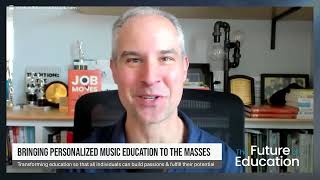
In this episode of the Future of Education podcast, host Michael Horn interviews Lucas Barwinski Brown, CEO of the Lang Lang International Music Foundation. Lucas recounts his unexpected career shift from a senior executive at Universal Music in Austria to leading a global music‑education nonprofit after a birthday invitation from pianist Lang Lang. He explains the foundation’s core mission: to give every child, regardless of background, access to high‑quality music education that improves brain development, academic outcomes, and executive‑function skills. The conversation details the two flagship programs: (1) Keys of Inspiration – a scalable in‑school piano‑lab model that equips public schools with 30 connected smart keyboards, headphones, benches, curriculum software (co‑created with the Royal College of Music), and teacher training; the program is embedded in the regular school curriculum and costs about $50,000 per school, delivering an estimated $600,000‑plus educational value per cohort, now serving roughly 180,000 students across 100 U.S. schools, 150 schools in China, and expanding in Europe. (2) Young Scholars – a talent‑identification and elite development pathway for gifted students (under 16‑17) that offers master classes, international academies, competitions, and mentorship from professors at Juilliard, Cleveland Institute of Music, Central Conservatory of Music, and Royal College of Music. Lucas describes the selection process, global regional tracks, and alumni successes (e.g., graduates attending Curtis, Juilliard, Harvard). He also discusses the evolution from Roland keyboards to a proprietary “One Piano” smart piano with integrated screens and animated curriculum, enabling personalized pacing and teacher dashboards. The interview touches on the philosophy of “happy learning,” blending classical and contemporary repertoire, the challenges of convincing school leaders to prioritize music over sports, and the foundation’s deliberate choice to invest deeply in fewer schools rather than superficially in many. Lucas emphasizes the impact of sustained, high‑quality programs versus minimal‑resource approaches, and expresses pride in the growth and future scalability of the model.
Chapters
Welcome to the Future of Education. And now here's your host, Michael Horn.
Welcome to the Future of Education. I'm Michael Horn. And you're joining the show where we are dedicated to creating a world in which all individuals can build their passions, fulfill their potential and live lives of purpose. And to help us think through how we get there today, I'm delighted we have Lucas Barwinski Brown. He's the CEO of the Law Long Long International Music Foundation. If folks don't know, in my humble opinion, Langlong is the greatest living pianist at the moment. And Lucas leads the foundation and it is just a thrill to have you. Lucas, thanks so much for being here.
Thank you very much for inviting me. I am very, very honored and very happy.
Well, I am delighted as well as listeners know, I'm a, I'm, I, I was an aspiring pianist at one point, so I, I, I love highlighting music education. Before we get into the. I would just love to hear about your own personal journey to the work. You know, how does one get to become president of the Long Long International Music Foundation? Not that this former pianist is jealous or anything like that, but I would just love to hear about your journey.
Yeah, the journey was practically my life journey is very, very full of surprise and, and, and very unexpected to be honest. And the same, the same way I, totally unexpected. I practically, I, I am, I landed here in the USA and everything has started I think I will say around 25 years ago when I met Lang Lang and as a head of Universal Music in Austria, so I was running Universal Music in Austria, classic and jazz and, and I met this young, young, young guy, nobody know him. He was like this was not the Lang Lang from today. This was really a different Lang Lang. Very young, very unexperienced. And we became really a very close friends and this, this friendship practically was cherished, you know, for, for, for many, many years. And, and one day, I never forget this, this was my birthday. And he came to celebrate my birthday with his mom and in Vienna and she was, all the time, half of the dinner he was talking with his mom in Chinese and using all the time my name as I was like, what the hell is going on? What are you talking about? And he said please, can you, can you, can you come to New York and run my foundation? And yeah, this was like, this was my reaction exactly. Wow. And we, we spoken very, very often about the foundation before and I was always pushing him to do the foundation because I think, and I believe that the foundation is, can be really his very Big legacy. And you know, and then unexpected, he, he asked me to run this. And as crazy as I am, you know, I quit my job, I sold my house and I move over the ocean and came to New York. And without no experience and not knowing really what I am going to do. And then I decided to exactly create this foundation together with him so that everybody will understand what we are doing, especially I will understand what I am doing. And this was the beginning and this is already 15 years ago.
Unbelievable. So, so I want to get into the work itself. It's obviously very authentic to who you are, to who Long Lang is, to his wife is, I might add, you know, professionally. The quote that you all have is, we believe that all children should have access to music and music education, regardless of their background or circumstances. You all work across geographies, though. We'll talk about the US perhaps in a moment, but also Europe, China. So tell us about the nature of the work of the foundation itself.
Yeah, the, you know, the, the mission is not only the slogan, it is, it is exactly what we believe. And, and we believe practically and we are working on this and we believe every day and, and we believe that music education is really a very important in children's lives. And also this is what I try to emphasize that music, and learning music and music education is not just the hobby. It is not that we are teaching those kids how to play piano or how to sing or how to play guitar. We believe, and this also scientists already scientistic, already proved that the children who are exposed to music and music education, the brain is totally different constraint than the children who are not. And so saying that those kids who are in our programs and we believe that we prepare them for the better academically life and as probably, you know, our programs are in very disadvantaged neighborhoods and we are going to those who need those program. So saying that we believe that we kind of like we are opening a better path for the future for those kids to, to, to finish the school and to, to, to go to the colleges and to, to, to make the better education for them.
Yeah. And I, I, I love this. Not only changing the brain, but also developing, you know, executive function skills, et cetera, right through music that pervades the rest of their life. Is the foundation. Is the work that you do in these communities. Is it you giving grants to music educators or is it you all running specific programs? How does it work on the ground?
The grants will be the easiest way and we don't like the easy way. We created programs and the main Two main programs are practically addressed to totally two different groups, groups of people. The, the one is the education program which we call Kizobe Inspiration. And this program is supporting the public title one schools in the across the country. And the second program is kind of like 180 degrees. On the other side is the Young Scholars program which in which we are supporting the super talented kids. Kids. The I am always saying though, those, you know, 10, 11, 12 years old who practically can play already with the orchestra at the Carnegie Hall. So, you know, so those two diametrically different programs, you know, practically are covered at 360 degrees. Because here you have this, the kids in needs and here you have those talented. And both groups are really, you know, very important for us. So answering your question, no, we are not giving grants in either of these programs. So what we are doing, for example, for the keys of Inspiration, it is also the most expensive program in the foundation. We are bringing to the school a piano lab. So when I create this program, I was thinking, how is this possible that the entire class of 30 kids can learn piano? You know, piano usually is one to one, is one professor, one kid. Otherwise, you know, the professor will make the suicide after, you know, 10 minutes of everybody are bumping on the pianos, right? So I was, I was like thinking, you know, how is this possible? What can we do? How is this? Because we cannot of course, making this one to one piano lessons in the public school schools. So I was thinking how I learn languages. I was going to the piano, to the language labs and everybody, you know, the entire class was sitting with the headphones that they were learning the language. And they said, this can be exactly the same way with the piano. And I contacted Roland, the very, very, you know, fantastic piano producer. And we were discussing this and they said, yeah, this is a great, this is a fantastic idea. Why we are not doing this? We can build a piano leg where 30 kids are sitting front of the keyboards and everyone has own and they are connected to each other. They have the headphones and they can play. And this will be exactly the one class get the piano lessons in one hour. And this is how we created practically the keys of inspiration. And when we are supporting the schools, we are bringing the, the keyboards, we are bringing the headphones, we are bringing the benches and learned materials and books, et cetera, et cetera. We are giving also the support for the teachers and we are making the teacher training. And I think the biggest difference between us and you know, Michael, everybody in America has a foundation, right? So there are Millions of foundation. But the biggest difference between us and those millions is that we are in the curriculum of every school. So we are not after school program. We are not preschool program or Sunday school program. We are exactly taking seriously as math, science or history. So this is, this, this is the, the, the, the, the let's say the spending what we are investing in the school. And one of my coworker, he made a calculation which I practically, I never did it, you know, and maybe this will be interesting for you. So Dan, who is also a teacher in one of our schools in Boston, he said, you know, did you think how much value you are bringing to the community with your piano? Lets. And I said I, you know, I hope a lot, but I never make any calculation, right? So he said to me, listen, average cost of the piano lesson is like around $50, right? So when you are going to get the piano lessons, you are paying probably 50 bucks. And so in the school, in the public schools, they have a 36 weeks of instruction, right? So average in our school, let's say today, because of course we are progressing. So in the, in the time, in the few years, you know, the entire school is learning the program, but let's say we are taking the first three years of the, of the, of the program. We are talking about 400 students, right? So he made the calculation and he said okay, $50, 36 weeks, 400 students is, brings you to over $600,000. So this, this the value which we as a, as a, as a foundation are bringing to the community, to the school community. And of course we can make this even further. And when we say we have now 100 schools and there's, you know, the $60 is almost like $660 million annually what we are bringing practically back to the community. So what the, this is the value of the program. And so this is, this is how our grants are working. And the same is with the, with the young scholars. The young scholars. We are, we are taking those kids and we help them to develop the artistry because of course they are in the fantastic schools, they have fantastic piano teacher. But yesterday, for example, I spent the entire day watching the master classes which we organized here in New York. So we are sending them to the festival, to the competitions. We have created piano academies in Beijing, in Cleveland and in Cambridge where we are sending all those kids and you know, to, to make the exchange with the best professors of, of. Of piano, you know, which you can edit. So this, this is the money where we are spending, we are not giving the $500 in the hand and say what you want, but, you know, I think this is much more important. Yeah.
So I. There's a number. I'm buzzing with numbers of questions right now, but I want to stay with the. Let's do the Young Scholars program first. Just. It's interesting to me because when I was in middle school, I competed in an international Chinese music competition. And there was a young Chinese woman who blew us all away in the competition. And then I remember my grandparents being so blown away by her that they sponsored her to come to America and study at Juilliard through the rest of the time. And so I have a lot of excitement, I guess, for what you're doing for these people. Are these individuals, when you identify these young scholars, these talented people, are, you know, are they from the same demographic as the keys for inspiration or is it anyone when you find these people and send them to these incredible academies?
Yeah, it is. It is open for entire. For entire world. So every three years now I extend it. This was before it was two years. Now I extended to the third year. So every three years we are opening the application process practically for everyone. Everyone who is not older than 16, 17 years old can apply. And you are sending the two videos. The one video is where you are playing and the one video is when you are talking. So we won't know also, you know, your personality, you know, and then we have agrinium from very esteemed professors, like, you know, we have professors from Juilliard here in America and Cleveland Institute of Music. We have professors from Central Conservatory of Music in Beijing. We have professors from Royal College of Music in London. So those, those profit, those professors, they are practically selecting the finalists. And now we have created also like three halves, which we have the Asian, Asian students, you know, like China, Japan, Korea. Then when we are doing with them, then we have the, you know, European and they had like rest of the world, we have here in the States. And this is, this is something what makes me very, very proud because, you know, like when I know those kids when they were 10 and we have a lot of alumni and now, now I see that the guy is 20 and play with the orchestra and then winning the festivals. And next week, one of my, one of my really, really like, like son, he's calling me dad, you know, Clayton Stevenson, he's getting the, the. The Medal of Excellence in, in, in. In Washington D.C. you know. So this makes you so proud, you know. And they are finishing Curtis and Juilliard and Harvard and Columbia. And you Know, playing all over the places. And, and it is really very rewarding program. It's very rewarding. And, and then you have, on the other side, you have, you know, those, those, those, you know, those elementary school kids, you know, and when you are going there, they, they welcome you and they are so proud because they never see the piano from close. And you know, and they are starting with one finger, you know, and, and then next year you are going to the school and they play already, you know, maybe with one hand or with the five fingers, you know. So this makes you really, this is exactly, you know, Michael, my entire life I was working in corporations. I was working, you know, in Polygram probably you, you know, Polygram from the, from the previous times, you know, the biggest, you know, record company. So Polygram, then Universal, then Phillips Classic, you know, et cetera, et cetera, Virgin. And I was making somebody more richer and richer. And now for the first time and this, you know, since 15 years, I am giving back and I feel so rewarded. I feel so happy when I'm going to those schools, when I see my young scholars and, and, and you know, this is something what I never thought I will, I will witness. And this makes me probably so very happy person.
So I, I want to dig in now to this Keys of Inspiration program where you've outfitted these piano labs with Roland. I have a Roland keyboard right over there. So I so, so love, love the electric instruments that they make. It's a beautiful piano sound. The question I, I would love to know is, I mean, you're building the curriculum. They have the headphones on so they're able to play. What does the class look like? Are they able to move at their own pace as they, you know, someone perhaps masters, you know, two hands before someone else masters, you know, just the five fingers. Do you give that kind of personalization? Are you helping teachers learn how to do that?
Yes. So this year we switched from Roland, we switched to another company which I, I, I founded, which produced the Smart Pianos. So this is like kind of like, like step up of this, what we did, you know, in the past few years. So the, the, the, the One Piano. This is the name of the piano, the One Piano. The Smart Piano has integrated also a software. So now our classroom looks really like from 21st century. And I think kids are, love it because, you know, now kids are probably much more advanced than we are with all this telephone and play games and everything, you know. So now that every piano, piano, every instrument has also a screen. And the screen is Connected automatically to the piano. And in this screen you have already the software which is practically an animated curriculum which we have created with Royal College of Music in Toronto. So it is kind of like, because they are kids, we are going to the second grader, second, third, fourth grader, you know, they are kids we want to make. And this is practically the philosophy of Lang Lang. And he wants always to make a happy children learning the piano. So he wants to make this happy moments when you are coming to the piano less. And by the way, the program in China here we call Keys of inspiration. In China they call this program Happy Kids. So this is exactly, you know, the philosophy. It is like the kids supposed to be happy when they play, when they learn. They don't know even when they learn and how they learn. They learn, right? Because learning by, by, by playing. And this is exactly, this is what we want. Of course, it is very serious curriculum. Of course they are making the progress. Of course it is, you know, it is learning the music and of course this, learning the theory and you know, and this is what I said. I'm always saying they don't need to play Bach and Schumann, you know, they can play also, you know, John Legend and Beyonce as long they know how to read their score, you know, so this is exactly the case. And now they are sitting in this room. It is a beautiful, you know, like picture when you are coming and you see those pianos with the screens and then you have a main kind of like, like conductor is that the teacher. And the teacher is connected to every single kid and he see and he heard or she had the progress of the, of the kids. And, and, and you know, and you can, you can individualize, you can say, Michael, you play this because I heard that you struggle with, you know, with the have not. Right. And then, you know, Mika, you know, will play, for example, something different because she's already a little bit farther than Michael. Right. So they can, they can also personalize this. And of course you can, you can also, you know, make kind of like little bit show and you take the headphones off and you can play for the entire class. Wow.
And so you, yeah, so you learn, you, you, you, you learn a little bit of performance then.
Yeah, exactly, exactly. And, and you know, and the kids are very proud and very, you know, they even with one finger, but they are very happy, you know, the other.
To play, you know, like, well, and they're making progress. It's a beautiful, it's a beautiful thing.
Yeah.
Let me ask this question, which is, I Think I read somewhere that the classes you all say that they should be twice a week or something like that. Is that what you've done in places like Boston? And how, how can we make that everywhere? Because at least in. When I grew up in my kids school right now I remember music class a week. If we're being honest, we didn't really learn much. It was more about exposure. It wasn't really about the learning. How do we, how do we get to where you all more systematically across our schools.
The two weeks is of course were a dream and I, I'm. I'm very, very proud because most of our schools they have a two weeks program. So you know why we started even this program and why we started even thinking about this program. Program. Right. It is because the, the first and you know this, the. The best, you know the first word is kicked out of the school is the music. When the, the. When the principals they have the choice, you know, sport or music or something, you know, the always they will choose the sport, never the music. So this is why we say, you know this is really. It is a, A. A lot big need here in the country. And and, and I realize not in the, in. This is not only the, the you know the America, you know situation is practically everywhere. And and and so to you know, I have a very big sentiment to, to, to Boston because Boston practically was the, the born place of keys of inspiration. And I tell you that very, very short. I was warning you that I'm talking a lot, you know. Yeah. So you know, when we decided and we were so excited, Lang Lang and I that we want to go to the public schools in you know and, and bring our program and, and, and and teach the music. Everybody everybody laughed us out. Everybody. This was not even the best friend. Everybody said that we are crazy. And they say, you know, you are Chinese, you are Polish, Austrian. You don't know what you are talking about. You know, you know the public school system in America is so complicated and, and you know, every principal is like the king of the kingdom and you know, you cannot do anything with them. Forget it. Why you're not making some you know, claps or whatever. You know the kids maybe on Saturday can come and, and I look at the Lang Lang and I said hell no, I don't want this. You know, we had this. No, I, I want to go to this, to the public schools. And, and then I was in, in Boston. He has a concert in Boston and I met people from Boston Arts Academy and, and you know, and Mr. Holt. And then, you know, and, and I, I told them, I said, listen, this is my dream. This is, this, this is a piano lab. You know, we can build a piano lab. This will be crazy. You know, this entire class is learning this with headphones. And they said, we love it. And they connected me with the orchard girl with orchard. Orchard, garden. Yeah. This, this was our first schools in Boston, you know, public school, you know, elementary school. And they installed also a piano lab in the pub in the Boston Arts Academy. And this was for me, Michael, the moment when I started to believe in this program. Because I said when one school got it and, and making, then I will go and I will do really a lot. I, I, there's no, nobody can, can stop me. And, and Ariela, my, my education director, she said me, you know, two days ago that we, we just achieved 100 schools in America. You know, we, we support hundred schools. So, so this is, this, you know, it's, it makes me really proud about this. And, and, and I am, I'm really very happy about this. And, and we have 150 schools in, in China. And we expanded now the program to Europe. And so practically, when you, and I'm always the conservative, you know, mathematician, I'm always taking only the, the first three years. I'm not, you know, some of the schools, they have already programmed for 10 years or for eight years. So you can multiply this. But let's say today on a Friday, you know, over 180,000 kids learning our program in different schools. So, you know, from the first school in Boston, you know, to those school across the countries, it is something very special.
That's wonderful. Well, one of the times when you were in Boston, this is where I live. So I'm going to have to come with you and see this in person because it just sounds amazing what you've created. And frankly, it sounds like a model not just for music education, but in terms of the progress and delight for kids that all of their classes perhaps could learn from. And take some tips from how you've built this curriculum for each individual child and teacher and support them all. It's really something.
Yeah. Yeah, it is, it is. And you know, it is showing you also that you are on the right path. You know, it is, it is showing you there is a need. You know, somebody I remember a few years ago was asking me why we have only, let's say, 80 schools and not 800 or 8,000. And I'm saying, and I answer, and I said, listen, you know, the program at least cost me a $50,000 per school. Right? We are bringing every equipment. We are bringing like, 30 pianos, et cetera, et cetera. I said, if I will do like other foundations are doing and bring one keyboard to this school, I will have already 5,000 schools.
Right. But the impact would not be what it is.
Exactly. This is not what we wanted, you know, so some, some. Some other. Other foundations, they are, you know, they bring one guitar to their school and they said, oh, we support music at vocation. Right? But. But, you know, this is not what. What we believe. We at the Lang Lang foundation, we believe really that this has to be a genuine, you know, genuine teaching. This has to be a really taking seriously. And this is how. How. How we. How we believe in this program.
I love it. Lucas, thank you so much for coming on the future of Education to describe not just the commitment, but then the actual impact and the depth of that. And I think you've created a model that I hope a lot of folks learn from, and I'm excited to spotlight. So thank you so much.
Thank you so very much, Michael, for inviting me. And if you want to have a, you know, talking companion, I am always for you.
Terrific. Terrific. Well, we'll count on that next time you're in Boston. And for all of you tuning in, check it out online, Learn more. And we'll be back. Next time on the Future of Education.
Sam.










