Building a Microschool Community in Los Angeles
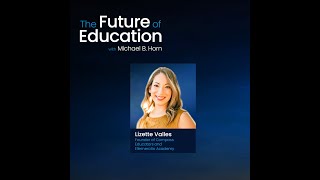
Lizette Valles, a former school librarian, founded El Mercito Microschool Academy in Los Angeles after the pandemic to serve at-risk high school students. The school started in a race-car warehouse, now enrolls about 20 students pre-K to high school, and uses grants and pay-what-you-can tuition to operate in a state without Education Savings Accounts.
Chapters
Welcome to the Future of Education.
And now here's your host, Michael Horne.
Welcome to the Future of Education, where we are dedicated to building a world in which all individuals can build their passions, fulfill their potential, and live a life of purpose. And to help us think through that, today we have a very special guest. Her name is Lizette Valles. She has a number of titles. She's the founder of Compass and Educators, which is a holistic educational services center, and just doing some fantastic work in the Los Angeles area. Got to meet her at Harvard at a conference a few months back, and now we're finally having this conversation. So, Lisette, thank you so much for joining us.
Thanks for having me, Michael.
Yeah, you bet. So let's dive in at the start, because you have these two organizations you're founders of. The first one, if I understand, was Compass Educators, and. And I believe you founded in June of 2020. So we're sort of height of the pandemic. Tell us about the founding story and your own journey to deciding that this is what you wanted to create and what it is.
Well, at the time when the pandemic hit, I was actually a librarian at a private high school, and I was assigned about 70 students to tutor. These were students that were at risk of failing. And so they were coming to me completely overwhelmed. So much anxiety, so much depression happening. And I really thought, not being a therapist at all, but just from one human being to another, how can I meet these kids where they are? And really, that's how the holistic educational services center started. One of my colleagues said, I think you need to open up, like, a tutoring center or, you know, you need to really, like, run with this because there's such a need. And that's exactly what happened. And, yeah, then our micro school was birthed from that.
So tell us then, a little bit more before we get to the micro school. All the services, it's a tutoring center. What else is encompassed in what you all do at the. At Compass Educators? And why did you feel like, you know, serving as the librarian of the private school, you know, you couldn't fill this need. You actually have to take the step of becoming an entrepreneur. Why? Why? Create something new.
Yeah. So, you know, as with many schools, there's all sorts of, you know, like, bureaucracy and regulations and all of that. And I've always been. There's. There's a, you know, a saying like, there's a coach's coach, and my. My husband always refers to me, and it sounds a bit redundant, but as, you know, a student's teacher and he's like, you literally, like, you're just there for the kids, you know, very tunnel vision. The adults are like, on the periphery. Like, I don't, I don't really care about what's happening on the outside. I want to focus in on my students. And because of that, I develop really, really solid relationships. Such a good rapport with them. And so they would come to me and I kind of served as, you know, like a counselor of sorts. And just like a sounding word. A lot of times when they felt like maybe they couldn't open up about certain things, they would talk to me. And so then kind of letting them know that it was okay to like, share with others and share with their parents and then building that, that relationship with their families. And so I knew that I couldn't do it necessarily where I was, but something new had to be created altogether just because of all of the restrictions. And I wanted to, like, at this point, working at a private school, a lot of my students were students of faith. So I was like, hey, like, if you want to pray, like, I'm down. If you don't want to pray, like, I'm okay too, you know, so meeting them where they were, even like doing breath work, like, hey, before we dive into tutoring, let's help regulate the nervous system because you obviously, like, are not here with me. You know, you're, you're not fully present and, and in order for us to, to kind of get some work done and for it to be a productive hour, so like, why don't we go ahead and delve into that? So it really became like this again. It's, it's a holistic educational services center because we really believe in the whole child. Yeah. And so moving from tutoring then to helping parents navigate all of these new educational options, that became something huge. But really like academic coaching, looking at executive functioning skills, be it like memory or organization, anything like that, because students oftentimes are struggling with some very, very basic executive functioning skills. And kind of pinpointing that and helping them organize their lives really does go a long way.
Wow. So fast forward for today before we get to the micro school that you then started. How many students are you serving through the center? Are there other services that you're providing besides this holistic support and tutoring model? What does that look like?
Yeah, so we probably serve, at this point, we probably serve close to 50 students. And we're, you know, we really have a heart for first generation college students. So Those kids that are really trying to navigate perhaps like applying to college and, you know, they just don't know the steps and they're overwhelmed and their parents are overwhelmed and I happen to be a Latina founder and so that plays a huge role. So a lot of word of mouth and saying, like, hey, hey, there's support here for you. There's a place where you're seen, known and heard and like, you matter. Right. So as soon as anyone contacts us, it's really honing in on how we can best meet their needs. And yeah, so we're serving, you know, like close to 50 kids. So that's academic coaching, that's tutoring, that's resume help, you know, sat, SAT assistance. So anything having to do with academics. And we even do, you know, my husband will do like social emotional support where maybe it's just talking, but it's not necessarily counseling. It's just like, hey, like, my kid's going through a difficult time. Would you mind like, maybe playing, you know, I don't know, like some sort of academic game together? And it sounds so simple, but because we are trauma informed, we're foster adoptive parents. And literally just knowing that there's so much academic trauma or like relational trauma, all sorts of trauma that, that kids are presented with. They might be a little bit intimidated by a counselor, but they're not as intimidated when it's like, hey, we're just going to go ahead and, you know, like, play a game and talk and. And even doing like sibling conflict resolution. That was something that was like, altogether new for us. We do it here at home. But then when a family requested it, like, okay, I guess, yes, you know, so just really interesting, just really interesting things that families are seeking and that they're not readily available. And so, yeah, it's really, really awesome.
Super interesting. And also about how not having the title of therapist or whatever it might be almost lowers the barrier, right? So people feel like they can open up. That's really cool. And yet at the same time, I guess not promising something you can't deliver, right? Meeting them where they are. That's really interesting. So then fast forward a few months later and you start the El Mercito Microschool Academy, which I think we're now talking probably September of 2020, or is it 2021, maybe a year after that? I'm not sure. Tell us about when that started and what, what, what that's all about.
Yeah, so. So Al Mercito Academy started August 2021. So it was a mad dash you know, the pandemic hits. There's three months between, you know, when everything is closed and when we launch COMPASS Educators, and then we move forward into launching a micro school. And it really came out of this need that. That arose from families asking if we could privately homeschool their children. So through COMPASS Educators, we started privately homeschooling students online. And then parents were asking, could you do this in person? Right. So we couldn't at that time. But then by like, 20, 21, we felt like we were in a lot. We were better positioned to go ahead and launch. And it was just. It's. It's kind of funny how I literally. I bought this desk, like a old school desk for my son because he was our first homeschooling student. And I thought, okay, we're gonna go ahead and use it, and I'm gonna replicate school, school. And I bought this, you know, homeschool in a box curriculum, and we very rarely used it. And I think I was in the process of deschooling myself. Like, I was so conventionally trained. I went to a Catholic school for nine years. You know, I mean, yes, very, very, like, conventional background, so thinking, okay, well, I need to just replicate school. Right? That's what I should be doing. And still, still being in this box and really not even giving myself permission to think differently about education. I hadn't really been exposed to alternative forms of schooling, maybe like, homeschooling. I had some friends that had been homeschooled very briefly, had taken my son to forest school, but that was the extent. So, yeah, knowing that our students were needing, like, a brick and mortar location, they were needing in person instruction, but what was that going to look like? So we started in a race car warehouse in Los Angeles and our founding family, their race car drivers, and like, hey, you know, could you go ahead and teach our kids? And we said yes. And I. I think you'll see the running theme here is yes. Like, we say yes. You know, like, scared, unprepared, however, like, imperfectly. But we do say yes. And. And it turns out to be way better than we expected. And it's not because my husband and I, like, have it all figured out. We have all the answers. I think it's just the mere gift of showing up and being there and being present. And so that's gone a long way.
Wow. So tell us. Obviously, the educational model changed a lot. You're serving, I suspect, many more students now. Tell us what it looks like today.
Sure. Yeah. So we started off with four students so three siblings and then our son. And it's steadily grown. So we have 20 students right now. And I want to say that's kind of like the magic number for us. There's three of us who are teaching and we have a pre K to second grade teacher. And then my husband focuses on middle school, like elementary and middle school, and then I focus on high school. And I also, like, wear a lot of other hats. But yes, and just knowing that, you know, the race car warehouse, that was a, that was a good starting point. It was really fun. And, you know, we did our thing and we maximized that, that location. But then we moved over to a church and now we're renting out, you know, spaces there and it's. It's been really great. And so, yeah, just continuing to grow. There was one other micro school founder when I started working with the National Microschooling center as a California Phil coordinator. And this gentleman was in Calabasas and you know, we were in Southgate at the time. And now there's upwards of 30 of us in California. And it's just been one conversation after another. So with each founder, I'm endlessly inspired because everyone's story is so different and, you know, so just gathering in in a couple days, we'll be, you know, meeting up online and discussing all the things that make what we're doing, you know, like, special, but then also all the challenges. So it's really good to have that community too.
So I want to go there in just one moment, but first on the context and environment. I didn't realize that the number of micro schools in California was starting to grow so quickly. What's interesting, obviously, is you're operating in a state that doesn't have education savings accounts. So the families you're serving are finding the dollars, presumably to be able to afford this experience. And then they're choosing to opt out of the traditional district or wherever they were. Talk to us about, like, what that looks like and, you know, why are families making these choices?
Yeah, well, you know, perhaps our founding family, I want to say they were, they were all in, and they were definitely like believers in what we were doing and they were funding a great deal of the project. Fast forward to today. I want to say about 95% of our students are receiving financial assistance and that comes in the form of grants. So a lot of what I do is grant writing. And we, you know, we're definitely trying to maintain this ratio of, you know, families that could perhaps pay the full tuition amount versus Families that maybe need some, some more support there financially. But I met with, with Alexi Burgess from Alcove Learning in Boyle Heights for learning alcove. Karen McDonnell organized a tour and we went out there to go visit. And I just remember him saying, you know, Lizette, the numbers will take care of themselves. They really will. And I just saw his micro school thriving. And so we've adopted that model of, you know, pay what you can and, and if you, you can pay, you know, there are families that can pay the full amount, they, they go ahead and do that. And so it's been really amazing to see when parents trust you and when you've built that rapport and those strong relationships, they don't take advantage of that. They actually want to see how they could help. They're so invested in their kids education, you know, they're asking if they could volunteer, things like that. So we have seen a lot of students who do need that financial assistance and we don't deny anyone based on like, you know, not being able to pay the full tuition. And that is probably like a really wild idea. And so again saying, saying yes and believing that, you know, as Alexa said, the numbers will work themselves out. And so we don't have it all down at all. But it does seem to be working. The families again, who can pay the full amount due and those who can't, we come alongside and support them in whatever way we can.
Amazing. That makes a lot of sense. So we could spend a lot of time geeking out on your school and part of me really wants to because I want to hear more. But the other really cool thing that you just sort of dropped in there is that you're helping the National Microschooling center as the California Field Coordinator and really building this broader ecosystem of these new forms of choice that we haven't really seen before. You know, it's really the last decade in the United States that it started to take off. So talk to us about what your work there is entailed and well, let's start there. What's your work really entail? Being the California Field Coordinator for micro schools.
Yeah, so it's a really cool role. I became the field coordinator in, let me see, was a little over a year now and as I mentioned, you know, that it was just myself and another gentleman in Calabasas. And I'm sure that there were kind of like underground micro schools, you know. Definitely. But because California is not super big on school choice. Right. A lot of people want to stay under the radar. So so that's pretty much what I was facing when I said yes. And, and, and really I bec. I became the point person for anyone in California who is an aspiring founder or maybe parents that have questions and they just kind of want to have like a relational navigator of sorts to really maneuver all of the options because now there's so many. Right. You have hybrid school schooling, micro schooling and like charter schools and I mean charter schools have been around for, for a bit, but you know, they really are just trying to understand what their options are and so gathering. And that's one of the things I love to do the most. I love to gather people and say, hey, you have an idea for school, you want it to be, you know, stem focused or you know, whatever, whatever they, they are into and saying like, yeah, like just validating them and encouraging them and letting them know also like the hard truths that it's going to take a great deal of resiliency and grit and like 99 of this work is that, you know, and just kind of like one day after the next pushing through because we're not in an ESA state, because we're not in a school. School choice friendly state, necessarily, but then also letting them know that there are families who are seeking this and those families will find them.
So tell me what, from your perspective, you get to see this landscape of new options. Parents trying to make choices in a state, as you mentioned, that's not super friendly to this. What do you see as the, like, what is this movement of micro schools? What are the biggest needs right now in the landscape? What's the biggest support that you're providing or that they're asking for?
Yeah, I would say guidance. Like a lot of. And these are founders, right? Aspiring founders or families?
Either one, because I guess you're playing both roles. So I mean, both are interesting, right? Getting a school off the ground and sustainable is hard. And obviously helping families navigate these new options and make sure that they land in something that serves their kid well is also hard. So yeah, talk about both sides, I suppose.
Yeah, well, I want to say it's pretty similar for both. So first of all, everyone is just looking for guidance. I think that as new models are beginning to show up, people are interested, but they don't necessarily know how to go about just navigating all of these options. And so families are asking, what, what's out there? What is a micro school? Exactly. And you know, there's been this lack of definition and I, I think, you know, in the simplest of terms it's a modern spin on the one room schoolhouse. Highly personalized learning, typically very small learning environments with multi ages. Right. So explaining that and going further in depth is typically like what they're looking for. They really just want to know they're coming in with. I'm not sure if you have read Thomas Arnett's like Jobs to be done. Yes, absolutely. Love, love Tom's work and that they're, they're coming in because there's you know, certain jobs that need to be done. Right. Like they're looking for safety for their children for a variety of reasons. Conventional schooling is not working and so they just want a different pathway. So I kind of, you know, talk that through with them and unpack that. And the same is true for aspiring founders. They're really excited. Or even teachers who are in a teacher education program, like a teacher preparation program. They have two options right now. They either go into, you know, working in a private school or in a public school. But as I'm speaking with these aspiring teachers, I just guest lectured at the University of Virginia and there's 120 students and most of them are going into policy, some into entrepreneurship, some into education. And they just could not fathom like wait, how do you teach multiple ages all in one setting? And so many questions but really it's all about educating like everyone about what micro schools are and how they could be of service, how they're a viable option. So yeah, so really looking at parents and at aspiring founders and also just like the general public and saying like hey, these are some really amazing ways that we could help meet students needs in a highly personalized setting. And I'm, I'm on my way tonight. I'm actually flying out to Indiana and I'll be attending the hospital. So it's a lengthy name Hospital Educator and Academic Liaison Conference. So the HEAL conference it is. Yes. And there's hospital schools that I was unaware of. And so now going into this new sector, into the medical sector and saying hey, you know, micro schools could be a wonderful, wonderful way to help students that are undergoing chemotherapy or maybe they are coming out of psychiatric treatment and need some support or whatever the case is. But kids that are on the fringes that are, you know, these vulnerable populations, they have medical and mental health challenges that are not easily overcome and how can we like really form schools around them and, and be inclusive and that's going to allow for more accessibility and more equity. And let's say there's someone that's terminally ill. The quality of life can still be, can still be there, right? Like we're saying, like, you have value, we see you and we, we want to build community around you. So things like that truly feel my work. I mean, there's a never ending supply of, you know, inspiration like this.
Wow. So, last question as we start to wrap up here, which is if you put on your crystal ball, you see the trend lines, you see some of these innovations that I didn't know about either, in terms of hospital schooling and the like, where do you think this is all headed? Like, in five years, you and I are in this conversation again. You know, what's the growth of this look like? What is the choice patterns, behavior, wherever you want to take that question. Put your crystal ball on. Where do you think this is going?
I really see this movement not slowing down anytime soon. I do see families spending a lot more time together. They're adventuring, they're going on hikes, they're traveling, they're doing their thing because they have a lot more time due to the flexibility and freedom that micro schooling is, you know, is providing. So I don't think that, like, once you get a taste of that, I don't think that you're ever able to go back into a box. You really say, like, the doors have been ripped off of the classroom. Learning is happening everywhere, all the time. And so it's very, very difficult to like cage people back in because they, they will not be caged back in. So I really do see this trend just continuing to grow. And it's super exciting because we're in the midst of this incredibly beautiful educational revolution and being a part of that at the very forefront, like, who would have known, right? We're just, most of us are former private public school teachers and there's a lot who aren't as well, but those of us who are coming out of this conventional form of schooling, I think there's a great deal of freedom there. And so I know that at least for us, like, we're not stopping anytime soon, nor are we going to be quiet about it. So it's, I definitely see the trend moving forward.
Wow. Okay. Well, so thank you for painting that future and educating not just me, but all the students and micro school founders that you are really appreciate having learned from you today and all the work that you continue to do. Thanks so much for being with us, Lizette.
Thank you so much, Michael.
Absolutely. And for all you tuning in. We'll be back. Next time on the Future of Education.










