Career Connected Learning with the TGR Foundation
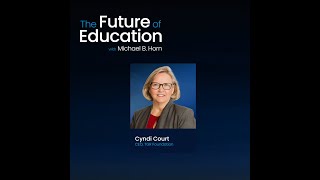
Cindy Court, CEO of the TGR Foundation, runs career-connected learning labs where students start exploring careers in fifth grade through hands-on STEAM projects. The Anaheim facility serves 7,000 students annually with real-world challenges like health assessments with Providence Health Care, plus internships and pre-apprenticeships. Two new labs are opening: one in Philadelphia in early 2025 and Lulu's Place near LAX, aiming to reach 21,000 students total.
Chapters
Welcome to the Future of Education. And now, here's your host, Michael Horne.
Welcome to the Future of Education, where we are dedicated to building a world in which all individuals can build their passions, fulfill their potential, and live a life of purpose. And to help us think through how we accomplish that. I am tremendously excited for our guest today. She's the CEO of the TGR foundation, none other than Cindy Court. Cindy, thank you so much for joining us today.
Thanks for having us, Michael.
You bet, you bet. So let's start. Before we get into the work of the foundation and some of the labs that you're running and scaling and so forth, just tell us about your own journey into the TGR foundation and what attracted you about this opportunity in specific.
Yeah, I'm an educator. I did my education degree many, many years ago in Toronto, Canada, but really fell in love with the after school space when my husband and I moved to Tampa. Flor I have been local. I love the creativity that happens in the after school space. I love the fact that we can come alongside both schools and be great partners and support schools and local educators, but also come alongside families and provide wraparound services in the after school space. I've spent the majority of my career either locally with the Salvation army and over a decade with Boys and Girls Clubs of America, the national office for Boys and Girls Clubs club movement. I was their chief development and marketing officer. So this actually appealed to me because there's a big differential in what tiger's trying to do here. The mission is very clear. It's about empowering young people to pursue their passions. Little similar to your mission, but through education. And so it's not just in the after school space, but we run programs during the day and we have kids come in from local schools all over Anaheim. And while while they're getting hands on creative STEAM curriculum, their teachers are getting teacher education. So we have this beautiful 35,000 square foot beautiful facility that has the latest technology in it, but it's not just used after school, it's used all day long. So it attracted me that this wasn't just after school, that this was actually a partnership with schools, it was after school. So there's a big differential here that I feel like our kids and our communities need. So that was incredibly attractive.
That is exciting. And what an opportunity. When I hear you talk about it, I always think after school in these wraparound areas or what I would call in our research areas of non consumption where the alternative is nothing. So you can often really reinvent the space and Give students these opportunities that they otherwise never, never could. And certainly from what you all have set up, that is the case. So start to describe that. I know in these learning labs you do a lot of work with career connected learning, a lot of employer based partnerships. Like when you're talking about exposure to passions, you are not kidding. There's a lot of opportunities for kids to have those experiences. Tell us about that work and what it looks like.
Yeah, well, we've started and actually done career connected learning in the aspect of exposing young people from under resourced communities to careers from the very beginning. So starting in fifth grade, our STEAM curriculum is designed so that kids are introduced to careers that might be available to them. And we know that 11% of the future jobs and the 11% of the growth is in the steam area. So we want to make sure that they're prepared for those. So it's begun from the very beginning as far as exposure. And we do pre and post, so we do some good outcome measurement of our students in the engagement with us. And they often tell us in our post interviews that they actually did learn about a career and they felt more confident that they had the skills or had attained the skills to actually pursue that career. So now we're beginning to be very intentional and actually try to target the teen population, which you'll hear from many organizations as well as many educators. It's a tough population to serve, it's more expensive, it's hard to attract them, it's hard to retain them. But we're being super intentional with those high school students. So not only are they getting exposure through our curriculum, but they're actually getting real world opportunities to meet people from different careers in kind of one day career fairs, career opportunities where we have professionals come into the learning lab and share what their career path look like and just expose them to different opportunities. I'm actually a first gen college student. I'm the first in my family to graduate from high school. So I know firsthand that often kids from under resourced communities actually don't even know these careers exist. So there's a lot of work to be done just exposing them. And so we call that learning about work. So how do we help students learn about work? And then we go deeper with them with a pillar three of that program for our high school students and that's where we help them learn through work. So one of our marquee partners was Providence Healthcare on the west coast, very large healthcare, 52 hospitals, one of the biggest employers on the west coast. And they actually brought their professionals in and gave us a challenge that they're having around doing community assessments in under resourced communities for their health system. And so we gave this challenge to our young people. We did a six week curriculum in the classroom and then they were all split into teams and as a competition, they set out as teams to solve the problem for Providence Health Care. So they were actually learning through doing the work. And then they came back, Providence evaluated them and so that was a great way for them to actually understand some of the careers and actually do the work. So they were out delivering healthcare assessments in communities, so they were learning through work. And then the third pillar of our program is learning at work. So how can we help them secure pre apprenticeships, internships? How can we help them prepare for those mock interviews? How do you do your Resume? What's your LinkedIn profile look like, even as a high school student? Because some of the careers we're introducing them to require them to go to college. Some of them don't require them to college. So how do we help them understand what are the credentials that they can go get? So we're trying to make it super intentional and really wrap around, around the whole career connected learning area.
Incredibly helpful overview that and I love the way you've divided it up of the. About work through work at work. I'm curious just you, you started to hint at it that this isn't just a tremendous benefit for the students who obviously get this exposure, connections, experience, actual real internships and pre apprenticeships and the like, but you started to hint to it that, you know, the partners get something out of it as well. From, from the employers. Just, just talk to us about the benefit that, you know, these companies and employers, what, what do they get out of it? Why do they decide to partner with you all?
Yeah, I think for a lot of the companies that partner with us, they are committed to doing good and committed to improving communities. But they also have a business issue, they do have a workforce issue that they're all trying to make sure that they're driving. Diverse workforce, highly qualified, diverse workforce and workforce that might stick with them a little while and grow with them. And so the employers are getting a great benefit and we're preparing the students. So there is a growing kind of opportunity where some employers are looking at which jobs do require a college degree, which ones maybe only require two years, which ones require just some credentialing. And so what are those opportunities and how that can they help us get the workforce into those jobs and then Provide career ladders within their industries so that their workforce is actually staying longer. So I think it's on multiple levels. It's on how do we diversify them, how do we prepare them, how do we make sure that they, they have those durable skills. Some people call them soft skills. We like to call them durable skills. How do we help them to work as a team and work as a community and understand a work ethic? And how do you go to work prepared? We want to make sure that our students have all that. So they're great employees. And then how could, how do we help them stick there so that they have a career within those industries?
Makes a lot of sense. So let's back up a little bit now because I'm. Why questions are coming to my head. There's a lot of points of leverage that you all, Tiger woods, when he was thinking about this, could have picked. Obviously, there's a growing amount of research about the importance of career exposure for really fifth grade middle schoolers, high schoolers, getting them aware of what's out there, building social capital. A lot of things historically, you know, the last few decades, the education system hasn't thought a lot about. But why did you all decide this is the leverage point where we, where we really want to insert ourselves?
It was really after 9 11, Tiger actually was caught in another place and rented a car and drove home. And driving home, really kind of sought through what can we do to really make an impact and how can we really change communities? And his mom always made him hit the books before he hit the course. So education was important to his mom. He grew up in Anaheim, so he had a sense of communities that didn't have a lot of opportunities. And so I think all of those factors together had him coming back from that trip after 911 saying, what can we do in the Anaheim community where I grow up, to really go deep and ensure that kids can chase their dreams and that they have a safe place to do it with. So I think it really came from multiple things, but they all converged around. What a lot of us did after 911 is to rethink how can we do more completely.
Completely. So then talk to me about this. You're in Anaheim. You have the learning lab there. You have all these opportunities. You're scaling and expanding now. Talk about what's coming down the road and where else the foundation will be operating these labs.
Yeah, I get construction pictures every day now from Cobbs Creek. So we're going into Philadelphia. Hobbs Creek is a revitalization of A golf course that has been there. That actually has been a great story of inclusion since the golf course was actually built. So Charlie Sifford learned to play there. And so it's a wonderful story of Charlie Sifford and Tiger, and he was a mentor to Tiger. And it is a forgotten corner of the Philadelphia community. So a lot of students who need a place to go need the kind of programs that we're offering. So we're going into Philly. We open the doors. We'll actually get the keys December 11th. Not that we're counting days, but we'll open the doors in early February of 2025. And then the next year after that, we'll be in la, just beside Los Angeles International Airport and on a very large campus called Lulu's Place, which is being built. And we've broken ground there with a philanthropist named Doug Kimmelman and the Kimmelman Family foundation, and it is a partnership with usda. So every one of our facilities, including having all of the STEAM programs and the Career Connected Learning Program, also really are looking after the health and wellness of our students. So every one of them has some opportunity for kids to go outside, be active, learn about hydration, explore things again. They may not have an opportunity to play golf or tennis in the communities where they grow up.
Wow. That's such a neat set of opportunities. So in terms of sheer scale, those are the centers you're going to be opening up. How many students will you be serving? You know, three. Three to five years from now?
Yeah. So Anaheim, we're serving about 7,000 a year, so we'll be as many as 21. And we're already looking at other markets.
Wow. Wow. Okay, so if that's the scale, let's go micro. Now to these individual student stories talking about the impact on the ground. I was reading some of these around Sammy Muhammad, I think who, you know, was, was highlighted at Tiger Woods Return to Competitive Golf, for example, But I'm sure there are dozens of others. What are some of the student stories that stand out to you as they've learned in this career? Connected learning experiences.
Yeah, so one of them, Brandon, actually we just highlighted him on a video on our website, and he really learned storytelling at the learning lab. So we really are steam, which we do include the arts. And so Brandon got a lot of opportunities to explore photography and podcasting. We have a podcast room. We need to have you come, Michael, and do a couple classes as far as. But Brandon had a great opportunity to do all that had experiences. We had a Young man who our genesis golf courses in our golf tournament is in February in Los Angeles. So he actually, as well as being exposed to the podcast room in our learning lab, he got to job shadow with the Golf Channel, and he's got to do some things with the Dodgers. So all day he was doing media interviews. And so it was a chance of a lifetime. And there were about 41 young people from the learning lab that got job shadowing that day. But he just had a tremendous experience. So our students are flourishing. We're just beginning to look back and look at our alumni and reconnect with them and do a lot of storytelling because they're doing some fantastic things.
So now I have to ask, because I didn't expect to hear podcasting as one of those avenues and all that media exploration when I was thinking about steam, to your point. But you're right, Arts is obviously a critical pillar of those of that acronym. Just talk to us. Like when you, you know, these students, they get this exposure. They're connecting with different companies, they're connecting with different mentors. What do they gravitate toward? What are you learning about what these young people, the careers that are most interesting to them?
Well, we use, we have a great supporter, Nick Gross, and we use a product that he built called Find you'd grind, and that helps young people assess what their passions are from the very beginning. So it's not a typical assessment where you look at, like, what are the careers? It looks at what are the things that you're. You're passionate about? So are you a connector? And so then we show them, like, here's all the careers that you can do if you love to just connect people. So it comes at it in a little bit of a different way. And so getting them kind of like understanding what they're great at and then giving them a chance to try all those things on, whether it's in an after school club, a robotics club. They love drones. They love our drone class. They love the science of cooking. Science of cooking is a great class. So we may put it, putting some great chefs that just understand the science behind what they do, but really helping those people identify what their passions are and then try different things on again. So if college is required, they know before they even go to college kind of the sense of their direction. So hopefully they're not changing majors four times in four years and ending up there eight years. We're giving them, and we're getting them prepared to really hit the ground and be successful in life.
Amazing, amazing. All right, so as we wrap up here, and I'm just thinking about those chefs now in the science of cooking, because I. I've seen it. My wife's in the culinary world, and her chemistry knowledge is way more than mine because she actually uses it. Right. So. But just as we wrap up here, anything else the audience ought to know about, you know, the TGR learning labs helping to shape the future of education and where you all see this impact going as we continue to chart forward?
Yeah. I would say there's a place for everyone to help. And if it's not with TGR foundation or at a TGR learning lab, find a place where you can give back to these communities and these kids. Everyone is needed, and everyone can make a difference. So I would say check out tgrfoundation.org find a learning lab. Find ways that you can get involved. We have mentors. We have a college scholarship program, and they have mentors. There's opportunities to be a career mentor, but get involved somewhere, whether it's volunteering, financially, and together, we can make a big difference.
No kidding. I love just how you're prototyping this future for these students by allowing them to try on all these different career hats. But frankly, you're probably teaching the mentors a heck of a lot as well as they help to help the students, and they probably get inspired on a daily basis. So, Cindy, thanks for inspiring us today and for sharing so much about the. The learning labs and how they're scaling and all this impact that you are having in these communities that we need this impact in.
Thank you. Well, thank you for having us.
You bet. And for all of you joining in, we'll be back. Next time on the Future of Education.










