Clay Christensen's Practical Lessons for an Education Leader
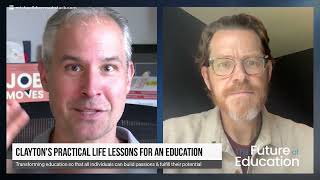
Tyler Thigpen, CEO of Forest School and Acton Academy, explains eight leadership lessons from Clayton Christensen that shape how micro-schools operate. He covers hiring practices, discovery-driven planning, the Resources-Processes-Priorities framework, and Jobs-to-Be-Done thinking, with examples like revised report cards and daily scrums showing how theory becomes practice.
Chapters
Welcome to the Future of Education. And now here's your host, Michael Horn. Oh, welcome to the Future of Education. I'm Michael Horn. You're joining the show where we're dedicated to creating a world in which all individuals can build their passions, fulfill their potential, and live lives of purpose. Today we've got a repeat guest that happens every once in a while, but generally not like this close in proximity to each other. But we've got Tyler Thigpen back. He's the CEO, head of school of the Forest School and Acton Academy. He teaches at the University of Pennsylvania's Graduate School of Education. We talked a lot last time about how he's the CEO of the Institute for Self Directed Learning in his book about that topic, the Playbook for Self Directed Learning. Tyler, did I miss anything? Good to see you. How are you?
You didn't miss anything. Great to see you. I'm doing really well and happy to be chatting about this topic today.
Yeah. And so I wanted to bring Tyler back because I thought the conversation we had was fantastic. And literally, like a few weeks after we had recorded that, he came out with this piece on LinkedIn titled 8 Game Changing Business Lessons I Learned from Clayton Christensen. And of course, as you all know, Clayton Christensen was my mentor. The ideas, he literally changed my life and how I view the world. And Tyler, I guess I, like, I hadn't internalized that you had had some similar experiences taking Clay's class when you were in the EDLD program, I think at the Ed School at Harvard. And so I just thought, well, for starters, like, what, what moved you to write the piece and maybe macro level talk about the impact that that Clay had with you or when you got to interact with him and sort of that moment in your life.
Totally. And my experience with Clayton, you said change your life. And even though I didn't get as much time with him as I think you probably did, I would say the same thing. Just an incredible experience. The first time I led a school, Michael, was back in 2011. And I had read the Innovator's DNA and was very compelled by that. And then my team and I started an innovation diploma for high schoolers. Really centered around some of the characteristics, you know, the questioning, the networking, the experimentation, you know, highlighted there in Innovators DNA. But I didn't know Clayton. It wasn't until I went to my doctoral program that I heard about this legendary course called Building Building and Sustaining a Successful Enterprise, which I know you know very well. And I got lucky enough to get him in Class and really just rolled up my sleeves and tried to take from it as much as possible. And it really. That was 10 years ago, and it's been, you know, my work as a CEO since that time. How many times I have, you know, thought back and reflected and looked at notes and reread theories and tried to apply things. It's just remarkable. It's really almost more than any other business framework that I've come up with. And so that's really what inspired me to write the piece. I was at a dinner with one of your colleagues, Thomas Arnett, and was sharing some of the same story with him, and I realized I haven't really synthesized my own reflections and thinking. And so I'll put it in a LinkedIn article. And I did, and it was so helpful. And I actually teach it to my leaders as well on my team, and we continue to benefit.
Very cool. Very cool. And I think you got a lot of feedback on that article. So maybe we'll start not David Letterman style completely, but at the bot number eight, and then we'll work backwards number eight. You had identifying and developing capable leaders, and I'd love to know what that means to you, because, like, I think a lot of people would say, well, like, everyone's looking for leaders. You talk to a venture capitalist. They invest in, you know, entrepreneurs. Right? Like, what. What does that mean? And how did Clay help you around that? Or what's the problem that it helped you solve for?
Absolutely, Michael. And again, I welcome your feedback on any of this because, you know, yeah.
We'Ll rip, but I'm super curious with this one.
Yeah, I mean, this was one of the most provoking ideas that I encountered with Clay. I actually disagreed with him at first. I was given leadership opportunities at a very young age, professionally, like 21. I had a boss that just really believed in me, and so I had this bias around leadership that's like, as long as you have a few certain qualities, you can do anything, you know? But Clayton's very provoking point was to think through, okay, for the roles that you have for your organization, for it to really, you know, grow and execute and learn at a high level. What are the kinds of experiences that this individual is going to have to face? What are the kinds of experiences, therefore, that we would then look for in their previous life, you know, leading up to that point, whether in their personal or professional life, that would have given them the sorts of experiences to be able to navigate them once they approach this new task. And so it really impacted my hiring Honestly, Michael, I just started to really think meaningfully about the competencies required for each one of our different roles at the school. And then backwards design from that. And then in our interview questions and interview performance tasks, start looking for team members who had done those kinds of or similar experiences, you know, in the past. And, and really, honestly, nobody, because we're our school and our organization is, you know, trying to build something that's new and innovative. So it's not like anybody's really gone to a school for exactly the roles that we have. So if anything, you know, doing this process with folks as they, as they apply for us, it helps see where they are going to be ready to hit the ground running and then where they may need some support, you know, early on. So that's been key for us for hiring for the last number of years.
And for those who are interested, I think he calls it the right stuff theory. Right. The schools of experience, if I'm remembering, and it's from Morgan McCall's work, High Flyers developing the next generation of leaders. And I think we may have had a similar, like, sort of disagreement with it initially. Actually, it'll. It'd be interesting to compare notes on this. My recollection was like, when Clay introduced this theory to our class, my pushback was like, well, if you're always looking for someone who's had experience, like, you never actually bring someone up into the next rung because like, you're looking for like, it's a truism in some ways. How do you develop? And I guess the nuanced understanding I developed over time of it was like, actually it's the opposite, right? Like, the argument is, you know, you're looking for a CEO of a startup venture or something like that. You don't go to the CEO of like a Fortune 500 company to fill that because their experiences are actually in large environments of how to get stuff done and things like that. And you'd be better off finding someone who maybe hasn't had the C level job, but had the experience of navigating and operating in a similar small environment and getting, you know, learning how to pull resources and get experiences done. And now you're giving them sort of that next ladder, if you will, on, on their progression. And, and so in some ways I, I started to think of it as like, actually it's more pro development than I thought. It's just you have to sort of understand experience and like context in a deeper way than maybe I had. How does that resonate with you?
It totally Resonates. And I, I think too, he helped me see that if you, I mean, yeah, there's a good chance that if you've got someone who succeeded in environment, they're going to succeed in another environment. But that's just what it is. It's a chance, you know, it's a bit riskier. Whereas if you need someone to deliver on the promise of this new role in this context, then there's going to be a greater likelihood for success if you look for that level of alignment. So you use the word nuance that. I totally agree. It's, it's a bit more nuanced approach.
Okay, so let's go to the seventh one then. You had, you had understanding business models and designing for sustainability, which is interesting because like his class, as you said, legendary class. Building, sustaining, successful enterprise. World's worst name for a course ever. But Clay was like consumed with sustainable success, right? Not flash in the pan. Success was like super core to who he was. So, so how did, how did this, how does this manifest and what you do day to day?
Well, and this one, I don't know if in your mind this one is closely connected to the discovery driven planning. For me, it sort of is. But basically the way this impacted me was when I was outside of this context, it was like, okay, when designing the pro forma for our organization, that five year projections, you know, having multiple different versions, all of which are sustainable, but you know, one would be a fast growth, one would be moderate growth, one would be slow growth and, and it included all the resources and, you know, processes, priorities, and we'll get to that in a minute, I think. But it, it essentially there were a few markers that I sort of said, like, it's got to make this amount of profit, this percentage of profit, you know, year after year, otherwise that tells us, you know, this is probably not a sustainable business model. There are a few key restraints that need to be considered. Like if we're getting this kind of funding for a short period of time, that really shouldn't be a part of the annual operations funding sort of thing. It just needs to be sustainable. And so I would tell my parents and my team of our schools early on, I would say we're building something that hopefully is going to live hundreds of years beyond us. And so allowing those constraints to help with decision making both around growth and staffing and what we would purchase and then continually looking at that from a budgeting standpoint, you know, every month has just been crucial, you know, and I do think like the Sector in which I'm trying to lead at the moment. You know, micro schools and education, you know, institutes, there are some great examples of some incredible ideas out there, but it's not exactly sustainable and it's just very, very hard. But it requires a level of. He helped me really up my game in terms of the discipline to make sure that this has a long term plan for it.
Yeah. So it's interesting hearing you say that and I'm going to change my plan of how I ask you questions in a moment because of the way you just went into that one. But my observation on the micro school sector specifically is that far too many educators come into this with noble intentions. They start something and they basically do the opposite of designing for sustainability. They say I'm not going to take a salary for two years or whatever else and then we'll figure out what happens to the school afterwards. It's almost like I want to break out, I want to do this noble thing of creating this purpose driven community for learners and I'm sort of not going to worry about the sustainability question. And my big fear is like the supply is going to keep slipping if we have that mindset that actually not thinking like a business is doing a disservice to those communities that they stand up. And so I hadn't linked it to the Discovery Driven planning until you just said it, but I think it's right, like the big thing that I tell people that I think Discovery driven planning is different from Lean startup or some of those things out there which, which are sort of derivative off. Discovery Driven planning is Lean startup has a little bit of like a, throw lots of stuff at the wall and see what sticks. Discovery driven planning is like okay, no, no, let's start with what's the end in mind. Like you know, Stephen Covey, right. Like begin with the end and then like okay, what, what's, what has to be true and what are the key assumptions in the model that we need to be thinking about now? Because otherwise it's, it's game over. Right. And, and I think we're not having enough thought on the supply side at the moment in this space is my observation at least. I'm curious how that resonates for you.
It, it does. The, the, for, you know, I, I heard it said a few years ago, like how an organization starts is kind of like really hard to get out of, you know, over, over time. And I've seen that in this sector as well where you know, maybe the cost of tuition, for example, isn't priced right and folks kind of get locked in to that and then it ends up not being, you know, sustainable. Whereas discovery driven planning just, it, it invited me to say, okay, you know, here's the goal and the priority and here are the assumptions baked into what I think is actually going to happen. And then let me put in place these milestones to, to pressure test and double check those assumptions and see if they're true. And I did this. And then by the way, often, sometimes they were, but most of the time they were not. And so like having to pivot, right? I mean, one of the. Our school is diverse by design, like economically, you know, racially, age, religion, gender. And I made a few early goals around that and made some assumptions around how that was going to happen. And sure enough, three, six and nine months in realized this is not working out. And so the pivots that we made there early on were like so beneficial and so crucial. And had I not known about this process, I would have just kind of been doing that lean startup, you throw stuff on the wall and see what works versus being a bit more methodical about it and seeing what the market is demanding and what is actually potentially sustainable for the long term. So that's kind of been our process. I mean, even when we started the school, Michael, you know, I sort of, I was, I think it's going to be this much, this much demand for the environment. And it ended up, you know, after looking at the first milestone, it was way more, you know, so then some of the pivots were like positive pivots, you know.
Yeah, yeah.
And then some were like, oh gosh, we've got to, you know, invest, we've got to add more resources, you know, or we've got to change some processes in order to, you know, arrive at this priority that we have. But, but, but pivots is really what it led us to. And pivots that were crucial.
Yeah, and it's interesting. Cause that's number five for you. And so that's what this is. What I realized is like, we actually probably should back up to number two on your list because two through seven really build off each other. So two, you have the assessing capabilities, resources, processes, priorities, which really became, I think over time, the business model framework. Those of us of a certain vintage think of them as separate. But I think for most people, sort of it melds into itself. But, but talk about this RPP as it's affectionately known, or when I was there, it was rpv. It was resources, processes, values, back in the day. Okay, so these things evolve, right? But. But talk about what this is and how it was useful to you.
Well, the way I make sense of it, I had done a little study on logic models in the past, and this just was almost a simpler, you know, more an easier way entry point in for me and my leadership team to help think through alignment in order to achieve, you know, our mission and our priorities, you know, being that last p. And then so based on those priorities, what are the processes that we need to have in place? And then what are all the resources that need to. To go to it and even within our organization. So our organization has three separate components, and then each component has different projects. I use RPP at both the organizational level as well as the departmental level. And it helps me figure out teams. It helps me figure out, you know, policies, procedures, processes, and systems that need to be put in place, that need to outlive all of us in order to, you know, bring some of these goals to life. So an example would be we just did a micro school accelerator for leaders across the U.S. independent and public schools, and we just stood it up out of nowhere. And I used RPP to do that. It was like, okay, well, what would be the goal for the size team that were cohort that we're like, inviting to this? You know, what are there for the processes? And then what are the resources from our organization that we can pull together to pull that thing off? You know, we. Our online school is another example. We're pivoting to be responsive to what we understand demand and parent feedback to be. And again, using RPP to do that and making staffing changes and making processes changes. And now we have three online offerings instead of one as an example. And even after school, I mean, what's interesting is now that our nonprofit has land and has facilities, it's like all of a sudden, our resources have kind of gone out the roof. And so that actually thinking about RPP made me think, oh, you know, are there other priorities that we ought to consider because of this new resource that maybe is underutilized in some ways. So, like, we're actually thinking about after school now, which we've never thought about before, but we have this great place, you know, this great resource that's just not being used in the afternoons and on the weekends. And so now what's the team and what's the process? And RPP is, you know, it's big for me there too.
Super interesting. And then I guess it translates into the business model and sustainability, right? Because what do you need to bring in revenue wise to make that, to actually be effectively leveraging that resource that is underutilized to your point, but you have in your control. The other piece that comes out of RPP directly and it's in your piece is the number three is shaping organizational culture through new challenges. I love this theory as well. It's Edgar Schein from MIT who sort of originally, right, documented all this work. And then in my telling, really processes and priorities are where culture really manifests right in an organization. But I would love to hear how you, how this has been helpful to you, Michael.
This was also very provoking for me. I used to think before this experience with Clayton, I used to think that, you know, if I hired the right people who were like a culture fit and if I was charismatic enough to sort of, you know, broadcast that kind of culture and celebrate the things that we wanted to cultivate, that would be enough. But Clayton's theory was so provoking, you know, based off Shine, as you're mentioning was like, actually if you introduce a problem to the group, then that's going to have a very formative, you know, impact on the group. And so I remember the first time I led a school, we, I did this. We created basically an unschooling experience and our staff had never done anything like that. And kids had a ton of choice and voice in what they were doing. And all of a sudden our entire team was, was confronted with this, you know, experience of children having decision making power where they previously did. And it completely shifted the culture. You know, in my current context, you know, my staff, a lot of my staff that I had hired had never done, you know, feedback, sort of 360feedback with one another before joining my team. And so I introduced a new problem which was like two by two by two feedback, you know, where, okay, before, you know, you come to me at the end of the year to give me feedback and receive feedback, like, go talk to two other teammates and give them feedback and receive feedback. And that was just a major culture shifter for us. We have another again, some of my educators had come from environments that were more teacher centric, where learners had a lot of control. And so one of the problems that we introduced to the environment was, okay, we're going to create an entire day for the learners where they make the rules, they sign their name to the rules. We have it at a campfire. You know, it's. It's this like problem that our entire team, staff are experiencing and all of a sudden it's shifting their hearts and minds to like, oh, this is really the learner school, you know, more than anything.
Yeah.
So now as a leader, I mean, I still think about hiring culture fits and, you know, really celebrating things I want to cultivate. But now it's like, what problems does our team need to be introduced to? What challenges, you know, that'll form us?
It's interesting when you, when you bring that up. I, I, I write about this a lot. And it takes like three paragraphs out of a chapter, right. To be like, find a problem, put a team around it. Then, you know, if it works, have them repeat. If it doesn't, try different processes, et cetera. Sounds so simple in theory. And yet it's actually really freaking complicated if you think about that. Right. To just do what you did. Okay, we're gonna have a day where the kids are making the rules. What do we start to build out of that? What problems does that introduce? Right? What does that mean for us as teachers? What are our roles? Okay, how do we actually now start to codify what we've done that has worked? Right. And repeat it over and over again? Like, these are not actually, they sound easy, but they're actually really freaking hard in reality. Yes, yes.
Amen. And what I found helpful to sustain the complexity of it was stand up meetings with my team every day, basically little scrums, you know, like, literally, what.
Did we just learn? What are we going to keep doing? What are we going to stop doing sort of stuff.
Exactly. And, and how's everybody doing? You know, we have, you know, and just checking in and, and iterating in the moment. That brought a lot of camaraderie.
Yeah, I can imagine. All right, so number four, you had integrating around a job to be done. This is one of my favorites. But why didn't you give the basic notion of what it means to integrate around a job to be done?
Yeah, my understanding, traditional marketing endeavors, look, try to sector out and section out different users in the marketplace and then speak to them versus jobs to be done theory which sort of says like, okay, we humans have some goals in our lives and we are hiring different things in order to achieve those goals. And, and from a very human centered, empathetic design thinking standpoint, what are those jobs that we are hiring others to do for us? And in my context, it's parents and caregivers, they're hiring schools or they're hiring learning communities to do certain jobs for them. And there's some great research out by your team and others around the Jobs to be done, specifically related to alternative schools that are sort of non traditional. And, you know, we took that feedback, in addition to the feedback we were hearing from our own community, and we said, okay, this is typically what we understand now. Parents, caregivers, in our context, are hiring folks like myself and my team in order to do. And so we looked at that, we talked about it, we discussed it, and then we sort of said, okay, does this align with the processes that we have in place? And also, is this what we're celebrating and reporting back on? And so we actually aligned, Michael, our report cards and our progress reports on this.
So, like, that's interesting.
Yeah, jobs to be done, you know, for alternative schools. One of them is, for example, when I disagree with decisions at my child's school and I'm feeling unheard, help me find an alternative that will honor my perspective and my values, you know, so us understanding a family's perspective and values and then reporting back instances where we see their children, you know, living those out in our context was a part of the report card. You know, another one is when my child is unhappy, unsafe, or struggling at school, help me find an environment where they can regain their love for learning. So one of the first things our report card talks about is are they loving learning right now? You know, and what are they loving learning specifically? And so I think. And that it seems like that resonated. We got great feedback on our revised report cards as a result of that.
Well, it's interesting, just thinking out loud, two things. One, to swim with you, which is the outcomes, right. Are defined by the job and the circumstance. And so reporting against that, super interesting. And sort of helps front and center, like, how should we evaluate whether we were successful or not? Let's do it. Relative to why they came here, I think it's really brilliant. The second thing is, I also think what gets very interesting for an organization is when people with multiple jobs to be done are coming to you and they're actually in conflict with each other at some stage. Right. So the one that I'll use is sometimes, like, okay, I'm not solving for academics. You have it here, right? Like social, emotional, learning, super important to me. Sort of that balanced educational experience, whole child, whatever you want to call it. And then that first one might be around the perspective and values. And you can imagine sometimes those swim against each other. Right. And so one of the things that I say is helping, you know, when you should fire a customer and tell them, like, hey, this is what you're optimizing for. And we are not optimized for that. So rather than, like, have this song and dance about how we can serve you, let's have an honest conversation and help you find a better spot where you can make progress. It's actually better for your school culture because you don't have someone that's like, sort of pushing against the grain. It allows you to better double down, if you will, on the resources, processes, prioritize priorities you're optimized around. You're also helping that family do better for them given their goals. Right. You're not asking them to somehow swim against the outcomes that matter to them. And I think one of the challenges that I observed that I think micro schools could really help traditional districts with is like, we're trying to pack these families in and say, like, your kid should do, like, be striving for the exact same thing as this kid. And, like, that's just plainly not true. Micro schools can maybe allow us to create a broader community, but not have us all swimming in the exact same direction, if you will. When an appropriate, you know, a different goal is appropriate for a given kid, if that makes sense.
It totally makes sense and resonates. And Anna's scary when you start saying no to a family at the beginning when you're trying to prove out the business model. Sure.
You just want to attract anyone at that stage, right?
Totally. Yeah. That's the temptation. Right. But we actually have on our website, I don't have it memorized, but we have a page on our website and it's close to admissions that does just what you said, Michael, which is this school is for X, Y and Z sorts of families. If you are A, B and C sorts of families, love you, see you, you know, you probably want to go somewhere else. And then what's interesting is I've tried to get even better as a leader at introducing people to our environment with that. So when they're going through the application interview process, I've identified what are like, the eight or nine most common struggles that parents have. And I'll lead with that. I'll be like, hey, know that you're signing up for these struggles. Like, I, as a dad, I'm struggling with. Everybody's struggling. It's just a part of who we are. But we want those struggles, you know, and why we want those struggles. And. And you're right. If they get into it, because sometimes they get into it and not really appreciate it, then there's a couple. I mean, we could sort of fire the customer if you Will or, you know, and this may be connect sounds.
Like on the front end, you're trying to make sure that they don't make a mistake. Right. Which is better.
Yeah, it's ideally for sure, but they still can get through. And then, and then I think another option, though is helping them outsource that, you know, that need that they're trying to hire it for.
You know, that one is interesting. Right. Also because I think I love the way you grounded in the struggling circumstances. Right. That they're experiencing. I also think, incidentally, that's the best way to market like anything is to like ground yourself in someone's reality and then they can be like, oh, that's what I need. Right. And something you just said there, I think is, is a good point, which is the advice I often give people when they're trying to pick a school is I say, like, what are you solving in your family already for your kid? And what, like, what is a school going to solve for you that you can't or don't have the desire. Right. To solve for your. For. For your kid? And it's a way to help them realize, like, you know, school is doing this lane for me, but like, you know, after school sports is doing this one for me. And then like, I do this with my kid. Right. And I don't need it to do every thing for me. Which I think is where you're going with that.
It is. And the, the older I get and longer I've been in this work too, like inviting parents and caregivers to consider, you know, their, when their children are 18 and they quote, unquote, launch, you know, in a traditional sense from their home, you know, what do they want to be true of them? What sort of qualities, competencies do they want them to have an exhibit? And then where are they getting practice at those things from the youngest ages, appreciating that really no single learning environment is going to be able to meet the expectations that they have for their children. But if parents and caregivers were to fully shoulder the responsibility for making sure that their learners, you know, their, their children get the practice in some environment, you know, putting the puzzle pieces together, if you will, you know, it's sort of which, which puzzle pieces do you want to, you know, choose for that and allow us to help you think through it, and ways in which we can add value, but also just be honest about the ways in which we're not going to, you know, we're not going to add value. And I think that, like you said, I think that's helpful too.
Yeah. And it sets expectations. Right. And it sets culture, I think for a community. I'll just say one other thing and then I'll go to your number one reason as we start to wrap up here, which was the other thing that I've learned through job moves is helping people make trade offs is really important and it's not settling. Right. I'm not settling for all my kid's not going to have access to this. It's like, okay, my top priority for the school is this, I'm willing to trade off on this. And then you being like, okay, and you can get that elsewhere. Right. Or you can get it not now, but in a couple years, that will become a thing. Right. And sort of realizing that trade offs are things you make so you can, you can get the thing you most value or are most prioritizing at a given point in time and seeing it as like a value creation step for a family as opposed to a. I can't get that. Geez. What, what, what, what good is this school if it doesn't do everything?
That's powerful, Michael. And I think in the micro, the schooling context too, for parents and caregivers, it's, it's so relevant because there's just so much that could potentially be learned and so much that we parents kind of project on learners, you know, as something that's being crucial. You know, what immediately comes to mind is math learning. You know, I mean, there's such an interesting debate about, you know, right now, what math conceptually, procedurally needs to be learned before graduating from school and for what reasons. And the safe default, you know, sometimes fear based posture that parents, caregivers take is like, well, do what I did, you know.
Yeah, yeah, yeah, yeah. Algebra, calculus, that's the way. Yeah.
And I'm like, do you know how to do those problems right now and are you using them in your life? And you know, but, but talking about the trade offs is, is exactly, I think, the right way forward. Because if we do, I mean, listen, if we want to do deep, deep math learning, we can, we can facilitate that. But just realize it's going to take a lot of time and it's probably going to take this amount of time and we're going to lose, you know, real world learning or collaboration or you know, self awareness or whatever it is that, you know, whatever else we care about. No, I love that.
And for those who think, sorry, this is going to be a plug off the topic, but for those who think that, oh, I learned to think critically through algebra. There are plenty of ways to think critically about the world. And I'm not sure the way we have traditionally taught algebra, we're actually building a transferable skill around critical thinking. So little plug there. You probably don't disagree with me. Number one, you have this notion of humility over ego. You pull from Jim Collins to introduce the idea, but maybe talk about how Clay brought this home to you and how it's manifested in your work.
Well, I just. He's probably in my top three humans on the planet. That was a role model for this. And I just saw him respond kindly in class at a sort of high stakes environment, the Harvard Business School. And I saw, you know, learners give challenging, pointed questions and I watched him, you know, respond with questions with a non anxious presence, with a kind tone. And then at the end, you know, the very last day of class, he talked about, he was like, you know, my, my wife and I strive and children strive to be known for our kindness, you know, and you can't go wrong. And I was like, oh, well that makes a lot of sense because I experienced him that way and I just. Because he's come up with these theories that really live outside of himself and he's just been very observant about the world and which. That is just the definition of ego free. You know, it's not about him and what he's trying to grow for his own kingdom. It's about observing what is happening in the world and how can we serve others and what works along that journey of serving others. I think for me, you know, right now we're ending up our year and I've just met with all my leadership team. They've all given me feed feedback about my leadership, you know, and I just summarized it before this call actually like the pluses and minuses. And I just need to take myself, I mean, I need to keep myself in it so I can grow. But like, it's like, hey, Tyler, as a leader, these are the ways in which I need to grow. These are how people are experiencing me on my team. And, and I can really, I stand to grow from this. And I think, I think that's important for organizational leadership because we just don't learn as quickly if we keep our ego in it, if we're not humble, if we're not willing to see the failure and learn from the failure and learn exactly why from the failure. In fact, I even on this point, Michael, I revised our exit survey this year for our families because I Was like, I really want to understand even more deeply when families leave, like, why are they leaving? You know, it's not about me or my teammates. Like, they have some goals. I want to understand what those goals are, and those are outside of myself, you know, so it's not about me or, you know, so that. He was very impactful and helpful for me in that.
And I always think it's like a really good role model because he loved to be wrong because it meant he learned something. And that was part of that humility, I think. And I always felt, I mean, you went through the class once, I got to go through it three times, you know, once as a student, then twice working for him. And I always felt badly because he. People didn't get to see how the theories changed or evolved. And I'd be like, all right, man, he got serious pushback on this last year and look at what he's changed now this year. Because even though he sort of debated, asked the questions, et cetera, he actually was like, oh, wow, this is not quite right. Let's evolve it. And I always thought that was such a cool example that unfortunately the students didn't always get to see because it was something that was happening over time. And as a student, you're there for a moment and then you're. And then you're graduated into the world. But I, I had the same experience as you.
That's cool. I didn't know. I could imagine that that was the case, but I didn't know that. And to see it from your vantage point would be really fascinating. And I mean, he, to me, what you're saying is he sort of did his own discovery driven planning process on his own theories. You know, good way to put it.
And he used his class. Right. As a way to like, he loved it when he got pushed back. I think sometimes the criticism I would hear of him is some students would say, well, he's so wed to the way he's done it. And I was like, but because he's asking questions and to defend it, because that's how he's going to realize, oh, wow, there's a flaw here. Let's, let's. Or there's an anomaly or whatever it is, let's sharpen it even further from what I just learned, which I always thought was really cool, that humility to learn from anyone he interacted with.
So cool.
Yeah. Tyler, huge thanks for coming on, sharing some of these insights. And frankly, like, for those running schools, I think there's a ton to learn from here, not just the micro school community, but everyone who's running schools top to bottom. There's a lot of lessons here, I think. So hugely appreciate what you continue to do as you've wrapped up your traditional academic year for a little bit. Just, just huge thanks to you and the community you've built.
You're welcome. And thank you for the conversation and for all the work that you and your team do to advance these ideas. Super, super helpful for, for all of us.
No, we're lucky to have it. So he's Tyler Thigpen. Thank you so much for joining us. And we'll see you next time on the Future of Education.
It.










