Climb Hire: How Helping Who Learners Know Can Change Lives
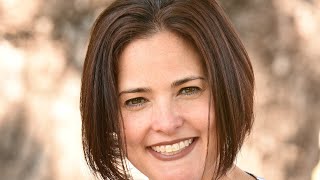
In this interview, host Michael Horn talks with Nitsan Pelman, founder of Climb Hire, and Sasanda, a program graduate and current fellow. Nitsan shares his personal journey from being labeled a special‑education student to working in Teach for America and eventually creating Climb Hire, an organization that blends skill‑building with community, referral networks, and a modified income‑share agreement (ISA). He explains how the model was inspired by LinkedIn data showing the power of referrals, and how Climb Hire deliberately creates a supportive peer community for people from non‑traditional, low‑income backgrounds, especially people of color, to learn in‑demand tech skills (Salesforce admin) and gain confidence, relationships, and job placement. The program uses a cohort‑based structure where alumni become “fellows” who teach the next cohort, creating a cascading leadership flywheel. Sasanda recounts her path from South Africa, through au‑pair work, to discovering Climb Hire, describing the day‑to‑day experience of community, homophily, relationship‑building, and how the network helped her land a role at Common Group. She also reflects on her role as a fellow, mentoring new climbers, and offers advice to prospective students, emphasizing the no‑up‑front ISA, the social capital, and the life‑changing impact of the program. The conversation also touches on Climb Hire’s outcomes (average income rise from $24k to $66k, 70‑80% placement rates) and the organization’s choice to rely on philanthropy rather than venture capital to stay mission‑aligned.
Chapters
Welcome to the Future of Education. I'm Michael Horne, joined today by two guests, really excited for this conversation. We have Nitsan Pelman, who I've known for several years now, who started this amazing organization, climbhigher, which we will get into in a moment. And then we have Sasanda, one of Climbhire's graduates, which is terrific. I always love talking to people that have actually experienced the program itself to give us the real story behind sort of the story behind the story, if you will. So really excited for this conversation. I'm going to dive right in. Nitsan, I'd love to start with you, which is a question that I'll take from another podcast I do called Future youe, where we have. Where we ask our guests how do they get into the world of education? Right. And I'd love to hear your personal story and how you came into this. And then we'll talk about Climb Higher in a moment.
Yeah. You know, my personal story is it's complex and it's intense. So I'll just say that as an intro to it. When I was a first grader, I was labeled as a special education student. And what that meant in my life is that I basically was tracked in a special education class from first grade until 12th grade. And what that meant, really, is that most of the educators that I spent time in classrooms with had very low expectations for me. And I sort of consciously and subconsciously was getting a lot of messages about the lack of my ability not being as high potential as other people. And I finished high school with a very low SAT score. I really couldn't write a sentence that made sense to most people. I was probably the equivalent of 8th grader in terms of my skill set. When I finished high school, and sort of in that period I started at the end of my high school life, I started to date somebody in my high school class who couldn't have had a more diametrically opposite educational experience to my own. He had been primed to go to Harvard since he was a very young kid. He was writing speeches for the mayor of Los Angeles when he was 15 years old. He's the valedictorian of our class and ultimately went to Harvard for college. And when I went to college, we didn't go to the same school, obviously, but I spent a lot of time at Harvard in my college years as a girlfriend of a Harvard student. And for the first time in my life, I had the opposite label as to the one that I had had growing up, which was all of a Sudden, I must have been a smart person because I was dating a smart person. And so through osmosis, I was the girlfriend of a sm. And the expectations and the kinds of conversations and the kinds of ways in which I was talking to people was just radically different. And I very quickly learned how insatiably curious I was and how much knowledge and learning had sort of been squashed out of me and squandered. And that when I was in a learning environment where people had very different expectations of who I was and a belief system about who I was, I began to flourish, but then also had a very painful realization that I had about 18 years of catch up work to do. And so to be honest, much of my twenties were just doing that work, teaching myself how to write and write with critical thought and sort of express myself in ways that I hadn't been prepared to do in high school or in lower grades. And it sort of really taught me in a really deep way just the power of what happens when people believe in you and when you have different expectations. And I feel like I got to see how both sides of those things played out for my life. And so very early in my career I joined Teach for America. I joined their staff actually in 1999. And that was sort of my first time being exposed to sort of issues around race and how we, how we oftentimes have low expectations for people of color that are oftentimes coming from impoverished backgrounds and, you know, are in some of the most difficult public schools in our country. And it was then that I started to really realize that, like I was starting to see my own potential and realizing that if I were sort of told at such a young age that I had so little aptitude and potential, like what did it look like for people in different communities? And so I've sort of always committed myself to helping people understand that they have a lot of aptitude and potential. And Climbhire is very much birthed in that space.
So let's actually fast forward then into that and then. Susand I'll come to you in a moment to hear your story. Nitson, tell us the inspiration behind climbhighre specifically and what it is.
Yeah, so a couple of years ago I was an entrepreneur in residence at LinkedIn and LinkedIn had put a referral button on their platform. And what they realized by doing that was that 9 out of 10 job seekers were getting jobs through referrals. And I'd been working in the education space for almost 20 years, been running different organizations for a while, and Realized that I was increasingly becoming very interested in what happens post college. And also if you're going to work on breaking the cycle of poverty, then at some point you become more interested in both education but also in jobs. At the time there were 6 million jobs that were unfilled. It was a 2% unemployment rate. And the narrative out there was, you know, if we could just skill people up and in these in demand skills, then voila, like everything would be solved. And when the LinkedIn data came out, I really started to just think deeply about how do people get jobs? And you know, I started to realize that every single opportunity I've had since I've been 22 has come through referrals and networks and I've never even applied for a formal job and a jobs board. Like everything has sort of happened organically through networks and through people. And so I felt like there was something wrong about this narrative out there of just like, oh, skill people up, like put them on a platform, Google, aws, Salesforce, whatever it is, and then they'll have a new certification and voila, like the world will open up. And that's just not how people get jobs. And so I really started to want to build an organization that thought about skill building and relationships and community and expectations and belief and belonging and all of those things and sort of like mix them together and that's what Climbhire has become. We can share more about the specifics of that, but I'll turn it back over to you and Sussandha.
Yeah, no, that's incredibly powerful, is just to give people a framing for the realization really right. That you had that drove that. So Sandha, I'd love to hear your story and how it came to the point that you were looking for something like a Climhire and how you found Climhire in your own life.
Firstly, thank you for having me here, Michael. So originally I'm from South Africa, grew up in a huge family where I was raised by both my grandparents and my mother was always there but she was the breadwinner and so she worked a lot. So I had a fairly good childhood and then I went to university where I studied mechanical engineering but I couldn't finish my studies because due to finance my mother passed away on my second year and so I couldn't finish my my year, my studying because she was paying for my tuition. And so I started finding part time jobs where I'd work so that I can finance my studies but at the same time feed my family. And I realized that by Doing that I was spending. I needed more time to work in order to. To make enough money to provide for myself and for my family. A friend of mine told me about Cultural Care Au Pair, which is an au pairing agency where one could study and at the same time make money through taking care of kids. And then. And it was in America, here in America. And so I applied for the program and I became an au pair. And through my au pairing years, I was able to feed my family back home. And the more that I stayed here, the more I realized that there was more opportunities this side and the employment rate wasn't as high as it was back home. And so I could provide way more being the site of being in America than I could back home. And so I started working as a Starbucks after my term as an opair ended, I started working as a Starbucks barista and I worked at a front desk as a front desk associate for a gym. But I knew that I wanted to do more with my life. I didn't want to be going over the same cycle where I work tirelessly with making just enough, like the bare minimum to support myself and my family back home. And so I started researching on entry level technology jobs because that's the field that I wanted to go into. And so I came across Climhire through that, and then after I met Clan Hire, everything, my entire life changed completely. What I mean by that is I got a sense of community and I'm so happy that I came across climbing.
That's awesome. So I'd love to dig in from there, actually, which is nitsan to have you just describe what being a student looks like in Climbhire. And this, I mean, this realization, this kernel, right, which is it's about creating that community, that network being so important. So what does that look like?
Yeah, so I think there's like a lot of like, think about this work in a holistic way and not just about, you know, can I hand somebody a skill? And will they engulf that? And then somehow like they'll be more ready for the world. Like, I think there's like a lot of things happening for people that maybe have come through a non traditional route. You know, it's the people who are your produce unpackers at Trader Joe's and the people that sell you your phones and the Verizon store, or as Sana said, you know, your baristas at Starbucks. Many of the people in those jobs have so much talent and have so much potential, but they don't have a network and they might not have a skill, but I think somewhere along that also like they might be feeling alone, they might be feeling anxious, they might be feeling a little bit in a darker space, they might be feeling depressed. And so we really bring people together that have motivation and grit and drive and tenacity and aptitude. And we put them in a community together to support each other around their learning. And I think there's a communal, there's such a deep communal aspect to the work that they don't let each other, they don't let each other off the hook. And I think that that's like a very powerful part of how the model starts to thrive. And so the idea is like when upper middle class people oftentimes go to four year liberal arts institutions, they live in dorms, they sing in acapella clubs, they write for newspapers, they play lacrosse, they live in a fraternity, they build natural networks and they build natural community. But for climbers and the people that we just described, they don't always have that. And so we're trying to build an alternative network for people of color, for people that are coming from non traditional pathways to sort of have that community. And the community has many functions to is just that emotional support, that feeling of that sense of you belong. It's the messages of like, we believe in you, you have potential, you have talent. It's when the work is really hard. I mean, learning a new skill, especially a technology skill, is really hard. And one that we picked in particular is really challenging at the Salesforce administrator certification. Most people who work at Salesforce usually fail that exam one or two times before passing. And so you need like the more the emotional support and like accountability and the accountability friends to like really lift you up in those moments. You're like, forget it, I'm just gonna like quit. This is so hard. And like we don't let each other fall. And that's a big part of like our model. Now the second part about it is that when you facilitate and foster that level of connectionness and community, people don't feel embarrassed about where they are in life anymore. They feel like everyone's sort of like marching to the same future or something, you know, a better life for themselves, that they're, that they're wanting to. And I think a lot of climbers tell us at the beginning they come in feeling a little bit embarrassed about where they are in the world. And then the part is about referral networks. So you know, once you've built a really tight community and then that community starts to Break in and get jobs. Well, then you're always asked for referrals once you're on the inside of a place as opposed to when you're on the outside. And so the climbers have really built an ethos and a mindset of like, as soon as I break in, my job is to pull the next person in with me. And, you know, Susanna is a great example of this. Like, you know, she sort of led the way working at Common Group. And now there's a peer of hers from Climbhire that's interviewing for the next open role there. And that's kind of like the idea is that, you know, once people break in, then the community pulls each other up and we rise together. And so our motto is that we are a community, we're not a class, and we're a community well beyond like the coursework that happens. And so the big part of that model is about that the alumni become what we call fellows, and the fellows come back and they teach the next set of co. The next set of climbers. So it becomes a near peer cascading leadership model in which, you know, the instructors really are playing roles well behind the scenes. And the people in the front are the people that have come from the community, have broken into a middle class job and now they're coming and they're paying it forward to the next set of climbers by teaching them and sort of saying to them, like, I just, I got here and you can too. That's the best kind of role modeling we can have. And then similarly, they start to pull each other into opportunities as they rise. So that's kind of like the basics of the model.
It's very cool. It's very clever. Also, I'm curious just how you started that flywheel when you had your first class and you didn't have those alums who are out there, you know, at Common Group and other places. Right. How did you build that flywheel to have that broader network beyond the cohort to help pull people forward?
So I mean, in some ways, like the staff or I, you know, a small group of us sort of became the network for the climbers and we sort of helped to introduce them to their first set of employers. So in our first cohort, it was a Pilot cohort, there's 23 people, 70% of them sort of went on to get fabulous great middle class jobs. Some of them in Salesforce, some of them not in Salesforce. And then that group, eight of them then became the fellows for Cohort 2 and Cohort 2 doubled in size at 42 people in the cohort. And now of those 42 people, 80% of them have middle class jobs now. Their incomes have gone from on average 24,000 to 66,000. And 26 of those people became fellows through a selective process. And now, now they are teaching the next 80. And so we sort of like blossom. So the, you know, the first cohort sort of maybe didn't get the most perfect of experiences, but that's always the case for the first cohort. But Sasanda is playing that role now as a fellow for Cohort 3. And, you know, I don't, I don't even have that intimacy that I did in Cohort 1 and Cohort 2, because the fellows have like now taken the culture and the values and they've run with it. And so the staff, you know, doesn't play that same role anymore. And that was always the vision. And I'm eager to hear about your experiences, Sandhya, from your, you know, from your standpoint.
Yeah, I want to, I want to dive in there. And just a quick footnote, I love that you're tracking the outcomes like you are, because way too many education organizations don't track that granularity and put it out there in an honest way. And I think it's so tremendous that you all have committed to doing that. But, Susan, I'd love to hear before we get into your experience as a fellow, that'll be my second question. The first question, what was it like as a student? Tell us, you know, when you were a climber in the program, you know, what was the day to day like?
So firstly, coming into going into tech as a black woman is totally an experience that people experience on their own. So they always on their own and have no one to support them. The first day I entered Clamhier, which was in the LinkedIn building, San Francisco, I realized that it was not just me. I wasn't the only one who was a person of color. Like, I saw a group of my people that we had homophily, instant homophily, which is a similarity. We were people of color. And that made me feel at home before anything. And so as days went by in Kamhi, we were taught that you're not alone in this. So I got a sense of support. I got a sense of a community in Klamhier. And then also I got, I got the credibility, which I lacked coming from South Africa. No one knew me. I had no experiences. I had nothing. I was a blank canvas in America. And so clam Hire gave me that credibility. One thing that Klamhier built in me and still stays in me is relationships matter. And so each day I continue to build relationships because Klemhire told me that relationships matter. And that is the best advice that I continue to give people until from that day that I came with Klam hire until now. Climb higher gives you a sense of confidence. It gave me in my own capabilities. Yes, I come from a non traditional background. How do I then break into another field? Who do I know? Where do I start? And so we taught that help each other, help build each other through the community that we have as climbers. And through that, through those skills that we learn to build each other, we learn how we can interact with other people and build more relationships where we can not just broaden our community but also, also feel, how do I say also feel like we're strong enough to do whatever we want. Like whatever we put our minds to it.
So yeah, it's phenomenal and deeply inspiring frankly to hear that. I'm curious shifting you went through the program, you got the job at Common Ground. Maybe a little bit about what you do at Common Ground I think would be interesting for folks and how you landed that job and then I guess I lied and then, then we'll get to what the experience as a fellow has been, has been like. So let's start with how you got that job and what that's been like.
So again at Clam Hire we taught skills as how to become a salesforce admin but also we taught resume building and also creating relationships on what are the best techniques as to keep relationships. And one of the activities that we do in is that we, we have social gatherings where Nitsan and, and Klamhier would, would invite people from different sectors in, in, in in the industry, in the education and tech industry. And so you get to meet new people that you've never spoken to where they, they help you with either your interviews, how to to write a resume and and what skills you'd require the job that, that you see in the future. And so my experiences with that is on the first day we had a social gathering. My current boss right now, which is George Vinton I met on the, he was the first person that I met through the social gathering event. And through then we started, I started building relationships exactly how Climb High told me keep in touch by email. Make sure that you don't. You get to know people because you're curious to know about them and not because you want to get Something out of it. And so George and I communicated and he's originally from the uk and so the South African English and UK English is similar. We had instant homophily and we kept the relationship going where we email each other. Just general way. He'd help me with my resume or he'll help me with my narrative. And so after a few months, Covid hit and then I was in a position where I had no job and then. But I was. I was constantly again in touch with George. And then a few months he decided that he was going to start a company. And so because I had that relationship with him and exactly how we were taught in Clam Hire, George was the person who reached out to say, I am starting a common group and this.
Is.
The position that I'd like you specifically because he's gotten to know me, we've gotten to know each other very well. And he knew my strengths, he knew my weaknesses. We had talked and so it was like this position would fit you so well. And so I went through an interview process and now here I am.
Very cool, Very cool. And George is a great. I worked with George at Entangled, so I know him certainly. And when he. So that's a great journey though, for you landing there. I'd love to talk about now, Sandhya, your journey in supporting climbers as you, you know, as a fellow, as Nitsam was just describing. What's that experience been like?
And then. Oh, sorry again. Being a fellow is another skill that the Clam hire gives us. Like, it's an additional skill that we have onto our resume. We get taught each day, weekly on how to facilitate meetings. And also we get the opportunity to create our own agendas as every. If we were to be like. If, like we have all the support we need from the instructors, Jake and Alex, and so they help us teach fellows how it is like being a. I mean, teach Clemens. Sorry, how it is like being a fellow. It is. How do I say this? It's like you get to help people grow and it's. It's like needs and looking at like her babies grow. That's how I feel with my, my climbers. I have. I'm creating like personal relationships with them, but at the same time, it's like I'm understanding where they are because I've been in that position and I can see sometimes when. When they lack motivation because I've been in that position. And so it's easy for us as fellows to. To navigate them to the correct path because being in the Same situation. And now that we've learned so much about both Salesforce and the soft skills, we are able to help other people through that because it's like you've done it before and so you know what it's like and know how to teach someone else about it.
It's incredible. And the teaching model there, embedded, is also incredible. And sort of the way Nitsan, you've. You've sort of virtually flipped the classroom, if you will, and then created really this community that is supporting each other is phenomenal and extremely clever in sort of its intentionality behind it. There's another piece that's really interesting as well that you put in place, which is the financing model. Nitsan, I'd love you to speak to that you put in, I would say, a modified version of an income share agreement in place. Could you talk about what that looks like?
Yeah, and just before I do that, I just want to say, Susanna, like, listening to you talk about how you're feel, how you feel responsible for the people that you're watching grow, it's just like it melts my heart because like that was always like that was always the vision. And I did get to watch that first two cohorts like grow and now like watching the fellows like take so much ownership of each other and sort of and really paying it forward. So the ISA model that Michael just asked about, the real thought process of paying of ISA is income sharing is about paying it forward to the next person. And we don't just do that financially, we do that through the community work. And I think Susanda is so right that she is in a much better position in many ways to help the next climber because she has been in their shoes and they have so much more trust and credibility with somebody that looks like them. And that came from their background and has struggled and at moments probably wanted to drop out too, but didn't and now is like symbolic as a role model, like in the role in the place that like they want to be themselves. And so to me, like the beauty of it not being the staff and being the climbers and the alum and seeing that come in to fruition is like maybe the most exhilarating thing in my life. It's amazing. And son, I just have so much love for you and on the income sharing side. So I've run a for profit organization before this and I've run a non for profit organization before this. So I've been running education and organizations for the better part of the last 15 years. Both at Citizen Schools and at REOP, a former Entangled company. And I think that I just, I sort of struggled with both models, to be honest. When you sort of take money from venture venture capital, like, there are many expectations that sometimes don't align to mission and you have to. And oftentimes you have to create contracts for the students that are not very student friendly and are much more investor friendly. You have to sort of like cough up like very high returns. And I just, I knew, I knew who we wanted to serve. We wanted to serve people like Sanda and so many of her peers that were earning below livable wage incomes. We're working in the gig economy, we're working at Starbucks or wherever and had these brighter futures ahead of them. And I didn't want to charge them, quite honestly, at an arm and a leg, even post facto for the program. And I think when you take venture capital, you sort of get forced into that a little bit more. So we took philanthropy capital instead. And our income sharing agreement is that you don't pay anything up front. And then once you've successfully broken into a job that pays 45k or more, and on average, most of our climbers are really getting closer to 60 or 65K or, you know, just closer to 60, then that really puts them in the position where they can pay it forward for the next group of climbers. So for the climbers, it's $150 a month for four years, which is $7,200. It costs us closer to 9,500 right now. So it's. We're not exactly breaking even, but we're sort of close. The fellowship is a $3,500 stipend. So if alum decide to do the fellowship and get accepted into the fellowship, then they could actually work off their debt to climb higher actually just by doing two cycles of the fellowship or pretty close to it. So, you know, that also, like, reinforces our model. And you know, I think my, you know, my hope is that this becomes a way for us to be a sustainable organization where we're all probably need to like be augmented through philanthropy for our growth and innovation and experimentation, but that like the core functionality and operational model will be covered by the costs of the climbers. And then employers are also paying us a fee as well for, for placement. Not all, but quite a lot of them.
No, it's tremendous. And frankly, I think more people need to hear that you can be a for profit but not take venture capital because the aggressive timelines, frankly don't in my mind add up correctly for what? Education organizations, the timelines that make sense in education, they work in other sectors. But. But in education where we're talking about building value over decades, not just sort of a quick cycle, I think they're often misaligned like you said. So appreciate that perspective. As we start to wrap up Sasanda, I'd love to hear sort of your sort of looking back at the experience so far, your reflections on how things have turned out and your decision and Climb Higher and advice for folks that are thinking about being a climber themselves.
Advice. I'll start with advice for folks that are thinking about being a climber. I'd say 100%. You need to if you're in a position where you're stuck, you're feeling stuck, you feel alone, you feel like you, you want to do more, but. But you have no way in which you can do more. Climb higher is the way to go. And also with the income share agreements. I've heard about so many income share agreements, but this one is so it's like Nitan had explained it perfectly. I am literally paying back for someone else to get the same experience.
Experience.
It's like paying it forward. And also it's a pretty good deal, like no upfront payments, a great amount of social capital. You learn a new skill and you have like friends that will be there with you from the beginning of Clam Hire till forever. I have friends that I've met through Clam Hire that are still like close friends with me that we meet up sometimes and those relationships would are going to continue to grow. And so my how Clam High has helped me has I am in the current I'm currently a program associate for Common Group, which is an organization, right. That works with nonprofits, mission driven companies in education. And just being in that education field and having the mission to create more opportunities for people like me is something that Kamhi has built into me and something that I'm continuing to go with. And so if I didn't have Klemhaya, like looking back, I'd probably still be stuck working two jobs Monday to Monday and making less than the minimum wage. And so Clam Higher was a great experience for me.
So Sandhya, thanks for inspiring us through your climbing. I just deeply appreciate it. And Nitsan, thank you for creating a really inspiring organization that enables folks like Sasanda to live out this dream and really connect some crucial pieces of the puzzle that have been missing in a lot of these programs that have been created to this point. So deeply appreciate you both. And thanks for joining me today Day. Everyone stay well, and thanks again. Bye. Bye.










