Crisis Proofing Today's Learners
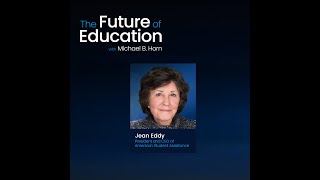
Jean Eddy, CEO of American Student Assistance, argues the U.S. education system pushes college too hard and ignores career exploration. She uses the Japanese concept of ikigai—finding what you love, what you're good at, what the world needs, and what pays—as a framework. About 5.5 million young people are neither in school nor working, and Eddy advocates starting career exposure in middle school through apprenticeships and skilled trades.
Chapters
Welcome to the Future of Education. And now here's your host, Michael Horne.
Welcome to the Future of Education, where we are passionate about building a world in which all individuals can build their passions, fulfill their potential, and live a life of purpose. And to help us, uh, with that journey today, I'm delighted that we have Jean Eddy. She's the president and CEO of ASA American Student Assistance. Just a great thinker, great friend, uh, and she has written a very important book among a lot of interesting things that Jean is doing, uh, that we're going to talk to today and get into. It's called Crisis Proofing Today's Learners. Gene, so good to see you. Thanks so much for joining us.
Absolutely, my pleasure, Michael.
No, it's all mine, trust me. So let's get into it. It's a terrific book. And for those who are, like, wondering, should I buy it or not buy it? It's a fast read, but it is packed. So much information in each chapter and I think reframes a lot of how we think about the choices that young people have before them in their lives. But I want to start up front with this concept of ikigai in your book. Tell us what that is and why it's so important.
Well, I mean, I think the Japanese absolutely got this right, where they were trying to provide a balance to an individual that would give them a full and meaningful life. What ikigai is about is helping a young person figure out what they love, what they're good at, what the world needs, which is very important, and what they can be paid for. And basically, if you can provide those things over the course of a young person's lifetime or over the course of their journey, then they have an opportunity to have that successful, meaningful life and happy life that that Japan and. And I would have to say, you know, other countries aspire to.
Yeah. So, you know. Yeah. And I mean, it's such an important concept, and I love how it balances self and purpose with contribution to the world and society and what you can get paid for. So it's not just underwater basket weaving or something like that, although maybe that's more important in the future, I don't know. But I guess I'm curious, in your mind, when an education system, specifically in a society, specifically get ikigai right, what is. What does that look like? And how far off are we from that today in America?
Oh, boy. I would say that we're pretty far off. I'll start with the latter question. I think we are so focused and, you know, within our systems about all the things that we believe young people need to have. So it's really more about the basics and what we need to impart to our kids and less about this whole idea of discovery. And I am a real fan of discovery work in that kids are looking for relevance and oftentimes they can't see it in what they are doing in their classwork. They don't know how it relates to what they care about or what they see. In so much of the research we do, we find that kids oftentimes are even leaving high school without a sense of what they're good at. How is that possible? And I would dare say that if our systems were more focused on that self identification, as far as what am I good at, what am I interested in? And then builds from there, that we could start to see the kind of change that we need to make in order to have our kids have the United States version of ikigai.
So part of the outgrowth of this focus on ikigai is, and I think this speaks to the US as well, you have this really strong set of chapters in the book that just push back on the college for all narrative. And I will say for a long time I have not been a college for all person. But your book really made me think about it in a different light because a huge part of your point is that when people say, oh, everyone should go to college, they say that because they think that they're reducing risk for young people. But your argument, and it's really persuasive, is that actually for many people, by pushing them to go to college, we're increasing their risk. And while this, you know, in some ways maybe seems prescient in our current moment, some people are waking up to this. Just tell us about your thinking about how for some people college is actually increasing risk. And that's not something that I think has been popularly understood.
Well, I think, and the papers have been full of the fact that college education is a really expensive endeavor. This is not something that you can ignore any longer when front page news is that some institutions, it costs 90 to $100,000 a year to go to them. So think about the young person. Think about the young person in their family who says, well, we're going to go to college because that's what's expected. And I'm going to figure it out. You know, I'm going to figure it out when I get to college. Which, you know, if you have limitless funds, you know, that might work for you. You could Stay in college for a number of years and finally figure it out. But I would say most people don't fall into that boat. Most kids come to college and they have some kind of sense of maybe what it is they want to do, but most don't. And so they. They end up either switching majors and switching majors and switching majors, which happens, which then means that you're going to prolong the amount of time you're in college, which is going to cost money. But I'm more worried about two populations of kids. The first is they go to college. They can't figure it out. They've stayed there long enough to accrue some debt, and now they leave college. They don't really have a path to how they're going to repay this loan, and they get into trouble, and they get into trouble early. The other population that I think we need to focus on are those kids who make choices about, yes, college is the default, but I can't afford it, so I'm doing nothing. And that is a huge number of kids in the United States right now. It's something like 5.5 million people who are doing this. Our society cannot afford that. Look beyond the individual happiness and purpose of those individuals. But what about the impact on our society and those number of individuals who really don't have a purpose or a plan? Yeah, that just. That breeds all kinds of crisis.
Yeah. Wow. So it's interesting because I think you're right. When. When we did our book Choosing College, we found out a significant number of individuals were going exactly as you said because it was expected of them. They weren't particularly passionate about it. And at least in our data set, 74% of those students transferred or dropped out because they.
They.
When it got tough, and college is tough, they couldn't find a compelling reason to stay there. Their. Their why was other people. It wasn't intrinsic to them. So I, I think what you just painted is really significant. And those. I. I didn't realize you said 5.5 million individuals doing nothing.
Nothing. Wow. They're not in school and they're not doing anything.
Wow. So that's. I. That's chilling. Yeah, that's chilling. So in your mind, what I think the book starts to do is it starts to say, let's reset this societal narrative around the primacy of college. I'm curious what, what a better, more balanced set of potential pathways might look like in your mind for students.
Well, I think first and foremost, it. It is this whole world about exploration and discovery.
Hmm.
We've got to do a better job really early on. And you know, my focus, our focus at ASA is on middle school because it provides an opportunity for young people whose brains are just hungry like sponges for all the information we can provide to them. And this is the time when they can really become self aware. And then I'm not just talking about self awareness, then I'm talking about sharing, showing them all the possibilities. We just don't do a good job showing kids what all the possibilities are. You know, I would say in most cases that the job is, okay, let's get kids through middle school, through high school, they're going to college, what are we going to do to get them into college? And it's not about what are the opportunities that young people could have to explore all the options that are open to them. You know, I keep talking about skill trades. I talk about them a lot because we have young people who have the aptitude, but moreover the desire to get into those areas. And we don't show them what's possible or how to do it or the skills you need for it. You know, I always, I always talk about plumbers, but plumbers, apart from making a very good wage in the state of Massachusetts, many of those young people, those young plumbers have got to be entrepreneurs. They have to have a business sense, they have to have a business plan. There are all kinds of things about skilled trades that we don't open the doors to our young people to tell them. These are the kinds of things you need to be successful in these areas. So how can someone know that they are suited to do a particular job if we don't even show them what those jobs are? And we can do a better job of doing that while they're in school.
Yeah. So talk to us about that because this is something you've over several years now have opened my eyes to about the importance of this. And as you said, middle school is when you all focus. Why middle school? Why is that the critical age when that exploration should start? And are there schools or programs out there that you're like, follow them, do what they're doing?
Oh, yeah, totally. I mean, well, first and foremost, when you think about middle school, not only does it give you an opportunity to work with a young person or to enlighten a young person who has not developed or I'm going to say, bought into what all our other friends are doing, they're willing to go out and explore, ask questions and do those kinds of things that can help them figure things out with all those other things bothering them. They are less stressed about what's going on in their world than in just a few years. They're going to be highly stressed because they're in high school and they're worrying about all these things. One of the things I learned early on when investigating when was a great time to start talking to kids about careers is I actually read a study by ACT and they were talking about the fact that there are certain things kids need to get while they're in middle school so that they can make good choices about what they do in high school. And think about it. These middle school kids have got to pretty much determine, okay, what is it I want to study in high school? And it's not so, it's not so dictated as it once was. And unfortunately, if you make the wrong choice about a course you're going to take in high school and then find out later on that doesn't comport with what it is you need for that next step, suddenly you're out of luck. So middle school to me is absolutely prime time for all those reasons. Now I think you've heard me say this a thousand times, Michael. I mean, the national model of how to do this well is in Cajon Valley and you know, world of work schools to be able to start working with kids and they do it early, they do it starting in kindergarten where they have kids discover their talents and abilities. But then they make the courses that kids take in high school, even middle school be relevant so that you can go exploring, you can see all kinds of things to test and try. Now there are some great schools out there who are doing things like with the CAPS network that are basically allowing kids to do hands on things, to discover if what they think they are interested in is actually what they would like to pursue further. We need to start. And it is happening, but it's happening in pockets. There are schools in New York that we talk to, there are some in Massachusetts who are embracing these kinds of philosophies, but it's not widespread and I would say it needs to be if we're going to impact this.
Yeah. So I'm curious, what's the way forward for realizing that vision and getting more schools on board? Right. You're obviously as you just, you named a bunch of really interesting examples there, caps, Cajon, different schools that are doing some very cool things. How do we, you know, you obviously have a lot of bottoms up work. Right. You all also have digital platforms out there that allow young people to engage and learn about different Career pathways and so forth. But it seems like a lot of this is in resetting the narrative and sort of societal expectations about how we think about these alternative pathways. So I'm just curious, like, how we do that. In your mind, is this sort of a slow moving until all of a sudden everyone sort of figures it out, or is this a national thing that we need? What's the right way to reset expectations?
Well, I mean, one of the reasons why I wrote the book is that this isn't just about a school system or about digital initiatives or, you know, pockets of places across the country. This is about a conversation that needs to happen with legislators, with parents, with policymakers, with employers, because this is. This is a problem that we all have to face. When I talk to parents about this, I oftentimes say, how often do you go to school committee meeting? What is your PTO doing as far as being able to allow various things to happen within your school system and don't. And, you know, parents will say, well, you know, they really don't care. They do care if parents come in and talk about these kinds of things. It matters, I think that there are superintendents across this country who have a vision and want to implement it, but they need the legislators around them and the policymakers to allow them to change the systems that they're in and give them the funding that they need. You know, I was really heartened when President Biden talked about the fact that he wants to institute apprenticeships across the country. But something like that is not only going to take. It's wonderful for the President of the United States to say that, but as you know, Michael, every state has their own set of policies that you have to kind of work through.
Yeah.
This is going to be a case of starting, yes, national, but then state by state, which is an enormous amount of work to do. But this is why I write a book. You write books? We talk. As you know, anybody who listened to us, we talk. And I think through that, more and more people are adopting.
No, that's. Well, I appreciate the vision of where this goes and how it goes. Let me just ask the last question that's sort of on my mind, which is one of those other. Yeah, but. Questions which is. I'm just curious if there's a risk in your mind that for students we might over index on interests at the expense of some, you know, other things that maybe are, you know, you could imagine, like a bunch of young people, they get exposed to influencers. They want to be an influencer. There's Only so many people that can make money as an influencer. How do we get that eco guy balance? Right. So it's not just my interests and, and yeah, I love it, but also I can get paid for it and it helps society.
The way to do that, I believe is through work based learning. It's through opportunities in high school. It's to be able to. And, and I would also say the connections to employers are going to be critical because what you can be paid for is enormous in this context. You know, I keep thinking about the number of times I've had conversations with my grandson when he was just a little guy, big basketball prep player, loved basketball and had visions of I'm going to be an NBA player.
Yeah.
Now the, the, the odds of a kid becoming an NBA, NBA player are like this much.
Yeah.
But loved it and was passionate about it. But along the way as he went through middle school and high school now he has come to discover of all the things that can happen around an NBA player, what that means and what you can be paid for. So I would not be at all surprised if at one point in time my grandson said, I'm going to go out and I'm going to do sports reporting or I'm going to go and be a trainer for a sports facility because he's been exposed to those kinds of things. I think that is where we are going to try and close the disconnect between what you'd love to do and what you can be paid for. This is about exposure, love it.
And the work based learning and showing and getting people actually experience in the workforce so that they understand that and build up their social capital. Their awareness of what's out there beyond what their parents do and so forth is just tremendous. And it's a terrific book. Again, it's crisis proofing. Today's Learners Reimagining Career Education to Prepare Kids for Tomorrow's World. And, and dare I say it's really so that all individuals have this career education, not just some. And maybe it's really more about career education for all than college for all. Is that right, Jean?
Very well said, Michael, as usual.
Oh, terrific. Well, look, thank you so much for the work you continue to do. Thanks for joining us in the future of education and keep up the good work. We'll keep an eye on it. For those that want to follow the stuff that ASA is doing, what's the best way for them to sort of stay plugged in?
We're really easy. It's asa.org if you want to get more about the book. My book's also there as well.
Check it out. It's an important resource in resetting this narrative. Gene, thanks so much for joining us again.
My pleasure.
And for all of you tuning in, we'll be back next time.
Sa.










