Equity In A Time Of Covid: How ReSchool Colorado Aims To Change Educational Opportunity
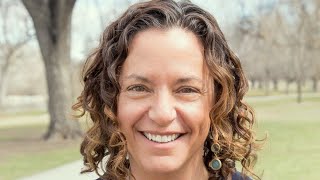
In this interview, Michael Horn talks with Amy Anderson, co‑founder of Reschool Colorado, about the organization’s evolution from a Don L. K. Foundation initiative to an independent nonprofit focused on making out‑of‑school learning equitable and accessible. Anderson explains how Reschool’s human‑centered research revealed that children spend only about 20 % of their waking hours in school, leaving the remaining 80 % of learning largely unaccounted for and often reserved for families with resources. To address this, Reschool created a suite of interventions: learner‑advocate networks (partnered with employers such as local hospitals) that help families navigate education and childcare; a “Learning Dollars” fund that provides cash grants for supplemental experiences and childcare; a searchable online platform that aggregates local and national learning providers; and support for community‑driven learning collectives (pods) that emerged during COVID‑19. The conversation also covers Reschool’s stance on funding—advocating for an additive public supplemental learning fund rather than diverting K‑12 money—and how the pandemic accelerated virtual delivery of their services. Anderson outlines future plans to scale the learner‑advocate model beyond Colorado, productize their tools, develop competency‑based recognition for out‑of‑school experiences, and launch a prototype game to help families understand the learner journey. Throughout, the interview highlights the organization’s focus on equity, community partnership, and systemic redesign of education beyond the traditional school day.
Chapters
Welcome to the future of education. Excited for this conversation with my longtime friend, Amy Anderson. Amy and I have known each other, Amy, I think it's like over a decade at this point. I was thinking about it beforehand, obviously, Donald K. Foundation, some gatherings that used to have out in Colorado, it was when I think we first got to know each other. And then of course, you've started this organization, Reschool Colorado, and so I'd love to start our conversation there. For folks that haven't been following the great work that you and your team have been doing over the last several years, just tell us what is Reschool Colorado?
Sure, thanks for having me. So reschool started actually as an initiative of the Don L K foundation back in 2013, and Tony Lewis, who runs the foundation, and I, we had both been working in education for a couple decades. And what we found was that we had been investing our resources at the foundation as well as our time and energy into various efforts to change the system and investing in institutions within the system. So whether that be doing schooling differently or districts differently, or online and blended learning, which is how you and I met, and there were some cool things that came of that. But as we looked across the board, what we realized is that maybe we were investing in the wrong thing. Maybe instead of investing in changing and tweaking institutions, we should invest in families and kids and understand their context and how they were navigating systems, what was working and what wasn't, and then to design new systems or a new way of navigating systems that would make it a better value proposition for kids and parents. And so we set out on this journey to at the time, to design a new education system that would be modern and relevant for today's world, but more importantly would be anchored around the needs and context of families and kids. And so reschool has been a journey and our work has been focused on how do you partner with communities and families, understand how what's working for them and not in terms of navigating systems, and then build out new concepts that will make it a better proposition. And so we set out initially to do a set of human centered design where we actually shadowed families and looked at what was working and wasn't working as they were pursuing different educational pursuits. And we started to realize is that actually kids are only spending about 20% of their waking hours in school. What we quickly realize is that learning happens everywhere, but not every kid has access to education and learning that happens everywhere. And so reschool became, after some initial research an effort to say, what if our education system counted and made accessible the learning that happens everywhere? And actually, we just redid our mission statement just this recently. And it's that to create, to create an equitable education system where learning that happens everywhere is fully accessible to all young people. So right now, our education system focuses primarily on schools and the 20% of time that kids are in schools. So all of our work over the past several years has been to say we're not going to focus so much on the time kids are in schools, going to focus on this system that sits alongside schools, which is out of school time. And so in order to make that system equitable and accessible to all people, we had to immerse ourselves with parents and understand what was working, what wasn't working as they navigated that. And there were some very key concepts that have emerged that have remained consistent over time. And one of them is that learning that happens everywhere is primarily reserved for people who have the money and the resources to pay for those experiences. So if you are a family that can afford to put your kids in sports and other kinds of activities, you build out a strong set of relationships and social capital and experiences in navigating those experiences that often set kids off on the trajectory of what they want to do in their life. And so our goal has been to say, well, how do we resource that broader ecosystem? How do we ensure that people have the agency to navigate learning that happens everywhere? And, and that is through a role called learner advocates. And so we've also been creating a concept over time that we've iterated on where actually families have access to an advocate who is their partner in building their capacity and confidence to get what they need for their kids education, whether that be from school or this broader array of experiences that kids need. And then a third thing that we have been working on is if we want to have a vision of a larger ecosystem, the values and counts, the learning that happens everywhere, people need to have information about how to find those experiences. We need to know who are the various learning providers that operate in those spaces. And that needs to be transparent for people. And so we have done things like create our own tools, as well as bring a website to town that allows people to search for learning experiences that align with their interests and values and needs. And what it's starting to do is pre Covid it was shifting the conversation from being just about learning and education being an academic thing that happens only in school, to learning that is valuable and accessible for people around the year the challenge that we had back then, that we don't have so much now, is that people thought, oh, well, the learning that happens outside of school is a nice to have, it's not a need to have. And then all of a sudden, nobody was in school anymore. We never, we never thought there'd be such a dramatic shift from being like, advocating for the importance of this time outside of school to saying, oh, nobody's in school now. Everybody's remote learning. And schools and districts can only offer so much during this time. And there's a lot of gaps that aren't being filled. And so a lot of the things that we were doing pre Covid we were able to easily insert into this moment and be a resource for our community. And I can share a little bit about how we've pivoted, but that's a little bit of a history of reschool. We started as initiative of the foundation. We became an independent nonprofit in 2018 because we were starting to take concepts that were just early stage R and D and they. They were getting. Gaining some traction and legs, and they needed a space to grow and flourish. And so reschool still partners with the foundation, but we are taking ideas that have come from that research and partnership with community and families and either growing them ourselves or partnering with others within our community to take those concepts and grow them independent of us.
Gotcha. Makes. Makes a ton of sense. I just before we jump into how you all have shifted in the current moment, in sort of the broader context with which a lot of families are grappling right now, just two key points that I think are worth just drumming on. One is the insight you all had of trying to reform existing systems versus create systems where families literally had access to nothing in some cases, I think was a really key one because I've sort of reflected as disrupting class. People have revisited our prediction of 2019, 50% of all classes online, and they said, oh, gee, you under predicted. Given the pandemic, I've sort of reflected that one. You know, I think the delivery disruption, if you will, has happened. Obviously, digital has grown, but it's grown within a system. It hasn't reformed a system. Right. It's taken on the characteristics of that system and all the limitations thereof. Right. And so I think a lot of our hopes and dreams for what it might do, some of those have been realized at the margins, but it hasn't been that tidal wave of change because it's been within the system. And then the second insight, obviously that you all had was the non consumption piece which we always talk about in our world of disruptive innovation. And we were always so frustrated that people weren't innovating in the after school area. It seemed like just the perfect one. And, and you all have finally taken all of those resources that exist and then combine it with a learner advocate, which seems like the real key missing piece to unlock this opportunity and discoverability for so many families. So I just, I love those two insights and I think they've been really brilliant as you've tackled this as we shift to the COVID context, I mean, all of a sudden that 20% in school went to zero for most families and really opened up a gulf and an awareness that people needed this. Talk to us what that's looked like for you all and for your families.
Yeah, I mean there's a few different things. One, you know, as people shifted, so we run a learner advocate network that is in partnership with two employers in town, two hospitals. And the idea there was that if you're a working parent and you're trying to navigate your job and ensure your kids are safe in school and doing things over the summer and so forth, that an employee benefit that would support families in navigating that process was something we wanted to try. And we now we're three years in and it's proved to be have a tremendous impact on people. But in this time of COVID because of the families that we work with in that particular network, they work in hospitals. So they were on the front line during this whole pandemic. And so some of our work has been very acute in terms of meeting the needs of people in the moment who are trying to work and maintain health and safety in their homes and with their families while caring for people or working in hospitals while their kids are in remote learning. And so we are supporting people on the ground level in very interesting ways and learning from that in ways that we think can apply at a larger system level. But we also started to see, especially as summer hit, that there were a lot of learning providers who typically operate in the summertime, that people relied on, who were easily poised and had enough entrepreneurial spirit in them and flexibility to pivot in the moment in the way that schools and districts were do. And so we invested a lot of our resources and time in trying to lift and curate and use the blueprint for summer website that we had already been implementing for the past few years to have a space to hold all of the opportunities that these providers were offering so that families had one place to go to look for it. And we focused primarily on local providers, although we did link to people who were curating kind of a national set of online and digital experiences too. So that's another role that we played. And now we learned from that in a way that we are actually revamping our reschool website and creating a new tool that's going to build off of what we learned during this Covid time about what people are wanting and access looking for, for remote learning. And then the third thing that we did, this is how you and I kind of reconnected recently was around this concept of, you know, learning collectives as we call it, like how are people thinking about how to support remote learning or replace it all together? During. During this time as we head into fall, we were hearing a lot about what was happening in more affluent, largely white communities, but we weren't hearing as much what was happening in lower income communities and communities of color, which is primarily who we partner with through our work. And so we reached out through our partners to ask what people were seeing. Were there collectives of people that were coming together in these communities who were doing interesting things and if so, could we help? Could we learn from them and be able to share what they were doing and also resource that work if needed in different ways? And so we've partnered with four learning collectives that started this summer and heading into fall. Two were run by youth and two were run by parents. And they have formed. They don't call themselves pods, but they are all pursuing different ways of supporting each other and having continuity of learning during this time of remote learning. And we invested, we compensate them for their time to share what they're working on. And we also gave each of the collectives $1,000 that they could use towards fulfilling whatever their pursuits are.
That's awesome. I love that last piece also because it's obviously been an acute need, but then the resources it to make sure that there are instructional materials or location things and so forth. It's become very evident to me as we're running our own pod or I like the phrase collective for our kids out of our backyard and thinking about what a New England winter is going to look like amidst that has been interesting. So appreciate that. There's a question that came in from Michael Robbins, who we both know, saying that there are two things that have our teachers and students tethered to hashtag zoomed out classrooms. One time requirements and the second is state tests and saying we need waivers on both immediately or all our Other innovation conversations, just simply rearranging deck chairs in the Titanic? What's your plan to push for these? Or how are you working around those structures with the folks that you serve?
Yeah, you know, I mean, to be quite honest, we don't like this is part of where we're focusing less on how we kind of fix the current system as compared to illuminate potentially a new path for a future way of doing things. So we haven't been spending a lot of time on those topics, although I think they're great questions and needs, you know, in terms of focus. But instead, what we've been looking at and these collectives is an example of this, is, you know, families are getting what they can and need as best as possible from their schools, but what they're looking for is to supplement that with the things they're not getting. And so to your point around being tethered to the zoom, when they're untethered, the kinds of things that we see them seeking out are things that take them away from that zoom. I can share, like the students that are running the collectives, they're pursuing the culinary arts, and they're learning how to cook. There's parents that are wanting their kids to have physical activity and. And resourcing that physical activity through purchasing sports equipment and other things that in small groups, they can be doing when they're not tuned into the school. So that's kind of more where our focus has been. But I do hear from my educator friends and other parents in my network just how difficult it is to try to be plugged in all day. And I think that is also where we're seeing so much attention still going into the time you're plugged in again, the time you're in school, and. And we're trying to. To create a more broad narrative about that.
I'm curious, the families you're serving have most of them pulled out of their district and gone to a homeschool arrangement that the POD is subbing for, or are they still in the district and doing the POD so that, as you said, they're really supplementing that zoom experience?
Yeah, it's more the latter. They're supplementing it. And, you know, a lot of. When I look at the families that are in our broader learner advocate network with the employers, as well as through some of the other partnerships we have, you know, families who are most have been disproportionately affected by Covid, are much more reluctant in many ways to send their kids back to school at Physical school. And so they are keeping their kids at home, they are plugging into the remote learning because they don't want to abandon their schools at this time. And they don't necessarily have the resources and the same kind of flexibility to full time do the education thing, but they can do the supplement part.
That's super interesting. It's been striking actually, right, that the percentage of people who want to stay out of school are those who have been most affected by it and most at risk. But also people often assume have the least resources to be able to create a replacement for that schooling. And thinking about the child care pieces of it in the custodial role that schools play in particular, I'm curious what you're seeing, you know, even more broader than the pods that you're supporting directly. What are those families doing? What are the workaround solutions that they're finding? If, you know, they still have to maybe be at work and they have a kid at home who's on Zoom Classroom, if you will. How are they negotiating those trade offs right now?
Yeah, well, one thing I forgot to mention that's related to this is we have been providing what we call Learning Dollars, which is a fund that started out as a very small fund with some of our first set of parents we partnered with and has grown to over $150,000 that we provided in learning dollars over the past few years. And I bring that up here because the purpose of that fund was to supplement or resource either experiences or if it's in this case, it could be to support childcare while kids are remote learning to offset costs that were getting in the way of people pursuing opportunities that they were interested in. And they were direct cash investments, so there were not strings attached, but people could use them for what they needed going into the future. We had hoped to put an initiative on the 2020 ballot that we were working on with a set of other coalition of people that would have created a public Learning Dollars fund. Now, in light of COVID we couldn't put it on the ballot this fall. And in some ways it was good because we've learned a lot since then. And with COVID we have a different way of thinking about how we would want to run that fund. So we're hoping to either get through legislation or through a ballot initiative in 2020, the creation of a new public fund that would sit alongside our K12 system that would be available for families certainly now in this moment, to pay for things like childcare, if that's what they needed, or resources to bring into the home or tutoring or you name it, sports, whatever to supplement and could be a resource that right now we're reliant on philanthropy or creative workarounds and those kind of things to solve for. And that's a good thing. One of the families we work, collectors we work with, they're taking turns, they bought museum memberships and experiences as collectives that, that, that they're going to pursue this year and they're taking turns taking kids to those different experiences. So they're not fully disengaging, but they're like one parent might take them one week and another parent the next week and so forth. And so yeah, those are a few.
Things that makes sense. I'm curious just in terms of as you think about that, you know, establishment of public fund or public dollars to support these experiences. You know, in some ways that sounds similar to an education savings account. It sounds like you'd have more broad usage for childcare and things of that nature as part of it. How are you positioning it or thinking about positioning it such that it doesn't feel outright competitive to the public school districts, such that they try to shut it down? Sort of like what we've seen with the battle over charters where it's felt like a zero sum game. How are you thinking about that or is it going to be a battle?
Yeah, well, I'm sure that we'll get pushback, but you know, the key thing that's different here is that we didn't want to take money from the existing system and put it into another thing. And that's what ESAs have done. You know, it's basically you're taking money out of the K12 system and people are having to leave that system in order to do something different. That was not something we wanted to do, nor do we think was the right thing, nor would it be politically feasible. And so instead what we have been working on is how do we supplement the money, you know, leave K12 funding as it is, allow people to have that experience for that 20% of time kids are in school. And lots of smart people are trying to think about how to leverage those resources in the best ways to have the best outcomes for kids. We're saying when kids aren't in school, there's this valuable learning that's also necessary and happening, especially right now during remote learning. How do we pay for that and how do we raise money through a public revenue source that's going to add it, be an additive. And so we're hoping that as an Additive. It's less controversial than it would be if it were replacing or taking away.
Yeah, it's interesting actually thinking about it, because when Florida Virtual School started, it was supplemental relative to the K12 funding, and it didn't get any pushback. I think so many advocates for those alternative choices or alternative supports or things like you're doing where, you know, the alternative truly is nothing for a lot of these families, they say, well, at some point it has to compete. And I think that's just. It's so. It feels so right and yet it's so wrong because it produces that pushback that actually is counterproductive, I think, ultimately. And so that's another insight I think you're. You're sort of breaking into here, which is don't compete with, but instead create other options alongside of that system for all that other time for, you know, that 80% of time when. When kids aren't in those schools and really need those extra learning opportunities. And obviously, naturally, that would, I would imagine, deal with summer learning loss and inequitable things that occur in all those gap areas, if you will, that that occur unintentionally outside of the confines of school. I want to go a different place, which is the employer piece of this, and just double click on that a little bit. This is particularly of interest to me now that I'm spending a lot of time with Guild Education, where we work with employers on helping pay for their employees to upscale and reskill. I'm curious how the employers, they're thinking about supporting these opportunities for families and their kids. What's sort of their incentive out of it?
Yeah, I mean, so we've been primarily working with a few hospitals in town up until now. You know, it was an idea that we obviously, we actually created the initial pilot, as you know, in partnership with you and entangled. And then we've built upon that for the last couple years and the hospital. And we're looking to expand going into 2021. We've been talking with additional employers and looking at how we take this model to a larger scale. But the. So the. The two hospitals that we work with are part of a network of hospitals that's a nonprofit health network. And, you know, we went into this thinking that the employer angle would be about return on investment, that if employees were. If their kids were happy and content in schools and childcare and summer programming and so forth while parents were at work, that would make for happier employees. And it does, you know, and that they would stay then and that would retain people over time. And I'm not going to say that that's not important to the employers that we work with right now and nor might it be important to future employers. But what's proven to be most important to SEL Health, which is the network we work with, is that they care about the health and well being of their people. And if they want to invest in people in their network and if those people stay happy, then they are not going to leave. And they can compete more on benefits than they can compete around compensation. And so offering something that's a unique benefit like this is something that they feel feed their mission as a nonprofit faith based hospital as well as something that's good for their employees. And they hadn't been presented with something like this before. So when they talk about the value and the impact, that's where they're coming from, is that they're wanting to invest in their people in different ways that are beyond the traditional. When we had the center on Reinventing Public Education as a research partner with us the past few years and we do have kind of reports and we've been documenting what the impacts have been on families and kids and that's something I can certainly make available if people are interested at some point and learning more about that.
That's awesome. So as we're wrapping up, I'm curious, like where is this all going to go from here? As you mentioned, we're seeing the explosion of call the micro schools, call them learning pods, pandemic pods, collaboratives, you name it, you have your term for it. It's exploding in particular pockets of our country right now, not equitably or universally across. You all are supporting these efforts for those who might not have these resources. In Colorado specifically, where do you see it playing out in the state as you think about more schools figuring out ways to open and so forth? What's Reschool Colorado going to continue to morph into to support learners? And where do you see the system sort of evolving to?
Well, I'm hoping we're successful with getting this fund created. I think that creates, that allows for resources to be infused into the community in different ways that, that we don't have now. We're also in the process of looking at how we can catalyze other learner advocate networks. We don't think they have to be just employer anchored. Our first one was anchored in the housing authority. Like there's different places and spaces where if people have access to the resources and tools that they could probably create them in their own Context. And so we are looking to take all of the things we've designed over the years and somehow figure out how we can make that available through a product as well as maybe some advisory or coaching from us to help others, not just in Colorado, but across the country to infuse this idea of learner advocates in different ways. And then also it's the further within our state we're going to be further curating and making transparent and accessible the resources and learning that people want to support. Remote learning, available, more widely available and having an easy place for people to find that.
That's awesome. And the learner advocate piece, I should have hit that harder I guess earlier, but I just think that's such a big piece of this. And what we're finding, not just in Colorado, but nationwide, at all levels of education is so important for helping people navigate, figure out, find success in the system. I know you are seeing the same thing that it's just a huge breakthrough when there's a learner advocate who's got their back and, and we'll help them figure out the resources and how to succeed.
Yeah, and one of the other shifts is when we went through the pandemic, our learner advocate network went fully virtual and before that it had been a more very place based, blended and now virtual model. So that makes it also more scalable in ways that we didn't know how to do before. And then one last point before I know we have to go about getting back to Michael's question. Some of the opportunity that exists when you're in the out of school space, you know, is you said to earlier, non consumption under consumption. It's a place where you can design new ways of like we want to get into this, we haven't had a chance to start to document and you know, kind of capture what are the competencies and experiences and the values that kids are gaining from these out of school experiences. We have a framework that we designed quite a while ago, but we want to see, we want to move in that direction where we can start to give kids the opportunity to share their story and have a collective of experiences and skills that they can share. And that's where I hope we push away from the seat time towards a more competency based approach and you can innovate without the regulations in this space outside of school. And so we have a game that we're actually going to be doing a Kickstarter for so we can send out info but the game mimics what that experience would be like for you become a Persona and a learner walking through it. We've been prototyping the game for several years, but we've redesigned it with a game designer. And so that's a way for people to experience some of this vision without having to actually live it yet. But to try it out through PD or other kinds of opportunities, that's really neat.
I'm excited to check that out once you're ready to share it more widely. And for those that aren't familiar, go to the site reschoolcolorado.org, check out some of the competencies that they've outlined because it's not just academic, it's really about habits of success and life skills that people will need to be able to navigate a inherently uncertain future and continue to make progress in their lives. And it's super thoughtful the way it's put together. So, Amy, just super appreciate the work that you continue to do and how you've put this organization together and supported so many learners and, and frankly, organizations to be able to serve these different family networks. So keep up the great work and thanks so much for joining me.
Thanks. Great to see you.
Likewise. And stay tuned. We'll be back next time.
Okay, take care. Bye.










