From Gap Year to Purpose Year: A Conversation with Abby Falik, founder of Global Citizen Year
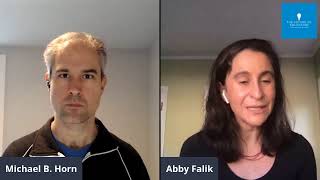
Abby Falik founded Global Citizen Year after feeling adrift post-graduation. Her 10-month program sends fellows abroad to build purpose and self-knowledge. She argues the gap year should be reframed as a "year on purpose" and made standard for all students before college.
Chapters
Oh, we're not approved yet for LinkedIn. Welcome, everyone. Excited for the conversation today with Abby Fallock, the founder and CEO of Global Citizen Year, which we'll talk about a lot more in a moment. But as a bigger statement wrote recently in Forbes about a bigger opportunity, I think, for college and high school students, that as they're facing campuses that are literally closed by COVID 19, that they start to think through and use this as an opportunity to really. To step back and reflect and think through who am I, and what do I want to contribute to this world, and how can I contribute to this world? And so I'm really excited about this conversation because Abby, quite literally has been the leader in this movement, I think, for about a decade, sounding the drum, that a lot more people ought to take time to invest in themselves and answer those deep questions about what they want to do with their lives. So, first of all, Abby, thank you so much for joining me.
Thank you, Michael. Delighted to do it.
Yeah. Really excited for this conversation. And I think I'll just start out with sort of the question that I suspect some people are asking, which is, what is Global Citizen Year? Tell us about that. And I'd love to hear about also your personal spark behind founding it to begin with.
Global Citizen Year has existed to reinvent the way we approach the transition between high school and young adulthood. And the genesis for me was when I finished high school, I'd been a good student. I'd done all the things and checked the boxes and gotten into Stanford. And yet I was very aware that there was something missing from my education. There was something that I was hungry to learn about myself in the world that I wasn't going to learn in a classroom context. And it felt odd and ironic that I wasn't encouraged to take some time in that critical developmental transition before landing in a freshman dorm to explore myself in the world. And when I couldn't find something like Global Citizen Year, the first seed was planted. And at some level, I knew that my reason for being here was to forge a new pathway. And 20 years later, here we are.
Gotcha. And so Global Citizen Year, obviously, you've been operating it for several years. You take cohorts of students, they go and have these amazing abroad experiences. They develop themselves, they apply in their, you know, themselves in communities, I think. So would love to hear a little bit more about what it typically looks like, but also, you know, what's going on now, given, frankly, that we're not able to travel. You've obviously brought the students who were in the midst of their experience back to the United States and back to their home country and locations. But what does that actually look like and what's going on right now?
So for the past 10 years, Global Citizen Year has identified, recruited, selected a cohort of really exceptional young people coming out of high schools across the US and around the world. And we take them through a 10 month leadership course where the heart of the experience is a deep immersion in a community in Africa, Latin America or Asia. So the students are in a cohort, they have a coach, there's a curriculum that they follow. But the basic premise is to have an opportunity that gives you connection to yourself, to issues that might spark a passion for what you want to study in college and pursue in your career, and really gives you a sense of, of purpose beyond yourself as the foundation for your education and everything that follows. So, you know, mid March, as it became apparent that the pandemic was spreading and that international travel was going to be quickly constrained and hard to predict, we made the very quick decision that we needed to get our current cohort of fellows home. So we staged an emergency evacuation, got everyone home safely, and then directed our attention to making a decision about what to do with the incoming class of Fellows we had accepted for to begin with us in the fall of 2020. And as we looked at how much uncertainty there was at the beginning of April and there still continues to be now, it came clear to us that it wasn't responsible for us to commit to sending young people around the world. Regardless of what the situation with COVID might be in the US come fall, it's even more hard to predict what it will look like in other parts of the world, particularly where the health infrastructure might be even less well developed. So decided that we weren't able to run our program as intended and that that was the responsible thing to do. We also wanted to give families and our fellows enough time to make an alternative plan. But we were then able to redirect our attention to answering the question of what can we do to be most useful in supporting an unprecedented number of high school graduates in the class of 2020 who are now not sure whether they should or can even go to college this fall. And we've got some really exciting new things cooking.
So before we get to that, I'd love to step back a little bit and just sort of set the stage for what you've got cooking and sort of this larger opportunity. And a couple other questions occur to me as you're describing the reasons behind your decision, which we'll get into as well. But first, you've been one of those people that have sounding the drum and frankly awoken me to it as well. About that. The phrase gap year might actually be a very misleading phrase and actually sort of a brand that creates challenges for students who are looking for this meaning in their lives that won't be accomplished by going through school. Can you give a little bit more insight into sort of why you, why you came to that conclusion of what you think better phrases would be or better ways of connoting what a gap year should do for people?
There is nothing helpful about the terminology we currently use in calling it a gap year. If you think about the metaphor, it suggests that you are falling into a gaping hole. It suggests the absence of something rather than the presence of what could be the most impactful part of your education. We think of it often as the gap year is actually what's filling the gaps left by the other parts of, of your classroom based learning. There are also all kinds of connotations that we've had societally. So there are societies and cultures and religions around the world that have fixated on this transition into young adulthood as the most formative moment for young people to develop a sense of self, a sense of purpose. But to call it a gap year suggests that it's not valued somehow. It's also historically been something that only wealthy kids have the privilege of doing. And it's got this sense of a wandering last year. So it may be aimless, it may be purposeless, but the reinvention of this life stage, a new transition into adulthood, requires that we use better metaphors and better language. I like to call it a year on purpose, a launch year, the opportunity to develop a foundation for everything that comes next. And my vision for forging a new pathway between these two stages of life is that nobody sees it as a gap, but instead as an integral, foundational, normalized part of every young person's development.
Makes a ton of sense from my perspective. It's obviously turning over a lot of cultural conceptions that have existed in this country and so forth. But I'm curious. You said that you all have made the decision that it wouldn't be responsible to operate the program as usual for next year. You're also seeing, frankly that a lot of students have a lot of uncertainty right now. I'm curious, stepping back from Global Citizen Year, what's the big advice that you'd be giving to high school seniors about to graduate and even current college students planning for Next year. And the corollary, I think you all made a very strong move in canceling your program. What advice would you give college presidents? Because right now they're all out of the news saying we're going to be back on campus in the fall. It strikes me as a little premature to be able to know that, but let's start with the students first advice there, and then I can follow up, I guess, with how you think about it institutionally.
Absolutely. Well, I'll start by saying I'm very glad I'm not a college president and feel a lot of compassion for how incredibly challenging those decisions must be for us. It was quite clear because the core of what we do was going to be compromised in some way, and our top priority has to be ensuring the safety and security of not just our fellows, but our staff and all of our host communities around the world. So the decision was hard, but it was very clear. And so the advice I would give in a normal year is really to encourage every young person to step off what we perceive to be this conveyor belt that's moving, this sense that we can't adjust the speed or the incline of the treadmill. It's just not true. We all have the agency to step off that path and actually recognize that there's not really a path there until we create our own path in the first place. But typically, I encourage young people to find ways to get outside of your comfort zone and to have an experience that builds empathy and gives you proximity to challenges in the world that could really open you up to a sense of what you're here for and what gets you up in the morning when there's no alarm clock. Because of the constraints right now, and who knows what will be possible come September, it's highly likely that there will be challenges in traveling, potentially even in leaving your home or your community. And so I've come up with a list of four things that are highly accessible, they are free to do, and they are available to any young person, whether you're finishing high school or already in college, thinking about how to convert this gap year not into a year off or a year off track or a year of getting behind, or a plan B that you're going to lament because it was forced on you, but actually into a purposeful foundation for what comes next. And so the four steps are, first, to follow your heartbreak. This idea that there is no shortage of pain and suffering and injustice, especially right now. It's been this great unmasking of all of the cracks in our social systems, figure out the thing that breaks your heart and turn toward it. It might be inequities. In our education system or our public health systems, it might be structural racism. Figure out what it is that you can't not do something about and orient in that direction. There's such a pressure on young people to quote, unquote, find your passion and find your purpose. And my intu here is the best thing you can do is figure out what strikes a nerve, that you can't ignore what you're curious about and follow the thread and you may find yourself living toward what it is that really lights you up, that might ultimately become a passion or purpose. So follow your heartbreak and then define your questions. Figure out very concretely what it is that you want to learn about yourself and the world in this precious in between time. Figure out what it is that, that that compels you to move on with your education in the first place. What are the questions that are burning for you? And then find your teachers. Figure out what or who can help you gain a deeper understanding on those things that spark your curiosity. And when I think about finding your teachers, these may be people who are famous or not, traditionally successful or not, living or dead. It's about moving toward people who've been where you want to go and finding a way to learn closely from them. And the final piece is build out your crew. Figure out who your traveling companions can be on this journey. I think it would be very, very lonely to just sit at home and compile a bunch of Coursera courses and go it alone without building a sense of cohort and community with other young people like you in your community. But, but, but around the world, frankly. Find a cohort who can hold you accountable, who you can check in with to help you feel like you are not in this alone. You are actually part of a foundational group of young people going through a crucible experience together, an experience that will shape your life forever. Here's how you can make the most of it.
Yeah, that's terrific advice. And I assume you all are starting to figure out how you'll support that. Are you thinking, I won't ask you to break any news here, but are you thinking, you know, bigger cohorts than maybe you've served in the past because of the virtual experience? Are you still going to keep it to a select group? How are you sort of thinking about, you know, coverage and served and then are there partnership? And maybe this is how I'll reform it. The question about college leaders Is, are there partnership opportunities with college leaders that are weighing these decisions about whether to bring students to campus or frankly, face some significant financial challenges for the schools themselves, which could be existential in nature? Are there opportunities in your mind for you or any gap year program to partner in that way?
Yeah. So what's come very clear to me is that we need a new and clear path. So a traditional quote, unquote gap year is not going to solve the issue we have right now with 2 million kids who are planning to go to college this fall who have tremendous uncertainty about what that experience is going to look like. And we also can't pretend that we're going to do a freshman year all virtually or as normal. So there needs to be some blended pathway that's not a gap year. It's not a virtual freshman year paying full tuition, but it's some blended intersection of the two. So I can't disclose yet what it is we've got cooking, but we're very, very excited. In the next couple of weeks, we'll be launching publicly, and it will be an opportunity for exceptional young people from around the world. We're finishing high school now who don't want to commit to going to college in a very disrupted or virtual way, to take this year on purpose to learn themselves in the world with teachers, a community, a curriculum, coaching, so that this year becomes that foundational learning experience that wakes you up to who you are and who you're becoming.
Yeah. So, final question from me that I'm hearing from a variety of folks out there right now is something that a lot of people have pointed out, which is that, okay, great, a lot of people aren't going to go to college in the fall. Potentially, they're going to take these gap years. There's a lot of surveys that show this. Hopefully they'll follow your advice and, you know, one, follow your heartbreak, two, define your questions, three, find your teachers and four, build out your crew as you go on this journey. And then high school class of 2021 is going to graduate. We hope there's a vaccine and things are back to some sense of normalcy and so forth. And a lot of people are going to be trying to get into college at the same time in the fall. Why wouldn't they take a year on purpose as well, I guess is my question. But how would you think about it as we go to a final word from you?
I appreciate that question, Michael. My vision for all of this is that this is the moment that everything changes, that we all wake up to what the evidence has shown all along, which is that young people and college and the world benefit when we pause between these two stages of life and really focus on how to help every young person find a sense of purpose and something that propels them forward in their education, that puts them in the driver's seat so that when they get to higher education and whatever form that takes, they're not burnt out, but they have burning questions that they're there to answer. And so this becomes the moment that everything changes. And it's not just about 2020, the class of 2020, everybody's taking this year. It's actually about a total reorientation that wakes us up to the fact that we can't go back to business as usual. The pandemic has put us in a moment where everything we've assumed to be true has come unstuck. It's like all the cards have been thrown up and we all have a precious and historic opportunity to redesign the systems and institutions around what the world. And so my hope is for the class of 2021 and 2022 and 2023 that it has suddenly become normalized, expected, encouraged, and accessible for every young people to do. Every young person to do a year on purpose before they move on to the next stage of their education.
Strong statement about the opportunity for a year on purpose and a realistic way, I would say, to find said purposes without being grandiose or erudite, without actually sort of a course to follow in that path. And Abby Fallick, deeply appreciate you being here. Deeply appreciate your leadership in these times and over the last decade, helping to chart this new pathway for the world. Students, frankly. And for folks online right now, make sure you check out Global Citizen Year. Put the URL down there at the bottom so you can check it out so that we can continue to make progress in creating purposeful journeys for all students. Thanks so much for being here.
Thanks, Michael.










