Gisele Huff: Force of Nature
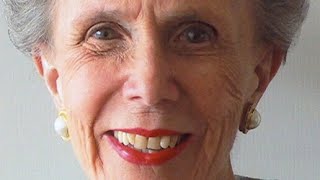
In this interview, host Michael Horn speaks with education leader and Holocaust survivor Gisele Huff about her memoir Force of Nature and her decades‑long work reshaping K‑12 education. Huff recounts her early life fleeing Nazi‑occupied France, the loss of her family, and how surviving the Holocaust forged a deep respect for individual dignity and a forward‑looking mindset. She explains why she began writing her memoir in 2015, paused it during her active years at the Jacqueline Hume Foundation, and completed it after retirement. Huff describes her initial libertarian belief in school‑choice solutions, the disappointment she found in the limited impact of vouchers, charter schools, and market‑based reforms, and how meeting Clayton Christensen shifted her focus from reform to true transformation. She critiques the "governance‑only" approach of school‑choice, emphasizing the need to address non‑consumers and to redesign education around student agency, curiosity, and failure‑as‑learning rather than punitive punishment. Huff highlights the importance of consensus‑building and skilled facilitation, drawing on her experiences with Education Reimagined and the Gerald Huff Fund for Humanity, where facilitators synthesized diverse stakeholder input into shared vision documents. She also discusses her advocacy for universal basic income and a new social contract for the economy by 2040. Throughout, Huff reflects on statistical measures of progress versus lived human experience, questioning whether higher graduation rates truly signal better outcomes. The conversation closes with mutual appreciation and an invitation for the audience to explore Huff’s ideas further.
Chapters
Welcome to the future of education. I'm Michael Horne and I am really looking forward to today's conversation because it's with someone that I affectionately call my fairy godmother, Giselle Huff, who for those that don't know, has been an incredible figure in the course of education. Not just reform, but transformation and the movement to really rethink it, but also in her work now pushing for universal basic income in some very meaningful parts of the American society at the moment. But I want to read from her new book for all of you can see it, Force of Nature, the Remarkable true story of one Holocaust survivors. Resilience, Tenacity and Purpose. Giselle served for more than two decades as the executive director of the Jaclyn Hume foundation, where I came to know her, which invested in non profit national organizations that worked on transforming K12 education. And now she's currently the founder and president of the Gerald Huff Fund for Humanity and lives in San Francisco. But Giselle's story is one where she escaped war torn Frances, as the back of the book describes, where 18 members of her family were murdered in the Holocaust. She arrived in the United States with her mom, it was 1947 and they had $400 to their name. And she quickly found her footing in America, eventually earning a PhD in Columbia University, running for Congress, and launching the spectacular career in K12 education that I've alluded to. Giselle also had many moments of devastation throughout her life that continued. And I think it's how she took those moments and what she built from them and what she learned from them that it's going to be a really interesting conversation as we reflect on education, transformation, the resilience of an individual and someone who embodies the American dream. So with that, I will bring Giselle up to our virtual stage. It is so good to see you. Thanks for doing this.
Thank you for having me, Michael.
Yeah, absolutely. And for those. Yes. And for those who are tuning in and want to ask questions, fire it away in the comments. I'll do my best to ask Giselle. She always is the first to ask a question at a conference so you can be the first to ask her a question. But Giselle, I want to start with something a little bit bigger. Which is what led you to write this book, this memoir? Why did you think that this was an important story, your story to tell for the world?
So in order to put this in perspective in terms of my life, I started writing the book in 2015, mostly out of boredom. I had time and I like to write So I thought, well, I'll write the story of my life. And I wrote 17,000 words about the start with what happened to me during the Holocaust and so on. And I got to the place where I was actually working and I was working for the Jung foundation with you and many other people and trying to do something about K12 education. And when I got to that spot, I couldn't figure out how to continue writing the book while I was still involved with the people I was writing about. So I stopped and I put it aside and I didn't think about it anymore. And then after I retired in 2020 and I had lots of time and of course I was working on the Fund for Humanity, the Gerald Huff Fund for Humanity, which is the nonprofit I founded, I was able to pick up and to explain and describe how, you know, the years that I spent, the 22 years that I spent in the foundation, what my ideas were, what I encountered, how I dealt with it without having to worry about how it would affect my relationships with people. And that's not to say that this is a Roman eclipse. You know, I'm not, no, I describe my relationships with people, but I don't go into the personal aspects of them. You know, I had many, many discussions with Friedman, who was a very funny man. And you know, I don't go into where I agreed with him, where I didn't agree with him. That is not what the book is about.
Yeah. So I want to actually, let's spend a little bit of time and then we'll backtrack into your life a little bit. But just based on what you just said, I think folks tuning in would be curious to hear the arc of your time. The 23 years where you were running the Jacqueline Hume foundation, making grants to education non profits, because you yourself had quite a transformation during that experience in the types of efforts you, you funded and what you concluded was not just important but necessary for American education and the development of each individual. Can you just talk about the work you did and sort of the arc of how it changed over time?
We started out. So let me back up for a second and let people know that I was a lifelong libertarian, so I was self made woman and I thought everybody could. If I could do it, anybody could. And pulling yourself up by your bootstraps was something that I believed in. And so when I started with the foundation, we approached education, which was the thing that the trustees were most concerned about from the viewpoint of reforming it. And road to that was to support organizations that were involved in Promoting school choice, so vouchers, charter schools, tax credits, all of that. And in order to do that, we were very involved with state based free market think tanks. Pure libertarian approach. Let the market decide. You, you know, so that was the first 10 years or so. And then as you know, I met Clay Christensen and started to correspond with him and I was instrumental in inspiring him to write the book he wrote rather than another book he was going to write, which I thought was not going to do the trick. And after that, so after I met him in 2005, by that time I was already no longer, you know, happy with the school choice avenue.
I want to stop you for a second. What, what specifically was leading you to conclude or have doubts that school choice would be the avenue that would develop each and every individual? Like what, what were the doubts, data points or signals? What, what was causing you to reflect on that question?
There were the, the most important, the most, you know, the thing that worried me the most was the math. The amount of time and money that had been spent for such a handful. I mean, you know, to this day keep has I think 200,000 kids, you know, I mean 55 million kids go to school every day. You know how long it's been going on. KIPP has been going on for almost 30 years. So the math didn't work. It was just. And then the other part of it was I wasn't persuaded that the schools that were being created or that the schools that the kids were being sent to through the choice of their parents were good schools. I, you know, some of them were better, but some of them were the same or worse. So it was, you know, there was nothing magical about that whole thing. There was nothing transformative whatsoever. It was traditionalism in another form where governance was the thing, right? It was. No, it wasn't. Had nothing to do with content. It was governance that was being addressed. And sometimes it worked and sometimes it didn't. And after I heard and I thought of education as an industry as opposed to, I'm sorry, as opposed to something that was not susceptible to the kinds of things that happen in the world at large. It became clear to me that we had to first of all, hurry up and secondly, we had to do what Clayton said. I mean, we had to, you know, gear it to the least to the people who were the non consumers. What do we do? How do we shape this so that we address the non consumers and let them come into it. There's so many more of them than there are of the people who have, you Know, rca, huge systems.
Yeah.
Huge television, right?
Yeah, yeah, yeah. And for those that don't know, this is the story of the disruptive innovation with the primitive transistor pocket radios making their way among people that couldn't afford or couldn't access the mainstream. Large floor standing radios. And bit by bit, they got better and better and transformed the world as the volume sort of went out. And Giselle, you had this transform, transformative view that we needed to transform education, not just reform it. So now I want to go back a little bit into your life, because what strikes me is that your early life was one. You know, you were born in 1936 in France, in the early 1940s, I think 1940, 41, the Germans come in. Many members of your family are. Are murdered during the Holocaust. You and your mom flee Paris, and you survive through the Holocaust. You have some very scary moments in today's lexicon, and I don't want to be callous about this on either side of it, but in today's lexicon, we would be looking at your story and thinking a lot about the trauma you endured, the learning loss that you incurred. And I'm just curious how you navigated that. And we could ask a lot of questions around resilience and so forth, but what are the lessons that you take out of that that are salient, perhaps, for what we're going through now and the development of humans more, you know, more globally?
The kind of experience I had and the fear I lived with when I was so young. Right. I mean, I don't remember anything before the war. The Germans came in when I was 4 years old. So what happened before that, I don't remember at all. My memories start with the fear after they invaded and the loss. The, you know, the loss first of my father and then of the rest of my family. And I don't know, it's maybe because of my personality or the kind of a person I am. What that gave me was an appreciation or a love of life and a. A knowledge, an ingrained knowledge that if you survive a day, then the next day is a huge opportunity. The very fact that you're alive on Tuesday is a triumph. So I've always looked forward. And when you look forward, there's two things about that. For one thing, if you know that you're looking forward, you live the day you're in, in my way of living, conscious of not doing anything that you will regret because you can't regret. Right. That's going backwards. So it kind of. It, you know, it influences your, your attitude and your behavior. That sounds very philosophical, but, you know, it happens often on a regular basis. I mean, so in what it does in relationships with people is you always want not to hurt them because you know that if you do even, you know, slights. I'm not talking about hurting them really, but just in relationships with people, if you do, you feel sorry for it. I mean, I will. So I don't, you know, I'm very careful about not hurting people. And once you go down that road, it becomes natural. I mean, I just. Yeah, people come to me for advice and they describe something that they're doing and I see holes in it. You know, I have a lot of experience and I see problems. I see that perhaps they didn't ask the why question deeply enough. But before I describe that to them, I always find something to praise authentically and then I tell them the truth. Because if they came to me for advice, I assume they want to hear it. So it's a kind, you know, a long way of saying that my experience as a child really armed me to go through life respecting other people and myself. That's very important. You know, if I didn't respect myself, I couldn't respect other people.
That building of self efficacy and self importance. Right. And understanding your role seems so critical right now for all individuals given the, you know, the mental health crises we know that are going on and so forth. And there's just a sense when I hear you, the phrase I keep coming back to is dignity of the individual. You had found dignity in yourself and you find dignity in those with whom you connect. And I'm just sort of curious in your mind as you think about education and the schools that we have today and the schools that you'd like to create and transform, how do we build that in individuals or to make sure that we convey that to each and every individual so that they can do the sorts of transformational things you've done in your life. Creating whole movements around universal basic income, creating whole movements around digital learning and the like.
It's important. The basis for that is, starts with young children. We have a system that, because it is punitive, doesn't let you build on your failures. So from the very beginning, whenever you fail, you're punished. I mean, and you, you lose confidence in yourself the more that's true. So if you start the system with, first of all, a. A mindset that respects children because it's no longer the purpose of education to impart knowledge, that's only one of many Things that children must learn. And it's almost, you know, ridiculous when that little thing that you carry around with you all the time has all the knowledge in the world in it more than all the teachers in the world put together. The key thing about that is knowing what you need to know, knowing where to find it, knowing how to evaluate it, knowing how to apply it, and coming up with the solution of what is, whatever it is that you're trying to do. The knowledge, the. The accumulation of knowledge is necessary but not sufficient by a long shot. And also, education system doesn't do what I just said at all. So, you know, until people let go, let go of their children and teachers let go of their students and allow them, starting early on, or train them to be actuated on their own, to little by little take hold and control their own education, pursue their interests, learn what they need to know. Not going to happen. And, you know, we have no time. We're way, way behind.
So I want you to reflect on that piece of it, because what we were talking about off camera is that you made the remark, and I don't know if it's true or not, because I didn't know you when you were growing up, but you said that a lot of this passion and curiosity that you exhibit wasn't in fact there in your early years, that you survived the Holocaust. You have what you described as this sense of respect for the individual, this sense of each day is an opportunity that you're alive, this sense that you have something that you can contribute to the world and always moving forward, as you said. But you also said to me that you didn't realize some of those things, that maybe that's not the right way to put it, but that you, you know, you completed college much later in life and things of that nature. So I'm just sort of curious. Like on the one hand, you say we don't have time, and I think that urgency is important. And yet there's the flip side of it, which is you've lived a long, meaningful life. Life with many different chapters in it. And I'm curious about that arc of, of learning through your life and what you take, what you take from that.
In order to. There is a contradiction there. You're right. I mean, there is. The fact that I didn't really bloom until I was, you know, in my 50s is contradictory to what I was saying about trying to training children very early on. But what I'm trying to. What I think needs to be done is distill the kind of Experience I had, which was very dramatic and horrible. Right. I lost all my family into a mode of teaching children, of giving children the same kind of opportunity that that experience gave. Willy nilly. Right. This is, I certainly don't wish this on anybody. You'd have to be completely insane to do that. But I'm saying that there is something to be extrapolated from what I went through, which is this love of life and this putting one foot forward at a time. Okay. So if you fail this test, first of all, there shouldn't be any tests. But if you're not, you know, if you're not performing as you wish, there's tomorrow, there is, the opportunity is now, the door is never closed and life changes all the time. So, you know, it's very hard. Like when you, when I talk to parents, I mean, I did such a long time ago that I had, you know, teenagers or children and I see that they despair about, you know, some kind of thing that their child is going through. And I, I know it's hard. People told me the same thing when I was a parent. This will pass. It does pass. You know, it really does. And that's the attitude that my experience gave me that ought to be given to children. Not in the way I went through it, obviously, but in a way that gives them agency and lets them grow.
Yeah.
You know, it's clear that by the time they get to eighth grade, you've lost them. Sometimes in fourth grade you've lost them. Yeah, you know, they come in wide eyed and bushy tails and then by the time they get to the, you know, fourth grade or eighth grade, they have no curiosity anymore. They're, you know, caught some percentage, probably 15%. And this country became very prosperous with that 15% in the 20th century, which.
Is a really important point. Which is a really important point.
Yeah, not good enough.
So if I'm squaring the knot or tying the knot between what you just said, I need to get my metaphors right when I'm around you. The, the, the. What's interesting is you had this foundational belief built, but what I also hear you saying is like, yes, you can develop later on, but as a human capital strategy for the nation, leaving it to chance is just a really bad idea. And so it worked in your case. But that's not what we should be falling back on because the ramifications for each individual and for society as a whole in today's knowledge economy is disastrous if, if you do. So I, I want to turn then to someone's question that we're getting and I, I apologize. It just says LinkedIn user. So I don't know who asked it, but they say, thank you for sharing your story, Giselle, and for being a force for advancement in K12 education. I've been working in education for over 30 years. Looking back, we've made great strides in a variety of areas, but with perhaps minimal impact on large scale transformation. They have a few questions. I can't see them all because of it gets cut off in this platform. But the first one they ask is for you to reflect on where have we made the most progress in your view? Take a moment, appeals to your positive or your cynical side.
I'm not sure, but violence, you know, in my view, I guess the numbers, the statistics, you know, more people graduate from high school, more people go to college. Those are statistics. So there it is. I mean, that's progress. Numbers. That's. Yeah. Are people happier? Are children, you know, our mental health disaster that we're going through, teenage suicides, all of those things. It comes at a price that questions the validity of the statistics. We may be numerically, you know, doing this, but what is it doing to our kids and what's the result in real life consequences? So, you know, I mean, I have these discussions about how the world has improved statistically big time. Right. Fewer people die of hunger, blah blah, blah, blah, blah, blah. You know, Bill Gates writes that.
Sure.
Stephen Pinker letter where he shows you the gap. Fine, that's statistics. Statistics is not human beings. You know, I walk along the Embarcadero, I live in San Francisco. I see these people in the tents, you know, across from the Ferry Building. And that's. Those are not statistics. Those are people. And I, we're not doing well by the people.
That that makes sense. It reminds me of what Clay always said, right. Which is data is not something that God delivers. It's not objective. It's created by human beings to represent phenomena in the world and therefore it's imperfect as well and only obvious how imperfect it is. In the distant past, he had more stories about the importance of thinking about how you impact each individual life rather than the data itself as a result. From that, I guess I want to turn to the second question that this person asked because I'm curious, you know, given that context, what you would say, they say, what one to three areas would you focus on now to drive the most transformation? I think they're offering context around education superhighway by focusing on getting digital broadband to all the classrooms of America accomplish that goal in a stunning five years time or so. So I guess they're curious. What are the one to three things that you would choose to focus on now with what you've seen has not worked and where you have seen things come to fruition.
You know, going actually based on your new book and also many things that I hear. You know, I walk every day and I listen to podcasts and I've heard a number of conversations about how parents are now very involved in education. And everyone here knows exactly what I mean by that. You suggest, and I agree, that one of the things that actually has to happen is that some kind of consensus has to be reached by all the stakeholders in order for anything to happen. I mean, we. I can say whatever I want, but it's not going to happen unless, you know, the Zeiss Guit allows it to happen. And in that respect, I think that we have to start a conversation among parents and administrators and teachers and students. We should involve kids to. Should listen to what they have to say and that this should be done. I mean, it's not rocket science. There have all kinds of activities that happen in school that are essentially meaningless. Like, you know, parent teacher conferences where you go in and the teacher tells you for 10 minutes what your kid is doing. And I mean, but I mean, you. There is room for that. There is precedent for that. I think that those things should be always done with a facilitator, a person who leads the discussion and knows how to make people reach consensus. And then once people agree about what it is, what the purpose of education is for their children, for their children in the 21st century, not an echo of what they did in the 20th century or how they were educated. That would be the first thing that needs to happen because anything you try to do on without that won't happen.
Yeah, I agree with that.
You're pushing people at some level. I don't mean, I mean consensus. I don't know. Everybody's going to have to give up something.
Talk about the role. Yeah, so talk about the role of a facilitator in that because. And I say that only because as we wrap up our time together. One pushback you had on my book was that I didn't talk enough about the role of a facilitator in those conversations. I've come to agree with you that that's a critical part of it. I'd love you just to talk about the role of a facilitator and what you've learned about facilitation. Really in, in the last several years of, of your life and career where that's played a more meaningful role in a bunch of the things that you have done and sparked.
So that was first exposed to that when I joined Education Reimagined which was an attempt to bring a group of 28 disparate people together to come up with a vision for K12 education. So the group met over a period of 18 months for two and a half days for five times. And if you go to Education Reimagined website, you will see the vision document that we signed. And it's what education ought to be. It's descriptive, not prescriptive. And that experience was an eye opener for me because you know, I was a one woman office for 22 years. I've always been very independent and when I was hired I was told I could get an assistant and I said no, no, I'd worry more about whether that assistant was, you know, getting paid for what she was doing. I could do that myself, I didn't need an assistant. So I mean I'm not a committee person and I was very reluctant to join this group. But there was no one who was approached who was really a champion for technology in education. And I thought that that had to be represented in this thing. So anyway, if you read the document, it's tremendous. And I did it again with the same facilitators when I started the Gerald Huff Fund for Humanity around just to give you the way these things work, I thought around universal basic income. But as we tried to put together a group, it was clear that there wasn't enough. They're there, the people who believe in it and the people who don't believe in it. That's not what you want. You want broader group of people. So we, we made it about a new social contract, if you will. What, what the economy should be in 2040. What should the economy be in 2040? And again we came up with a terrific document which you can find on my website, www.fundforhumanity.org. and those two experiences where the person, the facilitators listen to everybody, set rules that make it show that nothing you say is impossible. You can say anything you want, no one can argue with you about it. And then the facilitators take everything that's been said and synthesize it into a document that as you go along, each time you meet that you, that they then distribute and that everybody can edit and then you come back together again on the basis of the edited document and then you go to the next step. I find that incredibly, you know, successful.
No, that's helpful. And I think it's just a worthwhile lesson. There are many of them, Giselle. I think people who. Tuning in get a flair for a while. When you were the chair of the board of the Clayton Christensen Institute and I was the executive director of the education team, and we talked daily, our conversations often would stretch for. For quite a while, as we would then. We were sometimes shouting back and forth ideas at each other, but this has been more restrained. But what I, I'll just say, you know, people ought to check out the book Force of. Force of Nature. Giselle Huff, it's, it's. Your story is a, is, is an incredible one. And I, I mean that word incredible as it's in fact defined in the dictionary. It's not something that one would believe would happen easily. It is an embodiment of the American dream, and it's an embodiment of purpose, of. Of one who can find purpose and do something about it. And as you know, I've been deeply honored to have you in my life and be able to jumpstart my career and get advice from you and have you called me out on things throughout, throughout, throughout it. But I hope that through reading this and watching all the media that you're doing right now, not just this conversation, people can get a sense for who you are and the values and principles that you espouse and how they can pull them into their lives to help everyone lead a better life.
Well, thank you very much, Michael. And you've meant a lot to my life as well. You've been there for me, too. And actually, you read the whole book in its early form, so, you know, I really, I appreciate our relationship very much. I feel, you know, you're a member of my family and it's. I have a very small family, so it makes a big difference to me.
Well, and vice versa. And just for all of you tuning in, I hope you've enjoyed this conversation with Gisele Huffman, the author of her memoir, the new book Force of Nature. If you have any questions or further comments, please drop them in. I'll find ways to reply to them because this woman and what she does means a lot to me. So thank you so much. And we'll be back. Next time on the Future of Education.










