Guy Raz on Podcasts and Passion: Audio's Ability to Spark Learning
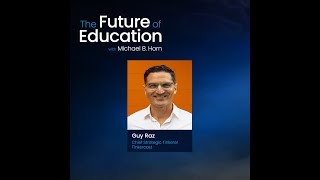
Guy Raz moved from war reporting to creating popular podcasts like TED Radio Hour and Wow in the World. He found that audio lets kids understand material two to three grade levels above their actual level, and built Tinkercast to bring podcast-based learning into schools through the NSF-funded TinkerClass platform.
Chapters
Welcome to the Future of Education. And now here's your host, Michael Horne.
Welcome to the Future of Education, where we are dedicated to building a world in which all individuals can build their passions, fulfill their human potential, and live a life of purpose. And to help us think about those topics today, I'm really thrilled we have Guy Raz, who is widely considered one of the pioneers of podcasting. Many of you are, I'm sure, familiar with his podcasts. Whether it's How I Built this, the Kids Science Podcast, wow. In the World, TED Radio Hour, many more, we're going to get into all of that. Guy is also a best selling author and he's the co founder of two media companies including Built It Productions and the kids and family studio Tinkercast, which we're going to talk about today on the show. And Guy, just thank you so much for being here. I confess I'm fanboying a little bit at the moment, but I'm just thrilled.
That you're here, Michael. Thank you for having me on and for being a fan. And, you know, that's why I do what I do, because we can talk about this a bit later, but every show, whether it's how I Built this or wow in the world of the great creators, is, you know, make it in the hopes that people get joy from it and, and value from it. And so when I meet somebody who says they're a fan, by all means, please, I'm. I mean, it means a lot to me and I really love it and appreciate it because most of the time, most of the week, I am in this studio behind this microphone, isolated from the world. And so I don't actually physically interact with people who are fans very often. So thank you for saying that.
You generally get to ask the questions. So this is a little bit of a role reversal, but I want to start there on the personal side where you just sort of gave us that quick entry into, because as I said, you host a lot of podcasts. I don't think I can keep count. I don't know if you can, but I'd love you just to tell your story because I actually don't think a lot of people hear that around how you got your start in podcasting, the shows that you're hosting now, and selfishly, how you stay on top of all the work it takes to do these podcasts so well with this level of excellence.
Yeah, so I kind of started in podcasting when it was a backwater back in 2011. At the time I was at NPR, I had been at NPR since the beginning of my career as a reporter at npr. I was a reporter at CNN most of my early career. I was a war correspondent. I covered the Iraq war. I covered Israel, Palestine. I was in Gaz, the West Bank. I was in Tel Aviv. I was all over the Middle East. I covered the Iraq war and Macedonia and Pakistan. And I mean, that was my life. I was in and out of war zones for most of my career. I covered the military and the Pentagon. So which is for many people who know how I built this and don't know my background would be kind of strange to imagine. But that really was my life. I was living in hotels, wearing bulletproof vests. I still have them dodging bullets and explosions. And that was my life before I had a family. Eventually I was a host on All Things Considered at NPR for a few years. And I would say around 2011, I started to get a little bit disillusioned with news. It felt to me like the thing that I wanted to do with my life, which was to have an impact in some way. I didn't feel like I was having the right kind of impact. I didn't feel like, you know, by. By going out in the world and trying to tell stories, the hope is that you will give people information that will help them build a more sort of nuanced view of the world. But what I discovered, and it's a very nice. It was a very naive perspective, what I discovered is that we humans generally, you know, don't operate that way. And. And so I wanted to figure out a different way to have an impact. And what I. What I kind of landed on was that news wasn't the thing that I wanted to do anymore. So around 2011, I started to transition out and I ended up connecting with people at ted, the TED Talks people, and they were looking to build a podcast, build on a podcast that they kind of started but didn't really. Didn't really kind of land. And so in the way that they had hoped. So they asked me to basically build the show, rebuild a show. And it was called the TED Radio Hour. And I launched that in 2012. This was a back, backwater era in podcasting. I mean, very few there. There were relatively few podcasts, comparatively few people listening. And, you know, I'd gone from being in All Things Considered with an audience of 5 million people to a show with, you know, a few thousand. Fast forward about a year, two years in, there was a podcast called Serial. And that. That kind of exploded in, you know, in our culture. And all of a sudden, a lot of people started to discover podcasts, including TED Radio Hour at the time, which was a show about big ideas. I would interview TED people gave TED talks. The shows were arranged thematically so we would talk about creativity or curiosity or how we organize our lives or, you know, the vastness of outer space. It was this interdisciplinary show where you would have, like, you know, in one episode, you would literally have Sting, like a rock star Sting, and then a neuroscientist, you know, from Johns Hopkins, and then a former prisoner and an Arctic explorer, you know, in the same episode, talking about a broadly connected theme. And that show gave me an opportunity to really explore ideas. And what I realized, having done that, doing that show, was that it was connecting with people in a different way. So when I was a news reporter in Iraq or Afghanistan or, you know, the west bank or wherever I was, it didn't. I didn't get the sense that I was connecting with people in a way that was making their lives better. But all of a sudden, making the show that changed all of that, because the feedback that I was getting from listeners was, wow, this has like, changed my day. Or it's. It's given me a different perspective on the world or now when I look up at the stars, I realize I'm looking at the past in real time. So that experience really kind of launched my career in podcasting. And I eventually started my own production company called Built It Productions, and started another show called How I Built this, which I continue to do today, which is about entrepreneurs, founders of companies. And then around the same time, with a very good friend, Mindy Thomas, started a podcast called wow in the World, which we launched in 2017. And along with another friend, Meredith Halpert Ranzer, we started a kids production company. So that was really my kind of the beginning of my career. You know, since that time, I have. I continue to do How I Built this. I no longer do TED Radio Hour. That was an NPR TED show. So eventually I stopped doing that, but it was a wonderful experience. And today I host How I Built this and wow. In the World. And I do a show called the Great Creators, where I interview celebrities, musicians and actors, Tom Hanks, Stephen Colbert, Jason Sudeikis, Jeff Tweedy, Bjork, you know, a long list of people about their lives, about their creative process, about their failures. And I try and create a space for them to show a more relatable side of who they are. Because whether you're an actor or the founder of Starbucks or Me or you, we are all characters at certain points of the day or the week or the month. And what I try to do on all of my shows, my interview shows, is to show a more sort of stripped down side of people, the side of people that people might. The part of us that we might see in the mirror. And I try and show that to my listeners so they understand that many of the people they listen to and admire are like them in very many ways. And so my hope is that when somebody hears a founder on how I built this, talk about how they built Instagram or Starbucks or Tate's Cookies or whatever brand that we do, that they can see that there's a possibility there, that if it's something that they want to do, if there's an aspiration they have, they can. They can hear and feel that through the shows that. That I'm part of, that I make in the hopes that they walk away from it feeling empowered and inspired and maybe even changed a little bit.
It's fascinating to hear you say that, because inspired is the word that I wrote down as you were talking. It seems like you really help lift people up to believe that they could go chase that dream. And in fact, as I said, I first got to know your podcast through how I built this. And my wife, when she was starting her company, she made all the employees in the kitchen listen to it during food prep and things of that nature. But then obviously, you really got into my radar with wow in the world with Mindy. And I for a while was like, are you sure it's the same person doing both of these things? Are you really sure? But I guess that's one thing that you were doing in both cases, which is inspiring and lifting us up to realize what is possible. But how did you see the through line from this podcast world that's largely for adults, entrepreneurs to kids, those on the surface feel like very different audiences and very different shticks.
Like any business, Mindy and I were trying to solve a problem that we had. I met Mindy in 2014. I was listening to her show on Sirius XM. She continues to have a wonderful morning show on SiriusXM. It's a kids program that just blew my mind when I first heard it because I had never heard somebody communicate with kids in such a funny, respectful, quirky way in the way that she did. I mean, it was. I was completely blown away when I first heard it, and I one day tweeted about it and she saw my tweet and. And she freaked out. She was a fan of the shows I was doing at the time. And eventually we met and became really good friends. And she would ask me to come on her show to talk about news events with kids. And eventually, after a year or so of doing it, we were on a hike, and I said to her, I said, mindy, I used to live in Washington, D.C. and we were on a hike together. I said, why don't we make a podcast? I make podcasts. Why don't we make our own podcast for kids? And that was really the genesis of. Of wow in the world. And what it was was we had kids. We both have kids now. They're teenagers, but at the time, they were little, and we were really concerned about how much our kids were just staring at screens all the time, you know, how. And we were very careful not to give them access. But, you know, the iPad or whatever was around, they were just like. It was like a magnet, you know? And so we started to think, could we create an alternative screen, alternative for kids that will be as good as a video, as funny, as compelling, as entertaining as a cartoon, except it. It lives entirely in that kid's brain. And we knew we could do that because both of us came from audio. And so that was really the genesis of the show. The through line between how I built this or the great creators at the time, the TED Radio Hour and other shows I've done. And wow in the world was very simple. It was. If you give me 20 minutes, 30 minutes, an hour of your time, I am going to respect that time so much that I promise you I won't waste it. I will work so hard to give you something in return for your time, whether it's really great, important information, really compelling entertainment, an inspiring idea, a thought that might change your perspective or trigger your creativity. And now I don't hit it out of the park every time. It's. I think it's impossible, but that's. That's our North Star. So whatever show I do, whether it's wow in the world or how I built this or great creators, that's our goal. That's where we recalibrate all the time. Are we giving people something to take with them? We're not asking for anything except your time, which is asking a lot. But if I'm asking for your time, I have to give you something additive. I don't want to make extractive content. There's a lot of extractive content out there, especially for kids. You know, unboxing videos or prank videos that are really just Needing needs those eyeballs to click up the, you know, the advertising revenue. And that's not what we wanted to do. We wanted to make something that was so funny and so compelling that kids would ask their parents for it, but wasn't just good enough to win over the kid, but it had to win over the parent. So we wanted something like Pixar, you know, where you watch a Pixar movie with your kid and you get a bunch of jokes that they don't get. We wanted to make a show that spoke to kids and parents at different levels. And that was the genesis of WOW in the world, which we started in 2016 and then launched in 2017. And the rest is history. You listen with your kids, which hopefully was. I think it was entertaining for you as well as for your kids.
You bet. It kept me awake while I drove. So we successfully got to the destinations, as I like to say. But I want to jump to where you just. You picked up on this piece of the magic of Audio specifically. And I'd love you to just double click on that because I think honestly, since at least as far as I can tell, since Sesame street, people have seen video as the way to capture kids imaginations, tell stories for learning. Because wow in the World is fundamentally about learning at its heart, after you get through. Right. And learning in the best possible way through stories. A compelling story that captures imagination. But I think it's fair to say you were one of the first to realize, hey, we can jump away from video into audio for, you know, four children. Again, how did. I'd love you just talk more about the magic of audio. You've already sort of explained how you saw the opportunity there. But, but just double click on that because I think that's a very important strand.
So the thing about audio is it's like imagine and you'll, you'll know this, Michael, because when you were a kid, there weren't any cell phones and there was no Snapchat and the only way to communicate with your friends was over a landline. And I remember when I was a kid, I'd get a phone call and I would take that phone and we had a long cord, long curly cord. And I take that cord down the corridor as far as it would go, and I'd find a closet door and I'd get in there and I'd have a conversation in the dark with another friend so nobody could hear me. Yep, those were some of the most intimate and powerful. Now, of course, you're a kid, but still memorable conversations I can still smell the smell of my. Of the kitchen, the corridor. I could see the color of that yellowed cord, you know, that curly cord. The reason why those were so powerful is because voice transmits. Human voice transmits an infinite number of cues, emotions, feelings that we don't normally take in because our brains are so wired to process visual imagery. But if you talk to somebody who cannot see, somebody who is blind, they experience the world sometimes in a richer way because they're focused on sounds and voice, and they hear the nuance of those sounds. Now jump to. To. To wow. In the world. Essentially, what it does, and what we wanted to do from the very beginning was to create in a black box, right, which is called whatever you want. A studio, the ether in a world in which anything could happen. You don't need CGI technology, you don't need multimillion dollar editing equipment. You can create the theater of the mind, right? You just need a microphone and some good writing and some good sound effects, and you can build any world you want. You can go in a submarine to the core of the earth. You can go into distant space, you can go into a black hole. You can go back in time, you. You can go forward in time. You can ride a giant pigeon, which we do on the show. You can do all of these things because the visual platform is inside of a kid's brain. Every kid experiences wow in the world differently. And we know, I mean, this is not our research, this is published research. That audio, it triggers certain, you know, neurological reactions in the brain. It essentially builds creativity because every kid's brain is imagining the story differently. Everybody sees me differently, Mindy differently, Reggie, Dennis, the whole world on wow. In the World. And yet every single episode of that podcast is rooted in peer review in a peer reviewed scientific journal article. We go through peer reviewed scientific journal articles, New England Journal of Medicine, Science, you name it, and we find stories that we believe we can make accessible to children. We literally take high science, you know, peer reviewed science, and turn it into a cartoon for the ear. And so you will learn about why the vertebrae of a thresher shark is, you know, is. Is so incredibly complex, why it's one of the only sea creatures that can flip its tail entirely over its head to attack its prey. We take this research and we make a cartoon out of it, you know, with characters, with funny storylines. And so what we. The hunch we had and what's been kind of proved out is that kids really learn science when they're taken into the story with Humor with fun, with this fantasy world. And they don't even know that they're learning. You know, they don't even know that it's a lesson in real science. And so that, that was our, our theory and our hope. And then it, you know, eight years later, it's been proved. You know, it's, it's not just from the reaction of parents, but from even some of the research we've done with teachers and some of the classroom programs we've done.
Very cool. It strikes me that you're building on some of the best known pieces of cognitive science research around the power of storytelling on the one hand. And then frankly, from my perspective, not overloading people's sensory. Right. When you absorb information through a video, through a visual and auditory channel, they often can work against each other. And you're just saying, no, we're gonna, we're gonna ride one of these channels to make sure it really penetrates and that it is a much deeper impression and memory, which is really what learning ultimately is, is these building of memories. And then you've taken those insights and you've done it inside of a company, Tinkercast, which is where I want to segue too, because tell us about the company and the range of activities it does, because this is then going to transition into some of the work you're actually doing, not just in this informal learning space where, where we all are learning constantly, but also in the formal learning space of schools and so forth.
So we, from the very beginning, when, when Meredith and Mindy and I founded the company, we wanted this to be, you know, not just a, a sustainable company, but a full range kids and family, you know, entertainment and educational company brand. And it, you know, we started with podcasts and now we, we make several different podcasts who went wow, wow in the world. We're two. What's in a wow? We've got other shows that we're working on. We've done how to Be an Earthling and several other shows under the Tinkercast banner, but we've also done live events. We create hundreds and hundreds of educational lesson plans every single week based on every episode of our shows that's available at our website. We have done partnerships with museums, we had a van that went around the United States, a wow. Museum with hands on activities. And one of the things from the very beginning that we wanted to do was create an educational technology platform that would enable kids to really, you know, hone in and really dive into this idea of audio learning, oral learning in a way that we believed could be really, really beneficial to virtually all kids. This is a bit of an aside. And, and, and, and it's not, you know, I, I, I qualify this because I don't have the peer reviewed data to back it. But anecdotally, from the very beginning when we started wow in the world, we would hear from parents who would say, and I mean, we have heard this now thousands of times. I have a child who has attention challenges, or I have a child who has some learning disabilities, or I have a child who will not sit still except for wow in the world. Hmm, there's something about, and we would hear this, and we do hear this all the time. And at our live shows we sometimes meet these children or the parents will say, my kid won't sit still for anything. But this show captures something. It's, there's something that keeps them listening and attentive. I don't know exactly what that is, but I do know that. And there is research that shows that kids, when kids learn through audio content and platforms, oftentimes they can comprehend things two to three grade levels above. Now that makes a lot of sense to me because wow in the World essentially is speaking to kids from age 3 to 12. Now when Mindy and I started the show, we didn't really exactly know, but I think in our minds we thought we were talking to sort of 8 or 9 or 10 year olds, but it turns out we're talking to 3 to 12 year olds, sometimes 13 year olds. And so a 3 year old might not get all the science, but you'd be really surprised how much they actually pick up because there is sophisticated science in the show. And so that is, you know, some of these sort of findings that we know about audio learning in the classroom or, you know, however, whenever kids listen to storybooks, we know that they have a higher comprehension level than they might if they're watching or reading something. And that's really been proved out. I mean, we have seen that in just the range of kids who listen to what we do. So as I say, from the beginning of the company, we wanted to make, we wanted to be where kids are. We wanted to be everywhere where kids are and we wanted to reach them in every way and create content that was available to every kid wherever they are and, and their parents. Because we didn't want, you know, we're not making sort of, we didn't want to be like, good for you content. Right. But it is, it actually is additive, it is educational, it is informative. But we didn't want to. We didn't want kids to think of us that way. We wanted kids to think of us as something really fun and funny and exciting and something that fires their imagination. And science was like the secret thing that. The secret thing that was kind of hidden inside of it.
Very cool. Very cool. So you all have taken these podcasts or I think what you're calling podjects, if I'm not mistaken. So for those who didn't follow projects but podjects into schools now with the launch of Tinker Class, and I'd just love to know, I mean, you have this rich informal learning world. You have the podcasts, you have all the events that you talked about, the van around the country, this sort of listen wonder, Tinker make Ethereum that could fit into design thinking in Silicon Valley or can fit in, you know, this platform you've created. Now you're going into schools with Tinker Class. I'd love you to tell us what this work is going to look like. And frankly, for interested educators, we get a lot of them tuning into the show. How can they start to connect and work with you all?
So Tinker Class is the result of this journey that we took from the very beginning to build an educational technology platform. It is free for educators. And you mentioned design thinking. I mean, we essentially, you know, inspired by places like Ideo, we've created this project. Project based, but project, we could say, because it's based on podcasts learning platform. And essentially what, what it is, is it's. And you can find it@tinkerclass.com or go to tinkercast.com and there's links to it essentially. It enables kids to listen to an episode of our show. So you listen and then you be. Kids begin to wonder. They work in groups, they're incentivized to work in groups, and they're incentivized to succeed as a group. So then they begin to talk about their wonders, then they begin to tinker. So they'll use critical thinking skills to identify questions that they want to explore. You know, and then they'll choose one big wonder to investigate. And then they will make. So they'll create, they'll collaborate, they'll investigate, they'll plan, and then they will present their findings on this platform. And it's an amazing, you know, an amazing sort of result of this long journey. We got a very wonderful grant from the National Science Foundation a few years ago to build this platform out. And now, of course, we've got hundreds and hundreds and hundreds of Real science based episodes of wow in the World and our other programs to populate these lesson plans with. So it essentially enables kids to, you know, build these 21st century project based learning skills that are so critical. You know, we, we, we've known for a long time that if we can grow kids into adults that know how to collaborate, they are much more likely to be successful adults rather than kids who don't know how to work in teams and don't understand the power of success as collaborators. And success in a collaborative form is how is what we reward in Tinker class. So it's, we've now had, you know, a few, several thousand teachers who have signed up. We have spent, you know, few years doing some very intensive research around how kids respond to it. We have found that it has been incredibly impactful for, particularly for striving leaders. And going back to something I said earlier, we found that kids can understand things two to three grade levels above when they are using the platform because it integrates with audio. So it's been a really, really amazing experiment and now it's out there in the world available for free to teachers and educators and we hope they'll take advantage of it.
It's incredibly cool to watch the evolution of WOW in the World and everything else right from these sort of standalone things to now connective tissue, if you will, into the schools. I'd love to hear you reflect. I'm not a big fan of the phrase learning loss, but, but obviously the disengagement of youth since COVID has been a real thing. Whether it's chronic absenteeism, you know, struggling to learn, struggling to get engaged. Interestingly enough, I suspect you probably saw, we certainly saw it in our household and other places that kids engaged more with these sort of, you know, whether it was WOW in the world or for my kids also like Mo Willems doing his drawing right during COVID and things of that nature, right. Like all these informal things really bubbled. So they still learning. But I'm sort of curious as you now plug into schools that are struggling to get that engagement again and to get that learning back up, how do you think that's gonna help? Right? How do you see that helping educators and helping students either get back on track or really plug in and get excited again?
Look, we are facing a future where we need, we're gonna need the greatest scientists, the greatest mathematicians, the greatest thinkers to solve the biggest challenges that we will face as a species. Probably the biggest challenge we have ever faced as a species. Climate change and our Hope. And our goal here is to inspire kids to think in a big way. It doesn't mean that every kid's going to become a scientist or a physicist or mathematician. And that's not necessarily our goal. But we want to inspire kids to think critically about problems, how to solve them, how to talk about them in a collaborative way. I don't know if this is the, you know, is this going to be the magic, you know, the magic answer to the question? I don't know. But I think that based on what we've seen in the classroom and what we've observed with kids, we think it's really possible. We think that there's a real possibility and likelihood that this kind of approach. Audio first with images too. We have, you know, web websites and screen and there are some really cool images on the screen. But an audio first approach, that's funny, that's accessible, that doesn't talk down to kids, that gets them excited about science in ways that is kind of mind blowing when you see it in action. I think there's a real possibility that this could have an impact. And the question is, you know, will people, will teachers be interested in adopting it? I hope they are. It's free, it's available, it's out there. We're not asking for anything in return except making the promise that we hope. Promise. But trying to promise that this will inspire kids and will get them engaged around some of the big questions that one day they're going to have to answer.
Man driving questions is obviously another great way to get people interested in learning to build solutions. As we just wrap up here, I'm curious, like you, you do so much inspiring of people at different stages of their lives. Clearly, what's next on your horizon? You know, we've barely scratched the surface of the books, live events, games, you know, we could talk about. But. But what, you know, as you think about your own journey, what are you excited to do next? And how can listeners and viewers stay tuned, so to speak?
I'm really excited to grow how to grow wow in the world. And our other. We have some other programs, new shows that we're working on. We've got some really cool toys and games that will be coming out over the next year. We are doing some really exciting things on my grown up show, How I built this. And one of the things that I have not done and, and that I will be doing more of is video is. Is. Is really talking about the lessons that I have learned over many years of interviewing founders of businesses. I have you know, over 600 of these interviews. I think many business school professors would love to have the database and the data set that I'm lucky enough to have. And while all of those interviews are available for free for anybody to listen to forever, I think that many of the lessons can be shared in different ways. And so over the next year or so I hope to really start sharing many of the lessons I've learned as an interviewer and as somebody who studies businesses and also kids and even celebrities to share some of those ideas with my listeners and hopefully viewers.
Love it. We will stay tuned and Guy, thank you for continuing to inspire us all. Really appreciate it.
Thank you so much for having me.
And for all you tuning in. Stay tuned for the next show of future of education and keep up on all that Guy Raz is doing as he continues to inspire and teach us to be the best versions of ourselves. Thanks so much.










