Helping Older Adults Learn Online Socially
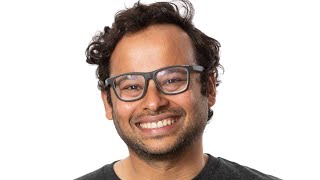
Neil D'Souza built GetSetUp to teach older adults through peer-aged instructors in small groups on Zoom. The platform has over 100,000 active monthly users and just partnered with Michigan to reach 2.5 million seniors. Classes focus on practical skills and curiosity, with instructors matched for empathy and learning pace.
Chapters
Welcome to the future of education. I'm looking forward to a conversation with my guest today, Neil d'. Souza. Neil and I have known each other. Neil, what has it been, like about 10 years now or something like that? Yeah, so, yeah. So you've been in this space of education for a long time. For those that don't know, Neil has moved through a range of experiences trying to bring more affordable and accessible education to a lot of people who didn't have it. And now more most recently with Get Set up your new company to older citizens who perhaps need to learn more, want to learn more, want to be social with others and haven't had the opportunity. And you've got a big list of who's who that is invested behind it. You just raised 10 million in funding. You got Jerry Yang and Mark Pincus and Reid Hoffman, our mutual friend John Danner invested and so forth. So a really good list of supporters behind it. Obviously you're getting traction early on, but before we dive in there, let's just take a step back and like, who is Neil, for those tuning in and how did you get into this world of education in a serial way?
Cool. No thanks, Michael. Yeah, so I think I am a trained engineer. So I used to work at Cisco in the Bay Area. I think right about 2010, I realized that was not what I wanted to do long term after five years. And so I took a year off to actually just go become a teacher. But I picked probably the hardest place to go, which is Mongolia, where there was no Internet access, I didn't speak the language. And so that got me thinking, like, if I had to solve my own problem and be effective for one year, let's build some technology that can make online education more accessible and I can just be the facilitator walking around and just giving everybody kudos. So I think out of my own need, I ended up starting a project which was called Teacher Class back then. And then I was getting Khan Academy, which was fairly unknown, then taking it international and so taking the video from different open source players. And I had to build a device which was this became School in a Box, but it was actually this portable WI fi device which could pull in content dynamically and you could learn online anywhere in the world. So that project actually saw so much traction within the first three months of me being there that I never came back. I just converted that into a company which became Zaya Learning. And I realized the power of something as small as just access to a large population, especially in emerging markets and the Impact it could have my first student being Zaya, the girl that I spent a year teaching. So I took that business and then spent time in India where I realized there's this massive market of affordable private schools that again didn't have really good teachers or trained professionals. But if you took technology and you gave a little bit of skilling to house moms and like the so called teachers there, you could actually get a good blended classroom. So I think I was too ambitious or foolish to try to bring blended learning after that for the last eight years. And I think it was moderately successful, maybe over ambitious. I think people just wanted access and they were very happy with just getting access to education, online education through Zaya. They didn't really care about the personalization and the software, but it was a good experiment. It's still going on. I think we reached close to over a million users and I stepped back from it about two years ago.
Gotcha, Ziya. And just a little bit more context of how we got to know each other. Ziya was really, as I remember it, packaging sort of these online tools that, as you said, like Khan Academy, very nascent at the time, just getting traction and getting well known and you sort of taking them offline so that they could be consumed very easily, connecting that to power devices and basically ways to. And then later on, as I remember it was ways to stream some of this in very sort of low bandwidth areas, but still get everything out so that the learner could have that interaction with incredibly interactive materials as sort of the power of Khan Academy and so forth evolved. Is that a good, reasonable summary?
Yeah, yeah, I think that that was the tech part of it. But as you know, the hardest part was adoption, getting teachers to adopt it. So I think Zaya ended up becoming a lot more professional development. And what we really got good at is taking someone who is passionate about teaching but doesn't really know how to teach and then giving them the basic skills on pedagogy, classroom management, and then tying that technology to them and then giving a full package. So it was a teacher with our school in a box that was 10x more powerful than just the device itself. And so that's kind of where it became blended. We ended up doing a lot more professional development of unskilled teachers who would make $100 a month, but were much better at delivering this because they were just emotionally invested in the education and the technology did all of the teaching, the personalization. But yeah, that's kind of how it grew.
Yeah. And so what I loved about it, when we first connected almost a decade ago was that it was sort of this area of non consumption, right. And it was doing two things that I had written a lot about. One was serving learners who literally had access to nothing. And Anne Christiansen, who's now the president of the Christiansen Institute, she spent a lot of time in Mongolia. She would always talk about these individuals who literally had access to almost no schooling in many cases. And so you were solving that problem. But then the professional development one you spoke to is another key piece of disruption, which is you enable people who are not experts to all of a sudden be able to act or serve as experts, in effect. And so I might not be an expert teacher in a particular math topic, but, but armed with technology, all of a sudden I can give you the same, you know, as, as, as maybe an 80 or 90th percentile teacher can. Very similar, frankly to healthcare, right? Where like low level, you know, like actually, let's do it this way. A nurse practitioner now with technology can diagnose strep throat and all these things that you previously had to go to a primary care doc for. All of a sudden you enabled these people to do more with the technology. Is that a fair summary?
Yeah, that's a fair summary. And I think that's really the power of edtech in my mind was like enabling this workforce that couldn't do it, especially in emerging markets. But yeah, that was actually the most interesting. Aha. Where I realized it was not an edtech company, it was a services business with technology just to just maybe amplify it a little bit.
Well, so that's the perfect segue into what you're doing now, I think, which is also a service of sort, but it's a very different end of the spectrum, if you will. It's older adults, seniors who are seeking to learn. I'll put the name up there. It's get set up, everyone check out the website. But Neil, talk to us about what your current venture is and how you arrived at this other problem, if you will, to solve that strikes me as very different from the one you were solving in certain respects.
Yeah, actually, yeah. So there's, I think, some similarities which I'll get to, but I think how I stumbled upon this was just. I was surrounded with. I just happened to have. All my friends were older adults in their mid-50s or 60s and I just, I still love hanging out because you get so much wisdom from them. And as I had this gap here, I just kept hearing, oh, we are going to Live longer. We have 20, 30 years to live. But people were feeling invisible. Like very qualified people that I looked up to felt invisible, even though they had these assets and skills. And so that got me thinking, like, why is there no place that empowers people like them to actually again contribute into this ecosystem? It was not really education. It was more thinking, like, how do you get them back into the workforce? And because I had this background with professional development, I was really looking for opportunities where I could take older adults who had maybe 20, 30 years of experience, do a little bit of upskilling and see what problems they could solve. And because of my education background, I went to retired teachers and I said, well, you're retired, you've done this for 30 years. Can you learn some of these tools, like teaching, Uber teaching, Zoom teaching, you know, how to build a website? Because all of these tech companies in the Bay Area, they build great products, but they don't want to teach you how to use it. It's all self serve. And we all know that older adults, actually, not just older adults, most learners are not self learners. Like they do need hand holding. So I was like, why not just put retired teachers upskill them a little bit? Because they can, they have all the other skills already and get them to teach these software and tools that like a large population needs to learn. That way I give opportunity to a workforce and then I can actually solve a real problem. So that was really an experiment about nine months ago or ten months ago, and it was going really well. Like, retired teachers are phenomenal at teaching even complex software. And while we were just experimenting with that, Covid happened and we realized there's this big disparity with older adults. Like we have forgotten how big that population is and how much they don't know some of the services and tools that they need to know to enjoy the world, to live happy, healthy, productive lives. We just assume that maybe their kids are teaching them or maybe someone else will teach them. But Covid actually made us realize that no, they just kind of need someone to do that. And so we just got lucky in a way that we were. We had this platform where retired teachers were getting skilled. And so we just directed them to teach all of these different tools and services that other older adults needed to learn. And so it really started from situational learning, learning the things you need to survive, Things like this. When people got familiar with, say, Zoom and basic tools, they wanted more. We realized there's this hunger in this age group to consume more, to learn more. And so it was not just learning tools. It became like, hey, we want to learn how to start a business. We want to learn about cooking. And so this became. This platform kind of has grown where even I didn't originally intend to take it. But it's kind of becoming this place where older adults hang out and learn in groups with each other. Because there's a magic when you're learning from a peer, which I kind of knew. But now I'm seeing it in, like, hundreds of thousands of users learning that way.
It's super interesting. There's a number of directions I want to go, but I think the one I'll start with is. So is the big difference between this and, like. I mean, I can learn anything on Udemy or MOOCs or even YouTube in some cases. Is the big difference here that there's an active teacher who is one of your peers in terms of age, is that like the big differentiator that makes this different from all the other options out there?
Yeah, so I think it is. The first big difference is learning at the same cadence matters. So when you're learning with another older adult who's a peer, they have the same cadence. Older adults, when you're trying to teach them something, it's not about knowledge. It's about overcoming their fear, learning something new. We all kind of know with our parents or grandparents, like, it's the fear of the unknown. So having a younger person or a YouTube video, it can't address that need of, you know, overcoming that fear. And we found that when you learn with someone your own age, that barrier is just completely overcome. And so once you overcome that barrier, everything becomes easy. Right. So you trust the person in front of you. You open up. So I think that was the aha. Where an older adult learning at the same cadence, the same pace. There's empathy. There is. You know, they don't make you feel stupid if you don't know the vocabulary of, you know, what a mute is or what a. You know, what that button with this circle sign means. So I think that was sort of the. Sort of the. What makes this special is there is no preconceived assumption of what you know, you don't know. And they make you feel safe by learning. And that's, you know, it started with few people in class, and now when you do it in a group, it's just really an easy and safe learning environment for you. Learn anything.
Yeah, that's neat. And so it sounds like, give us some of the stats that you're able to Say like what's the average class size? What are people paying for it? How many people are learning on the platform? Give us a sense of that.
Yeah, so we've been experimenting with the class sizes. We started off with one on one in January. Right now it's class sizes, small groups of like 10 to 15 where they have to actually learn by doing so they actually, the learners share their screen, they do it together with the instructor so they come out feeling successful. So that's other key differentiator. Then we do a little bit large group, like up to 50 learners in a class. When we're doing more, a demonstration of a product like hey, here's how to learn Medicare or here's how you fill up something. So I think depending on the type of class, the pedagogy and the class size changes quite a bit. And you know, we launched in India about three weeks ago and the class sizes are nuts. It's like, you know, they're doing meditation with about 60 to 80 people in a class. And so I think we want to keep the interactivity because that's the magic. It's the ability to ask questions and at least be seen. So I don't think we'll go beyond that or don't want to go because we don't think this format of video has gotten to the point where we can do large group interactivity well. But yes, the class sizes are now going all the way up to 100. We have, you know, I think from just the number of users on our platform, we've been growing quite a bit in the last eight months. Like as of last month we had over 100,000 active users monthly. And we just have this big deal with the entire state of Michigan to onboard about two and a half million seniors onto the platform. So, you know, so it's, it's.
I saw that news break. That's pretty significant, right? I mean, so Michigan is going to pay for it? Is that, is that the idea?
Yeah. And so as a business, actually this is, we have maybe 20% of our users paying us directly like $4 for a group class. They can also buy a subscription for unlimited group classes. But we have found interestingly all of these businesses you can think of senior living facilities like health and Human services of the government and YMCA is actually a pretty big customer because they are a member based organization. People can't go in. They want to offer virtual programming and so they would pay anything from $15 a month for unlimited group classes for their members. So still early on we are Experimenting with the pricing model, but it's paid for by businesses. It's kept as much as possible. We try to keep it free to the end users.
Super interesting. And then it sounds like you got a lot of traction early on. Can you give us a sense of, like, order of magnitude of how many people were learning total on the platform? Is that something that you can talk about at this stage?
Yeah, I mean. I mean, I can tell you last month's number. There was over 100,000 active monthly members. Like learning. We are adding, you know, as we speak every month. We are onboarding a lot of these area agencies, which are basically large senior centers, onto the platform, and they're coming in here. It's bulky, it's not your typical consumer behavior. So it's like we add on 50 to 60,000 members every week, depending on what partnerships you sign on.
Yeah, that's terrific. And then in terms of the classes offered in the class experience itself, it sounds like, have you developed the platform yourself or is this like, on Zoom? What's that learner experience like? And then the second question is the classes that are offered. It sounds like it started with, as you said, those necessities in a time of COVID in particular, helping to lead it to take off. But it's an incredibly broad range. I mean, it's everything from the skills you would need to do something technical, maybe work as a gig in the gig economy. It sounds like, to something I'm curious about to something that is fundamental to my lifestyle or living. How are you picking the classes? Or is it the teachers that are doing that?
Yeah, that's a great question. Actually, we think of it as three cohorts, and it's actually quite correlated to the age or the emotion of the learner. We have people who are coming in and learning with the goal of professional development. So, for example, LinkedIn, we all know how to use it. But think of this age group, like, if you look at 55 plus, they never had to build a LinkedIn profile. It's a fairly complex software. So we have a lot of users coming to take classes on how to use LinkedIn, like how to start a business. So it's all around professional development, because the boomers, I call them early boomers, have to think about the next 20 years of their life from a just purely economic point of view. They are not done yet. And so they feel like we need to acquire these skills and really be up to date with it. So we have a lot of classes in that range. Then the second cohort which I mean, I can broadly say is about 65 to 75 in age, they are driven by curiosity. There is overlap, but primary emotion is like, I'm curious, I want to learn, I want to learn, travel the world. So we do, like, virtual tours of a museum in Tokyo or in Italy. And so they're just driven purely by curiosity. And the third cohort is, I call them situational learners, where I got a gift or I now have an iPad, or I have to learn Zoom because. Or I have to learn Medicare because I have to talk to my doctor and need telehealth tools. So they are focused. I mean, we run a lot of classes on situational learning. And so we see these three cohorts of users that come in and I think a lot more in the curiosity driven and the situational learning. And you're seeing now, because we don't market to the early boomers that much, but you're starting to see a lot more people come in, as, you know, they're looking for new jobs and they need to, like, you know, upskill themselves coming and taking classes. On the LinkedIn side.
It'S so interesting how that's grown organically, almost based on the different slices of the population, what they need, and speak a little bit more to this, the user experience itself. Like, when you're in the platform, it sounds like it's a cool hangout environment. It doesn't sound like Zoom. Is it your own technology or is it Zoom, or what does that look like?
Yeah, so we actually built our own layer on Zoom. So again, back to my Zaya days, I knew exactly what platform to build for reskilling teachers quickly. So, you know, you have, over Zoom's SDK, you actually have your curriculum. You can give. Aha. Moments. So we've made Zoom a little bit more interactive than it usually is.
And.
Because we learn so much from our end users, both the classes that we learn are all driven by the community because they're just so engaged. They're taking two classes a week. They spend hours on the platform either after the class, hanging out. So we realized Zoom is not going to be enough. We actually have to think about what does the social platform look like if it's video, is how they socialize with each other. So we're building a version of our own tool where it's catered for a social network and not purely just meetings. The platform is changing because our classes come from our community and not really by our guides. It's all driven by active members. Tell us what they want to learn next.
Yeah, it's fascinating. So, and I'm looking right now on the site, there's some interesting classes on music appreciation, healthy Meals on a Budget, reading and recording stories for your grandchildren. That's one that I suspect my mom might sign up for tomorrow if it's offered. So, I mean, the range there is pretty incredible. What are you hoping this looks like as you think about mission and vision and as we sort of come to our end of time here together, what are you hoping this changes in the world and enables more broadly? Because it sounds like it's more than just an educational platform as a community gathering place, it's incredibly important. So I'm just curious your bigger vision and where this goes.
Yeah, that's, you know, it's early days, but honestly, I think what we're seeing because our users are so engaged and active that there's a need both for learning but also for socialization. Right. They are lonely, they want to meet new people, they want to interact, they need that connection. And so we have this opportunity with get setup where we can teach them the skills they need to live healthy, happier lives. But we can also connect them with people so that they are less lonely. And I think we're starting to see with all the data we collect, you know, engagement data, like, you know, interaction on the platform, that it actually has a lot of health benefits. You know, and so we're getting, having conversations with health care companies and you know, Medicare about the, the health benefits that we are seeing, which is just, it changes their perception about themselves, which is the most important thing for me. Right. Like that's why I started it. If people start thinking that they have now skilled enough that they can live independently, it changes the perception and that increases your life span already. If you think differently about yourself, then there's the whole neuroplasticity, right. Like you learning new things keeps your mind active and its impact on like early onset of dementia and Alzheimer's is huge. I mean, there is enough research showing that lifelong learning actually impacts it. The economic opportunity about people coming and teaching on this platform and making money, and then just the loneliness. So I think we're starting to see with data the health benefits. So my vision is that this can become actually a social learning platform. Maybe not even a social learning platform, but a social network for older adults where they actually hang out and do things that are important to them and they feel safe and they feel empowered rather than just being receiver of care. And I think that can make a huge positive impact on the, you know, globally. And so we already seen that, right. India has launched, we have Australia, because the needs of older adults there are the same. So we have Australia running now and UK users taking classes. And so we've seen that it's actually very similar. It's not a problem, just in the US like older adults are living longer, they are 25% of the population and growing and they just want to feel like they can be heard and seen. And education is a very powerful tool through which you can actually facilitate that. So that's my vision that we're going to have hopefully by the end of this year or early next year, like millions of users actually helping each other on this platform.
Well, it's an incredible vision, Neil, and it's strikes me that it sounds like the ultimate icebreaker in some ways that you bring a community of people together that might not know where their commonality is, but their commonality is we want to learn X and then they can bond and together progress toward that end. And you're the place where it's happening. So thank you so much for talking to me today, but also thanks for creating this. I think it's a tremendously important area and it's a place of non consumption in our language that I've been eager to see something come in for a long time. And it seems like someone's figured out that model. So keep up the good work and we'll follow closely.
Thanks, Michael.
Yeah. And we'll be back. Next time on the future of Education.










