How AI Could Lead to a Massive Productivity Boost in Education
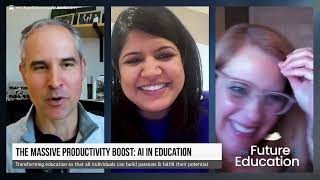
Siya Raj Parohit, education lead at OpenAI, describes how universities are embedding AI into teaching and administration. She uses ChatGPT as a tutor and planning tool herself, and points to campus examples like orientation chatbots and custom professor GPTs. The bigger shift: students move away from rote work toward critical thinking and learning to work with AI.
Chapters
Hi there, Michael Horne. Here, what you are about to hear is a conversation that Diane and I recorded with Siya Raj Parohit from OpenAI as part of our series exploring the potential impact of AI on education, from the good to the bad. Now, here are two things that grabbed me about this episode. First, I was struck by by how much Sia uses ChatGPT in her daily workflow already. Yes, she works at OpenAI, but it is seemingly revolutionized her life. As she said, it's a massive productivity tool, from using it as a tutor to helping her figure out what projects to prioritize, what to learn. This is just part of how she works now. Second, I was struck by how much she's really on the ground level with universities, particularly professors, helping them figure out how to make it part of their workflow as well for teaching and learning, and how deep she is in specific use cases as a result, and how she sees this, frankly, as an important tool to free up teacher time, elevate student thinking and the like. As the conversation wrapped up, I've also been reflecting on a couple things. First, what would it take for ChatGPT to be a massive productivity tool for me personally? And if that's the framing, what does it mean this technology can and can't be used for in education? I was also struck by how OpenAI has decided to go deep on supporting those in college and beyond with their tool, but they haven't yet created their own products or services for students who are under 18. Candidly, that's not something I had really realized or reflected on before this conversation. So I'm excited to reflect a lot more with Diane after we talk to a number of people about this topic. But for now, we'd love to hear your thoughts about this conversation. Please share it with us over social media through my website, michaelbhorn.com and with that as prelude, I hope you enjoy this conversation on Class disrupted.
Hey Michael.
Hey, Diane. Good to see you, Michael.
I confess I am really excited about today's conversation because the first two we've had about AI have been super interesting and have been raising some big questions for me around the assumptions that I had coming into these conversations and AI and schools, and in particular how we organize schools themselves around new technologies. But it's made me even more curious to talk to other people and get other perspectives. So I'm really, really looking forward to today.
As am I, Diane. And I agree that it's the first two episodes have piqued my attention on different things and I'm Looking forward to digging in on more at some point. But whereas our last episode featured someone who is, I think it's fair to say, largely skeptical about AI, I suspect we will get a very different take today, given our guest actually works on Education at OpenAI, the company that of course developed and operates ChatGPT. Her name is Siyaraj Prohit and. And she has been focused on supporting ed tech and workforce development in the startup community and in AWS over the past decade before she More recently joined OpenAI to work specifically on education. We're gonna get to hear about all that upfront. But first, Siya, welcome. It is so good to have you.
Thank you so much for having me.
Yeah, you bet. So, before we get into a series of questions starting to dissect AI and its impact or not on education, I would just love you to share with the audience a little bit how you got so deep into AI around the question of education, perhaps specifically. And maybe you'll also humor me as you do so, because I'm curious OpenAI's interest in all this, because it seems like more than maybe any product launch other than the iPad that I can remember anyway, I can't think of any other consumer tech product or service that has made education such a cornerstone of all of its announcements and sort of promise and potential for the new technology. So maybe you can tell us a little bit both about your journey, but also how OpenAI sees education.
Absolutely. So I've spent my career at the intersection of education, technology and workforce development. This all started when I was 18. During college, I published a book about America's job skills gap, talking about how American universities weren't teaching the skills that students needed to land jobs in industry. And this stemmed from my own experiences and the fear that I may not be able to land the jobs that I aspire to. And that's something that I think a lot of young adults relate to. But I've spent the next 10 years from that just trying to help bridge that gap. I worked at early stage startups, venture capital funds, and most recently Amazon, trying to bridge that gap between learning and opportunity, helping make economic mobility more possible for different types of learners. I joined OpenAI about 8 months ago to help build up our education vertical. As you all might remember. November 2022, ChatGPT launched and suddenly became such a used product around the world. What was interesting for OpenAI is that learning and teaching was one of the most common use cases on why people were engaging with ChatGPT. This year we launched a product called ChatGPT. EDU is designed for universities and school districts to be able to use an enterprise grade version of ChatGPT. With that, it brings all sorts of different types of benefits. There are all sorts of network effects that can exist on a campus once all students, faculty and staff have licenses. I will share a couple of examples of what that looks like. But a big part of my job is to help education leaders, educators and students students start using AI more effectively on different types of campuses.
It sounds like rightfully so. Michael and I are both operating under the assumption that you're probably biased towards seeing AI as something that offers real opportunity to improve and transform education. And clearly your, your personal pathway and journey is leading you to that impact. And so I, I'm one of the, one of the things we're interested in is having you sort of make the best case for how AI will impact education in a positive way. And you know, we, we have a lot of things in our minds that we've thought about, but we're really curious to be expanded in our thinking and have you make that very best case for us.
So I believe for education as a sector, personalized learning was always the holy grail. We always said that if we achieve that, we have made it like we have accomplished a lot of education goals with that. And I think that with ChatGPT it exists. I have a personalized tutor that I talk to every day. It knows my projects, the skills I'm developing, like my aspirations, and it helps me become a better knowledge worker every day. And I think that in education it's making high quality tutoring available to anyone with an Internet connection and supporting educators by automating a lot of the time consuming jobs that they do to let them focus on what matters a lot for them, which is like mentoring and inspiring students.
That's interesting. Let's stick on that one for a moment because, and we'll get to this a little bit later. But like I wonder, does that mean that the schools don't actually end up changing very much because the tutor and the sort of automated assistant just allow allow students and teachers to do, do things the way that they have been doing them, just better and more efficiently. I'm curious what you think about that.
So right now the most interesting examples we're seeing is that educators are crediting ChatGPT for reducing teacher burnout, which as you both know, is a big problem in America. So teachers who used to spend so much time doing lesson planning, quiz grading, like all the preparation for classroom activities are able to Outsource a lot of that work or use ChatGPT to do a lot of that work. Then they can focus on those classroom interactions and the engagement within different peers in the classroom, which I think is much more valuable as far as the classroom dynamics go. I think that it is a big compliment in the way that it brings personalized support and tutoring to individuals. But at the same time, I do think that there's still value in students being grouped with others that are of the same age as them because then you develop a lot of social skills and you learn how to interact more. So I'm not of like the mind that like people should just do online school and have ChatGPT because I think that social components becoming increasingly more important.
Got it. I'm thinking back to your 18 year old self who wrote a book, which we could spend a lot of time just even talking about that, but having we've both written books, we know what it takes. We weren't writing them at age 18. I don't. And, and your whole premise there that like, I'm not learning the skills that I'm gonna need to be successful in the job that I want to have or the careers I want to have. How do you see AI and what you're doing with CHAT GPT? Contributing, you know, making that not true or improving that. What, what, what is the intersection there of your personal sort of passion?
The reason I wrote that book and I felt so passionately about that, and I guess the passion still, like it's so deep in me, is because at first I thought it was a SIA problem. Like SIA was not able to be learning engineering skills to be able to land a job that she wanted. And then I did enough research by speaking with some really accomplished individuals to then realize this was actually a system problem. And the book was like my, my attempt to capture like the scale of this problem and also prove to myself that this is not just like a thing that I'm struggling with. And then I think the next part of that was like, how can I free other people from the struggle? And that's when this journey to try to make economic mobility more accessible has become like my life passion. So I think the ChatGPT, one thing that it does really phenomenally, which I hope the students will take advantage of, is it helps elevate our thinking. A lot of times I share my thoughts on a project and I'm like, how can I elevate my thinking? How would a CEO of a rocket ship company approach this? And it Helps kind of expand my thought process much more. And I think while doing that, it helps us feel like less alone in a lot of these things that we encounter a lot of the problems because we can find the right examples, we can think bigger about this, we can find our own gaps. And I think these things are very powerful. Yeah.
One other thing that's interesting about talking to you that I'm observing is when we ask other people to make the best case scenario for AI, it's a little bit detached from them. But what I hear in you is literally this is what you're doing. This is how you're working every day. It sounds like you are a true believer. Am I missing anything or am I hearing that right?
I used to work really hard at AWS, but I accomplish about three times more every day at OpenAI just because I have AI now. I use it a lot to up level myself, but also to up level the project outcomes I provide. Interesting.
Awesome. Well, this next question might be more challenging for you.
It's a massive productivity tool for you. And I'm, I'm interested in like your book. Like there's this common theme, right? Like you used me search, as we would say, not just research around your book. And then you were doing the same thing with this tool because you're living it in terms of your like massive productivity boost. But I guess I'm curious, like the flip side of some of these things because I, you know, there's a lot of skeptics, as you know about, oh, AI is might not even just like not have these transformational impacts, but also might undermine certain things. And so I'm sort of curious where you come out on some of this stuff. And I'll just name two and then you can go wherever you want on it, which is one, you said in some ways it actually makes you feel like you have a companion alongside of you to elevate your thinking. That some people said that actually could be dangerous because maybe you'll be in isolation. Right. And not feel like you have to connect with others. And then you talked about elevating thinking. And I think that's the other big worry that people have is that it'll actually do the thinking for you. Right. And we won't do the difficult, effortful work to learn about how to construct an argument and critical thinking and build knowledge so that we can analyze it and so forth and so on. And I'm just sort of curious, like I kind of want you to steel man the argument and make the best skeptics take. But I almost more want you just to start to dig into these different use cases. You've heard the ones that I just named and others and sort of talk us through how you think about them.
Yeah. So let's first talk about the human connection piece. It's really interesting because a lot of educators come talk to me about like their own doubts and concerns about the future of their profession. They're like, will I still like be a teacher or educator given that ChatGPT exists and it's getting so good. And this question honestly surprises me a lot because the reason that I remember educators that have influenced my journey is because of who they were and how they made me feel and who they told me I could become. Right. These are things that ChatGPT doesn't do because ChatGPT and AI know about me, what I tell it right. But great mentors can see things about me that I don't even know about myself. And I think that's a really important distinction. And I think that educators have this really unique opportunity in this era to double down on those things. They got into teaching to mentor and inspire and find these connections. And now they have the opportunity to do more of that. Because if they can help increase the potential or vision for more people, that's the true power of education. I'm really excited about that. And I don't think that ChatGPT will replace human relationships. I think it's just going to become like a support system. So the reason how I use ChatGPT on my personal career front is that I tell it the things that I might want to become. This is my five year goal, this is my ten year goal. Can you create a really robust roadmap on how I can get there? It gives me really precise instructions as I join these type of organizations, publish this type of content, think about taking on these types of projects at work. It's really detailed. But what it misses out on is like when my manager comes in and goes like, hey, this is your superpower, you should double down on this. You know, like forget like these type of strategic projects, like just hone in on this what makes SIA sia. Right. And that's what we need more people to do for other people.
Super interesting. Talk about the other part of this. The you mentioned elevating thinking, giving you a personal roadmap. It's amazing. Again, the other fear that I hear a lot of is people say, well, it's actually going to cause people to not do the effortful work to actually learn or Even get to the questions that you're able to ask of it. How do you think about that concern?
I think educators need to show more about what an extraordinary outcome looks like, and we need to just be able to showcase what amazing end products look like in different verticals and different domains. The reason for that is that if you give a generic input to ChatGpt, you'll get a very generic output, which a lot of students are realizing, because they're just like, okay, I'm going to plug in my homework, get a very generic output, submit that. And that's not what professors are looking for. I think one of the most creative use cases I've seen is a professor at the Wharton School. He always had an essay as a final submission for his MBA class. And he says he's like, what is the value of an essay? The value of an essay is not necessarily in its output, but. But in the conversational skills and critical thinking skills that go into getting to that output. So now he requires his students use ChatGPT. He's like, they are going to use it anyway. Might as well make it a requirement. And now he measures the number of prompts they use to get to an essay that they're really satisfied with. Some students are so good at prompt engineering that they take like two or three prompts and they have a really good essay. And some students go back like 18 or 19 times to get to a good essay. He uses that as their ability to clearly articulate what they're looking for, which he thinks is a really important skill. If he can teach students how to communicate those skills in terms of communicate that output that they want to see and also be able to visualize some really extraordinary output, then they're going to be able to use AI as just a tool to get there.
Maybe this is the last question in this section that I have, because building off that, I think it's almost an implied set of knowledge and awareness, right. That students need to have as baseline to be able to have those expectations or hopes for outcomes and things of that nature. I'm sort of curious. You also mentioned that what the purpose of an essay is implicit in all of that is that some of the artifacts that we have used historically to gauge, you know, thinking processes and argumentation, et cetera, et cetera, like they might change in the future, right? The example we've used a few times at this point, as Burr Saxberg, one of our friends, likes to say, Aristotle worried deeply that the written word would mean people didn't memorize Homeric epic length poems anymore. And he was absolutely true. And I don't think any of us regret that. And so I'm sort of curious, your take of like, you know, sort of how we do work or the artifacts of what we think of as representing learning, how might those change even in the future? Maybe some of these concerns, they won't all be that relevant because we will show our knowledge and skill development through other means.
I think a lot of basic calculations, basic strategic work, all of that is going to become much less important. I think a lot of listeners would probably relate when their teachers told them they wouldn't always have a calculator around, so they needed to learn basic math early. Right? And now we do. So it's just like these kind of like the basic, the basic elements of strategic thinking I think are going to be less important than they used to be. But the things that are going to be more important is like, like critical thinking, but also emotional reasoning and the ability, like emotional intelligence to be able to take these outputs and make sure that they match the type of Persona that you're serving. So right now in my current role I do a lot of like, I guess, partnerships and BD work and those kind of things. And like yes, I use AI to create the different types of documents and slides and those kind of like assets that we share. But the way that I communicate them to the end user to kind of inspire confidence or interest is like the unique ingredient here and we need to be able to teach that. So when the strategic work, like as our reasoning models get smarter and do more of that strategic work, that human element helps people distinguish their work and stand out.
Interesting. I, I'm so curious because I think you may be more than other people have started to maybe personally see some changes happening in schools because of AI and like how it looks different and how it feels different and. Or I bet you can imagine them a little bit better than a lot of people. And one of the things that I think we suffer from is just imagination in this space, right? Like we all know what school looks like and we have a really hard time breaking out and imagining something different. So can you just take us there? Like what could possibly look different, feel different for a teacher, for a student in a school? What, what, what are you seeing? What are you predicting for this one?
I'm going to actually focus more setting because that's where we're seeing the fastest changes happen. Our current thinking around what an AI native university looks like is that every campus will have multiple AI touch Points across that help enhance the student faculty staff experience on campus. Basically, once the like. Basically the idea is that we're going to take the knowledge of the campus, make it conversational and more accessible to these users. So when students come on campus, they're going to have these orientation GPTs where they can ask questions like where's the best pizza place in town? Or how do I change my roommate? Or any of these kind of pre term questions that they have. Then they're going to come into classrooms where professors will have designed these custom GPTs that are just basically that have learned from the professor's material and help answer questions. A professor at hbs, Jeffrey Buskyang, was telling me that most of his class uses custom GPTs between 12am and 3am When a human tutor is not available and they can ask questions like which CEO handle layoffs well and get the exact examples to help understand these kind of concepts. Classroom conversations will become much more in depth because of this. But also students will be able to do things like, I have a statistics exam coming up. Can you give me some practice questions, quiz questions that relate to the same level as my professor provides and just be able to go back and forth in classroom content. That way they'll go to career services where they'll be able to use the university's proprietary data to practice interviewing with a McKinsey partner and McKinsey recruiter, all with AI. So all of these experiences will happen, student clubs, career services, classrooms, and it's going to happen seamlessly for students, so they'll be able to navigate between this very easily as they try to like, grow as students and professionals.
Super helpful. I want to dig a little bit more, and this might be surprising to you, but I actually think a number of people who listen to our podcast, maybe fewer that listen to our podcast, but sort of in education, have literally never even used ChatGPT yet. They haven't logged into it. So let's spend just a moment helping them picture what it means to have a GPT. Is it on their phone? Is it on a computer, Is it on like a kiosk? You know, like, what does it literally look like if I'm a student when I'm engaging and what makes it seamless?
Like, yeah, so I saw a meme recently which I thought was really funny. In Harry Potter and the Chamber of Secrets, Harry starts writing in this diary and it's like Tom Riddle responding at the other side. But I really liked that example because your first experience with ChatGPT feels similar to that you just start writing. It's a blank screen and you have a conversation and it converses back with you. It's actually a very magical feeling because you're able to have conversations with the super intelligence that exists outside of our brains, which is very powerful. I think that it's really important to be able to first start having this conversation. You can use chat.com, you can use your mobile app, you can start on actually WhatsApp now or even call in. There's a 1-800-chat number, chatgpt number. Any of these mediums that make sense for you. You can start and you can ask basic questions. What we see most people do is start with very basic questions and kind of start building up as they gain more confidence in the back and forth interactions of this and then they're able to do more and more complicated jobs. So how we think about transformation for organizations is the very first step is at an individual level. So when individuals start writing emails better, they start doing better project planning or activity building, then it shifts up to the department level. That's when people start collaborating together on different projects. One of the best examples I saw of this is that a school district told me it takes 4, 40 people several weeks to assign which class goes into which room on campus. And now ChatGPT can do that in a few minutes. So hugely empowering at the department level. And then finally get to that organization wide level, which is when you'll have so many different AI touch points and make that experience much easier as you navigate different levels of knowledge on campuses.
I think the other thing that you're saying that I'm not sure everyone who will pick up unless we call it out. So I'm going to ask you you to call it out. Is the reason this is not like going to be a generic GPT. The intersection with the campus is that you're actually taking the data and the information and the expertise of the campus and well, you'll tell me the right words but like mixing it with the power of DPT to make it sort of a customized experience. Tell did I get that right? What does that look like? What's going on there?
Basically there's ChatGPT, which is accessible to everyone. Everyone will have slightly different experiences as they go through it, but it's basically a knowledge base and a conversational platform. Custom GPTs are specific instances of ChatGPT which are basically trained to do very specific tasks. Professor can be like, this is my six months of curriculum. This is all the case studies I provide Just reference these when answering all student questions. So now that superintelligence is focused. So it doesn't like, look at the web, it doesn't research answers. It focuses on the six months of curriculum, goes very deep and helps students be able to learn from that more effectively. And you can these custom GPT instances for any type of knowledge base. One of my favorite examples of this is that a professor at the University of Maryland told me that they created a custom GPT of themselves. They used. They uploaded about 24, 25 pieces of research work that they've done and there are different pieces of writing. And now they talk to what they call Virtual Dave and get good ideas on what their next research project should be. It's like having a thought partner, which is only limited to a finite amount of information that you share, but it's super intelligent itself.
Interesting. And let's just stay here for one more quick beat because you're leading us into what maybe the work looks like for the teacher or the professor, but like, just get a little bit more concrete. So that professor literally like copied and pasted his stuff into GPT. Tell us a little bit about what that, what, what's his work now? What's he doing?
Yeah, so it takes about 15 minutes to build a custom GPT. You upload PDFs or documents and so you don't need to copy paste and you give it instructions. Again, this is where the assistant piece comes in. You explain to the custom GPT what his job is. So in this case, this professor is like, you are going to be my virtual thought partner. As I think about my next research papers, as I think about my next book or my LinkedIn posts, I need you to sound the same as I have in my career so far. So maintain the same tone and professionalism, but help me ideate on what the next iterations of these projects can look like and give me like, very honest feedback. So these are the instructions it gave and then the professor just has conversations with it. It's just like, could I go in this direction? And custom GPT is like, no, it's a little bit like overdone. Why don't we look at this path and it just becomes a good research assistant for you.
Awesome. Michael. Here's the jobs to be done moment.
Seriously. Right, we're going to flag that for coming back to Diane for sure.
So let's now bring in. I promise we will talk really new soon. That we're getting to the end here. But I know that OpenAI you think a lot about, you talk a lot about, you focus a lot on policy and you're engaging with the policy, you know, field and whatnot. You know, what are you, what are you learning about the intersection of education policy and policy around AI? Like what, what should we be looking at? Looking for, watching out for, paying attention to. From your perspective and as educators, as people who are leading schools and school systems and universities, what do you see coming? What's important? What should we be thinking about?
So right now universities are in a couple of different groups. They're thinking about AI policy. Some have very established guidelines and clarity in terms of where AI plays the role in their student journey. I think some of the most forward thinking education leaders that I'm working with are like, okay, AI is accessible, the cat is out of the bag, it's going to happen. And now I need to think about how I change my curriculum at the university to be able to use AI and help students prepare for the future. The best examples of this is Harvard Business School. There's a professor named Jake Cook who teaches a digital marketing course and he's mapped out what a digital marketer's journey looks like now in the profession and the seven different jobs that a digital marketer does and where does AI enable each of those jobs. He's turned all of his projects. So now you use AI to do competitive research, AI to create marketing assets and images, AI to help you with the copy and website and all of these elements of what he thinks his students will graduate into the workforce and need to know policies that enable this forward thinking nature are really helpful for students because then they go into Enterprise and have ChatGPT Enterprise and actually are able to use that effectively. And then there are other institutions that I think are still trying to figure it out. They're concerned about how it might change their former assignments, how they can't use the same kind of syllabus they might have used in the past years. And a big part of our job right now is to help kind of showcase these examples of the forward thinking institutions and help these other universities learn kind of grow their own thought process. At the end of the day, universities are the ones best suited to make these decisions for their students because they understand them the best. And it's so interesting because when you speak with a state school, you realize they care a lot about navigation of tools and being able to help students find the right information on a campus that is 50, 60,000 students. Whereas a small liberal arts school, just like how can I help the student be able to voice their opinion more effectively. And all of these things have AI solutions, but it's universities that need to kind of figure out what they want to become and how AI can help with that.
I could ask 27 more questions, but I'm going to ask Michael to rein me in and either wrap up with something or no.
I think this is super helpful, Sia. I guess my last question is you're clearly spending a lot of time with colleges and universities. Are there others in the OpenAI team? Are you spending similar amounts of time with K12 institutions? Or how do you think that's going to evolve over time? Because clearly it seems like the colleges and universities are not all as you just said, but many of them are wrestling with this yesterday. Are you seeing similar movement among K12 schools and districts or not? In which case that also tells us something.
They have a growing number of K12 customers. But the big caveat is we don't have an under 18 product right now, so it's not for students. It's for, like teachers and staff members in K12.
Gotcha. Okay. Super helpful. All right, well, let's maybe wrap up there. Something we love to do, Sia, though, before we let our guests go, is wonder what else you're reading or watching or listening to outside of your day jobs. And so maybe, maybe ChatGPT has recommended you reading lists or watching lists. But I'm just sort of curious. One thing outside that maybe you could point us to.
It's interesting to say that I've actually been asking ChatGPT a lot for book recommendations because I think it's very magical when you find the right book at the right stage of your life. And I want to see if ChatGPT can help make that happen more often. It's mixed results so far.
Okay, good to know.
One book that I'm reading right now which is super fascinating is called say It. Well, it's written by one of President Obama's former speechwriters and he intertwines how to be a good public speaker with stories from President Obama. And it's just super fascinating to read about how like and the things that President Obama slipped on in different talks which make him much more human and accessible, but also like the ways that he thought about providing great speeches and connecting with audiences around the world. So I'm finding the book really interesting so far.
Very cool.
Awesome.
What about you, Diane, for sharing? Okay, well, I am going to turn to TV because we've been talking so often. I've exhausted all the books I'm reading right now and I'm. I'm a little slow on this one. About a year behind. But we just watched the series on fx, Shogun, and I was, I must say, I was a little skeptical going in. I was a young kid when the book came out and then the miniseries on tv, and I was like, there's no possible way this could be done well or without some real issues. And you all might know it's won 18 Emmy awards, the most ever for a single season. It's truly extraordinary and really thought provoking. Yeah. Highly recommend.
So I was gonna say you could imagine it winning awards, but someone who'd read the books being like, it still didn't quite deliver, but it delivered for you. It sounds like.
Well, and I never read the books or watched the original series.
Okay, okay, okay.
So I just had this image in my head and as I understand it, the current version is very different from the old ones, but it's. It's great.
Very cool. It's been teasing me for a while, so that is a good endorsement for. For mine. I guess I want to say, like, the NFL football playoffs are Australian open, but I feel like that gives away when we're recording, but too late. I've given it away. But I'll give you one other I've actually really been enjoying, or I enjoyed because I finished it in a day. A book recommendation that one of my daughters gave me or she actually ordered me to read it, she had finished. It's called the Girl with the Secret Name by Yael Zoldan. And I'll apologize if I've mispronounced her name. But it's a historical fiction, takes place during the Spanish Inquisition, and it was fascinating. It was a history that I knew at a high level, but not with any depth at all. I will say, like literally zero. And so my daughter was teaching me quite a bit. It was fun. So that's fun.
I love when that happens.
Yeah. No, I know you've had that experience with Rhett giving you many recommendations. So now maybe this is the first of many for me. But let's wrap up there. Sia, huge thank you for joining us for shedding light on this topic, for sharing frankly how you are using it in your daily life to both on your learning journey, but also in your work itself on a day to day basis. So really appreciate it and we hope you'll keep staying in touch so we can stay ahead of the curve as well alongside you. But huge thank you. And for all of you tuning in, we will See you next time on Class disrupted.
Sam.










