How Students Take Flight with Yass Prize Finalist SOAR Academy
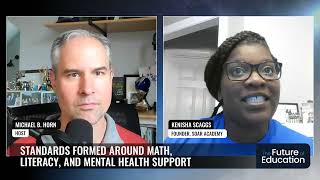
Kenesha Skaggs built Soar Academy from a $700 attic startup into a multi-location school for neurodivergent students. The Georgia school ditches traditional IEPs in favor of universal phonics and math instruction combined with flexible, project-based learning tailored to each student's style.
Chapters
Welcome to the Future of Education. And now, here's your host, Michael Horne. Welcome, welcome, welcome to the show where we are dedicated to building a world in which all individuals can build their passions, fulfill their potential, and live a life of purpose. And to help us think through that, today our guest is Kenesha Skaggs. She's the founder of the Soar Academy, a school that has what it says are not your typical classrooms inside. Flexibility is the name of the game, but with some clear principles at work, which we'll get into and I'm excited to learn about. Also, Soar Academy was one of the finalists recently for the YASS Prize, which rewards permissionless education, which, from my reading, certainly describes what they have built at the Soar Academy, which is based in Georgia. So, Kenesha, welcome to the Future of Education. It's really good to see you.
Hey, thank you. I'm super excited to be here as a part of the Future of Education. So awesome.
Well, I think you represent it in many ways. So. So let's start with our segment, the Morning Warmup. We're trying out a new set of segments for this show, and it's a set of lightning rounds, if you will, and just simply, you know, what is Soar Academy in your words?
Sure. So Soar Academy is a neurodivergent micro school, and it is for students with autism, dyslexia, adhd and and students facing remediation. Our approach is project based learning, real world application, and just getting to the heart of what's important, which is mental health support and literacy. And math is what we think are the really important points in education. So that's kind of how our school, that's how our standards, our education standards are formed around math literacy and mental health support for our students.
Wow, that's fantastic. So, and what grades do you. Do you serve? Is this K through 12 or what is this?
Pretty much we're first grade through 12th grade.
Gotcha. And then tell me the founding story. Like, this is 2011, I think when you founded it, if I have my year right, what was the sort of barrier or thing that said, you know, we got to create something for neurodivergent students? Like whatever is out there is not serving them right.
So in 2011, I was working with no Child Left Behind. I was working with a provider. Actually, I was just a tutor there, and we were working with a lot of inner city kids from low performing schools just trying to increase their literacy and their math rates. And the students were not engaged with the program. It was A lot of worksheets or back then, you know, they weren't online as much, but the time they were online, it was just kind of more of a babysitter. It wasn't really something that engaged the students in their interests. And so I mentioned to her, you know, we should have some games we can bring in, we can go outside, we can, we can turn this reading into a multi sensory project versus just the worksheets. And she said to me, we're making a lot of money. Let's not do that. Let's just push the paperwork through the state and you're going to get paid well, I'm going to get paid well. And that was what was important. And I just could not leave that space thinking that was a good idea for those kids. I really felt like if we could give them a real chance to read well and to critically think, that might change their trajectory after graduation. And so I decided I had $700 in the bank. Actually, it's funn. And I said, okay, I'm going to start a school in my attic, or am I going to work through some things that need to repair my home? And I said, nope, I'm going to start a school. So I quit my job. I was actually working in accounting right after college and I started a school in my attic. And it was about 10 kids who were not reading on a grade level, two and three grade levels behind high schoolers. They were not doing basic math. And from there it spiraled quickly. Parents found out that I was homeschooling and. And the line. Within a year it was over 20 students. And that's when I had to lease a retail space. So it's just always been in demand.
Wow, that's fascinating. And so you describe yourself. Would you describe yourself in the lingo of today as a micro school, a private school? Like, how do you think about that?
Yeah, well, you know, the Yosprays actually coined us as a micro school, but thanks to them, we've actually turned into a private school because we are looking at serving hundreds of students this fall. So we're not really a micro school as much. And we're looking at more than one location. So I say we're leaning more toward the private school realm at this point.
Wow, that's exciting. That's really exciting. So let's move into our next segment, Work time, where we dig into the work of the day of what students do. And let's start there. Like give us a sense of if I come in the Soar Academy, what are the classrooms look like.
Sure.
How does the teaching really work?
Sure. So our school is super flexible, as you've mentioned before. So Mondays and Fridays are very non traditional. Our students go to therapy if they need mental health therapy if they need it, ABA therapy, speech ot. We do character development and we do field trips, STEM and art. So on Mondays and Fridays, you're not even in a classroom setting. We have autism chairs, ADHD stools, some kids lay on pillows on the floor. It's just sort of getting kids back into the flow of the week. And I don't think you can really just ask kids to sit at a desk at 8am after all of the deprogramming you have to do from the weekend. So our kids look forward to coming in Monday because they know they're not going to be sitting at a desk doing busy seat work. They're going to learn how to work with other kids that aren't like them. They're going to learn something that connects to the real world and they're also going to be able to critically think outside of the box. So it's really fun. Tuesday through Thursday is a little more traditional. You'll do math, language, science and social studies. But still it's project based learning. It's multi sensory. Our class is a one room schoolhouse. So it's not about what grade you're in. You're not necessarily sitting with fourth graders. If you're in fourth grade, you're sitting with whoever meets your learning style. So if your learning style is that you need audio to hear the lesson and you need a video, then you're sitting with those kids. And if you need to move and be kinesthetic, then you're sitting with those students. And that's kind of how we've broken the room apart. And, and that seems to work for our students. They're still meeting the standard. So yeah, Tuesday through Thursday are more traditional. But still, what is your kid's learning style? How can soar teach your kid the way that works for them? And that's what we do. We build the curriculum around the kid.
Wow. And do you find that like, students will gravitate toward, you know, their math? They maybe want, I'm making this up, but maybe they really want that. Audio, video, headphones in. But then they're doing reading and they're like, no, I need to be more kinesthetic, moving around or something. Like, do you find that it varies based on whatever they're working on or their mood or things like that? And how much do the kids get to dictate that.
Yeah. So I would say that the kids 100% dictate that. Because we are at SOAR, we're dealing with a lot of learning challenges. We've got pretty much everyone's dyslexic, over 50%, autism, ADHD, pretty much 100%. We have a huge foster care adoption community. So those kids need us to be flexible to them. So, of course, we require a certain level of responsibility and character development, but we let the kids guide which way they learn best. So, for example, if we're learning social studies, and I say, guys, we're going to read a story together, and we're going to create a Civil War box, and we're going to talk about a major battle in our Civil War box, and then we're going to incorporate some math. And I might have one of my gifted students who's ADHD say, Ms. Kenesha, that doesn't sound appealing. I'd much rather go on Khan Academy. Can I. I found this great article on there. Can I do that instead with a quiz? Sure. You're still learning what we're learning. And then I might have another student say, Ms. Kenesha, I found this Civil War book. And I'll go, okay, you can do a paragraph for me on that while we do the project boxes. But we're all learning the same topic a different way. And it works. It works.
That's awesome. That's awesome. I'm so excited about this. I'm curious, like, digging into this, right? So where. Where do you say, like, this is a non negotiable for a student? Where do they have that choice? Right? Because, like, I find that's always. You often hear the phrase, like, learner voice and choice, but then, you know, you dig in. And not all schools, but a lot of educators are like, no, no, no. They've got to learn their reading. And it sounds like you have certain things around that. So how do you. How do you sort of navigate that?
Very good question. So here's my motto. I believe that if every student has excellent literacy skills, they can do anything post graduation. That's my. That's my motto because I was homeschooled in high school only, and my mom's not a formal teacher, but she knew exactly what I needed, and I was able to learn anything because I had strong literacy skills. So we draw the line with phonetics. You must do the phonics lessons, and that's K through 12. At SOAR, it doesn't stop with sixth grade or eighth grade, because when you talk about dyslexia and processing issues and memory issues, it's something that affects them all the way up. So they need it K through 12th grade. So we require each student to do phonics, and we require each student to do math intervention. There are certain basic math skills you have to have just to survive. Outside of that, we're very flexible with how much you complete with the science and social studies. Very flexible with those, because we know if we can get our kids reading really well, they can do anything they want when they graduate.
Gotcha. And then in terms of, like, maybe civics or things like that, how do you think about where those come into the curriculum?
Sure. Great question. So a lot of our civics is real world application. We went to the capital quite a bit this semester, and we really dissected the. Our. Our state government website. We spent a month dissecting that. So we do think civics is super important. We met our senator, our legislative members. So we kind of take a real world approach to that. There's awesome videos online for that. And so for Georgia history and for Georgia learning, our kids were engaged because they actually saw the building where the legislation takes place. And again, you can so easily incorporate science and social studies into literacy. So that's something that we find is easy to transfer into our phonics lessons. When we learn about, you know, spelling some of those words or verbs and nouns with legislate, like, it's just so easy to cross pollinate the subject.
So that makes a ton of sense. And I think a lot of folks are finding we've sort of broken them out arbitrarily, actually. And maybe that's hurt us in many ways because, you know, learning something about social studies and reading are sort of intertwined once you know how to read.
Exactly, exactly. That's this morning. We actually walked to Lowe's, because our school so close to Lowe's, and we were dealing with conversions, and we were also dealing with our phonics lesson for the week. They were looking for words. We were also working on area and perimeter. And so the kids were like, Ms. Kenesha, we're doing, like, three subjects just by walking the lowest. I was like, exactly. And this is real world, an application. These are things you've got to know how to do inches to feet. So. And it was something that our 6th through 12th grade did all together, and it related for all of their lessons. So it was. It was beautiful.
I love that they're getting real interdisciplinary learning. I will also say I Love the Monday sort of ease back into school as, as the risk of oversharing. As a father of a kid who doesn't always love getting back into the Mondays, if you will. I see the benefits of that approach. Let's switch to our third segment here, specials, where we're going to lift up a little bit and get to geek out on some of the things that are on your mind beyond Just Soar Academy. And you certainly have some provocative views that I want to dig into. I won't hit everything, I suspect that's on your mind. But you know, one I think is becoming maybe less controversial but really important, and you referenced it earlier, the importance of phonics for every kid. And I know you believe it should be essential for every, every single student in all grades K through 12. You say low performing schools, but I suspect you have in mind everyone. So yes, tell us why that's so important in your view.
You know, phonics is so important to me because if you can read for yourself, then if a student can read for themselves, then they can teach themselves. And you're not stuck in a system telling you where to live and how to, and dictating where you can work and how you can live your life. So what I've seen with kids that come into our tutoring program is that their IEP say you have to read aloud to this student. It's the sixth grader and the IEP says read aloud. They're not reading on a grade level. So if we're reading aloud to that student, when do they actually bridge the gap? When do we actually ensure that they're going to read on their own? It never happens. The read aloud is listed in the IEP from 6th grade through 12th grade. And so they never have gotten past the 3rd grade reading level. So what is that student going to do post graduation if they can't read for themselves? So, and again, another reason why I think literacy is so important is because again, I was homeschooled in high school. So once I hit high school, my mom just went to this whole real world field trip learning, just this really different approach to learning. And so I recall not following the standards, the state standards for high school, but I graduated early, I did dual enrollment, I went to college, it was no problem. And what we found was that was because of the strong literacy skills that I received K through 8th grade and the critical thinking and the comprehension, all of that is so important. And so when we don't have that, we rob our kids of the opportunity to be independent in adulthood and they're stuck in the system. So reading opens up the gateway to freedom. And I just, I just wholeheartedly believe that. And when I see kids, when kids come to soar and they go, do you want the test scores for science and social studies? Nope, I need to see how fluently they can read. I need to check their vocabulary. And that's all that matters to me initially because that is the gateway to freedom.
Super interesting. So I want to actually dig in on that because I think a nut that educators have struggled to crack is like, we know phonics is important, but we don't know how to do adolescent literacy because like a lot of the materials out there are not maybe age appropriate, if you will. They're sort of, you know, they're built for a first or second grader, but maybe they don't hold the engagement. So like, how do you, you must have cracked this nut. How do you get around that with your sixth, seventh grader that doesn't want to read like, you know, spot did x, you know, sort of thing over and over again?
Yep, such a good point. And I love that you say that because when I think of phonics program, I think of ABC Mouse, Hooked on Phonics. And these are for early readers. So if you have a sixth grader not reading on a grade level, their self confidence is already low. Right. So you have to connect to them first. So what we typically do is we find out what that child interest is and if it's art, if it's sports, science, whatever it is, we focus on introducing them to a book that they like first, but we're reading it to them. And then our approach is that we have the standards for what is important in phonics, but you're not going to be working in Hooked on Phonics. So for example, if you need to learn sh&th, we're going to use that book that you're interested in and we're going to find S H and T H and then when we need to get to shun t I o n, we're going to find that in a book that you like. And then we've come up with these lists of like 30 projects we have and it's pure project based reading intervention with our kids. You don't have to do, like I said, the Hooked on phonics approach. We can use things that you are interested in and then once we have you hooked and you see that you can read a little bit, we're usually able to sneak back in and see like a Wilson reading program or Orton Gillingham. But we don't. Again, we don't use that kind of first grade approach. It's more of projects built around your age level that we custom create for every single child. Honestly.
Wow. Wow. It's. I'm just struck by how much, you know, I suspect people who love phonics typically think of it as a drill and kill sort of methodology. You've really said no. We can take these two philosophies, sort of the direct instruction merits of that with the project based learning and kind of unify them. So we're really grabbing the interest and motivation and doing something that feels real and authentic. It sounds like.
Exactly.
With the science of like we're going to make sure you get your phonics and so forth.
That's correct. That is. And when I think about what I just mentioned to you, I'm thinking about my middle school boys because it is very hard to capture their attention. And most of the time it's sports for them. It really is. And so we have maybe like 50 to 75 sports books and we've got the list of phonics standards and we will play basketball for a week. We'll play air hockey, we'll play soccer, we'll play whatever gets them excited. So it builds that relationship and that trust first because they again, they're already so nervous and downtrodden with their self esteem and the ability not. They know they cannot read. So let's build a relationship for a couple weeks. Let's not delve straight into a worksheet or anything. Let's just talk about what you like to do. And then once we have the relationship there again, you start with something they love. And I tell you three months in they're reading things that you never would have thought that interest them. So again, just go with the student led interest first, even with literacy and then sort of bring the rules into that information is what we do.
Love it. And use the interest as a segue to build and broaden them. So I love it. So let's, let's do this next one that you mentioned to me before, which is why IEPs are not effective for most students. I'd love you to double click on this one because when I hear your approach, like every single kid in your program clearly has their own individualized learning plan.
Exactly.
What's wrong with an IEP then? An individualized education plan. That's that formal designation for a special ed student.
Yes. So I'll tell you what we we started out with IEPs. This is probably our first year kind of pulling back from it because you spend hours and hours drafting an iep. I mean, the school system meets so many days and hours and they rewrite it. But the implementation is what's difficult because you're. If you actually implement every single kid's iep, that's actually one teacher poor child, which we. Which is not possible in the public school system. Right. But again, if we get back to the basics of what every child needs, which is literacy and basic math skills, an IEP is not needed because we're going to cover that for every student anyway. So, again, in our class, what it looks like is sixth grade and seventh and eighth sitting together. We have autism there, dyslexia, adhd, but every single student is covering the phonetic instruction for dyslexic students, even if they don't have dyslexia. Every single student is doing the Real World map application. So you're hitting everything for every child, no matter what. We have the sensory accommodations, we have the autism chairs, the ADHD chairs. Every student at SOAR can use any of these accommodations. Every student's allowed headphones. You can leave the room when you need to use the restroom, you can lie down when you need to. So there's no need to specialize it for anyone. It's specialized for everybody, you know.
Yeah. So you build from there is basically the idea, as opposed to sort of designating. It sounds like the students are building something formal. Is that the real. That's the real difference. Very cool.
Every kid gets it.
So I think this one maybe follows then, because you mentioned that, like, continuing to increase funding into public school system, it's not going to fix the challenges we're having, which strikes me as maybe related to IEPs, because we spend in this country so much on IEPs for each kid and are not getting the results that they deserve. So I'd love you to reflect on what you mean when you think about, you know, that just continuing to pour more dollars or say it's a money. Maybe. Maybe your point is that it's a money problem is not the right framing.
It's not. And I did a lot of studying of Marva Collins and her approach, and she was really big again on reading intervention and the psychotic method with teaching. And she taught all of her kids all together. It wasn't like a split thing. And so again, with IEPs, there's no way to implement them for every single individual child. But if we reframe how we taught the entire class. And we focused on phonetic instruction, real world application project based learning. We're going to hit every single issue in that room. We are. And so I think that when I look at no Child Left behind, it wasn't super successful. And there was a lot of money leaked into that program. And I was working with that program and I thought, hmm, these kids are still not learning, they're not engaged, they're not excited. So I get what they were trying to do, but it still wasn't working. So one issue I see is that the public school classroom is just too big. So there's no way you can. And you can do 30. You can do 30 kids in a class or 20 kids in a class. If we get rid of the standards and we focus on literacy intervention and math intervention. Only in a real world sense though. So the classrooms are super huge. That doesn't really work for the kids. And then the teachers are bound by these standards that essentially won't matter if our kids can't read. If you're in the seventh grade and you're not passing science and so you're in science tutoring, but you're reading on a third grade level, what does science matter? It doesn't. What matters is the literacy intervention. And so when we keep putting more programs into the public school and more funding and more, all that just needs to stop, honestly. And I think that if they were able to say, we're getting rid of the standards, we're going to focus on the meat and potatoes, which is literacy, strong literacy skills and strong communication skills and math skills, our kids would soar, in my opinion. I don't think that there's anything we can really do to fix the program on such. We're trying to keep every single. We want a national standard for what it looks like to educate kids. And there's no way to do that. And I think that teachers don't have enough flexibility to say, I'm throwing the standards out the window, I'm going to teach you guys to read today. You're not reading. Well, they don't have that flexibility. And so I think that as we continue to keep saying more money, more money. What really needs to happen is schools partner with micro schools, they partner with private schools. Let's pull the kids out. Even if it's for just two or three years to get the literacy skills up. Most of the kids will go back to the system because they want to be around their peers and be around the larger groups. But we can't keep saying, like us versus them. They've got to be willing to partner kind of to change what's going on in the school system. It's just the money thing is just not going to ever fix anything, in my opinion.
Fascinating. So let's move to our last segment, which is closing time because I think it's a perfect segue for where you just went to, which is, I want to start with this question which is, you know, it sounds like this one world schoolhouse model that you, that, that you've, that you've built should really be able to serve everyone. But as you just said, people might want to transition in and out of it. Like there's times where you're going to want that comprehensive, maybe rah rah school, sports, whatever, you know, whatever it is that drives you.
Right.
How do you think about like, you know, that one room schoolhouse, what, what, who, who's that designed to serve? Is it for all students? And, and, and what's this blend in the future that you envision?
Yes, the one room schoolhouse is for all students. I've been doing this for over a decade. And our students, about 60% of them go back to public school. And when they go back, they are thriving. They are passing the reading test, they are completing math with their peers. They're no longer having IEP or pull out services because they can read well. And so I don't. The one room schoolhouse, it's not age specific. It really isn't. We have 10th graders reading at a fourth grade level. So if they stay in that one room schoolhouse and they hear what the fourth and fifth and sixth graders are doing and the high schoolers, they're actually picking up extra information and sweeping up more than they would have in a, in a grade level classroom. So I think that for soar we are going to keep with the one room schoolhouse approach and we are just going to magnify that multiple locations. So again, I don't think that there necessarily has to be specific standards for high school to meet or even middle school. I think in my mind just literacy all the way, math all the way, and then let the kids kind of direct what they want to learn with science and social studies and history and all that and then they are prepared for the real world in that sense. So I, I just think that from my experience in high school and just seeing what literacy could do, that if we just focused on that component, everything else would fall into place is kind of my, my idea with it.
Amazing. So last question as we wrap up here, which is you were a finalist for the ask prize. It prizes itself on permissionless education. But I'd love to hear from you, like, what does that actually mean? Why is it so important? And assuming it is important, how do we get more of it?
Sure. So permissionless means that I know for sure. We don't wait for any government agency or any funding to complete our program. We've kind of worked around the system. We are accredited as a private school, but we've decided what's important for our students and what they need. And we partner with parents and to decide what they want their kids to learn and not learn. So we don't really believe that if we don't have more money, our program won't succeed. We've run our program with a couple thousand dollars every year, so we're able to be permissionless in how we deliver the education by not following the traditional standard of, again, students being in a separate class for each teacher, having certain grades, we put them all together. That saves us overhead. So we're super permissionless in that way, but our students are still getting what they need. Another way that we are permissionless through the Yalls prize, is that our kids aren't working just on the core subjects. They're out in the real world. Field trips every week daily, trying to see how they can apply, what they've learned that week. And so that's not something that you see happening in a traditional school setting. And the Yass prize, what I like about them is I actually met with other public schools, charter schools, homeschool groups. It wasn't just about private schools. It's about us all working together with public schools, with charters, to just innovate for kids, to change these statistics in America for kids. So that's what I really like about the Yass Prize. It's just that it's not biased. It's super open to every type of organization. And most of the people that I worked with were public school teachers and public school superintendents who said, kenesha, what are you doing? Well, we want to innovate. What are you doing with the kids? Show me what's going on there. And I asked them, what are you guys doing? And we just work together in that initiative.
Love it. I love your passion. I've learned a lot in this conversation, a lot of really important ideas, and just keep soaring. You're doing amazing things for the kids, clearly. And thank you for joining us, Kenesha.
Thank you for having me.
Yeah, you bet. It's been an absolute treat. And for all of you joining us, rate us. Review us. Keep tuning in to folks like Kenesha that are changing kids lives. We'll see you next time on the Future of Education.










