How This School's Fitness Is A Good Model for All Learning
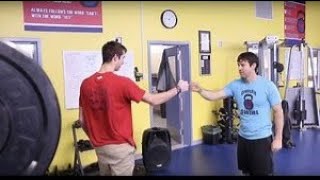
In this interview, Michael Horn talks with Pete Driscoll, a Vermont educator who transformed his school's physical education (PE) program by integrating CrossFit-inspired, scalable fitness into the curriculum. Driscoll recounts his unconventional path—from a business degree, extensive travel, snowboarding and swimming instruction, to becoming a certified K‑6 teacher and eventually a PE specialist. He describes how he shifted from traditional team‑sport PE to a hybrid model that emphasizes short, timed workouts (e.g., Tabata, WODs), scaling movements for all ability levels, and fostering a non‑competitive, personal‑growth culture. The program prioritizes connection over content, goal‑setting, executive‑function skills, and the five pillars of health (nutrition, sleep, exercise, mindset, social connection). Driscoll shares student stories that illustrate increased self‑efficacy, reduced excuses, and tangible life outcomes, such as a former student who now drives a high‑pay truck after embracing the "execution over excuses" mantra. He details rapid program growth—from a dozen participants to over 100 students—supported by community donations, equipment from CrossFit champion Matt Fraser, and media attention. The conversation expands to the broader implications for personalized learning, the spillover of movement into academic engagement, and the challenges of scaling such a model nationally. Driscoll emphasizes the need for passionate educators, bottom‑up advocacy, and a cultural shift that places PE as a central, personalized component of student life.
Chapters
Welcome to the Future of Education. I'm Michael Horne. Really excited about the conversation we're going to have today with Pete Driscoll, who's going to tell you about himself in just a moment. We're going to get there, but before we do, I just want to remind folks that if you're watching, you're enjoying this, give us a thumbs up and subscribe either on YouTube or Facebook so that you can stay tuned for the latest in updates as we come out with new shows and so forth, but also so that others who are interested in the content that we're putting out here can find us as well. And with that, I'm excited to bring to the stage, if you will, Pete Driscoll up in Vermont. Pete, welcome to the show. Appreciate you being here.
Thanks for having me. I'm super psyched to have this conversation. This is the stuff that really revs my engine and fires me up.
Yeah, well, I'm the same way. And I think a lot about, as you know, how our learning system has not been built around the success of each individual. And frankly, I don't get to write enough. But I think a lot about how fitness in my mind is a really integral part of that and wellness is an integral part of that, of making sure that every student is set up for success. That's what you're doing. Before we get into that, I'd love you to talk about how you got into the field of teaching and fitness in your own career.
Yeah, it's a pretty long, kind of convoluted, unorthodox route to where I got. So I'll try to make it fairly brief. But I graduated high school and went to college for actually business. So I actually have a business degree. And then after college decided to explore the world. And I guess you could say it took five or six gap years before I quote, unquote, hit the hit the real world. And during that time of, I think over that time I went to something like 46 states and 30 countries. And my kind of frame of reference on what I wanted to do with myself changed quite a bit. And I came back from traveling, you know, in Europe, and, you know, you meet people that are like, oh, the only thing you need in this world is what you can fit in your backpack. And I came back like, what is it that I truly want to do? Like, I really love snowboarding. I'm going to go become a snowboard instructor. So, you know, five or six years later, after teaching snowboarding in the winter and teaching swimming in the Summer, parents of the students that I was teaching snowboarding and swimming to were saying, you know, have you ever thought about becoming a teacher? And I'm like, actually, no, I haven't. My mom was a teacher, but it just wasn't something that I was really focused on. Like, well, I think you should consider because you're pretty good working with my. My kids. And one day I was teaching snowboarding, and I went in for lunch, and there was a lady correcting papers in the lodge. And I was like, excuse me, are you a teacher? She's like, yeah. I said, can I talk to you about it? She's like, sure, Sit down. So we sat down, and she's like, I absolutely love being a teacher. In fact, there's this program you can do up here to get your certification. So anyway, one thing led to another, and I got certified to become a teacher of the classroom of K6, you know, reading, writing, and math, and.
Oh, wow. Okay. Part way through the fitness there.
Yeah, no, partway through the program, I was like, you know, I. I love working with kids, but I don't have a, like, intense passion for teaching reading, writing, and math. And I peer out the window and the PE teachers out there in the yard with the kids, I'm like, that dude's on the same pay scale as everybody else in this building. And it just so happened that he was retiring, and I was planning on moving out west with my high school buddies who were ski bums out in Colorado. And my principal is like, I think you should apply. And I was like, well, I'm, you know, I'm not certified to be a PE Teacher. I'm not going to go back to school for four years to. To do it. And she's like, she can kind of give me a wink and a nod. She's like, I think you should apply. So one thing led to another, and they kind of helped me jump through some hoops to teach on a provisional license, eventually getting my license. And So I taught K4 my first couple years, and then K5 and eventually K6, and then years 8, 9, 10, 11, and 12. I taught middle school, and I built a fitness program at that school, which I'll talk about in a moment. And the principal that I was working under switched to high school, and he said, you know, I'd really love for you to come join us at the high school level and build at the high school level what you built at the K8 level. And I followed him there. And this just completed my third year teaching fitness at the High school level.
That's incredible. Actually, on a couple levels. I mean, just. I'm just going to pull out a couple things from your story that resonate right away, which is gap year is something that I've increasingly been pushing. The, the families that I talk to and the audiences that I reach to consider at any point to your, you know, it can be after college, it could be before. But I just think people ought to do these gap years. Not where they're just sort of bumming around per se, but they're like really seeking who am I and what do I want to do with. So they have a question they're trying to answer. In effect, I think a lot more people would benefit from it because a lot of the high school seniors that I talk to, they enter college and they, you know, they're sort of drift along to do what's expected of them, not what they really want to do. And then the second thing that just resonated out of that was how neat it is in a system that often is obsessed with credentials that your principal was able to say, no, I think you'd be good at this. Let's jump in. And then pulled you right through into, you know, your current. Into your current role, which, which you don't always see in public education. But it's pretty neat.
Yeah. I'm so blessed in that my philosophy of education aligns very closely with my administration. We basically have a. Basically a curriculum that focuses on the connection. It's basically a relationship based curriculum. And I believe if the teacher and the student have a strong relationship, the sky's the limit from there. And it's not so much about the grades. First we say connection over content and that's a huge piece for us.
Yeah, that's actually interesting. That's actually.
Froze. I don't know if people can hear me or Michael Froze.
There we are. Sorry about that. Yeah. Oh, no worries. I guess my connection is being spotty today. But the quick thing I was just going to say is it's interesting because especially coming out of the pandemic, that relationship as a foundation for the content or whatever else I think is going to be so important. Really quick just on that, you don't teach though any ordinary PE curriculum. So I'd love to hear how you evolved it over time and landed where you did with the emphasis on fitness.
Yeah. So I started teaching kind of what was what is known in our country as kind of traditional pe. My predecessor at my former school, it was very. You just kind of roll out the Ball and, you know, and do, and do the ball games and the team games that are popular in our culture. Soccer, football, that type of stuff. And at that time I feel like the PE curriculum kind of was evolving to switch to what they were calling at the time the new pe. And it was kind of, kind of more of a movement based, fitness based kind of approach. So I kind of did a hybrid of the two and then my own personal fitness. I went through a bunch of different phases. I got into, I got into bodybuilding for a number of years and I started racing 5Ks. And then I went face deep into obstacle course racing and eventually that all kind of led me to CrossFit and I absolutely love the methodologies of CrossFit and I decided to kind of really focus my own training on that. And after kind of getting in deep and learning about the methodologies there, I decided to bring it into my classroom. So we just started doing like we lead off every class. It's just like a four minute workout of the day. Often it was a tabata workout, which for those who aren't familiar is 20 seconds of movement followed by 10 seconds of rest for four minutes. So that equates to eight intervals. I would also just have the kids run back and forth across the gym and see how many times they could touch the walls within a two minute time span. All stuff that was, you know, time based. So no kids finish before other kids. And the kids just absolutely loved it. And what I found was prior to really implementing that in my curriculum, the kids who really love PE were the kids who were, you know, innately good at fleeing, chasing and dodging and they had the coordination and the agility skills and they were just super sized. And the other kids, you know, they didn't, they didn't, they didn't have that self confidence from our class that I wanted them to. So when I switched to kind of a fitness based approach and got away from team games and the competitive side of team sports, the program just blossomed and the kids would go home and rave about what they did in class. And I got a ton of support from the parents. And at the time, the way they were running music in our school was all the middle schoolers who went to music went to music class and the ones who didn't go to music just went to study hall. So you can picture like just like large numbers of people. Yeah, rambunctious boys who they're just telling to sit at a desk quietly for 45 minutes and I'm like, hey, I'VE been learning about this thing called CrossFit. I'll take every one of those kids that's driving you guys crazy and see what I can do. And The PTSF donated $100. So I got, I bought PVC pipes and $10 kettlebells and we just started doing workouts of the day during that time. And that was, it just went off so well. And then that program grew. So I went from like 12 next year to 40. And then we kind of. It didn't go so well because kids were leaving the music program to come to CrossFit and so they kind of had to find a new approach. And my principal actually turned, gave me permission to turn a classroom into a full CrossFit, if you're familiar with the terminology box, which is a CrossFit gym. And we started using that for our PE classes. And I found that these kids who, you know, might be on the bigger, the bulkier side of what we call up here in Vermont Farm strong, that didn't really excel in the traditional fleeing, chasing and dodging. They were crushing it with the workouts of the day that we were doing. And we set it up so that everybody could scale the movement in the way that works best for them. And the way I define scaling for anyone that isn't familiar is regardless of your fitness level, comfort level, or experience level, we find a way that enhances your fitness. And the kids really took to that and we set the culture with the non competitives. The only person you're competing against is yourself. So really non competitive environment. And the program just grew like wildfire. And from there it kind of gained some national attention. And Matt Fraser, who's the five time fittest man on earth, came down to our school and donated some equipment. And we actually had $8,000 throughout the, the community donated to our school and we just really hooked up. A sweet, sweet setup.
That's incredible.
Yeah, it was amazing. I was just so psyched about it. And my, my principal left and when he left, he said, you know, I'd really love to you to come here and start something here. And so when I arrived at the high school, there was 11 kids and what they called the personal fitness program. And now going into next fall, we have 105 signed up, which I'm really, really psyched about. So that program has grown and I think kids just realizing like they can adapt their fitness or their challenge any way they want with this programming. And it's just a, it's a really, really special cultural setup for these kids. To thrive and survive in. Yeah.
It strikes me that what you've done in some ways is take the CrossFit methodology and the emphasis on scaling so that it's right size for you. And as a result, you're basically personalizing the PE to focus on, you know, you setting a goal for yourself and learning how you're going to obtain it. And so, yeah, you're getting the fitness skills, which ideally is going to let you be, you know, someone who's fit for life. But secondly, you're also building all these skills around goal setting, executive function, like regulation of yourself, you know, planning, assessing and reflecting how you did and so forth. It's like all built in. Is. Is. Is. Am I getting it right?
Yeah, yeah, that's exactly what it is. And really at a. At its base level, I think what's really cool is I tell students, I don't want this to be the best class of your day or the best block of your day. I truly want this to be the best hour of your entire day. And how can I partner with you? I'm not the guru that's going to stand over your shoulder and tell you what to do, but how can I partner with you so that we can work together to move you closer to the person that you're desiring to be? I think one of my assets as an educator is that I was not a flourishing student and I can relate to and really connect with those kids who, you know, they've been told since kindergarten because they don't read well, write well, or do math well, the school's not for them. And now they have a place and they walk into that space and that is just solace for them. I get kind of choked up thinking about it. My apologies. But now they have a chance to be leaders and they get to, you know, demo movements because they don't take our class. And it's called personal fitness still, but they don't take personal fitness just once. They can take personal fitness 2 and 3 and 4. And my personal fitness 3 and 4 students are like the teaching assistants for the ones in the twos. So now they're getting this leadership role in this space where, you know, they haven't felt comfortable anywhere else in the building but here. And now they're totally owning it. And it's just so special to see. And then we go down the road, we talk about all the other things that really make us a whole, well, fit person, which is, you know, and I, I am a big Ben Bergeron disciple. I love what he has to share. For those that don't know about Ben Bergeron, his podcast and book, Chasing Excellence, it's just phenomenal.
And we'll do the full. We'll do the full disclosure thing that Ben Bergeron is an owner of the CrossFit gym that I go to. So, you know, but keep going.
Yeah, he talks about, you know, and. And I use a little bit of different wording with my students, but the five factors of health, which are the five aspects of our life that we have control over, which is our nutrition, our sleep, our exercise, our mindset, and how we connect with other people, and we really focus on those. The five pillars, what I call five pillars of health. My students, and we talk about that, and at the end of the semester, I get a lot of feedback with them and try to find out what was the most impactful thing for them. And so much of what they shared with me was mindset, nutrition, and sleep. And it's not even the exercise piece they sign up for the class because it's got all the equipment and it's a really amazing space, and it offers something that no other class offers, but what they actually get out of it is not necessarily what they signed up for. So I love this. Saying why I continue to do something is not the reason why I started, because why I continue to do it is much more purposeful and, you know, and fulfilling than why I continued to start. And then for me, as the best part is, I remain in contact with these kids long after they. They graduate. And that's why I started the daily dose of Driscoll on Instagram. So my former students, who are no longer in my class are still getting my face, my voice, and my lessons every day. And I just love it. Like, I love sharing with people what I'm learning is so fun.
Yeah. And that energy, I'm sure, pervades into them as well. I'm curious because, like, Vermont is a state where there's a law that allows for personalized learning plans for. For students in the academic life. Do you see what you're building? Honestly, like, when I hear you describe it, I'm like, that's what all learning should be. Right. I should be setting a goal for myself, planning how I get to that goal, acting on it, then reflecting, which is assessment, if you will, and then. And then revising. Right. My next goal based on that and just learning from it constantly. And I think that's how all learning should occur, not just in school, but in life, frankly. Are you seeing other teachers subject Matter experts in your school start to take this and build it into, you know, the academic subjects that they offer as well.
In the K8 school, I absolutely did. I don't know if you're familiar with the saying, like everything starts in kindergarten, it builds up from there. The elementary teachers are the most courageous with taking chances and changing curriculum. And then if it goes well for them, the middle school teachers will think about it. And if it goes well for them, the high school teachers might. But the colleges are never going to change. So they were very willing to. Yeah. Take on. I, you know, I did a presentation for them about the science behind physical movement breaks during class and what that does with getting the blood flow through the brain. And we had a, I started a Tabata kids program where during the class times teachers would stop, do an exercise piece and then get back into it. So there was that as well. But yeah, I think one thing that really makes fitness really nice for the students is a very objective measure of progress.
Right.
I think that's one of the reason why video games games are so popular is yesterday I could not beat level one. Today I can beat level one. That feels really good. I'm gonna try to beat level two. Well, yesterday I could not squat this or jump this or press this or go this quickly and today I can. That feels amazing. That is a really objective measure of my progress. I'm gonna come back tomorrow and do it. Whereas with, you know, you know, math or something, the 45 minute class ends. And I don't know if I accomplished more than I had than when I arrived or what I did yesterday. And it's kind of a long term. Whereas I can say to kids, look, last week you couldn't do this, but now you can do it. That is so awesome. Let's build on that. So I don't think it's an apples to apples comparison, but I definitely think it's gaining momentum absolutely at the elementary level and slowly working its way up. I think it'll be a while before we see it as anything, you know, commonplace at the, at the secondary level. But my principles are just cut from a different cloth. And we have a principal and then two assistants and all three of them are just amazing and so willing to take a different approach to meet our kids. So as we say in our school, back in the day it was 100 kids with one track. Now we have 100 kids with 100 tracks. And the personalized fitness in our school is a track. You know, a kid could take art for four years or Kids could take science for four years. So when I arrived I was like, I want a kid to be able to take fitness for four years and, and really be able to make that an integral part of their life, an integral part of their high school experience.
No, that's phenomenal. And we've got some comments coming in, questions. Amy Raymond, who says that they've been blessed to have you in their children's lives. She asks, what are you most proud of in your teaching career? We're probably going to send you down the emotional path again and then I'll double down in a moment after you've answered it.
I think what drives me is that this fitness thing changed my life. I was a very short tempered, low self esteem, angry high school and middle school boy. And when I reflect back on my life, it didn't really start to change until I found fitness. And that was the first time I can remember, like starting to see some belief in myself and starting to build confidence in myself. And the fact that I get to share this, this thing that really positively changed my life, changed the way that I see the world in a more positive way, changed the way I treated people. Now I get to share that with my students or anyone who's willing to listen is so special. So I can share my story in a way that will positively impact others. So I have a, I actually still have an old school blackboard hanging in my office that I won't let my.
School get rid of.
And on there is my personal mission and my goals. And my personal mission is to positively impact the life of every individual with whom I interact. And that could be the clerk at the grocery store, someone crossing the street, or a lifelong relationship like my wife or my brother. And this allows me to try to do that. Am I successful every day? Absolutely not. But I love that my story can positively impact the lives of others.
Yeah, that's phenomenal. And so let's go into some stories of other individuals that you've reached through that. I'd love to hear one or two stories of students whose lives you've changed because it's clear that that development of self belief, self efficacy and since that they can be something, that this can be a place where they can find a home, it's got to be pretty powerful. It's got to translate in some pretty far reaching ways.
I was actually asked to speak at a basketball camp this morning and I got all choked up doing that. And so I hope I can keep it together for this one. All right, go for it. But I Had I had a student who signed up for my class and I learned very quickly that he was from a family where excuses were the norm. And one thing that I'm trying to, I have a six year old daughter and one of our life, our family answers is never whine, never complain, never make excuses. And this kid would just come in with one excuse after another. And then if there was something that he didn't want to do at school, maybe he had a tough math test that day, his mom would call the school and get him out. So his mom, you know, was kind of bulldozing his challenges for him and it was just, oh, Mr. D, I'm tired, Mr. D. I didn't sleep and one day I just said, bro, those excuses are not going to move you closer to the person that you're desiring to be. It's really going to be tough for you to be the best version of you. When excuses are inherent with your thought process, they spill out of your mouth without you even thinking about them. So I worked with him to start to recognize how often he was verbalizing this negativity in his life. Because our words become our thoughts and our thoughts become our actions. And he graduated last year after taking my class for three semesters. And def certainly wasn't college bound. Didn't know what he was doing. He worked at Jiffy Lube and it was right next to my grocery store. So every day last year after he graduated, I'd go shopping and then bring over an apple. So, you know, we talk about the Whole Foods thing and I drop an apple off at Jiffy Lube every day. So we stay connected that way. And I got a email from and said, hey, Mr. D, I'm leaving Jiffy Lube. I don't know when I'll see you again. I said, okay, well, let's just stay in touch. So a couple months later, I got an email from him and he goes, hey, do you still. I'm getting choked up. He goes, do you still. Do you still shop on Mondays? Because I always, I'm creature of habit. I said, yeah, I shop on Mondays. He goes, same time as before. And I go, yep. And that was it. So I'm shopping a couple weeks later and I feel a tap on my shoulder. And I turn around, this kid's in the grocery store. And he hands me a sweatshirt. The sweatshirt says execution over excuses. And he goes, thank you for everything you taught me.
Wow.
He handed me the sweatshirt.
He walked away.
It was like, like amazing.
Wow. Wow.
So it turns out, yeah, Turns out he got a job working for the highway department for the state of New Hampshire and now he drives a $200,000 truck and he's just like killing it. He's so happy.
That's incredible. That's incredible. And he. And credits you, obviously, right? Execution over excuses is directly from you. That's, that's amazing. I'm sorry, I'm. Those who know me, I also, I'm a crier also. So I'm trying, I'm trying, trying not to right now with you and just.
I just love these kids so much and they just need to know if they're loved.
So I, I'm curious about another aspect of what you brought in because we talked about the learning cycle and how, you know, I think other areas ought to do the same thing where they're personalizing for the student and saying, you know, just because you were born in the year of the lamb doesn't mean today is April, whatever. And therefore you need to be doing double digit addition. Like, you know, maybe you need to be doing something else that's right for you. I'm curious. The other component of that, you know, in CrossFit kids really started to waken me up. My wife has her coaching certificate and CrossFit kids and they used to organize their classes. I don't know if they still do actually, but they used to organize their classes that it would be, you know, a fitness block up front. Like there was the game, the wad, you know, the warm up on a skill or whatever. And then the last 15 minutes you got out your homework and you did work. And a reason for that is the research that shows after you've moved, your brain is primed to absorb information, learn, be an active learner. Right. I'm curious, do you see that spillover effect, I guess, into other subjects in like, hey, I've gotten a good hour of movement, you know, with you and against my fitness goals, different from traditional PE where maybe I was trying to hide in the back and not be the, you know, not be the one getting the attention with the ball thrown my way or whatever. And now I'm more primed when I go into my next class or things like that. Do you see that? Do you start to hear that? Is, is that a component that you talk about?
I have heard that, you know, the first year I started, the numbers were so low, there wasn't, you know, a big sample size. And then last year, school ended, you know, 2/3 of the way through the year we were sent home. And this year Vermont, we were in person all year, which was great. And with some of the students who, you know, sitting in class is not their forte, I've had a number of my colleagues come and say, yo, I've noticed that after, you know, after they leave your class or in a much better space when they arrive here.
And.
And yeah, I've had a, you know, no, no stark numbers with scientific studies done. But anecdotally speaking, and those kids tell me all the time, like, you know, this. This gets. This gets me through the day. And a really cool thing was this year, our students had the choice to go in person or fully remote. So I was simultaneous, simultaneously teaching kids that were home and kids were in person at the same time.
Gosh, it was wild.
And the number of kids that said to me, Mr. D, I come to school for this class. If it wasn't for this class, I'd be at home every day. And that was huge for me to hear that. So, yeah, anecdotally speaking, absolutely. I'm seeing it, and I saw it at a very high level at the K8 when I was at the K8 for 12 years, and I'm starting to see it trickle. And now that the program has a little bit of a reputation at school and teachers can say, oh, yeah, like, yep, I can see he came from. He came from fitness class, or she came from fitness class. And that's incredible. Yeah, it's. It's really cool. And for them to start to understand, like, oh, when I come to class, I'm feeling like this. And when I leave, I'm feeling like this, man, things in my life might be really crappy, but after this class, they just seem a little less crappy. And I think that that's really powerful for kids to see. Have you ever read the book Permission to Feel or heard of the book Permission?
No, I haven't. I was thinking of a different one. Yeah, no, tell me about it.
My brother sent it to me, and it was a fantastic book, especially as a parent. But basically, when kids are in touch with their emotions, they're just much more likely to succeed. Anger can be any one of disappointment, jealousy, you know, sadness. But it comes out as anger. And a kid realized, oh, I'm not angry, I'm sad, or I'm not angry, I'm disappointed. So I'm considering this is something I may try coming into this school year, and I haven't decided if I'm going to do it yet, but there's like a chart with all these emotions, and I'm thinking about having the kids circle kind of where they're at when they enter class and then circle where they're at when they leave class and over time see if they recognize that this class has a powerful impact over how I'm feeling about my day right now.
That's incredible. Yeah. It's such a good idea because also, again, it's one more step of helping them be their own driver, if you will. Right. Of their fortunes in their lives. You're empowering them to be fit. You're empowering them to learn how they learn in effect. And you're empowering them to say, I may be angry right now, but I actually have control of how I respond to that. Right?
Yeah. You know, as a really short tempered, angry high schooler myself, you know, I say to them all the time, like, I let life do me back in high school. Now I do life. I want you to go do life. Go. You have so much more control and power over your mindset and you know, how you react versus how you respond. We talk about response being something you're proud of. Reaction is something you're not proud of when you're faced with a challenge. I could go on and on about all the different lessons that we talk about, but you know, overall, yeah, them realizing that I, I can go do life and I have, I have much more control. And then we, we focus a lot on really focusing our attention on what it is that we have control over and what we don't and trying to let go of what we don't. Trying to be proactive of what we do. Very, very easy to say. Very challenging to do at the high school level. Developmentally speaking, it's, it's quite a challenge. But it's so cool for them to start to pick that up over the semester. That's phenomenal. It's really fascinating. Yeah. And for me it all started with fitness. So that's, that's my story. So that's what I have to share. And we start with fitness and then we build from there and it's just, it's really, really special.
So I'm curious then sort of zooming out if you will, a little bit, I guess I have three questions as we, our time together is coming to a close. I don't want it to, but the. But I, but. So I'll do them sequentially. You know, first you went from like a dozen students, I think you said the first year to over 100 this past year. Probably going to get even bigger. I'm going to Guess where do you. Do you have a vision for where do you want to take? Or is this like, hey, take the next step, improve it, and we'll see where it goes.
The vision When I arrived, my first vision was to make sure the space is a comfortable space for kids to learn. And our environment's different from any other classes in that it's a performance based environment. Other students are seeing what I'm doing if I'm a student, whereas in science, if I don't do well on a test, the only person that knows is the teacher. So there's that kind of barrier right off the bat. So I wanted to create a culture that was supportive of that. And I spent the first couple weeks, I spent the first couple weeks of class really cultivating that positive culture. And that has worked so well. And a lot of people told me, you won't be able to do that at the high school level. You did in middle school, but you can't do it in high school.
And it's absolutely there.
So that was a piece again, the physical space and a culture set up. And then from there I wanted to start to build a program where kids could take it multiple times at kind of different levels and then become leaders to teach. And now, you know, I met with my PE department, there's a couple other PE teachers in the school, and I said, you know, straight up, like, I want to be the best PE department in the state, and once we're that I want to be the best PE department in New England, what do we have to do for that to happen? And the fitness is one piece of it. And our school now lets students take PE classes multiple times for elective credits. So it's not. Well, you took personal fitness. That's on your transcript. You can't take it again. It was like, no, you can't. You can take 2 and 3 and 4 and you can do an independent study with it. So to really kind of open up, like we talked about those pathways for these kids, they can access their fitness in any way they want over their high school experience. So that's kind of the program that I'm trying to build.
Phenomenal. So, by the way, it didn't occur to me though, you just said that about the notion of like elementary school students being different from middle and high school. But the release of endorphins is probably the best thing you can do for middle and high school students where hormones are sort of just raging. Right. And I mean, you're directly right. Basically bolstering all those Things that maybe bring them down or responding to peer pressure and things of that nature in the moment, it just occurred to me that that's probably another thing you're doing.
Yeah, yeah. And you know, one of the biggest challenges teaching high school is just the addiction to the phones and the addiction to the social media and to get them to start to understand, like this class, the mantra of our class is better than yesterday. I don't have to be great today. I just have to strive to be better than the person that I was yesterday. And we just keep building on that. We believe in the slow drip approach, you know, a low trajectory with distant horizon. Small gains over time make for big gains. And we talk about the goal of this class is to try to be a better version of ourself. Well, is spending the first five minutes of class on TikTok moving you closer to that? And that's. I'm an incredibly competitive person, so I won't just say, nope, can't be on your phone in class. I want to be better than the phone and I want to provide a product for them that they want to go, no. Like, I can be on my phone any other time. Like, I'm in this class for this hour. I'm going to put my phone down, down. And with some students it's great. And for some students I got a lot of work to do. But that's, I've found that to be one of the bigger challenges, going from the youngers to the olders.
By the way, you're connecting so many things for me right now. But just as an aside, like, I've been writing a lot about how the governors who are banning remote learning for next year I think are misplaced because rather than ban something, you should seek to make the in person option awesome. And like, it just, it's sort of like tamping down on supply as opposed to making the demand great for what you do. And I, you know, people are going to opt out and find other ways around. Like if you just ban supply and don't, don't make the actual school itself better. And that's what you're saying, right? Like, I'm not afraid of the phone. Bring it out. But I'm going to make this hour better for you to be engaged physically than to be staring at a screen.
Yeah. And then I know, you know, I know that's where they live. So I had to do my homework and find out, all right, how do I meet them on Instagram and how do I create a YouTube vlog and yeah.
You know, for those who don't know, you should check out Pete online. Like, YouTube videos are awesome. The Instagram feed is awesome.
So. Yeah, thanks. You know, I, I've been reluctant for Tick Tock, but, you know, if I have to go there, I will. I just, you know, I understand.
Yeah, I, I downloaded my phone and my wife immediately. He pointed out that I probably wasn't going to do it effectively, so I deleted it. But the. But, but so two, two other questions. Like, Matt Fraser comes to the school, as you pointed out, brought a bunch of equipment and really outfitted the gym that you had. Then did the students like, know who he was? In, in our world of CrossFit and so forth is like, you know, did they see this as, as CrossFit or do they see this as fitness? And this, like, was someone. You had to tell them who he was. Like, what was that like?
Like. Yeah, I don't, I don't talk much about the competitive side of CrossFit or the sports side of it. Yeah, I do compete in it. Personally, I love it. It's, it's, I'm a very competitive person. It's a great way. It's a good outlet for me, very healthy. But I, I don't talk about the competition side of the sport with the vast majority of my kids, with the kids that are interested in like, yo, I saw, you know, on Netflix, I saw the documentary and I, oh, yeah, but, you know, Matt Fraser is from Vermont. So it was neat.
Yes.
To, to introduce them to a Vermonter who was the man on earth. He came after he'd won his first. So he didn't have kind of the cachet with my students that he might in other, you know, well known, crossed spaces. But they were just fascinated by, oh, he's the fittest man on earth and he's from Vermont. He's here donating airbikes to us. Like, yeah. And, and he was just so incredibly generous. You know, he, he rolled in. I said, you know, how much time do you have? He goes, as much as you want. I was like, no, what time should we be wrapping up? He goes, we'll wrap up when, when your kids are, are, are done. So he did a workout with them and then he did a Q A with them and literally stayed until the last kid got their picture with him. He got his signature and had a conversation with him. Yeah, he, he was just incredible. But yeah, I, I don't, I don't push the competitive side. So they, they didn't know him as well. As. As well as he's known now.
Yeah, no, I think it's fascinating because there is that dichotomy, right. Of CrossFit for health and CrossFit. You know, there's the competitive side of it, which is not the experience, the lived experience, I think, for most of us out there. But so the last question as we wrap up, which is, I'm curious, more, as you think, nationally. Right. You mentioned that there's been a bit of a trend, I think, in pe, there's this new book, Survival of the Fit. Some of these movements sort of away from the sport based, sort of competitive, zero sum grading based approach to pe, toward more of an orientation toward, you know, fitness, health for life, personal goals and things like that. But my observation is like, yeah, there, you know, for every one of you and some of the other CrossFit implantations and these things or platform is, you know, a company that's growing and spreading this ethos. There's still plenty of PE classes across the country that are, you know, pretty quote, unquote traditional from the last generation, if you will. What's it going to take for us to build a broader movement that starts to, you know, see PE teachers as you see yourself central in the life, personalizing and doing something that, that really is, I think, the foundation for all that's going to come in someone's day, year and frankly, life.
Yeah, I mean, obviously, yeah, I'm preaching to the choir when I speak to you. But, you know, I tell my students this, this is the most important class you're going to take because it doesn't matter how well you read, write or do math, if you don't have access to your mind or your body, you know, as we say in sports, the best ability is availability. And if I'm not available to do the things that I need and want to do to be functional or thriving throughout my life, what. What good are those skills? And to answer your question, I, I don't know. I definitely see a huge improvement and movement in the 15 years that I've been teaching. I think where we were 15 years ago and where we are now, I think the kids coming out of colleges that are, you know, the future PE professionals are in a much better spot now than they were 15 years ago. But I still think we have light years to go. I'm very, very grateful, blessed and aware that I teach in a state that is incredibly progressive with its outlook on not just physical education, but physical activity in life, with outdoor recreation and all the things that happen in Our state, you know, from what I hear below the Mason Dixon, it's a very different story. And physical education and obviously all the other things that come with it with school food and all that stuff.
Yeah.
So I don't know when, when my story at my former school, CrossFit, actually made a video about, I think it's called the Kids Are All Fit. And it got a lot of. Garnered a lot of national attention. And for a couple weeks there, I was getting. Getting just inundated with emails and phone calls from people out in the, you know, saying, well, how do I. How do I do what you did? And I said, you know, I just think if you have a person that has a passion, you can do it. You know, usually if a school has a culture of some sort, maybe this school has an incredible chess club, there's someone with a passion driving that. If this school has an incredible golf team, there's someone with a passion behind that driving that. And they're asking, well, how'd you do it? I just said, I taught it to the students and they loved it enough to tell their parents, and the parents loved it enough to tell a school board. And that's how we got support. I went from the bottom up instead of the top down. I never asked for permission from the top to create these. I just made it awesome for my students and built up from there. And that's been my approach. So, you know, an incredibly passionate person that really wants to bring a program to the school, I think, is what it takes. And how many of those people are out there willing to dedicate their life to that? I don't know the answer to that. And systemically, I think it's possible, but it's going to be. It's going to be, you know, a challenge. So I wish, I wish I had an objective answer for you, but I really don't.
No, no, it's. It's good. I was sort of just curious because that's my perception as well, what you said. There's a lot of positive movement, but it's sort of not the tidal wave that we need, I think, to frankly set the country on a better course. I mean, we think a lot about healthcare costs in this country and so forth, and like, if you don't solve the fitness problem, good luck. And I mean, fitness and wellness sort of, you know, know, you know, holistically. Right. Nutrition, etc, but. But obviously takes one at a time. So, Pete, super appreciative, you coming on to talk to us and the good work that you continue to do.
I'm super grateful. Thank you for reaching out and making time. And I love the Conversation. So if there's anything I could help with going forward, just let me know.
Well, we'll keep, we'll keep finding ways to promote what you're doing and promote the broader message to transform the lives of a lot of students around the country and into the citizens that they can become. So, Pete, super appreciative all you for joining in the conversation. Thanks for joining. Remember, if you liked this content, give it a thumbs up. Subscribe so that others can find find it and find access to it and find stories like these. And just appreciate you all tuning in to the future of education. We'll be back next time.










