In Wake Of Learning Challenges, How To Reset Schooling
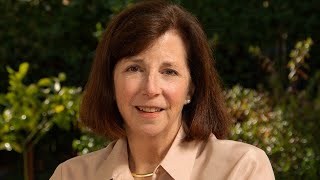
Mackie Raymond, director of Stanford's CREDO Center, discusses pandemic learning loss and how schools can shift from grade-level teaching to competency-based models where students progress by mastery, not seat time. Math needs scaffolded repetition; literacy needs autonomy and background knowledge. High schools should blend career and college pathways with industry-validated credentials.
Chapters
Welcome to the Future of Education. I'm Michael Horne, excited to bring another really interesting conversation to you today. Today I have the founder and director of CREDO center at Stanford University and the author of two fantastic chapters in a new volume that the Hoover Institute put out called how to Improve Our Schools in the Post Covid Era. Her name is Mackie Raymond. Delighted to bring her up to the stage. And Mackie, I'm really excited for this conversation because obviously these are two chapters that I know well speak to me on multiple levels. But let's start. Let's actually just give context, I think, for folks who are tuning in and maybe don't know the origins of the project. The book itself, how to Improve Our Schools in the Post Covid Era, where did that come from? And the idea for it and the authors, not just you, but several others that contributed to it. Where was the energy behind that and the hope for what that book can help accomplish?
Okay, well, first off, thank you so much for having me today. It's delightful to be with you and I'm looking forward to our conversation. Our, our anthology, the set of chapters that I'm going to speak about a little bit today actually have its roots in a larger initiative at the Hoover Institution at Stanford University, where we've tried very hard to bring together the best of scholarly evidence on a variety of topics in the K12 public education space and join those with the pragmatic experience and wisdom of people who are actually trying to make policy happen. And so our idea here is that the intersection of great evidence and strong policy pragmatism is probably the right combination to move a lot of the conversation forward in K12. Now, that's an initiative that started actually two years before COVID hit, and up until that point we've been quite successful about thinking deeply about a number of topics. When the pandemic hit, it became very clear to us that coming out of the experience of the pandemic itself and how districts and states were trying to cope with the challenges that the pandemic presented, that we had this opportunity to use the disruption creatively. And this is something obviously that you know a great deal about and have written about. So I'm glad to be chatting with you about it today. So we took some of the areas that we had discovered and discussed before the pandemic and recast those in the sort of, okay, now what? Setting of coming out of COVID so eight chapters. My co authors there are Eric Hanishek, who's a senior fellow at the Hoover Institution, Paul Peterson, who is a senior fellow at the Hoover Institution, and Checker Finn. Paul Peterson is also at Harvard and Checker Finn is obviously very well known as the lead for many, many years of the Thomas B. Fordham Foundation. So great minds on many of these topics and I have to say, most of the members of our Practitioner council, who are the people who are actually in positions of education influence like your, contributed to those chapters by being completely unvarnished in their feedback, which we completely took to heart and included in many of these drafts. So what you see in the actual physical copy of these is a sort of a back and forth dialogue between the scholars who are trying to bring a sort of an evidence focus and set of evidence based policy recommendations, and the reaction of actual policymakers saying, oh, this is great, all the way to are you crazy? This is never going to work. And they all show up in those chapters. So I invite everybody to go take a look and pick your favorite reaction and let us know what it is.
I was going to say and tweet it out to us and let us know what you think it is, because there are some good ones. I know one of mine was, I love this idea, but gosh, this is not getting any traction at all. We can allude to that later when we get in. But it was interesting. I had read the chapters, obviously the first time you went through, and then when I reread them once they came out, I was paying attention to the comments because I was just sort of having an internal dialogue with them. So for people that want to invest in this, there's a richness of the chapters themselves and then there's a richness of, like you said, I mean, these are the top folks, you know, superintendents of state, systems of education, engaging with the text almost. It feels like in real time with you. So it's a really neat. I mean, I don't think I've seen anything like it before.
Well, I'm not sure we're going to do it again either, but it was a good try. It actually does present almost as a dialogue and that's what we were aiming for. And it captures a particular moment in time which I think has sort of a historical or time capsule value to it. I think in the future we'd actually like better engagement throughout the process with our partners on the Practitioner Council and that's a direction that we're going to try to head in the months.
Yeah, but there was obviously an immediacy to the moment and to get stuff out. So I'd say you all handled that pretty well. But let's turn to the first topic du jour, which is still a topic du jour. So you wrote about this, your first chapter, learning losses, what to do about them. We all had a sense that these would be significant in the chapter. You give a lot of data around what we already knew at that time of what was going, what was emerging. But even in just the last few weeks, more data has started to emerge. We started to get results from state tests in Texas. I think Arkansas has started to leak a little bit of it. McKinsey did an estimate of what we're learning. NWEA has put stuff out. You're probably tracking this stuff way more than I am. What are we learning about the learning loss conversation? How bad is it and how does it compare? You know, a lot of people are focused on marginalized students and those who historically have struggled in schooling. How much worse are their outcomes compared to years prior?
So, great question. Obviously, the minute the pandemic hit and governors encouraged state superintendents of education to waive testing last spring in 2020, it became clear that we were going to be walking through a very, very dark tunnel for as long as it took to get back to assessments. What I don't think anybody knew at that time was how much the disruption was going to influence our ability to assess where kids are. So my team at Stanford, at CREDO, looked at all of the students in 20 states and tried to predict what their learning loss would look like based on their own historical learning trajectories. And of all of the organizations that tried to do learning loss estimations last spring, ours were the most negative. We predicted much worse impacts. The typical was someplace around a third of the year in reading and about a half a year in Math. Those were McKinsey and the NWEA studies were in that ballpark. We doubled those estimates. We said it was it's a half a year of reading in a full year of math. The difference between our studies at that time was that we had all students. And neither of the two data sources that were used in the other two studies were largely inclusive. So while they claimed to be representative from a sort of a statistical sampling basis, they didn't have all students. And the difference.
Yeah, just to double click on that, the importance of that. Right. I think, is that students who are more likely to opt out or not be present from some of these assessments, it probably wasn't a true random sample, if you will, of the population. Was that your hypothesis?
So, yeah, let me just probe that just a Little bit. Both of the other studies, and they were both very well done, used data from schools that subscribed to a particular assessment service. And automatically you end up with a different population of schools than the national picture because a lot of schools don't subscribe to these things. Where they went and got their national statistically representative sample was students in those selected schools that opted into the tests so you could have the correct number of students in each of the student subgroups, but because they were sitting in different kinds of schools, they weren't exactly the same. We went the full gamut now that other assessments are starting to come in, and I have to say, the differences between states and who is willing to test and who is not willing to test is also a really important part of this story. But the places where the data are starting to come in with real tests from spring 21, we see that the learning loss that they have been able to quantify is pretty substantial, and it has the same distributional properties. In other words, there's wide variation even among students who went to good schools in the past where they would have been expected to have good learning. There's big variance in how well kids adapted in the last year and where kids went to school. In schools that didn't do well, there's even bigger variation in how students did. And so two things are coming clear to us. One, there are a whole lot of students that weren't tested in 21 and really interested to find out where they are, because I don't have any doubt that people did absolutely the very best they possibly could to find every single kid and test them. But we're short tens of thousands of students. So what happened are they no longer in public schools? Have they figured their way out? The other option is that they're feral. Right. That they're just not enrolled and off doing whatever we don't know. So the picture that we have is serious, and the picture that we don't have is even of greater concern. Wow.
And so the headline, though, then, compared to your estimates, how those. How those compared, as you're looking at the data right now, what's your current sense?
So we have the opportunity to lay up their results on a school by school basis with ours. They are coming in slightly better off than what we predicted, but worse off than the other two sets of predictions.
Gotcha.
It's more than a half a year in reading, it's not quite a year in math, and students do have exactly the same spread as we saw before. And it's really the spread that's so concerning because the prospect of bringing students back into a traditional classroom setting with a traditional instructional approach is very challenging to imagine. When the range of where kids are has gotten so much larger. It stretches to the point of we don't know how this is going to work. The requirement of a teacher to be prepared to teach a huge range of student preparation, starting points and preparation. So we're in for it in the 2122 school year and lots and lots of opportunity to see how schools react, what kinds of additional supports they bring to the table, how they leverage technology and what they do to make sure that kids are sort of re engaged and help them to support moving forward.
Yeah, it's fascinating. We're going to hold on the high school aspect of this just for a little longer because it's the topic of your second chapter in particular. And the strains there, I suspect, get even more challenging because teachers are trained to cover content in a particular subject, a particular band, and not necessarily step outside of, say, the math, you know, that they're. That they're specified to teach and so forth. So it gets really tricky as we get in there. But in the, in the chapter you walk through, I think it's 10 action steps of what schools and policymakers ought to be doing to dig ourselves out of this. I'd love you to walk through or summarize some of these action items and why and you view they're so important right now.
Sure. I'm not going to go through every single one of them, but let me see if I can sort of summarize the general thinking behind this. One is we absolutely have to know where kids are. And so let's not be shy about the fact that assessments at this point are primarily diagnostic. I don't think there's any discussion about using them to judge the quality of schools at this point. I don't think that's appropriate, and I don't think anybody's talking about that. But there's a very wide range of appetites about whether or not we test at all. And testing on a regular basis from now until the foreseeable future, I think has to be a foundation of whatever our recovery strategy is. The second is that we should acknowledge that kids are going to be all over the map. And instead of asking teachers to just teach on grade level and expect the kids to catch up, let's do something else. Let's do equivalently an individualized learning plan for every single student. And I think that that's. It's the compassionate thing to do. I think it's the pragmatic thing to do and it requires that we rethink the way that school resources are organized. So much better idea of having teachers understand where students are and together work across an entire grade. Spanish, potentially to identify low performing students first and bring the best teacher to those students. Maybe a middle band of students can be taken together and quickly remediate what they didn't get last year. And then the students that did okay last year, they can continue to move forward. But we're really talking about two things. We're talking about individualized learning plans for kids, personalized learning, and that's going to obviously require some technology. But the second then is that we're really thinking about a switch to competency based performance assessments instead of just saying you can sit in a seat for a year and you get credit and you'll move on. We don't move people forward until we know that they have mastered material. And I, I'm a big believer that this is the moment to make that pivot and would much prefer to see states and districts agreeing to a model like that, even if it means they educate students for another year or two coming out of this, rather than let kids move forward with big gaps in their knowledge. That's only going to compound and turn worse as they continue on through their schooling.
So I want to double click on this on a couple of fronts because I think what you're saying is fascinating. It obviously echoes a lot that I've been writing and saying as well. So. But I promise that's not just why I find it fascinating, but what I want to dig into is when you're saying testing and so forth, I think what you have in mind is these competency based performance assessments that are diagnostic but also giving us an accountability picture. Not for accountability purposes, as you emphasized, but more for transparency. Let's understand really where the gaps are. But it sounds like you're not talking about these massive two week periods of traditional standardized assessments. Much more like, let's make sure there's real time rapid assessment that's going on so we can understand and help students. Am I picking that up right? And what would that look like in your mind on the ground?
Well, so I'm quite encouraged with your description. I think that's exactly what we're talking about. I think the idea of having essentially embedded assessment in the course of weeks and months of schooling is the right approach and it's the same as we used to do, you know, 20 years ago. When we had embedded assessments in a lot of different learning curricula. It's not a big deal. It's a diagnostic deal. And it's an important deal to let teachers and students and families know where their kids are. And I think it's a much more direct connect to allocating resources where they are best needed to make sure that all kids are actually getting the kinds of support they need so that they can move forward.
Super helpful clarification just to understand the picture even more deeply. The second aspect you touched on is there's this acceleration versus I'll call it remediation debate. But I think that actually is like a unfair title to the other side of this, if you will. I think it's more acceleration versus personalization debate. But you're hearing some folks say, teach on grade level, fill in the holes as they mount themselves. That's sort of one side of it. And then the other side. The acceleration folks, if I'm being fair, I think are casting it as, like, don't throw someone in the credit recovery class and let them just languish there. But there's another camp that's saying that's not what we're saying. We want to personalize for each individual's particular gaps and so forth. And if they understand something, we'll accelerate them up in that particular area. Area. And then we'll slow them down, you know, wherever they need. So there. But there does seem to be a bit of a break going on right now, at least in the chattering class. And I think teachers and a lot of schools on the ground feel like they're sort of caught in this crossfire right now. Can you help dimensionalize this and help make sense of what we're hearing right now for folks?
Sure. So let's take the first one, which is teach on grade level, and remediate. Do spot remediation.
Yep.
Let me just give you an example. There's 45,000 teachers in Alabama, and what you're asking is that every single one of those becomes adept at identifying where students are, being able to identify exactly what their learning gap is while they're continuing to teach on grade level, then customizing a solution for that student at that moment and making sure that the student gets traction with that, and then reconnecting them back to the pace of learning.
That sounds like a good luck proposition.
I just, I. I don't even know the 45,000 teachers in Alabama, and I already. I hurt for them because I just don't think that that's just not A realistic expectation, especially kids are all over the map. Right. So if you literally want the kids in classrooms, then the teacher is not only teaching on track, but they're identifying and remediating five or ten different spots. So I just don't see that working. The other one, I think it's a false dichotomy. And I think the problem in all of these is that we continue to hold on to the time variable as though it's precious and sacred. And I think that's where we just have got to get over it, because I don't think time is the variable that we should be a slave to. I think competency is the variable we should be a slave to. And whatever time is necessary, then that's what we give.
That makes a ton of sense.
That's the pivot that I'm trying to get to. And it's also the one that shows up in the high school work a little later.
Yeah. And it'll be a good transition in just a moment. One more question on this topic, which is, does the advice change from math to other subjects? So I've heard that math is more linear, it's cumulative. It may be different in some ways from, say, social studies or once you know how to read. And I think that's an important distinction. English, which is so knowledge and background knowledge and context dependent. Right. Once you've gotten past that and so you're into the reading to learn, in effect, as opposed to learning to read, are those subjects somehow different from mathematics in your mind? And how do we think about the right approach if they are.
So? I will completely concede that I'm not an expert in the science of learning, particularly by subject. So I'm not sure that I have a lot to contribute to this. But it does seem to me that where we can encourage on one side, autonomy, and that's the learning, learning to read so that you can read to learn, encouraging autonomy is, in fact, I think a very important learning skill to begin with, and that's great. On the math side, my understanding is that scaffolding becomes much more important in mathematics, that you have to be able to continually return to earlier concepts and draw them forward. I think that suggests that repetition and a varied repetition practice is actually much, much more valued in mathematics than it would be in skill and drill stuff, in learning vocabulary or something like that.
Gotcha. No, super helpful and makes sense. And I think also points to the notion that mastery or competency might be something that you may perform well in a test today. Let's Go back and check you in a month, see have you really mastered this? And knowing that we're going to have to probably do some reinforcement that are very short intervals at first and then get longer and longer over time and not just assume, hey, you crammed for it, therefore you mastered it. I think it's a good segue into your other chapter that you contributed for this, which is about COVID 19 high school and the both and world you called it in the chapter. Why don't you lay out the premise for that? This is really about redesigning, rethinking what the high school experience looks like and it links very tightly to the competency based and getting away from time as the anchor, if you will in all this. So I'd love you to give folks a summary of what you're talking about in that chapter.
Okay, I'd be happy to. So there are, there are thousands and thousands of high schools that ask students essentially to pick between career and technical education tracks and college preparation tracks. And our earlier work in this area revealed that states differ dramatically in whether they make the presumption that you are college material and choosing a college prep track or not. So what's the default state? And when we were looking through how states differed in the way in which they presented course options to high school students, it became very clear to me that many students actually would benefit from having a blend of both. If you think about the options that students are likely to pursue after high school, it's no longer a given that somebody's going to go to college for four years straight. The pathway that kids are more likely to take now is very much back and forth between work and, and credentialing of some form or another. And so the world that the kids are facing is not reflected in the preparation in high school. So the both and world was, let's figure out how to give them both of those things in high school. And the big thing that it rests on is something that we call navigation skills. That among the things we do not prepare our students for is the idea that you have the ability to make investigate a variety of options and think about a pathway that you want to create for yourself and think about whether it requires that you work for a while, study for a while, work for a while, study for a while. So navigation back and forth between content rich college ready courses, college prep courses, and exploration of career and credentialing coursework is part of what we're thinking about in the new design for high schools.
It's super interesting and makes A lot of sense it echoes in choosing college. When I wrote it, I found so many students, you know, 18, 19 years old going into college, not unusual, that they had no idea what they wanted to do, but they didn't even know what was out there from which to choose, to be able to consciously figure out, what am I good at? What are opportunities out there? Who do I ask? Those were questions that they just weren't aware of. It seemed to me that's why I'm not an engineer.
I never knew about engineering until I was halfway through college.
I'm so glad you said that. I've said this a few times. I didn't know what engineering was until junior or senior year of college because growing up in Washington D.C. there are not engineers. There are lots of other sorts of life forces, but engineers do not exist. So I didn't know what one was. I thought it was like a train conductor or something.
So I know I walked by the engineering school, the engineering college at Boston University where I did my undergraduate work for two years going, what is that? What is that all about? Totally figured it out. Yeah.
No, well, that's the thing. I didn't know that there were fields that I like, STEM fields, but I literally didn't know that there was a way to do that in an applied way. I just, it never occurred to me until much later in life.
And so here you are just changing the world instead.
We're all doing our best, but the question I guess is, so what are these key elements then of redesigning high schools so that we allow for students to have this both hand world and not. It's another false dichotomy. Right? Is essentially what you're arguing is we don't have to have career tech versus college ready. Like, how do we blend these things? What does this look like as we redesign high schools?
Well, so one of the things that it does is it. It asks state education departments and their career technical education divisions to think quite differently about what they encourage districts to do. Because most of the career and technical education in most of the districts across the country lead to strong wage occupations and they don't lead to careers that actually have a career trajectory too. So really want to have a different kind of approach to understanding where entry level jobs are now, what industries are growing. This could be a local exercise that they do with their state department of labor, but basically think differently about where to help students think about employment opportunities. The second part of that is that not every single district has to build their own complete program. There are Online options in career credentialing for many, many industry positions, both open level, entry level positions. And further on, you can get pretty far along in stacking up credentials while in high school by taking online courses that have already been endorsed by industry professionals in the occupations that are being contemplated for a person's career. So my idea is that the focus shifts to the navigation part of the equation in high schools. That's where the staff folks put their time, that they in fact curate large opportunities for students to take courses online for their career and technical instruction, and that those choices then lead to credentials that are actually already recognized in the workplace. So we get a much bigger lift with that path and that approach than by having every single district create its own four different career paths.
I love that idea. What's interesting also about it is a lot of these career certifications and courses around them that are emerging have third party assessments so that they can assess. Did you in fact master it? One of my worries about a lot of the dual credit early college movement in high school is I take the content from a community college course. I have a high school teacher teach it. Is that really a college course? Well, there's no way of knowing because there's no assessment to say, are you mastering college college level work on the other side. Whereas with these courses you're talking about in the career side, like if I want to be a Facebook digital marketer, there is an assessment to show, hey, did you master these skills? And it then can port right onto my resume. You can actually see Michael has these or doesn't yet have these skills. And I can keep working at it obviously until I master it. So that seems to pin into your other big recommendation in the chapter, which is to start focusing even more on the competency item that we were talking about earlier.
Exactly. And it's perfect. There are organizations now that are taking a number of the entry level positions and occupations that one pay a living wage now, but also are the gateway to a progression of career advancement. And what they're doing is they're creating these competency maps, which I just think are brilliant because essentially you end up with your own QR code of your competencies and you can sort of match it up with the QR code of these positions and see how well you're doing, see where you need to add on that, plus your navigation skills, plus a little more online stuff is a much more directed way of not only training for skill based competencies now, but it also then sets you in motion for the inevitable retooling that we all have to be prepared to do throughout our career.
It's so interesting. I'm curious. A lot of these ideas change the way would change the way schools are funded. And as we think about barriers to implementation, you know, most schools in most states have a seat time or average daily attendance or something like that. That accounts for the way that the school receives per pupil dollars in many cases. If we might be keeping certain students longer, some students shorter, they're able to master things quicker, they're able to go in a different pathway. Funding, it seems to me, needs to be more flexible, but it might also need to follow the progress of the individual student from an academic perspective and mastery as opposed to just time based. Have you thought about that at all? What do we need? Like, do we need to look at an overhaul of school finance to make this work and what would it look like?
So I do think that additional flexibility in high school funding is obligatory, but I think it's obligatory regardless of whether we do this or not. The, the big thing is we continue to reward schools for seat time. That's it. We ask them to take care, take count of how many people show up at the beginning of every period in high school. It's at the period, not at the half a day or the full day. And so we ask them to take attendance in every single period. And we use that as the proxy for okay, then this person is going to spend 50 minutes of this next hour with this teacher in this class. That must mean there's an hour of learning going on. No longer believe that that's the right approach to do that. I think that there is some approach to sort of risk pool funding that says we'll pay you for sort of the operating costs of having a student. But the real payoff is that you'll get funding when you demonstrate that they have competency in the course. And the combination of those ought to be, I think, given to schools and given to them with the flexibility that they can allocate resources in whatever way they think they need to in order to achieve those outcomes for kids.
Super interesting. So essentially it's a fixed line item that covers the fixed set costs and then it's a variable line item that gets paid out as you demonstrate math, so that we're not asking schools to have building infrastructures and so forth for the cost of housing the kids, if you will, even if they haven't maybe made academic progress in line. But to your point, once they show that mastery, then they get those funds. Is that Essentially correct.
Yeah. And you know, I think particularly at the high school level and certainly in the post secondary level, we are on the verge of a massive reorganization of physical costs. Anyway, the fixed costs of a lot of what we have claimed are, you know, sort of the durable costs of education. I think the pandemic has shown us that a lot of that is up for grabs.
That's a really good point. It's a really good point.
You know, my idea of, you know, sort of a blended finance approach actually would drive more of that conversation about what's the most efficient way to help kids learn? Is it that you have to have them in their classrooms, you know, run a transportation system and have them in their classrooms five days a week from X to Y? It's not clear. It's not clear. That's indelible requirement.
Gotcha. That future topic, I hope you all will dig in on that because you have the right roster of people there to figure out what a model might look like, I think.
Can you imagine the comments we would get from them, though?
I would be fascinated. You know what, I would be sitting there cheering you on. So that's got to count for something, right?
Excellent.
I'm curious, as you look at on the ground and you heard from all these practitioners and got feedback and so forth, you walk away from this. Who's doing this stuff? Well, as we wrap up our conversation, where are the bright spots? Where should we be looking for models on the ground? Where you're like, yeah, they're getting this piece right and we ought to amplify that or whatnot.
So it's a wonderful question. And let me add to the question, who is doing it well and what are other people doing to learn from that? That's the other half of this, right? So we've had really good innovation in high school for the last 15 years. There are models, some of them are charter schools, some of them are small districts, some of them are high school only districts. One of our members of our practitioner council is the superintendent of an all high school district in Arizona. And the kinds of new thinking and new models that he's been able to bring together in his district are really exemplary. I don't see that you're going to get the big systems to just flip on this for a while. But I think that the record and the evidence that it is both possible and cost effective and much better outcomes for kids is growing every year. So yes, I think you can look at the high tech highs, you can look at the strong districts in Arizona you can look at the high schools that are doing real dual enrollment, where kids actually go to college in high school, like the 21st century schools, the GEO schools. We see these examples around the country and their records of accomplishment are not only noteworthy, but they're durable. You can see it year after year after year after year. So I'm encouraged that we have evidence that you can do this. Whether or not other districts choose to pick it up is a very different question. And there I think it's actually a coalition of business, local politicians, families and frankly students, employers particularly, saying we absolutely have to do this differently because we're just not getting the connection with the human capital that we need.
That we need. And we're living in a knowledge economy where that's been never more important, I think, which is sometimes the context people miss from. Say, why Wasn't this push 60 years ago? Probably was a good idea then, but it seems like a necessity now.
Well put.
Yeah. Mackie, any closing thoughts? Things that you hope you've written the chapters, they've been out there now for a few months. You have the comments from the practitioner council, but you've probably gotten a lot of other comments since. Just direct to you. Any further thoughts or things that you said, gee, let's double click on this and make sure that this happens in the next X months or whatever it might be. Just want to make sure that you have an opportunity if there's anything you want to expand upon.
Thanks. There is one point that we didn't make that I do want to try to our discussion today, and that is that partly because of the learning loss, partly because of the experiences that teachers, educators and families have had over this period, the public opinion and appetite for school choice and flexibility has gone up a lot. And you see that in the number of states that have adopted some new form of choice, whether it's an education savings account or a tax credit scholarship, or whether they have really relaxed how many charters they're going to allow go forward or whatever, we're seeing families asking for flexibility and autonomy in their own ability to choose. And I also see particularly in the charter school space, that schools are pivoting to try to be more responsive to families. So I think the school choice dimension of this is going to be one of the drivers of not only addressing learning loss in a three to five year way, but actually driving some of these larger institutional revolution forces that we've been discussing today.
It's a really good point and it seems like the school and educational choice movement has never been more important than right now as well. It feels qualitatively different from what it felt five years ago, even from my perspective.
Yeah. Yeah. Well, I'm glad to hear you reinforce that because I think it is a, it's a moment. You know, we have so many of these moments, but this is, this is one that I think actually has lots of different directions coming together all at the same time. And therefore, you've got some momentum that.
Makes a lot of sense. Well, we will continue to watch what you're writing about this topic and what you're thinking about this, because the evolution of all these forces, frankly, is incredibly important right now. We're in an interesting time. I dare I say that the next year I think, is going to continue to be somewhat unsettled, which that friction could end up being productive in terms of creating the changes. I think that we need to get all students back on track.
Well, and I hope that you will continue to be one of the bright lights of bringing these issues forward. So thank you again for having me, but also thank you for the work that you're doing because it is, in fact, one of the longer strands of pretty important conversations. So I appreciate it.
Deeply appreciate you. And thanks so much for joining us and for all those watching and tuning in during and after. Thanks for watching. And we'll be back next time on the Future of Education.










