Investing in Opportunity with Michelle Rhee
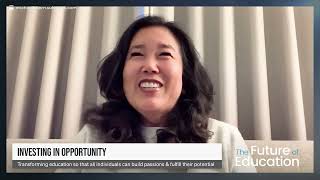
In this interview, host Michael Horn talks with Michelle Rhee, venture partner at EO Ventures and former DC public‑school chancellor. Rhee recounts her circuitous career path—from leading the DC school system, to founding the advocacy group StudentsFirst, to co‑founding the apprenticeship platform Build Within, and finally moving into venture capital after a call from economist Roland Fryer and a meeting with Greylock veteran Bill Hellman. She explains EO Ventures’ sector‑agnostic thesis that market forces can accelerate economic mobility for low‑income people of color, and introduces the firm’s Social Money Multiplier (SMM) model that quantifies social impact alongside financial returns. Rhee highlights several portfolio companies: Kipod (micro‑school network enabling teachers to become entrepreneurs), Edlite (AI‑driven analysis of student work), Manta (a data‑science‑in‑your‑pocket platform for districts and nonprofits), Stepful (a four‑month, virtual phlebotomy training program that guarantees jobs and raises earnings), and JobGet (a shift‑focused gig‑matching platform). She discusses how apprenticeship models and flexible work preferences are reshaping the education‑to‑work pipeline, and argues that EO Ventures operates as a “single‑bottom‑line” investor—prioritizing economic returns while ensuring impact through the SMM. Throughout, Rhee conveys a shift from pessimism about systemic education reform to renewed optimism driven by innovative entrepreneurs, and emphasizes the importance of measuring impact rigorously.
Chapters
Welcome to the Future of Education. And now here's your host, Michael Horne.
Welcome to the Future of Education. I'm Michael Horn. And you're joining the show where we are dedicated to creating a world in which all individuals can build their passions, fulfill their potential, and live lives of purpose, which unfortunately is not the world we are living in today, but to help us think through how we can better get there and talk about some of her moves to do so. I'm delighted. We have a very special guest today, Michelle Rhee, venture partner at EO Ventures. And I'm sure many of you know her as the former chancellor of Washington D.C. public Schools, of course. Michelle, thank you so much for joining us. Great to see you.
Thank you for having me. I'm excited to be here.
No, I'm, I'm, I'm delighted to talk about, frankly, this new chapter, relatively speaking, of your career with EO Ventures, a venture firm that supports some really interesting entrepreneurs and portfolio company. Maybe let's start there. Just what is EO Ventures and talk about your path there. Because obviously after you left D.C. public Schools, you started Students first, you had a long run there and then have taken a couple other steps. But I think people would be curious why venture capital and why into this step?
Absolutely. So it's been a circuitous path. And certainly if you had have told me two decades ago that I was going to end up being a venture capitalist, I would have told you that you were crazy because this is not sort of the obvious next career choice. But, you know, So I, after D.C. public Schools, I started Students first, which was a political advocacy organization focused on education and education reform. And after spending a few years at AT Students First, I actually left the education arena completely. I really felt like I was not being helpful in the education conversation because it had, in my opinion, become so polarized and divisive. And I really felt like me being in the conversations was not helping. So I completely left education. About a little over four years ago, I co founded a tech startup with a colleague of mine and it was called Build within. And it was not in the education space. It was actually in the workforce arena. Build within is a software platform that helps employers to start and manage apprenticeship programs. So even though it wasn't in education, there was sort of a very obvious connection into workforce development. And so stayed with that company for a number of years. And was it. That was my first foray into like startup land, which was so different from anything that I had ever experienced before. And I was super fortunate in that my Co founder Jimena Hartsock was a serial founder and so she kind of taught me the ropes and made sure that the organization and company was being set up well. But I, after that I left Build within and for a little while was just kind of living my best housewife life for a few months. And then got a call from Roland Fryer. So Roland and I had known each other since my DC days. You know, I met him when he was a 27 year old newly tenured professor.
Say newly genius tenured professor.
Yeah, exactly. So he was the youngest black tenure professor ever at Harvard at the ripe old age of 27. And that's when I met him. And he sort of, he had called me at the tail end of my time with, with Build within and he's like, I didn't know you had a startup. Like I have a venture firm, we want to write you a check, you know, that sort of thing. And after I left Build with it, and he was like, that's great because now you can come on board and join us. And I said, doing what, sir? I don't know anything about the venture capital world. And he's like, we just raised $100 million third fund and we'd love you to come on board and run a fund within the fund that is focused on education investments. To which I promptly said, no, thank you, I'm out of education, I love being out, I never want to get back in. And I said, well, maybe something having to do with workforce development. He was like, sure, come on board, do whatever you want. Yeah. And it was, that's such an odd thing to say, but it's very on brand for Roland. And then I talked to Bill Hellman. So Bill is the co founder of EO Ventures and he spent 35 years at Greylock, 15 of those as managing director. And I had not met Bill before. And so in our first conversation together, I said, I don't understand why you want me for this job. I said, know anything about investing? I've never done it before. Surely you can find somebody who's more qualified than me. And he said to me, he's like, you know, yes, there's venture stuff that you're going to have to learn. He's like, but it's, it's, you know, you're smart, you can figure it out. He said, really? This is a business about picking people and you know how to do that. And I just found it so interesting. It's so like refreshing that somebody was with the storied sort of, you know, Career in venture like Bill would think that an old woman like me could learn how to do something new and do do it well. Right. So I was intrigued by. By sort of the both of them and their confidence that I would be able to do this. And so I was like, all right, I'll. I'll. I'll give it a shot. And so I'm. I've been doing this for about 10 months now, and I have to say that I love it. I absolutely. Every job that I've ever had, I always knew that I was doing, like, I'm just, you know, doing good for the world. Right. And hoping, hopefully making it a better place. But this is the first job that I've ever had that is genuinely so much fun. And every day I wake up and I. I almost feel guilty. I'm like, are you supposed to have this much fun when you're working? So it's been a fantastic experience so far.
That's amazing.
I'm.
I'm sure this is off. This is with my job moves hat on at the moment. Like, what about the job is really lighting a fire under you that you wake up every day energized, and I've got to keep doing this. Like, what are the sets of things you get to do that you're like, wow, this. This is really energizing me.
Well, first of all, on day three, being on the job, Roland had me sit in on the board meeting of one of our education portfolio companies. And I came out of that meeting, I was like, oh, I need to talk to him about this. I need to introduce that person. And I came out of the meeting and I was like, I guess I have to do education stuff. And Roland was like, hook, line and sinker. Yep. Yeah. So I, you know, I am in education, but what I have found to be sort of most fascinating about the work is that I got to a place in education, quite frankly, where I had become a curmudgeon. I was like, you know, what we actually know in this country what we need to do, and we just refuse to do it. And I don't know that anything is ever going to change. And so I was pretty pessimistic about what the possibilities were to fundamentally change the education landscape, the public education landscape in this country. And I find that now, um, I mean, what better job could you have that every day I get to meet with people who are pitching me and they feel like they're going to change the world and make it a better place through this idea that they have and you know, sometimes I'm like, love the idea, not sure about the founder. Sometimes I'm like, oh, amazing founder. I'm not sure about the idea. Right. But every now and again I meet people who I genuinely think, oh my goodness, like, you could seriously change the game. And it's just incredibly inspiring and it has turned me into an optimist again.
That's awesome. I mean, I think that's the. It's interesting. You're probably in a very similar place to me at the moment in terms of outlook on the K12 education, which is kind of pessimistic about the changing the existing system. But I see all these things coming from the outside and the entrepreneurs. And I know you all have Kipod learning in your portfolio and it does make me optimistic about this movement that's growing on these fringes, that's sort of outside, if you will, the traditional discourse of ed reform. And so I'm sort of curious, you have Kipod learning, like, what's the basic hypothesis certainly behind that investment, but maybe more broadly in the fund. Right. Like, what sorts of things are you guys looking to back?
Yeah. So the thesis of the firm is that market forces can significantly accelerate the economic mobility of the populations that we're focused on when done in the right way. So as long as a company aligns with that thesis, we're sector agnostic. We have portfolio companies in housing, healthcare, govtech, fintech, education, workforce and more. And so. And we also have something called the social money multiplier. This is a model that Roland came up with which basically allows the firm to put real sort of measurement around. Are the investments that we are making or are they having the impact on society that we would hope? So Qipod is an investment and a portfolio company that I have had the good fortune of getting to lean in a bit on. And you know, for some folks, I think the, you know, they'd think, well, you know, micro schools, how much impact could they have? You know. But I think that when Amer and Roland first met, Roland really, like, first of all loved Amer because he's an amazing founder, but he also saw the potential for the micro school movement to not just sort of be relegated to the fringes of, oh, these are, you know, people who would normally homeschool their kids, et cetera. They really together saw the potential to serve a broader population and specifically our target population of low income folks of color. And that has 100% panned out over the last few years with Kipod. But I was, I was fascinated because Amr invited me onto a like a webinar that they had for people who were interested in starting micro schools. And what I have found really interesting is that there are a ton of educators out there, teachers who for whatever reason have become frustrated by, you know, I don't know if it's working in the district bureaucracy or you know, or they're just looking for something new. They've always want to and wanted to be an entrepreneur as an example and have never really been able to figure out how, how could I make the leap from education into entrepreneurship and Kai Pot and micro schools actually enable people to make that transition. So I was on this webinar with all of these folks, probably the majority of whom were educators, teachers who were thinking about making the leap into starting a micro school. And it was really just amazing to hear from those folks, hear their stories, to kind of see them struggling through like do I want to take this kind of risk? Right. Because in many ways educators aren't always risk seekers. Right. Some of them are very risk averse people. But having the opportunity to move into something like this but where they can really leverage their expertise and their experiences and their knowledge base but do something different and allow them to kind of control their own destiny. Right. It was really encouraging to be on that call and to see so many people who were interested in that. And I think this is, you know, oftentimes I always tell people that folks in this country are looking for like the silver bullet solution. The one thing that's going to like change public education and face a public education. And I don't think it's ever going to be one magical thing. I think it's, you know, instead of one 100% solution, it's probably 52% solutions. But I really feel like the micro school movement could play a big part in this. So that's one of the reasons why we're super excited about cadpide.
Yeah, you're echoing a lot that gets me excited about them as well in terms of bringing in and I think it's something that people don't understand how these schools are started by educators. Like right. They are on the front lines, they are sick of what they had and they want something different in many cases. And so this is a way for them to do. So what else are you all is in the education portfolio or are things that you are excited about at the moment that get you excited about the entrepreneurs or ideas that are coming your way?
Yeah. So super excited about a few of our portfolio companies. One is called Edlite that is a company that is really focused on utilizing AI to analyze student work and be able to sort of take that analysis and feed it back into the teacher and the planning process. So, very excited about that. We have a company that we're incubating within the firm called Manta, and that is a data analysis platform that school districts, charters, nonprofits, foundations are using. And it's basically like having a data scientist in your pocket. And so all of this sort of data analysis work that has consumed lots of organizations, a lot of their resources and time now is like made incredibly easy. So we're excited about that one. And then, you know, we as a firm are really focused on workforce development and knowing and seeing all of the data about the fact that young people these days, fewer and fewer of them think that college is for them and they think they want to go straight into the workforce. But we think there is a lack of really sort of defined career paths out there. And so we're very excited about stepful, which is another portfolio company of ours. And stepful started because they started training phlebotomists. Basically what they did was they took what traditionally was a two year, like community college program and they condensed it into four months. They made the vast majority of it asynchronous and virtual so people could do their job at Starbucks during the day, come home, make dinner for their family, put their kids to bed, and then sort of do their coursework in the evening. And it's been exciting for us because they are taking folks who largely before we're like in these minimum wage service industry jobs through four months with stepfl, they are learning how to become phlebotomists and nursing assistants and pharma techs and then moving into these jobs where they can get a starting salary of say $70,000 a year. So it's great in terms of their economic mobility. But what the Stepville has figured out, which a lot of, you know, boot camps and other folks couldn't, is they really have these unbelievable relationships with employers, hospitals, labs, doctors, offices, etc. Right. Everybody needs a phlebotomist. And so you're pretty much guaranteed a job when you finish the step, full training. And so that has been an amazing portfolio company for us. And we're really trying to figure out could that model be replicated in other industries and for other specific job classifications because it's been so successful. The employers are thrilled, the participants are really happy, and from a business and investment standpoint, we couldn't be more thrilled.
That's super interesting. And frankly, I mean, all the workforce development stuff is interesting in that you did the apprenticeship Build within as well. And you're. I was just on a conversation around this that, you know, the number of high school graduates going on to college has dropped significantly down to 62% at last count from a high of roughly 70. And the interesting thing to me in that is like, we don't really know what those individuals are doing. We don't have narratives around what are they finding pathways and so forth. And so it's sort of a lot of one off anecdotal things, but we know apprenticeships probably are part of the solution. Again, to your point, there's not a silver bullet here either. I'm just curious, like your sense of, as you think of the map of things that could help those individuals, what else are you excited about in that workforce development space or maybe churning over that we ought to keep an eye on?
Yeah. So I mean, I learned this when I was at the Ed Build within that, you know, this notion that kids are going to go to school for 16 years and learn, learn, learn, and then suddenly they're going to go to work and do. Right. It's such an antiquated notion. First of all, there are so many new job classifications out there right now that there are no, you know, university kind of programs of study. Right. That would link to that. And so as educators, we know actually that the most effective way for someone to gain skills and knowledge is for them to be learning and doing kind of simultaneously. And that's what the apprenticeship model allows for. And so we saw that firsthand and at Build within and in, in occupations that people wouldn't necessarily think. Right. When people thought about apprenticeships when we first started Build within, people automatically thought, oh, this is like trades and. Right. Which, you know, they utilize the apprenticeship model, which is great. But there are, I mean, through Build within, it was, you know, medical assistance, it was teachers going through teacher apprenticeships. I mean, there was just such a broad range of professions that were well suited for the apprenticeship model that people just didn't really think of. I think though, as we think about the workforce development space at Build within, one of the things that we're sort of noodling on, which is interesting, is that I think that people are missing the boat on just how young people are thinking about work generally days, I think it's very different. We have a. Another portfolio company called Job get. And Job get is sort of like the, the, the job sort of placement site for the hourly Wage employer employees. And one of the things that the job get folks told me was that a lot of people come onto the platform and they say, I want to work on these days in, during these particular shifts. Right. And they don't really care a ton about like what the, what the work is. Right. They want it to fit into their lifestyle. And it's clear that those folks, like, they need income, right. They got to pay the bills, they gotta have something to eat. But I think there's also like something else out there that is, you know, more meaningful to them that they want to spend the majority of their time on potentially. Right. And I don't think that us old people have really dug into this and really understood, like, how is the next generation thinking about work? And you know, is it just. Work is a means to, you know, survive and have the money that you need to put a roof over your head and food in your mouth versus I think when we were younger we thought, oh, you have to have a job that you feel passionate about and you love, you know, going to every day, that sort of thing. Like, are those notions changing? So I want to make sure that we as a society are not like missing the boat on that because is that going to impact things like, you know, worker productivity and like motivation and how do we, how do we make sure that people, you know, don't see their passions and their work as two different things? I actually think it's important for those things to be married.
Yeah, it's super interesting you bring that up because it's something we found in the research for job moves as well. Right. Which is that for some people, purpose is met through work, but other people, work is a conduit for them to get purpose in their lives, not at work. Right. And so it's sort of a funny. I think you're right. It's like a dichotomy for those of us who want all those things to converge in neat ways in their lives, as certainly I have as well. But it's definitely a shift. I want to shift with the remaining time we have. You know, Roland Fryer, you, you mentioned like social impact and I'm sure he's the one that came up with the formula to help you all think about that and measure it. I'll never forget when I saw him at Milken years ago, at this point, probably 15 years ago or more, and he talked about the heart test in a mocking way in education, can you feel the good we're doing and saying, no, we have to measure this and Be brutally honest. I'd love to hear you reflect on like how that work. You know, actually measuring impact from the companies you all invest in squares with the returns as a VC firm that you're looking for. And, and what are your investors, you know, the limited partners, like what do they expect on the other side? Do you guys have longer time horizons? Are you playing with that so that you sort of get out of the unicorn or bust mindset of some VCs or how do you balance these two sides of the equation?
Yeah, it's interesting. Roland has a very specific point of view on this which will not become, will not be right. Because we only will consider an investment in a company if they are impacting social mobility and economic mobility in some way. Roland always says, like we are not double bottom line investors because he believes that sometimes, not all the time, but sometimes that makes people think, oh you, there's a trade off to be made here, right? Sometimes sacrifice your financial gains because you want to, you know, have that impact. And he sees the work that EOV is doing as no. The first hurdle is are you going to move economic mobility for our populations? Right. And because the answer to that has to be yes in order to qualify for an investment. He's like, we are single bottom line investors and that single bottom line is the economic returns. And we're just that. So we, we drive at those. And because of our thesis, right, we, we know that the, the impact is going to be there. But we, you know, as you would imagine with Roland, he's very, he's very disciplined about making sure that we're, we're measuring everything. So that social money multiplier is a model that he came up with. It's like, how much are we investing? How many people are being impacted by this particular company and in what, what way? Like how, how, what does that multiplier look like for this particular company given what they are doing? And so our portfolio companies are required to set targets around SMM to report against those. Right? And, and we look at those just like we, we, we look at that metric just like we do all of our other metrics in the company. So you know, I think that for us, Bill and Roland very much think that when founders are taking on some of society's biggest and most intractable issues with the right solutions, you are going to, you're going to see, you're going to, you know, you don't have to compromise. You're going to see those incredible financial returns and the impact is going to.
Be there as well love things that break trade offs because that's when we have opportunity in the world. So Michelle, huge thanks for joining us for talking through the work, for doing the work that you are doing for getting sucked back in a little bit into the education world although maybe not in the fractious policy craziness that divides and actually with the entrepreneurs that just putting their heads down making an impact, really appreciate it.
Absolutely and thank you for everything that you're doing. I think talking about this work and making sure that more we're encouraging more people to to start and found companies is critically important. So thanks.
Well I hope everyone takes a look at EO Ventures website and checks it out. If you're an entrepreneur and you're making an impact in this way, definitely, definitely reach out. And Michelle, thank you and for all of you tuning in we will be back next time on the FUTURE of Education.
Sam.










