Johns Hopkins Professor Annette Anderson On Safe Schools
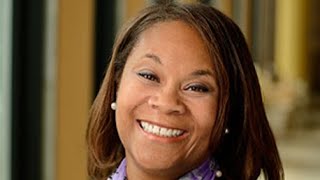
In this interview, Michael Horn speaks with Dr. Annette Anderson, a faculty member at Johns Hopkins School of Education and deputy director of the Center for Safe and Healthy Schools. Anderson shares her personal journey into education, rooted in a family of educators and formative experiences at Baltimore’s Liberty Elementary and Western High School. She recounts her progression from classroom teacher to charter school founder and later to academic researcher, highlighting how her frontline experience informs her scholarship. The conversation then shifts to the Center’s origins, sparked by a school shooting in Maryland, and its mission to broaden the definition of school safety beyond physical security to holistic health and equity. Anderson describes the creation of the eSchool+ (Equity School+) initiative and tracker, a data platform that monitors state policies across twelve operational and equity dimensions, developed in response to the chaotic reopening landscape during COVID‑19. She discusses the challenges of rebuilding trust with families, especially communities of color, amid mixed messaging, pandemic fatigue, and broader societal unrest. Anderson emphasizes the rise of parental agency, homeschooling, micro‑schools, and learning pods, arguing that these movements could reshape public education if districts allocate resources and innovate. She concludes with a hopeful vision that the pandemic can catalyze a reimagining of public schooling to meet every child’s needs through equity‑focused, flexible models.
Chapters
Welcome to the future of Education. I'm delighted by the conversation we're going to have today with my guest, Annette Anderson, who's a faculty member at the Johns Hopkins School of Education, deputy director of the center for Safe and Healthy Schools, and then has helped stood up a really important initiative for schooling during this time of COVID the eSchool plus initiative, all of which we'll get into. But first, Annette, where I'd love to start is a question that I ask a lot of my guests, which is, how did you get into this world of education to begin with? What's your own personal story?
Thank you. Well, first of all, thank you, Michael, for having me today. It is my great honor to be a part of this important educational conversation and to be your guest today. I think I've always wanted to be an educator. It's always been in my heart. I come from a family of educators. My mother was a special education teacher. And so we got to hear about some of the stories just of equity right at our dining room table at dinner time. But also, I think that growing up in Baltimore, I had a unique opportunity. It was a beautiful opportunity that really helped to shape me. I went to the formidable Liberty Elementary School. I always cite that because I'm so proud of having come from Liberty Elementary School and through Baltimore City Public Schools. But I had a wonderful principal. Her name was Anna Y. Smith, and he actually was very. She pushed us. She pushed us in so many ways. And you could tell that she was pushing her staff. She was a role model for me once I became a principal. And so she had a huge influence. Even as a child in kindergarten, she used to point her finger at me and say, little girl, you're going to be something important one day. And so you believe that when you are at this very early stage of your development, having someone who believes in you, it meant everything. And so it was a huge part of my journey that I also had a lot of African American teachers who were also role models, people who were peers of my mother's, but also people who were just in this field to make a difference for kids. And so that had a huge impact on me, too, because I always knew who I was. I'm a third generation college graduate, so I come from a family where family history and family legacy is something that. That we talk about quite a bit. And it means so much to all of us. And I think that all of that rolled up together. It sent me through to Western High School, which is where I went to high school as a proud Alumna, just to understand that I had a lot of resilience, I had a lot of grit. Just even before I went off to undergrad, I had already had seminal life experiences that prepared me to be strong and successful at the same time. So I'm always very grateful for my trajectory. You'll always hear me talk very glowingly about Baltimore city schools. And when my husband and I had to think about where we were going to come back to, to raise our family, we wanted our children to be part of Baltimore City because we knew that they were going to get the same kind of care and concern that I got when I was a student in Baltimore city schools.
Well, growing up in Maryland, I can attest it's a beautiful city. It was always a thrill for us to sneak up there from Montgomery county where I was. But I'm curious, before then, Johns Hopkins, obviously you started your own charter school. You were a teacher, you were an assistant principal, founding principal. You've had all these different role roles. Talk a little bit about what that experience of really being on the front lines with the students and then moving into academia, you know, you bring a unique perspective. Not everyone follows that path into academia.
I would say that you're absolutely right. I think in my mind, I wanted to be a researcher. I think I went back to graduate school in hopes that I was going to be able to solve some of the biggest education research questions of the day. But once I got there, when I went back for my PhD after having taught in Montgomery county schools for a while, I wanted to understand what it was that was going to help us to support our teachers, to be stronger at the same time that I got there. And as you know, as I believe that the providence of the universe speaks to our lives. And I do believe that at that time I got to Pennsylvania just as Act 22 had passed. And so charter schools were a brand new phenomenon in the state. I got asked by one of my doctoral advisors to go out and take a look at a school that had just started and that school kind of pulled me in and I got really involved with that school, made a lot of suggestions and ended up working at the school ended. And that ended up having a huge impact on me because I think you get to see a lot when you work in a very high functioning district. But I think when you're also trying to start something, you have to have some, some critical lessons to be able to do that well.
And.
And so I was really glad for the experiences that I had had because it helped us to really start the school. And then the school that I actually founded in Chester, Pennsylvania, which was a blessing. It was a gift to be able to be part of that. And so I, you know, I have relationships with those families and the staff that we started the school with all those years ago. I have to say, it was an honor just a few weekends ago to be invited to the birthday party of one of my original first graders from all those many years ago.
Oh, wow.
He's now at Rutgers studying animation. And he said to me, Dr. Andersen, you told us that we had one job and it was to change the world. And I've never forgotten it. So just having all of these beautiful experiences in my life is what brought me here. But then coming back home to Baltimore, that was a dream come true. Being able to come back to the city, that made me being able to come back to Baltimore and to contribute to the building of Henderson Hopkins, that was an incredible experience as well.
Very, very neat. And then obviously at Hopkins and in the School of Education, which we didn't talk about this beforehand, but I would characterize as one of the schools of education that's really moving to remake what we think of schools of education across the country. But you also are the deputy director of the center for Safe and Healthy Schools, put the website up there for folks to take a look at. But this was before COVID and really thinking about safety of community. You've done a lot of research. Research and what it takes from a leadership perspective, as I understand it, and to build a safe community and the importance of that for learning to occur. Just talk about your, I guess, partially your academic work, but also your work at the center preceding Covid and sort of the importance of that perspective.
Well, again, you know, Providence tapped me on the shoulder. I got an opportunity to be part of this conversation around safe and healthy schools. There was a horrific school shooting that had happened at Great Mills here in Maryland. And our new dean, Dean Christopher Morphew, who was doing a fantastic job as Dean, he said that it had really bothered him that when he got contacted by media, that they asked him, you know, what is Hopkins doing about this? What is the School of Ed doing about this? In response to this? And so he pulled together a few faculty members, and we sat down trying to tease out what it was that we wanted to say in response to that. And so the center for Safe and Healthy Schools was actually created in response to that. And so when we had our conversations collectively within the School of Education, we realized that we wanted to shift the Conversation from so much focus on physical safety in schools to understanding some of these other holistic pieces that lead to schools being safe environments, healthy environments. And so we wanted to shift that conversation.
And.
And it's just been a great honor to be part of a team that has been pushing to do that. Again, that was before COVID so we were ahead of the curve. Now we've just welcomed into the fold our new executive director, Dr. Otis Johnson, who's come here from Washu, and we're really excited to have him for what he's going to bring to the center in terms of visioning for our next steps as a center. But it has been an incredible journey to know that we have been trying to do the right thing for. For kids, for families, for students, and knowing that that has given us this opportunity to be able to have a platform to speak about the issues that are on top of mind today.
Yeah. So let's start to transition into those issues, because I think you've done actually a good job also of painting how Johns Hopkins has been such a actor in the space. Not just studying, but actually acting in the space. And folks know that obviously Johns Hopkins was early with the COVID 19 tracker last March, maybe even in February, if I'm mistaken. Starting to give. I get the daily digest of how many incidents there are, where there are policy changes, things of that nature. But you all stood up. Also this eSchool plus initiative very early on in the crisis, which, if I understand it was really, you know, some places are tracking which schools are open or not. You're tracking the actual policies, and are they asking the right questions to be able to open? Do I have that right?
You have it absolutely right. And I can give you a little bit of the story of how that happened.
Yeah, please.
So, as you know, I was doing my work as the deputy director for the center. One of the things that our team had decided was that we needed to get out and understand how this prospective school closure issue was going to affect schools and our most vulnerable students. We were very concerned about that from the very beginning. And so we went out and we started interviewing many of our faculty who are doing incredible work here at the School of Ed around our. Around students who are vulnerable, around things like dropout serving, families with special needs, family engagement. And so we thought that we needed to try to get this on tape as part of what our center's mission would be. And having done that, that work got sent out. I had no idea that it would go to the audiences that it did. But what happened after that was that I got an email. We got an email from Dr. Ruth Faden and Dr. Megan Collins, who are two incredible colleagues. We sat down and talked. Megan is an ophthalmologist by training, but she is also one of the co founders of the Johns Hopkins Consortium for School Based Health. Ruth Faden is a world famous ethicist and she has done so much work. Right now she's doing work with the WHO on vaccines. And so the three of us started really trying to tease out like what was the issue that was there, particularly for students who are vulnerable and families who are trying to make decisions about safety for their students and for schools that were trying to respond to that. And out of that eSchool plus was born Equity School plus, because we always want to keep the equity top of mind. And so it's been a great journey. We worked on with a team. We have an incredible team again that has been working collaboratively. Andrew Nicklin, who comes to us from govx@hopkins, and, and Sarah Johnson, Alan Ragenberg, Beth Marshall. This is a really critical team that we work together very collaboratively on a lot of topics. And so everything from thinking through op eds to say how we felt about certain issues to thinking about, like what checklists needed to exist for schools that were trying to think about reopening at the time. So this was now six or eight months ago. But then what happened was as we were doing that work, we were also saying, well, there's inconsistency in how states are saying that schools should reopen. And so trying to keep track of that led us to actually say if we're having a hard time keeping track of it, we know that schools and districts are having a hard time as well. And we thought that it would be a useful piece for us to develop the Eschool tracker, which gives state. Gives the state perspective on what each of the 50 states and several of the territories believe was was needed across 12 operational and equity focused categories. And you can go to Equity School plus as you have here on the screen if you want to see the tracker. I will give you a little hint that we do have something new coming out very soon looking at this next phase around vaccines. So keep an eye open for what we're doing. It's very important, I think, that we who are in this research space also keep this information current for others who are trying to make sense of what's happening on the ground with families and kids. So that's how Eschool got together and that's how we have continued to do incredible work.
Now, it's fascinating, and it is so important that you're keeping the equity lens front and center. I'm struck by something in that conversation, and this is where I want to dig in with you, which is you came out early on with some op eds talking about the importance of reopening, but the very real questions at stake as places did so. And it was a measured piece in terms of the tensions and balances act and so forth, but also a sober look at the. I don't know what you want to call it learning loss, but I kind of hate that phrase that. That would. That would result. Right. For the most vulnerable students among us. And at the same time, you've also acknowledged and talked about how families who often have those most vulnerable students don't necessarily want their kids going back in person. So how do you think about the current conversation against that backdrop of sort of we must reopen, and yet there's a lot of families that aren't going to come back in person when they do.
So what I'd say to that, Michael, is that this has been quite an evolving conversation here in Maryland. When we first closed, we closed for two weeks, if you will recall. And so when schools closed for two weeks, people thought it was like an extra spring break week, right? So the whole spring kind of amounted to a long spring snow day. And I think that people were trying to just parse out the time and figure out how we get back to fall. No one at the time had any awareness that Covid was going to be as significant as it was, that it was going to cause such a traumatic loss of life and impact on our country's economy. And so if we thought back to that, back in March, we were just kind of like, okay, let's close for a little while and see what happens. But then what I think happened was we got to June, schools were thinking again, well, we're going to try to reopen in the fall. Every. I think the perception, and it was a misperception in hindsight, was that Covid was going to. We had. We had national leadership that was saying, one day it will just go away.
It'll just go away.
But I think that that had a significant impact on how people reacted and planned ahead, because people, I think, thought, well, we don't know, but they're saying, maybe it'll go away. And people thought maybe it would. I think that we got to the middle of August and people panicked because not only had it not gotten away, gone away it had gotten worse and communities were reeling from not understanding what the options were, what the choices were. We had not given much more thought about how much deeply invested we need needed to be as a country in expanding E rate so that we could have access for high speed Internet and devices for students. We'd had those conversations, but we weren't having them at a national level. We were also absent any kind of federal guidance about how to reopen. Right. Everybody was just saying, schools are safe, reopen. Yeah, exactly. And that was highly problematic. And I think that for many families, it became so problematic that it caused just the deepest mistrust because families were saying, I can't trust that you were giving us the right information over the spring. It got worse over the summer. And now you want us to send our kids back because you're saying it's better, but it's not better. There were so many conflicting reports that I think a lot of people began to start saying, okay, I'm not getting help from my school, I'm not getting help from the media, I'm not getting help from our government officials. I need to figure this out for my family. And so it became a personal. Every single parent had to have conversations about their personal risk assessment. What were they willing to be okay with their children doing going back to school, and what were they not okay with? And so this is how we get to where we are, because parents have made that decision and so many of them now are waiting for that trust to be built back. And unfortunately we have not yet, I think, for many families, reached that nexus where we have combined true data with trustful data so that parents can make the choice about whether they feel safe enough to send their kids back. And this is why we're in this situation. Now, let me say again, another competing factor on this arc of change has been that for many families of color, it is compounded by what happened with Breonna Taylor, Ahmaud Arbery, George Floyd, and that for many families, that was just it was just it. Like families of color were also trying to process what this meant for them on top of it. So you have a health pandemic, you've got a racial pandemic, now you got an economic pandemic. Parents are really trying to figure out what this means for their economic structure. All of these are happening all at the same time. So it has created like a perfect storm of distrust for families because they don't have trust for the media, they don't have trust for government officials. You don't know what the school officials are going to say and whether you can trust that. We don't know if the vaccine is going to be here now. The vaccine is here, but not everyone can get it. There's a lot of mistrust. And issue number one from where I sit is building back the trust. I love the phrase from the Biden administration to build back better.
Build back better?
Yeah, build back better. But you've got to build back better by starting with building the trust for our families. That's critically important in order for us to be able to move forward. So. So to get to your question, I think that where we are right now is that many families are hoping that we build back better, but in the meantime, they're saying we're going to watch and see. We've got to build the trust first.
Gotcha. So let's dig into what it'll take to build the trust right now, because all of what you laid out is correct. I mean, there's just an erosion of trust, I think, from what you're saying. Also, there was not a heck of a lot of trust going into it in some cases. Right. These are a lot of school systems that have not done well by these communities for a long time. Right. And then, you know, for. For much of America waking up to, you know, the George Floyd killing, for example, this wasn't new per se in these communities. Right. And so what's it going to take to rebuild that trust and get confidence back such that a family would say, today's the day I will send back in person time.
And that's not the answer anybody wants to hear, but that's what it is going to take time. You're talking about generations that have had to parse through these conversations. None of these conversations, as you say, are new to our communities. And yet people are asking families to discard some of this historical distrust and say, well, we know that we have data now that shows that these vaccines are effective, the kids aren't super spreaders, that Covid can only be released in XYZ kind of circumstance. Many families are saying no. I mean, people remind me all the time that the guidance we originally got about masks was from the federal government was, no, we don't need masks. And we found that immediately. It didn't even feel right by common sense standards. It didn't feel right. So parents are saying, I might not have a PhD, but I know that I have to be in control of my family and my household to keep them safe. When you hear families saying that I'd rather my child not learn, not be engaged in school, than to not be alive. Those families have had to weigh some very heavy risk factors that are more affluent peers in education. They haven't had to think about people who are wealthy, have lots of choice. But our families that haven't had a lot of choice, they're holding on to the choices that they have. They have figured out how to connect with their extended kinship for care. They have figured out how to connect through the remote learning options that they've had available to them. We do still have some vulnerability because we don't have the same level of access. I've been excited to see here in Baltimore that some of our young people have taken up the banner and taken on these utilities and municipalities around trying to make sure they can get the high speed Internet service that they require to do their work well. But right now you have parents saying, I will wait and see. And in the meantime, I have talked to many parents that have said, in the meantime I'm going to sit this out because I don't trust that what I'm hearing, even if they say the vaccine's available tomorrow, I don't trust that what I'm hearing is going to necessarily help my family situation and that it's going to help my child to do better academically. So many families are saying they want it all fixed. They want you to fix it all. Fix the racism, fix the broken pipes in the building, fix the leaking roofs, fix the bad, the bad issues that they have around teacher certification requirements, around who's available to teach children and vulnerable schools. They want it all fixed. So I think until all of that can happen, many families are saying, I'll take a rain check, get back to me, keep me updated, but I'm going to go my own way. And so what I am really fascinated myself by is how significant this group, this growing group of African American parent voice is going to disrupt the landscape of public education. Because it's not a few parents, it's a significant number. What we don't know is how many of them there are, how long they would actually stay out. Will they stay out until their students, their children finish school or will they just stay out until they feel like they have gotten satisfaction? Those are the kinds of questions around the research that we're trying to get at a little bit now at Hopkins. But it's important work and we need to know because public education, I don't know that it will be the same as it was in March 2020.
Yeah. So everything what you just said, I think is the exact right questions. And I think we're all trying to figure out exactly what you just said, which is what's that percentage that's going to hold true to those values and not sort of just run back in when it's, you know, I mean, you just sort of answered one of my questions, which is I suspect a lot of these, you know, families, low income, minority families, both parents or one parent, if it's a one parent household, working, probably unlike a lot of more affluent people, unlike myself. Right. Being able to work from home, that's not an option. But you're talking about these arrangements with next of kin and so forth to build effectively homeschool or micro school environments. Call it what you want, however it works. But then I guess this piece of it of what percentage of that is going to hold to that and for how long. Because if it's significant, and I don't know what significant is, but if it's a significant percentage, that's the thing that I think will actually transform public schools to be looking at each individual child as opposed to a group. And can we get the percentage high enough of success where we haven't been? Do you have any sense of how to, you know, of what that is going to be or what are the questions you're asking? I guess to try to get at.
That, I'm trying to figure out what available technology exists to support parents who have taken this standpoint. Because if there's enough technology to do it, if there are enough arrangements of micro schools and learning pods and alternative education platforms to acknowledge this parent concern, public education will have to really reinvent itself in order to meet this demand. I do think that parents have been concerned for a long time about school culture. You've had this concern about school resource officers. To hear parents saying that, you know, they're happy their children aren't in school because there's no school resource officers at home. I mean, I think that's significant to think about that. We're looking at pictures. Even last week, two weeks ago, we saw a young girl slammed into the concrete. Every time I see that video and hear that girl's head crack, it makes my heart go to pieces. We just saw this week a nine year old girl handcuffed in the back of a police car. And so we know that this is already having impact on how parents are seeing their intersection with systems and they want the systems to change. And so if there is a system that can, that can change to meet this moment. I think that you're going to find that many families are going to look at those options as opportunities.
Do you think this has shown them that they have more power in this equation? In essence? Right. That like before, they felt like public schooling is something that happens to us. We don't have much choice, but now actually opting out is a choice that we have, and that maybe there's more of a constituency that gets built out of that.
Well, we know that there has been a rise of homeschooling amongst African American families because they were concerned about school culture. Maybe it was for religious reasons, maybe. But there had been a rise in the number of families that were choosing homeschooling anyway. There were concerns about how schools were handling bullying, for example, and why parents felt that schools weren't doing enough to handle this issue around school culture and bullying, for example. So a lot of families did go to homeschooling. But what I think we are seeing now is that parents of color, particularly those who have intersected with large urban districts that have not been able to keep up with some of the demands that families have. They're saying, you know what, we are going to make choices and we're going to make our own path in this conversation. And so we don't necessarily need to hang on and wait for the school district to respond to that. What I have been encouraged by is that I do think that district leaders are trying to start listening to this conversation. The fact that even as schools have tried to reopen, and you're listening to district leaders, superintendents across the country who are saying, great, we need to reopen for our most vulnerable students, they are still keeping options for families who want to stay remote. That is significant. That is important because there's such a large percentage of families who are saying, we still choose remote. And so I think the districts are now. Are now coming to terms with the fact that they're going to have to have a path that is fully face to face. They're going to also have to have a path that is maybe perhaps hybrid, but they're also going to have to have a path that continues to be remote, because many families are saying that their children are doing well with remote learning. I mean, I personally have experienced how my own three children have done so well. We've had schools, but we are in schools where we get lots of communication. In Baltimore City, we get lots of communications from the district and from. From our school's principals about what's happening. And so that has made a difference. But thriving is a word I keep hearing, and it just fits because I'm seeing my own kids thriving right now. And I. I think that you'll see that there are a lot of families of color who feel the same way. And I've heard this phrase often, so I'll say it here. But many of those families are saying, we are not going back. And I think that that's symbolic because I think it's not just about going back into the school building, but they're also not going back to accepting the status quo. They want change. They want our children to be safe physically, psychologically, emotionally, socially in school before they decide to put their children back. And I think that they're saying, we will not go back until all of those conditions have been altered to our satisfaction.
It's powerful. I mean, it's a really powerful opportunity. Part of my frustration, I'm split where I want to go as we start to wrap up with questions right now. But part of my frustration has been districts. The micro school pod phenomenon happened, and districts sort of said, oh, that's terrible, because it's inequitable. And I was sort of screaming at the top of my lungs, well, you do it, you facilitate it and make it equitable. It's encouraging to hear you say that. They're providing the virtual schooling option, which only a year ago people thought of as like, we've got to kill virtual schools because they're a horrible thing that's taking advantage of families. So that narrative seems to have turned. What do you think it'll take? I guess let's go to the learning piece of this then if we see more choices. You're saying that some of these folks are thriving. That flies in the face of, I think, a lot of people's conventional wisdom. Deeply heartening to hear, frankly. What is it going to take to make sure we're serving those families with what they need if they don't go back to that in person, conventional schooling, which was, frankly, failing them before?
Yeah. I think that it requires that school districts are allocating resources to all different kinds of families. And I think that's a challenge because we know, especially in urban centers, that districts are really challenged with the resources that they have. And now asking them to innovate again without additional resources is going to be challenging. But we do know that we've got this incoming funding from the federal government to help reopen schools. I hope the districts will look at this as an opportunity to use this to think about some of these new options and how they can grow them successfully. You're absolutely right. There's no reason why schools can't stand up learning pods in micro schools and unschools. There's no reason why they can't do it. It's just that school, school, for most of the last hundred years it has existed in one type of fashion and schools are a system. Just like healthcare is a system and we've got an economic system, schools are a system. And school and systems try to protect themselves. They don't like to have to innovate. And what you're asking now is for a system to learn on the fly how to innovate and make this shift, this huge shift. And so there has been some pushback to it. But I think that in order for public, public schools to survive, they are absolutely going to go forward and have to think about how to accommodate this parent demand.
Annette, that's a deeply hopeful way actually to end because that parent demand I think is going to be the secret sauce that not just pulls us through the current moment, but hopefully moves us forward in a much more significant and sizable way. Any last thoughts that we ought to be thinking or keeping our eyes on as we wrap up our time together today?
Well, I am hopeful. I mean, wouldn't it be amazing if because of this pandemic we have been able to reimagine public education to meet the needs of every child? Wouldn't it be fantastic if we were finally able to think about how we can meet both our high achieving students as well as our most vulnerable students in the moment of their need? That's the definition of equity, meeting every child where they are with what they need. And so the opportunity for the pandemic to have blown the doors off of the system and forced us back to the drawing board to think about how to do things differently. But to do them well is an incredible opportunity and I'm just very humbled and thankful to be a part of the conversation.
Well, look, I appreciate you having the conversation and speaking to me and educating me frankly on the mindset of families right now because it's an important topic and you leave me more hopeful than I was because I've been so dismayed by some of the school's responses in this moment to innovate, as you said. But everything you said is spot on. So I'm going to take that and march forward in good faith and keep working. So let me know how I can be of service and help to you, obviously.
Absolutely. Thank you.
Well, thank you so much and thanks for all those who joined us on this cast, and we'll be back next time.










