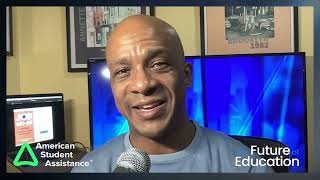
CNBC anchor Jon Fortt didn't find journalism until college, after theater and architecture. He argues schools should stop training students for specific jobs that won't exist and instead build durable skills: communication, writing, speaking, and teamwork. These abilities survive technological change.
Chapters
Welcome to youth career readiness, the one question podcast.
I'm Jean Eddy.
And I'm Michael Horne.
And this is the podcast where we talk to people across careers about their professional journeys and what advice they would.
Offer to help all middle and high schoolers explore, experiment with, and discover careers. Today, we're welcoming journalist and news anchor John Fort. You may recognize John from Closing Bell Overtime, the business news show that he co anchors on cnbc. Or perhaps you know him from Fort Knox, the podcast and streaming channel that's all about tech leadership and innovation that he created. We're so excited to have him on our podcast here today.
We certainly are, Michael. John, as Michael mentioned, you are now well on your way in your journalism career. But for this question, I want to go back to when you were still identifying your career path. How did you find your path to being a journalist and business news anchor? And what are the lessons you'd share for adults guiding middle and high school kids with career advice?
My path to being a journalist started really in high school. And when I was in high school, I really wasn't known for journalism. I did participate in, in the student paper. I was opinion editor for a little bit, but mostly I was known for being in fall plays and doing student government. Junior class president, student government president. So I think in a way, people would be surprised that I ended up doing journalism and TV journalism. Actually, before I started taking newspaper classes, I studied architecture as an elective. So my main piece of advice for educators in middle school and high school, preparing kids for careers would be don't, don't prepare them for careers, because the careers that we think are going to exist tomorrow probably won't. And really what they should be doing, if they're interested in media, they're interested in journalism. The writing, the speaking, the explaining is working on projects that involve that, but more collaborating with each other on written projects, spoken projects, podcasts, broadcasts, understanding how to communicate both with an audience and with a team to create a piece of content for an audience. Because I don't think that's going to change. Wherever this AI era takes us, it's going to have a lot to do with, with that, figuring out how to use technology, work together, collaborate, and get something done. But the careers that exist today won't exist tomorrow. I mean, when I was graduating from high school in 1994, the web browser had just been born. We certainly didn't have smartphones, no podcasts, no YouTube, no any of that, no social media. And all of that has dramatically affected how I work. But the reason why I've been able to prepare for all of this is the portions of education that I had really had me working with other people, figuring things out and making sure a team worked in a way that, that everybody could push forward to the next goal.
And that's all we've got on the Youth Career Readiness, the One Question podcast.
Thank you for tuning in, and we'll see you next time for more tips and insights.