Kindling Learning
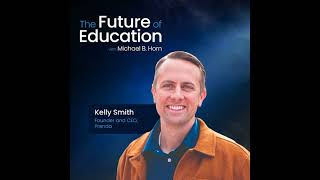
Kelly Smith started Prenda Learning in his kitchen in 2018 and now serves 2,000 students through micro-schools with mixed-age groups of up to 10. His model pairs small cohorts with adult guides who know each learner's motivation and encourage risk-taking and failure. Smith's book reframes learning as purpose-driven rather than credential-focused.
Chapters
Welcome to the Future of Education.
And now here's your host, Michael Horne.
Welcome to the Future of Education. I'm Michael Horne, and this is the show where we are passionate about helping all individuals build their passions and fulfill their potential. And, and today's guest is someone whose life work is really around those same aims. His name is Kelly Smith. He's the founder and head of Prenda Learning, which we're going to learn more about shortly. But he's also the author of a terrific new book, A Fire to Be Kindled, which we'll talk about more in depth as well, because the messages are ones that resonate for any individual, regardless of your life stage. You're a kid, you're an educator, you, you're an adult living life. This has messages for you. So first, Kelly, it's great to see you. I always love when we get to spend time together. Thanks for joining us.
Thanks for having me, Michael. It's good to be here.
Yeah. So we're going to start off with our morning warmup. We got four parts of the show, morning warmup, work cycle, our specials, and then our closing time. Morning warmup is just a little bit about Kelly and the Prenda learning that you've started. Just tell us a little bit about what it is for those that don't know.
Yeah, thanks for that and excited to be part of morning Warmup. So I, I think you just said a second ago that my life's work is helping empower learners, helping people see themselves differently, and I hope we get a chance to talk about that. But it wasn't always that way. I studied physics and nuclear science. I was trying to make fusion work, which, if you're following this, it doesn't work. I did a whole bunch of careers in technology and software and got to this point as a father of four kids, myself and somebody who was at the time volunteering at the library to teach kids computer programming, of all things. I had this moment where I just started thinking about the questions, like, what is it? What is learning and what is formal institutions? And I think very much an outsider kind of perspective on this, although I of course attended school like everyone else. But it got to this point where I became obsessed. And that led me to do something kind of crazy, which in 2018 was to pull my kid out of school and invite my friends to do the same. And I started a micro school around my kitchen table. So it was me and seven kids. And we, you know, we ran really. I was reading your book, I think the word microschool you had. You had uttered, and a couple other people had talked about, but it wasn't huge yet. And we just put this thing together. Personalized learning for mastery is using blended learning. We were doing a lot of projects and inquiry and all the fun things. It was really designed around at first. It was just designed around what made sense to me intuitively as an adult who likes to learn. Eventually, I found that there's lots of great research and people who have thought a lot more deeply about these things than I have. Um, I. I'd say one of the interesting differentiators between something like homeschool and a micro school is this inherent connection, this human, this human piece. We were together in person every day. My role as the learning guide in this class, as the adult, was to know and care about and understand the motivation of each of these kids and then be able to provide an environment in person where they could take the risks and do the repeated failure and all the things that learners do. And that became just a fascinating semester that led to more semesters and more people doing it. The COVID pandemic came and exploded the whole concept. And since that, we've continued to grow. So we're serving something like 2,000 students today, really all across the United States, but strongest here in Arizona, which is where I started out.
Wow. And if the model is the same as it was a few years ago, you're partnering a lot of times with existing districts or charter schools or whomever, and then serving students. As I recall, it's like seven kids around a table often. Right. Learning at their own path and pace with, you know, in your case, you were the guide there, but obviously you're setting it up around these communities across the country. Is that still what the model looks like or how has it evolved?
Yeah. So picture a small group. We tend to cap them at 10. You'll have an adult and 10 kids, typically close in age, but not necessarily the same age. So the mixed age group research would all apply here. Older kids teaching younger kids, kids with different skill levels and proficiency in mastery, trying to personalize as much as possible, trying to provide as many choices as we can. We're pretty. Pretty high on agency around here. And yeah, that's. That's the academic model that stayed consistent. One of the areas where you'll see some change, for those who have heard me talk about this in the past, is the goal has always been to invite as many people in and make this as accessible as we possibly can. So in contrast to folks that, you know, maybe start a private school and charge $20,000 for tuition. We're saying, let's see if we can make this free to families. In the past, that has involved partnering with districts and charter schools, and we still do those things. There's a new opportunity now with a wave of school choice programs across the country to do that in a way that's more direct or simpler. And we've really leaned in and participated in those programs. So you'll see us in a lot of these states that have large ESA programs in universal school choice. Not because we have any sort of political slant. We really don't. Our goal is to make this model available and accessible to as many people as we can reach.
That's great to hear. So let's shift into our work cycle and get into the guts of this conversation, which is not about Prenda. Uh, but it's based off of a lot of the insights you had in Prenda and. As well as. And. And you detail this in the book. Around those early days, coaching people on coding in the libraries and so forth, but a fire to be kindled. How a generation of empowered learners can lead meaningful lives and move humanity forward. Uh, it's a big title. I'm just curious, like, why write a book? What. What are your hopes for the book? What. What do you hope it accomplishes?
Yeah, this is where, you know, even after all this time doing it and thinking about this stuff, there's this voice in my head that's like, who do you think you are? Right?
This is.
This is audacious to make the claim I'm making, which is basically that we as a civilization don't yet appreciate and understand what real learning is, what learning can be, the level and degree of power. And I try to give lots of examples throughout the book of people who have discovered power and purpose and accomplishment and achievement and contribution all through this idea of really becoming a learner. And the first chapter goes right into it and says, you might think you. You know what that means because you have got this degree and you can point to these courses or these certifications. And I'm saying those things are fine, but. But real learning transcends all of that. It's down to questions and answers and skills and that are applied and applicable in whatever you're trying to do with your life. And so that. That's, I think, a pretty big claim. It's. It's inviting people to rethink, you know, their relationship with learning, think about themselves as a learner in a. In a new and different way, and hopefully it's exciting. And people see that and think, yeah, I've tasted that. I know what that feels like. I don't think it's going to be totally new to a lot of the people, for example, listening to your podcast. But I think they. The hope is that we can double down on that and say, you know, all these reasons maybe to hedge that or, you know, hedge against it or do something different. Let's be just explicit about it. Those aren't. Those aren't really what I'm about as a learner. I'm about understanding myself, setting a big goal, and then going about learning in a way that really leads me to, you know, what I put in the subtitle of A Life of Meaning and the contribution that will help move the species forward. So I really believe that. I believe in a maybe irrational degree in humans, and that's what I'm inviting people to do through this book.
Well, and your optimism in the book comes out loud and clear because you talk a lot about what education can enable in a future state and things of that nature. And if you close your eyes, what do you imagine society to be in things of that nature?
It's.
It strikes me you also do a lot of work to decouple this notion of learning from schooling. Right. Which you just talked about there, really grounded. And what's the progress you're trying to make as an individual? And to that end, though, I'm curious, as I was reading it, I was. There's a lot of, like, yes, yes, yes, as I'm reading it. And I was thinking, but he's writing it to me as an individual, not to other educators or people who are thinking of founding schools or, or people who are thinking of enrolling in schools like the ones you've created. So I'm just curious about that decision as well. Like, why write the individuals as opposed to maybe the education audience?
It's a great question. There's actually two books, Michael. So this is a funny story is I sort of said there's a theoretical framework here of what an empowered learner is and how that works. And then once you have that, once you agree with me about that, here's what that means for the classroom, for a learning environment, for setting things up. And it gets into a lot more, you know, there's a lot more Piaget references in the second half of the book. Well, my editor said you're writing two different books to two different groups, and it's not really one book. So, you know, as painful as writing, and you've written books like, there's this. This moment where it's like, you're right, you know, I need to decide what's my main message. One of the things we've seen with Prenda is people who buy. Buy into it all the way, who are empowered learners themselves. It's almost, I would say, number one is being able to start with heart, to see human beings. Number two is be an empowered learner yourself. And everything else I will give you, you can use those things and create amazing learning environments. But if I had to pick, if I had to get really focused and prioritized about the change I want to make in the world, let's get more empowered learners thinking about this in these ways, and then we can work with them. I think there's probably a lot more still to say, but I felt like there's folks like, like you and many others that are out there communicating to those people. I said, I kind of felt like what might be missing is just a deep, almost spiritual connection of, what is this? What are we really trying to do with this anyway? Because once you have that and you, you know, you take an example, like you use the words a second ago, learning versus schooling. There's this agency question of somebody who's decided to learn something. They're unstoppable. You can't. You literally can't get in their way. And we've all seen this working with kids. And then there's somebody who has decided not to learn something, and it just feels completely ineffective. Every. Every attempt of carrots and sticks and all the programs I want to put together around them, it's really, if they're. They're not with me on this, it's not going to happen. And so what I. What I really believe is, is we as adults need to lead the way on this. Let's be learners ourselves. And that means this is hard for educators sometimes. It means being wrong. It means not knowing, not having the answer. It means changing our mind. It means asking a kid for help with something. I mean, there's all these things that really model the curiosity and persistence of a learner. And I'm inviting everybody to do that.
Well, and it does it great. Although I will also say there are some great tips for educators, too. The three questions that you have that you ought to ask instead of leading with the answer, cancer and things of that nature throughout the book. Part of the book is talking about this empowered learner, which is obviously in the subhead. We've talked about this. It is a whole chapter on it. And one of the things you talk about is something that a lot of cognitive scientists like Daniel Willingham and others talk about, which is like, people choose not to learn a lot of times because we're biologically wired to conserve energy and not learn. And so in some ways, and you go through all the reasons in the book, you give the science right, and. And then you're sort of asking the reader or the learner, right, to make this leap, like you can actually overcome this and rewire in some sense. What I would love to know is what gives you the confidence that we as individuals, like, can. Can overcome that? Right. Like, where do you draw on that strength to say we can overcome, you know, millennium of DNA and inheritance of evolution. Right. That have asked us to find the lazy way out, if you will.
Yeah, I mean, it's massive, right, what we're up against as human beings. And so I want to acknowledge that and. And let's give ourselves some grace and be patient with ourselves as we try to do that. But the reason I'm confident is because I've seen it. I've seen it firsthand over and over again. I'm thinking of one of the girls from one of my early semesters, friends with my daughter. Incredible, bright, just fun, fun young woman. I think she was a third grader at the time I got her, and she had struggled with math. She was operating grade levels behind. We were using at the time, Khan Academy for the, you know, day in and day out, what we call conquer mode. So here's your lesson. Here's the formative assessment. You're answering questions and she's getting them wrong. And I could see her resorting to all the. All the tactics, right, like making jokes, distraction, like just clicking through, like kind of rage clicking through. Khan Academy. All the things that you do just sort of get out of the. The incredibly painful feeling of not knowing something. Our brains don't like it and they're working so hard against us anyway, over time, and it took months, she gets to this point where she's engaging with each problem. She misses it, and she'll read the hint or the explanation of why she missed it. And I see her building that muscle of being a learner and taking risks and being okay, being wrong, which was a lot of what it. What it came down to. And I watched this transformation happen in this. This little girl. And then the next week, and this is where it got crazy for me, is we go to softball and I'm sitting by her parents and our daughters are on the same team. And her dad's like, she just never swings. Like she won't even. She's just sat there last season and every pitch just watched it go by and she gets up to bat and she just takes like a huge cut at the very first pitch that came. I don't even think she hit it. She might have struck out. But like, to see her like posture literally change in a totally different domain, like, to me it was not coincidental. It's part of her growth as a person and as an empowered learner is to be okay taking those risks and accepting the fact that you know you're going to have failures along the way. There's that. I just, I've seen it happen. I've seen it for her, I've seen it for lots of other people where I. In a way it's. That's part of why Prenda's K through 8, right, is I actually think it's easier the younger you are. Writing this book is like, hopefully people that are maybe a little more set in their ways will believe me on this and kind of take some risks. But I just, I feel highly confident this is not only possible, but it's, it's necessary, it's what's needed. I mean the limitations are all on ourselves, right? Like we're limiting ourselves every single day. So unlock that and, and be, you know, you. I. This starts to sound like self help at some point and I'm not really like a self help guy, but I believe strongly in what humans are capable of.
Well, there is that element of it, right? And what you're just describing is far transfer, right? Taking something that I've learned in one domain and then applying it somewhere else. And essentially you're giving a process to do that over and over again. You have dare greatly figure it out. Learning over comfort. Start with heart, foundation of trust and making it real. Let's maybe drill into the first one of those, which is the daring greatly, which is, is basically your assertion. And you have the analogy of climbing a mountain or things of that nature in the book, but essentially this notion that like, hey, set a goal and say I'm going to go. You know, it starts with a big goal and then yes, you're going to plot out the little steps. But this is how you do that to make that first big know commitment, if you will, to learning about something that, that you care about. The curiosity that I had as I was reading this chapter was is this concept equivalent in some sense to like what cognitive psychologists would call agency in, like, teaching people that they have agency or is it something else in your mind?
The thing about agency, like, alone agency in a vacuum is just, yes, you, you know, you need to make the choices. And I believe very, very strongly in agency. I think what's interesting when you. You need to connect it to something. And I think the psychologists talk a lot about motivation. I mean, something you can read. Daniel Pink writes about this stuff and others. But to have this idea of why. And the classic example from an Algebra 2 classroom where you're frustrated with solving for the vertices of a parabola or hyperbola or something, and you're like, why, teacher? Like, why are we doing this? And there's two paths, really. The teacher can give is like, well, you're going to use this in your life, which is a lie for most of those things and for most of those kids. Or you can say you won't use it in your life. And it's like, you know, I think there's a. There's a third answer here, which is because you could be this concept of empowered learner, and that's going to look different, literally different for every person. And it doesn't always include, you know, every technical skill. I, I care less about the specifics of that, but it's more about. And you'll see this in that chapter, I talk about Socrates a little bit, and just this idea of a real understanding of yourself, your strengths, your interests, your. What's the, the kind of inspirational Mark Twain quote of. You know, there's these two days that matter. There's the day you're born and the day you find out why. And. And it's this purpose, this idea of big purpose. It should feel scary and audacious and like, I know these things about myself, and therefore I can set a big goal. And then it's about taking that goal seriously and backing into a plan. Well, then what does that actually look like? What do I do today if my goal when I'm 35 is to be a brain surgeon? There's an answer to that question, right? There's. It's almost math. And whether you end up being a brain surgeon or not doesn't matter to me. It's in the process of doing those steps today, you're building the muscle that will then transfer to the new mountain that you choose if you end up deciding to do a different thing. And so I think there's some value to always having a mountain that you're climbing and being explicit about that for yourself and your, and your friends and Everybody around you to kind of hold yourself accountable.
Yeah, no, that makes sense. And then I don't. At the risk of having you summarize your book, I don't want you to do that. But I'll ask one more question on the process. Just, it's been interesting to me since reading your book, some of the language has crept into my own way of talking about what I'm doing or even saying to my daughters, hey, what you just did there was figure it out. Like you didn't know, right? You went into the deep end, like we didn't know how to navigate this and you figured it out. And so that, that's been interesting to me as well is sort of how concrete these ideas are. And the language is something that you can just easily adopt to make it almost do that inner voice, right. As you're trying to pursue something and say, like, oh, what's happening right now is. This is uncomfortable. This is really difficult. I'm going to choose to embrace the sock and get into the learning. Right. And so you have all these phrases throughout. Are these things you're using in the micro school that you've tested are these things that are like, you know, Kelly, like this is sort of how you think. Where does the inspiration for all that come from?
No, a lot of it's institutional. You know, we had a moment early in Prender actually, where we sat down and said, what are we all about? What are we trying to do? I mean, that was really where this empowered learner concept came from. And in fact, I said, I don't want one of those mission statements with semicolons in it. So we need a mission statement that's just a few words and we came up with one that has two words. And this is still true. Prenda as an organization exists to empower learners. That's literally the goal of the company. So that meant something to us. We couldn't have articulated at the time what that was. But it's a phrase that continues to exist, a concept across all of Prenda. And you'll even hear kids talking about it. The first five chapters after that are the core values of Prenda. I mean, dare greatly is one of our core values. Figure it out is one of our core values. So as we put that together, those are meaningful. They have shared meaning across a community that includes five to 80 year old people and working together on these things. And that adds, I mean, everybody kind of adds their own flair to it, which I really appreciate.
Then that makes sense. So as we go into closing time, and last question here. You go through this process in the book, and then you end with this chapter on making it real. And it's interesting, when I read the table of contents, I was expecting this to be, okay, rooted in real world projects or something like that, and instead it's about how to make the process really real to your life. But I'd actually love you to abstract that other piece of it, because what strikes me about your learning model more generally is it's like this perfect blend of direct instruction and organic, like, intrinsic progress, you know, based on what you're purposeful or excited about or whatever else at that given point. You have like, this really cool blend between the two that seems to me anyway, to hit like this practical sweet spot. And I'm just sort of curious how you've come to that model because it seems to buck a lot of traditional schools, but also, frankly, like, the far extreme of, like, unstructured, you know, journeying around. So you seem to have hit this really interesting sweet spot between the two. And I'd love you just to reflect on that as we close out.
I'd love to say that was on purpose. I mean, I really entered this as a. As an outsider and a novice. So a lot of it was just what was intuitive to me. I mean, over time, as these concepts gained words, I guess in my, like, I was able to talk about them and notice them. There was this kind of contrast that just continued to appear between what I had, what I had received. And so if you look at something like dare greatly and have a purpose, you know, I had set this goal in high school to get all A's without ever getting above a 91%. So I used my time and energy to do that. But it's like, as I look back, it's like, what a stupid waste of my time, right? Like, what could I have accomplished? What could I have done if anyone in my life had sort of said here, you know, you're capable of more than that, some invitation to set some bigger goal. It literally just never occurred to me and I never did it. And. And so I think, yeah, what I'm. What I'm really trying to do is, is align an environment with these principles that I believe to be true. Right? I think this is. These are growth mindsets, real learning over comforts, real. I mean, these are. These are real concepts. And how can you just structurally allow those things to happen, which you just can't? If. If it's all about, like, I've got this list of standards and I'VE got to get it into their heads. I mean, this goes back to the very title of the book. This is a reference to Plutarch, which I'm sure all of your listeners are well familiar with. But the system itself, what your district curriculum is telling you to do, what your legislative, you know, the code, the laws that are passed, it's all telling you to fill vessels, right? Like, even down to like you should or should not talk about this particular social science theory. Like, we're going to teach kids to think this and that's all filling vessels. Filling vessels. It's so wired in to the system. And so what I'm saying is what if instead we start with kindling fires, right? What if it's about helping an individual make a decision to care about, learning to own it, and then do that work? Which, as we point out in the book over and over again, like, this is not easy. This is very messy. It's hard. It takes enormous amounts of just time and frustration and the emotional work of it. But it's worth it because that's the type of the type of humans that we need as a species to continue moving forward. So that's my hope is people will shake things up a little bit and choose to be empowered learners themselves and hopefully do that for others as well.
Well, it's a heck of a dream and a heck of a way to get people started on it is to read this book. It's extremely accessible, quick read that I think is helpful. As I said, the language has seeped into my own dialogue now, both inner monologue, I should say, as well as dialogue with my K. So, Kelly, thank you for writing it, but also thank you for spreading the work through Prenda Learning, which I'm glad to hear it's expanded to 2,000 students and continuing to grow and make an impact in the lives of the individuals that we need for them and society. So thank you so much for being here on the future of education.
Yeah, you bet. Thanks, Michael. Appreciate it.
And for all you tuning in, we'll be back next time. Thanks so much for joining us, Sam.










