Maintaining Engagement During Remote Learning
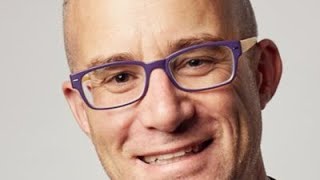
Andrew Frischman, CEO of Big Picture Learning, discusses how the network's schools kept 95% of students engaged during remote learning through small advisory relationships, interest-based internships, and flexible projects. Students Izzy and Davon describe variable schedules, Zoom classes, virtual internships, and workshops that increased their independence and creativity.
Chapters
Welcome to the Future of Education. I'm Michael Horne coming to you live in snowy Lexington. Like, winter's not fully here yet, but we've got almost a foot and a half of snow. We've got. I'm really excited for this conversation. Mainly, yes, Andrew Frischman is here, the CEO of Big Picture Learning. But I'm more excited because we actually have students here who are going to tell us the reality of what school is actually like during these times. Unfortunately or fortunately for them, they're not stuck in snow. Right now we've got Izzy Fitzgerald coming to you from San Diego and Davon coming to you from Nashville, Tennessee. So I don't think there's any snow in your forecast right now. But Andrew. Yeah, okay. So Andrew, being in Massachusetts, you're getting pelted like me. But Andrew, let's start with you. You've been leading Big Picture Learning for several years now, taken over from some illustrious co founders. And just tell folks out there what is Big Picture learning and how are you different from some of the other school networks out there?
Certainly. Thank you, Michael. It's a real pleasure to get to connect with you. And it's an auspicious title to be on the future of learning. Big Picture Learning was launched 25 years ago by Dennis Licky and Elliot Washer, really trying to address the fact that many, many students, when you ask them, what do you think of your high school experience, will say it's boring. There aren't people who know me. I don't get to do things I'm interested and care about out in the real world. I'm not developing relationships and figuring out what kind of things I want to do when I'm done with high school. So Big Picture Learning was created to address those kinds of issues. We now have a network of schools all across the US and around the world, and myself and Carlos Moreno are the co executive directors. We started as advisors 18 years ago at the first Big Picture school in Providence, Rhode island. And today get to work with fantastic students like Izzy and Davon and thousands more across the US and around the world.
Terrific. That's great. And before we go to Izzy and Davon, Andrew, tell us what your schools did when Covid hit and we went into remote learning and what does it look like this fall? Obviously, schools have been doing different things. And I should add, I see that there's a number of people tuning in, watching live. If you want to drop a comment in the feed, I'll try to pull questions in as well for our guests But Andrew, why don't you tell us what it's looked like on the ground?
Sure. Thank you. I mean, I'll first just say that our schools are truly across an incredibly diverse geography. So we have schools in over 30 states around the United States. They're in a mixture of cities and suburbs and rural areas. And obviously there have been very, very different kinds of waves and cascades of effects due to the pandemic. But by and large a general trend that I would say is that our young people and students have stayed closely connected with the school. And you know, we didn't design our schools to focus on being ready for a pandemic. But there's a, there's a quote that I've heard ascribed to Warren Buffett that when the, when the tide goes out, you find out who is swimming naked. And I think, you know, we've all been looking at the really scary numbers that so many, so many large districts have had 20, 30% of students who are not connecting on a day to day basis. One thing that we did have in place was a very, very strong advisory system. And that meant that there was one adult who knew each student and knew each family and knew the community really well. And so they stayed closely connected. So we've been seeing more on the lines of like 95% of students staying really closely engaged because they're connected with that advisor. The second piece that I think is really key is that we've always been about young people pursuing their interests. Now, prior to the pandemic effects, what that looked like was in most case, students were going one or two days a week to an internship. So they're going to a local community organization or business and they were actually getting the opportunity to do hands on, real world practice and meet with mentors. Now, as a result of the pandemic, one thing I would say that a little surprising is that that has not entirely stopped. We still have thousands of young people all across the country were able to go to internships. You know, part of the challenge of, and the reason why schools had to close down their buildings in many cases is that bringing hundreds or a thousand kids together under one roof poses some, some real epidemiological problems. But if you have local small businesses or organizations that might only have five or 10 people working in a space and they're taking all the right kinds of precautions, we do have lots of students who are still able to engage in those kinds of learning opportunities. And then even beyond that, what we've realized, and it's opened up really some new opportunities is that not all of those kinds of internship or interest based projects have to be done in person all of a sudden, you know, if you live, you know, in Nashville and you have a strong interest in marine biology, well, you might be able to connect with somebody virtually, even though there isn't necessarily a lot of marine biology focused in the city of Nashville. So we've seen a bunch of virtual interest based kinds of experiences happening where young people get to explore careers in that way. So I think, you know, our schools have proven to be really highly adaptable and resilient. I think that's the biggest thing that we've always focused on in our schools, is that many, many conventional comprehensive high schools try to be very, very certain they have, they know where kids are and what they're doing at all times. And the answers are often in the back of the book. And it's just sort of, you know, you got to raise your hand to ask to go to the bathroom, you know, and yet, you know, two, two weeks after an 18 year old might have to do that. They're out in the real world and they're deciding where they're going to be and what they do and what's valued. And they're really big questions where there's no book with answers in the back of it. So I think what we've always tried to do is work with young people to grapple with that kind of uncertainty and be ready for it by being out in the real world. And we're continuing to see that in our schools and with our young people.
Terrific. That's super helpful to start to paint the picture. We're going to go deeper now and get the truth though. Andrew and I want to know, Izzy, what does this look like on the ground for you? School let out in the spring. What did your days start to look like? Let's start there and then we could talk about how maybe it's changed over time.
Yeah, school has been very different, I must say, from your standard day. Sometimes I'm waking up at 8:30 in the morning, sometimes I'm waking up at 12. It really depends on what zoom calls I have in the day. Every day is different right now. I'm traveling each week back and forth from LA and San Diego because that's where my mom lives. My mom lives in LA and then my dad lives here. So that's of course making everything different as well. And I do have a job, so I also work on the weekends. Every day I basically get up and get on My laptop, get on a call. Sometimes I turn on my camera, sometimes I don't. And school's really different too. We sometimes get to all talk about what's going on in our lives. I know in my humanities class they open up with, like, little icebreakers to get the conversation rolling.
So.
So everyone's not on mute the whole time, not really discussing anything. And sometimes we have book clubs and we get to, like, read things that we're interested in. Again, with advisory. We have that once a week now on Tuesdays for us. So on each Tuesday we'll have a group advisory, zoom call, and even throughout the week, our teacher, my teacher's name is Mr. Schiffer. So Schiffer. Well, give us a call or give us a text if you see that. If he sees that we're struggling, we can always reach out, give him a text. If we see that we're. If we feel like we're struggling. But really now, because of COVID every day really just looks different.
And.
Because when we were in school, every day looked the same because we were in school from what, 8:30 to 3. So it was just we got to have that formality of it all. But now we have to change it for ourselves and see what works for us when doing it, when it comes to doing classwork or having to join these zoom calls. So, yeah, yeah.
So that's super interesting, Izzy, on a number of levels. That flexibility you just described, some days you're waking up at 8.30am, some days you're waking up at noon. Right that day. What is dictating? I guess, you know, making you make those decisions. Is it like, you know, your teachers are like, no, we got class, you better be there. Or it sounds like it's much more flexible than that. How does that work?
Well, so some of my classes have a distinct, like, call time, and it's only one call time. So sometimes my I'll have to join a zoom call at 8:30 or 9:45. And some of my other classes have two call times that you can join. Sometimes it's 8:30 and sometimes you can join at later in the day at 12:30. So that's really what distinguishes it all. Also, some days I don't have zoom calls because Tuesdays and Thursdays are meant to join mentorship calls. Figure out your projects, if you have any. Those days are really free, except if you have an advisory call. So those days I do wake up later and just get all my work done because I wanted to sleep in. So really, what? Just dictates it all is just the zoom calls, honestly. And sometimes it's because my teacher wanted to catch up on something. Sometimes it's because I wanted to wake up early just to feel, like, productive in the day. But, yeah, it's usually the teachers or the zoom calls, or maybe a student wants to catch up to get help and do a group project together.
It's very cool because it seems like you're also, though, in that, driving a bunch of those decisions directly. We're going to get into that more in a moment because I want to hear about some of these projects you're working on, but I want to go to Davon first. Davon, tell us about what that's looked like for you on the ground as this world has shifted in some crazy and unpredictable ways.
Got you. So for me, when Covid and everybody got out of school back in spring, we tried to do school again, April, and it was zoom, and teachers really weren't pushing students to come to class. So either you came to class or you didn't. Either you learned or you didn't. But this year has looked very different. Students are actually starting to come to school. We have, like, a 95% attendance rate, which is really good considering that my school is only, like, 165 students. But for me, Covid really just changed my life because, you know, everybody has each either lost loved ones or came close to, like, realize what they lost. And it was really just adapting to a lot of stuff, like, you know, reaching out to my friends, making sure they're okay, trying to get in tune with my schedule, my family schedule, and also my work schedule. It was just like a whole bunch of learning back and forth and just adapting, and that's all I can do right about now. So, yeah, that's. That's how my days look.
Super interesting.
You just said something there that I just took a note on, which is adapting, right? And that notion of, like, things aren't set for you, and actually one of the biggest things you're learning right now is how to adjust or roll with the punches or check in with people, right. And then make decisions off of that. Can you tell us a little bit more about what that looks like on a daily basis for you right now? Like, what sort of adaptations have you made? Maybe your clever hacks that you've done to try to make things still, if you will?
Yeah, I got you. I'll start off with my job. I work. And since COVID started, a lot of people have lost their jobs, and I work in a grocery store. So that mean a lot of people have started applying to grocery stores, which mean like my hours got cut. Sometimes they call me in, sometimes I get called out because there's too many people working and I just have to roll with the punches. But on top of that, I also have to adapt to my family schedule because I'm in School from 8 to almost 2:30 every single day. And so sometimes my mother needs to go to work and I need to make sure, hey, she's up at this time. My brother needs to go to work and my father needs to go to work. So it's like me making sure everybody else get their things done and then start with me.
That level of responsibility seems significant. I want to, I'm starting to get questions from the chat, so I want to pose a couple to all of you. Frankly, the first one, I'm going to combine him from Steven Nunez, who asks, has productivity gone up for you guys? And do you think this will become the norm in education? In some ways. So maybe each of you in turn. Andrew, I'll start with you. Has productivity across the system, do you think, gone up or. And you know, what will last? I'm going to rephrase the question. What will last from this when the vaccine's really rolled out and we can return to some sense of normalcy.
So I'll answer in the sort of contradictory, self contradictory fashion a little bit. So first, I think there certainly are examples where productivity has increased. You know, I've seen examples of students who had a real passion in music or the arts or writing or wanted to delve really deeply into a particular project where school suddenly was a bit out of the way. Right. And so they were able to delve really deeply into something that they might not have been able to. So if you want to measure productivity against particular areas and goals, I certainly have seen that. But I also, I don't want to over glamorize or over generalize that to all cases. There is so much power in people physically gathering together in an advisory space and getting to share learning experiences together and also the really situated learning. You know, when a young person is out in a workplace working closely with a mentor, the kinds of relational connections, the kinds of sort of tacit knowledge that can be passed on there are really invaluable as well. So I certainly think, you know, we've managed to modify and adjust so that those pieces still come along. Overall, productivity is a little challenging to measure. I mean, I think the kinds of productivity and learning have shifted. They're different, but I'm not sure that I've seen. And I think I'll also just say I think we've seen ways in which real, you know, some of the forcing function of this has created the idea of, hey, you could have a virtual advisory, right? So maybe if normally students Monday, Wednesday, and Friday were coming to the building, and Tuesday, Thursday we're going off to internships, well, you could have a quick advisory at lunchtime on Thursday where everybody can drop in virtually. Right? So I think it's helped us to see ways in which we could do more of that hybrid kinds of gotcha. That's helpful.
Davon, let's go to you next on this question. How has productivity gone up or down for you? And what do you want to last from this? Like, when schools, if they go back to normal, what would you say? Let's hang on to this and ditch, you know, and ditch this stuff.
Got you. I would say my productivity has definitely gone up. I actually attend college classes at Nashville State Community College instead of going to an internship, and my main focus is business. So I took an Intro to Business class, and that made me fix my schedule like I had a set schedule. And it helped me focus on my business plan, because when I get older, I would like to own my own restaurant and own my own business. So this is very helpful, and not only for me. I know friends who work in music who, with their flexible schedule, actually helps them create more music, focus on, like, their time, and connect with their mentors to actually, you know, critique their music. And once we go back to school, one thing I would like to keep the same is flexibility, because flexibility is the most important thing, because you get to focus on what you want at any given time, but you also need to make sure that you have other priorities that need to be taken care of.
Makes a lot of sense. Izzy, let me go to you next. I'm curious on this. What you know, how has your productivity gone up or down? And what do you want to keep out of this? Davon just named a couple key ones that I'm keeping in mind. And by the way, Davon, let's just say this. My wife actually owns a food truck and opening a brick and mortar restaurant. So you and I should connect afterwards if I can help you. But, Izzy, let's. Let's go to you next.
Yeah, I wouldn't necessarily that my say that my productivity went up or down. I would say that my independence and creativity went up instead of that, because I still, I get my work done at the still, like, at the same amount that I would be getting it done if I was at school. But I'd say the independence with having more creativity with that work and having the more time to really focus on it. And so instead of getting it done just to get the A has really grown with it because of the more of the time that I had. I wouldn't say I don't know what next year will look like for me. I finished most of my credits, so I'll literally only have one class next year, except for those college classes. So honestly, I don't even know how much I'll be on campus because of those things and those ideals, because I don't really need to. Like, I'll just be in the classroom sitting there for, like, five hours. So I couldn't say what that would look like. But honestly, because of COVID and because of the time that I've had, I've gotten to work with different types of people and different types of outreach, and I've gotten to work with big picture learning more. Before COVID I hadn't really focused on working with big picture learning and seeing what that opportunity could do for me. But now, because my principal reaches out to me and my advisor reaches out to me, they really got me into it and working with them and figuring out different things I can do because I never really thought about the educational system in a way that I could work with it.
Can I add one piece? Because I think I want to unpack that word. Thank you first, David and Izzy, for saying more eloquently than I think I could have explained. Because you're living it. I want to add one piece, though, to unpack the question, Michael, of productivity. I think, like, using that term and phrase is a little interesting. Like productive in what ways? I think that conventional high schools. There's a lot of people who have an idea that, oh, if I walked through a high school and I saw lots of kids sitting in rows and kind of cranking through content, that that would be productive. Right? But I think what I'm seeing is. And you know, you go back and look at. And I was looking at the. Frederick Wiseman has a new documentary out, but he had this first documentary called High School, American high school from 1969. You go watch that documentary. It's terrifying because it's so similar to what's going on in too many high schools now. And I think the question I would ask is, like, you know, and I was trained as a science teacher, right? So I have. I do love some of my content. Right. But biology, chemistry, and physics. Okay, but why not neuroscience? Why not engineering? Why not immunology and virology? Right. And then even on the mathematics side, oh, well, you got to make kids got to be rigorous with algebra, geometry, and calculus. But what about statistics? What about business math that Davon's talking about? What about economics? And especially in these times, how come traditionally in high school kids aren't studying psychology and their own growth and development? So I think if we broaden the idea away from productive, from what the school and the system and the content standards had to say, to what do young people and families and communities and the workforce marketplace for that matter, what are they really going to value that I think, shifts the way we might measure productivity.
That makes a ton of sense. And frankly, a lot of what you all have said, I think, has echoed that. I appreciate you bringing out the point, Andrew. I'm curious to that end, Izzy, you talked about some of the projects you're doing. You talked about the fact that you're basically done with all your coursework. Can you describe a little bit more in detail what those projects for Big Picture have looked like? And how is it possible to get through courses that quickly just so folks have a sense of what a course maybe is conceptualized as in this environment and how it's different from that mental model? Andrew, you laid out of the, you know, the Carnegie units and people in desks and listening and so forth.
Yeah. So a project that I got to do with Big Picture learning, basically the story was like a week before COVID a week before school went out, we didn't know what was happening. Before we had that long spring break, my principal, Melissa, went up to me and asked me if I wanted to write a poem with her on the teacher versus student perspective of what school is like. And I was like, gonna like, say no. So I was like, of course I want to write a poem with you. So that's where the project based out of. And then Covid happened. So we didn't know if, like, we didn't know if we would still be able to do that. But maybe a little later when school started, I'm not sure the exact time, Big Picture Learning came out with this almost internship type idea where they wanted to get students to discuss and talk about and like have a project where they can show that just because we are in school, our productivity and our creativity didn't just stop. Or the want to have an internship or the want to do things within the outside world didn't. Didn't just end because of COVID.
So.
I got to apply for it and I got in like I got in. So I got to do that within the projects and I got to write a poem with her. And we actually started thinking of like turning it into a whole book because Covid is a lot and the school system before COVID is a lot and we. The schooling system after Covid is going to be a lot. So just making those poems as long as possible and maybe turning it into a book one day would be super cool. Also within this new idea of what school is, we've gotten to do different projects within school. So for my school, every Tuesday or Thursday, we either have like mentors or bigger people come in and talk to us. So you basically get to sign up and we'll have zoom calls with different people. We had a zoom call with my mom because she's a makeup artist. We had a zoom call with Andra Day, who's a singer. And then we also have like little zoom calls, like workshops almost. And our teachers will be usually teaching those, but they get to pick it out of their interest. So there's like discussing Disney zoom call. There's a yoga zoom call. One that I joined was a cooking and baking workshop because I know that I am going to college soon and I know that I won't want to be cooking ramen every single day while I'm living in college. So luckily for me, they were affordable little cooking things that we could do and they gave us all the ingredients that we needed. It was like a three week or four week workshop too. So it wasn't just a one time thing, which was amazing. So that was awesome as well. And yeah, and to talk about my classes a little bit, basically my school formats it that way where by the time you have senior year, you'll only have one to two classes left to do to get all your credits done. So we'll just have. For me, I have humanities all this year instead of just having it one semester. I just have it all this semester. The whole year. Every school year I have humanities, so that's the class I'll be taking next year as well. And then we have physics and we have Spanish and we have integrated math. So basically instead of doing. Because I know at some schools you do just the math one semester and then you do something different another semester. We just have it the whole year so you can get it over with. And then you got also get to pick what you want to do. So for Spanish you don't have to Take it if you don't want to. But it's easier for credits with college and stuff and as well as different things. Also, my Spanish teacher is my advisor teacher, so we got. That was just an easy thing. And then on top of that, my school is also on the college campus, so I get to. It's an easy way to just like, move around within the college classes as well when I want to, and I get to integrate those levels into my class classes. So maybe let's say if I don't want to take a math class within my school, I can take it within the college and get the same credits for that one semester of that math class within my whole year for that school. So it's just different things like that, like little loopholes that I get to do to get that semester over with.
No, that's very helpful. And Andrew just dropped a useful note to me in the private chat that the San Diego Met is located on the Mesa College campus, I guess, in San Diego. So most of you all get the opportunity to do these dual enrollments in college classes before graduation. I will add one other thing, Izzy, which is the fact that you don't want to be doing ramen every single night means your maturity level is much higher than certainly mine was at the same stage or even through college. So I think. I think that says something about you or frankly, the types of agency that BPL develops in its students where you're making these ownership decisions. Davon, I'm curious, turning to you, how much I suspect you still have friends who are in more traditional school environments. Is that accurate?
Yeah.
Yeah. So how different is what you've experienced from what they've experienced in terms of, like, it sounds like you're. Initially there was maybe a drop off in engagement in school, but now you're pretty active and pretty engaged. How is that different from what you're seeing from your friends in other schools?
With me, I would say the way we're doing it is the best way because I have actual, like, friends who are in school and sometimes they have to stop school because somebody caught Covid and everybody has gone. A two week. I forgot the word. A two week quarantine. Yeah, quarantine. Thank you. A two week quarantine. And for them to go back and forth from quarantine to back to school, quarantine back to school, I feel like that's just rocky and it's gonna throw people off their schedule. But to stay home and be flexible and go to my classes whenever I feel like it and with my class, they record each class and let you know, hey, you don't have to be here, but we would like you to come. Because when you're in class, you get to engage. You actually get to ask questions. The teachers are, like, very responsive, even in and outside the class. So let's just say if I email or text my teacher, they'll email or text me within, like, five minutes. Like, they're very responsive. And I just feel like online school gets students prepared because with me, I always figured that, oh, when I go to college, I'm going to be in class talking to other peers, talking to the professor. But some classes are not like that. Some classes, you're on the computer, you chat virtually, and it's just getting me mentally and physically prepared for college.
Can I double click on something you just said there, which was interesting, that it sounds like you get a choice each morning whether you show up for the class or not. Most schools, you know, you theoretically don't have that choice, right? Like, if you don't show up, you're not going to pass. There's something different going on here, right? That, that, that you get that choice. And so, so I guess two questions. One, how does that work that you have a choice, and why is it that you're often choosing to go? I mean, you're. You're making a choice to show up. That's a big choice.
Got you. The reason we have the choice is because my school understands that life is life and life throws curveballs and sometimes you have to roll with the punches. Like you said earlier, some people might have, you know, technology issues, technical issues. Some people might not even have power to go into class. So my school understands that, hey, sometimes you can be here and we understand. But the reason I choose to go to class every day is because I feel like when I'm in class, I actually get to learn better. Like, actually understand what we're learning. And my teachers answer my questions and they answer like, in detail to where I'm like, hey, okay, I can't believe I didn't see that from the beginning. So to have that and go to class every single day is like, I wouldn't say a privilege, but it's like a. It's like a thing I will continue to do.
Very cool. And your school is proud of you. They just posted in the chat in YouTube that they're proud of you. So the. Andrew, I want to turn to you and as we start to wrap up and, and sort of concluding thoughts and so forth, something that I'VE been frustrated with as I've watched districts respond in this is the lack of imagination around two things that seem very present in your system. One, I would say is the flexibility you've created and the breathability almost right in people's schedules to figure out how best to engage. And then the second, though, I think that goes along with it is something that you talked about, which I'm going to butcher the phrase you use, but I'm going to say smallness, right, of community in the sense that like, you know, Davon, Izzy, you all are connecting individual level with mentors and with one on one with students working on projects and your teacher's texting you. And like there's this sense of like smallness, right, that creates accountability, but it also, I think creates a level of personal interaction and engagement that is lacking in most systems. And I've been particularly frustrated watching a lot of districts in these times because, you know, my family, we're potting, we've got, you know, seven kids right in our backyard learning a lot of times, not a day like this with the snow, but, but a lot of times right now because like every family, as you said, Davon, like, you got different situations, right? People have different hours needs. Now you're family life is part of the schooling environment. And it seemed to me like, why not the districts create these micro environments, whatever you want to call them, right? And it's sort of like what you guys have done by taking advantage of all these different resources, both in the school and the community more broadly. And I guess I'm curious, Andrew, do you agree with that? And B, like, what's it going to take for us to capitalize on that? It's almost a design principle at the heart of big picture learning that enables all these cool things that we've heard from Izzy and Davon.
Thank you, Michael. I think you're raising, I hear your specific question and I think there's also a few questions underneath it. And I'm glad you mentioned like the question of design. I think one of the things that we've always focused on, it's one of our key distinguishers is around school culture. But when we say school culture, that deeply influences the design and the sets of learning experiences that young people have and the kinds of relationships that forge, you know, in, in so many conventional schools, particularly conventional high schools, a lot of what's happening is a very narrowed curriculum, a very narrowed set of ways in which students can demonstrate performance. And then there's a lot of rank ordering and a Lot of competition individually that's created between students related to that. And that does not really foster necessarily, like a collaborative, like, hey, we're all in it together. We're going to try to, you know, make this. So I think, you know, one of the things that we do that's pretty significantly different in the school culture and please, you know, check this with Izzy and Davon, is that we're less interested in sort of lining every kid up against each other, and we're more interested in saying, Izzy, who are you? What are the things you want to advance on? Devon, who are you? What are the things you want to advance on? And so the collective success of the school is measured by how well does everybody advance as opposed to pitting people against? And I think, you know, part of the way you do that, and this goes to your question to Davon. The way you get kids to want to show up is by saying, like, we know you. What is it you want to advance on? Like, we are going to help you advance in those interests and those goals. And we also have got some stuff that we think is going to help you. You may not entirely know that spreadsheets are going to be important for you, but let's teach you a little bit in, like, why that might be important or you might think, you know, a five paragraph essay might sound stale. But if you want to advance your business plan for your restaurant, laying that out in a business plan, it's going to be pretty important. You need to be able to write about that. Right? So sort of separating that. And I think, I guess what I just want to highlight is that, you know, I fear that too much of the education system has been myopically oriented on this, like, scarcity idea of like, only a few can get the things that are good. But I think across the whole political spectrum, everybody from J.D. vance with Hillbilly Elegy, to like, Jennifer Morton who talked about moving up without losing your way and sort of the ethical costs of upward mobility, I think there's a lot of people saying it doesn't have to just be that kind of individual competition. It actually could be celebrating a broader range of interests and helping develop the potential of all young people in a wide variety of talents. So I think that that's really what, you know, we've continued to try to do through the pandemic. You know, we haven't tried to hold on to, like, we don't, we don't want to go, quote unquote, back to normal. You know, I don't think Normal. You know, Erica Kristakis just wrote about, like, how school wasn't so great even before COVID Right. And I think we're looking at don't go back to normal, go forward to better. That's what we'd really like to have happen.
No, that's helpful, Andrew. And I think you brought up a really important point also. And for people that are going to look back on this and ask about rigor or something like that around interest based education, you just answered that also because intentionally or unintentionally, because part of it is following what a student immediately knows is in their interests or that they like, but part of it is also to say, like, hey, if this is actually an interest of yours, this is going to be important. And I always say that, which is students are, you know, and you know, you all are, you all are young adults, but you know, children as well. Like, they're interested by a lot of things if the question is put to them in the right way and with something to actually act on it. So I guess Davon and Izzy, as we wrap up, you guys get the final word. Davon, you first. And then Izzy, you bring us home with what Andrew said in terms of the opportunity to make these choices. Is that what's driving engagement for you or what's the secret sauce in your opinion?
Got you. What Andrew said is, is what actually what drives me, because let's just say middle school compared to high school. Middle school, you know, they always ask you, hey, what do you want to be? But you never get to focus on what you want to be. You always focus on the basics, math, science, history, English. But with high school, you know, you actually get the focus and engage of what you want to be. Like, I have friends who wants to be veterinarians, obgyns, orthodontist. And the fact that they actually get to work in a orthodontist office or actually go to a vet clinic is like, very engaging. And then when they actually say, hey, I'm doing this exhibition and I'm going to focus on what I want to learn, and you get to support them and say, I'm here for you and like, I support everything you're doing. And when you get that same love back, it actually just drives you like, hey, I can actually do this. I know I'm gonna have people behind me who, who's going to support me? Like, for me, I always say, hey, I want to be a chef in almost a restaurant. And then sometimes I have my doubts, like, oh, this would never work. Nashville is getting too big to. For me to own a small business. Nobody's going to come. I mean, they were like, hey, I'll support you. I know people who will come and come to your restaurant and eat with us. And it's like, you know, you always have people to come help you.
That's very cool. Before we go to Izzy, Dave on.
What kind of restaurant, actually, I always get this question, and the restaurant I want to have is like, I want to have a restaurant that's welcome, welcome to every, everybody. So I don't only want American food. I want to have, like, Chinese food. I want to have Indian food. I want to have African food. So, like, everybody can come and, like, feel like they have a piece of home.
Very cool.
Very cool.
So we'll call it Home Cooking around the World. I love it. Izzy, bring us home. Your reaction to what Andrew said about the secret sauce, and is there something different that sort of engages you?
Yeah, I would say curiosity is really what drives me. Unlike Davon, I don't know really what I want to do with my future in my life. I feel like that's a lot of different students. I want to do a little bit of everything. I want to write poetry. I want to go into politics. I don't know, maybe I'll be a lawyer one day. Like, there's so many different opportunities that the school provides for me to investigate every single one. And that's really what drives me because I am a little indecisive. So it really just shows me maybe, hey, you don't really want to do that, or that's a little too scary, or, oh, don't go to doctor's office. You don't like blood. So different things like that. I think that's a lot of students, too. We just don't know yet. So that we get to, like, experience every single thing is really amazing.
Love it. And I will tell you, I still don't know what I really want to be when I grow up. So, you know, you could jump around. Like, granted, I've been in education for 15 years, I guess, but I like to jump around still and dabble. So I totally hear that and frankly, appreciate you guys coming on, telling your stories, sharing a bit about your day and the schools in which you're learning and the incredible work Davon, Izzy, Andrew. That you are doing. And I'm excited to see how this story continues to play out and hopeful that a few schools will tune in and take a page from the book you've ripped up and recreated so thank you all so much. And thanks to everyone for watching the Future of Education. We'll be back next time.










