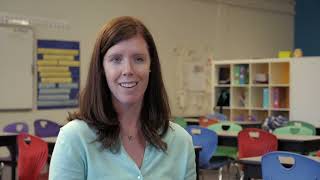
The video features Michael Horn, Brian, and several Summit teachers discussing how Summit Public Schools restructures teachers’ responsibilities across four key instructional segments. In the daily hour of Personalized Learning Time (PLT), teachers shift from lecturing to facilitating, unlocking assessments when students signal readiness, and providing immediate feedback, fostering student agency. During block‑scheduled Project‑Based Time, teachers act as coaches for collaborative, non‑cognitive skill development rather than content deliverers. The school also implements team‑teaching, pairing educators of different grade levels and specialties to co‑plan, co‑teach, and learn from each other, creating a culture of trust and professional growth. Finally, Fridays are expanded PLT sessions where teachers serve as mentors, holding brief one‑on‑one check‑ins to review progress, hold students accountable, and set weekly learning goals. Throughout, the emphasis is on student choice, self‑directed learning, and a cultural shift that positions teachers as coaches, assessors, and collaborators rather than sole knowledge transmitters.
Chapters
When I talk to people about our school model, they're always impressed with how we allocate time and how we allocate student time around. Focusing on exactly what they need and not wasting their time with what they don't. And focusing teacher time on coaching kids in setting goals, coaching kids on drawing out their skills, rather than on the mundane tasks of grading papers or preparing simple tests.
So at Summit Public Schools, we really start to see these different roles for teachers come to life in a few distinct ways that we want to highlight.
The first one is this notion of personalized learning time, or what Summit calls plt. It's in essence, students owning their own learning.
Next, the teacher's job is really different during their project time. Here, their focus is all on non cognitive skills and teaching students those mindsets that they want them to develop.
The third area that we want to focus on is what Summit does with team teaching.
And finally, it's really interesting to think about how they use their Fridays, where the teacher's job is almost entirely mentoring and goal setting with students.
So we're going to start by looking at how Summit uses this personalized learning time for an hour each day. Take a look.
I find it fascinating to watch how independently all these students are working. And when we're there, you can just feel that they are hungry for their knowledge during this time, and they're working on many different things at the same time.
You probably noticed that there's a shift also in the teacher's role. They're not in the front of the room lecturing or guiding every single thing. Instead, they're now facilitating.
We were surprised at how quickly and easily our students took to personalize learning time. We saw that when we put them in the driver's seat and we put the tools in front of them, that they dove right into it. And we believe it's because they had choices and they had time to explore, and they also had the relationships with their teachers in a safe space in order to fail in a very useful way.
So we have community groups where they read every day. And in those community groups, we discussed what personalized learning time is and what it looks like and what it sounds like with each group. And then we sometimes revisit it as needed. And so instead of us as teachers saying, like, personalized learning time is silent, personalized learning time is blank. The long list, it was like, let's come up with it. So they created it instead of us telling them what to do. And it was all about student choice. And I think that just gets Their buy in and they want to learn and they realize like, oh, this is what's going to make me successful.
So this is one of those cases where culture is everything. They've built this school from their first day to make this PLT time sacred and have the kids really have that uninterrupted quiet focus. And it allows the teachers to do some very different things. So the teachers you do see on the floor, their main job during PLT time is actually to do assessments. So when a student is ready, when they've learned enough that they know that they can take an assessment, they just put their name on a board or raise their hand and let their teacher know. And the teacher unlocks the assessment, lets the student take it, and then the student has immediate results. It's really interesting to just watch this happen in action.
Ryan.
To Brian's point about culture, you can see that Summit has worked really hard in the first few weeks to instill in students this idea of being self directed learners. And the big idea for teachers here is that you're no longer being that explainer of every concept, but you're only intervening once a student has exhausted every other route in front of them.
And this ties in deeply to that idea of student agency which we are such big proponents of.
Sometimes I have trouble finding something or like doing something and with the teacher they'll help you or something like that. But I think it's kind of a challenge for me so that I could be a self directed learner.
So if PLT at Summit is all about the individual time for students, then the other part of their day is in project based time. And this is where students are collaborating with other students. And teachers are still not being the explainers. They're just now facilitating students through these projects to get at those deeper learning skills.
And Summit has decided to block schedule their project time so they can use teachers in different ways. And one thing that's emerging is they're starting to play with team teaching. And it's really interesting to hear the teachers talk about how much they enjoy this and how much they're actually learning from each other.
Brian and I both have had a lot of experience teaching, but neither one of us have co taught on a regular basis. I had like push in support from special ed teacher, but I didn't have like Brian, I didn't have someone like in my class full time who like we can sit down and co plan together. So even if we. So on a professional level like co teaching with someone else has really helped. And it's really just like started this like very trusting relationship with each other where we can like, I can show my lesson plans and I could care less. Like I hope he has a lot of feedback to give me and it's the same thing for him. And like we've learned from each other because we've both had a lot of different experiences. And he's really pushed me to like think older and I've pushed him to think like younger because I've taught younger grade levels and he's taught high school. And so we, and it's great. Cause we can like, if you forget something, we can like bounce off each other and like remind each other like, oh yeah, hey, this is what we're supposed to do next. Or let's add more to that or I don't think they're understanding this. And like we trust each other so much that we're not like offended or you know, or we don't feel bad. We just feel like we're able to grow and it's just a really like trusting, comfortable situation.
So if every teacher doesn't have to do the entire job of teaching by themselves, we can imagine this shift happen from generalist to specialist. And then also just think for a moment about being a teacher in a setting where you have a colleague to play off of and the camaraderie to work together. And we've had teachers telling us about how much they're learning from each other because in the old system the doors are closed, right? We say teaching is the second most private act. We're opening the doors here and letting people interact and be together and frankly improve their craft.
And lastly on Fridays at Summit, what they do is basically it's an expanded PLT day. The entire time is devoted to personalized learning time for students. But what that means for teachers is that they're operating as mentors. Literally pulling students into 10 minute meetings at a time where they're reviewing their progress and how they've learned over the whole week, holding them accountable and then setting learning goals for the next week, which really is that engine that drives self directed learning.
We also have one on one check ins with kids every Friday. So I spend my entire Friday doing a 10 minute check in with about 30 different kids. I think that really helps too because it helps them set some goals towards those areas and every week reflect and get feedback on if they've improved and if not, what strategies they can try to get better at.