MyTechHigh: Personalizing Learning
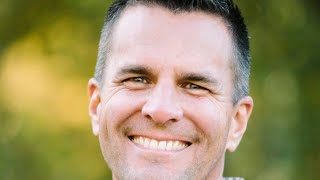
Matt Bowman runs MyTechHigh, which serves 18,000 students across seven states by letting parents pick different curriculum providers for each subject and grade. Teachers check in weekly, and the company builds its own tech and entrepreneurship courses using drones and coding. Bowman expects parents to keep demanding customized, a-la-carte education after the pandemic.
Chapters
Welcome to the future of education. I'm Michael Horne, joined by a guest that I've known for many years now in the education field. Matt Bowman, the CEO and founder of my tech high. Mytek High is one of these fascinating success stories in the education world. It has grown year over year now, educating over 18,000 students. I think Matt, or close to there, across seven states. And really excited about this conversation because I'll just give everyone a little bit of background. Matt would always find me at conferences and be like, hey, you know, we're doing what you talk about, right? And like we're making this world happen in terms of really creating thoughtful, curated, personalized experiences for students. And my tech high predominantly has served low and middle income students over the years and now even branching into higher education, not just K12. So fascinating set of activities you're involved first with.
Welcome Matt.
Thanks for joining me.
Thanks Michael. Good to be here.
Yeah. And I'm excited for the conversation. Why don't you start with telling folks who don't know a heck of a lot about my tech high, who you are, what you do, how you differ from some of the other providers they're probably hearing a lot about right now in these Covid times.
Yeah, for sure. No, I love what you've been doing over the years and you've provided a lot of thought leadership to programs like mine to really figure out what the, what the future of education looks like. And so I think it's a, it's a timely conversation to have and to keep having. So, you know, we're in our 12th year and the first year that we started, we surveyed our parents and asking them for kind of their best, their best feedback on what the curriculum for core curriculum we should standardize on. And we really wanted to choose the best. And so we went out and met with all the different core curriculum providers out there and, and when we surveyed our parents, we got a different answer from each parent for each student, for each subject, for each grade level. And it just blew us away. Literally. My favorite story is a mom of triplet teenage girls answered a different provider for each subject area for each of her three triplets. And that's when it kind of triggered in my head, you know what? Let's truly personalize education by curating all the best options for them and letting parents and students choose the provider by subject, by grade, by child. And it just blew me away that the parent would have enough insight into their child to know, you know, edgenuity works well for math for this child. But BYU independent study works well for their English and they want Aleks math or other provider for, you know, different subject areas. And it was just really cool to see that type of engagement. And so we spend our efforts building ways to help parents make those decisions, whether it's demo accounts or feedback from other parents or like minded children or you know, that kind of thing to just really arm the parent with choice, you know, really educational choice and microchoice down to the level of, of subject and provider.
So that's fascinating. Right? So you're not building the curriculum, you're sourcing it from an array of places. You're finding the best match for me as an individual student, even within the family. It sounds like based on that story of triplets and of course as a dad of twins, that, that, that's music to my ears. I see it all the time. I try not to send them out on a randomized control trial but, but I, I get, I get, I get the point.
So your twin daughters are different?
Yes, absolutely. Absolutely right. They're identical girls and have strong differences that continue to manifest themselves and deepen. Right. And that's just reality of who individuals are in the world. And so you all being able to curate that is phenomenal. Talk us through because you provide teachers too, right? You're not just sort of giving a homeschooling experience to a family and saying go run with it. You're providing a lot of backup support. Talk about what that looks like.
Yeah, no, great, great point. So our model is that we contract with innovative school districts. So Mitek High might sound like a private school, might sound like something, you know, independent, but we're actually a program that is operated by innovative school districts. And so with that comes, you know, so we're in the public school system. And so with that we've really focused on accountability and, and compliance with all the state regulations. And so we have state certified teachers that are assigned to every child that check in every week and make sure everything is going well for them. We have, you know, certified core curriculum available for every student in every state. And then on top of that, we allow so much personalization to really help children pursue their passions. One additional comment I wanted to make on. We don't source, we don't build our own core curriculum. We source the best of the options out there, but we do build our own tech and entrepreneurship curriculum.
Huh.
Couldn't find in the market that met our need around hands on project based interactive from grades, you know, kindergarten through 12th grade. We wanted to provide a Rich experience around coding and entrepreneurship, as well as, you know, drones and animation. And the whole spectrum of what tech and entrepreneurship covers is quite broad. We do a lot with Lego education. We leverage their really cool education products, build course and curriculum around that. So we do have a course development arm, but it's only around tech and entrepreneurship electives. And then we source the best core for every child.
That's actually interesting. Right. And important to double down on, which is you are making sure that all students are getting that foundation, that core, through different pathways to that core. And then there's the opportunity for them to go deep where their passions are, starting really early on. And you're serving students who are. I mean, there's a pretty big span of range in terms of age that you're serving students, right?
Yeah, absolutely. Again, just to go back to our first story, I think it's kind of funny when we. The first vision board for my tech high was that we would find a bunch of 16 and 17 year olds that we could develop into Mark Zuckerberg's and Steve Jobs of the world. Right. And create these 20 year old tech startups and, you know, have them hit it big. And our average age, the first year was nine years old.
Wow. Okay.
We shifted our whole focus to that 9 to 13 year old average. And it hasn't changed. It's actually, if anything, it's gotten younger. Especially this year with COVID and the growth in really kindergarteners looking for a more safe and personalized experience at home. We're probably skewing a little bit younger, but it's around nine years old, still is the average. And we just saw this middle age group, this middle school age group, couldn't get enough of the tech, the cool stuff we were offering them. Whereas so many of the older high schoolers are putting pressure on with society to do early college and accelerate their college path instead of focusing on cool things.
That's really interesting. Yeah, I've seen that phenomenon in other countries like Korea. They say don't bother innovating in high school because it's all about entrance exams for college. Right. But middle school is perhaps the one space for us to innovate. It's interesting you found that even in the United States. I'm curious, how do you think about what separates what you all do from say the full time virtual school options that have been out there for 15, 20 years now? this point, probably longer actually. At this point and some of those other providers out there. Why are you all different?
Yeah, the main difference is Simply the level of educational choice is that all the main virtual high schools and providers out there have their curriculum and they personalize based on how quickly you want to go through their curriculum. And that's great. And that serves many, many families really well that want just a straight line shot to the same curriculum. Everything is kind of standardized, but you can go as fast or slow as you need to in the same curriculum platform. But ours really gives choice by providers. So we'll offer K12 curriculum or edgenuity or BYU independent study. Alex Math. Matthew C. Singapore Math. All these different providers are available for parents to make that micro choice on what curriculum kind of clicks with their learning styles of their children. And that really sets us apart from others that just really have a standardized curriculum platform from grades K through 12.
Gotcha. That's helpful. And then in terms of the actual interactions and Covid in particular, are you seeing huge demand, obviously for younger students? You just said, and I'll let everyone know, you were super helpful to me last spring when I was trying to figure out how to think through some of the schedule and resources for my daughters who are kindergarten age but, and unfortunately couldn't serve them because you're not yet in Massachusetts. We're going to try to fix that at some point. But the, the, I'm curious, are you seeing more, you know, homes come together effectively in co ops or pods or you know, to sort of team up and figure out how to spread the childcare out across multiple families and be on the MITECH high platform in effect, and have that level of curricular choice? How is that playing out?
Yeah, that's a great question. So pre pandemic there were the names of things were homeschool co ops, right? Families would gather together, they'd rent out a space, they'd all volunteer, take different turns, they would teach. And sometimes that would be in people's homes, right? They would rotate around and do I'll do art on Tuesdays and you do science experiments at your home on Thursdays. And the homeschool co op model has been around a long time. And then the term came up within the past couple years of this micro school where let's actually formalize that experience, hire an independent teacher that comes to a site or setting. And then when pandemic hit and more and more families were forced into a schooling at home experience, this term of pandemic pod came around. Right? Let's actually build a little space in our backyard or in our garage or our basement and dedicate it to that experience of Homeschooling and potting and doing all that together. And so I think it's just a manifestation that that's a successful model is to really join with other families. You know, I think all of the articles you've been writing really highlight the pros and cons and challenges and factors. You had to consider, you know, as a parent, to decide if I. If I'm going to, you know, am I creating less visibility to diversity or to, you know, train of thoughts or social experiences. And so it takes extra effort for a parent who is conscientious about those things to ensure that they're broadening their children's perspectives versus narrowing them. And I think that's a good way to do that if you're intentional about your groups you join.
What are you learning about those co ops or pods in these times? There seemed to be a ton of buzz in August in the media about them. And. And then anecdotally, at least, I know we're still going strong, of course, but I know that many have broken apart as they've gotten into the meat of the year, and differences in family philosophy or comfort with safety protocols or whatever have sort of pulled them apart in some cases. What are you seeing on the ground in terms of your student population? Do you have any data on how successful those co ops have been?
Yeah, I think I probably don't have specific data, only anecdotally that it's a model that has been in play for many years already in the homeschool co op model. And so those that are already familiar with it and comfortable with it, and with that said, I definitely hear the same things. If families will bond together and then just have a conflict of philosophy of education, and that is totally understandable. And so they'll break off and create different co ops and. And I think that's very predictable and understandable. And I think it just takes time to. Because a lot of families, even yourself, you have to. You probably didn't know exactly your philosophy. Education. Right. And so it takes time for you to work that out. And you really can't work that out on paper or on a whiteboard in your office. You have to work that out once you launch.
My books only go so far. Right, right.
That terrifies people. Right. Is to enter into something that is by nature going to be fluid. So many of us thirst after this. It's got to be fixed, it's got to be defined, it's got to be known because there's so much chaos and confusion already in the world. I've got to have something that I control. Right. But with schooling and education and children and development and philosophies and personalities, like you have to kind of just let yourself be a little fluid even. That's, even if that's a little terrifying.
No, that's helpful. So. And it sounds like you're not though seeing like rampant break aparts that are just shuttering this by any means. It's, it's, it's more just sort of natural evolution stuff. Is that a fair characterization?
Absolutely fair. And I'd also add that from the beginning the Mai Tech High philosophy has been embraced. Community education resources. And that's just something. Let's drill down just a little bit more on is that, you know, I think you recently quoted and I heard, I can't remember where I heard it, but learning happens in the learner, not in a building. Right. And so the principle behind that is there's a wealth of education resources in every community in the world. You know, museums and karate classes and children's centers and art centers and music, you know, music companies and, you know, you name it. There's so many community education resources that are out there that are beyond the walls of a traditional public school building and tapping into those and embracing those as a element of a public school systems schooling experience is kind of innovative. Right. And that's kind of where our model has really been well embraced, is that we recognize that there are experts at the symphony, there's experts at the, you know, the art workshop design place or the, you know, the horse, horse riding therapist. Right. There's expertise out there. Let's tap into those, leverage those, let, and embrace how parents engage with those so that students can have the best of the best no matter where they are and not have the financial burden to access those. Because we really create that education equity by providing support and funding and subsidies for them to engage in those high quality resources that in the past were really only available to wealthy homeschoolers. Right. And so we want to try to equalize that playing field and give everyone access to high quality community education resources.
And that strikes me as part of your disruptive story, right, Is that you're extending what used to be reserved for the privileged and those that have the support to far more families that still granted, have to be able to contemplate it from a someone's at home perspective, I suspect. But you're expanding the circle. Chip Kimball asks, what have you learned that can be applied to a traditional school, whether public or private, out of this experience I suspect one of the obvious ones is you're actually partnering with, with public schools to offer this, but maybe more broadly inside their four walls or their operations. What are you learning that can be applied in those settings?
Yeah, great question. I think a couple of things. So, yeah, we contract with district schools to do, you know, to serve students who learn best at home. But you're right, it's interesting to say, what kind of principles can we learn from our model that could be applied to a very traditional brick and mortar school? And a couple things jump out. Number one is that there are, you know, every teacher dreams of having a personalized model for their students because we all want to, you know, I'm a teacher by trade and we want to help each individual student grow and progress. And sometimes we're locked into one textbook curriculum that was chosen for the district and that's great. But there, you know, again with the digital world that we live in, there's ways with, with computer labs or Chromebooks or whatever to have students engage with different layers of curriculum and different, even bring into your classroom different options and have. Even if it's three. Right. Give a menu of options where students can find the one that clicks with their learning style best and they, you know, whether it's Imagine Learning or Waterford or, you know, there's lots of different programs that you could implement in a classroom and let students have choice and really engage with the curriculum that works for them. Then the only other thing I'd say on that question is embrace the community education resources that you have. And even, you know, I shared with you, Michael, this morning. We held a virtual field trip this week with Jamestown, Virginia. So we're. Most of our students are located in the west and have never been to Jamestown or may never be in Jamestown, Virginia. And we had a full day's worth of virtual field trip experiences hosted by the Virginia Historical Society there. And our kids absolutely loved it and gave them and embraced the community education resource model. Inside the walls of a classroom is something I would highly recommend you try to figure out how to do that because there's cool community stuff in every city and town. Find out what those are and don't be afraid to bring them into your on site classroom or have kids reach out virtually or field trips and just embrace that that's a quality education that you can bridge the traditional brick and mortar class.
Yeah, it makes a lot of sense and very cool that you brought folks back 413 years if my math is correct on the spot. But very neat that you've been able to do that with folks virtually, but then also leveraging the community resources in their own towns. I'm curious. One of my frustrations in this moment has been, it seems to me, that for virtual schooling or homeschooling or remote learning, whatever you want to call it, to work well, there have to be relationships and people involved to create community and accountability for the learners themselves and support, uh, and one of the things that I think public school districts have sort of failed to do is, is use their imagination about how they might use their teachers to, say, assign them to a small pot of students and help them find, you know, hey, you know, so and so is not working on Monday. So the pod can be there on Monday and on Tuesday, so, you know, someone else can take their day off. And so the pod will meet there, and the teacher's able to sort of, you know, glom onto them or different creative sort of structures. Right. That would give that support and community when you can't be in the building with everyone in there or and frankly, create an opportunity maybe for unmasked gatherings in these very small communities and reimagine schooling through that, to be able to not just customize the curriculum like you are, but also be able to customize so much more that you customize about the experience in terms of the projects and passions and being able to chase things down, because I want to pursue this on this given day and so forth. Are you seeing any districts learn that from you? Play with that idea, sort of glom onto that in this time. And do you expect any of it to stick, or am I just. I'm totally out on a limb and wrong?
There are innovative pockets of districts that are seeing that they can do something different. One of the phrases I would point that I love is teacher as entrepreneur. It seems. It seems interesting phrase, But I think Outschool.com really has proven that model that teachers who are passionate about different subjects can create lessons of their most passionate topics and sell those on Outschool. And the people by the thousands and tens of thousands are signing up for Outschool.com classes because it's teacher as entrepreneur. And I think if districts started to, you know, one of the things early on, you know, I would work. I work with charter schools and district schools, so I have a chance to kind of see the difference of innovation and creativity levels, you know, embedded into both those systems. And I've been fascinating to see districts undervalue the amount of resources that they have the charter schools don't have. And I Think it's just really a mind shift that a district needs to have is what are the resources I have at my fingertips that can help a parent and student succeed? And if they start just from that, you know, kind of the premise that you often quote is what kind of job are you hiring someone to do? I think districts forget how much they can deliver. They approach it of what does. What job does the parent and student want me to deliver for them and think I can do so much more than I might be doing today. If I think about the resources I have in a district that charter schools don't have, private schools don't have, homeschool, independent homeschoolers don't have. And it's really like offer your breadth of access to resources and figure out how to match those with parent needs and student needs. Right. I think it's interesting.
Yeah, I know that makes a lot of sense. I'm curious just to dig deeper on this then what do you expect the sort of your hot take, what do you expect the lasting impact of this pandemic to be in terms of transformation of schooling, or will it all snap back? Where do you think this is going? Because everyone has a hot take. Some people say, oh, micro schools are here to stay. This is their moment. They're going to continue to grow. Others say momentum. People can run back to the buildings they're going to do, so it's going to erode somewhere in between or maybe what will be in, you know, enduring sort of my take is that more of a consumer mindset in the parent on behalf of parents will endure even if they're still going back to the public schools or traditional options that they explored before. Where do you land on that? What is the future out of this pandemic? What do you think is going to happen looking at your crystal ball?
Yeah, that's a great question. Our growth has just been so accelerated this year and we're curious to see if, you know, what percent goes back if next year the schools are more open than they are now, what percent will go back versus which will see the value of the flexible experience they've had and stay. And with that I'd probably be on the line of. I like how you said it. The parents will be more savvy consumers of education. I think that will be lasting. The phrase in my head is they'll learn that they can all a cart their child's education more so than they thought they could before. And what I mean by that is we have a lot of parents that like to, you know, our program has, you can take up to two classes at your boundary district school and still be in our program, plus lunch, plus extracurricular activities, plus, you know, a religious release time if they want that, you know, so there's opportunities for them to all the card their education in a way that they didn't like. A lot of parents said, I didn't realize I could choose to have them stay home for half a day and then go for half a day. Right. And enjoy the flexibility of doing something that their child would be more successful if they did it at home. Then going to school all day, every day is their only option. I really think the mindset of a la carte in your education is going to last longer than we might think.
That's super interesting. So let me ask you a question. Do you think some of these relationships that you've carved out with districts are also going to be enduring in the sense that they found you as a partner to be able to provide this more bespoke type of education? Is that going to endure as well in your mind?
I think so. I think even just last week I had a couple, you know, I meet regularly with our district partners and was meeting with the superintendent who said, you know what, now that we've got our big enrollment done for this fall, I'm now ready again. What more innovation can you bring me? Matt. Right. And so I think that that's a.
Neat question to be asked.
Yeah. Started to say, I gotta take it in bite sized chunks. I can't go to my board and do all of it at once, but one at a time. Let's just look at things that we can implement that are innovations. And one of the things that this particular district took advantage of was our partnership with Snow College. You referenced that. We have started an online competency based associate degree through an innovative college called Snow College and have enrolled hundreds of students this year in that associate degree. And the district that we partner with said, well, I want to do that for our on site kids. Can I do that? So we connected them directly with Snow College. Now they have a direct relationship, they pay Snow College directly and they have probably 50 or 60 kids in their entire, you know, in their district that have a couple classes on campus and then can do Snow College associate degree online the rest of the day. And they'll probably finish their associate's degree within a year, year and a half because it's a competency based accelerated approach. They can really do that. Well, actually the URL would be online Snow Edu Perfect.
I'm going to adjust that right now. Thank you.
Online Sno Edu describes and that's available to the whole country. If there's any right now that want to sign up directly with Snow College to offer early college access to an accelerated associate degree, you'd be foolish not to check that out because with, with any advanced students who are ready for College at age 16 or above or whatever, schools absolutely can cover the cost of that. It's only seventeen hundred dollars a semester. Most school public schools in the country can afford to pay that as part of their per pupil spending. So they could, they could serve the kids at home. They wouldn't lose a mass exodus of kids. You know, a lot of districts are struggling of the growth of homeschooling and they're losing enrollments then and they lose funding. It's really like offer parents a value and they'll stay. And I think online associate degree from SNOW is one of those things that a district in Massachusetts or Virginia or New York or anywhere could begin offering in January. You know, easy. And SNOW does all the graders and faculty and advising and curriculum, all of that's included. And students can absolutely accelerate their early college and then earn their associate degree and then transfer to Harvard or MIT or Stanford or whatever. Right. Their dream schools. And with their two years already done, paid for by their local district. And I think that's a model that is very attractive to equity and to really providing innovation and reaching out to students where they are.
So I hope people check it out online. Snow Edu. I'll say a couple things I love about this partnership. One, the affordability. Two, the competency based. It's the way I think all education, but certainly higher education ought to be being delivered increasingly. And then third, I love that it's actually the faculty, faculty at Snow itself that are offering it. I've grown very. You might have a take on this as well, but I've grown very wary of a lot of the dual enrollment, concurrent enrollment sort of trends across the country where there's a partnership with the community college, where they sort of dump the curriculum into the high school, but it's still taught by the high school faculty. You haven't necessarily been trained to offer it. That doesn't really feel like a real genuine college course to me. And if we care about the learning, not just sort of the stamp right at the end of it, I'm a little wary of some of that early college credit. And I'm also wary because I don't think a lot of Places are going to accept it. Right. So Harvard's going to look at that. Harvard may be a bad example. Even state universities in that. In that place are going to look at it and say, we don't think that's a real college course. That should count for credit. Glad you spent your time on it. But that's not actually going to save you the money you think it is by trying to transfer it into here. Whereas if you're getting it from a real accredited school with the faculty themselves, I think it's a materially different experience.
I totally agree. And one of the reasons we selected Snow is that the chronicle of higher ed ranked Snow College, if you can believe it, as number one in transferability.
Oh, interesting.
And so they. They are known for, you know, they're a rural college in Utah that has focused on making sure transferability is a core aspect of their school. And so they're, you know, they make sure the credits are transferable, accredited, and the incoming institution can have confidence that the Snow College brand is solid.
Very cool. So as we start to wrap up here, Matt and I appreciate you being so generous with your time. I'm curious, what are you most excited about in the landscape right now? What has you saying, like, that's new, that's neat, or that we ought to be focusing on?
Oh, that's a good question. I should have known you'd asked that one. I haven't.
Well, I figure you have your eye on, like, you know, you're thinking about curriculum providers. I'm curious also, frankly, how you sort them and decide which one, you know, you're curating and which ones you choose to offer or not. But I'm more curious, like, what with your view of the spectrum, what are you most excited about right now?
I would have to say. See, I, you know, the thing that's on my to do right now, strangely enough, is around esports. Oh, I know that's probably not the most academic answer that I could give, but esports is really an interesting industry that is just growing rapidly. Colleges are now having sanctioned esports teams where they hire college coaches. They have scholarships available. Snow College is one. They have an esports team and esports coach and esports scholarships. And so we've had a bunch of interest from our my tech high families is to create the my Takai esports club. And so we just launched that this week. That's why it's on my mind. After a couple years of evaluating, what does the market look like? Is this something that's going to stay and it's definitely going to. And we're creating what's called the business of esports course that we're going to offer next year because it comes down to twitch streaming, production skills, it comes down to broadcasting skills in addition to just playing the game. Right. And competing at a very high level with skills and reaction time and all these things. And even like the social nature of gaming is a big emphasis in that industry. And so we're trying to make sure that the social connections are strong and healthy and well being is a key factor. But it's really interesting that colleges are embracing it. There's now high school sport, also esports that are sanctioned and they're having state tournaments just like a traditional sport that you might think of. And so that's an area that I'm really intrigued to see where that goes.
Very, very neat. And I didn't see that answer come in, but I appreciate it. I think it's interesting and there's no question in my mind right now. In particular, esports are sort of seeing their moment in the virtual sun, if you will, in these times as well. So I'm throwing up your website up there again. How can people find you, follow you, reach you particularly, and this is my interest, as you try to expand your relationships with districts and so forth, how do they help, you know, broker that conversation if they want the sorts of options you provide in their district?
Yeah, that's a great question. So, yeah, go to our website. You can connect with me there. I'm on LinkedIn. You can connect with me through LinkedIn. And really it's. We look for one innovative superintendent in a state. That's basically what we try to start with and say, would you like to be the central enrollment partner for students in your state that want a personalized education experience? That's all it takes. The funding will go to the district, they'll pay us a portion of it to operate the full program on their behalf. So there's funds, increased funds, opportunity for the district to just partner with us. And then we do everything else. We try to, we find the students, we enroll them, we serve them, we manage our whole, you know, personalized schedule builder model with them. And so it's really just if you have a district in your state that is innovative, whether it's a board member or a superintendent or administrator that really wants to shine and be the leader of high quality personalized education in their state, contact us and we'll engage and we'll do the rest for them.
Love it. Thank you, Matt. Deeply appreciate the work you all are doing and the way and the thoughtfulness you're doing it with. And thanks so much for joining me today.
Thanks, Michael.
Yeah. We'll be back next time on the FUTURE OF Education. Thanks so much.










