Scaling the Transformation of the Traditional Teaching Model
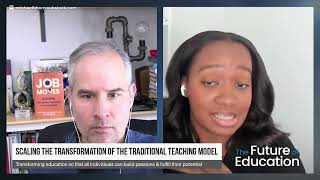
In this Future of Education interview, host Michael Horn talks with Brian Hassell (Co‑President) and Ashley Williams (VP of Innovation & Specialty Services) of Public Impact about their Opportunity Culture model, which reimagines the traditional one‑teacher‑one‑classroom staffing structure. They explain how the model emerged to address inequities, limited teacher career pathways, and lack of collaboration inherent in the century‑old model. The core of Opportunity Culture is the multi‑classroom leader (expert teacher leader) who co‑teaches, provides wrap‑around coaching, and aligns curriculum across teams, creating a coaching culture rather than a supervisory one. Third‑party studies show students in certified Opportunity Culture schools gain an additional 2‑7 months of learning per year, with Title 1 schools two‑to‑three times more likely to achieve high growth; teacher vacancy rates drop 50‑75% and teacher satisfaction rises. The model has scaled to over 90 sites across 17 states, encompassing roughly 1,000 schools and 250,000 students. Certification standards—developed from a decade of data—serve as design guardrails, allowing districts to self‑design via an online portal, reducing transition costs to 10‑50% of original expenses. They also pilot remote multi‑classroom leaders who share expertise across districts, addressing rural staffing shortages. Implementation challenges include securing district‑level leadership commitment, shifting entrenched mindsets, and managing the time and financial investment of redesign. Future frontiers involve leveraging AI for design and differentiation, and advocating for state policy and funding to accelerate adoption. The conversation ends with resources: monthly info sessions, a robust website, and portal demos for schools ready to begin the redesign.
Chapters
Welcome to the Future of Education. And now here's your host, Michael Horn
Welcome to the Future of Education. I'm Michael Horn. You're joining the show where we're dedicated to creating a world in which all individuals can build their passions, fulfill their potential, and live lives of purpose. And to help us think through that, today we've got two incredible guests that is tackling one of my favorite topics, which is rethinking the role of educators in school. We'll get more into that in a moment, but first, let me introduce them. We have Brian Hassell, the co president of Public Impact. Brian, good to see you.
Good to see you, Michael.
And we've got Ashley Williams, who serves as the vice president of innovation and specialty services at Public Impact. Ashley, good to see you as well.
Yeah, you as well.
I'm excited for this conversation, Brian. I think I'm going to get the chronology slightly wrong, but I think pretty close. You and I were working on a bunch of blended learning projects together probably 13, 14 years ago or something like that. And then my recollection is out of that you sort of said like, wow, there are other things we could do with innovation as well, and we could start rethinking the role of the teacher and sort of how they interact with other teachers in the building. And one of my favorite things is like, there was the movie Waiting for Superman. And I was like, the biggest problem with that movie is the title that we're expecting every teacher to be a superhero and do like an unfathomable list of things for kids. And then, of course, out of that, I think you and your colleagues created this notion of the opportunity culture, staffing, design model. And you had a range of models for how to really distribute responsibilities and create teams and management structures and all sorts of things for. For the adults in the building to better serve kids.
And.
And it was, you know, I've written about it now several times. It's in my most recent book, from Reopen to Reinvent the the chapter sort of formed around what y' all have been doing with Opportunity Culture. And this notion really of teaching should be a team sport. But maybe, Brian, in your words, like when you all created this, what challenges were you aiming to address? How do you think about Opportunity Culture today? And then, Ashley, if you have anything to jump in on, please.
Yeah, Michael, that's a really good introduction. It really does go back to that time period. And I think, you know, Emily Hassell, the co president of Public Impact, was really thinking about, you know, the one teacher, one Classroom model. I mean, Michael, you've written about, with Clay Christensen, you wrote about how kind of hard and fast these notions of schooling are, right. It's like there's one teacher for each classroom. We assign kids there. And that's how almost every single school in the country has worked for 100 years. And so Emily started thinking, what could be different? And she started getting input from people like you and teachers. And that led to a bunch of different models because the one teacher, one classroom creates a ton of challenges. One of the big ones is it's very inequitable. It means that only a fraction of kids get access to teachers who are really strong enough to give them that kind of high growth learning. So it's built in, guaranteed inequity every year. It also means teachers don't have a career path to move up without leaving teaching. And so that's another crisis in our country right now is the teacher retention and recruitment crisis. And part of that is there's not much opportunity. And then finally makes it really hard for schools to implement their vision of what they want instruction to be like because it's every single teacher for themselves rather than working together. So lots of challenges all can be addressed. Emily thought by thinking, how can we extend the reach of excellent teachers at teaching across the whole school?
Ashley, what would you add to that and sort of how those models have evolved now and sort of the current form, if you will, of opportunity culture that people might see in the various, many, many schools that you all work with?
Yeah, so I feel like I'm entering this from a very unique perspective because I was one of the first multi classroom leaders. And so I was there when we had just some chart paper and some sticky notes trying to figure out where to move teams around. And honestly, when I first heard the idea, I thought, wow, that's a really novel concept. I'm really interested to see how this is going to work. But having been in the role and also having done the work that I'm doing now in my role and seeing how this is scaling across the country, I would say that we nailed it down to a few design aspects that really make this work. Right. And we are seeing an incredible response from teachers and teacher leaders and their amount of satisfaction, the amount of support they're getting. It is a culture of coaching and support that schools are adopting when they adopt these roles. And so it's no longer like Brian was saying, this one teacher, one classroom model where, you know, a principal would be responsible for giving feedback to all of the teachers. In the building. Maybe they yell around to them once or twice a year. Right now you have this expert teacher leader who is in those classrooms partnering alongside teachers. I would co teach with my teachers. I would, you know, do small group teaching in their classrooms. And it's really this wraparound support that you traditionally just don't get in a one teacher, one classroom model.
Hearing you say that just occurred to me. Brian mentioned Clay Christianson and he used to make the argument in his last class every year that the most noble profession was one of being a manager. Because you were really directly working with individuals and helping them be their best selves. And how you did that didn't just impact them at work, it also spilled over in their home and community lives and so forth. Right. If you had a bad interaction with your manager or frankly to your point, Ashley, no interaction at all, no feedback with adults, the way that could spill over when you came home with your, with your kids, with your spouse, with people you were working with, could could be pretty toxic. Right. And sort of managers in the ideal sense would really be heavily working and supporting and coaching like in a very supportive way. Right. The folks around them. And you've created that structure, it sounds like, to enable that and not make it be an act of heroism as well. So. So maybe talk a little bit about the impacts and the results you' both in the teaching force. But then also like how does it parlay into student outcomes as well?
Really encouraged by the results for students and teachers on the student side, we've seen a lot more growth by students because they have that team wrapped around and they have that expert teacher leading the team. So in the third party studies, kids are learning an extra two to seven months per year when their teachers are part of these teams, which is really strong. Last year in North Carolina, the Title 1 schools that met opportunity culture certification standards, which we can talk about as well, were two to three times more likely than non opportunity culture charter schools to make high growth. So it's really hitting the students really well. They're learning more. Teachers are highly satisfied. Vacancy rates are coming down 50 to 75% when districts implement this because they're not losing as many teachers and they're able to attract more teachers and they're frankly sometimes having fewer vacancies to fill. Because Michael, some of these models involve changing the size of teams to meet the needs more effectively. Rather than filling every vacancy with a long term sub or some other kind of emergency certification situation, schools will use a team to handle the students in a different way and not have to fill that vacancy.
Ashley, were you going to add in? Yeah, I want to make sure, because you directly experienced also these results in your own practice. So I just love sort of the color on that to give us a sense of what that felt like and what that could enable for students.
Yeah, I would say we saw a direct correlation with what Brian is talking about in the school where we implemented Opportunity culture models. The school was high needs title 1 school in Charlotte Mecklenburg. And I want to say at one point we had over 20 teacher vacancies. Right. We were at a point where we really needed to grow students and we didn't have time to experiment. We needed results now. And so we implemented these, these models. The team where I led ELA that year, we ended up getting fourth highest growth index out of 160 schools in the district. And I think that is directly correlated to the opportunities we provided to those teachers. That coaching support, aligned curriculum. There were no more guessing games about what lesson plans we were teaching today. As a multi classroom leader, I was responsible for getting that curriculum. And we had literally rounds of practice where we would stand up and practice those lessons. And we looked at data very intensively, not waiting until the end of year assessment, but really saying week to week, what are our students learning? Where are the gaps? So there was lots of work done on that behalf. And I think that the multi classroom leader model really just helped to shape all of that so that that work could be done.
It makes a ton of sense. I'm curious this. Where are you all right now in terms of scale? How many schools are in the, you know, using opportunity culture models right now? And Brian, you mentioned the certification, which I don't think I actually was aware of, so maybe that probably ties in how many schools who's certified, how do you get that? And how widespread is this model? Are these models at this point?
I can talk a bit about that. So we're in over 90 sites across 17 states in D.C. and it's not just one type of district. So it's very large urban districts, also to small rural systems. So we've seen it work, like I said, in places like Charlotte MEC where they have over 140,000 students, also to those smaller districts with fewer than 10,000 students. And so it's happening in several places. As far as certification, this is a set of standards that were developed based on over a decade's worth of data. Right. And so it's thinking about what works and where and really using this as the driving force for Designing the models. Right. And so you don't have to say, you know, I wonder what would happen if we had a team of four teachers led by a multi classroom leader doing these things. Instead we're saying we've done the data and we've compiled it, we've done the research and here is what works. But it's also a way for folks to just have a really clear destination of what they're designing. Right. And so it's, you know, putting a structure in place of, you know, if you follow these standards, pairing it with your local context. Of course we're seeing that this is what is yielding the highest results for students.
I'd add that, you know, we've got. So Ashley mentioned 90 sites. There's. That means close to a thousand schools, over a thousand schools engaged in some way. 250,000 students were being reached last year. So there's enough data for us to really learn over time. And so leads to this kind of certification system where we can say do you live up to these standards? And it's things like you're being very selective about who these teacher leaders are. You're paying them a lot, an average of 13,000 around the country above their salary. Which sometimes leads teachers to be into six figures in some places where you're paying within existing budgets. So you're not relying on a grant for that so you can keep going. You're giving people time to play these roles differently and be a team and lead. So it's not just an add on, but it's really changing the schools design in a fundamental way. So those are the kind of certification standards which are like something to shoot for, like Ashley said, a destination to drive for. And yet lots of flexibility. So how are you constructing your teams? Are they subject based, are they grade levels, how big are they? What do teachers do within those teams? How do roles change? What kind of specialization goes on? How do you move the kids around and group them differently for small group instruction and tutoring and technology based learning and everything else. So much flexibility. But within some guardrails that are like we've learned from data over many years, you're going to get better results if you go in that direction.
Well, so that's where I want to go because a thousand schools. So 90 sites I assume are like a lot of these districts that have multiple, you know, lots of schools. Right. Jumping on quarter million kids. You know, one of the questions I suspect you get all the time is around student teacher ratios. I know Brian, you've written ELOQUENTLY about student teacher ratios being sort of the wrong way to look at the world and that it often backfires as a policy response. So maybe you can sort of address that. But I think in the larger question that I want to get into is, you know, if you've scaled to, you know, a thousand schools, what are you learning in terms of like what are the challenges to get to the next group? Or what are the yeah, buts you hear, what are the barriers perhaps to go in faster and moving? I mean I'd love us in a decade from now to come back and be like, there is no school in America where the one to many models still persists. I think that'd be a, that, that would be a big, that would really be moving the ball forward in my, in my judgment. So I'm curious what you learned about those obstacles as you guys have gone about this work.
Yeah, we've learned so much over the years and I think one, you know, one big set of lessons is around the, the leadership required to, to pull off the change to something like this and then, and then to maintain and support it over time so that it stay. It's not Superman. You mentioned the waiting for Superman. It's not that you need some heroic principle to lead this, but you do need some commitment at the district level, commitment at the school level to say, okay, we're going to make a change to something different and then and see it through. Which means realizing it's not going to go perfectly the first time and you're going to have to come back and change things and tinker and fix. That's the kind of innovative innovation cycle has to go on. And that's pretty important. It's not one and done. So I think that's one challenge that we've seen. I think another big challenge has to do with just mindset. There's again kind of going back to the picture that was in disrupting class of that classroom 100 years ago. That looks pretty much like the classroom you might walk into in today's schools. And that's just so ingrained and we've all been through it. And so it's often challenging in these conversations to help people see, hey, there's a different way to do this now having a thousand schools doing something is really helpful for that. But still there's a sense of, well, can this really work in my context? So we're always working on the mindset. But then I would say the biggest challenge and maybe we can get into this a little bit is just that it's costly both in terms of time and potentially money to make a change from an old way to a new way. You have to either put staff time onto it or you have to hire an organization like Public Impact to help you get from point A to point B. Because you're building it while you're flying, right? You can't close the school for a year, rethink everything and then come back. You've got to just, you've got to keep going. And so how can we bring that cost down? That's really been the, our mission for the last three or four years. Especially looking at the fiscal situation in the country, looking at what's happening with funding and enrollment, that's the imperative is to make this a lot easier and a lot cheaper to do.
So how do you do that? Let's address the transition costs specifically. How do you reduce those or make it palatable to a school going through this so that they can actually move to this change? Ashley?
Yeah, I would say one of the ways that we lowered the cost significantly is through those certification standards, by having that guiding process, that document to say this is where you are going instead of a longer design process. I would also say that technology plays a role, right. And so we've developed an opportunity culture portal that houses tons of modules where districts and schools can go on and they can self design, right? Aligning their design to decisions to those certification standards. There's tons of tools and resources, Monday ready resources that they can use with their teams, with their students. And so taking some of that aspect of it and putting it onto our portal has been a great way to really lower the cost. But it also, I would say increases the amount at which we can scale. Right? So you don't need to partner with us so intensively. Schools definitely still do, they want that hands on support. But now we're putting it in their hands. We're saying you can go on to the self driven modules and you can do your own design and you can tell us, hey, public impact. I actually want your help in designing these stipends or I actually want your help in how to hire, you know, really, really exceptional talent. And so that's some of the ways in which we thought differently around, you know, making sure we still have that support, making sure we have guardrails for good design and also pushing this out so that schools can access it now so that all of their students can benefit from that excellent teacher.
So, so in essence, the cost savings, if I'm understanding you, Ashley, right, is, is Like I, I'm going to need some support whether that's my staff time or you know, the outside consultant or whomever it is right to come in and guide us. But now because of the technology layer, the certification, the clarity, you're basically saying like hey, I'm, I'm a school. And I'm like I got this part of the journey. Like I, I don't need, you know, to buy extra time or, or to get, get hand on. But whoa, like, so you want me to have a multi classroom leader doing this? I, I need a little bit more support here than just the online module. And so you might come in here and so it's sort of more.
It.
There's still a cost, but it's more targeted. Is that the right way to think about the savings?
Yeah, I would say so. We've gotten it down to about 10 to 20, 10 to 50% of what it originally.
Okay, that's meaningful.
The lowest end is that DIY self driven aspect of it, you know, to where schools can go on and make their own decisions.
Gotcha. And, and you know, how are you evolving the models themselves now? Like what's, you know, what's next? You're learning from a lot of these sites. You're probably seeing like, and maybe you can describe some of the different models you've seen out there a little bit more granularly. But like I imagine you've said like, like oh gee, you know, it seems like when people partner in this or you know, create this particular teaching arrangement or this multi classroom leader in this particular way, it's not as effective as when they do it this way or something like that. I imagine you have a bunch of lessons learned around that. How, how's this all evolving? Where, where's it going to? And, and what, you know, what further improvements might we be seeing?
Yeah, we've learned so much it's hard to know exactly where to.
Yeah, fair enough, jump in there.
But I think we've learned a lot about the kind of support that the multiclassroom leaders can most effectively provide to their teams. And so one of the frontiers is just aligning that much better with the instructional strategies that the district and states and others are taking on. So the multi classroom leader is really the person that can be trained in whatever it is that the science of reading or the curriculum that the district's adopted or the personalized learning approach that they're, they're undertaking and then they can turn around and deliver that effectively to their teams every day in a way that's much more effective than like a teacher showing up for one training and then being expected to go off and do the thing for the whole school year. So that alignment though, is so important for any kind of system, whether it's a charter school or a charter system or a whole, a whole large district. So that's one. I don't know what you would throw in, Ashley. There's. There's a of lot.
Yeah, I would name that. You know, these are really exceptional leaders who are in these roles. And you know, some districts who work with us, we go through the design process and they say, but where are we going to find these leaders? Right. We're in this rural setting. We've hired everybody there is to hire. What are we supposed to do? And so one of the things that we've piloted is a remotely located multi classroom leader role. That is a mouthful, but it is essentially sharing talent across districts. Right. And so you don't have to physically be in that district or even employed by that district to support students and teachers in that district. So if a district is having, if they're having a really hard time finding a math candidate for a multi classroom leader role, they might look to a neighboring district who has several math candidates who might be willing to share talent with them. And so we've seen a lot of success just in the pilot stages with that, this in Rockingham county in North Carolina. And the superintendent is showing lots of, I would say, early results. He's very satisfied with how those results are going. And so it's just really helping us to think creatively. Right. When schools and districts are bumping up against these barriers, what are some other things that we can do to create the conditions to where, you know, still we can have this exceptional teacher impacting more students.
That's fascinating, right? Because we've seen for years people use sort of the virtual teacher to plug the gap of. We couldn't offer this particular subject or whatever else. But a lot of those models, at least as I've seen them, are sort of still very traditional, one to many. In the worst of all the cases, right. They're beaming in the teacher remotely and like they're like the native Chinese speaker or whatever. And then there's like 30 kids, somewhat unintended. Maybe there's a, an aid maintaining discipline, sort of lockstep learning. But what you just described is like a new managerial model, but using the same technology. So you're actually changing the underlying structure of the school at the same time and bringing in expertise. That seems fascinating. As sort of a up leveling of the talent at a site and not sacrificing the student experience and maybe bolstering it. The other thing I hadn't thought about as much, Brian, when you were just talking about science of reading or personalization or whatever it might be, you've created so much capacity in your school now for an expert in that space who's not just an individual expert, but they're an expert working with the team to become awesome at whatever the practice is that's designed to bolster student outcomes, that seems like a significant piece, that's maybe a distinction and I'd love you guys to reflect on this because the other model that's getting a lot of attention right now, not nearly as much scale or experiences you all have is the next education workforce out of asu. But it seems like that actually is a tangible difference, is the multi classroom leader has a lot of time to be able to sort of develop and then share and coach this expertise. Is that how you think of the major differences? Or are there other things that. Or maybe they're two P's in a pod, right?
Certainly two P's in the pod in terms of getting away from the one teacher, one classroom model. But yeah, the teacher leadership, the highly selective, well paid teacher leadership is definitely a hallmark of the opportunity culture model. The team structure in the ASU model typically is a team sharing a roster of students across the whole team, which we do see within the opportunity culture network. But that's not always the case. Sometimes teachers still have their own kids and they're supported by that multiclass. That's a little different across the opportunity culture models. And it really depends on how they design it. I think I mentioned there's more than a thousand schools involved in this. Some 7, 700 of them are already implementing. The others are in some phase of design. So they're really thinking through, usually as a teacher team, how do we want this to work. And that's where they make decisions like team size, team structure, what are we doing within the team to steer students or not? So there's a huge important teacher involved design process that goes behind this.
Okay, last question as we wrap up here and we think about future scale, future spread and so forth. We haven't talked about policy, we haven't talked about union contracts. What other changes have you all, you know, learned or speculate is needed to really make this sing and spread? So we're having an even bigger conversation over the years ahead.
It's somehow we haven't, we haven't talked about AI, which seems like we haven't
talked about AI yet. Pull it in.
Yeah, certainly, you know, that has so much potential. Both to. We talked about the technology platform for helping schools design, taking that to the next level of using AI to make that even more helpful to schools. But also the teacher teams, how can they use AI as effectively as possible? We've done some development of training on this, but there's so many possibilities for the adults involved to handle tasks like differentiation of experience for kids much more effectively if they have more technology to help them. So that's a whole frontier of this, for sure. And then we think policy is a frontier as well. As you mentioned, just because states in this country have typically been the agents of saying, hey, districts, it's time to rethink X or it's time to move in this direction. Lots of local control, of course, but they can incentivize, they can provide funding, they can guide towards standards like the ones we're talking about. And that's really the path to having. Having your vision. Michael, you mentioned of every teacher being outside of this one teacher, one classroom. It's really for states to get involved and try to move this to scale much more quickly. We've seen North Carolina do some of that with an advanced teaching roles grant program. New Mexico recently appropriated some funds for this, and so that's a frontier as well.
Ashley, anything you'd add to that that we ought to keep our eyes on or be pushing on?
I would echo what Brian said about states. Right now we're seeing a lot of districts who are interested in this work. I think we'd be able to scale a lot faster if we had that commitment from the state for them to put policy changes in place that make it possible for this work to scale, to put some funding behind it. I think that would really help the model to scale, and it would help district leaders and school leaders as they're drafting their models to feel really confident in the sustainability of it.
All right, well, you've heard it here. Let me give you guys the last word of how that the. The educators tuning into this, they want to start to go down this road. How can they learn more? How can they jump on the process? Where should they go to to get. Get going on this?
Yeah, so we've got some free info sessions popping up every single month that folks can register for and, you know, really learn what the design process entails. And so I can share for those. We also have a really robust website where you can get a demonstration for our portal and actually see what all it includes. And so there's like a webinar there and a walkthrough of the portal so folks can kind of see what they're getting into. There's tons of resources there on our website if folks want to start their design journey.
Perfect. All right, well, we'll get links to those in the show notes up front from you, Ashley, so that everyone can check it out. And Brian, Ashley, just huge thanks for the work that y' all are doing at Public Impact with Opportunity Culture. It's amazing to see how far it's come and how far it's still continuing to grow and have impact. So. And huge thanks for joining us on the Future of Education. Really appreciate it.
Thanks for having us. Thanks for having this interesting show for everyone week after week.
Well, we like to spread good work of innovation that is actually making a difference in the lives of students. So you all are doing some incredible stuff and really appreciate it. And for all of you tuning in as always. We'll be back next time on the Future of Education.










