Stoking Microschool Supply in Utah
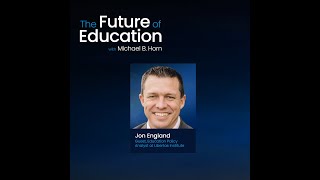
John England of the Libertas Institute discusses Utah's microschool boom, where 27,000 families applied for 10,000 ESA spots. The state removed zoning barriers by allowing microschools in commercial spaces, but founders still struggle with capital, marketing, and business skills. About half of ESA families choose traditional private schools instead.
Chapters
Welcome to the Future of Education. And now here's your host, Michael Horne. Welcome to the Future of Education. I'm Michael Horne and you are joining the show where we are dedicated to building a world in which all individuals can build their passions, fulfill their potential, and live a life of purpose. And to help us think through how we get there today. Our guest hails from Utah. His name is John England. He's an education policy analyst at the Libertas Institute. John, first, it's great to see you. Thanks for joining us.
Yeah, thanks for having me on. I'm excited to be here.
Yeah, no, you bet. We got to obviously spend some time together at a conference a couple years ago. I learned a little bit about your background, but you were entering a time on this show where we are doing a lot right now on micro schools, new forms of educational choice, education savings accounts, really hitting innovative school designs and all the rest. I'd love before we dive into some of the questions that I want to ask you about, just tell our audience how you got into this conversation around all of these themes more broadly.
Yeah, so I'm actually a former public school teacher and principal. I lived through the COVID shutdowns and all the craziness that came along with that. And at the end of it, I looked around and said, I think there's something different that we can be doing. So I started looking actually for different jobs and I ended up in the policy side of things with the Libertas Institute. And, you know, one of the very first things I did is I ended up on listening to another podcast, one of your friends, Kerry McDonald's, who has her liberated podcast, and she just has micro school founders on. And I'm like, this is amazing. The teacher in me was just like, I love this. I love that these teachers are going out, they're creating the classrooms that they want to create and they're doing it on their own and they're getting rid of sometimes the bureaucratic nonsense that comes along with public schools. And, and I just loved hearing about that, learning about it. And we just started diving in from there as I learned more and more and started learning more and more about the problems that these micro schools are facing.
Yeah, so I want to get into there. But first, let's lay the landscape right. Like, we know that more states are moving to create education savings accounts policies. That's obviously stoking even more demand for educational choices on top of sort of already pent up demand. I think in a lot of states, the numbers are extremely clear on that you look at a place like Florida. Right. And how many folks are participating in an education choice type of plan. Bring us up to speed on what's the state of play in Utah. I know that there's going to be an education savings account, I think supporting about 5,000 students. But. But give us a little bit more color around what that looks like.
Yeah, we actually have some good news. It's been expanded to 10,000 students.
Oh, that's great news.
Yeah, it's great news. The unfortunate thing is we had 27,000 students apply for it. The application just closed just a few weeks ago. And that will go into play for the 24, 25 school year. And yeah, it's a great thing. It gives parents that opportunity to direct the education funding that the state collects. And it does. It makes a difference in how schools operate. It makes a difference in how parents choose what they want. They now feel like they have a choice that's funded. And that's been a great thing being able to see these parents. They're excited to be able to use it, but unfortunately more students won't get it than will that want it.
That's 17,000 students who wanted it, didn't get access to it. How does the Department of Education make the choice? Are there criteria in the policy around who gets access to that scholarship and who doesn't? Is there preference orders of lottery? How does that work?
Yeah, there is a preference order. So low income students will get it first. Last I heard, and this was before the final number was in. They're estimating that probably six or to 7,000 of those scholarships will go to low income families. And then beyond that there's like the middle income tier and then a higher income tier. The middle income tier makes up the majority of that. 17,000 that will not get it. And that will end up being just a straight lottery. So you know, they'll pick and choose. I don't know. Whatever it is, I'm pretty sure they won't put anything in like a ping pong ball type thing or anything like that. But you know, they have, they have their way of randomizing which students get it.
Yeah, it'd be unfortunate to see like an NBA draft style lottery play out with people's futures right on the line.
Right.
Okay, so let's shift then. That's the demand side a little bit. We see that there is a lot of demand. A big question of course has been then on the supply side. Right. How do you meet this burgeoning demand? We know that there are a Lot of factors on that. It takes capital up front to start a new school. Education savings accounts dollars sometimes trickle in a little bit later than you need. You have to have a sustainable business model. There are a lot of hurdles to supply into running and operating these schools. You've been doing a lot of work and thinking, I know, on helping make sure the supply side actually meets demand. Tell us about some of that work and what you're learning.
Yeah. So In August of 2022, we had just a listening session where we brought in microschool founders across the state of Utah and said, what are the obstacles that you're running into? Some of them are the ones that you mentioned. Capital. It's a marketing, letting parents know that they exist as well as, you know, there were some governmental sides of things. And that's where Libertas really got gets excited because that's what we do is we start looking at laws and what can we do to make a more free market in education. And one of the big things that came up was zoning, where you can put your school as well as building occupancy, what your building has to look like when you get there. And those are two things that seem to be consistent. When I've gone to other conferences across the country. I was in the, at the hybrid schools conference in Atlanta just a couple of weeks ago and you know, everybody I talk to, they are all running into this same issue of cities don't know what to do with these micro schools. They're kind of a school, but they're very different from a school sometimes. Sometimes they're more like a homeschool supplement. And they don't necessarily let them into the same parts of the town that they would a public school. And so they end up being relegated to things like strip malls or busy highways, which aren't necessarily conducive to a great learning environment.
No, it makes sense. And this has been obviously a long running issue. Right. Even before ESAs were really on the scene, I remember talking to the founder of Altschool, obviously a micro school experiment that did not end up where he wanted it. But you know, he was sharing stories about requirements of the town that they were operating in to have bike racks for certain numbers of bikes. And it had to be a specific bike rack manufacturer that you in fact bought the bike rack from for a school that was tiny. Right. And didn't need like this extensive bike rack. So obviously you're speaking to some of those zoning, building occupancy issues are like, what's the solution for that, because that feels very town by town. Are there statewide solutions or is this really what we're talking about is going into each town, educating, updating, zoning.
So luckily, in Utah, we can get the state involved and we just have to convince one legislative body rather than the hundreds of different towns across the state. So most states have what they call preemption, meaning that they can preempt any city ordinance and say every city has to. At least here's the minimum standard you have to do. And that's what we did here in Utah is we went in, we worked with the Utah legislature. The sponsor ran a bill which allowed micro schools in all zones, and it reduced some of that building occupancy regulation, meaning that the schools, a lot of times, so they're either regulated like a daycare or as a traditional public school. And as I said before, neither one of those really fits. Fit what a micro school is. And so we were. We had to define. And that. That's maybe one of the drawbacks of it is I know some people don't want to define what's going on, but in order to reduce the building occupancy, we had to define what a micro school was, meaning 100 or fewer students across the state. And then we allowed them to be in commercial spaces as opposed to the school setting, which is a big deal because a lot of the spaces they're looking at are zoned for commercial. And so it doesn't require a lot of upgrades. Things like adding four bathrooms for a class of 20. You know, things like that. That's one of the crazy ones that went in there. Some of the daycare regulations that they ran into was having to change all their outlets to toddler proof for a group of teenagers. Right. It just these types of things that don't make sense and don't fit what they're trying to do. But the cities are. I like that. Because the cities are trying to work with them. They just don't maybe have a clear path of how to do that.
Yeah.
Wow.
Those are some stunning regs. What are you finding that, like, what's an ideal space or set of spaces that maybe they've historically been excluded from or challenged to get into that the entrepreneurs that are starting these schools, the educators starting these micro schools that they were sort of clamoring to get into. Can you give us just some color on, like, you know, if you don't want to be in a strip mall, what does the ideal set of locations look like that you were having trouble with?
Yeah. So there's one micro school founder in Bountiful, Utah, which is like 10 minutes north of Salt Lake City. He actually was looking at a more agricultural property, happened to be across the street from a public school. But the city just dragged their feet with the whole zoning and approval process that he lost out on that property. They didn't want another school across the street from the public school even though his school was only going to have about 100 students in it versus the 4 to 500 that were across the street. So that's, that's one of those areas where they, after they get to be so big, they do start looking for their own property. Another one I'm thinking about is in a very rural part of the town, the state. And they, they built a, a temporary commercial building on their property and were running the school out of that because they were mostly wanting to be outside. So really just ended up being a place for them to store their stuff and have restroom facilities. But the, the state said no, you can't do that. Even though the building was basically like one of those portable classrooms that you see at public schools all the time. They, they denied that. And so that's some of the problems that these schools are running into is they're, they're not a true public school. But even when they are doing some of the things that the public schools do, they're still being denied being allowed to start their school. Others have to classify themselves as a tutoring center or a learning center as opposed to a school which can affect the marketing of their brand. Right. If they're a five day a week school, they're not really a tutorial tutoring center at that point.
That's a byzantine set of things I guess you could run down because you can't. False marketing. Right. I guess if you're registered as something else and the state will absolutely go after you historically, I imagine on those sorts of discrepancies.
Yeah, I'm, I'm not sure about, they've necessarily done that so far with this micro school movement. It's, it's flown under the radar somewhat to a lot of the regulators. But you know, this is, the movement's going to go one of two ways. It's either going to die off, which I don't think is going to happen, or it's going to explode and become way mainstream, very mainstream. And if it becomes very mainstream, that means that the regulators are going to be paying attention. And that's why we needed something like we did in Utah with this law.
Makes sense So I, I'm curious then. Well, you've done two things in that set of answers. One, you've sort of given lie to the claim that these micro schools will never start up in rural areas and that this is not something that favors rural kids. You just gave two examples there where it very clearly does benefit them. So that, that I think is interesting. The second thing is you talked about the definition of a micro school being fewer than 100 kids. I can already hear the pushback, I can imagine for many quarters that you experienced because, you know, I know what I would call a micro school. 125 kids. Now, I guess is that a low or, you know, a small private school? And does that go under a different set of regulations? Do they have to get accreditation at that point? Like what happens once you cross that 100 line in terms of all these regulations and zoning, etc.
No, that's a great question. And the intent of what we did with the bill is to make it easier to get started. Once they kind of get up to that hundred range, they, they've, they're probably fairly well established and they would then just go be reverted back to the regulations they were subject to before. And so, yeah, that's definitely a problem and something that we want to see and we keep pushing on. But it's the way of politics too, where sometimes you have to change the number. You know, we started 150 students or less and, and then they came in and said, well, no, we want to do 100, otherwise it, you'd be bigger than some of the rural schools out there. And like, I get that. Okay, fine, we, we can live with that for now.
Yeah, no, well, compromise obviously allows for progress as well, so that's important. Let, let me ask this question. What are you learning? Because you're, you're still listening to a lot of the school entrepreneurs. So you've started to make these updates, fixes, et cetera, in policy regulation. It improves obviously, the zoning across the towns. What are you hearing now as the big challenges for these school operators that are getting started?
So some of them, I think it comes down to business skills. That's how I kind of classify it. You know, a lot of the operators are either former teachers or their parents. They're not necessarily entrepreneurs or not necessarily have a business background. And so they'll start their, their micro school, but they won't necessarily use good accounting principles. They maybe don't know how to market their, their school appropriately. And so they, they get kind of stuck in this way and they have to figure it out. And, and many of them do, but that's, that's something that I think is the next step is, is finding a way to help them. I don't, I don't want to touch their education model. I want as many varied options out there because no two kids are the same. And having all these different options out there, I think is good for education. But I don't want them to fail just because they made mistakes. Business wise. There are business skills that I think they could learn. And so we're, we're working on a project where hopefully we can start helping these micro school founders learn, learn those business skills as they progress in their journey of starting a school that's super smart.
I mean, my anecdotal observation I'd love you to square this is that a lot of these folks seem to be creating really cool educational models that are different from what's available. And they're often operating at 10, 12, 15 students. And maybe they themselves are not taking much of a salary and sort of, they've been willing to do it for a year or two, maybe three. I've been super concerned what happens after that because it almost becomes, I won't say a promise to the families, but a little bit of that. Right. Like you start to lean on these options that are really working for your kids. If you haven't solved the business model questions and the business practices questions as you just referenced, that feels like a threat to the movement because you really want that stable and growing supply. Obviously some schools should go under, like that's a very healthy part of supply, but then you want robust numbers coming in right behind it. So how does that line up with what you're seeing and some of your own concerns or challenges for the sector?
Yeah, and again, I think it depends on what the founder wants. A lot of the parents who are starting them are doing it specifically for their kids and inviting friends to come along. And those ones do tend to last for a much shorter amount of time. You know, as a kid ages out of what the parent's trying to do, they tend to shut down. And that seems like a normal thing that ends up kind of being more that homeschool looking micro school versus, you know, the teachers who are leaving a public school classroom and starting this and doing this as a career. Those are the ones who want to be sustained. You know, they, they want to keep their school around at least for their, their working lifetime of, you know, 30, 40 years, whatever it ends up being. And that those are the ones that I definitely want to help learn these business skills so that they can make sure that they're sustaining themselves and not. You're, you're absolutely right. A lot of microscope founders don't really take a salary. They're doing it almost pro bono where, you know, they're, they're charging some, some nominal tuition fee, but. And it's keeping the lights on, but it's not necessarily feeding their own family. And that's, that's definitely a concern and that's, that's why we're, we're looking into helping them in that way.
That's great to hear that you're helping them because I think they're doing real meaningful work. They ought to get compensated for that meaningful work. That, that makes a lot of sense, I guess. Last question as we sort of round out this conversation is ESAs obviously don't just support students going to schools. They support them going to a range of educational options, tutoring, extracurriculars, lessons, whatever it might be. I'm just curious what you've been able to learn about the choices of families in Utah or sort of the desires that they have as they lean into ESAs and what you already know, what maybe you're looking for as we get into the 24, 25 school year. I think families get that, that were lucky enough to get the scholarship, get $8,000, if memory serves correctly, or something around that. So, you know, what's, how much are they putting into the schools? How much are they putting in services around the schools? I'm curious for what you're learning.
Yeah, and again, it depends on the, on the family. Utah, I think, is going to be an anomaly because it looks like about half of the scholarship users will go to a traditional private school and basically just pay the school tuition with their $8,000. And the other half will do this unbundled homeschool looking option where, you know, maybe they're using a micro school for two or three days a week and then they're homeschooling the rest of the time. And, and that's what it's looking like. And so there are, there's definitely a lot of parents out there who maybe they want to homeschool, but they work two days a week and so they're looking for the homeschool supplement. I know a microschool founder who is catering to that need. And then there's others who are looking for a school that lets the kids work at their own pace. A lot of these act in models that people have out there. And those, those tend to look more like a private school, but you know, less so on. This is the specific curriculum we use. Right. And so the, the needs and the desires of the parents vary great greatly. And even within our own home, as we, we look at our own kids, I have five of them, you know, they're all different and they all need different things. My 15 year old wants to be a writer and so we're looking at very different curriculum than my 12 year old who is more into the outside and wants to be around farm animals. Right. So we have different needs there. And as, as the market grows around these micro schools and these essays and the options that are out there, I think we're going to see a lot of diversity in what a parent can choose from.
Yeah, that's super interesting on a number of fronts. So I lied. I have one more question off of that, which I'm curious is, you know, a lot of people have observed that in a lot of states, a lot of these micro schools, they're serving younger families, elementary, maybe middle school, you've mentioned a couple times high schools now or high school age students going to these options. Are you seeing anything different along those lines as well perhaps from other states or maybe you would dispute that characterization. Maybe it's more spread across.
The majority of the micro schools are serving kindergarten through eighth grade students. And that comes down to I think a couple of reasons. There's the accreditation question that comes in and you know, that's something that we're looking at. And a lot of times the high school student wants to be in a public school, to be around their peers. And so there that plays into it, but not always. I think as we get more micro schools and these kids who are in that kindergarten through eighth grade start to age into the high school age, I think we'll start to see a lot of micro schools that cater specifically to high school students. I know of a couple. But the vast majority, as you said, are kind of that kindergarten through 8th grade grade range more of kindergarten through through 6th grade. Elementary age is the vast majority. Some go up into that middle school age.
It's going to get really interesting when it gets into the high school because I could imagine almost groups of these micro schools creating collaboratives or something like that to be able to offer the sports leagues or the band or, or whatever else. But you can still go into your flavor, your desired schedule of academics as well. You start doing that, the combinations become endless, I think, and really, really exciting. If you can solve for the student that's like, yeah, I want my education choice my way, but I also want to play football or be able to cheer on the sidelines or whatever it might be, right, John?
Yeah. And actually there's a lot of in Utah anyway, if you go to a micro school, you can still participate on your local school team, which is a great option. But yeah, as these micro schools start to become more prevalent, there might be a few that band together, be like, hey, we're going to have a football that competes with the, you know, local high schools or whatever.
I'd love to see this evolution. So he's John England. Thank you for joining me. I appreciate it.
Yeah. Thank you for having me on. It's been a pleasure.
You bet. And for all those watching, stay tuned. Next time on THE FUTURE OF education.










