The Black Experience in America: Behind The Course
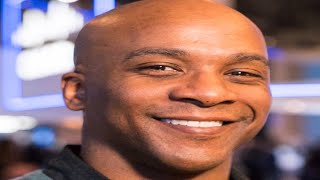
In this interview recorded on Inauguration Day, host Michael Horn talks with CNBC anchor and journalist John Fort about his personal background, family life, and the emotional impact of George Floyd’s killing. Fort explains why he chose education as a response, describing the online course he created on the Black experience in America. He outlines the course’s objectives—to give Black youth a framework for understanding their history—and its three‑cycle syllabus: (1) Double Consciousness, drawing on W.E.B. Du Bois and Shakespeare’s Othello; (2) False Restarts, highlighting recurring patterns of hopeful but incomplete progress; and (3) How We Got Here, covering ancient African civilizations, trade, and the slave trade. Fort details his pedagogical choices, such as using a feature‑story structure and an interactive “S’mores” game that illustrates comparative advantage and the breakdown of fair trade. He shares anecdotes from teaching the course to his two sons and a small group of other children, describing the late‑night family discussions it sparked. Fort also discusses the practical side of building the course—designing PDFs, pricing a $5 lesson, creating a web platform, and aiming for a self‑sustaining model while keeping resources free where possible. Finally, he reflects on what he has learned about African history, the importance of the Declaration of Independence unit, and his vision for the course to reach broader audiences beyond Black youth.
Chapters
Welcome to the future of Education. I'm Michael Horne, trying not to be intimidated by today by my guest, John Fort, who gets to play television anchor all the time for real on cnbc. You probably know him as a technology reporter and anchor. Terrific personality who has elevated the conversation around business and the future of media and technology in particular. And so, John, just deeply appreciate you being here today on Inauguration Day. I know you're busy coming off hosting Lunch Hour and so forth, but you've been engaged in some important work. So I'm excited for the conversation. And for those who are tuning in live, please ask questions and I'll do my best to jump in with them. But John, just to kick us off, I think people, they know your face, they know your voice from cnbc, certainly. But I think they'd be curious, your own personal story, how you got to where you are now. We're both Montgomery County High School graduates. You're Blair High School, if I'm not mistaken. That's right.
1994.
Okay. I was Walt Whitman just a few years behind you. I'm just curious, your own pathway into journalism and the pedestal that you now have and the platform that you have for the country.
Well, yeah, be careful with the pedestal because the fall off of those can be painful. But I, I really grew up in a household, the son of a minister and an artist and an art teacher. And so communication and learning have always just been so important to me. And I born in New York and we lived there for the first portion of my life in schooling. Briefly went to private school at St. Anne's in New York, which for those who know it, is sort of one of those well regarded but kind of touchy feely private schools also. But then we moved to D.C. and I went to D.C. public schools. Very different environment, majority black environment. This is D.C. public Schools in the 80s. Elementary school was a pretty good experience. Junior high at Jefferson in Southwest, right near Southeast, was a lot tougher. And you know, seeing the disparity in facilities across the D.C. area, seeing the difficulties based on resources and the different social challenges was something that my eyes were definitely open to. But from there, as you mentioned, I went to Montgomery Blair, not because I lived in Montgomery county, but because my mom was an elementary school teacher at the time in Montgomery County. So I could go to Blair for half tuition. In effect, I just, I had to get out of D.C. public Schools. It was that rough as far as the bullying, the pressure, the difficulty in the environment for a black male in the 80s and particularly in the Gifted and talented classes. It was just. It wasn't doing good things for me at all. But at Blair is where I really got introduced to journalism. I had been into creativity and writing before that, but took a newspaper class and newspaper, student government and drama were three of my major things in high school. And newspaper, well, you could say that all of them in a way have followed me out. But newspaper is the clearest line then from there into what I do now.
It's amazing how the student newspaper experiences, by the way, do translate. I mean, my writing path and so forth is similar in high school journalism and on the paper there. I'm curious if we fast forward so you went into journalism, but just talk a little bit about your family now and family life because that's going to be relevant to the story that we are going to talk about.
Sure, yeah. Live in New Jersey now with my wife and two boys. They are 12 and 10 years old and they are awesome. And they are a handful and they're just lots and lots of fun. And they're both attending public schools also. My wife's Korean American. So we have this really interesting and rich blend of cultures within our family and a really interesting tangle of challenges then around how do we teach them, support them around their identity and understanding what's happening in society, giving them the tools to form their own opinions, make their own observations about what's happening, decide how to participate in that, Especially at a time when there's so much intersection between politics and identity and everyday life. And I think partly because of the technology that we have at our disposal, there's a lot of expectation, even on young people that they're going to have some kind of response to things. I think that richness and those identity issues come to bear in an even bigger way.
I want to dig into that more in a little bit, actually, about that technology piece. We'll hold it. I'll say my wife, who's also Korean American, said last night when I was prepping for this, she said, you should dig into how Covid and technology has impacted the online course in particular and the opportunity for quick react or quick takes and considered conversation how that's manifested. So we'll go there. But I want to back up just a little bit and talk about, you know, obviously in 2020 there was the killing of George Floyd. I'd love you to take us into your reaction in the moment and your family's reaction, your two boys, and just help us understand emotionally how you all felt about that. Before we even get into what you did?
Sure. Well, my reaction is probably not what you would expect for me, navigating these multiple killings and instances, interactions with police as a black male, it's both intensely personal and also very common. So my reaction to the killing of George Floyd was similar to my reactions to the killings of so many other black men before. It was tragic. I. It affected me, but frankly, I've gotten used to it in a. In a really unfortunate way. So it wasn't. The challenging part, wasn't so much my own reaction to the killing. I. I didn't watch the video, didn't need to watch it. For me, watching videos like that, it's not informative so much as it's deeply traumatizing because I see a version of me on the screen dying, being killed. It's different when it's, I think, more arm's length. But what really affected me was the reaction of other people around me, co workers, supervisors, et cetera, who wanted a reaction from me this time in particular. And so there was almost a bit of. This wasn't new for me. I've been paying attention to these every time they happen. But for the broader society, this had become more of a watershed moment, and they were desiring a reaction from me. And that was difficult in part because as a journalist, we have this standard of fairness. I won't call it exactly objectivity, because I think it's more complicated than that. But I don't protest, I don't march, because as a journalist, I've got to represent a wide variety of viewpoints and avoid putting myself in a position that. That. That would communicate bias. But at the same time, for my boys, for my wife, for the family in general, there were a lot of questions and questions about how we react, how we don't react, what we take from this, how things change. And so that led me to think about, well, what can I do? What should I do from my position as a person who gathers information, who communicates, who engages, who hopefully helps people to go down thoughtful paths? What can I do and put together in response to this moment that's going to be positive?
And so let's jump in from there then. Because you decided on creating this course, you turned to education, in effect. And before we get into the course itself, and as you call it, the course capitalized as you've written about it, I'm curious why education again? You know, as a journalist, you have this again, I guess I won't use the word pedestal this time, but you do have a way to reach people in Multifaceted mediums, for lack of a better phrase. And you're able to impact even while keeping on that veneer of objectivity or keeping yourself out of the story. And I'm curious why education, given the sets of ways that you could have reacted or responded.
You know, I think it's probably a great question, but the answer, it's just all that I could think of. Because in a sense, education is a long narrative. It's a long story. And what I was looking for was a framework in which to have an extended and very complicated conversation. Engagement, primarily at first with my boys, with our boys, that was. They were the target in this. I was thinking, well, here are all the things. What are all the things that I want to communicate to them about the black experience in America, kind of as their dad, what do I want them to know? And then when I saw the breadth of that, it's like, well, this is a lot of stuff. This isn't a talk. This isn't the talk that we've heard so much about that black fathers give their kids. I had a version of that with them already, particularly our oldest 12 year old. This is a course that's what's longer than a talk and involves making sure that somebody understands and has their own reflections and thoughts and questions that they push back with, where they engage with material and learn about what's happened before and have ideas and opinions about what comes next. That sounds like liberal arts education to me, which is what I had as, as an undergrad or after high school. And so that's immediately where my mind went is this is. If it's not just a talk, it's a course.
Gotcha. So that, that makes sense. And to have a snap reaction like that makes sense. So, so let's, let's dive into the course itself. I'll put it up there so folks can check it out online. There's a number of different ways you can engage with it at the moment, which we'll also get into. But let's start, I guess, with a series of lightning questions, if you will. First, the objectives. You know, what did you want people to learn and take away from having taken this course?
Well, when I first crafted it, it was specifically for young black kids. Junior high, high school was the target, though. Very quickly when I got into actually teaching the material that I put together, I realized it was more crafted for a high school, college, probably, but. But I figured, well, you know, I never liked to be talked down to as a kid, so let me just keep the same Material, but just do my best to make it relevant for this younger audience. And what I wanted to do was not tell them what to think or lead them down a very specific and obviously prescribed pathway, but to introduce them to ideas, to thinkers, to historical events that would start to give them their own framework for understanding at least how I see the black experience. And I think that that take that approach was different from what I saw out there already. Because traditionally, I think black history courses have tended to focus in on two things, slavery and the civil rights movement. And there's like maybe a little lead up and then a lot about slavery and how awful it was and the details and it said, the economics of it, the social aspects, etc. The brutality. And then, yeah, Civil War, Reconstruction, black codes, Jim Crow, but then Civil rights movement. And weren't the leaders of that heroic. And there was a dream, and we're partway there, but not all the way there yet. And that's pretty much it for black history. And I thought, well, my mother grew up in the segregated south and my parents generation lived through the civil rights movement. And I was sort of a child of the post civil rights era and this expectation that coming out of that, everything was going to be different. And in many respects it's not different. Many things are different. There's been progress made, but it's not as different.
Well, I remember you saying that the first time. Right. I remember you saying that the first time we chatted, as you were. The course had been up for some time at this point. But one of your points was that effectively every time people think when a moment like George Floyd's killing occurs, that this is going to be different. This is the moment we're going to lift beyond this legacy and past of race relations and we're going to finally, you know, realize Dr. King's dream and so forth. And your point has been history is much more marked by maybe two steps forward, a step back, a side shuffle, and sort of these repeated patterns, if you will, of. Of history. Can you talk a little bit about that and how you brought it out in the course?
Sure, yeah. What I call the. And I'm not a professional educator, of course, don't pretend to be. I'm a lifelong learner, I'm a journalist. I really built this to be, hopefully an asset to both professional educators and to parents. But as I was looking at history, the third part, or third cycle, as I call it, of the black experience course is called false restarts because of exactly what you said growing up in the 80s and 90s, mostly a little bit in the 70s, but mostly 80s and 90s. I think to our generation it was communicated okay. We lived through the civil rights movement. You saw the Eyes on the Prize special in video and now these laws have been passed and things are changing and you're going to have opportunities that our parents generation never had. And by the time you're having kids, you, your kids won't even care about color or know what race is. And look at all of the integration that's happening in society and that's going to fix it all. And I think a lot of us believed and expected that and that isn't how it worked out. And when I was thinking about, well, why did that not work out that way, I looked back and really noted the reconstruction period after emancipation and how the hope was so similar. Well, we've had emancipation, now we're going to have black people across the country are going to have the vote and there will be more and better representation and boy, there will be land for the former slaves who would work that land. They'll get a due compensation for the generations of work. And yet, you know, thanks Andrew Johnson. It didn't quite work out that way. And so there's this pattern of what I called false restarts kind of playing that idea, false starts. And I think, you know, after the civil rights movement we saw a push for integration through policies like court ordered busing, you know, different ways like affirmative action. And there was a backlash against those things. The intentions were one thing, making them play out in reality was something different. And my sense was not to be cynical but to be observant, that the George Floyd tragic killing, that moment in the response to it, the outpouring of, you know, from corporate America, from all quarters. Well, now we're going to do things. Things are going to change. When I was hearing people say, well, everything's going to be different now, right? Not so fast. Yes, things are going to be different. These are important initiatives. It's an important push, but it's a slog because there's going to be a reaction and a pushback. I think we've already seen some living that, right?
Yeah, I think we've already been living that. I agree with that. So talk briefly, I guess, about the syllabus and how you transcend the typical narrative of black history in the United States, if you will, and get beyond just slavery, civil rights, figure out, I guess, the space in between on your own. How have you navigated to bring out all of the contours and shifts that have occurred in between and since.
Well, I try. Hopefully the audience will engage with the course and take it and provide their own judgment on how well it works. But my initial challenge was how do I make this material relevant to a new generation? Right. Because you can't just start with slavery and kids today. Well, I'm not a slave. And as a matter of fact, I'm kind of uncomfortable talking about those terms, you know, especially in kind of mixed ethnic and cultural company. But. But even. Okay, well, why are we. Why are we talking about this? How do I make this relevant? And so what I did was borrow from a classic journalistic feature story format where you've got your lead and your nut graph, which are meant to engage the reader and show them some tension and why this subject is relevant, number one. And then you go into history and talk about, well, how the situation that we're talking about came to be. And then you go into the dynamics, perhaps, that are pulling the story forward. Kind of classic feature story format. I thought, okay, well, in narrative, why don't I set the course up with that same structure, engaging them, then going into history and then talking about dynamics. So the first part, the first third, what I call the first cycle, is called double consciousness. To do exactly that. Looking at W.E.B. du Bois concept that he brought forth in his classic work, the Souls of Black Folk, of double consciousness, that difficulty being black and American at the same time because of discrimination, as an African American, the familiar state is not feeling fully African or fully American because, you know, we don't have a specific link or connection to Africa. Many of us, that's been severed. And in America, many, often in the mainstream, see us as not fully American or American enough. I think for this new generation, that double consciousness perhaps plays differently. I think there are a lot of young people today growing up in. In more integrated, more diverse environments who might feel more of that double consciousness. You know, dissonance and pressure. A black kid among other black kids being told, well, you're not black enough, or why aren't you into this? Or why do you talk like that? Right? That. That's also pressure on that double consciousness. So I figured it would provide multiple potential pathways for young people to understand why the study of the black experience is relevant. So it starts with Du Bois. Then I reach into Shakespeare and Othello, because for me, Othello is a great representation of double consciousness written by Shakespeare before 1619, before we even had a black American experience at all. Othello, the Moor of Venice, is in the Situation where he's a black man in a white man society, highly competent and yet facing discrimination because of where he's from and how he looks. And it ends up driving him crazy. And so it starts to set up, I think, both the universality of the relevance of double consciousness because Shakespeare is so great at communicating stories that are universally resonant, and also really just I think, bringing to bear for everyone, because Shakespeare is clearly for everyone just how important a societal issue this is.
It's really interesting. And then I'm going to push you a little bit further because one of the cool then experiences that you've designed in the course is the Smore game, if you will. And I'd love you to tell folks about what the Smore game is because I think it's another way to make this relevant to the audience that you, that you were talking to specifically in the context of trade and slavery and how that got its start and frankly became such a big business.
Yeah, sure, sure, yeah. So the second part, the second cycle of the course is called how we Got Here. And I mean that in two ways. Sort of how we as a society got into this really difficult point and also how we as African Americans got to North America. So the goal was to look from ancient African civilizations up into the Civil War, not just to jump straight to slavery, but, but look at, okay, what was, what was happening in Africa before the transatlantic slave trade became a thing. How, how much can we zero in on that, even though there's not so much of that traditional written record as we have in some other cultures? So it starts off with a lesson called forgetting. You know, focusing in on the idea that just because we don't remember something doesn't mean it didn't happen, doesn't mean it wasn't important. There are all kinds of reasons why there's not a record of certain things. And from there move into this idea of good trade. And so, like, what is good trade and not a business report? So this is right up my alley.
This is part and parcel.
Yeah, yeah, yeah. So I said, well, how are we going to, how are we going to look at trade? Well, when I think of what's good about trade, I think of this concept of comparative advantage. The idea that if I'm really good at growing apples and you're really good at growing oranges, and we both want apples and oranges, it doesn't make sense for me to grow half apples and half oranges and you to grow half apples and half oranges. And for us just not to have the maximum amount of fruit, the best thing is for you to focus on growing what you're good at. I'll focus on growing what I'm good at, and then we trade, and then we both end up with more. So I thought, well, how do I show the kids how good trade is supposed to work? I thought about this game, Settlers of Catan, which we love to play as a family. It's a trade game. It's a lot of fun. And I thought of that concept of focusing on what you're good at, which is a simplified way of talking about what in economics is called comparative advantage. I thought, well, what if I set up a game that shows the kids both what's good about comparative advantage and that that concept, when people focus on what they're good at and how hard it is to really achieve the best outcome from that. So I thought, well, okay, let me think of something with multiple parts. So I thought, those s', mores, they got graham crackers, they got chocolate, they got marshmallows. So I set up this dynamic in this game. You can find it on the kind of newsletter site where I explain how the game works. Be for black. Experience.FortMedia.com explains how the s' mores game works. But basically, the kids have a choice of how much of each of those elements, graham crackers, marshmallows, and chocolate, they want to produce, that they. They can produce either four of the things that they're best at or, you know, less of something that they're not good at, and then they have the opportunity to trade in between. Well, what tends to happen is the kids try to do. These teams try to do as much as they can on their own and avoid trading because they don't want to benefit another team too much. Even though the objective of the game is not to beat the other teams, it's just to have as many s' mores that you can make at the end as possible. And at the end, you know, I explained to them how the real, the best way to win this game is for you to just focus on making the most of what you're good at and then trade equally with the other teams. All of you would have ended up with 12s'. Mores. But it's difficult to do when you don't respect what the other team is producing, when you don't trust the other team, and when you don't come up with sort of a trade agreement that's fair and benefits all parties, and from there move into the slave trade and how that's bad trade. Now that they understand what good trade looks like and how it's supposed to work, it's like, well, here's why this is bad.
Yeah. And I suspect they can see the breakdowns. Right. Because they've struggled with the exercise themselves. As you noted on your writing about this, when you ran the course, I think the maximum you saw was people get to six s' mores, and so they saw, I think, how these arrangements can break down. It leads me to my next question in terms of what's the dinner time conversations that you all had around this. You taught this course the first time, I believe, to your two sons and seven or nine other children, if I'm not mistaken, online.
So.
And I'm assuming that provoked conversations right around the dining room table.
What. What were.
Can you take us inside some of those conversations and. And then maybe extrapolate a little bit about what you hope those conversations might be as others engage with this material?
Well, what it sparked is kind of late night, right before bed conversations, because the. The process of putting this together was really, really hard. What I would end up doing is teaching it mostly after dinner, except on the nights when I was teaching it, it was three nights a week. I mostly wouldn't eat dinner because I'm scrambling to put together the materials finally and set up the TV and the zoom call and the laptop in the right position and whatnot. So it was a bit of a scramble and a race. And we ended up having the conversations about the material oftentimes in the zoom session itself because I tried to provoke some discussion with it. But then after, I was afraid about how it would work out and would my kids be embarrassed that their dad is, you know, doing all this stuff in company with other kids. But, you know, it was great in. Upstairs in the halls, outside the bedroom, you know, my 12 year old or my 10 year old. Wow. I didn't. You know, what Emmett Till's mom did in having that open casket was really powerful. And, boy, I can't imagine what it must have been like to see that in Jet magazine. And, you know, it was these conversations about the connections to the material carrying into what they were seeing happen today. That was just absolutely my dream scenario for the material. So that's. And it continues, which is what is really kind of heartwarming for me is we're still having conversations about connections to the things that we talked about, whether it's Du Bois versus Booker T. Washington, whether it's the concept of lynching, the sort of uprising in the American south post Civil War versus what we just saw at the Capitol. It's amazing the connections that young people and people in general are making.
That's awesome. And I would love to geek out a little bit on the how you built it and taught it piece of this now because my audience is often going to be more education focused, of course, and they're going to be curious about it. I'll start off just with a commendation, which is taking that tactics from feature story writing and building that in, I think makes a heck of a lot of sense because we learn best through stories. There's a whole mountain of research around how we connect with stories, stories. And if you think about teaching through the ages. Right. The way we originally taught thousands of years ago was through folklore and legends and passing it down generation after generation. We didn't have writing and things like that certainly in pre civilization. So I'm curious though, you know, as you said, you're not an educator. You have emphasized that multiple times online and in conversations we've had as well. But here you are sort of getting an education in how to be an educator. What was that experience like? Building it, researching it sounds like was. You probably didn't know all the material and then constructing it and leading it online, which in a non pandemic year might have looked quite different, I suspect. Or maybe it wouldn't have. Maybe you would have naturally gone online. I'm just curious. That arc of that experience.
Yeah. Well, I keep emphasizing that I'm not a professional educator because I have so much, so much respect for professional educators. My wife is a trained teacher. She has a master's from Berkeley and is a reading specialist. My mom is a retired professional educator with a master's from Pratt Institute and Art. So I want to let everybody know I'm not trying to step into those shoes. I approach this as a parent, as somebody who communicates, as a longtime Sunday school teacher. Yes. And someone who loves interacting with young people and pulling their ideas out and challenging them and seeing them grow. So I am an educator of sorts, but certainly not a professional educator. My approach was to the first six lessons, the first cycle I put together kind of all at once before I started teaching it. And I had a broad idea of where I hoped it would go. And I knew I wanted to use the modern technology that we have because of the possibilities it has in ways that I hadn't seen done before, because I thought, boy, there's YouTube videos out there that are great, that are biographies of people, that are notes On Shakespeare, in this sort of environment where we're learning digitally and virtually, you can just link out to those and watch pieces of it as material. As a kid in a classroom, it was a special treat when the teacher showed video. Bring in the cart with the TV on it and the vcr and put the tape in. And where'd they gotten the tape from? It's super special. Now we've got these resources at our fingertips, and I think we haven't gotten as many processes in place to take full advantage of them yet. So I wanted to see if I could do that. But after I got through the first lesson or two, that's when I realized that I was trying to teach mostly middle school students, high school and college level material. So that was one adjustment. And then I also thought, okay, I need to do a few of these lessons before I plot out how exactly the rest of this structure is going to go, because I need a sense of how the interaction between the kids is going to be, where they're going to have questions, what they understand, don't understand. So I would really sometimes just a couple of days in advance, be adding material and structuring lessons, say, in how we got here, even though I knew how I wanted it to go. So, for example, just days ahead of time, I knew I wanted to do a section that really did focus in, or a couple of lessons that focused in on slavery ahead of the Civil War, but how to tackle that? And I settled in on the idea of fighting back. And what about taking three different African Americans who fought back in different ways? What if we take Harriet Tubman, you know, who fought back by smuggling slaves out. Nat Turner, who fought back by literally taking up arms and fighting back. And Frederick Douglass, who fought back by educating himself and becoming sort of this larger than life communicator, activist, speaker presence that was influential broadly in an even different way. You know, education and elocution were arguably his two most potent tools. So, you know, it was playing with that and putting those concepts together really in ways that, based on who the students were, I thought would really hit home. And sometimes doing that on the fly.
It's incredible, though, that you've pieced it together in the way that you have, and now you've got it on a platform. People can. You're charging for some of the courses and you have bigger plans to take it to bigger scale, I think it's fair to say. Just curious about your plans, your vision for who this is going to reach. It started with black youth, but I think it's fair to say, or at least in my opinion, as I was going through the course over the last couple months, it's transcended that, I think. So I'm curious, what's your vision for it? Why charge for it? Where do you see it going? I love to hear your reflections on that.
Sure. Well, right off the top, the reason why I'm charging for it is because I want it to be self sustaining and I think it does have value. And that value ought to be communicated. There ought to be some good trade right at play even within the education space, or maybe especially within the education space. I think too often education as experience is undervalued. At the same time though, it was important to me for this to be accessible. So the first thing I did was create a designed PDF of all the lessons of the course and resources in the course and make it a free download. So there's a black and white version design. You can, you can download, you know, put in your email address and download that for free. There's also a version of that PDF, kind of put together multiple pages that has more explanation, introductions, original illustrations, that's $5. And then the feedback that I was getting is that people really wanted help getting through this material. It was one thing to kind of give them a sheet where they could see the objectives and click through it, but they wanted more interaction, more help with the nuance. And so I originally tried to work with some outside groups on that and what they came back to me with, format and presentation wise, I wasn't happy with. So I thought, well, why don't I try to put this together myself? I've done some work in design and with HTML and web development just on the side. And so I looked for a platform to do that and found one and put it together. It's time consuming. So right now there are two built out lessons of the 18 with a third coming in just a few days. But yeah, that's the story of how that's common. It's expensive. It takes both in time and resources, paying for web hosting and platforms and figuring out the best ways to deliver this material and hopefully additional materials in ways that will benefit having the ideas and concepts spread. So that's why it's important to me for it to be a self sustaining economic venture.
Yeah, it makes a lot of sense. As we start to get near our end of our time together, a couple other questions and the first one is to allow you to reflect my mentor, Clay Christensen. Well, always said two things that have been relevant to this conversation, one, he'd rather teach you how to think rather than what to think, which I think is completely in line with what you're doing here. But then the second one that Clay would always say was that he felt sorry for all the students in the class because he, as the teacher, got to learn way more than they did sitting in the class. And so I'm curious, your reflections on what you've learned through teaching and building this course.
Great question mark. So much. I learned a lot about ancient African civilizations. Putting this together, that was always a significant blank spot for me in the history that I'd been taught. Like, I'd heard about Mansa Musa a bit, and, you know, okay, richest guy to ever live. And, you know, we see little dashes of folklore. But I had never taken a course or really spent time, you know, this is on me in books, learning about great Zimbabwe and civilizations and structures where through looking at what we know existed, structures that we know existed, we can point to technologies that must also have existed and the degree to which archaeologists and historians have been able to piece these things together. And then I learned so much about the Swahili coast and the trade networks that were in place long before the transatlantic slave trade between Africa and Asia. They were shipping giraffes to China and also trading gold out of southern Africa into eastern Africa and then out to China as well. So sort of that example. It's also in the good trade lesson. We get into those specifics after we do the s' mores example showing, okay, well, this area was producing gold and cattle, and this area was producing, know, some textiles, and they were getting some spices and other things from Asia. And look at how all of this, you know, this idea of comparative advantage, it was working in Africa before, that was all new to me. In the section before, when we're diving into double consciousness. A lot of that came out of things that I happened to be studying and looking into before. I had read all of Maya Angelou's autobiographical works over the past couple years or so, and then got into reading a lot of Toni Morrison also. And one of the things that was important to me in this course in the curriculum was to have lots of representation of women throughout. You know, too often, I think when we study black thinkers, when we study black history, there's very much a focus on just mental. But I really wanted to pull out some of these artists, thinkers, really, philosophers that perhaps didn't get their due in their time, but were very significant. So Ida B. Wells also being one of Those important to have, I think Harriet Tubman there as a fighting back example, even though she wasn't always physically fighting in the way that we might conceptualize it.
Yeah, it makes a lot of sense, frankly, and that balance as well. And before my last question, I will just say everyone ought to have spent some time in this course because I was learning a tremendous amount as I started to go through it and was trying to think about how do I do this with my family, actually, so that we're having a conversation around it.
So just last question on that point, on the conversation. Give it a try if you like, at classes.fortmedia.com that's where that interactive experience is. That is $5 a lesson. But it's about at least an hour's worth of material and interaction. And so you got me talking through some of this material on video and then you've got opportunities to pause and have discussion. So if you're like mirroring your laptop on Apple TV or Roku or something like that, you can have a group of people, maybe young people, maybe just peers in a room going through this together and having conversation. I think it's potentially pretty rich that way.
Yeah, I, that's, that's my reflection as well, having spent some time with it. And last question, just which is specific to this day, and I know people will watch this not necessarily on this day, but it's Inauguration day. We have a new president, we have a new vice president, President Biden, Vice President Harris. It's a momentous day. You have an entire unit in, in the course on the Declaration of Independence, which I think is noteworthy. You know, Gary Wills, I think it was wrote about Lincoln that prior to the Gettysburg Address, people thought of the founding of the country in these United States as the Constitution. And that what Lincoln effectively did by saying four score and seven years ago was pull people back through the Constitution to the Declaration of Independence. And why that matters was it pulled past the odious three fifths language in the Constitution to this notion that we're all created equal. And then Martin Luther King in 1963 when he's making his I have a Dream speech on the steps of the Lincoln Memorial, he pulls back to Lincoln to the Declaration of Independence as well. And uses the same thing. And he uses that same language five score years ago. It's not by accident, right, that, that, that he did that. And you know, it just says it's time to cash that check. Right. We, we have not yet cashed that check. And I'm curious, you know, on this inauguration day, momentous day, for a number of reasons. Just your reflections around that unit and the Declaration of Independence and its importance, perhaps, in this story for certainly black youth who are learning about this, but also all of America.
Yeah, the importance of that unit and of America. I think of myself very much as an American and a patriotic American. Over the past, you know, three or four years in particular, you know, I've gone back through, you know, ancestry, done some research, and realized I can trace multiple lines, branches of my family tree, back into the 1800s, which is unusual for African Americans, but it shows just how American. Right. I am. Even though in our society, I think there are lots of pressures, both from within the black community and without, to somehow communicate that black people are less American. I think what's embedded in this American idea is a work in progress. And what I hadn't reflected on as deeply before is how central and how key that is to both what this company, this country has been, and what it's going to become, what it needs to become. The Declaration of Independence, I'm convinced, was written the way it was, with that language. All men are created equal, because it had to be. Thomas Jefferson had to know as a slave owner that there were problems with that language, but he was searching for something bigger than monarchy. And what are you going to appeal to above monarchy? He needed sweeping language. He needed the biggest possible mandate. And so he reached for that because the country had to be founded on it. And I think we've wrestled with that ever since. And the Civil War is one example of that wrestling. I think we were on a path to that when the founders had the language and the Declaration, which was necessary language to get enough of the country, or what was going to be a country on board for a revolution. But then really, they wanted to hold on to some of the practices that flew in the face of that necessary language. And we're still dealing with. With some of that on multiple levels. But I think it's so important for us as Americans, you know, this is the black experience in America, specifically for those of us taking it who are Americans. It's so important, I think, for us to embrace those founding ideas, even if, and even as we struggle with the failed implementations and the flawed implementers. And I would count ourselves among those flawed implementers.
Sure.
That idea is so important, and it's so, I think, available for those of us from many different backgrounds to embrace.
No, that makes sense. And it's good words, I think, to leave the conversation on as we all strive toward that ideal and that more perfect union. Right? That includes all of us. And first, thank you for building the course. Second, thanks for coming on to talk about it and engage in conversation and for those tuning in and checking it out or reading this in my newsletter as it will go out later, you know, check out the course. I personally think it's a really important contribution that I hope is frankly not just taught on your platform, John, in the future but becomes something that if not taught directly through college online programs at least inspires some courses and some conversations in those colleges. So just just deeply appreciate it. I'll leave the link there for folks to check it out. And thanks so much, John. I appreciate it.
Thank you so much for the attention that you've given it and the insight and the guidance that you've given me. It means so much.
Well, I appreciate it. And we'll be back. We'll be back. Next time on the FUTURE OF education.










