The Buying and Selling of American Education
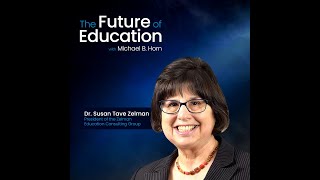
In this episode of Future of Education, host Michael Horn interviews education leader and author Susan Zellman. Zellman recounts her personal journey from a sixth‑grade student in the Marble Hill projects to roles as a high‑school teacher, academic, state associate commissioner, deputy commissioner in Missouri, and finally Ohio State Superintendent and president of her own consulting firm. She explains why she wrote The Buying and Selling of American Education, noting that policymakers often lack a deep sense of American education’s 230‑year history. She outlines the “seven Ps” that shape the system—politicians, parents, professionals, publishers, producers of educational software, plutocrats, and partisans—and argues that vested adult interests make reform difficult. Zellman describes education as a complex, socially embedded system linked to taxation, health, housing, and banking policies, and stresses the need for genuine community immersion and empathy, citing fieldwork in Appalachia that shifted superintendents’ attitudes. She critiques the current school‑choice landscape for its fragmented, unaccountable programs, and proposes an “accountable pluralism” model: funding students rather than schools, eliminating property‑tax‑based inequities, creating statewide equalization formulas, and leveraging technology and cross‑sector R&D (including an X‑Prize‑style competition) to generate data‑driven, high‑quality options for families. Throughout, Zellman blends personal anecdotes, policy analysis, and a forward‑looking vision for a more pluralistic, accountable American education system.
Chapters
Welcome to the Future of Education. And now here's your host, Michael Horne.
Welcome, welcome. Welcome to the Future of Education. I'm Michael Horne. And today we welcome Susan Zellman to the show. Susan served in a number of interesting roles across the education ecosystem. She's currently president of the Zellman Education Consulting Group. Tell you more about why I'm particularly interested in having her today. In a moment. But just to give you a little bit more of her background. Before that, she was the executive director of the superintendency at the Ohio Department of Education. She has also served as the senior vice president for education and Children's programming at the Corporation for Public Broadcasting, where she developed policies and programs to integrate public service media into a national reform education agenda. And prior to that, she was the superintendent for public instruction in Ohio for 10 years. And during her tenure, the state of Ohio went from 29th among states to fifth in the 2009 Education Week Quality counts report. But more important for this conversation, she's also the author, or co author, I should say, of a new and very interesting book titled the Buying and Selling of American Education. Susan, welcome. It's great to see you.
It's great to be here. And thank you for interviewing me.
Oh, you bet. You bet. So before we get into the conversation around the book and so forth, I've given obviously the thumbnail, if you will, of your bio. But I'm just sort of curious about your own journey through education and education policy and how that journey perhaps has shaped where you've spent your time and your passion within the world of education.
Well, you know, I. I love that question. And my, I think education journey started when I was in sixth grade in Mrs. Eisner's class. that time, we were living in the Marble Hill projects, and on my floor, a family moved in from Harlem. And the boy who was going to PS122, though it's now not called PS122 because it was reconstituted, but was in my class, in my sixth grade class. And, you know, I actually tried to befriend him and walked. We had a long walk to the elementary school together. And, you know, he seemed like such a nice, bright guy and he was quite tall. And he lasted in my sixth grade class for one week and then he got demoted to the fifth grade. So I asked my teacher, Mrs. Eisner, why. She said, well, he went to school in Harlem and they don't have good schools there. And I thought, how unfair. And not only that, but he also got Then demoted to the fourth grade. And that really freaked me out because he was so tall and just stood out like a sore thumb. And I thought, God, the system has failed Poor Ernest Gibbs. And to this day, in my old age, I still remember Ernest Gibbs and kind of wonder whatever happened to him. The second thing is that my grandparents were immigrants from Russia, but education was the root to the middle class. I mean, my father was a lawyer, my uncle was a lawyer and a judge. My uncles went to the City College, you know, in the 30s, and it was their way to become middle class. So education was always very important and a value. Plus, I was kind of a nerdy kid, you know, and I was the type of kid who failed summer camp. Nobody wanted me on their volleyball team. But I couldn't wait for school to start. So in some sense, even though I know my father wanted me to be a lawyer, education was my passion and I felt comfortable at school then. I could have done college in three years, but I stayed on to get certified for one year. I was a high school social studies teacher at Grace Dodge Vocational High School right across the street from. And I would have to leave the teacher's room because I thought they were so judgmental about their students. They said they couldn't tell the Bronx Zoo from the students at Grace Dodge. That really pissed me off. I was able to get a full scholarship, a fellowship. Then to go to that. I have to say this in Mass. Because I live in Ohio right now, that other university up north, University of Michigan. And I was in a doctoral program funded by the U.S. department of Education to train people who were interested in education, who had an education background, but who would do research, planning and evaluation for public schools. I got to do my dissertation from the Harvard Civil Rights Civil Liberties Law Review. I met my husband that brought me to Boston. And then he put it in our marriage contract. Our marriage was no employed unless I finished within a year, which I did. And then, ironically, through a high school English teacher he had, I got a job teaching at Emanuel College. And I was an academic for the first 14 years of my career. I also simultaneously held a research appointment at the Harvard Educational Technology Center. Then I got an NSF grant from Columbia Teachers College for women who taught in small liberal arts colleges. I was getting kind of bored even though my kids were young, I thought I happened to meet actually Mike Dukakis at our neighbor's party who was in his law firm and becoming a judge. And I was recruited to join the caucus administration as an associate commissioner. So I left my brilliant academic career and joined state government. And not only that, but I really found my passion. I felt that I could help design and improve educational systems and I could make a sort of a greater impact. The associate commissioner for a new division called educational Personnel. And I lasted there for about six and a half years. And then I had an opportunity to really break the glass ceiling and come to become the first deputy commissioner in the state of Missouri. Oh, my gosh, a far cry from ever been. And my two girls were in college at the time, but we took our son to Missouri, and he used to call it the good enough state. First of all, he was angry because I denied his birthright of going to Harvard Square every day when he was in high school. But the reality was I realized the variability in the quality of education from state to state. He went to Arlington High, but quite frankly, where he went, which was considered a very good district in Missouri, was not as challenging for him. And that gave me even more passion. And then I was recruited to be a state superintendent in Ohio. And I did that for 10 years. I went to Washington for almost two, came back. I actually also did a short stint in a publishing company. Halton Mifflin Hartcourt. Yeah, Halton Mifflin. And then a new governor came in. He liked me, and I came back as executive director.
I'm just curious because you have a lot of experience across a lot of states, a lot of contexts, a lot of personal passion and anger in some cases tied into all of this. Right. And your sort of your why. And I'm curious what you wanted to pull into this book and really share with the readers as you wrote it.
You know, I had a wonderful experience of seeing how legislation is crafted both at the federal, state, and policy at the local levels. And one of the things that was sort of struck me when I started to work in the state department of Education and not the academic community was that people who engaged in education policymaking really didn't understand American educational history. And yet we were trying to improve and reform the system. And, you know, without roots, trees perish. So I think it's really first thing is that very important for us to have a good conceptual model of where are Americans? Educational experimental system has been and is currently now over the past 230 years. And so that was one thing that I was going to do. And I also wanted to highlight the sort of, what I would call the structural problems in trying to reform an educational system that I saw up close and personal, particularly in the state roles that I Performed. That was one of the reasons why I wrote the book.
No, that's helpful. It gives context. And I'll dig back into the history piece in a moment, but first let's go to the title, because you have this super provocative title, the Buying and Selling of American Education. And I'll give you some context for my question in a moment because I really want to hear how you picked that title, because this isn't really a book about commercial interests in American education or capitalism in American education, nor is it like philanthropists buying American education, even private schools, frankly. It's not even like a Diane Ravitch type book. It's none of that. So I'm sort of curious, like, why this title and what does it mean to you?
You know, it was very clear to me in my work over the years that educational, our educational system was designed around the needs of adults in the system. And we all, including myself, have vested interest in this system. And it is so hard to change because of our vested interest. So in the. Not the introduction, I think the prefix of the book, I talk about the seven Ps, the politicians, the parents, the professionals, the publishers, the producers of educational software, now the plutocrats who want to keep the status quo and, you know, and the partisans, you know, people from either the left or the right who don't like education anything. So. So I thought. And you know, I've always tried to be provocative, so I thought the Buying and Selling of American Education, Reimagining a New System of Schools was. Was a title which I would hope sells books, but who knows?
We'll find out in that, but hopefully we'll help a little bit and get people a little bit more interested. And so I want to dig in on the history part of it, because this book has a lot on the history of American education, and frankly, it does it from of the perspectives that you just laid out. The professionals, the politicians, et cetera. You sort of go around in a variety of these angles and help us understand how we got to where we are today through the lens of, as you said, the last 230 years. And so I suppose this is a totally unfair question for a cast like this, but I'm curious, like, you know, as you think about the top couple things you hope people take away from that extensive history, what are they in a little bit more detail as we think about informing where we are now and where we go?
Absolutely. Well, first of all, education teaching is not a linear type of thing. We don't have a curriculum. We teach a kid and Then we expect to measure results. I think teaching is doing school, first of all, doing school is hard work. Teaching and learning is a complex human act and that we don't do it in a vacuum. I mean, your classroom in some sense is a social system in a system of a district, in a system of a community. And I think that in lots of ways the school is a microcosm of what's really going on in society and also relating to other systems. The political system, the economic system, the taxation system, the health system, housing policies, which I talk about in my book, banking policies that create neighborhoods or for whatever reason. So one is that this is really quite complex. And one of the things that I think educators need to do is to immerse themselves. And your book talks about this in the. And that, you know, I think one of the problems we have become a political tool to tool to the Republican party and superintendents are leaving and teachers are angry and they're leaving and so forth is because we really didn't do a good enough job in community engagement. And we need to sort of open up that schoolhouse door. We need to let the community into the school and immerse ourselves and go out into the community like cultural anthropologists and also develop a sense of empathy for the families and the children we serve. And I think that's really, really important. And I think educators tend to be somewhat judgmental of their students and that forces a culture of soft bigotry, of low expectations. And for this book I interviewed 104 Ohio superintendents. And one of the things that came out, particularly in Appalachia, and I'm spending a lot of my time working with Jason Learning, by the way, I think doing some terrific, incredible work in workforce development in Appalachia. One of the things the Appalachian superintendents told me was because of food shortage and difficulties of getting learning materials, they went into the little hollows, little villages, and they saw the conditions in which their students live. And that really changed a lot of teachers attitudes toward the kids and toward the families. I think that's really important. I love your chapter where you talk about that you better, as a superintendent or a principal understand that schools have different purposes for different families. And you better assess that. And you need to accommodate that. You need to develop trust, you need to listen, you need to take your judgment and work with community based groups within your community and develop wisdom to solve problems.
Well, so that's, I mean, it's a terrific set of points there, right? And that piece of empathy and getting out into the community to understand the progress that they're trying to make and so forth. I think you're right. It could break down a lot of these, these walls. And as you said, tools are the pawns that schools have become in a lot of these political fights. And so you give this diagnosis of how we got to where we are today and how broken and intractable some of it seems. But then really, in this last culminating chapter, chapter six, you end with this conclusion of how we can move forward. And it's really a major conclusion that you have is to embrace a more pluralistic view of American education in school. And it's frankly, as you sort of implied. Right. It's very similar to where I ended up in my new book, From Reopen to Reinvent, as I sort of worked my way through it. And I think we both took different paths to it, but we ended the same place. And so I'm just curious, tell us more about that conclusion and why you see it as the only way forward.
Well, first of all, I don't see it as the only way forward. I wanted to be provocative and say to people, look, you're not going to like my vision, but let's all come together, form a multi sector partnership and rethink. So let me start off, though, with why I talked about accountable pluralism as state superintendent. First of all, I am the Zellman of the Zelman voucher case. The Supreme Court is really moving. If you follow the Supreme Court decisions, they're really moving more toward funding private and parochial schools. That's. That's one thing.
Yes.
Second, and that's happening in lots of other states with regard to vouchers, private school scholarships and charter schools. And, you know, I had three children, all who are very successful, thank God. I don't want to knock on wood or whatever, but, but they all were very different types of learners. And as a parent, I mean, you know, it was expensive to put all three of your kids in private school, and we didn't have very many choices. And today I think parents, all parents, not only poor, but especially poor parents, need better choices. And as state superintendent, I saw how people exploited poor kids by making money off of the charter school movement and that there is no accountability in these private school scholarships. And I thought in some ways, when you only have one system, like the common school, which was never really, it was sort of a myth of the common school anyway. And I think, well, you know what, we're moving toward pluralism, but other democratic countries have done this much better than us because they hold people accountable. So I always like the work of Paul Hill. And he wrote this book in 2013 or 15 about democratic constitution for our public schools. And he was, as I was very upset about where the school choice movement was going because of its lack of accountability and that we were not giving poor parents really good quality choices. Lots of charter schools only last for five years. Now, look, there are wonderful models of charter school schools out there. I don't want to bash that, but we need more of it. We need more innovation, we need more experimentation, and we need data, and we need people to understand quality processes and how to measure it. So that was really important to me. Plus, if you look at 26 state policies on school choice, they're all over the place. And it's not a coherent system. They're discrete programs. So I tried to use my imagination and say, look, we have an ailing system. If I were queen of the world, what would I design? And I designed this system, which would be a system of schools. The CEO would be a superintendent type, but they would manage a portfolio of schools. The money, we wouldn't fund schools, we would fund students. And that we would stop the property tax because it pits parents against one another. It's not equitable, but we would have a statewide taxing system with an equalization formula based upon the needs of students and their families. And I think with new emerging technologies, we could get a better sense of how to merge educational funding with health and human service funding and get better data. I mean, one of the good things about technology, I think, from a research perspective, is that we will have these incredible databases or we can and we could understand what works under what conditions and why? And that's what I was sort of arguing in chapter six. You know, where is the role of business, philanthropy, state government, the federal government in trying to build a stronger R and D for American education and bring all people to the table from multiple perspectives and see what would come up. Do an X prize. Rather than go to the moon or Mars, why don't we do an X prize for different types of educational systems, do some good research, design evaluation and see what works under what conditions, for what types of children and families, and provide better choices, an accountable school choice for parents.
So much to aspire to, I think, in that vision. Susan, thanks for writing the book. Thanks for joining us on the future of education and thanks for continuing to push for quality choices and options for the families who needed it most. Really appreciate it.
Thank you.
And we'll be back. Next time on the Future of education.










