The Value of Opening Up: Welcoming New Ideas in Work and Learning
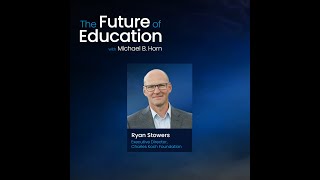
In this episode of Future of Education, host Michael Horn interviews Ryan Stowers, Executive Director of the Charles Koch Foundation, to explore the principle of openness within the work‑and‑learning ecosystem. Openness is defined as the free movement of ideas, resources, and people, which fuels knowledge, innovation, and opportunity. The conversation critiques the current closed system that relies on credit hours, seat time, and degrees, arguing it leaves millions behind. Stowers and Horn discuss how openness requires both incumbent institutions to rethink entrenched practices and new entrants to bring fresh ideas. They highlight three stakeholder groups—learners, solution providers (educators), and employers—and illustrate how openness can transform each. Real‑world examples from the foundation’s portfolio are examined: Arizona State University’s culture‑change under Michael Crow, Western Governors University’s competency‑based model, and Reach University’s employer‑linked credential pathways. The dialogue then shifts to employers, warning that risk‑averse hiring practices (e.g., over‑reliance on degrees) can lead to “Kodak moments” of stagnation, while embracing openness can create competitive advantage, better talent retention, and purpose‑driven work. Finally, the benefits for individuals are outlined—greater empowerment, ownership, and meaning—culminating in a case study of a Swiss train‑car company that partnered with a community college to create apprenticeship pathways, demonstrating a win‑win for workers, schools, and the business. The episode closes by reaffirming openness as a mutually beneficial, positive‑sum strategy for the future of education and work.
Chapters
Welcome to the Future of Education. And now here's your host, Michael Horn.
Welcome to the Future of Education. I'm Michael Horne and you are joining us, the place where we are dedicated to building a world in which all individuals can build their passions, fulfill their human potential and live a life of purpose. And there are very few people that I know who exemplify that more than the executive director of the Charles Koch Foundation, Ryan Stowers. He's a man who's a friend and has just offered a lot of wise advice over this journey for individuals, for many organizations over the years. So, Ryan, great to see you. Thanks for being here on the Future of Education.
Thanks for having me, Michael, and thanks for all that you do.
No, you bet. I've been looking forward to this conversation for a while for many reasons, but you all at the foundation have just been working with so many entrepreneurs, educators, employers, helping rethink really how we develop talent in this country so that all individuals can live into those ideals that I espoused up front, purpose, and that businesses will also benefit in the process. And so as a result, you get this, like bird's eye seat right on. Like all these cool journeys about how people are doing things differently from the way they've always done it. And this will be the first of a series of conversations we'll get to have. But I guess I'll set the table because over the past couple months I've gotten to explore a few of these principles with your grantees, the concept of mutual benefit with Scott Pulsifer, of course, of Western Governors University, and what I think you would call the broader dimensions of talents. Right. With Kathleen St. Louis Caliento of Cara Collective. And then you have this other, you know, I'm looking in your book, right, that the Koch foundation and Charles Koch Industries puts out and principle based management. And you have this other one in there called openness, key principle. And I'd love you just to define what openness means to you and why it matters, because it's one of those that I think on the surface the word could mean lots of different things to lots of different people. And so it requires a little explanation.
Yeah, no, thanks, Michael. And when I think about openness, I think the best way to define it is the free movement of ideas, resources and people. And that generates knowledge, innovation and opportunity. And we think that's been critical to fueling progress in society. And we think it's going to continue to be important moving forward. So I think that's the best way to define it.
No so that, that's a good definition and you couch it in that larger narrative of progress. Obviously in the context of like learning and education and workforce, what does openness sort of look like? Right.
Yeah. And if you, I mean, if you think of, and, and you, and I spent a lot of time on this, if you think of a system that right now, from my perspective needs, needs thoughtful consideration of, of openness, you know, it's the work and learning ecosystem as, as we think of it and, and it, you know, it. For so long it's been, it, the focus has been on things like credit hours, seat time, degrees, and it's not working. It's, it's helping a select few get to the point where they can reach their potential, find purpose and meaning and produce value for themselves and others in society. But for the most part, it's leaving millions behind and it's setting a lot of people up for failure. And so in this context, openness means, and you said this, you use the term rethink. I mean, openness would lead us to considering that we haven't figured this out and that we should consider changing the way we think and act about work and learning to bring about better outcomes for all people with a recognition that we know how to do this. We've seen it work in other industries, we've seen it work in other spaces. We should put that kind of openness and innovation and a willingness to rethink or think outside the box to help us find better solutions for people. And from our perspective, the answers are there. If we'll engage in this kind of openness and backing up a bit, you see it work at a societal level. A more open society is going to be one where new ideas are welcomed, where those new ideas are applied and progress is made. You know, in the physical world, you see it like closed systems. You know, they, they inherently stagnate and eventually fail. And, and so if you apply that to, to the, the world in which we're, we're working, you can see how, you know, in the work and learning ecosystem, you've got more than three stakeholders, but I'm thinking of three in particular. The learner, the solution or educator, the, the solution provider, and then the employer. Because so much work, so much learning occurs through work in our, in our lives. Getting all three of those stakeholders to think and act differently about how they engage in the work and learning ecosystem, I think can, can bring about incredible results. And so it's, it's in that context that openness, I think applies very much.
Yeah, It's, I'm just thinking of so many things as you're talking that through, Ryan, because like two of the things that hit me, I think of glass nose right in the Soviet Union, Gorbachev being like, we got to open up, we have to have new ideas.
Yep.
And then I think of like the American entrepreneurial system over the last many decades compared to say like a place like Japan. And our friend Clay Christensen would always say Japan disrupted the US economy. They played the game once, but then they had no mechanism of venture capital or laying employees off to create new companies that would come, like create that next wave of growth. Like as a society it was relatively closed. Whereas the US like it's, we have some painful moments but we keep having entrants come in and rethink and bring new ideas.
That's right.
And so it's an open society that like keeps rejuvenating us over time. And so I, I, I guess the question is like, so is it so much like the existing organizations rethinking or is it like being open to new organizations maybe coming in and reinventing the DNA of a sector?
Yeah, I mean, I think it's going to require both. And you know, if, if you think of just the education system, like look at post secondary ed right now there are attempts and look, a lot of these attempts are well intended. I mean a lot of these people are trying to help others reach their potential. Universities, you know that I think fundamentally they are. But if you look at the competition that new alternatives face in the post secondary ed market, for instance, universities are getting $250 billion in subsidies to run their business and the anti competitive forces that that creates for an alternative to be relevant and provide a solution that will actually empower people is extreme. And so that's an example of where if we don't rethink what we're doing in the student finance and funding question, we could inadvertently create a more closed system than a more open system that would allow innovation, that would allow to your point, new entities, new individuals, new entrepreneurs to come into the space and try to make things better and to have incumbents and people in the traditional space not view that as a threat, but view that as an opportunity to learn and adjust as well. So that's just one example. So I think it's gotta be a combination of both and of the current actors being willing to and open to changing the way they think and act and then, and then new entrepreneurs coming up with new ideas and driving and spurring that kind of innovation. With, with the intent of, of creating a marketplace that, that reaches all learners in a highly individualized way to help them, you know, reach their potential. We can do this. I, I think we can do this.
Yeah. So I, I, let's talk about your portfolio because you guys support so many interesting organizations and it's a compelling point. You just made the both and. Right. Has to be part of this openness. Like who's doing this? Well, who's doing this? Right. Right now that's really, you know, bringing in new ideas into the sector exhibits that openness.
Yeah. So just a couple of, of groups that are maybe on the side of the traditional approach. If you, you know, and these are, these are folks that you and I know. Well, we talk to a lot of these folks a lot. But if you look at what Michael Crow's done at asu, he's been, he's been open to considering culture change in a space that's been fairly resistant to that kind of culture change over time and, and rethinking the role that the university plays in society in order to help more learners gain access to knowledge and skills they need in order to be successful and more open to bucking the one size fits all kind of standardized approach to one that's, that's more individualized. And you know, Michael would say this. I don't think Michael's figured it all out, but he's, he's made some huge strides in doing so. Another one that comes to mind, you've interviewed him, Scott Pulsifer at Western Governor's University. The fact that they take a competency based approach to then figuring out where they can meet students and empower them to close the gap to getting the knowledge and skills they need for in demand jobs, that competency based approach is highly innovative relative to where higher ed has been in the past. And I think you're seeing the outcomes through the results that Western Governors is producing. Another couple of that come to mind that are maybe smaller and less well known, but equally impactful is like a reach university where they've gone in and this is where you can bring the employer in, but they've gone into different sectors directly with groups that need to hire people and they're not able to find people with the right skills, knowledge or aptitudes to meet the demand. And so they started with K12 teachers going into school districts and saying, hey, if we can identify dormant talent either through, through teaching assistants or substitute teachers who have, some of them have 20, 30 years of classroom experience, but they don't have any way to take that to the market and say it's worth anything other than giving them another role as an assistant or as a substitute. And so Reach going in and saying, how can we help that substitute teacher close the gap in a low cost way to get them the credential they need and then have the district recognize them as a fully trained teacher able to run a classroom and teach students. And now they're going to nursing and manufacturing jobs. So, you know, Reach University is a great example of what can happen when we take an approach based on openness and in this space coming up with a highly innovative idea that has the potential to unlock things in ways that otherwise wouldn't happen.
Yeah. So I love all three of those examples and for different reasons. I mean, the way Michael at Arizona State redefined excellence away from who you effectively exclude to how you can take anyone, regardless of their starting point. Right. How far can you take them? And then Scott, obviously I'm a big fan of what Western Governors does with competency based learning and fundamentally changing the measure of learning from time to actually what you've mastered. And then Reach, Mallory's longtime fan club of what they've created. It's interesting on the last one with Reach that required and I guess they all do to some degree. Right. It's certainly true for Scott and Western Governors as well. But like there, that's an explicitly big change in terms of the connection with the, with the businesses, the employers in this case. Right. Hers is school districts, but it could be companies. Right. And I guess the question is, you know, like, what's the downside for businesses if they don't embrace openness? Because it, I'm sure it can feel scary. Right. Like it's upending the rules of how you have operated. And obviously there's some great upsides in terms of dynamism and sort of rein, you know, innovating the future. But I can imagine a lot of the colleges or employers that maybe have hired the way that they have historically, they're like, yeah, but it's working for me.
Right.
What's the downside if they don't make the changes?
Yeah. And you know, at a general level, we've seen examples of companies when they're unwilling to make changes that anyone looking at the landscape would say, hey, you need to change. So, you know, think of just out of the learning, work and learning context for a minute, look at Kodak and remember, you know, Kodak was the leader in their industry and at a time when they should have probably seen the writing on the wall and understood the landscape and being, you know, willing to open themselves up to new ideas and new concepts, new technologies. They shifted away from digital photography because they didn't want to threaten their profits from their film photography. And you think of the consequences of that, that decision, they were cataclysmic, right? For Kodak, I meant, they meant stagnation and eventually ultimately failure. And you know, I think we're, we're at a point where if you look at the, if you look at the US Economy, you look at the number of jobs that are available and necessary in order to keep these companies moving, in order to help them produce products and services that make the world a better place, make people's lives better. Based on our current approach to talent, who and how we hire and how we develop our people as employers, we've got a more closed system than would suggest is necessary in order to be successful in the long run. And you know, there's, there are a lot of companies that are looking at changing the way they hire and changing how they develop their employees from a social impact standpoint. But, but I think what you and I are talking about is that they ought to be thinking about it from a, a business standpoint. And far too long companies have relied on the proxy of degrees is telling them, for instance, what person they're finding in the marketplace and how that person's going to add value to their, their enterprise, their company. And so an over reliance on something, you know, sticking with the degree in the long run to help employers understand who and how that, you know, who they're hiring and what that person will be able to do in the company. You know, this could be the Kodak moment for a lot of these companies because things are shifting, people are valuing things in different ways. There's so much fluctuation in the education market, the credentialing market. People are looking at skills now more than just degrees. And from my perspective, they're not going far enough. How do we use technology and identify solutions that can empower employers to know exactly what they're getting when they hire somebody? Because there's a way to understand aptitudes and, and mindset and gain skills and knowledge. To me, that has the ability to give a company a competitive edge in industries, especially where other companies are slower to respond in that way. And so to me, the answer for a lot of these companies, if they want to continue to be relevant, they'll change the way they think and act and they'll approach hiring and they'll approach all of their talent practices in a very, in a very different way, understanding that their human capital, their talent, their employees are the most important asset they have. And so investing in that, investing in them in ways that matter more to the individual, I think is, is, is not just the right thing to do. It's going to be the competitive and smart thing to do as a, as a business.
It's so interesting hearing you sort of develop that out. I get new things every time we talk about these principles. The one right there I got was actually openness. The opposite of it isn't just closed, it's a risk aversion. Right. And so in some ways you often think of like the HR function in a company as being very risk averse. It's sort of the no one got fired for hiring IBM back in the day.
That's right.
I like that Kodak moment language. And you can almost imagine, I think what you're arguing is like, you can stay with the same practices. You may have heard the Andreessen Horowitz podcast recently on Higher Ed where they were saying like, they don't just recruit, you know, their companies don't just recruit from Stanford anymore because it turns out it's not a good predictor of success in the companies. And so they, they're having to get more creative and look at different measures and assessments themselves, like on, on, on point. Because in many ways the degree is itself discriminatory and not very helpful to the companies. And so as an HR leader, breaking out of those tried and true, quote unquote mindsets is actually really important perhaps to, to staying ahead of the curve. If, if, if I'm understanding you right?
Yeah, no, exactly. And you know, look at some of the other problems they're facing. In addition to not being able to find enough people to fill roles, they're having a hard time retaining talent. And in reality, the, the answer is the same. If, if, if companies will invest in people in ways where, where they're empowering them, where, where they're meeting them, where they are. We're seeing the data. I mean, paycheck and compensation matters, the commute matters. But so does purpose, so does meaning in one's career. Even to the point where this younger generation seems to be willing to trade off some levels of compensation in order to find that purpose and meaning. A smart employer would tune into that aspect of the landscape and, and recognize that in order to stay ahead of the game, they've got to change their talent practices in order to, to hire the people that are going to want to contribute, to have that contribution mindset to achieving what the business wants to achieve. And, and I think that tweak is, is huge, Michael. I think it's going to be. I think it's going to matter a lot.
Yeah, I couldn't agree more. We're seeing the same data. I mean, as you know, got this book that I've been working on, and the data we see on individuals trying to make progress as they switch jobs is that like the paycheck it stands in as a proxy for something. But like, it's a proxy for I want more respect or gee, I have, you know, I have to pay daycare.
Right.
Bills or like. And so it's a proxy. It's not the root cause. And we really need to get root causes and understand people's purpose and progress underneath it. And to your point, as a whole, like, as a whole individual, not just you at work. You know, David Brooks had this piece recently, right. On marriage being much more important than work for happiness. Let's end our conversation here with individuals. Like, what's the upside and downside for individuals, you know, if they are or are not in places that actually support openness? What should individuals be looking for and thinking about?
Yeah, there are a couple different ways you could talk about this. If you step back and think about openness in the workplace, think about the difference between working for a company where you're not just your. Not just your input from day to day, whether it's making devices or transferring information or whatever your role looks like. Think about the difference between you just kind of plugging in and doing your thing versus an environment where your supervisor or the people on your team or your employer generally respects you for what you have to bring to the table, is open to your ideas, and given your local knowledge about what you do from day to day versus anyone else in your organization, the possibility of you coming up with ways to make that better or make that more efficient or make it more impactful or effective. And that kind of empowerment approach internal to a company or that kind of openness to the possibility that a leader doesn't always know everything that's best about what's going on in the company. The learner worker in this case is learning through experimentation, learning through trial and error. He or she is respected and given the chance to share his or her ideas and thoughts and know that they're impactful. That kind of empowerment and openness in the workplace creates a much better environment and one that people want to be a Part of they go to work because they find purpose. It connects up with what we were talking about a minute ago. It connects with their ability to make something bigger than themselves better and move forward. And they've got a sense of ownership in that improvement. They've got a sense of ownership in that innovation. And so I think it has, you know, I think it has a ton of potential to unleash things in people that frankly we just haven't seen in the past in ways that are much more empowering and much more effective for both the employer and the employee. And this gets back to a different level of mutual benefit than I think we've seen in the past. And look, their employers figuring this out, I mean, their employers doing things differently right now, I think Walmart's taken a huge step in this direction, focusing on lifelong learning, focusing on the merits of, of understanding who the individual employee is, what their aptitudes are, recognizing that if they invest in people in these individualized ways, they're going to, they're going to be empowered and want to contribute in ways that are much more meaningful and important to the company than otherwise. And I think you're going to see companies that take that approach gain the competitive edge. I met with an employer last week, Martin Ritter, who's the CEO of a Swiss based company that makes passenger train cars and his US operations here in Salt Lake City. He came to the US and recognized this challenge. They weren't finding talent at the level they needed to with the right aptitudes or skills through the traditional system. And so he approached a local community college, built a program that allows juniors and seniors to come into the company, get credentialed for what they're doing in conjunction with what they're learning through the community college, as well as what they're learning through this apprenticeship program. And they're hiring people because the people are more connected to what the company's trying to do. They're more motivated to be a part of it. They were met in a way that the traditional system wouldn't have met with them. In fact, in a lot of cases, there would have been barriers preventing this level of access. And so in this instance, it's an employer fundamentally being open to more risk and fundamentally changing the way he, he thought and acted about work and learning. That's leading to improved outcomes for hundreds of young people in the Intermountain west and mostly in Salt Lake City, Utah. So it's just an example. And you're seeing this, you're seeing employers start to step up and change. And you know, the reason they're doing that is they know that it's going to give them a competitive edge and let them be more effective and in turn, it's going to help unleash the potential in their in their employees and workers and people.
I love that case study and it's a great place to end because it really is the win, win, win. Right. It's really the positive sum as opposed to too often, I think in society we sit there thinking who's the who's the loser in this? No, the individual benefits. The schools are certainly benefiting and of course, the employer is in that example. Ryan, thanks for doing the work you continue to do and for joining us. We're going to find a time in a few more months to catch up on what you're learning from the portfolio and continued evolution, but just really appreciate it.
Thanks so much, Michael. Really appreciate your time.
And we'll be back. Next time on the Future of Education.
Sam.










