Tom Vander Ark on Cutting-Edge Schools, Contributing to Society
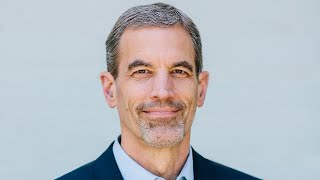
Tom Vander Ark discusses how pandemic enrollment drops have accelerated alternative school models like nano-schools and micro-schools, with the PRENDA network expanding rapidly in Arizona. He argues schools must shift to team-based staffing, embed social-emotional learning alongside academics, and help students build purpose through real-world projects. Kansas City's portrait of the graduate effort has aligned 31 districts around five experiential pillars and mobilized 600 business partners.
Chapters
Welcome to the Future of Education. I'm Michael Horne, and really excited about today's session because it brings someone who I've long looked up to in the education field, the thought leader, someone who's seen trends well ahead of others and said that this is where the world both should go and is going in education, and has often been at the forefront of helping make that happen in a variety of ways through his writing, through the philanthropy that he's been able to direct, through the investments and organizations he's advised and the leaders that he's worked with, and his own time as a superintendent marshaling a lot of the changes that he said would be important coming into. Into action. And so I'll bring up to the stage right now Tom Van Der Ark. The one and the one and only Tom Van Der Ark. I'll say it's good to see you, buddy.
Hey, great to be with you, Michael.
Yeah, I'm excited about this conversation because you always have such a good pulse through getting smart and all of the network of people that you have out there around what's really going on on the ground. And so I want to start there with. You're fundamentally a very optimistic person generally about where things could go.
I generally am, Michael. But, you know, the exciting thing is that in the last month, I've been getting out there for the first time in two years. I mean, that's exciting. Then you and I have a chance to. Typically to visit a lot of schools and learning institutions. I tried to. I used to get to 100 a year, and then for two years didn't see any schools or kids. And it. It was so challenging. And just in the last month, I've been. I've done a bunch of workshops for superintendents, so I've had a chance to interact with a couple hundred superintendents. I have visited about a dozen schools around the country. And so on one hand, it's just super exciting to see folks resuming some sense of normalcy. But I'm also just seeing and feeling a lot of pain and frustration and confusion in some respects. Some teachers and leaders have said, Michael, this year is even harder than last year. And last year was the hardest in my career because it's still the confusion of the COVID procedures that keep changing. On top of that, in many communities, we're seeing a level of political unrest and even political disturbances. And some sleepy suburban districts, we're seeing school board meetings be overrun by protesters. And so in some respects, it's just never been a more challenging time to be a teacher or leader. And then when I think about the context variables sort of behind that, that are shaping the work that we need to do for the future, it leaves me challenged to reset my mental model. And so I think we're dealing with this complexity and challenge and confusion right now. That are my headlines.
No, that makes a lot of sense. I'm curious, as you think about where we'll come out of this. And that's the here and now. And I think you've done a good job of summarizing the current state of affairs. And I'm hearing the same thing from the educators I talk to. They saying this is literally the hardest time, harder than last year for them, not just because of the continued uncertainty, but because of all the other dynamics to bring to bear, plus, you know, the mounting gaps that they see for their students, not just academically, but socially, emotionally, the challenges of reconnecting and so forth. But I'm curious, against that backdrop, there have been people who, myself included, who've said, well, there are some opportunities for big changes out of this in the long run to create a better schooling system that you've long advocated for. Are you fundamentally optimistic, are you fundamentally pessimistic, or tell us about the messy middle of how we'll come out of this? You know, a couple years out of it?
Yeah, it's a, it's a messy distribution. Michael. I'm seeing a lot of districts that have snapped back to something resembling normal, but I'm, I'm seeing a lot of districts that are struggling with low enrollment. Kindergarten and preschool enrollments remain low. I think we've seen, I predicted 500,000 loss in public school enrollment this year. I'm guessing that it's closer to a million. And some of that remains temporary like last year, but I think a very large percentage of it is, is permanent as people have sought and created new educational options outside the system. And that includes online learning, both traditional online learning programs and new online learning programs, new forms of homeschool, and then many combinations of the two. Co ops and nano school. Some people would call that a micro school. Our friend Kelly Smith has developed PRENDA just before the pandemic. And it exploded into 400 nano schools across the state of Arizona. Little schools of five or 10 students using a largely digital curriculum, but with great infusions of hands on learning. And so we're seeing a tremendous amount of innovation around the edges of the system. I would say that the superintendents that I spoke with in the last few weeks appreciated the opportunity to stop and just consider what's happening and consider the opportunity, short term, of how can we make the second semester different and better, but how can we begin or resume innovating to better serve kids? In this new context, we're seeing a number of school districts even launch their own micro schools, sometimes inside a traditional school and sometimes in a community facility. One of my favorite examples, Michael, is the Cajon Valley and David Miyashiro and San Diego County. David, more than any leader in the country, just leaned into this pandemic and put a bear hug around the El Cajon community. They opened schools before anybody else in California. And then this summer, they just exploded the summer offerings into this beautiful array of learning experiences and artistic expression experiences. Just an extraordinary array of learning opportunities for kids in his community. They're now even growing a brand new high school. It was an elementary district, and they're growing a high school to extend those kind of opportunities into post secondary or secondary and post secondary, because it's an early college. And so in the system, we are seeing people taking advantage of this newfound agility of some of the new lessons and learnings, the capacities that teachers are developing and doing some really, really cool things.
So those are some bright spots that you're seeing on the ground. I want to pull out others because as we go through Cajon is a great example, though. They're just doing remarkable stuff before the pandemic and as you said, continue to lean into it. I'm curious, you know, this confusion and chaos and sort of wrestling through things and the uncertainty that people are continuing to grapple with. Do you see that slowing down some of these innovation efforts that they need to be fostering these, you know, micro nano schools within. Where's the tension and how do you think that wrestles itself out as we. As we move forward?
Yeah, Michael, there is a tremendous amount of tension. I feel a lot of caution when I urge innovation, because when I am on the ground with school leaders, they're like, tom, we're short teachers, we have no subs. I'm doing contact tracing at night, and once in a while I have to drive a van to get kids to and from school. So many schools are at a real basic level of survival, just trying to get through this. They have a few more resources than they did in prior years. But sometimes these challenges are not things that you can quickly solve with money. So just the logistics of running school in the area of pandemic with political foment on top of that, I think is distracting the large percentage of leaders and so just being able to carve out time and capacity to begin doing the work that people need to do is. It's very, very hard.
Do you think resources that are coming in because there is an unprecedented infusion of federal dollars that we've never seen coming into the school system right now. Do you think it can create those staffing structures to at least start that work? One of the, you know, Marguerite Rosa, of course, writes a lot about how you put funding in place for things that will be unsustainable and then you'll have to stop those services in a couple of years. But, but maybe these skunk works are precisely what we need on a temporary basis to build these practices that then go into the mainstream school. Or, or are you recommending something different from the use of those funds right now?
Yeah, we're seeing all of the above, Michael. We're seeing some people putting funds to good use just in. In order to survive. A few examples of new staffing strategies that are sustainable in the long run. Let me note a couple of bright spots.
Yeah, please tell us. Yeah.
For the last 10 years we've seen two national efforts thinking, helping us all think differently about staffing schools. One is opportunityculture.org from our friends at Public Impact. And the second one is the next workforce work from ASU Fulton Teachers College. And both of those have been developing new learning models and new staffing models that rely heavily on teams. And the folks that have moved to that sort of a teaming structure are much. Because it creates a distributed leadership system that takes advantage of teacher leaders that allows two things to happen. One, it creates a sheltered environment for new teachers to step into. It also is easier, for example, to. To take advantage of substitutes and community resources that can step into a team structure and have a bit more support and supervision than would typically be the case. So I think team based staffing is critical. And Michael, this is slightly melodramatic, but I think the pandemic ended 100 years of teacher as individual contributor. And it really does mark the beginning of team based staffing and team based teaching and learning. We just. Schools are too complicated to rely on this individual contributor model. And you and I have been advocates for blended and competency based learning for a decade. Those are inherently team based practices where we have to work together in new ways. And so I am encouraged that so many schools have quickly moved to this sort of a team based staffing. I do hope that this year more schools adopt that sort of a strategy to deal with both current tensions, but also to lay the Groundwork for future innovations.
I'm excited to hear you say that because not just because my new book that I'm working on has a whole chapter around teaching as a team sport, but I've come to believe exactly what you said, that this individual contributor model puts way too much pressure and isolation on the teachers themselves in the face of all these challenges. And then you have folks like Robert Pondisio writing that asking schools to do some of these other jobs around social emotional learning and so forth is dangerous. And if you assume the traditional isolated teacher model, I can see where you'd come to that conclusion. But to not figure out a model in which you can take care of those things, you're just not going to be able to be successful for these individuals is my sense.
Michael, let me go off on that for a second, please. We have to put wellness, we have to put social emotional learning at the heart of the agenda. This is what learning institutions are about. These are the priority outcomes. I think we've reached something close to a new consensus on this subject. And I'm super excited that before and even during the pandemic that so many communities have adopted new learning goals that fully incorporate social emotional learning, that really build on whole child development principles. During the pandemic, our friends at Turnaround did terrific work with Linda darling Hammond and LPI. If you go to designprinciples.org, you'll find a beautiful set of whole child design principles. If you go back to the building blocks for learning that Turnaround put out, the building blocks for learning are a beautiful developmental progression that really describes how young people grow. And at the bottom, it's attachment and belonging, and it moves up to those social emotional skills. And then it ascends to curiosity and agency, the sort of skills that we want to foster. But it acknowledges that we have to pay attention to this. What we have to do soon, Michael, is create new dashboards, new means of reporting back to both individual kids and families, but also communities of how we're doing on these subjects, as well as reading, writing, and math. But I'm super excited that the majority of schools in America are paying really close attention to social emotional learning. They've made it a priority. I think this is a sea change in how we view the purpose of schooling. And I'm just so excited that so many communities are coming together and expressing that in really purposeful ways.
Yeah, I couldn't agree more. I hope that more schools also spend some significant community time planning around that conversation. So it's not Something where a lot of places I've seen, they all know they need to do it now. And it's sort of seeping in. And parents are excited as well. They've been demanding it, it seems, from my perspective, but I hope they have those explicit conversations to codify it in meaningful ways in the years ahead. And it's not just purpose that's sort of, you know, as sometimes schools do. Right. Without that clear rationale behind it. So you can point to it and help someone understand why it's critical for their future.
Yeah, we're seeing some point solutions that are, oh, well, we'll adopt a program and then check that box. And I did an Aurora webinar with your colleague Julia Freeland Fisher yesterday on relationship centric schools. Julia's just done such remarkable work on the subject of relationships and taking it seriously, not only as a strategy for promoting basic skills as well as social emotional skills, but an asset and an outcome in and of itself that social capital is critical as a, as a foundation and a deliverable. And we acknowledged yesterday that relationships like social emotional learning have to be valued in the culture, in the structure, in the schedule, in the way we are funding schools in the curriculum, in the advisory system. So these have to be fully incorporated into the core architecture and practices of schooling.
I couldn't agree more. And I brought a bunch of your books with me to this conversation. I was going through my bookshelf. It was fun to see everything from Smart Cities to this is the original, I guess, Getting Smart, where you started your author work. Smart. I got smart parents almost 12 years.
Old when we wrote that.
Right. Time passes quickly. But I have your most recent one, which is Difference Making at the Heart of Learning. Terrific book in my mind for several reasons. But. But one of them, I think ties very deeply to this conversation around relationships and mentors and bouncing back from all of the confusion and chaos that the pandemic has sown, which is around how do individuals figure out how they are going to contribute to, to society. And I love your phrasing that you use through that book. If you will give us a little bit of some of the summary and why this is so important for schools to tackle as well.
Michael, it's been interesting to watch what's happened during the pandemic. I think we've seen America sort of awaken to the importance of purposeful work. This month has been called striketober because so many people are on strike and so many people have tens of millions of people have just left the workforce because they're in part interested in more purposeful work. So that's one strand behind difference making, that we want to begin a conversation with young people early on about the purpose of their learning, to help them create a sense of purpose about who they are and what they're interested in and what they're good at and where and how they want to make a difference in the world. The second strand is that we really learned this with and from Seth Godin, who for 10 years has been saying there's really only two skill bundles that matter and it's leadership and problem solving. That school should be about fostering a sense of leadership. We think of that first and foremost as agency of knowing yourself and having the creative confidence to know when and where and how to act on the world, and problem solving, of building some pattern recognition about stepping into complex problems. And we think the best way to deliver and develop the skills that matter most is by helping young people make a difference right now. So shifting the conversation away from you're going to need to know this five or ten years from now to get a job, to what do you care about what's important in your community? How can I connect you to work that matters to you and to your community? And by doing more of that, at least doing that occasionally is going to build more quickly, more robustly, this sense of agency and leadership and then problem solving. And it turns out that those are the most valuable skills in the world. So the world needs difference makers. Difference making is a superpower and difference making is this super efficient pathway to preparing kids for work that's important to them.
It's interesting to hear you say the full context because I also think some people might read a Daniel Willingham say and be wary of the, I would say the brainless or mindless seeking of trying to connect content in relevant ways to people's lives. This is much deeper than that, what you're talking about. It's this connection to something larger than self and larger than sort of, oh, this person likes basketball. Therefore, I will try to teach this content through that. Right? It's a much more rooted in who you'll be and become and how you'll act in your community in the here and now as well.
It is. This is one thing I appreciate about our friends at Cajon Valley who between kindergarten and 8th grade immerse young people in a 54 experiences that help them imagine possible futures. And they conduct projects and connect with experts in different fields of study. And then when they're done, they ask themselves these important Questions can I see myself in that future? Does that speak to my strengths, interests and values as a human being? And doing reps on that, of connecting with the world, doing work that matters, really, I think helps build a self knowledge that's so important. And I love the way that they and the San Diego Workforce Partnership are connecting both young people and parents to localized and personalized guidance. This has been one of the most important additions to my mental model of learning in the last two years, Michael, that every person on the planet ought to have access to personalized and localized guidance. There's someone, an algorithm and an advisor that get to know you and your strengths and interests and values and your zip code and help you piece together work and learning opportunities. Right. Of how you skill up, how you employ those, either either in a job or as an entrepreneur. But this combination, this lifelong combination of reflecting on opportunity, of skilling up and then activating those skills in ways that are meaningful to you and your community, I think that's the path forward. So I think you and I are interested in how we help people create those learning institutions that walk alongside people forever. Rachel Carlson was great on your podcast this morning, Michael, talking about this, of not starting with programs, but starting with people and inviting them to think about the work that they want to do and the skills that they have and then how we can help them gap fill around that. And that's the lifelong work that I think you and I are excited about supporting.
Yeah. And I agree with you also that my own mental model of this has evolved over the last 15 years. We've been in this conversation with each other. I actually found in writing my new book, I found disrupting class some drafts that you had dumped on and finally recycled them 15 years later or something. But it was fun going through and just my own evolution and understanding and learning because we all are. And that's the heart of this. So I guess in that spirit, as we wrap up today, I'm curious, what are you most excited about next? Or what projects are you working on that have your excitement that we ought to keep an eye on? Because in addition to the things that we've just talked about, they're going to be sort of the next wave of education reform and conversation that we ought to be mindful of?
Michael just today on gettingsmart.com, we posted a blog and a case study on real world learning in Kansas City. This is the biggest and most important high school transformation effort in America. It's exciting because it started as a community conversation about what high school graduates need to know and be able to do. And just as they were getting ready to develop a regional portrait of a graduate, they said, why don't districts articulate that as a portrait of graduate, but why don't we create a set of regional agreements about the kind of experiences that young people need that are likely to be transformative? And they agreed that there's five really valuable experiences, and they include entrepreneurial experience. This is the only place in the country, the only region in the country that's prioritizing that. Internships, client connected projects, you know, work that matters to your community, that results in a public product, college credit, nine hours of college credit, and internships that are at least 120 hours. And so by coming to agreement on a set of experiences, it helped mobilize over 600 business partners in the Greater Kansas City region. Now, 31 systems, including 75 high schools, have joined this effort to make sure that every young person in that metropolitan area has access to one or more of these valuable experiences in high school. So it's exciting that it's a region that came to agreement about valuable experiences and combined with some small grants and some technical assistance to each of those systems, it's resulted in this beautiful bottom up, top down transformation of regional agreements, but the flexibility and support so that every system and school can innovate in ways that are authentic to them and their community. So it's just super exciting to see that work underway. And even in the middle of the pandemic, we had big districts like North Kansas City adopt career academies to make sure that every learner had access to internships and client projects and entrepreneurial experiences. So in the middle of the pandemic, all of these districts work together in a way that I've never seen any other region of the country. Even though it's across state lines, it's Missouri and Kansas, Missouri and Kansas. So it's just, it's super exciting.
What's the secret to them being able to collaborate amidst all this chaos and day to day operational worries.
There? You know, Michael, there was some of this work underway beforehand. There's a couple of collaborative efforts. They were on both sides of the river, but there were some regional efforts like PrepKC that for 20 years has been working across that geography. When Kauffman stepped in to provide some support for real world learning, they also pivoted as soon as the pandemic hit. And we held weekly meetings for me at six in the morning with all the superintendents in that region talking about how to respond effectively. And so the fact that they were responsive to the pandemic and created this collaborative response effort allowed the strategic work around real world learning to continue. And that meant flipping all of our professional development online, and it meant flipping many of the internships to virtual internships. But I think acknowledging the challenges of the pandemic allowed this set of innovations to continue, even flourish. During the pandemic, I always learn something.
New when we talk in addition to the example and then how they did it. Another thing I'm take away from it is if you think through the jobs to be done lens, I sort of think the job to be done equates roughly to purpose in a moment of struggle. And then the next layer of how you design against that is the experiences you need to provide. And I had never thought about that layer quite that way, which is to say it sounds like portrait of the graduate was sort of what's our purpose? And then to provide it we have to think about, okay, so what are the experiences everyone needs to touch? And then we can figure out how to operationalize that in each school. But you need to name that explicitly, it sounds like.
I think so. And the other interesting insight, Michael, is that for a decade I've been saying high school should really be skill sprints and projects.
Yeah.
And. And this sort of operationalizes it in that I think what will happen and starting this year and next year is that they will credential experiences and skills. And I think this is really important, that if we only credential skills, you know, the world is moving really quickly to skills based hir, and if we just focus on credentialing skills, we could create another NCLB where there's just this short reductivist, sort of completely reductivist people game in the system to get a skills credential. But if you also say there's a set of valuable experiences and they're multidisciplinary, they're complex, they're extended, they require partnerships, that if you do both of those, it's much more likely that what you'll see is deeper learning for more young people sustained over time. And so I'm really excited about the idea of credentialing experiences as well as skills. And then maybe the old courses and credits framework begins to move into the background.
Yeah, I'll need to think more about this, but I think it's an interesting idea in the sense that I've always thought the skills based hiring works well in industries where the tasks are very well understood, which Typically are digital tasks or more maybe finance or things like that, easily quantified and well understood. The more you get into work of expertise or where there's less rules, less patterns, we're not actually very good at specifying what those skills are or measuring them in ways that are free of bias and so forth. And I think we could go down a really dangerous road of trying to sort of make this over technocratic on all skill sets and all job roles and so forth if we're not careful and honest or humble about where, where we are in that spectrum. So that, that seems to speak to that, I think.
I super appreciate that comment. I'm excited and nervous about skills credentialing for I'm a big, big advocate of multiple assessments. I want to make sure that the teacher, mentor, advisor observations are combined in thoughtful way with machine scoring assessments, for example. And that's why I like a framework that names and values skills and skill credentials, but also other forms of evidence so that we avoid another cycle of reductionism that we're really not honoring the full expression. I think this idea of helping young people tell their story of who they are and what they care about means that we should also be helping them create public products that, that illustrate their, their, you know, the multiplicity of their capabilities. So it's, I think it'll. You'll see credentials and transcripts that include credentials, skill skills, experiences and, and artifacts that help them tell their story.
Yeah, it makes a lot of sense and I think there will need to be ways we simplify and construct data views of it. But data I wrote about this last week, right. Is still human created. It's not the subjective reality we would like it to believe and the things that it does not, we do not know how to put in a data or quantitative format are no less important. And we need to figure out how to recognize and value them as well in all this.
Maybe next time we talk we can talk about how higher ed is responding to all of this.
Let's do that next time.
It's a super confusing time to be in higher ed, man. It's getting crazy dynamic. Just quick comment. Most interesting thing that happened in the pandemic behind skills based hiring was that big tech has entered learning and development in a big, big way. Every one of the big players now has a public pathway to employment or enhanced employment. Google and Microsoft and Salesforce and IBM and Amazon through AWS have these beautiful learning pathways. Many of them are credentialed. I don't think high schools and colleges have begun to appreciate how significant their entry into the learning and development space is going to be.
Could not agree more. I think it's something that both high schools and college when they're thinking about how they link up with each other need to also be asking that second question of how do they link up with these external not just credentials and assessments but the learning experiences behind them as well. So Tom, we could probably go for several hours for your own schedule and your own it's early early there on the left coast. But I just so appreciate you joining us and continuing to shine light on a lot of these examples and then drive them forward as well. So keep up the good work Tom. I appreciate it.
Thanks Michael. Thanks for your leadership and thanks for letting me join you today.
No, it's a heck of a lot of fun. And for all you watching stay tuned for more from the future of education. Thanks so much.










