What role can microschools play in the future?
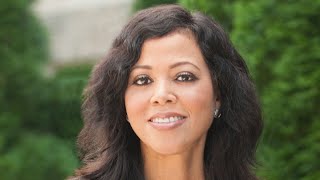
In this interview, Michael Horn talks with Pat Brantley, CEO of Friendship Public Schools, about the network’s history, philosophy, and diverse portfolio of school models—from Reggio‑Emilia early‑childhood programs and a STEM high school to a long‑standing online school. Pat explains how Friendship defines excellence as personalized growth measured by individual learning goals rather than one‑size‑fits‑all metrics, and how the network balances this with data such as assessments, attendance, and parent satisfaction. The conversation shifts to the pandemic‑era emergence of learning hubs (pods) that resembled microschools, highlighting the rapid rollout, student progress data, and the sense of safety and belonging they created. Pat outlines Friendship’s vision for microschools as a lasting model built on three pillars—people, place, and platform—detailing pilot demonstrations, blended learning stations, competency‑based progression, and flexible enrollment. The discussion then covers major scaling challenges: regulatory constraints around seat‑time and competency‑based credit, the need for funding across startup costs, technology infrastructure, and facility adaptations, and the importance of educator and administrator training. Pat also notes growing parent demand for online and homeschool options, and how microschools could be integrated into existing district facilities to broaden access. The interview concludes with optimism about the microschool movement’s future, likening its potential disruption to the shift from taxis to rideshare platforms.
Chapters
Hello and welcome to the Future of Education. I'm Michael Horn. Really excited about today's conversation with Pat Brantley of the Friendship Public Schools. Pat's going to talk to us a little bit about what Friendship Public School is, is her own background of getting into education. But then the topic that we're both really intrigued to get into is the topic of micro schools and how Friendship Public Schools is leaning into this idea and some of their ideas, very innovative ideas for what all ought to be created out of this moment, out of a conversation, obviously that's been very present on many people's minds, but also what Pat thinks maybe the conversation has been missing to this point and where we're going to go from here. So with that, I'm going to bring Pat up with me first. It's good to see you. Thanks for being here.
Thank you for having me. I'm really excited to talk about something other than COVID 19.
I can imagine you all are going through a lot right now, and I hope you're all managing the insanity of, of contact tracing and all sorts of things I thought you, you probably never thought you would do when you got into this job. So thank you first. But, but let's start with your own story. I suspect people will pop in with questions and so forth as we go. But your, your own story of how did you get into the field of education originally and to Friendship Public Schools?
If you had asked me 15, 20 years ago, I would, said, I would have said I got in haphazardly. But, but having time to reflect, I think that education has always been my course. I came to this job of heading Friendship Public Charter School, actually from civil rights. I worked for Dr. Dorothy Irene Height, where we went around the country to really talk about what our children needed, particularly children in urban centers, in inner cities and rural areas who didn't have access to opportunity. But for myself, my mother was a public school teacher in Newark, New Jersey, and I started out in the Newark Public Schools. At that time, you know, we weren't getting everything that we needed in school. And I was fortunate because a group of community volunteers started their own school called the Chad School. We're talking about the very end of the 60s, the early 70s, with the idea that we could empower and improve the next generation of children by delivering an education that not only taught them, well, sort of reading, writing, arithmetic, but also gave them a sense of clarity, a sense of their self worth and pride. And so I took a lot of lessons from the Chad School and it was, it doesn't matter where you start. You have to come to the table, you have to contribute, and you are responsible for more than yourself. You're responsible for your community. So going through civil rights and then coming into Friendship Schools, I joined with the founder of Friendship Schools, Donald. Hence we launched the schools in the District of Columbia, much like the school was launched for me back in Newark. And that was to give students a better chance, to give our children a better chance, and to do it with people from the community. And so we've got a tagline. It's community vision, world class education. We believe we can bring that world class education to scale if we are partnering with our parents and families. And I think we've done that. Today, friendship is 4800 students, almost 5000 students from 3 years old to 12th grade. So from early childhood to high school, we have award winning schools. And we're quite proud of what we've seen our students and our staff do.
And so that's actually something that jumps out to me as I look at Friendship Public Schools is it's not just sort of like a set of middle schools or a particular philosophy in one narrow grade band. You all have a portfolio of school types, it appears to me, anyway, serving kids of lots of different ages, perhaps even different goals in their lives. I'd love you just to talk sort of about the portfolio and what that reflects, I guess, in the philosophy more deeply about Friendship Public Schools.
So our philosophy is that every child deserves an excellent education, but what excellence looks like differs depending on the needs of the kids and the desires and their interests. And so you're right, we have several different school types, but all of them have a foundation of how the strongest staff possible, high quality curricula, more time in school, school organized for student success, and lots of resources. But we do that in a school that has a Reggio Amelia approach because families were interested in that. We have a STEM high school because that is what families wanted. And we also run the district's oldest first public online school, which of course helped us tremendously when we got into Covid. But I think that our approach is that excellence is what undergraduates or is the foundation for all of our schools. But personalizing to the school community and to the needs of every child is what makes our school special.
That's something I find so fascinating right around that excellence being the bedrock. But then the fact that you all had a virtual school well before that was a phrase that most people would have identified with. But then also to your point, you know The Reggio Amelia approach, a STEM approach, really, this portfolio of models. I'm curious just to dig a little bit more deeply. When you say, like the common ground is excellence for each student, how do you all think about what student success looks like and, and what trade offs do you have to make as you sort of navigate maybe some of these different philosophies or modalities?
So we, we tend to look at the same data that most schools will look at. So that might be standardized assessments. We look at attendance, we look at student engagement. Are students participating in activities in school. We get feedback from teachers, we parent satisfaction, we look at re enrollment so our family staying with us. But in terms of excellence, we create a learning report for every child and we look at whether or not that child is meeting goals that are set and those are growth goals. Children start off in many different places, right? They might be really strong in math, but maybe they need extra help in reading. We can't look at them in a cookie cutter way. And so we set goals for students to see how they are growing against their own goals. And so that's what I think excellence looks like. It's not that we've all started out ahead. It is that we are helping each child get to their strongest potential.
I love it because it's a sense of sort of distance traveled, right, Is what I hear you saying of how far can you bring them regardless of the starting point and knowing that they're going to be in different starting points for different subjects. So you can't sort of paint it with a broad brush, if you will. I also hear you saying that if I'm catching it correctly, because sometimes I think people will look at, say, a Reggie Emilio approach and say, oh, that's totally at odds with the excellence as we currently judge it. Are there tensions that you see in that approach or it sounds like you all have found a way to say we can make it work. Actually, if we're excellent with these students, they'll show up on those traditional metrics, if you will. How do you think about that?
So first of all, let me just say we can make it work, right? It can be made to work if you keep the child at the center and if you understand that children grow and so you have to stick with each individual child. I think most schools, not most schools, large networks, districts, are aiming to serve thousands of students. But the reality is that families expect us to serve their child and each child has their own individual needs. When we first started our Reggie Amelia program, there was tension. People Would come in and say, well, wait a minute, is this play based? What is it? I need to make sure my child gets out in two months knowing all of their ABCs. Or educators would say, wait a minute, what about the assessments? Here's what we found. We put educators together with families. We had them go through what a Reggio lesson looks like. We had the students go through a lesson and then they did demonstrations of learning. I can talk about all the background and the philosophy, everything. When you see a three, four and a five year old who just spent three weeks studying light and they can tell you that the light bulb is artificial light and the moon reflects the light from the sun and the sun is natural light, and then go through the properties of light, it transforms the thinking of the adults around about the potentials and the possibilities of children. What I would say is that there is tension, but that is a tension because people haven't been exposed to all kinds of different models. Like I said, I came up in Newark. We've seen lots of different kinds of schools. When schools are set up to support students who have been furthest from opportunity, there's sometimes this idea that this cookie cutter approach is going to move kids through. But kids aren't widgets and they're not cars and this is not an assembly line. And so once we get people to understand that you have to deeply know each child and set up learning experiences to, to support them, I think they can start to see how it all works together.
You're singing my tune. I love this. And that line about kids not being widgets and moving them along at a lockstep pace as though we're the world's greatest astrologers based on when they were born, that we know what they need. I think that's a really important point. Let's shift the conversation now into microschools because as you know, micro schools were around before the pandemic, but they gained a lot of attention, sometimes notoriety in some education circles during the pandemic. I'm curious, let's start sort of high level, your entry into the micro school conversation and how you framed it in specific.
So, you know, In March of is 20, all public schools in the District of Columbia, all public school buildings were closed. We were closed. We already had online. Within a week, we had all of our students with curriculum in their homes. They had their laptops, they had their computers, and we began our virtual instruction. And then we started delivering meals. And then we started hearing from families just how tough it was for them while they Appreciated everything that we did. We had families that needed their kids in school. At the earliest opportunity, we opened up learning hubs. I would have told you I don't know anything about micro schools. I don't know anything about pods, but the first day that we opened our learning hubs, which had no more than eight children in with two adults, I saw kids in classrooms where they had this sort of sense of safety, of belonging, of lessons that were tailored for them and adults to help them and facilitate the learning. And in all of the anxiety and craziness that was Covid, there was peace and there was progress in those first hubs, or what we call pods and what we now call micro schools. And when we look at the data, students who were in those smaller pods, they progressed, right? They progressed further and faster than their counterparts, and some of them even faster than when we had been in normal school. So we knew it was something that we had to really break down and say, what is it that kids are getting? And can we do it at scale? Wow.
So tell me where that vision is going, because that's fascinating that you saw that not just in relation to others who maybe didn't have the learning hub experience, but as a more generalized statement of evidence. So. So what's your vision for where microschools should do? And what's friendship public schools going to look like around micro schools in the future?
So my vision is that micro schools, I hope are here to stay. That when children have a smaller environment and more adults that are focused on them, that that's where you can really start to personalize the learning. That if we are bringing in tools, blended learning, digital learning, that we can give access to really broad and deep content. But for us, micro schools are about really leveraging what I'll call people, place and platform. We can create micro schools and we can transform what are traditional school settings to do it. So we have actually launched a microschool demonstration project in a facility that is state of the art. We are bringing kids together in the micro school for demonstration lessons. So right now we're doing a week or two of micro school demonstrations, and I would invite anyone who wants to see it. If you're on, you know, ping me and I will make sure you get to see it. But so what microschool looks like at friendship is over the next year and a half, we are piloting the microschool concept with educators coming together and creating deep lessons for small groups of students where they are learning with their peers. They can be in groups that are Blended in terms of age, what we're really fixed on is are you able to master the content on your own pace and then move on to new concept in new content as you master. And so that's a part of it. So what it will look like at Friendship is starting with this separate micro school site. And then we will start to move our current schools, where families would like to see more micro schools, into sort of a micro school experience, what that will look like in a traditional preschool to eighth grade. So one of our sites is that we'll break the students into smaller groups and we'll have multiple people in a classroom. So first, starting with station rotation, so the teacher is only with a small group of students that they may be working with for an hour or so. They can rotate to a station that might be digital or blended learning. They can rotate to time with the tutor. That's what it looks like in a traditional school. But over the next year of piloting, we really are going to determine how do we deliver it at scale, how do we take what are, you know, some of the real good benefits of being in a school district, which is lots of staff, lots of physical space, and then use it to undergird micro school. How do we work with parents and families that may want to access our online school, but only come into the micro school twice a week or every other week? So. So really it's about determining the flexibility and helping to move Friendship students who do better in a microschool environment to that as their main choice.
Super interesting. I want to hit on a couple points there that I think I heard you say. One, it sounds like it won't be for everyone. Like not everyone will have to opt into it, or will that depend on age? How does that work?
So it won't be for everyone right now, but I do think that the world is moving into the direction of if not micro school, micro experience. And so that might be stations that might be two to three teachers in a classroom that might be the opportunity for tutoring instead of going into a traditional class. Because we are a district that's, that's fairly large or large for a charter network, we have the option of giving kids opportunities where they can do a micro school experience. Experience for science and math, let's say, or for STEM would be in traditional classrooms for other courses.
So this is fascinating. I'm curious then from a high school experience, some people have pushed back on me and said a lot of the kids that maybe have been in micro school environments, they want something larger by the time they get to high school, they don't want the small community. How do you think about those trade offs or are there ways that you can navigate them that they get the benefits of? Both. How are you thinking about that?
So we've done some of that in our online school. So friendships Online schools that operate from preschool to 8 and then a separate 9 to 12 actually allow students who say, listen, I'm a full time online student, but I want to participate in the math fair or be part of the cheerleading group or be on a basketball team. They can go to any friendship brick and mortar campus and be a part of those clubs and experiences. But I actually haven't found it. I think we have to talk about, talk to students about what they want and not say what we think students want. Students who come into our micro school tell us things like this one student said, when I'm in my traditional classroom, my teacher is sometimes telling me, you have to sit here, you have to do this. This is what we do. Now I come into the micro school and then I'm fidgeting and I want to go over here and work on my science project. I can do that. I want to go into another room where I'm working with students, students on, you know, a mock essay or something that we're doing together. I can do that. And so we have found that students are saying in middle and high school, I'd rather go to the micro school. Wow. So. So I don't think that it's true. The other thing that we heard from students and we heard this a lot during the, the learning hubs, what students say about micro experiences are I get better feedback from my teachers, I have less distraction or I am less of a distraction to my peers. I feel like I can take more chances. Right. Because I'm not doing in front of this wide audience. Kind of what we as adults feel. Right. Like you can take more chances when you have the smaller group that you've grown trust in. We also just know that psychology tells us, you know, people have a limited amount of people they can establish and have really strong relationships with. And so I think that the micro experience does deliver something to students that's hard to do in very large settings.
Very cool. We're getting a question from the audience which is around scale. What are the biggest obstacles to scale and what do you need from funders and legislators to be able to expand access both within DC but also outside of DC around this?
So I'll start with the legislator question or the regulatory Question. The first thing is that students need to be able to move from experience to experience based on competency and standards mastery. And so if you've got seat time things in place, if you have really rigid requirements for what courses students have to take as they're graduating from high school, I'll give you an example. You know our online school or any of our other schools where students had to take so many credits in physical education, we have award winning tennis players. They're in the online school because you know, they're practicing 20 or 30 hours a week and yet they have to take. And so in D.C. and I have to just say that I think people are really forward thinking here. They waive the requirement so that you can replace it with participation in formal sports instead of taking phys ed. And so those are the kinds of regulatory things that we need to do. The other thing that, that we need to look at, if I think about funders, is place matters. Right. And so when you're setting up micro schools, you need to be able to fund the places where kids are going to gather and meet. And those places might look a little different for friendship. We're going to do it in what are modified school buildings or meeting places. But there are other people that are doing micro schools in very different locations. And so how do you authorize the location, fund it and make sure that it, that it happens? Educator training. You know, teachers have to go into a classroom typically with 25 students, maybe more, and they are having to get through a whole lesson. You know, we hope the kids get it, but they've got to keep up to a certain pace. And so really empowering educators. And while I said educator training, it's administrator training too. How do you empower educators to really look at this small group of students and create experiences for them across a year? And those experiences are really based on what the student needs. Blended learning. I don't know if you can do this work well without bringing in digital learning. Learning that kids can access on their own time, learning that they can do in stations in a classroom. And so the funding would need to come along to make sure that every kid has access to high quality content that yes, is in person, but also could be digital.
Yeah, so that last point is an important one. Right. Because I think sometimes people think, well, content won't matter in these things, but I hear you saying it matters, but it's got to be portable, accessible things of that nature. And in pursuit of the students goals and objectives and on their own roadmap, I Want to just double click on the funder piece of this? What do you need from funders to see these things scale? And is the model more expensive because you've created smaller communities with more adults to kids or how does that work?
The model is more expensive initially because you are creating smaller groups of students and you likely need more than one person leading the students. What we are trying to do is to prove that you can do it under the typical per pupil if you can distribute other costs, right? You're distributing the cost of a facility across, you're distributing an administrator, you are creating more teacher leaders and then you may have less people outside of the classroom and administration. You're bringing in more tutors who may not be credential teachers but are masters in whatever the subject is. And so you can spread them across as well. And so there is an initial investment to getting set up, to getting it started, to piloting. But over time I think we can prove that you can make it work under the traditional per pupil.
That'll be fascinating to watch. So is part of the role for funders right now really startup capital on this journey to help you incur those upfront capital investments, operating costs that maybe fade away as you start to. To your point, it sounds like you might have two or three teachers in a room with a bunch of students and then you have a floating tutor who maybe is leveraged across a lot of different micro schools or micro communities in the quote unquote bigger school over time. But maybe up front you need some funding to be able to make that sort of investment. Is that the most useful set of resources?
Yeah, I think the funding is in three areas. The first is the startup cost. And so we've got a setup and so we need to bring in money early before we have pupil coming through to appoint the people, the leader to buy the curriculum, etc. We need a second block of funding that is just about developing the technology, right? So you know, being able to ensure that students are learning, being able to follow them, to build the systems where they can track their own learning. There's a huge technology investment, but I think this work is best done if you're one to one with students that have devices they can take home so they can learn wherever they are, whenever they are. So we make it really accessible. The third part that I don't think people think about in terms of micro schools is the funding for facility, so people technology, facility for friendship that is about modifying the facilities that we have, but to the point that micro schools might be parents trying to set up shared micro school with others. They're still going to need that help to set up the facility so that it's safe, convenient, accessible for all learners.
So let's zoom out as we wrap up our time together because this is going to be a fascinating thing to watch you all transform A school system that's already doing a lot of these practices, bringing it into these smaller communities with greater touch points, more flexibility, it sounds like, is going to be sort of the value adds. Where do you think the broader movement of micro schools is going to go? You set up front, you hope it stays. And it's not something that fades. But as you look across the country, where do you think this phenomenon will go? Are there spots you're already watching? Are there concerns that we ought to be thinking about?
So I'm watching parent demand for homeschool and for online school. You know, families aren't just choosing online because, you know, they have fears of COVID although that's there. It's because they want more control over their child's education. And so, you know, our online school had started growing even before COVID post Covid, it's grown, you know, 10 times what it was. And so even though we are now back in school, as we look at people applying for next year, they say 10 times more families who are applying because they want that experience, but part of the reason they apply to us is that we also provide a facility for our online kids to come into to have these micro school experiences. And so we're also looking at homeschool. I've talked to lots of families who are like, you know, I know what my child needs and they are not getting it in their regular school, but those families need help to get it set up. And so my hope is that districts can take what we have, teachers and expertise and facilities, and create a place where micro schools can be driven by educators and families within the facilities we already have.
Fascinating. Pat, this is just tremendous work you're doing. I'm really eager to check in like a year from now, I think, if you're up for it, just to see what you've learned, where you all are in this journey. Because I think what you're doing is phenomenal. And we'll have a lot of lessons, frankly, for a lot of school systems. It's something that I've been pushing, say, stop seeing micro schools as sort of an enemy and start asking how do we do it ourselves to make sure that all learners get the benefits that maybe that suburban family can do on their own to set it up. How do we make sure that this isn't an accidental, you know, you happen to have access to it. It sounds like that's what you're leaning in on.
That's what we're leaning in on and I think it will be as disruptive as going from taxicab commission to Uber and provide the tools.
I love it. We're going to check in then. Let's check in in a year's time. I'd love to learn from you on this journey. Hopefully at some point actually get in person to see it. And Pat, just deeply appreciate you being with me today and for this conversation for what you're doing and for everyone checking in. If you like content like this, things like conversations like what Pat's doing at Friendship Public Schools, give us a thumbs up. Stay tuned and we'll be back next time on THE FUTURE OF Education. Thanks so much.
Thank you, Michael.










