Working with Individuals, Employers to Unlock Purpose, Potential, Passion, and Success
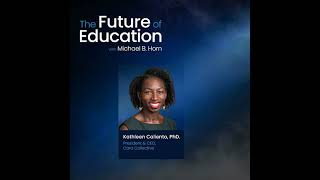
Kathleen San Luis Caliento runs Cara Collective, which has placed over 8,000 people facing homelessness, poverty, and criminal records into 13,000 jobs. The organization combines training, wraparound support like housing and childcare, real-world work experience, and coaching that keeps 65-70% of people employed a year later, well above the national average.
Chapters
Welcome to the Future of Education. And now here's your host, Michael Horn.
Welcome to the Future of Education. I'm Michael Horn and you are at the show where we are dedicated to building a world in which all individuals can build their passions, fulfill their human potential and live a life of purpose. And to help us advance that today we have a great guest. Her name is Kathleen San Luis Caliento. She's the president and CEO of Cara Collective, where she's been since 2021. She and I got to be on a panel together at the ASU GSV Innovation Summit around the future of learning and work. Stand Together brought us together. And Kathleen, it is great to have you here. So good to see you.
It's so great to see you again, Michael. Thanks so much for having me.
So let's dive in. Tell me about the work that you do that Car Collective does. Like, how do you describe what the organization itself is?
Absolutely, what I like to say is Care Collective is an organization that helps people find themselves and then find jobs. We are a Chicago based workforce development organization with a national footprint and we have served over 8,000 individuals in helping to place them at 13,000 jobs. We understand the barriers, the particular barriers that many of our participants face. Homelessness, poverty, health, child care, formerly incarcerated. And those are the barriers that often unfortunately keep them from employment. At the same time, we know that they are incredibly talented and they have either found us because of misstep, misfortune or injustice, as we know prevails unfortunately in our society. And so the goal really is to figure out a way to help them, as I said, find themselves and find jobs. And so Care Collective is really composed comprised of four entities in the way that we do that. The first is cara, which is our personal and professional training program. That's where we provide these workplace competencies to help them prepare for jobs. But also what's sometimes even harder is those, the social, emotional competencies, right? So we have workshops that are called Love and Forgiveness and helping people truly understand what it means to rid themselves of some of the baggage, some of the myths, some of the narratives that they've been told their entire lives. And so those are the things that those personal and professional training workshops that truly help them get prepared for the workspace. As part of that, we've provide these supportive services because again, as we know, our folks are facing significant barriers to employment and so connecting them to resources that help them address housing, homelessness, their health care, childcare, if they have record expungements that need to take place as well. So those are the things that we're helping them with in terms of wraparound services. Then we have two social enterprises because we recognize the need for some of our participants to truly begin to build their resumes back up. And some of them had significant gaps in their work history or facing particular records and backgrounds that were not being taken on by some employers. And so giving them those reps through some social enterprises. Our first Clean Slate is an external beautification company and we work with social service districts, chambers of commerce, neighborhood organizations to help beautify the city of Chicago and its neighboring areas. In addition, Connex is our mission driven staffing firm. That's where we work with employers who are looking for that temporary, sometimes temporary to permanent positions that we help to place our folks in. And then finally, the work of CARA plus is our expansion, that's our expansion arm. We do a few things there. Number one, we work with other workforce development organizations like ourselves to think about best practices and how to continue to multiply their impact, working with employers and their job seekers as well. But we also work with employers and to think about what it means to truly be inclusive in their employment practices. So providing them supports as they're thinking about everything along the talent continuum from hiring, sourcing and hiring to developing and retaining, in fact. And so that's the work of caraplus. The final piece that they do there is affiliation. That's where we work with local organizations who are looking to lift up workforce development programs and help them build those in their local communities. So really, really proud of the work that we're doing. You know, the impact that we're seeing, again as I mentioned, the number of folks that we serve. But also retention is important for us. So a big measure of our success is that our folks are staying on the job longer than most folks. So our retention rate right now hovers between 65 and 70% for one year. Same firm retention, which is really incredible, especially when you think about the national average being typically around 50 or lower percentage.
Wow, that's a huge number just to say it, especially for those people who are facing significant barriers in their lives that have held them back historically. And I'll also say, like I, this is me geeking out, but I love the integrated nature of what you all have built. Not just the support in terms of skills or the social emotional support and so forth, but the all the way to we're going to help you get that first job, in effect, and then we're going to help you work by working with the employers directly to change the policies that maybe have held people back like you, that the employers themselves didn't even realize perhaps, that they were missing this talent historically and so forth. So I. I want to get to more of that in a moment, but I want to actually just stay on you for a moment and your own path into this role, because you've had a really interesting career path as well. And I think people would benefit from learning of some of that story and some of your own conviction behind this work as well.
Sure, sure. And I think people who sort of know, know my background at first are sometimes surprised or interested that I've landed in the role that I am. But once you actually stop and think about the trajectory, it makes a ton of sense. So humble beginnings and roots, you know, daughter of Haitian immigrants who came, classic American dream story, to find a better life for their. For their children and unfortunately, often face the kinds of lack of access, lack of opportunity and inequity that many immigrants face in this country. And so, you know, they struggled themselves in terms of making sure that we had the right educational opportunities and in their own. And being recognized for their own professional assets and what they could do. And so that's always been a driver for me, thinking about the road, the tough road that my parents had. But even where I've. I've faced some of that, some of that myself. And so the majority of my career, because my father was always about education, truly pushing education. And he would say something to me that was actually a little harsh that I've mentioned before, which is, you know, you're black and you're a woman. Unfortunately, you're not going to be taken seriously by anyone unless you have an education. And so that was really kind of like you got these two strikes against you. This is what's going to be the great equalizer for you. So do what you need to do to sort of get yourself where you need to be. And for him, that was truly education, which then doesn't surprise anybody that I ended up getting my doctorate from Columbia University in science education. But that truly led me down a road of education reform. So it was really around thinking about education reform and educational equity. The work that I did was various types of equity. How do we provide folks who didn't have access to data about their own children's performance, helping them understand what those data meant? How do we work in Chicago to make sure that this. Every school has highly qualified teachers and principals leading in those schools? And so that kind of work, when you think about it, there are themes of access, equity, opportunity that continue to sort of run through those themes and through those, through those experiences. And as I continue to move on through that educational equity work, I found myself doing more sort of education to career. So helping companies recognize the talent that was coming up through education that may not know that their job was an opportunity. So when I was working with a young boy, you know, from the south side of Chicago who's interested in math, knowing that he could do work, that a company like KPMG exists, right. And that that's an opportunity for him. And so really helping them build, bridge those mentorships and helping the young folks understand the power of their own possibility. And so that was truly those, those last couple of roles were really around that kind of education to career space. And so that now we find myself, I find myself squarely in that edge, in that career workforce development space, which again, when you think about the social determinants, education, health, employment, these are inextricably linked. And so it's really not much of a stretch. It's really more about the, what I was trying to do, it didn't really matter how I was doing it.
No, that makes a ton of sense and it's inspiring to hear the story and then how that's translated to the here and now in your career right now. And I want to dig into that because you talked about, you know, your first answer, the full integrated nature of all that you're doing. But as you said, it starts with a lot of deep work, right. With each individual, each job seeker. And so I'd love to know how the skilling and so forth. That's part of it. But I'd also love you to talk about what are the conversations, the interactions look like really at the individual level, what's the process you all have built. You talked about the best practices and so forth. But, but just give us a little bit more insight into the process that you've developed to help take individuals through on their own journey.
Yeah, absolutely. And so as I've mentioned, you know, we, we've had, we've had more than 30 years in Chicago leading this work in workforce development, working with folks that have experienced a number of barriers to employment. And so when, when I think about the, the impact that we've been able to have, it truly is meeting people where they. So we know that no one's journey out of poverty is the same, which is why from day one of working with us, they meet with our admissions team. We begin to understand who are they what are the challenges that they're trying to overcome? Where have they been? What are the stories that they've told themselves, right? What are the untruths that they believe about who they are and what their possibilities and limitations are and start to think about what role that we can play in helping them achieve and realize their dreams. You know, community is such a core value in terms of who we are and we were founded on that belief of it takes a community to lift someone up and out of poverty when they're experiencing particularly such a low point, which by the way is often an unknown piece. But that's the origin of our name, right? So many folks often think that KARA means is a, is an acronym and it's in fact an old Gaelic world, old Irish word for friend, because we know that everyone needs a friend when they are at their lowest point. And at kara, we talk about community and how important that is. And so our job really is to walk alongside each individual. So again, from the beginning of our recruitment team, we're talking to them about what their needs are. And from that, from the beginning we're connecting them to those resources that I mentioned earlier in terms of housing, childcare, health, et cetera. They moved on then into the training program that I mentioned that personal and professional development training. There's a foundation series where they're truly just understanding some of the workplace competencies, but also understanding who they are as a person. And then once they've gone through that, which is about a four week program, they then move into what we call our leadership program and they're really starting to think about more. And then they become, we call send out eligible. So they're ready to be put in front of an employer. They've demonstrated those, the five competencies, training or excuse me, teamwork, timeliness, professionalism, conflict resolution and communication. So those are the five that we've worked with companies that say these are the skills that we want, folks coming in with other things that we can teach, but these are the skills that are going to be important to us. So once they've demonstrated that, we then work with the over 70 employment partners, partners that we have to find that right person. And it really does help when we understand who our participants are from the individual perspective because then we can put them in that right spot. And so that's, that's, that's their journey with us. And in fact, you know, many folks think that once we place them, their work with us is in, our work with them is over. But in fact, you don't graduate, graduate from Kara. Once you get the job, we actually stay with you for another year. So we provide individual coaches to each of our, our job seekers for up to, for a year into that, that first job because we know that once they get that first job, their problems don't suddenly disappear. So how do we ensure that they have someone, they have a network and a community that they can fall back on when we need them, when they need, when they are needed the most.
Something you just said sparked something for me which is that you know that there's this aspect of this, of your program. You've been working with individuals at the individual level. Right. For decades now as an organization. So you've been able to do a lot of contin. Improvement, of course. But you also said that no individual is in the exact same circumstances, exact same goals, perhaps, and so there's some tailoring to individual needs. So you've literally, as I like to call it, been working at the level of n of 1 as opposed to perhaps average effects across a population. You obviously see the average, but, but you're actually able to identify individuals, unique circumstances and so forth. And so my guess is that you've been able to prob, probably build processes that get below the best practices or average effects at a population level and say, hey, we've actually seen someone like this individual before. Like we understand their circumstance and so we have a deep sense of what causes them to maybe struggle in their workplace or conversely, how to help them thrive, to be able to live a life of purpose and fulfill their potential. And so I imagine my hypothesis is that you've probably been able to change how you approach people based on identifying these individual circumstances and patterns that maybe wouldn't be apparent at a macro level if perhaps, like I'm an economist collecting a big data set or sort of looking across the population and then you're able to build customized programs for those individuals. But that's sort of the instinct I have. And so number one, you can correct me if I'm wrong, but if that hypothesis is right, I'm just sort of curious how the organization uses this n of 1 data and the specific circumstances to really improve the individual interactions you have, the success rates you have, and perhaps these customized processes.
Absolutely. You know, and I love the way that you're, you're, you're thinking about that and framing that question because, you know, it's sort of two sides of the same, of the same point in that, yes, there's this idea of this n of 1 and we know that everyone has their own individual story. And I think understanding and hearing multiple stories over time, you also generate some themes and some trends. Right. And so, and so I think that I'll say a couple of things. One, ensuring that we have the ongoing individualized feedback from our participants is key. So if that we provide opportunities for them to provide us feedback at multiple steps throughout the process. From the, you know, from our, from the intake perspective, from the intake point right at the beginning to, you know, a week or so into a few weeks after they've completed the program to a couple of months after they've gotten their first job, and so on and so forth. And so that having a better understanding of are we actually, in fact meeting the needs of our participants is critical. Another example is something that we talk often about at CARE Collective is this idea of transformation helping really our job seekers transform their lives. And you can't do that top down and you can't do that outside in. Right? That's got to be coming from the people who know themselves the best that say, these are my goals and dreams. These are the things that I'm trying to achieve. And so one of the things that we work hard at is helping our job seekers develop and define goals that they want to achieve for themselves. Right? So this idea of, you know, and of what it might be that, you know, one person says they want to finish that they want to open a bank account, and one person might say that they want to, you know, have their first apartment. Both of those are financially driven. Right. And so we might bucket those to say that we have folks who are interested in thinking about their financial financial goal that they want to achieve. But that looks different depending on the person that you're talking to, right? You might have somebody who says, you know, I want to go for a different job in my, in my current career, or I want to, you know, finish my. My degree so I can have different skills that are opening up or something else that's kind of thinking about career advancement in some way, shape or form, perhaps coming at it different ways, but really thinking about it in different ways. And so, so having folks drive that is important for us. So those are the few things that I would say we think about as we think about. So how do we use this N of 1 to actually help us do our work much more impactfully?
I love that answer that you just gave, and it's actually interesting. I didn't expect to go in this direction, but it's mirroring the book that I'm working on right now about how to help people switch jobs and find their next job. And one of the things that we constantly hear is, you know, someone will say, oh, I want more money in my next role. And we unpack that in the book with them. Like, what does more money actually mean? Is it, do you need more money because, like, you want to be more respected, or is it because you want to be able to afford child care and child care is expensive, or is it because you're trying to, you know, maybe save for your retirement and be able to step back at some point? And it turns out that the answer to that, that answer below, you know, just the surface level explanation of more money, if you get below that, it actually points you in very different solutions once you understand that sort of deeper why, if you will. So I, I love that you're able to go down that journey with the individual and really help understand what is best for that specific person in this specific context, which might be different from what best looks like, like for someone else that you're working with, if I'm understanding you correctly.
Absolutely. Absolutely right. That's absolutely right. And I love that you're, you know, I think that we often talk about also just you're making me think about this idea and I think we already brought it up in the panel that we're in. But this idea of dignity, of choice, right. And so it's something that we think about often at Cara Collective because one of the things that we don't ever want to appear to be doing is forcing people to be thankful for any job, Right. And so this idea of what are your dreams? What are your aspirations? Right? So that question of you kind of double clicking and saying, why is it that you actually want more money? What is it that you're actually trying to achieve? Going double clicking is so important for someone to be seen and to feel as if they do have dignity in terms of charting their, their future.
I want to geek out on this one a bit more with you because I'm curious, like how, how do you help people to even articulate those dreams sometimes? Because some people, you know, you mentioned the individual, they don't even know what KPMG is, Right. And a lot of people who listen to this conversations on the future of education, they'll hear it from me all the time. Like, I grew up in Washington D.C. i didn't know what engineering was, didn't realize it was a possible pathway. Like, I thought an engineer was like a train conductor or something. So how do you help individuals that don't even know what the possibilities are. Articulate a dream that they may not fully understand themselves or have the social capital to be able to articulate and envision.
That's such a great question. And, and it's a balance, right? Because we could be so excited and say, no, you really want this job. And it's like, is that really their dream? Right, right. I have a, I have a colleague who talks often about how to ensure that we are offering opportunities to our participants that, that span beyond food, files and floors. Right. And that's sort of a gross oversimplification of these entry level roles that we know exist and that many of our job seekers go into. And, and to me, probably the biggest way to do that is to offer them exposure and opportunity. Right. And so you didn't know what an engineer was until you knew what an engineer was. Right. And when they see the diversity. So for us, it's our responsibility to ensure that we have a diversity of industry in terms of employers that we're working with, but also in terms of pathways that we provide skilling or training and preparation for in terms of our job seekers. And so it truly is that exposure, it's, it's the knowledge, it's the awareness and that, that leads to equity. Because if someone knows that this is an opportunity and a possibility, they might go for it. Right. And so it's helping them understand and see something that they might not have seen.
It's just absolutely fascinating, this work. So I, I want to fast forward now and flip to the other side of the equation because as you mentioned up front, you're not just working with the individual job seekers, you're also connecting their demand to the supply. And I know I've sort of flipped how most people talk about this when you talk to labor economists, they're like, no, the employers of the demand side and the people are the human capital. That's the supply, if you will. But from my lens, I like to think of it as actually as individuals, we hire our next job, we're demanding progress in our lives and we have some choice in the matter as well. And so we actually get to demand and think about the jobs that we want to take and there's a supply of jobs out there and I suspect that matches little bit of your standpoint as well. So when you talk to those suppliers of the jobs, otherwise known as employers, how do you help them move beyond, you know, the applicant tracking systems that they have, the filters, the biases that they may have built in throughout their Processes that would otherwise miss this hidden talent that's sitting right there in their communities.
Yeah, absolutely. And, and, and, and that bears repeating. Right. Each year we know companies miss out on thousands of MOT job seekers and employees due to just their own internal processes. And these processes are ones that prevent folks from joining and at the far end, staying at particular firms. Right. So losing this kind of talent, we know cost companies millions of dollars annually. But it can be. These are fixable problems. These are fixable problems. And so this is truly a big focus of the work that we do with our Care Plus ARM that I mentioned earlier and through, specifically through our Inclusion Action Lab is one is one specific way there. We've worked with more than 30 companies to date nationally, and really helping them rethink everything from how they recruit, what's on their job descriptions, what might even be the platform those job descriptions are placed on, to hiring policies and how they're retaining, to thinking about how whether or not managers who are supervising untapped talent are trained adequately to be able to provide the kinds of support and guidance and development that untapped talent who might find themselves in environments that are new for them, making sure that they have the resources and tools necessary as well. Otherwise we know that they're again missing out on a big piece of the population. So, you know, what we have found, which is really wonderful, is that more than 90% of the folks who attended our Inclusion Action Labs have actually identified shifts to their job requirements or hiring processes or other practices that they engage in to either attract or retain untapped talent. One global firm in fact reported that they were able to hire more than 100 additional people annually because of shifts that they made in their job requirements. So again, we know that these are fixable problems. And I often say that it's not. I don't find that it is a matter of will. I think it's often a matter of way, right? And sort of where do I start? Where do I begin? How do I even start to think about this? Right? And if you're not used to going to diverse places to find that talent, you know, how do we help you get there? And so that's really the work that we do in helping to shift some of the mindsets.
It's such an interesting point that you're making and that it's not just the will, it's the way it's actually, you know, and you have the data to back it up. But it seems right now, like so many employers, they're dropping degree requirements Several years ago, it was, you know, banning the box around, asking if you had been incarcerated previously and things of that nature. And, and yet the needle hadn't, you know, perhaps fully moved. And I think what you're saying here is that's because, yeah, the intentions are great, but they actually have to do more in terms of changing the process itself. There's more work to be done, we know. And if you, if you as the employer actually do that work, you can actually change those outcomes themselves.
Absolutely. And that's absolutely right. That's absolutely right. I was at a, at a event recently where the, the chief human resources officer talked about a couple of things that they, they did. One was right, they wrote a little disclaimer at the end of each of their job descriptions that said something along the lines, slightly paraphrasing, but it was something along the lines of, you know, research shows us that women and people of color often are unlike, are least likely to apply for a job where they don't feel like they check all of the boxes. If you don't feel like you check all the boxes. But this is something that interests you. We encourage you to apply for this role anyway. And just like that is just so powerful to read, right? And to think about that you're saying, I don't have to check all the boxes. Whereas this was my thought going into this of like, I can't do this. I don't have all these requirements. And to provide that kind of, of push and nudge to somebody who might have been on the fence anyway to apply for something to say, okay, maybe I'll go for it, is incredible. So it's just thinking about, you know, small shifts again, that are so possible that would open up the aperture in ways that we, that we haven't seen.
Terrific stuff. Last question as we start to wrap up here, which is from my perspective, you're not just in the job placement business, right? And you've said it yourself that that may be the product, but what you're doing is much larger than just placing these individuals in a job. And frankly, you're not just placing them in a job, you're putting them in a place where they're going to succeed, they're going to stay at that job for some time at much higher rates than the average and what we would otherwise see. But even larger than that, it seems to me that what you're really doing is helping these individuals make progress in their lives, meaningful progress, helping them claim their dignity, helping them fulfill their purpose. And so I'd Love you. Just to speak to what that looks like and how perhaps this job placement work that you do is really an entryway into something much larger, both for the job seekers and the employers themselves.
Absolutely. You know, and, and that, that's the exact right phrases, is to help folks claim their dignity, you know, I, I think I described it earlier, is helping them find themselves and then find jobs, because that's just as critical and just as important. And we often, as I mentioned, think about that dignity of choice in a job and what that does to someone's confidence in their ability to say, maybe I can go for that next thing now, and that they do have the right to choose their own career. And so that pride in creating your own path and creating your career creates that ripple effect in your family, in your community, and you inspire others. And thinking of a young woman, Bridget, who is just an incredible force, she's quite the firecracker if you meet her. She'd been a member of our community for more than a decade. She's worked in. Cara worked in her care placement for seven years, but she ended up leaving it in 2020. We all know, we all know what happened in the world then. But she returned to us back in about two years later, ready to work, ready to do her next opportunity. Her personality, her. Her determination, her skills, honestly, would have made her a best fit for any, any job. But she wasn't getting those opportunities on her own, which is what brought her back to us. She was persistent in truly looking for the job that she wanted. And I remember her saying to me, you know, I hope, I hope, I hope my coaches don't get mad at me because I know they're wanting me to go to some of these interviews, but that's not what I want. I know what I want. Ms. Kathleen is what she would tell me. And today, hey, she is in that role. She's in that role that she wants. It is actually at Deloitte and she is thriving. We've received such positive feedback from her supervisors. I get notes about what she's doing there every day. And she's celebrated, actually her year, what we call the Great Wall. So once you've made your year, you get on a plaque. We invite supervisors back, the participants and the job seekers back to celebrate the. That they lasted in this role for a year. So her story really shows us there's true power in that dignity and being able to choose your own career path. And we know that when you focus on transforming individuals, you transform their families. You, in turn, help transform those communities that have been historically disinvested in. So this is a ripple effect that we're continuing to see and one that we're incredibly proud of.
Very cool and very good to be proud of. I agree. You're transforming individuals. You're transforming family trees, communities, employers. Just great work, Kathleen. I'm so thankful that Stand Together has brought us together for this conversation a couple times now. And thank you so much for the work that you continue to do.
Absolutely. Thank you so much for having me.
Michael, and for all those tuning in. Thank you for joining us on the future of education. We'll be back next time.










