Dropped Out of High School at 15 and Just Raised $5.3M to Map Every Person | Michael Fanous, Nyne.ai

In this Small World Podcast interview, Michael Fanous, co‑founder of Nine.AI (also referred to as 9AI or Dyne), explains how he left high school at 15, pursued community college and UC Berkeley, and built a series of startups before launching Nine.AI. He identifies the core problem as a "context bottleneck": personal data is scattered across the web, and existing AI systems lack the rich, accurate person‑specific context needed to act effectively. Nine.AI’s solution is to deploy tens of millions of autonomous agents that scrape, reason about, and link digital footprints into a unified identity graph, enabling agents to act on behalf of individuals in use cases such as recruiting, customer support, targeted marketing, life‑event prediction, and even niche B2C scenarios like dating apps. The conversation covers technical challenges (entity disambiguation among millions of John Smiths, model selection, infrastructure costs), privacy and legal compliance (CCPA, GDPR, public vs. private data, moral responsibility), partnership strategy (enterprise customers worth >$1B, careful vetting to avoid malicious use), fundraising ($5.3 M raised, NDAs around partners), and founder philosophy (thesis‑driven experimentation, “play to win” mindset, sacrificing personal time, staying curious). Fanous also shares advice for aspiring founders about balancing context, testing hypotheses, and iterating quickly. The interview ends with a brief look ahead to future product directions—query‑by‑person search and predictive life‑event modeling—while acknowledging the high operational costs and ongoing optimization efforts.
Chapters
Alrighty. Welcome back everyone to the Small World Podcast. Excited to have my guest Michael here today. An introduction through a mutual friend who I can speak very highly of and who spoke very highly about Michael. So usually I ask the founder to give an introduction about their company, but I did see an interesting LinkedIn post that Michael posted that I want to just read. Before as an introduction to kind of like set the stage for what we're gonna talk about. So two AI recruiters enter a bar. Agent A only sees senior engineer, Python. Agent B knows the candidate scaled Rust systems to millions of users, led infra for 3 years, had over 8,000 open, open source commits in the last year to Tokio, and mentors teammates. Which one asked the better question? That is the difference context makes. Bias in AI hiring is often not in malice. It is ignorance, right? Agent— agents that do not know enough about a person end up guessing, and other guesses look like bias. The cure is not new prompts or better AI. It's better context. Why did they enter a bar? I needed a hug. So with that, Michael, I'm really excited to get to know more about 9AI. Could you please tell me about that?
Sure.
Yeah.
So I'm one of the co-founders of Nine.AI. General premise of the company is data about people is scattered across the whole internet, right? And a lot of folks don't realize that agents are just getting increasingly more powerful, very, very fast, exponentially. And the bottleneck currently is actually context. So to give some context, I was a machine learning engineer at a YC company and I got a look into their go-to-market sales funnel and how they were sort of doing it. And I very quickly saw like the outbound messages were like, hi Michael, I saw you work at this company, now come buy this product. And I was like, well, that's not really personalization, guys. And I wondered like, why is there nothing better? So I like looked at all these sort of data providers out there and very quickly realized most of them were just like wrappers on top of LinkedIn. Not very impressive, right? So what Nine does is we deploy tens of millions of agents across the entire internet with the goal of centralizing people's digital footprint to provide context to agents. So they can act on your behalf, they can emulate you, and they can reason. I think we can sort of go into it more, but you can think of a ton of use cases related to recruiting or customer support. Imagine you're calling a customer support agent and they know nothing about you, like how are they going to service you? Right? So I think piping in the right context is going to be one of the most crucial steps to actually making AI actionable. Like I think you've seen probably there was a case study that said 95% of AI pilots fail. And I think a big reason why is because a lot of these products don't have the context they need.
Yeah, that makes perfect sense. And, you know, you think about right now how AI is trained and how it operates. It pretty much force-feeded information as much as you can and then pretty much take all that information and see what you can do with it. Right. But it's not specific context, right? Whereas you, on the other hand, are looking to give it specific actionable context. So I guess we can start with how do you do that? Like, how do you find specific data that's correct? And I understand that's pretty much some of your IP, so I understand if you can't give the whole context there.
Yeah. Yeah. So I guess what I can sort of say is there's a lot of hard math problems to solve. I love probability theory. I love set theory. There's 10,000+ John Smiths in the US. How do you know which John Smith owns which account? There are a lot of complexities that people sort of just look over. They're like, hey, like, couldn't I just look up the name and Instagram and the first one's going to be the right person? And it's like, no, try it, feel free, but usually not the right person. So there are some, definitely some special sauce related IP things we can do to enable like What I can say is basically put a brain in a scraper and you can think of it as like a human being that can reason. It can see the page, it can understand the page, it can do some pretty creative stuff to map people correctly.
Awesome. And I'm excited to keep going further into what Nine AI is building, but before we do that, let's go back to where it all started, right? You mentioned you were at YC with a different company. You also mentioned to me off air. A first on the podcast. We've had a lot of college dropouts, but only one so far, high school dropout. So can you talk about why you dropped out of high school, how you built your first company, and how you got to Nine? Sure.
Yeah, so this goes back to, I grew up in Los Angeles. When I was in 10th grade, I think I was always really smart, but I wasn't as ambitious, right? So like I'm writing code in the classes, in math class, I'm getting in trouble. My computer's getting taken in the office because I'm writing code and I'm not paying attention. I remember one day, like, I was in Spanish class and there was this test we're taking and I mean, I'm part Spaniard, so I can speak Spanish pretty decently, but I was just like, a lot of this is pointless and I'm never gonna use it in my life. I know some people may not wanna hear that, but like, there's these tiny things that really don't apply to Spanish. But long story short, I just came to this realization where I was like, this is not the best use of my time. I can, you know, go somewhere else and get some more stuff done. So, took a test during 10th grade, so I was 15 or 16, uh, just left high school. I think a lot of people in my high school just kind of wrote me off, like, what's wrong with this kid? Like, why is he leaving high school so early? Which is very valid. Um, ended up joining a company called Speed Suspects. It's in the automotive media space, has millions of followers. Um, got to meet folks like Alex Choi, Jake Paul, um, some very big names in the automotive media space. Um, then from that, I did okay. I felt like there was more to be learned potentially, and I had a friend who was over at Cal and he showed me some of the coursework and I was struggling with it and I was like, okay, like this is, this is kind of interesting. So, went to community college as a 16-year-old, did 2 years there, transferred to Cal, studied CS and data science there. While I was there, joined a company in a machine learning internship role, which very quickly turned into a full-time role. In fact, they kind of wanted me to drop out. My parents are like, you dropped out once, you don't get 2 dropouts. You gotta finish one, right? So, I think it was a really great experience. It taught me a lot sort of led to the path of Nine, which was I built recommendation engines. This is COVID and this is a healthcare staffing company. So I was on a rocket ship. I believe revenue went from like low single-digit millions to like really high, like 8 figures, right? So like really, really quickly. And I got to build a recommendation engine that basically suggested to nurses, hey, this nurse typically takes Thursday night shifts at this hospital that's a few miles away from her. Maybe when we send our email notifications, we should prioritize shifts that look like this. And it was called SmartRates at the time, and it generated the company over $10 million in revenue in its first year of life. And I think from that, I gained a lot of confidence, and something I'll sort of tell folks is don't feel like you need to always have all the answers. Like, I was constantly figuring stuff out, iterating, stuff broke in prod, you know, figured it out, but I think building a startup, you never have the full picture. And I think that was my first experience where I realized that was the case in a lot of technology companies. So it gave me the confidence to say, hey, I figured it out here. I can figure it out for myself.
So for a lot of the budding entrepreneurs who are thinking about taking the step, right? What would you tell them?
Right?
Is it ever going to be the right time or do you just kind of have to dive into the dark?
It's a good question. I think there's a balance. I think you, you're going to always overestimate how much context you would like to have because obviously, like for myself, I'd love to have 100% of the picture all the time. Right? But I don't think that's truly the case. I think what you need to start a company is a thesis about a situation. So I just described this as someone like, let's say, I believe if a helicopter has 5 propellers, it's going to go 50% faster. Then you need a way to test that thesis in some way. And then you get feedback. And if you're seeing some response from the data or from your users that would indicate that your thesis is right, you should pour fire on it. Like that, that's a very clear sign. And you may not see that for a while, You may have to iterate and test many different theses, but if you attack a problem area enough and you're intelligent about saying, hey, I was wrong here, or hey, I was right here, I think that's something a lot of founders get wrong. They can't actually self-reflect well because they're too close to the product. But once you're able to do that, I think it's actually not as difficult as a lot of folks make it to eventually find the right attack vector or solution in a given sort of point, or I guess space.
It really is a skill to be so deep into a specific problem, but also have the ability to like take a step back and look at it from a different point of view, like the balcony, right? Is kind of what people call it. When it comes to like identifying a problem and building out a thesis, how do you put yourself in a position to kind of start seeing these kinds of problems and building out theses in the first place?
Um, I think you have to just be really curious. Um, I'm back by South Park Commons, so definitely can, can talk about that. But some of the folks who started South Park Commons include the first female engineer at Facebook, Aditya, who's very well known. He made this idea of like a feed on Facebook.
He worked out well.
Yeah, he became the first product director there. It's very, very early on and is a great sounding board. Like, he'll tell you straight, good or bad, whether you sort of get that. So I think he's really helping instill in us to be able to sort of just learn that skill over time. And a lot of folks, like, they're just going to need time to develop it. I mean, I'm 22, right? So I'm sure I'm going to get better 5, 10 years from now too. So yeah, I would say just be curious, test different software. I just chatted with someone today who's been at GitHub for like 9 years and he's still not using any AI code gen. And I don't think that's going to serve him well over the next, you know, 5 to 10 years as the models get better. Like, yes, there's some issues with, you know, Cursor, WinSurf, whatever they're doing now, but like, you kind of want to know where everything's at because as the models get better, it's a compounding effect in terms of how much productivity gains you get from it.
Yeah, there definitely is an advantage to the early adopters for sure. Let's get back to 9, because we got a little off track, even though I really appreciate where the conversation went. Where are you guys right now? So you guys raised, as you mentioned, right? What are you trying to do right now? Are you in the building phase or are you already making customers, finding customers?
What's up? Yeah, so we have some great partners. Our average customer is worth over $1 billion. I'm bound by some NDAs, so I wish I can get into some of these partners, but I'm fairly limited in terms of what I can describe. But from like a general point of view, I think What's really interesting is one of our first customers. So they're one of the biggest companies in the early life/pregnancy space. They sell products in that space. And something they really struggled with was the time delta between getting pregnant and having a kid is so short. Identifying a pregnant parent and being able to market and sell to them is really hard actually. With Nine, because we have the identity graph of people, we're able to, you know, deploy agents across, you know, the net and like, let's say there's a post of someone and in the post it's a video of like a baby shower and the caption is baby shower and maybe there's a bump, lady has a bump that shows that she's pregnant and you know, the username is Michelle123. The whole premise of Nine is we're able to go from Michelle123 to, hey, Michelle actually works as a PM at Apple. She lives on Mission Avenue in San Francisco. This is her husband. Here's how you'd contact her in terms of phone, email. Um, here's all her social medias. Here's her interest in the brand she cares about. She loves going to, you know, Abercrombie Fitch or whatever else it would be. So you get a really deep dive into the person and basically you can qualify people for all sorts of different things that no one else would be able to do. In terms of future, you'll, you'll get a really cool announcement soon too. You might get a scoop here.
Oh, okay. Um, do you want to just go straight into that then?
I, I wish I could, um, got some, some legal stuff to close up there, but, uh, just stay tuned is what I can say.
Cool. We will have you back on the podcast to celebrate the big news and the new announcement. But I want to talk about just like one of my first thoughts when you're going through this whole process. Oh, Michelle123 is Michelle and she lives here and this is her phone number and this is her husband. Privacy. Like, personally, I wouldn't want some agent to just have all the information, even though it probably already does. I don't feel comfortable about that.
Yep.
How do you guys like answer that question? Because I'm sure it's come up.
Yeah, so there's like a legal and moral perspective, right? So like, let's start with the legal. In California, the data privacy law is called CCPA, California Consumer Privacy Act. And one of these sort of like key pillars of CCPA is this idea of expectation of privacy, right? So if I make a public account that any LLM can find, there's no expectation of privacy. I chose to make it public. If you make a private account, what Nine will not do is it'll try to like bypass it or request to follow you and like scrape your stuff. So if you're making an effort to be private, Nine can't really see into you the same way it could if someone's, you know, a public-facing person. So what I would say is if you want to maintain privacy, you should have private accounts across the web. In terms of like a, from a moral perspective, I think folks, I think folks are sub, are intentionally subconsciously negligent about this, even though they know the truth maybe internally. Every app that's on your phone is collecting data about you, right? They're collecting data about the other apps you're using. If you're on Instagram, I guarantee they know a lot about you also. I know TikTok is the same way. Facebook's the same thing. All these companies have this data themselves, right? In fact, yeah, like all that data really exists. I just think they're not just waving it in people's faces saying, hey, I have all your data. No, but yeah, from a legal perspective, we're on board and clear. Like in Europe, there's GDPR, but that's a whole other hour conversation right there. But from a moral perspective, I definitely agree. And I think that's why we've been very selective about who we partner with and what the use cases happen to be, and has to be something I can sleep with at night, right?
So yeah, there could be a lot of evil for sure, right? Like if you go to, I don't know, insert like kind of like shady company here, right? So how do you vet the companies that you work with and bring on as customers? Yeah, so I don't do a whole lot of marketing, growth, go-to-market online.
Like I may post, but I think my last post was even from a few weeks ago. Most of our partners come inbound. So, um, we work with giant companies and these giant companies have like a very specific use case. So it could be like a giant consumer brand that's trying to activate or to increase conversion in a very specific bubble or niche. It's not really malicious stuff typically. It's like, hey, like we noticed we're doing really well with folks who have $100,000 of expendable income and like these topics. We want to double down and find more of those. So it's not really usually with any sort of malicious intent. I mean, if you want to talk about that, you can look at Facebook in the early days. I mean, I don't know if you remember the first initial iteration of Facebook is like this idea of like Hot or Not with girls in Harvard that Mark Zuckerberg made, right? So like, I definitely can understand in a lot of ways how startups can be morally ambiguous in different ways, but it's something that's core to me and core to how we choose to partner with folks.
I think also it's just what people are used to, right? Like, you know, Google, Essentially the premise of like the value that their company brought was it's a search engine, and by the search that you put in, we're able to better advertise to you, right? So essentially this is kind of the same. By the information you put on the internet, we're better— we're able to better advertise to you, right? There's also a bit of a value prop for the consumer, I guess, that you can say, and correct me if I'm wrong, but I'm thinking like if, you know, I'm pregnant— I'm not, guys— but if I'm pregnant, I probably would want to like have the best products put in my face, right? Maybe there is something I need and I don't want to spend 20 minutes on Google or ChatGPT finding it, right?
Yeah, no, I mean, I completely agree. Like I'm getting emails for like wedding rings and engagement rings and that's not, not at all top of mind, right? So I think there are a lot of issues with, with currently this idea of like spray and pray where companies basically try to email the entire planet and hope that some subset actually find it relevant. We're trying to just stop that essentially.
So can we talk about just like applications, right? Because initially when I was doing research into your company, I was thinking, oh, this is mainly for like recruiting for companies, but the more we're talking about it, the more I see there's application like everywhere pretty much. Right. So where do you see Dyne in like 15 to 20 years when you scale it to its max?
Yeah. So we're definitely, definitely bottlenecked in certain ways. And some of these things are just going to be solved with time. And hard work, of course, but I have sort of two steps I want to get to. The first step is I'm curating this dataset to allow any user to essentially query the way they query Google, but about people. So if you said, for example, hey, I want to meet other kids who go to Berkeley who also enjoy crypto and maybe they play on the Cal Boxing team, and it would sort of curate the group of people who would meet all that criteria. Like on LinkedIn, there's these basic filters for work, but outside of that, you're very limited to search for commonalities from your peers or friends or even people you've never met. So I kind of want to solve that problem. And then the second step of that, which is much further out, is this idea of once you have a dataset that can actually do that, you can almost predict the future. Not like Minority Report, which I know is a little evil, but like, I'll give an example. I have a woman, A, who's 29. She lives in Tennessee. She got married when she was 27. She buys A, B, C products, and she just bought D. Then I have person B, who's 28. She just got married, also in Tennessee, follows extremely similar life patterns and has bought products A, B, and C, but not D. It's going to be substantially more likely that she's going to buy product D compared to the general population. Essentially, you can map out life events, patterns of life, characteristics, things people care about to predict what they're sort of likely to do next. And I know that sounds really futuristic, but we're closer than I think a lot of folks realize.
I think we're already there. You know, sometimes I'm scrolling Reels and based off of like where I am, Sometimes I'll be drunk with the boys and a bunch of like, I love my boys, like Instagram Reels. I'm like, how do they know that?
You know?
Um, so I think we're already there. This is just in a lot of ways the next step to make it maybe more mainstream, I guess you can say, outside of just social.
More accessible too. I think that's the other thing. It's like right now companies basically give a ton of money to Meta and Instagram and they don't have any visibility into like who is actually being targeted. It's like if you want to target recruiters, How do you know if you're giving Meta, you know, $100,000 that they're actually targeting recruiters? It's like, you hope so. You can look at the conversion rates, but, um, they could just say, oh, the conversion rates are bad, or you didn't have a good ad copy or something like that. Whereas, you know, we have actual proof of what we're claiming. Yeah.
And then it's a lot easier to reiterate the thesis, you know, maybe if you're looking for age 25 to 30 female et cetera, et cetera. Well, now maybe actually some of the things that you're looking at, turns out there's a different demographic that makes more sense. I got you. I want to talk about also just, well, actually what you said earlier, B2B, right, is kind of what you're doing right now, but then you mentioned the B2C aspect, right? Do you ever see yourself going into like the dating app world or something like that?
It's a great question. So we've gotten a lot of inbound traffic recently from platforms that are actually being powered by us. And I'll have some name drops soon. I need to get like logo rights cleared, but like something I would sort of express to someone is, for example, a dating app. Let's say there's a dating app for women and it's similar to Raya in terms of like the goal is to find like, you know, guys who accomplish something in life where it's like they've made at least $200,000 a year, they're based in a certain city, they're single, and they take care of themselves. They're like into health and fitness and stuff like that. Like, how would you do that today? How would you find that? Answer is you can't, right? So with Nine, because we have all of it mapped about people, you can see on LinkedIn, hey, John is a senior software engineer at Google. He's probably making, you know, $270,000 a year. Oh, from his Instagram, he's got like no girls there. He's probably hopefully single. Hopefully he's not hiding his girlfriend. And he loves weightlifting and he's jacked, right? So it's like, okay, like from these different signals and Nine has his address. So like, you know where he's based and his floor plan and all that stuff. So from these pairings, you could say, okay, John is qualified to be on this app, right? So another sort of project that's ongoing right now is a, a big bank is interested in finding people between 25 to 34 who make at least $200,000 a year, who enjoy saunas, Pilates, and like cold plunge and some other things. And you might be asking why, and they're releasing a new card and the only way they're gonna get lift in terms of what they're fronting for the benefits of the card is if they find people who make a certain, you you know, dollar figure in terms of amount of money, and they have to care enough about the benefits to pay the subscription for the card, right? So, um, they've done, I think, the traditional ads and they've kind of realized like, hey, there's very limited lift, whereas like I'm showing actual proof that all the points they want are being hit.
Got you. No, I— the more we talk, the more I just see like different use cases for pretty much everything. Information is king. But I want to talk about costs, right? Running a bunch of agents costs a lot of money, right? So, like, you must be charging, like, quite a premium on top of, like, what regular ads would cost, right? And on top of that, it probably costs you a lot in upfront to both develop these agents and then actually deploy them, right?
Yep. Yep. I've had a lot of hard learning lessons. So, part of my background too was Foundation Capital has this great program for Berkeley founders called CalBuild. I went through that. They gave me a ton of credits to different products and services, AWS, Azure. OpenAI, Anthropic, sort of, et cetera. And I burned through a lot of those credits pretty quickly, right? So I think there are definitely lessons in terms of optimization. Like, for example, now we have a ton of Linux servers all over the world that can run 24/7, and I'm not sort of incurring a bunch of cloud costs from that because it's a set monthly fee I'm paying. And then another thing is like, hey, foundation models are great, but for a lot of the reasoning tasks we sort of do, I don't constantly need the most expensive model. So I can run a self-hosted model that's sort of smaller, 7 billion parameters or 13 billion parameters, that can still reason efficiently enough to make the right decision without me having to incur constant, you know, API coin, API sort of token usage or API costs.
Gotcha. Okay. And as AI gets better, so will that AI in a lot of ways, right? And probably cheaper at the same time. The finance major in me always wants to ask a little bit. I know we got a hard stop in a couple of minutes. So last question here, Michael, away from the business, how do you keep yourself sane? Because in the startup culture, you're working 80 to 100 hours a week. What do you do outside of those hours just to be Michael and not the founder of Fanous?
Yeah, so I'm not prescribing this, and this may be very unpopular. What I will say is this: I'm 22 years old. Some of the most successful people in Silicon Valley have decided to bet millions of dollars on me. I think that's a privilege and responsibility, right? So how many shots do you get to sort of amplify yourself. Like if you're in a job, your upside is like capped constantly. But like when you run a company, I mean, there can be a few-month deviation where the valuation of the company goes from, you know, $15 million to $50 million. And that's like life-changing potential money, right? So what I would say is this, I definitely think I have put certain hobbies on the back burner. As you see, like I'm a big lifting guy. I was part of the lifting club over at Cal. I love boxing also. So I've always been super competitive, loved sports. That said, I definitely think that I've had to table the sort of amount of time I spend outside of work and I'm making that active decision, right? So I've chosen to do that and I think a lot of founders have to do that also. Like, this is not a normal job and you should know what you're signing up for. This is my life's work, right? So I'm ready to do this for the next 5 to 10 years easily and keep going and just make it happen, right? And if you don't feel like that, that's the one thing I would say even more so than like figuring out a company or anything like that. You have to have the mentality of saying like, I'm in it to win and I'm going to go for it. And it, that's basically the mentality you need.
It seems like this has been echoed by a lot of founders who've come on the podcast before and the men you've spoken before. And I think that's just a lesson to take away as someone who's listening to this, who might be a potential founder in the future. There are sacrifices you got to make, but I think all in all, it's definitely worth it, right?
Yeah, I mean, I think maybe ask me in 10 years, you'll see the answer. I'm just joking. But like, yeah, I think regardless of the outcome, like the experience is so invaluable. I mean, I've had friends who are working at, you know, some of these frontier companies offer a lot of money for me to just join them essentially. Like I think you develop this reputation. Obviously I'm playing to win. I'm not playing to do anything else, but people work hard. Like I'm part of South Park Commons and there are some folks here who are starting companies and Obviously I hope they get a great exit, but if they didn't and I'm in a, you know, still at Nine or a future company, I'm going to go to them because I know who I want, right? I know who works hard, right? So what I would say is just play to win and I think everything else works out.
And so there we go. It's all about the journey, not about the destination, right?
Okay.
Well, we're up on time. It flew by. I don't know about you, Michael, but I feel like that was about 2 minutes. I just want to say thank you again for hopping on the podcast. It was really fun and hopefully we can continue the conversation at a later date.
Yeah, definitely get a longer session in sometime in the future and appreciate you, uh, reaching out and let me know how I can be helpful.
Awesome. Thank you.
More from Michael
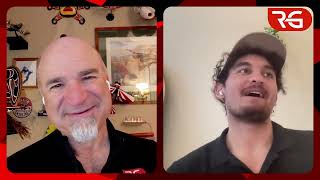
He made $15K Flipping Pokémon Cards at 13. MarTalks interviews Michael Fanous of nyne.ai