Michael Mignano: Building Anchor Into The Biggest Podcasting Platform In The World
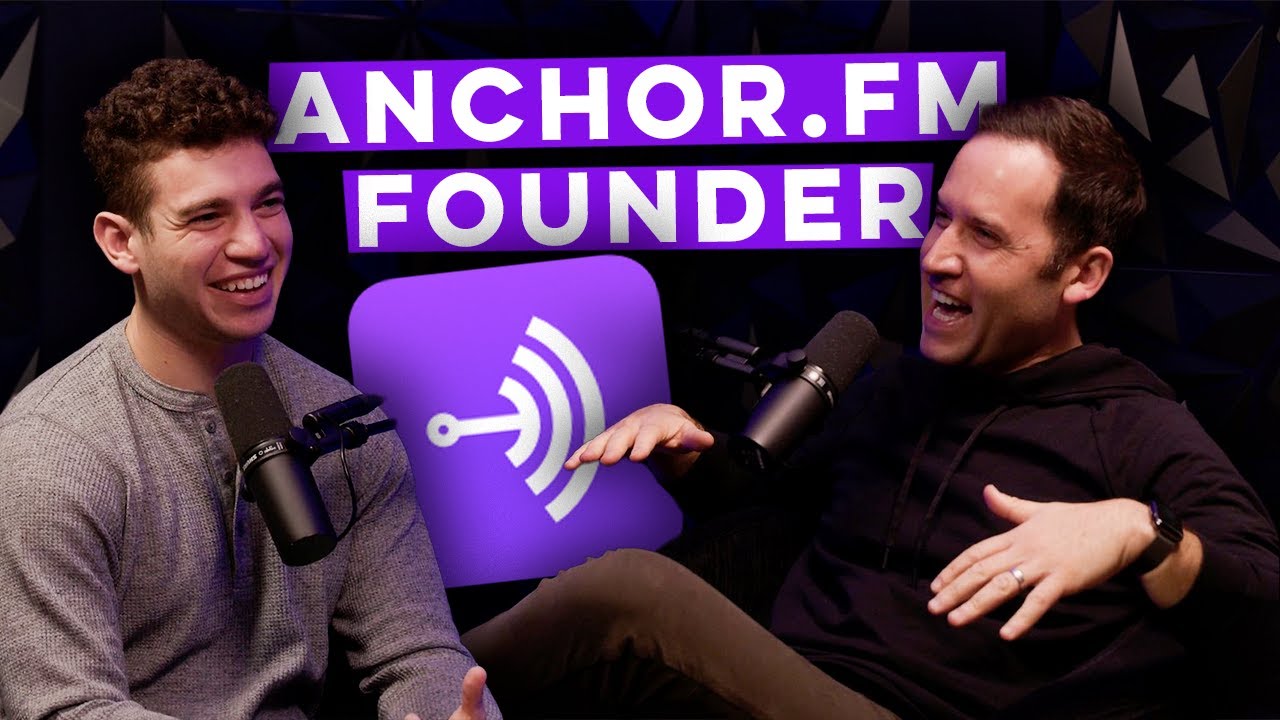
Michael Mignano built Anchor into the platform powering most podcasts by pivoting from short-form audio to mobile-first podcast creation with one-click distribution to Apple Podcasts and Spotify. After hitting 10% week-over-week growth, he sold to Spotify and now invests at Lightspeed, betting on founders who move fast and ignore hype.
Chapters
Mike Mignano is the creator of Anchor. And for those who are unfamiliar, Anchor is the platform that you use when you want to put a podcast into the world. It publishes automatically to Spotify, Apple, and it's why podcasts are so widespread today. And Mike created that platform. So it's pretty cool. And in this conversation, we spoke about how he built Anchor into the most used platform for podcasters. We spoke about how he invests in companies, and we spoke about the troubles and the trials of building Anchor into the platform that it is today. I really believe you'll enjoy this conversation with Mike Magnano, and if you do, let me know on Twitter @HeyDannyMiranda. Super excited to bring to you this conversation with Mike. This episode is brought to you by My First Million. My First Million is the podcast that I listen to whenever I want to learn more about technology, business, creating. They have a pulse on the future, Sam and Sean do. And I'm super excited to be sponsored by My First Million because they're podcasts I listen to anyway, and I'd recommend to you regardless. So thank you so much for listening, and this is the episode with Mike Mignano. Mike, thank you for coming on the podcast. I really appreciate you taking the time. I'm looking forward to our conversation because you've spent so much time in media and thinking about audio in general and podcasts over the last 10 years. So I'm excited to talk to you today.
Likewise. Thanks for having me, Danny.
So what happened with you getting jumped 3 times in Manhattan?
So I didn't personally get jumped, but I'm assuming you're talking about when the Aviary office got robbed. Back, geez, it was probably like a decade ago or more than— I don't even remember when it was. But yeah, we had an office in a not great part of Manhattan. And this was back when I had first joined startups. And so before I was in tech, I came from the music industry and I grew up a musician and playing in bands and very much drawn towards that sort of lifestyle and ethos of a couple of people doing something creative, being scrappy. So when I got my first job in startups at Aviary, and it was in sort of this, I don't know, this sort of stereotypical startup office, not a lot of amenities, it felt like being in a band. But the downside to that was you might be in some not great part of Manhattan. And yeah, there was no doorman in the building, so anyone could, if they wanted to, come in off the street, and people did. So I guess one day there was— somebody had their bike right outside the elevator on our— I think we were on the 11th floor or something. I don't even remember. And we ended up reviewing this on the camera footage later. Basically, somebody just took the elevator up, stepped out, grabbed the bike, put put it back in the elevator and just took off. So that was one of the incidents. And then I think the other 2 were people came up in the middle of the night and broke in and didn't even care about security cameras, or they just came in and pillaged the place. So that was an unfortunate situation. Fortunately, no one got hurt, but we did lose a lot of iPhones, MacBook Pros, things like that, sadly.
When you told that story on a different podcast, it sounded like you had personally got robbed 3 times.
Oh, whoops. I hope I didn't misrepresent.
No, it's all good. I was just curious. So when I was doing research for this, it was clear that your interests in life were around music and technology at an early age. Why was that the case?
So I grew up playing the drums. I grew up in a family, my sister and I, where our parents definitely just encouraged us to follow our passions. For me, it was doing things that were creative, whether it was making music or my mom was a photographer, so just following what she was doing a little bit. But yeah, I took up playing the drums at an early age. It's like when you're in school, you have to pick an instrument. I picked the drums and just fell in love with it. I had somewhat of a natural ability for it. And so I was decent for my age, which I think just helped me like it even more. And that just took me down the rabbit hole of learning about bands and music and wanting to be in a band myself and starting a band. I think there were, a few friends and I started a band in the 6th grade or something. And I was in a bunch of bands growing up. So that was one passion. Just sort of went down the rabbit hole of music. And then the other passion was I got really interested in computers. I remember getting some PC, like some 386 processor PC and an early version of Windows. This is pre-Windows 95 even. And yeah, it was just, I don't know. It was just like this open world of potential possibilities. And I don't know, I was just very intrigued by it. I learned how to program at a pretty early age in Visual Basic. And the internet was just sort of becoming a thing. And I remember getting lost on places like AOL and Prodigy and message boards. In fact, I remember spending a lot of time in message boards dedicated to some of my favorite musicians and artists. So it was just this whole untapped world of potential. So the 2 things didn't really have anything to do with each other. They were just 2 distinct things that I happened to be really interested in. And when it came time to go away to school and think about picking a major, it seemed like I should either follow one passion or the other. Music seemed risky, and it wasn't necessarily the type of music that I was interested in doing. I was really interested, like I said, in being in bands and couple friends and I being scrappy and writing songs. And majoring in music is majoring in music theory and, you know, a lot more formal training, which I just wasn't really interested in, even though I probably should have been because now— because I sort of like capped in my abilities because I never really, really went deep on the fundamentals. And then, you know, like I said, the internet was really starting to break through and capture a lot of people's attention. And so this notion of majoring in computer science seemed like it could be a good investment, right? Go and learn how to program more formally, learn more of the foundational aspects of it. And that's what I ended up doing because it seemed like the smart thing to do, or the responsible thing to do, I should say.
What were some of the perspectives around technology and computers in general around that time? I think it was around 2000, 2001 you're talking about. But before that even, how did people think about the internet and think about where the future was going?
Yeah, I mean, I think the internet was still pretty niche at the time. I mean, there were definitely a lot of people using it. Like I said, I was using products like AOL and Prodigy. I mean, there were many, many people using these services, but it certainly wasn't as ubiquitous as it is today in the US. And the other thing was people weren't really distributing full programs or people weren't distributing software online. People were still shipping products and software in boxes. So I don't know how old you are. I don't know what age of the internet you came online with, but in case this was before your time, products like Adobe Photoshop or even Windows, like I said, you would go to a store, you'd go to Best Buy or— CompUSA was another big one back in the day on Long Island where, you know, I know you grew up, I grew up there too. And you would go and you would pay $100 for the latest version of Windows. And then you would go home, you'd put the CD in the CD-ROM drive and you'd install it. And then that was software. So it was still primitive in that, you know, there wasn't this potential for anyone to create anything and distribute it to anyone over the internet.
Right.
in real time, which obviously we do today. So yeah, it was just a different world. And for me, especially after I went to school, it didn't inspire me the way that it does today.
The internet didn't inspire you or the future didn't inspire you?
It did inspire. Like, I thought it was interesting, but the potential of it had not really resonated with me yet. I didn't really recognize yet the potential of it at that point. You know, when I was studying computer science in college, you know, writing in languages like C and C++ and some more foundational languages like Lisp, they stimulated me intellectually, but I hadn't yet connected what I was doing in college for the potential for what I could, or what anyone could necessarily build or distribute on a mass scale, much in the same way you can do today. And the moment that really turned the light bulb on for me was both the introduction of the iPhone, but probably more importantly, the introduction of the App Store.
Hmm.
Because that's when, for me, it really clicked that you could build something, you could build a product, you could upload it somewhere quickly, right? Because bandwidth wasn't as nearly accessible or as fast in the earlier days of the internet. And then with the tap of a button, you could distribute that piece of software, that product, that thing you built to millions or hundreds of millions of people. That was a light bulb moment for me, for sure. And I think it was for, or I know it was for many, many, many, many other people.
This is incredible though, because you had a fascination or an interest in technology and computers at a young age. And then it isn't until the iPhone or the App Store where it really clicks.
Right.
And that's like a 10-year gap, maybe 15.
Yeah. Yeah.
And that's wild. Do you ever stop to think about like all that time and also like what in the future people are going to— it's going to click for them that it hasn't clicked yet in terms of the impact of the internet?
Yeah, absolutely. I mean, I think, I think the internet was, was a, was a, was the introduction of a new platform for many people and therefore a world of new possibilities. I think the iPhone and mobile and the App Store was another one. We haven't really had one since then. We haven't had a new platform since then that totally resets or extends people's imaginations to new heights since then. I think some people are saying maybe it'll be AI. I know a few years ago, or maybe even just a year ago, people were saying maybe it's Web3. But I don't think we've really had that in a while. And I think it's impossible to know what that thing— there are definitely— people are having predictions, right? I think for a couple years people are saying maybe it's the metaverse, maybe it's VR, AR, but it hasn't happened yet. And I think when that happens, maybe to your point, I think it's going to inspire a whole new generation of people to want to pursue their passion or their interests.
When you look back and you say, okay, we went to the, the store to buy software to upload to our computer that cost $100, and it's so primitive. When you look at today what the equivalent of that is, what pops to mind for you? Because I know you spend your time thinking about where we're going with all this. I know you've invested in over 50 companies, and I'm curious what today seems like such a primitive— will seem like such a primitive invention or the way we're doing things today is so primitive compared to where we're going.
Well, this isn't necessarily the same as a new ubiquitous platform, but I think what you're getting at is somewhat related to the reasons that my co-founder and I started Anchor, the podcasting platform. I think we saw an opportunity to take something that was rigid and manual and frankly, in my opinion, outdated in terms of a process, And simplify it dramatically using new tools and software and new cost structures. And I think we see things like that. You, I, we all probably see things like that all the time. I mean, you're recording a video right now and audio, obviously, of this, and you're going to probably upload it to YouTube. And not that long ago, you couldn't do that. The way that you distributed video was— You put it on a disc, or even before that, a tape, and you sold it physically in stores, or it came out in theaters, right? So I think we see mediums all the time that can be disrupted or simplified or democratized by technology. And I think we're seeing some of those things right now. One space in particular I've been interested in for a couple of years is this notion of building websites, right? Building websites today is still mostly a thing that happens on a desktop computer. But there are companies like Universe, which is a company I angel invested in a couple years ago, that takes the process of that and puts it on a phone. So much like Anchor did for podcasting, you can create a website with a couple of taps on your phone. Or maybe the process of building a website, right? So when I was in college, I was learning how to code, When I came out of college, I was building websites, writing code manually. But now you've got tools and products and services like Webflow that makes it far, far simpler to do something I would say just as powerful as somebody who's maybe investing a lot more time writing code. So I don't know if that answers your question, but I think there's so many opportunities to make things simpler and more accessible and cheaper and more available to more people throughout there in the world every day.
Yeah, I completely agree. Let's talk about Anchor and particularly, I'm so fascinated about the idea of we're living through the printing press for audio and video. I've said this a bunch of times throughout the podcast and it's—
I like that.
It's incredible to me how we've— it's originally from Jordan Peterson and that idea has stuck with me forever as soon as I heard it because I'm like, this is insane. You had the printing press in 1400, come about and allowed anyone to publish written word and anyone could read written word. Before, it was just the Bible. And now you have podcasts and you have videos where anyone could create and distribute video and audio. And that's an insane realization. And it makes you realize that the length of time in which we are thinking about some of this stuff, like podcasts being around for 10 years or videos being around for 20 years, it's like, this is just the beginning of what is going to happen.
Yeah.
And that realization got me started on creating this podcast. So with all that being said, when did you realize we were living through that revolution?
So I joined a company called— well, we talked about it in the beginning of the podcast, the company where we got robbed 3 times. That was a company called Aviary. And that company had a mission to democratize creativity. And the way that we as a company pursued that mission was through photography and making the taking, editing, sharing of photos something that anyone could do. Now, this company was started back in the early, let's say, I don't know, 2006, 2007. I actually don't know the year. I joined in 2012 during a transition of the company's software and products to mobile. They had been desktop-focused. They were transitioning to mobile.
Okay.
Which was around the time that Instagram was really taking off. And I think that was a moment for me, to answer your question. I grew up in a household where my mom, I mentioned earlier in the episode, was a professional photographer, and I saw all the work that went into taking and editing and processing these photos. And then Instagram came along and products like Aviary and many others, And again, a light bulb moment where it's like, oh, wow, now with your phone that you carry around with you everywhere you go, you can take a photo and you can tap a button and immediately, instantaneously, that photo looks beautiful. It looks like you put it in Photoshop and you spent 2 hours in Photoshop making it beautiful. And then you can share it with anyone in the world, again, with the tap of a button. So that was definitely a moment for me where I realized that Oh, wow. It's getting easier to be creative in certain ways. And I spent a lot of time, we all did at Aviary, we spent a lot of time obsessing over that. We talked about, we always had this, Avi Muchnick, the founder of Aviary, always had this great filter for thinking about product, which is we should build products that are so simple and so easy to use that a kid picking up a phone or an iPad for the first time or Maybe your grandparent who's just getting the gift of an iPad from somebody in their family for the first time could take and edit and share beautiful photos just as easily as anyone else. So that was a really inspiring lens for me. And in fact, it's funny, I made this connection in my head recently. We also talked about getting the product at some point to the point where you could just tap a button and the product would just know what you wanted to do to the photo. It would almost be like magic, right?
Mm-hmm.
And now, funnily enough, we're living in a world where you can type any sentence into a prompt with products like Stability, and boom, it spits out exactly what you're picturing. So it's funny, now we've sort of gotten there from a technology standpoint. But anyway, to answer your question, that was, I think, the moment for me where I realized we were living in this new age of, I would say, creative revolution, where the devices and the technology and the software we all use every day has reached a point where it can dramatically simplify and make more powerful these creative outlets and means that were previously one day very, very difficult. And so jumping to Aviary, Sorry, jumping to Anchor. AVR got acquired by Adobe. We were working at Adobe, my co-founder and I, for a bit. And while we were there, we both got really interested in podcasts and audio. I had been interested in audio my whole life through music, but this was the first time that I was actually getting interested in spoken word audio and podcasts, the thing that we're doing right now. And it was impossible not for us to immediately apply the same lens that we had at Aviary to audio and say to ourselves, well, why is this so hard? Why does it take really complicated software and really expensive hardware? And why does it take money to invest in podcast hosting for somebody to just speak and get their voice out there in the world? I mean, again, just a few years earlier, we had seen people take photos and tap a button and get that out there in the world. Why couldn't it be that way for audio and voice? So I think To answer your question, it was that period of my life where I really started to look at things a little bit differently and think about all these different means of creativity and creation and ask myself, how could they be simpler? Yeah.
The original product for Anchor was much different than what it became.
Totally.
Take us through the initial idea of it and the evolution of how it became the thing that we know today.
Yeah. So when we first started building Anchor, we wanted to do everything to audio all at once. We were like, man, podcasts are great, but wouldn't it be great if they were easier to make, easier to distribute, easier to monetize? And then as a listener, podcasts are great, but they're long. It's hard to parse through information. They're not interactive. We had all these issues we identified with the medium, both on the creation side and the consumption side. And naively, being first-time founders and entrepreneurs, we said, let's try to fix everything all at once. And the implementation of all of those ideas mashed into one thing was basically a social network. It was, hey, let's build a social network and a new format for audio that's short-form, that's interactive, That's easily shareable. It's less dense, so it's easier to get through lots of information really quickly rather than sitting through a 40-minute episode of something. And we got to work building that. And it was cool. I mean, to be honest, when we first launched it, it really resonated with a lot of people. We saw a lot of people wanting to create, but we also immediately identified some pretty big issues with it, which the main one being that even though we could get people to create in this new format, it was effectively like 2-minute-long audio files that people could respond to with their own voices and they could share, they could put them on Twitter and stuff. Even though it was really easy to get people to create that stuff, the listening experience was not good. It turns out listening to a bunch of short-form, 2-minute clips of audio from people who have never recorded audio before and don't have any tools to make it better, is not that enjoyable of a listening experience. So after the initial sort of wave of excitement after the product came out, it pretty much flatlined and usage like dropped to zero.
But it's funny because the initial excitement from doing research for this, I wasn't on Twitter at this time, but I get the feeling that this was the most exciting thing that people were thinking about at this time. Like people were flying across the country just to meet you, to invest in you. It was like you had wonder kid status. And you were being compared to Steve Jobs, right? That's how it sounds when doing research for this. So how does that imprint on you and impact you as somebody who's trying to create something but is getting all this love and praise, but then it's not actually working? And when do you realize it's not working? How does that impact your psyche?
Yeah, it's a really humbling experience. I mean, again, my co-founder and I had never built anything before, and we hadn't really spent much time with people who had built in Silicon Valley and built startups. We had been at Aviary. That was the first startup I was a part of. And I think to Aviary's credit, the founders and the company did a great job of sort of insulating themselves from the echo chambers of Silicon Valley. We put our heads down and we were building our product. But that meant when we went to go build Anchor, we were pretty naive. We didn't know how fundraising worked. We didn't know the way the world worked. And so when we launched this, and I think to address your point about there being a lot of excitement, I think in hindsight, the reason there was so much excitement was just because it was pretty novel at the time. Snapchat was immensely popular at the time, and I think because of Snapchat's popularity, there were a lot of products and startups coming out focused on video and short-form video. social products that were all about video. And then so when Anchor comes out and it's a social app around audio, I think people got really excited that it was just very unique and novel at the time. And I guess somewhat to the early product's credit, there were some unique and novel things about it, but again, it wasn't working. So yeah, I mean, there was a ton of excitement. There was a ton of press. There was investors. And again, we didn't really know much about raising money. There were investors trying to get money into the company. There were big companies, very, very big ones that you know about and everyone listening knows about, inquiring about buying us. We had been live for a couple of days.
Days.
Wow.
And how long had you been building it at that point?
Over a year.
Over a year. So not many people are going to get that experience ever in life where they work on something for a year, release it, and then all of a sudden the entire world Once. Yeah. What advice would you have? I'm sure you saw OpenSea probably had a very similar thing happen to them. Like, what advice would, would you have for somebody in that position?
I think the advice that I would, that I would give is that you're, you know, if you're a product builder and you're building a product and you launch it and it goes crazy the way Anchor did, or maybe some of these other products did, It's really, really important to ignore the noise because there's going to be a lot of noise and really try to focus in on the product. You get really distracted by taking a million investor meetings or M&A meetings and you don't focus on your product. And really the product is almost definitely not working. So it's really important that you focus on the product, but that's really hard because actually the metrics will kind of look like everything's working on the surface because you're getting a bunch of attention and press and the App Store is promoting you and all this stuff. In fact, so funny, on the second or third day or sometime within the first week of the launch, my co-founder Nir, who was our CTO, said, I really—
Oh, wow.
The only thing I don't want to happen within this first week is I don't want us to get promoted by the App Store. Because if we get promoted by the App Store, the servers are going to crash. We're going to get too much usage and we can't handle it. And so he's like, Mike, you know, don't get in touch with anyone at the App Store. Like, we really don't want to get this thing promoted. But sure enough, even without us talking to anyone at the App Store, they still ended up promoting us like the second or third day. And I remember like getting a phone call from Nir and being like— Oh, my God. I don't know what we're gonna do. We can't keep up with this traffic. Anyway, I'm getting off the point a little bit. You really have to focus on the product and you have to try to figure out what's working and what's not working. And that's a really, really hard thing to do because the metrics are going to look like things are working.
Mm-hmm.
So you really have to focus. You have to try to hone in on the things that are true in the product despite the noise. And I can't say what that is for any— every product's different. Every product's got its own set of success metrics. And I think a good place to start is looking at the retention. And even that might not be great because there might be so much excitement in these early days that people are using the product over and over and over again because they're so excited about it, but it doesn't necessarily indicate that the product is working. And the other thing is just to remember that this is a marathon, not a sprint. I mean, I personally can't really think of any products that got a ton of excitement and attention overnight after they launched, and that turned into immediate success, right? Like, I don't know, maybe you can, but I can't think of a company that launches, sort of blows up on the App Store and the press, and ends up IPOing or selling for some crazy price. It doesn't really happen.
The only ones I can think of are the ones in which it kind of crashed and burned in a way.
Exactly. And that's typically what happens, right? Because the founders maybe take their eyes off the ball. They start focusing on these externalities that don't really matter in the end of the day. I mean—
But how much is it their own fault versus just the way the market and the cycle reacts?
Yeah. I mean, it's not really their fault, especially if they haven't done it before. Again, I mean, I hadn't done it before. And so it was very easy for me to get distracted by all this and think that it was important. Now, I will caveat a little bit and say that there could be a right situation in which it makes sense to maybe raise a little bit more money if you find yourself in that situation. But even that, I think you need to be really, really careful because what happens— quite often is whenever there's a lot of heat on a company, investors start kind of outbidding each other and the price, the valuation of the company goes up and up and up and up. And at a certain point, it sort of becomes detached from reality and detached from the true value of the company. And again, a first-time or maybe a naive founder might think that that's a good idea to raise money at some crazy inflated valuation, because that means they're taking on less dilution. And you often see founders fall into this trap where they say, oh, wow, I can raise all this money and not really get diluted. But what the trade-off is, is the value of the company gets set really, really high. And when the value of the company gets set high, you're effectively raising a higher bar for yourself to go and raise the next round of financing. You need to effectively double or triple the valuation of the company in that next round. And most likely in that next round, things will come back down to reality and you won't have the attention and the heat that you have on you at that moment. And you will actually be judged by the true measures of success for your product. So you've just set the bar so much higher for yourself. And that is often another example of a situation that ends up harming founders in a pretty big way. Back to the, I think the original question, as much as you can, like you just, you really have to try to stay grounded and just focus on building a great product. Because at the end of the day, that's what you're there to do anyway. You're trying to build a product that is going to solve some problem or pain point for some large number of users. And so it's best to just stay focused on building your product and your team.
Yeah. So at some point you decided, okay, I'm going to, or we're going to start targeting 10% week-over-week growth. And that seemed to be a pivotal moment for you and for the company to kind of allow it to keep going.
Yeah. So before that, what happened was we realized that the audio quality was not great. I mentioned that we made it really easy for people to create, but the listening experience was pretty subpar. And so we effectively scrapped the first version of Anchor, which was a really difficult decision, but we ultimately realized it was the right one.
How long after this first week of hype would you say this was?
Probably somewhere between, I could look it up actually, but it was probably somewhere between 3 and 6 months. 3 and 6 months, right. Because we spent a lot of, after the initial excitement died down, we spent a lot of time trying to get it back.
Yeah.
And after enough cycles, you realize, oh, it wasn't real. This product is not good. Look at the retention. Look at the way it's growing. It's not growing. This product doesn't work. And eventually you have to make the hard decision to take a big step in another direction. So we did that. And yeah, we started focusing on a new version that gave people a lot more creative tools such that it wasn't just a 2-minute audio file anymore. It was a new format that allowed people to add in music and sound effects and edit in a very sort of simple way. Again, the product, well, I don't think I mentioned, but the product was mobile first. It was all on your phone. So all this stuff had to work on mobile. And we launched that about a year later after the original version.
Excuse me.
And we saw immediate improvement, which was pretty cool. It was like, wow, we did something right. The quality immediately went up. Listening time in the app went up. People kept creating. More people came in. Actually, so even though we were doing some things right, it was actually once again hard to see because there was another wave of excitement. It was like, wow, anchors reinvented themselves.
Back.
Yeah. And that was, again, a bit distracting, but I think we were a little smarter the next time and were able to focus a little more clearly on the things that mattered. And then I think to your original question, after a number of months iterating on that version of the product, my co-founder and I were starting to think about— we were planning for the future and starting to think about the next fundraise, which we would need to survive. And we realized that the current trajectory of the product's growth, it actually wasn't really growing. It was sort of flat-ish, meaning we would grow, we would get new people every day, but then eventually people would churn out. And over a long enough period of time, it was effectively flat. It wasn't shrinking, but it wasn't growing. And the next round of funding for us was going to be our Series A. And when you go out to raise a Series A, I mean, you really need to show that you have product-market fit. Meaning that you're building a product and it is solving some problem for some meaningful number of people such that it delivers something that the market wants. There's a fit in the market. And we didn't have that. We did not have product-market fit. We had made some strides since the first version of Anchor, but we didn't have product-market fit. And we knew that if something didn't change, We were going to run out of money. We were not going to be able to raise that next round of financing, and the company was going to be over. And that's a pretty humbling feeling. We had been building for a couple years at this point, and it had been a lot of fun, and we were having a great time. But that was a moment where we realized, oh, this thing's going to be over unless we figure this out. And so we came up with this framework, partly inspired by this Paul Graham essay that I had really loved called Startups Equal Growth. And we decided that to hit the timeline of being able to raise a successful round of financing, we effectively had 3 months to turn the growth around. And what we estimated was that we needed effectively 4x growth in the product. And we set a date in the calendar. We said, we need to have that 4x by this date. And then we backed out of that date and realized that we needed to grow 10% week over week to hit that 4x growth in the 3 months. So we sat the team down and we said, look, just going to be totally candid with you. And we were always super open and transparent with the team. If we don't turn this company around, if we don't 4x our growth, we're going to run out of money. And unfortunately, we're not going to be able to exist anymore. And so we need to have all hands on deck and we all need to commit to hitting this number. And we all committed as a team, there were about 7 or 8 of us at the time, we're going to meet every single day and we're going to track whether or not we're on track for our 10% week-over-week growth goal. And if any day during that week we determine that we're not, we're going to have to think of something else. We're going to have to do something else. And anything goes. It could be a product. We could build a new product feature. We could launch that. We could do some sort of marketing initiative. We could maybe interview some influential creator and ask them to promote it on their Twitter. We had recently started making these Twitter Moments. Twitter Moments was a new thing. I actually don't even know if they're still around, but at the time they were this cool new format on Twitter, and we had gotten really good at making them and getting them to go viral, which would drive some top-of-the-funnel growth. So we were making Twitter Moments every day. We were doing Anything we could to do this. Now, after doing that for about a month or so, we were getting some incremental gains, but we were probably missing our target more often than we were hitting it. And we were getting kind of desperate. And we started— we realized that one of the things that was working better than anything was just building new features and shipping them. Building new features, shipping them, talking about them among the Anchor community. And one feature that there seemed to be a pretty loud and resounding request for was the notion of taking the audio that you had made on Anchor and distributing it to Apple Podcasts and Spotify. So Anchor was building its own unique format. And so that meant that we weren't letting people listen on other platforms. You had to listen to it on Anchor. But when we introduced these new creative tools, the format started to sound more and more like a podcast. So creators and their listeners started asking us, well, you're just effectively allowing me to make a podcast. Why can't that podcast be listened to where my listeners are already listening to podcasts? And we had sort of resisted doing this for a while because we felt like that was violating this, this product strategy or this principle that we had about making our own unique format. Because again, we wanted to solve all of these problems. But remember, if you go back to the beginning, I said we wanted to solve all these things. Creation, consumption, interactivity. And we felt like the only way we could do these things was in our own ecosystem because they effectively went around the means of distribution for podcasts, which was RSS, which is a whole other topic we can get into if you want. But we were running out of time and we said, you know what? We have to do this. We have no choice. And so we committed to building this distribution system, this RSS distribution system, and we got to work and we probably launched it about 4 weeks later. And the minute we launched it, I mean, you could see, I went back and looked at the data recently, you can see it. You can see where we launched this, everything just turned around. We immediately had product-market fit because now we had this product. There were all these people out there in the world that wanted to make podcasts, but felt constrained by the way that you and I are making it right now. And all of a sudden now they could do it on their phone with the tap of a button. And the number of creators exploded. And yeah, we found product-market fit. It was crazy. We hit the growth target and we went out to raise a round of funding and we were able to do it. And yeah, it worked.
It's insane just hearing it all The whole story of getting to that point of something that I know today is Anchor. Now Anchor's the most used platform for people publishing podcasts. What do you think has contributed to that the most?
I mean, I think there are a number of things. Number one, this distribution thing that I mentioned was a big deal. So prior to Anchor, to distribute your podcast, this podcast, if you wanted to put it on Apple Podcasts or Spotify, You basically, you had to go and host your podcast on a hosting platform like Anchor or one of its competitors. The platform would then give you back an RSS feed, and then you had to take that RSS feed and you had to submit it for review or for consideration to Apple or Spotify or any of these platforms. And the thing that Anchor did was, first of all, we didn't even expose the concept of hosting. We felt that that was too technical for most people to understand. We didn't make you pay for it because it was actually very, very cheap for us to host your podcast. So it felt disingenuous to us to charge you to host a file for you that cost frankly less than pennies for us to host. And all of our competitors at the time were charging. And then the other thing was we abstracted away the notion of you having to go and submit your podcast to Apple Podcasts and Spotify. Candidly, and I think I've talked about this before, but in the early days, the way we did that was we were manually doing it with human beings. So in the Anchor app, you would tap a button and on some admin dashboard that we had built, we would get a notification that Danny wants to distribute his podcast to Apple. We would generate the RSS feed, we would go submit it to Apple, we would submit it to all these different platforms. We would wait for them to approve it and come back. with the URL to your podcast. We would put that into our admin system. We would tap a button and then you would get a notification saying your podcast is live on Apple. It felt magical for you, but the reality was it was anything but magical on our end. It was, it was a bunch of us sort of running around scrambling to make it seamless for you. But this was a big deal and this, this, this reduced so much of the friction. It, it took this process that was very, very disjointed and technical and made it like posting an Instagram photo, right? You capture the media, you tap a button, it goes live on the internet. So that was a big deal, to answer your question. And then I think the other thing that was a big deal was monetization. So monetization for podcasts before Anchor was extremely manual because of the limited data that RSS, the distribution mechanism for podcasts, provides back to the creator. and to potential advertisers. You can't really get much data. And there also was no platform to sort of aggregate all the data in one place. And so the means by which podcast advertising worked was advertisers would effectively— I'm exaggerating a bit, but they would effectively just call individual creators that they saw at the top of the charts and say, I want to advertise my mattress company on your podcast, or, I want to advertise my website hosting company on your podcast.
Right.
And the reason they did that was because it was just too hard to do otherwise. There was really no other way to do it. So what you ended up with was effectively this really small but highly valuable market for podcast advertising. I'm talking in the hundreds of creators. And for those listening who happen to be in podcasting maybe 3 or 4 or 5 years ago, You may remember that podcast CPMs for some of the top shows were insane, something like $100 CPMs. And it was because there was just a constrained amount of supply. So just think about supply and demand. If you have something valuable and there's not much of it, there's going to be really high demand for it and people willing to pay. So what Anchor did was since we were able to grow pretty quickly to become the biggest podcasting platform, we had all of the podcasts or most of the podcasts in one place. And therefore we had an opportunity to sort of bundle the shows together and sell bundles of shows to advertisers and then pass that revenue through to the creators. And that was a big moment as well that I think attracted a lot of creators to Anchor. So I think it was just, if you take all those things I just said and sum them up, it was sort of vertically integrating all of the components into one platform to make it very, very easy and seamless. and free, and not just free, but also for many creators, profitable. And that was just a very, very unique proposition in the market back then. And frankly, I think still is today. I don't work for Spotify anymore. I don't work on Anchor anymore, but Anchor, from where I sit and what I can observe in the market, Anchor still has a pretty unique value prop compared to the rest of the players in the space today.
How do you figure out when to sell?
Yeah, that's a good question. And I don't know that you ever figure it out. So everything in startups is, you never really, or I should say oftentimes in these sort of pivotal moments, you never really know the right answer. You try to make the best informed decision you can, There were times in Anchor's history where, well, one main one in particular where we had an opportunity to sell and we turned it down because we believed that we had a lot more opportunity in front of us by staying independent. And when I say opportunity, what I mean is the potential to fulfill our mission. Our mission was to democratize audio, similar to actually to the Aviary mission around democratizing creativity. And we really, in our core, believed that we were not successful unless we had accomplished our mission. It wasn't about the price tag of a potential acquisition or an IPO. It was, did we solve our mission or did we not? That was success. And by the way, I think that's a very important lens for startups to take when they're building their company, is to sort of make success and failure about a mission, Because that will push you to do something really, really big. And even if you don't achieve that thing, you get part of the way there, there's still a good chance that you're going to do something really, really special and great. Whereas if you optimize for only very specific outcomes and those outcomes don't end up coming true, then you fail, right? If your goal is to be acquired by X company for Y dollars and that very specific reality doesn't happen, then you lose. And you may have actually optimized all of your opportunities just for that one, meaning you cut off a lot of other opportunities and potentials. So that's why I think it's so important to just aim very, very audaciously high at all times for some nearly impossible mission. So there was a time where we did not accept this offer that I mentioned because we thought that we would have a better chance in fulfilling our mission by not taking the offer. But when the offer came in from Spotify that we ended up accepting, we felt that that was the best opportunity for fulfilling our mission. We had spent a lot of time with Spotify and Daniel Ek and Gustav Söderström, Spotify's chief R&D officer, and we truly believed that the combination of these 2 companies would put us on the best possible path to Achieving the mission. And that's really what it came down to. Now, could we have achieved it without selling to them? Sure. Yeah. I mean, anything could happen. But we sort of looked at what was ahead of us and felt that there was a higher risk of failure, much higher risk of failure to achieving our mission than if we had joined forces with Spotify. And so We made that decision eyes wide open saying, this is going to be the best path for the company and this mission moving forward. And that's how we made the decision. And then by the way, when you're in that moment, obviously there are all these other things like negotiation and setting up your team for success. But that was how we made the decision. And I'm sure another founder might give you a completely different answer for how they made the decision.
For sure. So you previously served as the head of talk for Spotify for 3 years, and I know you can't talk about a lot of that stuff, but I'm curious from your perspective, what do you think are some of the biggest misconceptions podcasters have in general about Spotify as a platform?
So I think if you've been in podcasting for a while, what I've observed, because I've been in this medium for a while now, there's There's definitely this— I think people that have been in podcasting for a while love the notion of podcasting being truly open, not being centralized by a larger platform, having it be a little bit of this free-for-all. And I get the allure of that, and I agree with it.
As a musician too.
Yeah, totally. But I think what people often miss is that podcasting, those same podcasters, they want more opportunity, they want more revenue, they want more exposure, they want bigger audiences. I think what they often miss is that the reason they don't have those things, or a reason they may not have those things, is because podcasting as a medium has been constrained by the limitations of RSS. And a company like Spotify, yes, they are looking to grow their own market share of podcasting for sure. They're a business, right? They're a publicly traded company. But they actually want to do it in a way that benefits creators and listeners on whole. And they want to do it by innovating on the actual format. And the medium that in many ways has constrained the same creators that are asking for more. So I think it's a really, really good company that's very creator-first and like Anchor was, very mission-driven. But I think a lot of podcasters see that it's a big corporation, it's a tech company, it's been funded by Silicon Valley.
Yeah.
Obviously, there have been a number of instances over the past couple of years where people feel like big tech companies maybe haven't lived up to what they said they would. But I know, having been in the building, Spotify is a very, very mission and creator-oriented company. So I don't know if that answers your question, but I know for sure that their motivations are to help creators en masse and listeners en masse. Yeah.
As we go to the next stage, how do you figure out, okay, I want to leave Spotify and okay, I want to start investing in different companies in the future in general?
Yeah. So we talked about Aviary, we talked about Anchor. Prior to Aviary, I worked in the music industry at Atlantic Records, and that was a really cool, legendary, storied record label that had really built a career, built a legacy by helping music musicians and really working closely with some of the greatest artists ever. And I think one of the things that I got from that experience and the Aviary experience and the Anchor experience was I realized I really like to help people create. A couple years ago, I started angel investing and I realized that angel investing was another form of helping people create, people that have their own missions they want to pursue, or they're building their own creative products that they want to get out into the world. And angel investing represented an opportunity for me to help fund these businesses, but also if and when it made sense to help share with these creators my own experiences building Anchor. There are lots of stories and lots of experiences that we went through with Anchor that when I was going through them, I had no idea what I was doing. And it was helpful for me to have angel investors or institutional venture investors in my corner when I was building Anchor that I could go to for, hey, I just got this M&A offer from Spotify. What the hell do I do? And so through angel investing, it's been really rewarding and fulfilling to me to be able to help other founders. So when I was thinking about the next thing I wanted to do with my career, after spending, like you said, nearly a decade in audio and being inspired to sort of move on to the next chapter of my career, I said, well, can I take what I've been doing with angel investing and can I make that my full-time job? And so fortunately, I had built up a relationship with Lightspeed Venture Partners over the years of building Anchor. You meet a lot of investors, you develop these relationships, and There was an opportunity to join as a partner based here in New York City. And I thought, wow, this is an amazing opportunity to take what I've been doing on a small scale as an angel investor and do it on a much, much bigger scale through Lightspeed, which is a global firm. We have, I think it's now 9 offices in 6 countries, including a brand new office here in New York. Truly multi-stage, which I thought was really cool because One of the things that I saw when building Anchor, and one of the things I see now is investors— sorry, founders, they raise capital and maybe a certain round of funding, but it doesn't really end there. They often need support all the way through IPO or acquisition. So to be at a firm like Lightspeed that could invest at every stage and work closely with founders literally at every stage was really, really inspiring to me. And then the people, I thought the people were just phenomenal. a ton of great domain experts and really, really good people who, like me, were sort of mission-aligned to help these founders build the next generation of the greatest companies in the world. So it just seemed like an amazing opportunity. I started a few months ago, and so far it's exceeded my expectations. It's a lot of fun, but it's different than building a company on my own.
I know you're new to the investing world in general, but I'm curious what your best investment has been and your worst investment has been. And why?
Geez. Well, I don't want to pick favorites or talk negatively about any company or person. I will say that what I have found, maybe not coincidentally, is that for me, the best investments have tended to be the ones that are truly also mission-oriented. There were a couple of times where I made an angel investment that maybe wasn't mission-oriented. It was more of a, what I call a spreadsheet investment.
Hmm.
A founder basically identified a problem that they didn't really connect with personally and modeled it out in a spreadsheet and said, wow, financially, this is going to be a great product. But the mission and what they were building didn't really have any soul to it. It was really just about a spreadsheet. And I have found that those are often, just in my experience, those tend to be the least successful ones. It really takes somebody or a team that lives, sleeps, eats, and breathes a mission or a problem that they personally identify with to go and build a world-changing company.
I've heard you talk before about missions come from obsessions. And I'm curious, where do obsessions come from?
Have I said that?
You've said so much on audio over the past decade.
Well, maybe what I'll say is, I don't know if this is what I was getting at when I said that. I should probably go back and find that.
It was with Harry Stebbings.
Oh, okay. So with Anchor, when my co-founder Nir and I started talking about Anchor and building it, As a side project, nights and weekends. We hadn't yet decided to go all in on it and quit our jobs and say, hey, this is our full-time job. But I became obsessed with Anchor. I would wake up every single day and the first thing that would pop into my head was, how are we going to go fulfill this mission? What do we got to do today with Anchor? Should I quit my job and do this full-time? I think that was actually the question. It was like, I just woke up every day thinking, should I invest all of my professional time in Anchor? And somebody told me, an investor that I knew, this Mo Kofman, I don't know if you know him, who was an investor in Aviary. I said to him, he was one of the only investors I knew, and I said to him, I called him up and I said, hey, I'd love to talk to you about this thing I'm building. And I said to him, I was like, should I do this full-time? And he's like, Look, he's like, my opinion is if you wake up obsessed about this problem every day for 6 months, he's like, you got it. You're going to be wondering the rest of your life. And I thought that was really interesting. I thought it was interesting. Wow. If I'm dedicating 6 months to thinking about this every day when I wake up, that's probably a pretty good indication that I should go and give this a shot. So maybe that's what I meant.
Yeah.
And then, and then, yeah, you know, the problem that we're obsessed with turns into a mission and then we quit our jobs and we dedicate our professional careers to this mission.
How long was that, the time period between you having the idea or you starting Anchor and then you actually quitting your job? And how should people think about that themselves?
It was about, it was about, I think about 8 months, 8 or 9 months or so.
Okay.
The way that we thought about it was there were a couple things. So for us, neither of us were in the position financially to bootstrap this idea. Neither of us had meaningful savings that we could tap into without risking our family's financial economic future. So neither of us felt comfortable doing that. We knew we had to go out and raise money if we were going to go full-time. I think the thing that we realized, and I think this is probably true for lots of people, but certainly not for everyone, so I don't want to just say this and apply this as blanket advice for anyone to take, but I think what we realized was we had pretty good resumes. We had built— we had worked at companies big and small. We had worked at a company that sold to Adobe. Nir, my co-founder, was a fantastic backend engineer and product person. I had run product at Aviary.
You could get a job if it didn't work out.
Yeah. And I think that was something that took a minute for us to realize. I think there's this cliché, oh, starting a startup is so insanely risky. And again, for some people it very well may be. So I don't just want to apply that advice sort of in a blanket way. But for us, I think we felt like if we could go raise some money and pay ourselves a modest salary, much less than we were making at Adobe, but just something to pay the bills, and we did that for some extended period of time, I think we gave ourselves, we said we were going to do it for a year, or I don't remember what the timeframe was. We ultimately had the confidence that if we failed, we could go get another job and everything would be okay. That's how we thought about it. The trickier thing was, okay, how do we go and actually raise some money when we don't know anything about venture capital?
Yeah.
We have a full-time job. Our mentors and people we knew let us know that, hey, look, fundraising is also a full-time job, so you can't raise money while you're working a job. That was the trickier thing that we had to navigate. But that's how we thought about the framework was like, maybe this isn't a risk. If we set a deadline, we give ourselves a modest salary, maybe this isn't such a risk.
How do you go about picking And figuring out, okay, I need to raise money now, and then actually doing it when you've never done it before. How would you recommend somebody do that today versus back then? I'm sure there are some differences and nuances in the 7-year time difference.
So for us, and this would be my advice to anyone that's able to do this, is you need a mentor. You need somebody that— you don't need, but I think it can be helpful to have a mentor, somebody that believes in you, somebody that's been through it before and wants to help you navigate it. So for me, that was Avi Muchnick, the founder of Aviary.
Excuse me.
For me, that was Avi Muchnick, the founder of Aviary. He believed in what we were building. He believed in us, I think more than the thing that we were building. He believed in us. And promised me actually as my manager at Aviary, I told him, I was like, look, one day I'm going to start a company. I don't know what it's going to be, but I'm going to start it. Can we dedicate some amount of the time that we spend together at Aviary to you teaching me about starting a company? And he basically, it was like my startup school. He would teach me about fundraising or M&A or building product or whatever it was. And he gave me a lot of advice sort of in advance and then also in real time as we were raising for how to do it. The other thing though that happened to us is I think we got really lucky. We embedded ourselves— didn't embed ourselves, I'd say we inserted ourselves into a community here in New York, which was the Betaworks community. Betaworks was a startup studio, now is a fund, but back then was a startup studio here in New York. A friend of ours worked there and they would do these Thursday night demo nights at Betaworks. And she invited us to come in. She said, hey, come in, present Anchor to the community. Maybe you'll get some beta testers. And so we did that. This is while we were still working at Adobe. And the founder of Betaworks came up to me afterwards, John Borthwick, and he said, hey, we've been looking for an audio product. And he's like, this is exactly what I've been excited to find. And so we had a conversation with him and we said, look, we're thinking about quitting our jobs, but we know it's going to be a full-time investment to go out and raise a real round of funding. And so John Borthwick and another partner there, Matt Hartman, who led multiple investments in Anchor afterwards, they said to us, look, let's try something. You guys quit your jobs if you want to do this, and we'll invest just a very, very small amount of money. We can just figure it out right now. You don't have to go out and raise a round of funding. You come work out of our offices for 3 months, and then after the 3 months, We'll make introductions to any investor you need in Silicon Valley or New York to go and raise a real round of funding. And that seemed like a really good situation. We wouldn't have to go quit our jobs and spend potentially months raising a round of funding, which we had never done before. We could effectively just quit our jobs and show up for work the next day at Betaworks and start working on Anchor. And it felt like too good of an opportunity to pass up. So that's what we did. That's how we made the transition. But I think others could probably do similar situations where it may be, if they're able to, and again, this isn't going to work for everyone, but maybe you're able to start your company on some small amount of capital invested by friends and family, or maybe close friends, maybe some angels in a community starting you out with a very, very small amount of money just to give you maybe a couple months runway.
Yeah.
to go out and then raise a real round of funding. I think that's a potential viable path for some people.
Very cool. I'm curious, the hour has flown by.
Yeah, seriously.
And this is crazy, but I have so much more I want to talk to you about in terms of technology, the future, where we're going. But I like to end these podcasts with a challenge for people because you take and you listen to the audio or video and You watch it and consume it, but what action are you taking after doing that? And so the challenge leaves people to take an action after consuming the podcast. So do you have a challenge you can leave people with?
I think if you have an idea for something in your head, whether it's a startup like we just spent a lot of time talking about, or a podcast, or a film, or a book, or a piece of writing, a trap that I have fallen into many times throughout my career especially earlier in my career, was to not act on it, to think about it, analyze it, even get feedback from people on it, which I do think is helpful to get feedback. But maybe most critically and most importantly for this challenge is to not act on it. And what I have found in my career thus far is that I have been most successful when I've just acted on my ideas, even if they're incomplete, even if they're bad, Even if they don't end up resonating with anyone. A thing that I've been doing recently is I've been writing really for the first time in my career. Over the summer, I had some downtime in between my Spotify role and my role at Lightspeed. And I was like, this feels like a good opportunity to start writing. And so I started writing. And quite honestly, a lot of the stuff that I've published, I did not put a lot of time into. Some, some of it I have, I will say. But there are also certain pieces where I just put them out there. I write them and literally publish them an hour later. And sometimes it leads to, you know, maybe some critical feedback. Somebody says to me, hey, I think you got this wrong, or I don't think this idea was fully fleshed out. And I love feedback like that. And I take it and I take it with me to either change what I wrote or, you know, take it into consideration for the next thing or for the podcast. You know, a podcast, we talk about it. My perspective has changed. But what I like about putting things out there that are incomplete is they enable me to learn a lot faster. And this is how Anchor was built. We had this idea, we obsessed a lot over whether or not it was the right thing to put the idea out there into the world. But eventually one day we said, we've got to just get this thing out there. Let's just put it out there. And in fact, bringing it all the way back to the beginning of the conversation, you asked about the time when We had investors flying all over and all this attention and this media. We had been in a period of building Anchor in closed beta for a year, and we had set all these goals for what would have to be true for us to launch it. And we didn't reach any of those goals, but we got to a point where Nir and I looked at each other in the face. We're like, what are we waiting for? What are we really going to know about this product unless we get it out there in the world? And we learned a ton. We learned that if you get a lot of attention after you launch a product, you should probably ignore it. We learned that the product we were building didn't work, but we also learned about the things that did work. And so my challenge to anyone who's got an idea is don't sit on it. Get it out there into the world. You will learn far much more about that idea and yourself in a real-world scenario than in a controlled environment, be that in your head or a small closed beta group, get it out there into real-world conditions as quickly as possible. That's my advice.
Mike, that's an incredible place to come to a close. Thank you so much. Follow this man @mignano on Twitter. Thank you for your time.
I really appreciate it. Thanks, Danny. This was great.
More from Michael

Why Now is the Time for the App Layer | Why Startups Should be TokenMaxxing | Mike Mignano, USV

Inside Anchor’s Journey to Product Market Fit and Sale to Spotify with Mike Mignano

EP 38: Anchor Founder Mike Mignano talks History/Future of Podcasting, Clubhouse & Web3 for creators

Michael Mignano: How I Founded Anchor; Why TikTok could be a $2 TRILLION Company | 20VC #923