[Interview] What Toilet Paper Has to Do with Startups with Mike Michalowicz
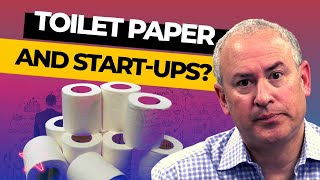
Mike Michalowicz explains his Profit-First framework, which flips the traditional profit equation to prioritize profit before expenses. He covers why founders skip market validation, how his certification program teaches accountants the methodology, and why tracking the right numbers beats gut feelings. He also argues that less work increases efficiency.
Chapters
Hey, it's Jeff with Startup Therapist, where we focus on the people part of startups. And I've got a fantastic guest today, Mike Michalowicz. Hey, Mike, how are you?
I'm doing well. How you doing, Jeff?
Very well. Thanks for joining us. I appreciate it.
My pleasure.
And I think people are going to get a lot out of it. Let me take a second to introduce Mike, if you don't already know him, and then we'll get right into it. From what I understand, you built two multimillion dollar companies, both were acquired, decided to become an investor like many do, and didn't have a successful entry into angel investing, which we'll talk about. And you're now building your third company, which we'd love to hear a little about in a few minutes. Along the way, you've written some amazing books. I've read all three, including one that I guess Businessweek really called a legend for entrepreneurs. Kind of a cult classic, right? Called the Toilet Paper Entrepreneur.
Yeah, shockingly, that's the one they picked. But it's true.
It's true. Well, so why don't we start with that? So I'm sure you get the question all the time. The Toilet Paper Entrepreneur.
Yeah.
What does it mean? How do you write a book like that? And. And what are you telling people?
It was my, you know, my first endeavor in writing books. I felt. I really felt compelled to do is excited about it, and I looked at all the other books that exist in the market. I'm a rabid reader of books. I can't stop getting enough. And the one voice that I thought was missing was the real in the trenches feel. A lot of them were academic reads and they're fantastic, but it was always someone talking. I wouldn't say down, but definitely they didn't have their arm over your shoulder. So I wrote the Toilet Paper Entrepreneur. I said, I'm gonna write a book that is my true voice of really embracing and walking hand in hand with entrepreneur through the dirty parts of business. And so that became the toilet paper entrepreneur. It's an analogy, clearly, with toilet paper and that all of us can navigate that situation where there's only three sheets of TP we don't talk about. But everyone's been there. Yeah, well, in business, there's lots of these three sheet moments, and that's what this book is about. How to survive when you have very few resources. Actually, how to thrive with few resources.
Something that a lot of entrepreneurs can identify with. What are some of the big mistakes that you see entrepreneurs make you know, you've been an entrepreneur three times now, but I'm sure you've met so many along the way. What are some of the most typical problems you see over and over?
The biggest mistakes I see are people go in for because they see a money opportunity, but it's not within their field of expertise or passion. And when someone else goes into that same field and they're passionate about it and they know what they're doing, they kick the ass of the other guy. So that's a big mistake, pursuing money. The second thing is people pursue funding. Like, it's almost amazing how many entrepreneurs feel that, oh, I'm going to raise VC funds. And one of my favorite things who, excuse me, is when someone says, well, you know, VCs usually only do a capex investment of like 3 million to 10 million. So if you're asking for only 250, you're not even in VC territory. And the entrepreneur says, well, I guess.
I should raise three, right?
Right. I should be raising more money. That's not how it works. They need businesses that could justify that valuation. So a lot of entrepreneurs spend their time trying to raise money, find out it's fruitless, and then the concept has passed them or they give up on it. And that's such a shame.
Right.
One of my favorite things, I think it was Mark Cuban who said it. He goes, I only invest in businesses that will be profitable within 30 days of my investment. And that's the mentality we have to have as entrepreneurs go into something where we can see a return in very short order without anyone else's money, just our own effort.
And then the money, if you raise it, just becomes fuel to accelerate things.
That's what money should be used for.
As opposed to the solution.
Yeah, money is an accelerator. I actually, in my book, I said money is an amplifier, but it amplifies smart things and stupid things. I've seen people go into a bad venture doing bad things and they start putting money into it and they fuel their way to obliterating themselves.
But what about an entrepreneur that has a valid idea, but it does require some startup capital to build the product? It could be, let's say, a software product or take some period of time before the cash starts flowing in. Do you discourage entrepreneurs from swinging for the fences and shooting for the moon? Tesla was not profitable on day one or even Amazon. How do you reconcile those two?
I think you've got to bring legitimacy to what you're doing. You got to do the smallest piece necessary that will Convince the customer to buy it. The mistake is to go into a venture without having the validation of the market itself. You've got to get that. One thing. I do, I start businesses. I started a business recently. I sold it before I even had it. And that's when you have nothing to offer and you can sell people. That means your concept is pretty convincing. You figured out the marketing. That is the time. Perhaps, if you're going to do early funding, once you can convince customers to buy it, there's proof in it. That's something you want to accelerate forward. I just say if you have a great concept but no one's bought it yet, ain't a great concept yet, don't do the funding then.
Got it. What do you think drives entrepreneurs to pursue this VC funding? Is it just a shark tank mentality that's taken over or why do you see these kids go out and say, I need 3 million bucks?
Yeah. I call it the INC syndrome. Right? So we see INC magazine, you see Mark Zuckerberg in there. And listen, if you want to follow the formula of Mark Zuckerberg, first you got to get into Harvard, then you got to drop out of Harvard, and then you got to have this crazy idea and you got to theoretically steal it from other people.
But lock yourself in your bedroom and develop it for a year.
Exactly, exactly. And write the formula on your window. He's the anomaly. I mean, an extreme anomaly. 99.9% of entrepreneurs never get funded. They bootstrap the way, and their story will never get into Inc. Magazine, but they're still very successful. I know some wildly successful people that have never been mentioned anywhere. But. So we watch this little subset and say, well, that must be the way. But I'll tell you, if you watch the news and you see all the murders and stuff on the news, that's the subset. The news always highlights the anomaly. Most people are good people, but if you watch the news, you think you should be a murderer too. If you believe Inc Magazine, you think that's the formula. It's totally not.
It's almost like we live in the shadow of Steve Jobs and Zuckerberg and these few, you know, Jeff Bezos. And one of the things that we talk about on Startup Therapist is the psychological impact it has on the entrepreneur. So I'm interested in your observation. Can it lead to things like entrepreneurs being depressed or anxious because they want to be Zuckerberg and they don't understand why it's not taken off?
Yeah, we compare ourselves to them. Right. So we compare ourselves to these anomalies and say, why am I not also just like them? And the answer is because that's not normal. That's not the typical path. I also found that as we progress, our business satisfaction doesn't necessarily come from size. Actually, I found more dissatisfaction come from size. Yeah, I know from personal experience. As my business have grown, the money I was making, that top line, actually I consider stress points. The bigger that number was, the more stress and responsibility. I had payroll in one of my companies, 250,000amonth for payroll. I remember thinking, oh my God, if I refinance and mortgage my house, I don't have enough money to cover payroll for one month.
Right.
In distress, I found that the healthy formula that gets you out of depression is not focusing on what you make, it's focusing on what you take. It's not the size your business, it's the health of your business.
By take, do you mean take home pay or something else?
Take home, yeah. Not what you're the top line, it's the bottom line, the take home. It's the health of your business, not the size.
So to that point you wrote this great book about the profit first formula.
Thank you.
And my understanding is, at least from whatever call reading it, it was more about flipping the formula. And instead of sales minus expenses equals profit, which is what most of us are taught in business school, you flip it around to sales minus profit equals expenses. Can you, to someone that hasn't read the book, can you explain the principle behind it?
Yeah, yeah. So I call total bullshit on the formula that's been around of sales minus expenses equals profit. It's the foundational formula. We all use it. The vernacular we use, we say profit's the bottom line, year end, payout, all the terms we use push off. But we have to understand that the psychology of humans is when something comes last, it doesn't happen at all. It's like saying, hey, you know, we should start working out and I get a little more in shape, start working out. We should do it at night or we should do it right before we go to bed. It's never going to happen. You're not going to do it. Conversely, if you say I'm going to work out and the very first thing when I get out of bed is going to put my sneakers on and work out, the likelihood is much more great, it's much greater, you're going to do it. But profit's the same way. When it comes last, it's for God. When it comes first, it gets Focused.
So how do you operationalize that? How does an entrepreneur put profit first? Can you give an example?
Yeah. It's a pay yourself first mentality. Take a predetermined percentage in the book. I charge, but I'd say start with 10%, 5%. I don't know. Pick a percentage you haven't done ever in the past. And every time a deposit comes in, take that percentage, move it, hide it away in an account that you can't even see.
Pay yourself.
Basically pay yourself first and continue to operate the business. The amazing thing is our psychology changes and we are forced now to find efficiencies. We're forced to be innovative.
It's like a forced investment program for a kid in high school where he has to put so much of his allowance in the bank.
Yeah. And the thing is, you never notice it's gone. If you're. We're in a 401k with a company and that money is taken aside. You adjust your lifestyle based on what you have. There's thousands of companies doing this now, at least that I'm aware of thousands of companies doing this as they do it. They just naturally adjust their business to live off of what they had. And you understand that's how we've always run our business. If you're living check by check, you're proving that you're living off of what you have. So why not take your profit first and live under this new setting?
It's a pay as you go mentality.
Yeah.
Are there ever exceptions? Are there ever a type of business or a type of entrepreneur where it doesn't make sense or a certain time in the business's life cycle?
Yeah. So I've yet to find an exception. But there are certain guidelines. The sooner you start, the better. So I've had people come to me saying, I don't have a business yet, I barely made a dollar last year, I can't be profitable. And I say absolutely. It's a percentage based system. If you took a dollar and you're taking 10%, 10 cents went to your account. I know that's barely a gumball nowadays.
But you're profitable, you're profitable.
The sooner you start, the better because it becomes an ingrained system. One of the nuances though, or parameters, is if you have a large company that transfers money from clients to a third party. An example is if you do home construction and a client give a $50,000 check. But $40,000 is used to buy materials.
Like a pass through, right?
Yes. The pass throughs are not Part of this.
Right.
You don't have $50,000 not making.
You really got $10,000? Yes.
So you have to run it off of what I call your real revenue, what you really are collecting for the services you really provide.
So are you basically saying 10% of gross margin as opposed to 10% of the top line?
Yes. And the only reason I don't use gross margin is because you can play some accounting games with that and say, well, part of my time goes to the cost of goods sold. So I call it real revenue. It's simple. My goal is so that we can't play games with it.
Got it. Okay, excellent. So let's switch gears from that operational to investing. So after your first two businesses, which you sold, you became an angel investor.
Yeah. Right. And I did. And I called myself the angel of death. I sucked. I mean, I suck. I sold my company. My second one was a Fortune 500. It was a big exit. I had this money. I'm like, I'm a genius. My ego was massive, and I started these companies. I stepped into an area where I didn't have passion, I didn't have skills. Right. We talked about earlier. I collapsed, but my ego was so fat that I kept putting money, money into money, saying, I'll buy my way out of this because I'm a genius anyway. And it literally took me. I really lost everything. It took me losing everything to wake up and say, oh, my God, I should not be doing this.
What does it feel like on the day that you wake up and realize you've pissed through all of the. All those exit funds?
Devastating. I said I was crying in front of my family as embarrassed I went to depression. It was years of struggling with what an idiot I was, but now I'm grateful for it. I was an idiot, but at least I realized my idiocy. And I hope I've permanently corrected that myself.
What do you think. What do you think caused you to. To do that? You're a bright guy, clearly. What. What. What was it that you. That fed. That.
I bought into the Ink magazine stuff, right? So I was like, oh, look at me. I'm the next Zuckerberg. And now I gotta show. I bought. I remember buying a Dodge Viper, Land Rover, BMW 7 Series, moving to the rich town and joining the club all in the same day. And. And I'm like, this is how we roll. This is us rich folks. I was a total douche. Like, I didn't realize I was a total dick.
And that'd be a good name for your Next book.
Yeah, I'm a Total dick.
I'm a Total Dick.
That's the title. And after I lost all. What I hope has been permanently ripped out of my soul is ego. Ego. I let my ego drive me. The effects and stuff. Now I hope I am rooted in pursuing happiness, passion, excitement, serving others. I hope I'm there permanently. I am now, but I hope I'm there permanently.
You seem to be. How do you reconcile that with the general CEO or founder Persona? Steve Jobs. Zuckerberg, where some would argue that a certain level of ego is necessary to take that kind of risk, to inspire people every day to run through brick walls when everyone says no. How do you find that balance between emotional quotient or EQ and also, you know, ego.
Yeah. So I still have ego, but now is a new definition. The ego of the past was I am great. The new ego is you are great. And I have the ability to help you express your greatness. It's a position of servitude. I would think. I don't know much about Steve Jobs. I would think his internal conversation was, I'm serving others, not that. Look how fantastic I am and you suck. I think he's like, you are fantastic, and I'm fantastic at serving and showing how great you are. I think it's a little different spin on the story.
Just had a funny way of showing it.
Yeah, you play showing for sure. For sure. But chest pounding doesn't. Like. I used to get fired about chest pounding. I couldn't wait to show you my stuff. Now I'm like, I don't have any stuff to show you because I don't. I don't even care so much about stuff anymore. Unless me. I still like a nice car. I still like to go on vacation stuff. But I have. There's no. I don't feel any worth in it.
Yeah.
I don't associate with it that way.
How many nice cars can you drive at a time? Right?
Yeah. Listen, and I don't mind. I enjoy it, but I used to brag about it. Used to be, hey, look, I wouldn't say, hey, Jeff, look what I got. But I would make sure that somehow we're taking a ride in the Viper real quick and then going on the seven series to make me feel good. I'm not motivated by that.
There's no value anymore. Part of that is probably just becoming older and maturity.
Maturity. But I think when you lose everything and you realize that it really never mattered and no one really cares. That was a good wakening up for me.
What gave you the ability to rebound and then go from that angel investing experience to starting this third company and tell us a little about the company.
Yeah. So I think what made me rebound was fear because I got five mouths to feed my family and now I had nothing to feed them. And so I had to figure it out.
Did you say five mouths to feed?
Five, yeah, five, yeah. I mean, myself included.
Yeah. No, no. But you like to eat too.
I like to eat. I mean, I had a family to support and I believe that's part of my life's mission, is to support my family in the ways I can. And so I was terrified. I had to figure it out again. And so that's what I did. The new business I have today is a certification organization for accountants and bookkeepers. I know it's this little tangential niche path, but the riches are in the niches. Yeah, sure. I have a very healthy business that helps accountants and bookkeepers implement profit first.
So you're training them on the content that you've developed over the years.
Yeah, and helping them become. To serve them. Most these accountants and bookkeepers are stuck in this transactional mindset. Data in, data out. But that's going away. Software's getting very sophisticated. This is now a path to make them more consultative.
Got it. With their clients. And. And so how did you choose that particular niche? I'm sure you looked at a number of them. Probably.
Yeah, yeah, well, yeah, I did. Maybe one of the smart things I did was you wait for the customer to reveal what they really want and then you play into it. So as I was writing books, I'm just listening and observing. I tried little things, a coaching organization. I started a little other thing trying things out and nothing was really getting traction. And then I started getting inquiries from entrepreneurs asking for accountants and bookkeepers to guide them through profit first. Like huh. So I started a little test market and all of a sudden it started growing and now it's only a year old. It's a real. It's a real business. You know, five employees here now and growing.
Got it. Fantastic. Congratulations on that. Bounce back.
Thank you.
The firsty act is easy. The second act or third act is tough.
It really seems that way. I didn't believe, I would have never believed it, but it seems that way.
What gives you some data points that a year in give you confidence that you're onto something? When you look at it, is it month over month growth? Is it what you're hearing from customers? How do you know the reason I'm asking is a lot of entrepreneurs that we talk to don't know when they fold up the tent or give up or say I was wrong or these assumptions didn't play out or my hypothesis didn't play out, I should move on.
Yeah. So we have KPIs. I mean, we just call them our numbers. We don't even call them KPIs. That's too fancy. But we call them our numbers. So we track membership and we graph it. Is it growing consistently or faster or is it flatlining? That's a big indicator. We track how many people are reporting back to us with unsolicited testimonials saying we're having successes. Is that growing, decreasing, or staying flat? And if those things are all up, we know we're having impact. In my old business, but I always did these KPIs, my old business, I actually tracked phone numbers. I mean, phone calls. I simply had my receptions write down every time the phone rang. I don't care who's calling, just track it. And at one point, we're getting about 300 calls a day inbound from all different people and stuff. And then one day, right after September 11th, they were born, the call stopped. And I was like, that's weird. And then a week later, the calls still stopped. Two weeks later, calls stopped. I said, we got a real issue and it's going to hit us. And in about 30 days, as soon.
As the pipeline moves through.
Yeah. So that's a leading indicator was simply phone ringing. And so we started cutting back proactively, and that saved my business. So I'm a big believer in tracking your numbers. And if the numbers. I don't know what the numbers mean, but I know there's patterns. And if a pattern shifts, that's a warning or an opportunity, but it's an indicator of something.
In your experience, do entrepreneurs track their numbers the way you're describing or track the right numbers?
No, most entrepreneurs don't track numbers. We trust our gut, and our gut lies to us a lot. But our gut, we don't believe it.
Because you want to hear what you want to hear, right?
Yeah. Yeah. So you say something and then you look for something to validate. See, I proved it right. So most entrepreneurs don't track numbers well enough. Not even close.
Got it. Last topic that I would like to talk about. Since you mentioned you brought up five mouths to feed, let's talk about work, life, balance. So you started three companies, you've been an angel investor, you've written the Books. I know you do a lot of speaking. Tell me what you've learned about work life balance. Is it possible for an entrepreneur to have work life balance and a healthy relationship? Does it require 100 hours a week to get that boulder moving up the hill? And therefore you need to be conscious that your personal life is going to suffer for some period of time? What have you learned?
Yeah. So for me, my life did suffer and I wouldn't be here if I didn't make those sacrifices. But I don't believe that is the path. I think that's just what I thought was the path. I believe there's work life integration and that we can shift our work to kind of ingrain into our lives. We can pick where we have the blessing of picking where we work as an entrepreneur, and we can kind of work and control our schedule in a way that we couldn't otherwise. So, yeah, I do work sometimes. 10 o' clock at night, rarely sometimes I do, but that frees up me to go to my son's soccer game at 2 in the afternoon and. And there's that balance. So that definitely works. But the other thing I found that's blowing my mind away. It shouldn't, but it is, is the less time I work, the more improves my efficiency. And so actually by spending more time with my family, investing in stuff outside of business, time wise actually is making my business more productive.
It forces you to prioritize.
Yeah. And now I'm like, oh my God, I wrote the book product first. It's the same.
It's like family first, right?
Yeah. Family first or time first? Like, like, like. It forces efficiency. And the biggest thing I'm talking about now, I used to brag about being a workaholic. I could work till midnight. That is the dumbest thing I've ever done.
It becomes a status symbol. Right.
Or it's a status symbol, but for the wrong reason. Workaholic means I can't be productive. I have to work till midnight because I'm an idiot.
But how do you begin to change that? So for the entrepreneur who does work 100 hours a week, how do they make that change to put their family first or to put their relationship first or put their health first. Right. A lot of entrepreneurs I work with gain 30 pounds. I call it the Founder 15. And, you know, so how do you do that logistically?
Real life, we are all creatures of habit. And what I did was I looked for when do I disrupt my habits? And for me, one thing I noticed was when I would go to A doctor's appointment, like a chiropractor or something. I had to get up, physically leave my office, and then I was there for an hour. By the time I was done, I was like, okay, I'm done for the day. So I deliberately started putting these intentional meetings with. With a chiropractor or whatever to actually get myself physically out of the office and disrupt my day. And that was the way to come to an end. I don't know what the vehicle is for you or the listeners, but we look for what is naturally working and leverage that.
Got it. You force yourself to break the pattern.
Yeah, that's what I did. Yeah, exactly.
Got it. So no more workaholism for you. And it is possible to integrate the two, but like you said, it's an integration as opposed to work life balance. Right?
Yeah, that's how I have it. Integration. Exactly.
Great, Mike. Fantastic advice. And how can people learn more either about you, your speaking, your books, your new venture, etc.
Yeah, you can Google the hell out of me if you wish. My last name is a doozy. But here's the shortcut. If you type in Mike on Google and then Mick, M I C, it drops down, you'll find me by that point. And if you visit my website, which is mikemcalowitz.com I can promise you one thing, it'll be the most different website you've ever seen.
Good. And we've got a link to it on our site as well.
Perfect.
So thanks for making the time.
Oh, it's been a pleasure. Thanks for having me.
We really appreciate it, Mike. We'll talk to you soon.
Bye. Bye.
Bye.










