Making Your Business Run Like Clockwork - Interview with Mike Michalowicz
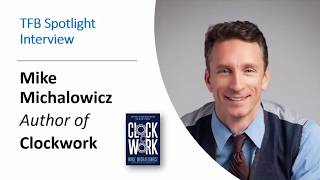
Mike Michalowicz explains how to build a business that runs without you. He introduces a four-step hierarchy (sales, profit, time, balance) and a seven-step framework to separate owner from business. Bookkeeper Cindy Thomason grew revenue from $30k to over $500k using this method and now takes regular week-long breaks.
Chapters
Okay. Welcome to this much anticipated by me interview with hopefully a few people. Well, I hadn't announced it, but with this interview with Mike Michalowicz for the Freelance Bookkeeper blog. And we are here because of Mike's new book, Clockwork, which is released August 21st. So you're seeing this on the day of release. And if you're not familiar with Mike Michalowicz, why not? This is the. He's been a feature on my blog and in my training programs for quite some time. Mike and I met. We met, he says, in 2012. But my consciousness of really US meeting was 2014 after profit first, when he reached out to me. But I actually was aware of Mike in 2012 and went to go see him in Philly after Pumpkin Plan.
I remember Barry Moltz was there hosting the event.
Yes, exactly. But ever since then, I've had a love affair with Mike, that what he teaches us is just so important for our businesses and for our clients. So I. I knew that when Clockwork was coming out because I, you know, Mike told me about the concept of this book several years ago. And my thought was, mike, you have to publish that book several years ago. Because I couldn't even sleep the night after he told me about it because I was so excited. So needless to say, when the book is out, I said, mike, we gotta do an interview. So there's the buildup for how excited I am about this. But Mike, you know, can. For those who, for whatever reason, don't really know about you, you're an author. You've published several books. I mentioned Pumpkin Plan, Profit First. Tell us about this author thing. How did you get to be an author quickly?
Yeah, so I've been an entrepreneur for the entirety of my adult life, but I've been through the ups, but I've been really through the downs. I think there's this thing, I call it entrepreneurial poverty. There's this outside perception. Gabrielle, I'm sure the day you decided I'm going to start my own bookkeeping business, that your friends who aren't business owners look at you and go, oh, my God, you're now a millionaire. They think you're so wealthy, right? And they think you can dictate your schedule, like, oh, and you work whatever. You don't even work. The reality is, ironically, the exact opposite. Most entrepreneurs are struggling to survive financially and in other elements. They have no time left. They're struggling to have a balance in life. And I have been through that, and I continue to experience that in different elements of my life. Every book I've written honestly is really to solve a challenge that I personally face. These books, too, are the ultimate accountability mechanism. When I wrote Profit first, when I first wrote about the concept, it was over 10 years ago now in a Wall Street Journal article. The day I wrote that article, and I got emails from people saying, oh, my gosh, I'm going to use this. I felt this internal accountability. I don't stick with this myself. I'm a facade. I'm a fake. So I have to live by it. So I was committed to profitability. That book has changed my life, and now I hope it serves others Profit first. Clockwork. I am committed to an absolute balance in my life. I think we can. I know we can have it. And now Clockwork is forcing this for me because it's out there. It's my declaration. But that's my selfish reason for being an author. The other component, probably the most important component, is I really want to serve others. I want to pierce that veil of entrepreneurial poverty and allow people to really become profitable for them to experience the wealth that they deserve and aspire to have and for them to have balance. That's what this book Clockwork, is about. I keep looking here because I have my copy, but Clockwork is about bringing back that balance so we can truly live life the way we've defined it.
Yes. Excellent. Well, and I mean, that's why we connect. It's because of the values. The values of walking your talk and the values of really wanting to help others as well, but doing it yourself. Solving a problem that you have as an entrepreneur clearly is a great basis on which to help others, because others are having that issue, too. And you kind of answered this question a little bit, but it's. Our first question is about why did you choose to write about Clockwork as your next book? Because you have other books that solved problems. But why Clockwork?
Well, there's been inspiration behind it. First, I am so blessed to get contacted by readers constantly. There's my email. I'm just looking up my email now. I would say every 15 minutes or so on average, another email come in from a reader that's reading my books, has a question, has an inspirational moment. That's part of it. Part of it is our conversation. You and I met. I can't remember the location. It was at a conference. I think it was in the Bahamas or Florida or somewhere hot. And my favorite part of these accounting and bookkeeping conferences is when you and I get some time to Spend together. And we had breakfast together one morning, gawboning, talking ideas. And what I discovered from our conversation, from reader feedback, is there is a Maslovian hierarchy of needs in business, in our lives. Maslov says first we need to take care of oxygen and food and water and then shelter. You can go up this pyramid of needs in business foundationally. I believe every business needs sales. With no sales coming in, that is the oxygen for a business. If you don't have any inbound cash flow, you're in deep trouble. The next level up, which I believe is the substance of food and water, is profit. Sadly, I've discovered most businesses when they are starving to death, they need food and water. They. They actually gasp for more air. They try to breathe in by selling more. They say, I'm not profitable, I need to sell more. But gasping for air when you're starving to death is not the solution. Profit first. My objective there was to get people, businesses to have subsistence. Sustainability. I believe the next up in this Maslovian hierarchy of entrepreneurial needs is time. Once we have sales coming in I adequate sales, once we have sustainable profit and it brings about this confidence, then it becomes about balance. Time we want to be able to do. I believe most of us, what we want to do, both in our personal lives, but also in our business. I don't think the goal necessarily is to say, now my business is an ATM and I want to abandon it. I think now my business is running on automatic. It's generating a predictable income, predictable profitability for me. I want to now do what I want within my business, but it gives me joy. So Clockwork is about designing a business to run itself so you can do what you want when you want, both in your life and in your business.
Yeah, that's fantastic. And I think you're spot on as the progression goes with the business, for sure. That's great. So this book is launching today, August 21st. So it's not the time we're recording, but the time that you're seeing this.
But my heart is racing like, this is the moment. We are on the precipice of the launch and the nerves are very heightened right now. And plus three cups of coffee did not help.
Yes, that's right. Well, that coffee helps, but the people watching this are accountants and bookkeepers. Of course. That's the world I live in and that profit first has been thriving in. But why is it accountants and bookkeepers should be paying attention to clockwork?
Yeah. So I've had the privilege now to work with hundreds of accountants and bookkeepers through Profit first, our organization, Profit First Professionals, continues to grow. And what we do is we first, we empower these companies by differentiating themselves with the Profit first brand, transitioning from traditional bookkeeping and accounting to a consultative model around profitability. And the reason is that there's this downward pressure that's occurring for accountants and bookkeepers. The automation, the introduction to artificial intelligence. We, when I say we, book accountants and bookkeepers have become so commoditized that we need to transition. The other element that's happening for accountants and bookkeepers is the demand on time is actually increasing with business efficiencies, which seems crazy. Like the more automated stuff is becoming. You think it would require less time from us, but for us to survive, it's actually requiring more of our time. So the response I'm seeing from most accountants and bookkeepers is actually a work harder mentality. For me to sustain my income or grow it, I must work more. But that is a means to no end because at a certain point, we are capped. We can't work any harder. We're exhausted. All we do is we wake up, crank away on the computer in our basement, and then we don't even see the sunrise or the sunset and we're exhausted. And we repeat again. I think the community that needs this most, our people, industries are going through transition. Accountants and bookkeepers are going through probably the most massive transition of modern times. So clockwork is about how do you sustain that income and increase it without you being in the business foundationally? You have to change the structure of what you're doing. You have to offer something new and distinct. That's why I hope to do this proper first. But as importantly, you must have a mentality of an entrepreneur, not a doer. You must have a mentality of someone that is using other resources, other people, and channeling them collectively to have a consistent outcome that drives the business forward. And we ourselves must remove ourselves from doing the work and be designing the business. That's why I think the book will be so impactful for our community of accountants and bookkeepers.
Yes, yes. And I agree. And of course I view it that like with profit first, where we say put, put it in your business first, see how the results, it has put you in a much better place to support your clients, to help them, because accountant and bookkeeper are close to the business owner who is floundering with these same issues. So if we're walking our talk, then we're in a better position to go to that advisory model and help them. And I think that is absolutely true with something like this and building the systems that you're outlining in Clockwork. I did get to read an early version of the book. Yes. And. But one question is, and I've read these other books, this issue of wanting to have the business run without you has been an issue for small business owners for a long time.
Sure.
In fact, even what you just referenced was, you know, getting away from being a doer. We have to think more of ourselves as an entrepreneur. That has a similar ring to what I remember reading many years ago in Michael Gerber's E. Myth, Revolution Revisited. Right. And then now there's so many versions, including one for bookkeepers. But then also several years later, I read the book, which I like this book a lot, which is called Work the System by Sam Carpenter. And that was, to me, that was valuable because he went through it himself in his own business, truly. So my question to you, Mike, and this is the tough question is, so, yeah, you're gone through this kind of sort of, but Clockwork, what makes it any different from those other books? And especially at this time.
Yeah, great question. And I am a huge fan of E. Myth. That book was an eye opener for me. And I've had the privilege now of sharing the stage with Michael Gerber. I'll never forget one event we both presented in Mexico. We keynoted back to back. We ended up having dinner together. And Michael is a notably eccentric guy. So I won't use the verbiage you used. I said, E Myth is one of my favorite books of all time and it probably will remain that way for eternity. I said, one of the challenges that I faced was that the core concept is don't work in your business, work on your business. The perception was that one day I will not be working in my business as a technician. I will be the definition of a true entrepreneur. I'll be working on my business. But it's a one day thing. It's a switch. I said, I think that's where I get stuck. I'm waiting for the moment for it to present itself. I said, I think it's not a switch, Michael. I think it's a throttle. He responded with very flowery words, which is funny because I thought he was joking, but I don't know if he was because he's an eccentric. And we had a marvelous dinner together and we then discussed this concept. I believe my proposed in Clockwork is that it's a throttle. We have to slowly transition, but persistently to a design phase where we are strategically moving the business toward a vision as opposed to doing the work in the business. There's an analogy, and I believe actually in Sam Carpenter's book, it says this in many of the books and entrepreneurs use this terminology too. We see our business as a parent child relationship. I think this is going to be the big distinguisher of clockwork. What we say is, I'm the parent, I birthed the business. I'm growing this business, and one day it's going to have legs, and that's when it's going to have the returns for me. I need to nurture it, I need to feed it. But one day it will be sustainable on its own. That's the concept I challenge. I do not believe we have a parent child relationship with our business. What I believe we have is a conjoined twins relationship. We share common organs, the same legs. As the business health goes, so does our health. As our health goes, so does the business health. It is that conjoined. We need to separate ourselves in a very surgical, disciplined process. You don't just one day say, you know what, we're splitting the two. It would kill both. We need to very carefully separate the organs and so forth. At a certain point over time, we can surgically separate ourselves and we will have separate hearts, we'll have separate organs. We will always share a common soul. But that is when the business is now running itself. So Klocwork walks you through the surgical process of slowly but persistently separating yourself from your conjoined twin. And now the business can flourish on its own by running on automatic. I think that's the key differentiator from all these other phenomenal books.
Yes, yes. Very good, very good. That's very helpful, actually. It makes me almost think it's like we're cloning ourselves in a certain sense. And then with that clone, has to be independent.
Yeah. The founder of Intuit, Scott Cook, is that his name? I remember him on stage. And that was another aha moment for me. I said, here's the guy who founded it. Intuit has grown explosively, but what's his participation? It is simply vision and guidance. He has become more of an idol for the company and a rallying point than anything else. And I think that's what's truly extraordinary. Intuit lives because of his soul. If I look at Amazon, it would be laughable to think that Jeff Bezos is packaging that shipment we just ordered and sitting at the door. That's true for every successful business. These Big companies. I like to use your name because we recognize the names. But I also want to realize that us tomorrow to be the next Amazon is not going to happen. They too went through this growing process and the separation. You can bet your bond dollar the first shipment that went out from Amazon, Jeff Bezos was in his garage. He was packaging it. He slowly and systematically removed himself from the business while maintaining that visionary position. We need to do the same thing. It is a methodical process where we keep our soul in the business but at the same time extract ourselves from the business.
Yes. Excellent. And you know, that's one thing I love about the book is because it is methodical. In fact, you take the reader through seven steps and the big promise is, which I think is pretty incredible and I haven't seen in any of the other books is that you're promising you can as the business owner, if you follow through these steps and execute it, you can take four weeks vacation unplugged, completely away from the business and it will run without you.
Yeah. And I would argue even, even more than can you have to. Here's the best case study and my favorite case study in the book is Cindy Thomason, who is a bookkeeper who removed herself from her business for four weeks literally. She returned from her four week vacation two and a half weeks ago from us recording this. She went to Hawaii. There is a post. It's in the Profit first professionals group because she's also a Profit first professional. Now. She posted in there her experience. I don't know if you saw this.
Yes, I did.
There's a picture of her and this beautiful cloud coverage coming up in Hawaii. And. And she explained what she experienced. Here's why I think we need to declare a four week vacation first. And I suggest everyone watching this if you want to make a bold move toward removing yourself from the business and having your business run on itself, declare a four week vacation. Not for tomorrow, but for a year and a half, maybe two years from now. The day you make this declaration, there's a mind shift. It's like, oh my gosh, my business has to run without me. What happens now is we start going into this design mode. We say, well, how do I get other people or resources? Even if you're a solo practitioner, you can and have to do this. How do you get contractors or part timers or systems in place to get the business running on automatic? Then over time, as you get closer to it, we run test mechanisms. Cindy went away for a couple weeks, full disconnect by the way no email, no. Nothing came back. And was it perfect? No. Was there problems? Absolutely. Did she lose clients? No. Were some clients upset that certain things slipped?
Yeah.
And those are the things that she fixed. She went on another two week vacation test. Again. It got better. She then subsequently went away for four weeks in Hawaii. And by the way, you don't have to have some grand vacation. You could go to your mother in law's for four weeks, which may be like going to hell for some people, but go away for four weeks. And what happened was the business thrived. Cindy's business actually acquired new clientele. They increased pricing on two clients and the employees. And she's a small team. I think it's more people. They huddled together and they said, we own this now. They took the ownership. I think the greatest thing was the shift in Cindy's mindset. Week one was panic, like, how are they going to survive without me? Am I really prepared? Week two was almost kind of giving into it, saying, well, I'm away now. I'm halfway through this. Week three was a new discovery of herself. She said, maybe I don't want to work in the business. Maybe I'm getting joy elsewhere.
And.
And week four was this confidence saying, there's a new me now. I am now thinking strategically about my business and how it can change the world. And thinking much bigger. She returned to the office. The business had grown. There was still some challenges she needs to fix. But now every month, every month she's taking one week off. Total disconnect from the office. And the employees have never felt so empowered. They've never been so excited because they're in charge now. They're in control. There's been this mind shift and just to put some numbers on this and Cindy's very proud of this. I'm very proud of this. Before going through this process, before I even knew her, her business was doing about $25,000 to $30,000 in annual revenue after being a bookkeeper for 10 years. This year she surpassed $500,000 in revenue. We're halfway through the year. The trajectory is over 500,000. Cash collections are not there yet, but it's very clear surpass that. And next year she's confident she's going to surpass a million dollars in revenue. And I think all indicators are that that's been in a three and a half year span that that's become a reality. You don't, the point here is you don't need to change so much in your business. We just need to Change your mind. And the impact happens when we change what's going on up here.
Yes, everything is between the ears.
So it's fun.
It is. But the thing about Clockwork that I love is that that it is. Look, here's the exercises to do. Here are the things that concrete action to take. It is not theory. It is not something that all businesses, including bookkeepers, proven with Cindy, can't apply to their practice or to their business. So I'm so excited.
I think that's necessary. I am not a theory kind of guy. All of that action, everything that's in this book is something I first tested myself. I think that's what distinguishes me because I still run businesses that I have a guinea pig. So Clockwork. I started writing six years ago. As I was writing, I started testing stuff out and a lot of stuff did not work, therefore, not in a book. Some of the stuff did work. And then I tested with friends. So Cindy started experiencing this a year and a half ago. We started testing on her test with other companies and only once it was proven to work in my own business. I other businesses and there's examples of existing businesses who've been doing this stuff for decades. Then it got included in the book.
That's great. What. Can I ask a quick question on that? What would be. It was 18 months, like a typical amount of time that you could go from totally being consumed by the business to the point of being working on it. I mean, I realize every business is different, but since you've seen several, what would you say is a believable, doable amount of time to expect?
Yeah, the 18 months, which a year and a half seems to be the number. And that's why the plan in there, there's an 18 month plan. Here's what happens. I find that when people declare they're going to go into this, that's not enough saying, I'm going to start working on my business. As Michael Gerber said, we say this, but the next morning we're back to our routine. When there is something that is very rapidly approaching, there becomes this pressure. When we were testing like two or three years out, there was not enough pressure. When we said, oh, let's try this six months from now. It became exhaustive. People. It was a panic. It seemed for most businesses, a year and a half out was far enough out that we go through one year's full cycle of a business plus another six months of preparation. We could then test certain things. Some businesses are seasonal. If you're an accountant, bookkeeper, I suspect February is a little more busy than August. I just have a suspicion. February, March, January, actually, yeah, December through March. December through March is a little bit more intense than August and September. Therefore, we want the business to experience an entirety of a year with you still being accessible to it, but thinking in this design mode, that 18 months out seems to be the perfect number. The other part, though, is it has to be a hard commitment. It's easy to say, well, 18 months from now, I'm going to take off from my business. If it's not in the books, so to speak, if there's not people holding you accountable, if you haven't told your contractors or part timers or virtual assistant, or if you have employees, your employees, it's unrealistic it's going to happen because we'll play that game. Well, maybe I need to wait on this. So it has to be a decorative. But 18 months out seems to be the number.
Excellent. Excellent. Well, Mike, then that means that everybody who's watching this, if this is what you want, if you really want your business to work, work like clockwork. You gotta go get the book, today's the day to do it, and make your declaration that 18 months from now is when you're gonna be going on vacation unplugged from your business, knowing that it's gonna be running just fine without you.
Yeah. And I will tell you this. What I discovered is after you go on this vacation, there's a new level of awareness that I think for you, I don't know if you're going to say, I never want to work again. I don't know if you're going to say, I love working so much. All I want to do is go back to just working like I have been. I do know whatever answer that comes is the right answer. There's no wrong answer. But until you put yourself in that position where you have that choice, then you don't have an answer. When you are forced to work, because that's the only way to sustain, there is no choice. But when you have the freedom to participate in the way you want to, that is where all that stress melts away. And that's the goal of Clockwork is truly, at the end of the day, to give you the freedom of choice.
I love it. I love it. Thank you, Mike, so much. This was fantastic. And I'm really excited about it. I already have ideas, but I won't tease everybody too badly, but I want to continue this conversation about climate Clockwork, so. And actually doing it not just talking about it. So thank you once again, Mike, and we'll look forward to when we can connect again.
Next event, we're grabbing breakfast.
Okay? We got a plan on that. Thanks.










