SPS 131: Get Different With Your Book Marketing (Mike Michalowicz Interview)
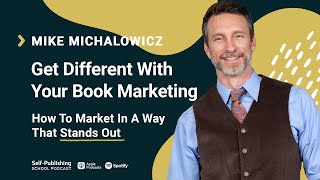
Mike Michalowicz explains why following standard book marketing makes you invisible. He used an invisible-ink email, a launch video of his bald spot, and a donation campaign that sent books to underserved entrepreneurs. His DAD framework: Differentiate, Attract, Direct.
Chapters
Hey, Chandler Bolt here. And joining me today again is my friend Mike Michalowicz. Mike is the author of Profit First. He's the author of Clockwork. He's author of the Pumpkin Plan, the toilet paper entrepreneur Surge Fix this Next. He's founded multiple companies. You may have heard. I mean, his most popular book, Profit first sold a bajillion copies. It's used by hundreds of thousands of companies across the globe to drive profit. And he also created Clockwork, super powerful methodology to help businesses run better. And today we're going to be talking about getting different with your book marketing. Okay, so Mike has a new book called Get Different. So we're going to talk about that and then might even have time to talk about writing your first kids book and turning your nonfiction methodologies into a children's book. Mike, welcome.
Great to have you back, Chandler. It's awesome to be with you. In my bio, you forgot to include that I have an autobiography out called I'm a Tool. And yeah, I thought the title was genius. Like, you know, I'm here to serve and my wife's like, no, you're a tool here. It's so. Oh, man.
Well, Mike, great to have you back, guys, if you haven't already, go back. And I cannot believe it was this long ago, but our last episode that we did to get. Well, the only other episode that we did together came out February 10th. All right, so check that one out. I'm going to just like read through some bullets of what we talked about so you can know that that is the place to go to for that stuff. And we're not going to talk about any of this stuff. So check this out. On the last episode, we talked about how he started multiple seven figure companies off of books. How he sold 700,000 copies of profit first three formats, 20 languages. We talked about, gosh, starting companies from books. We talked about the importance of building a backlist. What is it? Why is it important? We talked about how he doubled the advance from his book and why audiobooks make a lot of money and a lot of royalties for him. We talked about why you should self publish your book if you want to make more, if you care about making money off the royalties. I think we broke down. It was like 45 to 51% of his sales are audios. We kind of walked through that. Why you should read your own book, why he doesn't do a straight read. And then how he pivoted his book. His book launched during COVID So all of that was amazing. And it was in the last episode. So if you're interested in learning any of that, go to the episode that we released on February 10th. But today we're going to talk about getting different, like I said, and maybe even some kids book stuff. So, Mike, your new book called get different just released a few weeks ago at the time of recording this episode. Speaking of getting different, like, what are you doing to market this book differently?
Yeah, so one of the golden rules, perhaps the golden rule of get different is whatever the best practices are of your industry. So as an author, you know, the best practices of the authors is the one thing you should avoid. And the lesson here is best practices are wonderful in so many different applications. Like, Chandra, you have a best practice for hiring. Like, I should be using that best practice. But when it comes to marketing, if we use the same marketing method as our contemporaries, it means our same audience is receiving the same message and they've become habituated to it. I mean, they're, they're wired to say, oh, this is ignorable. And one classic example is, you ever get a hey, have you ever gotten a hey, friend email? I'm sure, like millions, right?
Yeah. Oh, yeah.
So the first one I got, I'm like, oh my God, I have a friend who's calling me friend. They're so friendly. They don't even use my first name. They're skipping that. And I was like, who is this friend? And I'm like, oh, this is bullshit marketing. And I've never opened a hey, friend since it goes right to the delete box. I actually feel like a little vindication every time I go spam delete, you know, and the lesson here is me, you, all, all consumers that have become habituated. The second we deem a form of marketing is not relevant. We don't even consider the future replications of that. So what I did different. So the golden rule is this. Whatever your contemporaries are doing, the consumers become habituated to it. If they're all doing email blasts and you simply do another email blast, it's ignorable. Hey, my new book coming out, so what I did with get different is I first looked at the medium and, and the method. The medium is email or billboards or it's the way to vocalize your message. The method is how you approach it. And you can do different in either. So you can do an established medium, but just do a different method, or you can use the same method as everyone, but just put on a different medium. So if everyone's doing emails, do it on A billboard, and you'll probably have better results or at least different results because no one else is doing it. I decided to stay on the same medium. So I did an email blast, but I had to do a different method. So I looked at my contemporaries and I noticed, well, what's the common factors? Everyone sends out email. White background, black text. I'm like, okay, black on white. So I'm like, why do white on white, which makes it invisible? I'm like, oh, my gosh, what if I'm the first author to send out an invisible ink email? So the first announcement of this book, it was in black text. The first line simply said, this is the first ever invisible ink email. Click and drag below to reveal your message. And now when you highlight over white text and a white background, it pops in blue and you reveal it. And it said, I'm coming out of a brand new book at different. And you're gonna learn strategies just like you're experiencing now. There's a reason you're reading this because it's different. Click here to get your copy of the book. That email had a four or five times click through rate, open rate than everything else I've ever done. And the reason is because it's different. But it plays into other factors too. Different for different sake alone is not good necessarily. So I'm not saying be outrageous or weird. It has to be something that's compelling, has to be something that gives action a reason to take action. But when you meld those elements together, you can crush it.
That's awesome. That's so interesting. So interesting. Anything else that you did that was just totally different off. I mean, that's awesome. That's cool.
Yeah. So I did a different launch video. So they were. They were filming it here. And, you know, I noticed my contemporaries who do launch videos, it's very prequel, kind of sizzle, reel movie type of feel, you know, voice of God, very deep voice. Like, coming out this September, your life will forever change. Buy your copy now. So I was like, okay, that's what we can't do. And I'm not, I'm not being disparaging toward these. Even though the way I said that voice was very disparaging. I'm not saying those things are bad. I'm simply saying they're common. And common doesn't get noticed. So we had a film crew come over again, same medium, but in this situation, we use a different method. We decided it was coming out September 21st to do a music video that harkens to earth. Wind and Fire song September. And it was me dressed in this crazy costume. I have pictures I can send you just like outrageously looking, very flamboyant. And it opens up with that deep voice of September 21st. Everything changes. And then it pops into this music video. And I remember yelling in a fun way. But the camera guy who's trying to. He couldn't figure out how different we're trying to get. I'm like, you gotta zoom in on the bald spot. Like, I have a bald spot up here. I'm like, zoom in. He's like, what? I'm like, zoom in on my goddamn bald spot. He's like, who does this? Exactly. So the opening shot is this really tight shot on my bald spot as you see me getting into it. And then the next shot goes to the extreme and you see my butt cheek pulsing to the beat. And that's how I kick it off. And it's, it's, it's different. But here's the key. It also is authentic and genuine to who I am. I suggest a serious author, you know, Malcolm Gladwell. You know, if he's trying to do a restart, I wouldn't suggest he does a pulsing butt cheek video. So it has to be congruent with who you naturally are. I am definitely silly and goofy and I like to mock the seriousness that is put inserted into our profession. It doesn't need to be consummate. So that's why we did it. And that video, did it go viral? By no stretch of the imagination did the right people talk about a lot of times, hell yeah. And they're like, I can't believe you did this. I shared it with my friend and that's what I wanted. The result was we had, we had, we beat our goal. Our first, our two week goal was to sell 10,000 units in the US of get different. We sold 11,000. So we beat our goal. We didn't crush it. I wasn't like, oh my God, we doubled it. But it was the best launch we've ever had because we were different.
That's interesting. Where can people go see that video? Is there an easy link or easy place?
Yeah, if you type in, if you just type in get different launch video, you'll find it. It's on my website and I'll send a link to you in case. Perfect cases. It's not that findable because you get.
A different launch video. It's okay, we'll, we'll, we'll find somewhere. We'll make sure it's linked up. In the show notes get different launch video. And I like that you said it's. It's. It's different, but it's congruently different is this. You know, it's. It's different in a way that's congruent with you, and that's the key.
So I'm putting the chat so you can get there. But so what's interesting is when people hear, get different. They're. They're hearing or they're receiving get outrageous. And that's not what this is about. This is not outrageous marketing. It's not offensive marketing. It actually is an amplification of who you are. And so the first step is to really be honest, integral with who you are and what your idiosyncrasies are, and then to lean into and amplify that. I just had an author event, you and I, before we started recording. I showed you. We're at Don Miller's house. This is just yesterday. I mean, I flew back this morning, literally from Nashville, and it's with six or seven other authors. Well, there was one person playing all the pranks. I know I better show you something. But it's actually. I don't want to offend. Anyway, that was there. But I placed one prank as one guy laughing my ass off, and so are the other folks. But it's predictable. It's going to come from me. You know, Chris Gallebo, who's there, is not the prankster guy. Chris Gallebos, the intellectual guy, he leans into his authentic character, John Rulin, he says he's a. He's. He's very. He's into his faith, and he's just so integral with that. And he leans into it, and that's what makes it so powerful. That's who I naturally am. I'm the prankster. I'm the class clown. And that's why it works. We all as authors, have to really be consistent with who we are. Don't. Don't fake it like you're somebody else because it worked for someone else. Just be more of you. But to a point where a community says, wow, I found my people. And listen, there's people. I saw this video. I said, this guy McAllister, he's the biggest idiot on the planet. He makes a mock. He makes fun of entrepreneurship. Screw him. But as much as I repel a certain audience, I'm engaging another. And that's the key.
Yeah, yeah, that's great. And it's so. It sounds like the first step is finding the thing that's uniquely different to you and then amplifying that thing or leaning into that thing, as you call it.
Yeah. So you can do. As authors, you actually have the greatest opportunity. If you have established readers, just say what, what makes me special to you? Or you ask integrally, say, listen, I'm trying to really amplify my brand the right way. I'm looking to be a service the right way. What about me do you think makes me unique from other authors? What distinguishes me? The good, the bad, the ugly? Just tell me your truth. But I think just as impactful, perhaps more, is to also reflect and contact people back in your life. So I reached out to. This is early on. I reached out when I became an author 15 years ago to friends from high school I haven't talked to since then. I said, hey, I know it's weird. I'm reaching out to you particularly with this question, but I'm preparing to launch a new career and I want to know, what do you remember about me? What made me distinct and collectively? I got feedback from 15 or 20 people, including an ex girlfriend who didn't like me so much. And I started seeing a common thread. I was like, oh, okay, this is who I am. Goofy, a prankster, but not hurtful. Like to have fun in a situation but never have someone's feelings hurt, self deprecating. And it was kind of these different elements. Someone that can simplify complex stuff, someone who speaks common English. I was like, oh, okay. And I put these elements together and it came clear what my brand was. And it's, it's who you or who I always have been. But now that it's clear about it and all my marketing, I intend to be absolutely consistent with that.
Hmm. And maybe that's why we hit it off so much the first time that we met, because I feel like, oh.
Dude, dude, I love your, you're saying.
Those things that, that reminds me, I think probably a little goofier than I am.
I'm probably a little more silly. But you, but you're a little more positive, I'd say. Like when I think of Chandler Bolt, I'm like, oh, he's a bolt of lightning. Like, your last name is so idyllic. Like, this guy is raw energy. He can't stop smiling. You can say the worst thing to him and he'll, he'll smile and get kind of giggle and that's who you are. And that makes your brand so compelling to certain people. I love your brand and I know other people in the self publishing space and I'm like, ooh, not for me. I'm not saying they're bad people. We're a bad fit. And that's why I'm in your camp and rallying around. I want Chandra Bolt to be successful. And that's what we all need to be, is don't intentionally polarize by conflicting, by causing conflict. Just be who you are and you're going to get a community that rallies around you.
Yeah, I love that. And I think that's the through line. And probably for most people listening or watching, I mean, that should be the first takeaway, right? Find the thing that's uniquely different. You lean into that thing. So you talked about 11,000 books sold in the first two weeks of this launch. What were the top two or three things that moved the most copies? You talked about the invisible email. You talked about the pulsing butt cheek, uh, launch video, um, anything else that moved a lot of copies.
Street team, um, what we did different here was an execution. So we did a lot of common methods, right? So other people have done street teams, but this one we had. We asked people to have an. To commit to an obligation to move books. So typically it's like, hey, be on my street team. Get one book and help me promote the word. We said, hey, join the street team, but tell us what your commitment is. How many books will you move? And do you agree that if, if you're going to commit to this and you can't help other people buy the books, that you'll buy the books yourself? And so we said, what's your threshold? And we invite you to the street team. And that was powerful. We did something that was really unique and new and we did a donation campaign. Here's what it was, was we discovered that. I discovered that if someone buys a pre order of your book, it's unlikely they're going to buy a second book when your book launches. So you kind of burn the buy at the transaction. So we said, how do we get people supporting the book without buying the book? Because when the book launches, we also want to get momentum. How do we get people buying multiple books? And what we did is we identified these communities in need in the entrepreneurial space and said, if we can get you books, would you want to circulate these? And they said, yes. I put for me a large sum of money in. I notified our constituencies that I put in X number of dollars into this campaign to get books out. I am looking for additional donations. And we made it extremely clear that this is not a not for profit. This is not a charity. You won't get a tax deduction. This is simply a book that will go to a community that is seeking this book. If you want to support it, great. And if you don't, totally respect that too. We received a 10 figure sum of money and not a low 10 figure sum of money by doing donation campaign. And we were able to circulate a lot of books to a lot of communities. In fact, I was meeting with the president of our company just an hour ago and she said one charity is so blown away by how he supported them, they'd like to have a personal call with you and just give you thanks and stuff like that. It was really cool. And that drove a lot of books. I've never heard of another author doing that. It was different. And then part of me is like, oh, and I always go through this battle. Don't share that. That's my secret. Use that next time and next time. But the thing is different has a shelf life. If another author runs a donation campaign, as long as it's to a different community, it will work and it'll work and it'll work until authors start hitting the same community saying I'm doing a donation campaign and so am I. And so am I. And all these hands and elbows go up and that's the day it becomes habituated. That's the hey friend problem. Hey friend was wonderful. The first person sent out the hey friend effing genius. The second person smart copycat everyone else afterwards you exhausted it. But that's the nature of any kind of marketing. So that's, that's why I share it. Cause I know it's going to burn out. I got new ideas. I actually am doing some really cool stuff right now, but I'm not sharing that because I'm just starting to roll that out and then I'll share it and I'll do something new.
Yeah, nice. And so just to, just to recap so I understand, so you have, you pick communities in need and then you go to your audience and you say, hey, we're going to down. We're, we're going to donate books to these communities in need and when. And so people are able to donate as much or as little as they want. That all goes towards. And so then essentially you're doing a bulk purchase of books but for charity and then donated to these communities.
That's exactly right. Shipping right to them. And communities, they're all entrepreneurs, but they are in maybe impoverished areas and they're trying to set up shop in an area that's less privileged. Some of them by, by the nature of their background were in a position where they're starting not at the start line, but about 50 yards back. And how do we give these folks a leg up? And that was the intention. Yeah.
Win, win. Love that. Hey, I've got an idea I want to run by you. So speaking of getting different. So I'm working on the relaunch. Well, I'm about 30 minutes from finishing the rough draft, so hopefully later today. But I'm going, I'm going. Basically an updated revised version of my book published. I love it. The corner is cut off. So I don't give this book away because it's all marked up. But so I'm doing an updated revised version of this now. I've got a crazy idea and I wanted to get your feedback on it of different. I know how much you focus on audiobooks. I thought about week one just publishing the audiobook.
Yeah.
And then week two being like the full launch and it's all formats, it's all that stuff. Because I want to own the audio space with this book. More purchases, more royalties, more likely those people are going to become customers for self publishing school yet. Have you ever tried that? If so, if not, thoughts for.
Yeah. So very smart. Because it's. I don't know anyone else that's done that or very few. Yes. Have dabbled in it. Did an experiment of an audio only. We did a book called Recession Response and what we tried to do is I said, can I test the validity of a book and get done within one weekend and say, well, I can't write a book that fast. It takes me years. But I can record just my thoughts. I can make a podcast. We can edit it down. So on Friday I wrote the outline. Saturday I read twice horse. Sunday was editing. Monday the book was ready and it was a. It's. It's out there on Audible. It's called Recession Response. It was a two hour book. Um, and it wasn't super successful because the COVID didn't really turn into much of a recession for some people. So it didn't, it didn't land the way we wanted. But we proved out the model and now we're considering just introducing books this way. Not in a staged rollout, but to see the validity of a book. Your concept is a different spin of that. It's a book that you're going to publish but you're doing in stages. I love it. I freaking love it. So I haven't seen Anyone do that? That's why I love it so much. Yeah, yeah, you'll probably. You probably get a number one ranking, you know, and just point. Yeah. And audio.
Yeah, There's.
I think there's. There's two reasons to do. I think one's a bad one. When I was at this author retreat, we talked about it. There was a study done by a company the guy owns. His name's Rory Vaden, and their company analyzes, you know, Rory personal brands. And they did an analysis of what do readers value in a book when they're considering buying it. And a number one ranking on Amazon was so insignificant, it barely made the rankings. Wall Street Journal, New York Times bestseller, almost didn't make the rankings. What mattered was my friend recommended it, that it's endorsed by and someone I already trust. And I heard it from them. Not that I read it on the back of the book. I heard them from it, talking about the book, showing that they prove that they've read the book and truly believe in it. I think some folks, and my ego's not beyond this. I wanted to say I got number one and I'm a Wall Street Journal bestseller. That feels good, but it really doesn't effing matter. But there is one component that matters is the algorithm. If you go to number one on Audible, it's not about bragging number one on Audible, it's that the Audible system says, oh, Chandler's book is performing so well, we better start linking with other books quickly to catch this momentum. And that's a big deal.
Yeah, that's good. I like that. So you've alluded to this some already, but I guess can you maybe zoom out a bit? Like, what's the overarching. Get different philosophy. And how can authors use this philosophy. Philosophy to stand out with their marketing?
Yeah. So the overarching framework is an acronym. Staad dad. And is the three elements you need to check off to assure your marketing will have the most potential for success. Doesn't guarantee success by any stretch of imagination. Anyone that says I guarantee success in marketing probably is manipulating the truth. Yeah, mine, and I will tell you this, so if you miss any one of these three elements, the DAT framework, you've definitely crippled your marketing. It's unlikely to be successful the way you need it or want it to be. D. The first D stands for differentiate. We already talked about that. Don't be the common noise. Be the uncommon voice. The new approach. The second, the A stands for attract different for different sake. Does not serve as I I could go on your podcast and dress like, you know, Bozo the clown and I guarantee people watching the video like, oh my God, like there's buzz with a clown. That's kind of weird. But is it attractive? And the integral. The honest truth about clowns is they're not only not attractive, they could be murderers. I think most clowns are murderers. It repels so attractive means it speaks to the audience interest that it keeps them engaged. So be attractive. Be something that they thirst or desire. It may be solving a problem. Maybe it's just entertaining, educating, but it surely isn't something that's repelling. You know, you can wheel the gun around and people will notice. Do they want to hang out with you? Probably not. So the attractor factor is very critical. The last element is D for direct. So differentiate attract and then direct. Direct means give the prospect specific explicit direction on what to do with this information. And this is the key variable. It must be reasonable. I can't like, hey, I'm an author. I got a brand new book coming up. Buy 100 books right now. Give me a deposit and it'll come out in two months. Like no way. Like forget it, weirdo. But maybe it's appropriate to say, would you give me your email and I'll give you a preview to the book. There still has to be some kind of transaction. It needs to be reasonable for the prospect to stay engaged. And the smaller price point like books. Sometimes you can go right to the buy the book situation but tell them exactly what to do. Don't do the learn more. It drives me nuts when authors websites you navigate it says learn more. The whole reason were visiting your website in the first place is to learn more. Don't tell me to keep learning more. You're driving me effing crazy. Tell me what to do. Be explicit.
That's awesome. So the dad I told you you smiled everything.
I'm yelling at you, calling me an idiot and you're smiling. Tell me to learn more. I love it. He's calling me an idiot. This McAllister. I love this guy. Dude, you're stuck.
Oh man. All right, well, so the dad framework. Differentiate, attract and then direct them to what's next? I want to, I want to move into, you know, just briefly on the, on the back end and actually let's. Where can people go to purchase the get different book? Or what's the best next steps for people to take that are interested in this book?
Yeah. So my direct is go to go getdifferent.com. go get different.com has the book links information on the book without having to click on get more information. The call to action to direct. There is a free resources but what's cool is I have a hundred downloadable tips on how to market at no cost or near no cost. Like the Invisible Inc. Email. Something with wireless access points. You can do all these different things that cost you nothing that will give you exposure. Can guarantee you'll hit out the park with one of those. No. But I can guarantee you'll start building them different marketing muscle. You'll start thinking outside the box and. And that's where you want to get started. So go get different. Com.
Go get different dot com. There's a huge learn more button at the top.
Just click that Chandra Bolt picture doing this.
Oh man. Get the free resources and there. All right. And so let's keep going. So I want to, I want to talk about because I think this is really unique and interesting which by the way guys, if you haven't checked this out, there's. It's directly related to this. There's episode 126 which was just released on how to turn your nonfiction book into a children's book. Elaine, she's one of our children's book coaches at the publishing school. So she talked about hey wrote the nonfiction book and then turned that into a children's book. Like super practical steps. So I want to dive into some of that with you. You've got a new kid's book?
Yeah, I got.
Yeah, there it is. My money Bunnies. So first off, I mean, I was so shocked when I saw this. I was like, wait, what in the world? I swear he just launched a different book. So first off, this guy's a superhuman doing all these books. But secondly, I was just. I'm super curious. Why, like why the kids book? Yeah.
So this is a couple things. So what is showed on screen was the prototype. It's coming out for the Christmas or winter holidays, I should say. Why is there's been a recurring thread of people who've read Profit first saying I wish I could teach this to my children or I wish my wish my kids had it. I heard enough times. I'm like, oh, this is more than just a one off. There's enough people asking that there's interest. Doesn't mean it's going to be a successful book. But there's interest. But there's also a opportunity here starting with around Covid. So I don't know if this is true pre Covid, but I've Been looking at the top 100 books on Amazon, and when I say the top 100, I mean from one to a hundred in the entire world. Not in a category disproportionately. Children's books are the top 100 books in the world. I think at any given time, 30 to 40% of the books are children's books. So you'll see like, you know, where the crawdads sing. And then you'll see like, you know, how to catch a leprechaun. Then you'll see, you know, count, one, two, three, you know me, children's book. And then you'll see maybe some political.
Tree gotta be the giving. Oh, sorry.
And then the giving tree, right? But it just pops. Children's books are disproportionately there. It is a massive revenue opportunity. Now these, these children's authors and these books are performing that well because they're freaking good books. I'm not saying like, oh, because you write children's books to be successful. It is a very saturated genre, but it is a real business too. This isn't something that is just like, oh, I'll write it, and maybe someday my grandchild will have this. This is something where you can be of great service to an extraordinary community of children by doing your work. So there is a revenue opportunity, which means there's a sustainability opportunity. And I had a request from my audience, so I'm like, this is something I got to lean into and experiment with if this hits it. I already have ideas for more children's books, but this is my first test and hopefully it'll be of great service.
That's cool. And so I'm imagining, I mean, not only does this, this helps people who purchase your other books, I mean, it increases your lifetime value of that reader, if you will. Because now they can buy a book to read their kids. But I would assume it's also a Trojan horse in the sense of like people buying. If the book gets popular enough, they buy this for their kids and they say, oh, hold up, this Mike guy's got other books. And then they purchase your other books. So it's a big.
Yeah, it could be a Trojan horse. I mean, I'm not trying to grow an audience here for the long play. I'm not saying like, oh, the four year old, four year old buys this 20 years from now.
But I also know, right, like you're so we have, we have a children's book school at Self Publishing School, right? So, and our slogan is like, it's, it's you know, write a book that parents love to buy and kids love to read. Right.
That's exactly what it is.
It's the dual audience. So, no, you're not playing the long game with four year olds, but you are, I think, playing the short game with the parent, which is like, I read this book to my kid and now I'm going to buy all of my other books.
100% agree. And I'll tell you, even if they don't buy the other book, the perception changes. Jimmy Kimmel. I'm not a Jimmy Kimmel fan. I'm not against Jimmy Kimmel. I don't really know much about him. But I was in Barnes Nobles and I saw this book with this goose and I'm like, oh, that's great artwork. And I look at it, it's like, by Jimmy Kimmel. I'm like, oh, I know that name. And he illustrated this. Like, I love Jimmy Kimmel. I never really paid attention to him in the past.
Yeah.
And I still don't consume his late show because I go to bed too early. But I have an affinity toward this author in one simple stroke, just by seeing the COVID And I wonder if our perception expands or changes or people even soften to us where they say, oh, it's just another business authority. Once you have a children's book. It did for me, at least.
That's interesting. Are you self publishing this one?
Traditionally this is self published. Yeah.
Cool.
Through Chandler Bolt Enterprises.
Let's go. Well, man, we'll have to. Let me remind me afterwards. We'll have to get you some of our children's book school resources.
I would love to. And I want to talk with you about something afterwards too. That may be something I can learn, but we could do something together. Maybe in a fun way.
Hey, look at, look at. To just an idea. Look at. There's a episode on the podcast with Rus Soup. I think we talked about this a little bit. Um, but that might be. So if you're listening right now, that might be a helpful episode for you to check out as well and then let me know afterwards. I'm happy to introduce you to her. If you don't know her.
I do know her.
She kind of did something similar. It's a little bit different. But she, uh, she wrote the book Do It Scared. And then the kids book was How Big Is yous Brave? And so it was a two book deal with Zondervan. There's tie in, there's a TedX talk. There's like kind of this Whole thing, it's. It's really. It's really interesting. I mean, obviously Todd Herman did this with his book. It's just becoming more popular where there's. What was it? The alter ego.
Got my task list. Just so you know, this is the number line, number 40 here, which it doesn't mean you're the 40th thing. It means I won't forget.
Nice. But that's. It just seems like it's popping up more and more. So it's interesting. Hey, we're running right into the time here, so I'll ask one or two final questions. Biggest takeaway or lesson learned in the process of writing and creating this, this kids book.
In the kids book is how important an illustrator really is. Your words have to come to life through that because you're not afforded, you know, 40, 50, 60,000 words or more to draw a picture. You're afforded like 200 words for an entire book. So the illustrator is critical and did you know 40, 50, 60,000 words or more to draw a picture. You're afforded like 200 words for an entire book. So the illustrator is critical and they're hard to find. I shouldn't say hard to find. The right one for me was difficult to find. A lot of them came in with their preconceived notion and couldn't see my story, but they saw their version of it and it wasn't what I saw, so. So I had to really find someone that we were in sync with. And it took a period of time, but we got them.
What would be. Let's go. Parting piece of advice for other nonfiction authors wanting to turn their nonfiction book into. Into a kid's book.
Find what the. You should know it. But there's got to be a thesis for your book. So my book, Profit first is if you take a profit first, everything else, all your expenses will come into alignment. So that's the core thesis. Then I said, okay, with that thesis, how do I teach the exact same message to children? And. And how do I present the exact same antagonist, the same problem? So the problem is in prop first is your cash eating monster business can be converted into a money making machine. Well, for children we get our allowance and we splurge it. So we have this disorganized life. It's the money bunny backpack here comes to life and chews up the money effectively, spending it frivolously. But with a simple money bunny jar system, she's able to take her profit first. So it's the exact same thesis, the exact same Antagonist. It's just presented in a simple and hopefully highly engaging way. And I even inserted craft. You know, the tactile experience is so important. Not many children's books had this, but we have. I made sure it was inserted when the book concludes. There's an opportunity to create now your own money bunny system with stuff around your house. You don't need anything. You can do it right away. I think that's critical.
Nice. That's awesome. And maybe we'll have to. Maybe after all this is said and done, we might go round three and. And bring it back and find out what you learned about.
Oh, I'd love to. Yeah.
The kids book and marketing that and all that. I think that'd be fun. But I love how you think, Mike. And we're just so aligned in how we approach books, marketing books, using books to grow businesses, like all that stuff. So this has been another good one. Where can people go to find out more about you to get the get different book? I realize we're not even at launch for the kids books that might not even be an option yet, but what's the best next place for folks to go?
So for get different, and I did write it for creatives, for Authors because. Because I'm an author and I share author strategies in there. So go to gogetdifferent.com and my hope is you'll market yourself as an author like never before. My Money Bunnies has a website called My Money Bunnies. So you can go to mymoneybunnies.com and then my website. And this is also. I talk about this and get different While it's Mike Michalowicz.com that's like John Cougar Mellon camp. It's pretty hard to spell. And remember, Mike, Motorbike is my nickname. That's my John Cougar. So go to mikemotorbike.com, you'll see my author website.
Cool. Nice. That's awesome, Mike. I appreciate you, brother.
Appreciate you, man.
Yes, sir.










